Musk’s DOGE Released AI Chatbot for Government General Services Administration

Musk’s DOGE has started rolling out AI Chatbot to General Services Administration (GSA) Employees. General Services Administration (GSA) manages government real estate and certain IT efforts. The chatbot would help the employees with their daily tasks by automating them. An internal memo was given to the employees to let them know which tasks they could automate.

The Chatbot, GSAi, gives users 3 models to work with and the main idea is to use it to analyze contracts and procurement data. It should be remembered that GSA is one of the many agencies that faced job cuts. Reportedly, around 100 workers were affected due to what they call proper sizing.

The AI vs Workers battle

There has been this notion that AI will eventually replace human workers. Such layoffs always add more fuel to such predictions. While AI is improving rapidly, it is still nowhere near human intelligence. However, AI has proven more proficient in tasks like data entry, as automated systems can process data faster than humans. Similarly, with customer support and FAQ lists, AI Chatbot can do a better job. Similarly, Robotic automation, basic content writing, and accounting are other examples where AI outshines.

AI creating Jobs?

The counterargument is that while AI is replacing human workers in some capacities, AI also creates jobs. For example, AI development/engineering has seen more demand for people with the required skill set. Similarly, on the Data side, Prompt engineers and AI-assisted content Creators are some of the skill sets that are very hot in the market due to AI development. From this analysis, it is clear that humans must do more technical jobs and leave the simple, repetitive tasks to AI. Now, it remains to be seen if humans can step up the ladder and fill the more technical roles in more significant numbers.

DOGE is a villain

Elon Musk’s DOGE has come under heavy criticism from companies. DOGE stands for Department Of Government Efficiency. DOGE has been involved with the government to cut costs by replacing workers with AI cost-effectively. There have been lawsuits against DOGE’s actions, and while some were successful, others were not so fortunate. Federal Government contractors are wary of DOGE and have been outspoken about it. It is their livelihood that is under threat.

Even some businesses that are not directly affected have raised concerns that if their relevant Government department employees are reduced, it could slow down their business as well. For example, drugmakers want to ensure that the Government has enough staff so that their drug approval process is not affected.

Microsoft Challenges OpenAI with Next-Generation AI Model

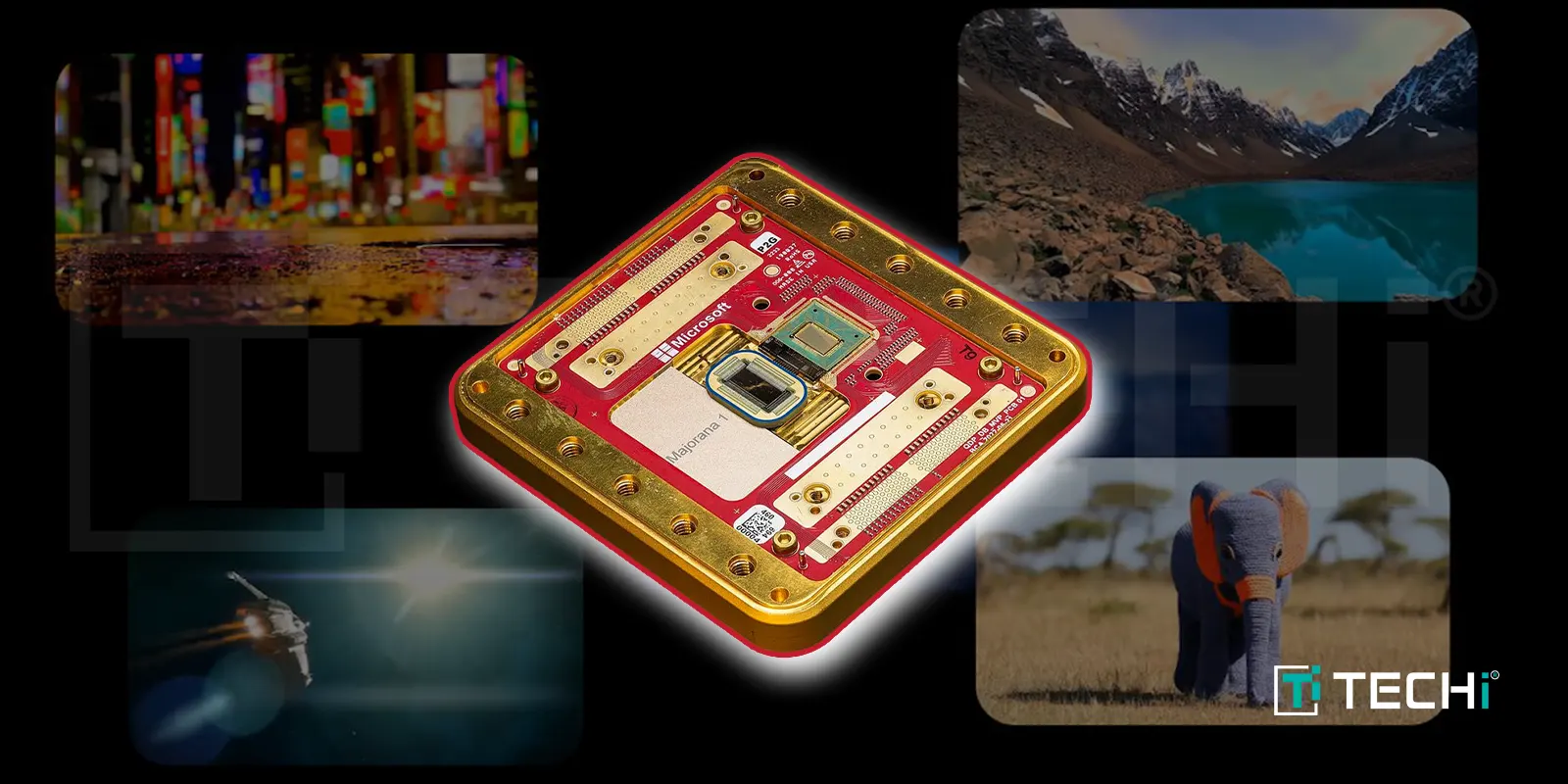
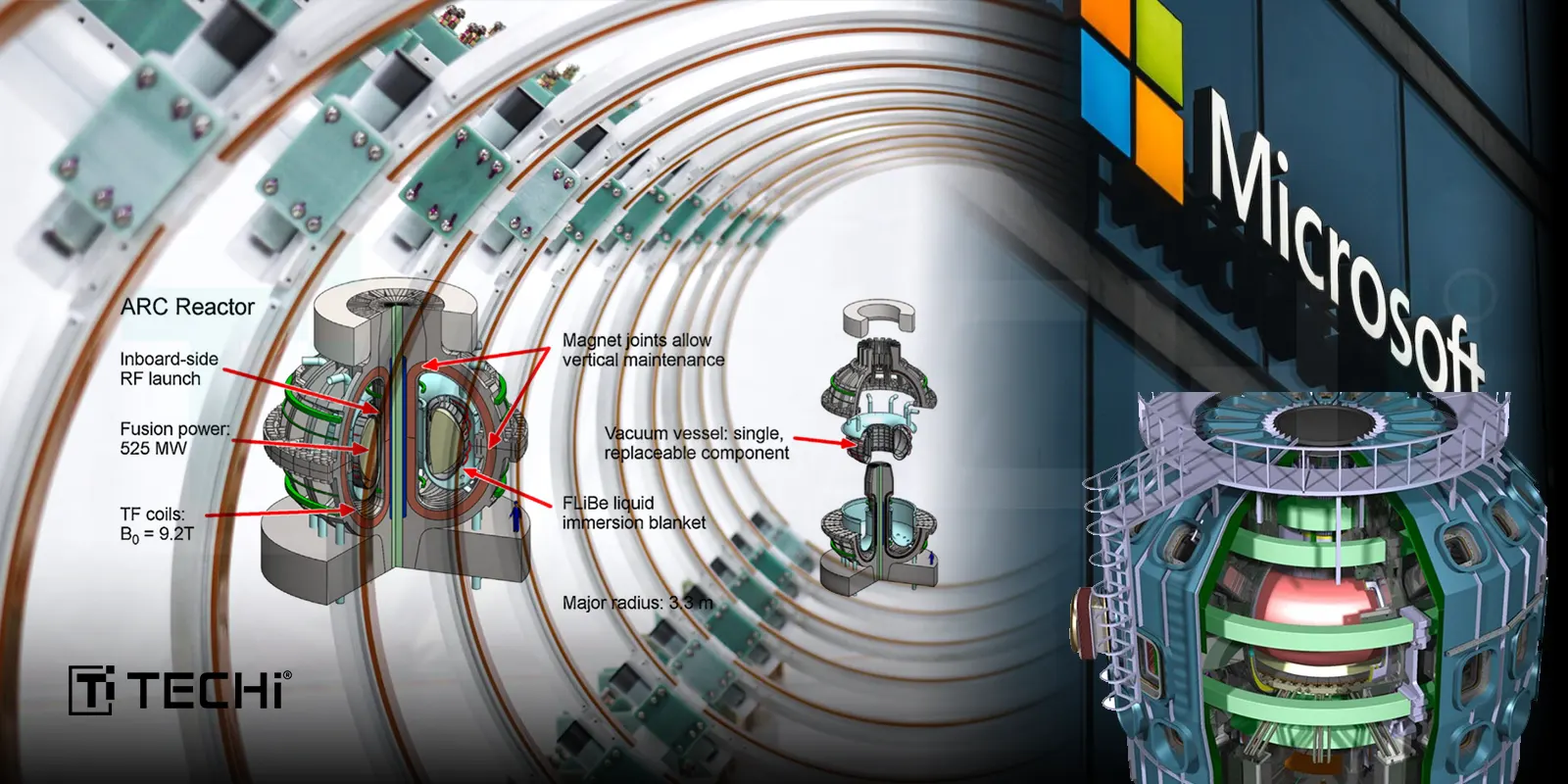
As per the news received, Microsoft is developing in-house artificial intelligence reasoning models that can compete with OpenAI and other rival models. The information was a surprise since Microsoft is a partner of OpenAI and has been using its models in its products. The partnership with OpenAI has been successful. Microsoft has positioned itself as one of the leaders among the big technology companies in AI race. Its seems like Microsoft is challenging OpenAI with this AI Model.

Although Microsoft has worked on some of its own models in the past, like Phi, interestingly, Phi was developed with the help of OpenAI, and it can perform similarly to OpenAI with far less computing power. Microsoft is testing models from xAI, Meta, and DeepSeek as potential replacements for OpenAI. Things are not getting any better for OpenAI lately. They already have a battlefront opened by Elon Musk, with that matter currently being heard in the US court. Microsoft has been using OpenAI in its flagship AI product, 365 Copilot. Copilot’s main attraction was that it used OpenAI’s GPT-4 model.

Last year, in March 2024, Mustafa Suleyman was appointed as CEO of Microsoft AI (MAI). Under his leadership, work was being done to create an alternative to OpenAI so they could start using it in their own product. The main reason is cost-effectiveness in the long run for the company. According to the report, the training has been completed, and the product is performing similarly to the OpenAI and Anthropic on commonly accepted benchmarks. At the same time, work is being done on the reasoning model as well.

It typically uses Chain-of-thought (CoT) techniques to analyze the input as humans do. This process involves calculations, logic, and decision-making. With this, MAI would be able to compete directly with OpenAI. The work to replace OpenAI’s models in Copilot with MAI is already in process. Microsoft is considering releasing the new model as an API (Application Programming Interface) that developers can use to benefit from these models in their own applications.

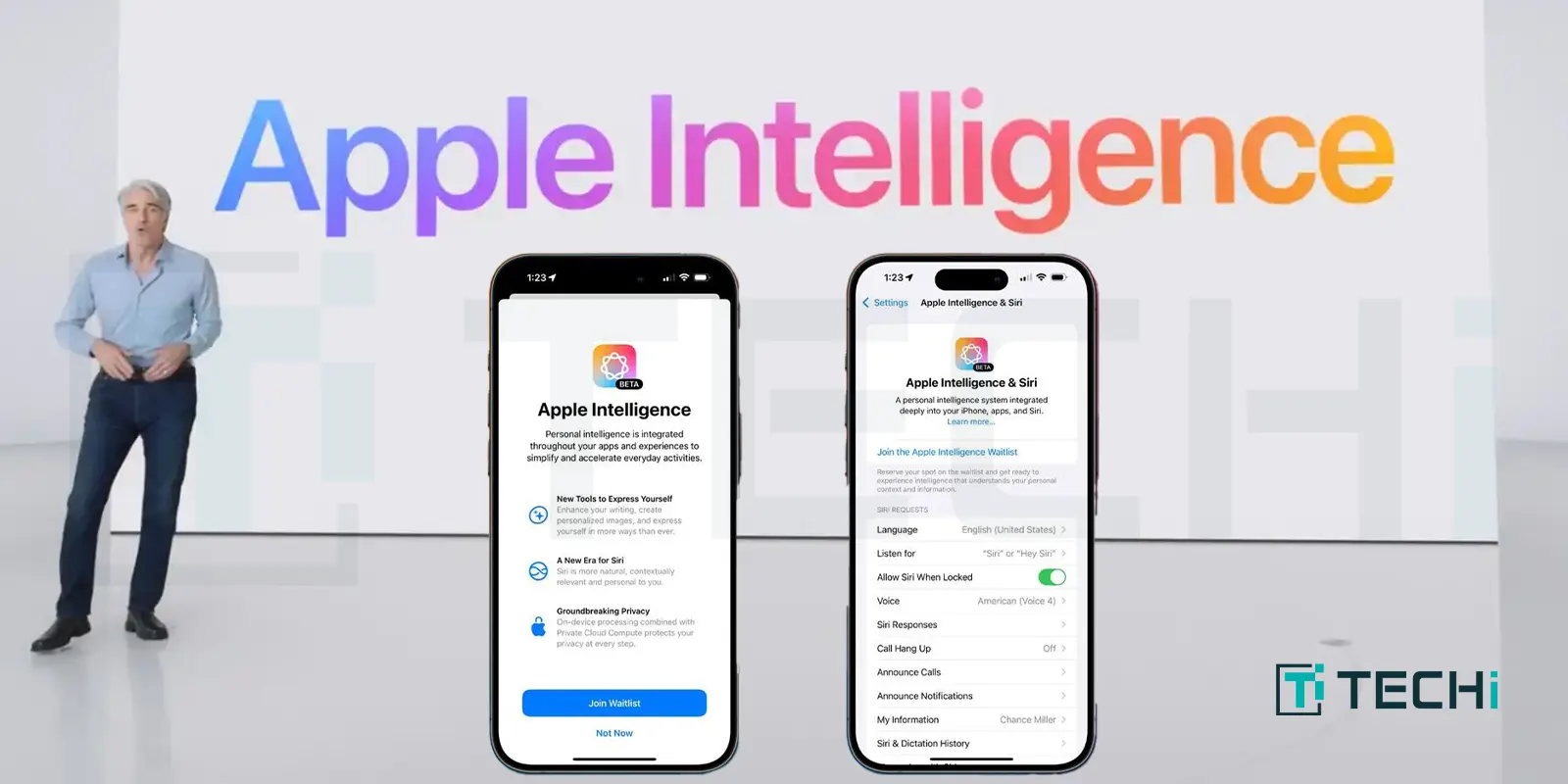
It is to be noted here that Microsoft has invested $14 billion in OpenAI so far. However, like a smart business entity, Microsoft is not keeping all its eggs in the same basket. OpenAI has had a series of setbacks lately, be it the DeepSeek computing power or the lawsuit by Musk. Now, it seems like they are getting stabbed in the back by their own partner, who established its AI standing using OpenAI itself. However, OpenAI is also being smart and it has already secured a deal with Apple back in June 2024. The deal involves using ChatGPT in Apple products iOS, iPadOS, and macOS. Even Siri would be able to tap into ChatGPT to get help when needed.

Both OpenAI and Microsoft are in an agreement till 2030 . Also, a lot of Microsoft products are using OpenAI, and they aren’t going to be replaced overnight. It is to be noted here that a recent change in their agreement in January 2025 allowed OpenAI to work with other cloud providers like Oracle. It seems like both companies are keeping their options open for now. Things are heating up in AI world and new developments are fast. Everyone is trying to outdo its competitors, and even the partners are not spared. It’s a cruel world out there, and you must always be awake and ensure you safeguard your interests.

OpenAI’s ChatGPT Hits 400 Million Users by Doubling Its User Base in Six Months

When OpenAI first introduced ChatGPT to the world in November 2022, it took the tech circle around the world by storm and was considered the fastest-ever consumer application in history. While the chatbot’s early success stemmed from people’s curiosity and novelty, it was widely discussed whether that initial buzz would continue or fade like the many other trends. All the indications throughout the past year that concern has been relieved, as ChatGPT is now certain to stay and continues to grow at an exceptional speed.

With immense progress being made in what AI can do and an upgrade to a more user-friendly interface, the chatbot has bounced back and doubled its active users in just under six months, solidifying its position on the top in the AI chatbot game. According to a report published by American VC firm Andreessen Horowitz (a16z), the AI chatbot ChatGPT has proved its worth, doubling its weekly active users in less than six months, where the report has pointed to the very impressive revival of the chatbot in the second semester of 2024 along with strategic updates and releases.

Speedy User Growth:

ChatGPT was originally famous for being the fastest app to cross the 100 million mark in monthly active users, a triumph it achieved within just 2 months of its debut in November 2022. The number had already increased to 100 million weekly active users by November 2023, rising to 200 million by August 2024. Even that increase has been outdone by this most recent surge in February 2025, when ChatGPT had achieved an incredible 400 million weekly active users.

Key Growth Drivers:

Major product releases in 2024 were key drivers for the increase in demand for ChatGPT which are;

  • Release of GPT-4o (April-May 2024): The launch of this AI model drew a sharp rise in user engagement since ChatGPT was able to handle text, image, and audio input with a greater level of accuracy and efficiency.
  • Advanced Voice Mode (July-August 2024): Launching a more natural, conversational voice feature contributed significantly to user interest and retention.
  • o1 Model Series (September-October 2024): These enhancements were like the cherry on the icing on the cake, creating an extra spike in usage, especially among enterprise and professional users.

ChatGPT’s user base continues to demonstrate a steady growth trend on mobile. There has been an approximately 5% to 15% increase in mobile users every month. Out of the 400 million weekly active users, about 175 million are accessing ChatGPT from mobile devices.

Competitive Landscape:

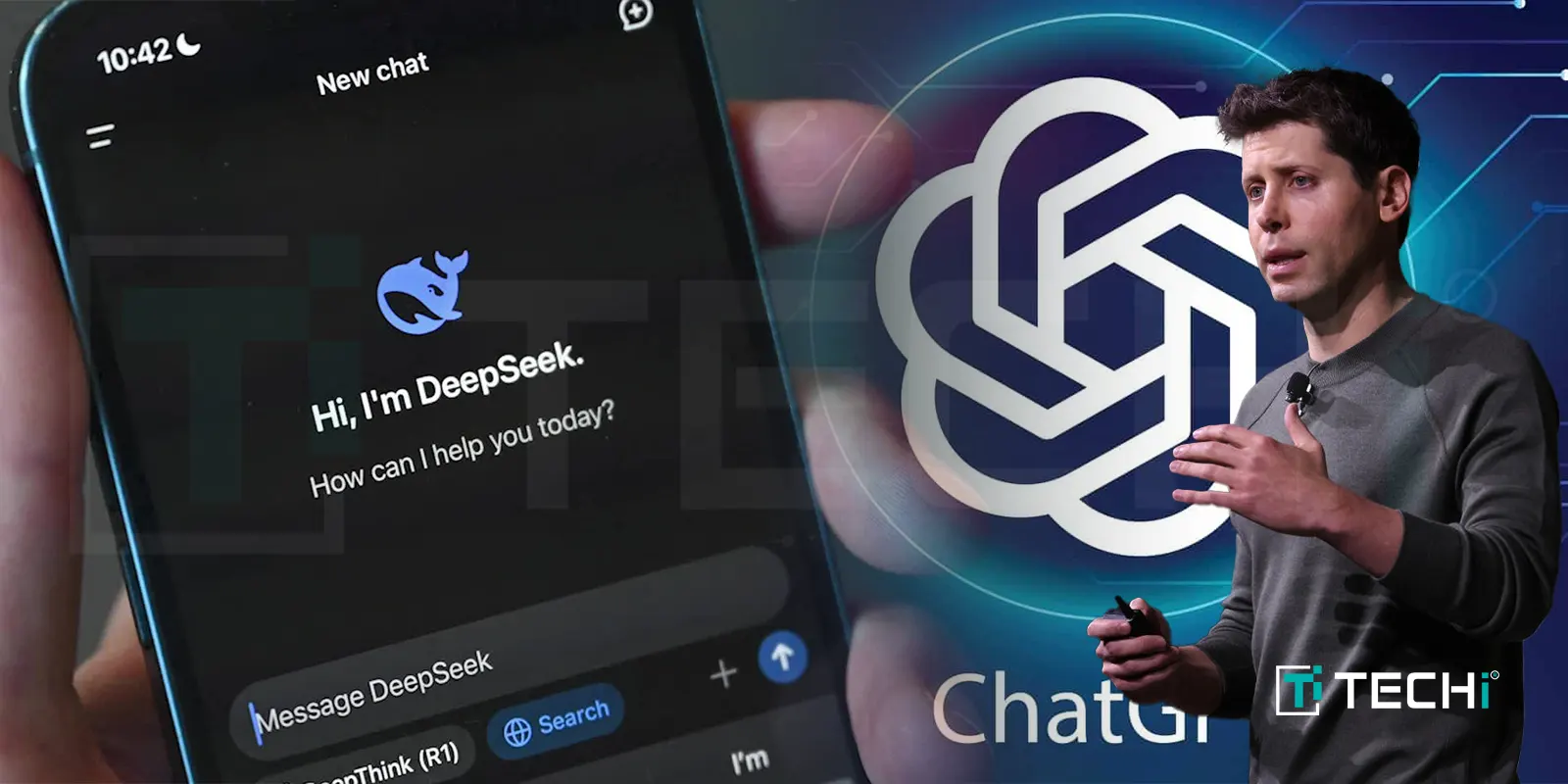
The industry has become quite competitive in developing AI chatbots, with emerging players like DeepSeek coming out strong from the launch pad. For instance, within ten days, DeepSeek ascended to the second position globally and attained 15% of the ChatGPT mobile users by February 2025. ChatGPT, nevertheless, maintains a strong lead in both web and mobile categories.

According to data from the market intelligence provider Similarweb, ChatGPT is ranked No. 1 as far as unique visits per month on the web and mobile active visitors are concerned. On the other hand, DeepSeek usage was measured to involve per user, slightly more than other competitors like Perplexity and Claude; however, ChatGPT remains dominant.

Future of ChatGPT:

ChatGPT isn’t just a superb thing, but it is also an omen of how AI is playing an increasingly important role in life today, whether it is for professional work, learning, education purposes or simply personal needs day to day, the millions of users who tap from the chatbot’s ongoing capabilities find value within its beneficial features, when these options become more popularized.

It will create the next round of interactions, primarily personal, real-time, and ever-developing into different digital ecosystems that match the level of the technology revolution. With AI adoption trending across industries, ChatGPT’s unparalleled growth suggests we have entered the age of generative AI, where fast paced technology development continues to redefine the way we interact and be productive worldwide.

Reddit Drops Game-Changing Tools For Content Moderation and Analytics For User

Reddit has taken a big step to make things easier for its users by launching new tools that help follow the rules and track post performance more effectively. This move comes after a recent slowdown in user growth caused by changes in Google’s algorithm, which affected traffic from the search engine. However, The traffic from Google has recovered, CEO Steve Huffman said last month.

One of the standout features is Rules Check,” which warns users if their post might break subreddit rules before sharing it. This feature is the currency being tested on smartphones. Users can now easily repost a post to another suitable subreddit if it gets removed. The best communities will now be recommended from the content of a post by Reddit so that posts reach the most relevant audience. Also, the users may give metrics, such as the views, number of upvotes, and shares, through which they could have information on the performance of their posts. These are expected to make Reddit even more user-friendly and thoroughly engaging.

Key Features:

  • Rules Check: Currently being trialed on iOS and Android, it warns the user of a potential breach of subreddit rules before posting and suggests fixes.
  • Post Recovery: If a post is found to breach the posted rules, it will then be easy to share again in a different and relevant subreddit.
  • Specified Community Info: Raddit will suggest subreddits based on what users post and tell them the rules for posting in specific communities.
  • Post Insights: Users will be able to learn about how many people viewed, upvoted and shared their post, which can help improve future content. 

In December, Reddit introduced an AI-powered search tool called Reddit Answers. This tool summarizes community discussions and is currently in testing and available to a limited number of users in the U.S.
Reddit’s new tools are helpful for users. They make understanding the rules easier and help you see how well posts are doing. If these tools work well, more people might want to use Reddit. I believe such updates are important to give everyone a better experience.

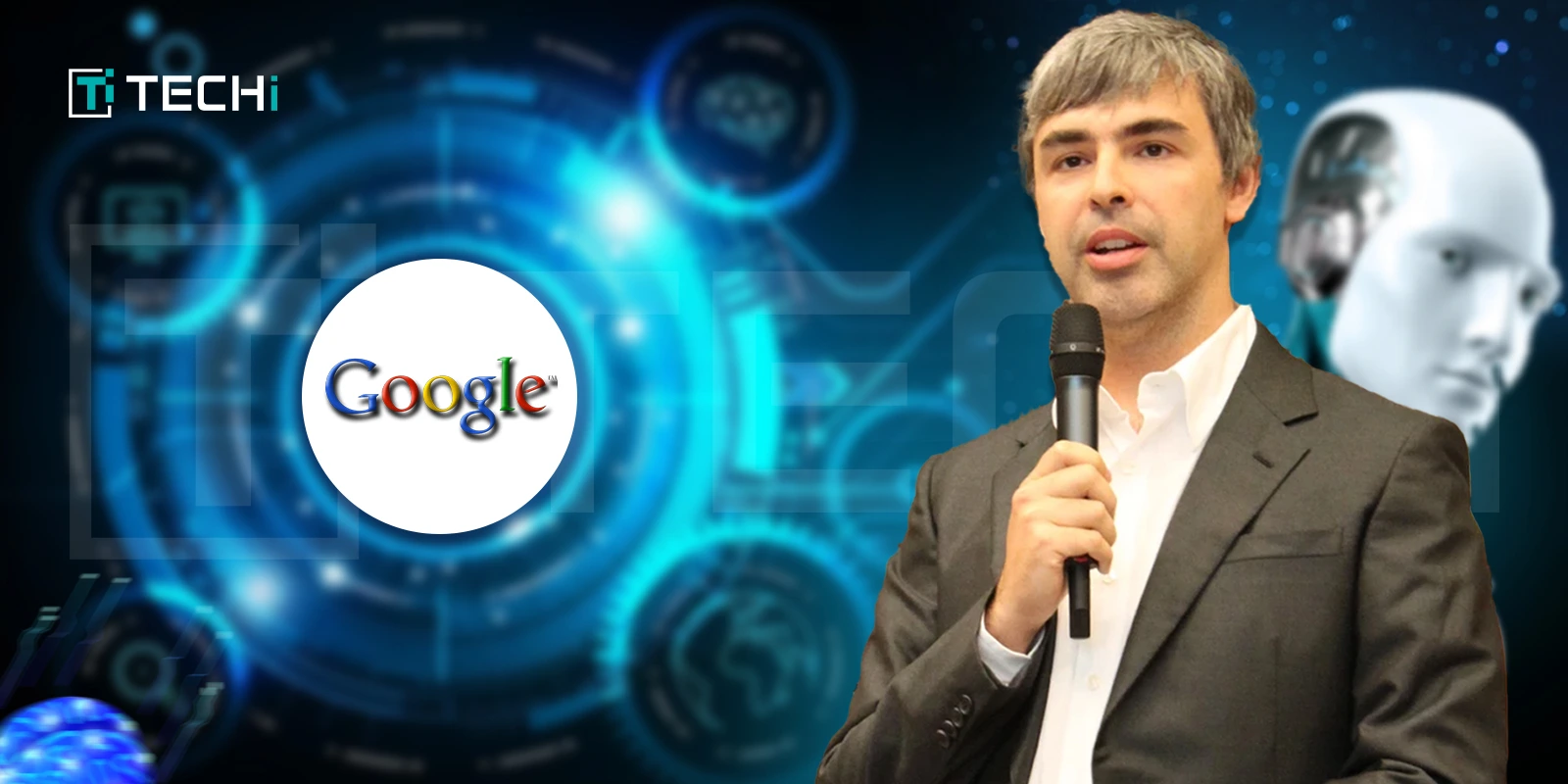
Google Co-Founder Larry Page’s New AI Startup Dynatomics Aims to Transform Manufacturing

The Co-Founder of Google has always done things out of the ordinary by betting big on the future, be it how Google would revolutionize search, funding self-flying taxis, or making moon shot investments. According to The Information, Google Co-Founder Larry Page has thrown himself back into tech with a new startup in artificial intelligence and he’s creating waves with Dynatomics, a stealthy AI company already demonstrating the beginnings of changing how products are designed and manufactured.

Upon a positive outcome, this effort could consequently pave the way for a new world where AI will no longer assist in manufacturing but, even more shockingly, will conceive, optimize, and lead the production of real, physical objects at an efficiency never before realized. If robots designing robots isn’t the start of a sci-fi movie, I don’t know what is. As companies rush toward integrating their products into AI software, healthcare, and finance, Page’s vision targets a unique area of AI-driven manufacturing that is largely untouched and unpopularized.

AI-Powered Manufacturing:

Page is working with specific engineers to create AI that will eventually automate the production process of highly optimized designs for products that effortlessly transition to factory production. Chris Anderson, the former CTO of KittyHawk, the electric aircraft startup backed by Page, leads this effort. This Startup is currently running in stealth mode. Little news is available about it, but its suggestions offer a hopeful glimpse into an AI-centered future that significantly streamlines manufacturing processes, thereby improving efficiency and reducing material waste.

Expanding Role of AI in Manufacturing:

Larry Page is just one of the others who are pursuing the AI-manufacturing nexus. Here are few of the other companies developing similar AI-based solutions; Orbital Materials is developing an AI platform that is meant to discover advanced materials for other next-generation applications, including batteries and carbon capturing cells. PhysicsX offers AI simulation tools to engineers in various industries, including automotive, aerospace, and materials. Instrumental uses AI and computer vision to detect quality control and abnormalities in the factory in real time to help improve production quality and efficiency.

Catalyst for the AI Industry:

AI has done remarkable things for the software, healthcare, and finance industries, and much attention is given to the potential of AI to create the next industrial revolution. One could say Dynatomics could be a catalyst for Larry Page’s vision of transforming AI integration into industrial design with an insight into achieving smarter, faster, and more sustainable production methods.

Dynatomics isn’t merely another AI startup, rather it could also signal a possible turning point in the way physical structures are designed and built. With sufficient funding from Larry Page, an elite team of engineers and a clear focus on AI-driven optimization is guaranteed. If the world truly needs AI to tackle its complex problems, then Dynatomics will shape the future of that industry. After all, given Page’s history for backing transformational technologies, this startup is one to watch.

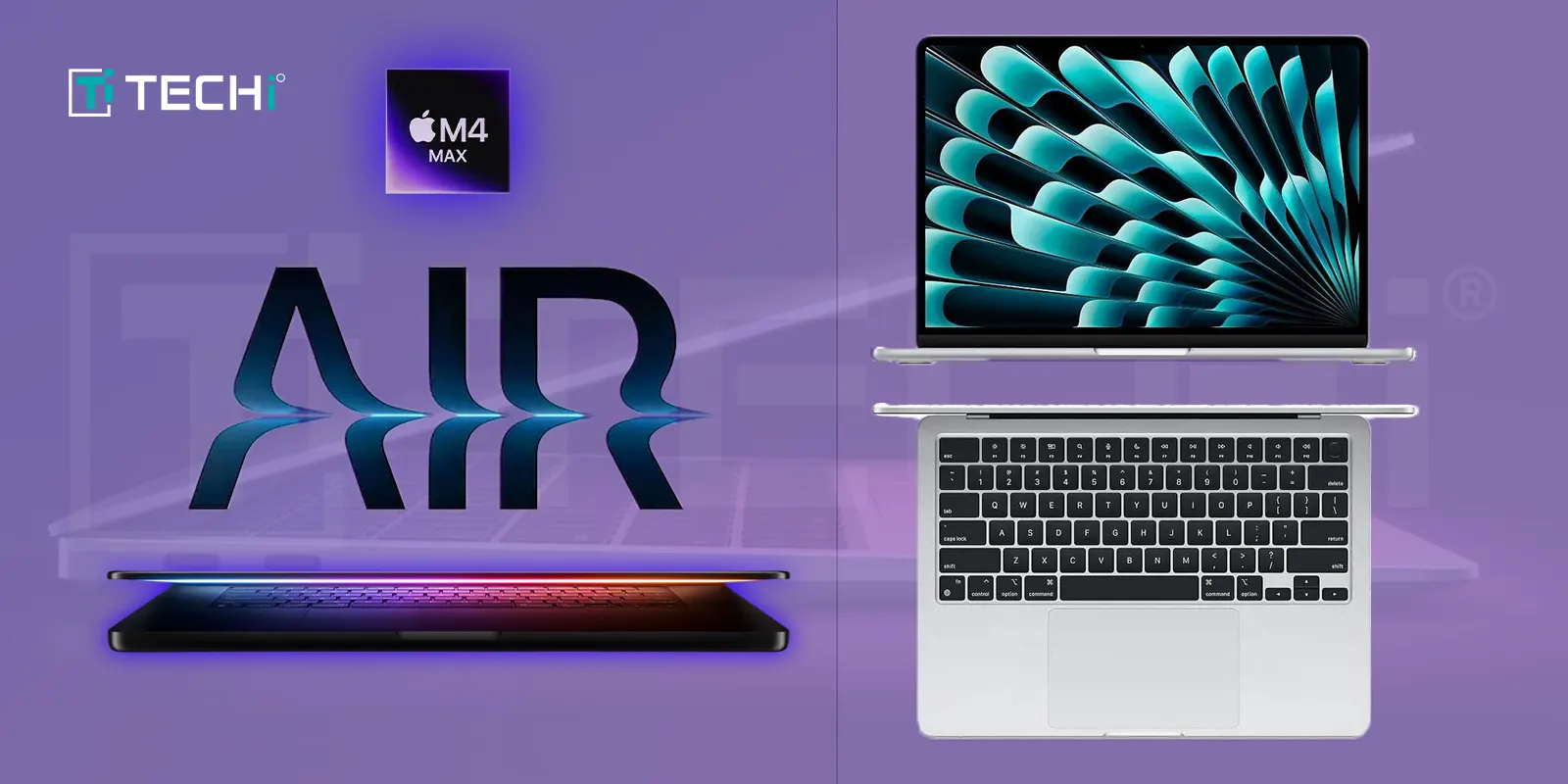
Apple’s M4 MacBook Air Sticks to a Safe Upgrade with Minor Enhancements

Apple has always been a company that walks very lightly on risks, and this is evident even in the M4 MacBook Air. MacBook Air does not employ a radical redesign or groundbreaking innovation; it is more focused on enhancing rather than reinventing. The M4 MacBook Air has been introduced by Apple, representing a careful yet strategic modification of the popular consumer laptop line. The M4 MacBook Air features many noteworthy upgrades, but it is essentially just an evolved version of its predecessor, as this cautious upgrade is an excellent way to maintain sales for Apple. The MacBook Air remains a dependable companion for users who demand performance, portability, and price, thanks to its continued design alongside these minor upgrades.

Features of MacBook Air M4:

The new MacBook Air comes with a few very nice upgrades, which include:

  • The brand-new M4 chipset has improved performance and efficiency.
  • 16 GB of RAM has been made available as standard across all models, doubling the base models’ capacity from before.
  • Support for two external displays, a very long-standing limitation for the more power users.
  • The price reduction is $999 for the 13-inch model and $1,199 for the 15-inch.
  • The improved resolution of the built-in camera, which has up to 12 megapixels, now with CenterStage, will allow automatic framing adjustment.

Though these upgrades are to be appreciated, they are not completely new to Apple’s ecosystem. The RAM bump fits in with what we see in iPhone 16 series stocks, whereas external display support brings the MacBook Air closer to the MacBook Pro lineup. The 12 MP Webcam with CenterStage will make calls better because it keeps them person-centred. The MacBook Air’s decision to go with the M4 chip was introduced in May 2024, but it may suffer a holdup when the anticipated M5 comes in at the Worldwide Developers Conference (WWDC) 2025.

New Within the MacBook Air M4:

It’s faster and sleeker, and it’s still a MacBook Air. Beyond these improvements, the MacBook Air makes no major changes. Like existing models, it is still limited to just two Thunderbolt 4 ports on the left side, which could be a nuisance for users who prefer to use multiple attachments simultaneously. The general design is recognizable, seemingly without leaving its previous predecessors, but with the new Sky Blue colour, Apple adds a unique aesthetic change to the collection.

While the MacBook Pro is constantly reinventing itself with additional innovations, the MacBook Air remains loyal to staying within itself, improving but not adjusting. Lower prices added RAM and dual external monitor support might make this a competitive consumer laptop. In the world of casual use, it still remains an A-class ultraportable laptop, but the update may seem slightly unimpressive to hardcore early adopters. Those who hoped for shocking advanced features in this laptop market would find this a safer bet than a bold move. With the M5 chip expected next year, Apple may regret its discreet approach even sooner.

Meta’s Expansion of Anti-Fraud Facial Recognition Tool in UK, a Security Measure or Privacy Risk?

Meta has, once again, stepped into the lost realm of facial recognition, which hasn’t been free of controversies in the past. After years of being disenchanted by not-so-pleasant regulations, resulting in billion-dollar settlements, the tech giant is taking the AI-powered route to add facial recognition to its suite of tools all over again. This time, in reducing online scams and account takeover, is it really about user protection, or is this a strategic move to channel facial recognition back into public view under a different, more attractive guise? With Meta taking the anti-fraud tool into the UK, the subject of privacy, security, and corporate responsibility again throws the spotlight on users. 

Meta launched two new AI-powered features in October to facilitate either the impersonation of a celebrity or the recovery of hacked Facebook and Instagram accounts. An initial trial of the features only included global markets, but now, the tech company has expanded the experimentation into the UK after regulators embraced them. After being engaged with the regulators for a while, the approval to start the process was received. Meta is also extending a feature called “celeb bait,” which is meant to prevent scammers from using the real names of public figures to an even larger audience in countries where it was previously available. I guess it’s all fun and games until Meta’s facial recognition mistakes you for a celebrity and starts flagging your selfies.

Regulatory Hurdles and EU’s Future:

Meta’s choice to extend these technologies to the United Kingdom comes at a time when current legislation is evolving into a more welcoming environment for AI-oriented innovations. The company has not yet decided to unveil the facial recognition feature in the EU, another key jurisdiction with rigid fixation on data protection. With this strict approach, the EU has taken on the utilization of biometric data under the General Data Protection Regulation (GDPR), it would mean that it will be getting another layer of scrutiny ahead of any further expansion of the test.

Meta said, “In the coming weeks, public figures in the UK will start seeing in-app notifications letting them know they can now opt-in to receive the celeb-bait protection with facial recognition technology. This and the new video selfie verification that all users can use will be optional tools. Participation in this feature, as well as the new ‘video selfie verification’ alternative, will be entirely optional as well.

Meta’s AI Strategy and History with Facial Recognition:

Meta maintains that the use of these facial recognition tools is strictly to combat fraud and secure user accounts, yet it has a long and mostly disreputable history of using user data in its AI models. Meta says their new facial recognition tool is for security because obviously, that’s the first thing we think of when we hear ‘Meta’ and ‘privacy’ in the same sentence. Their previous reputation says a lot about them, which has caused trust issues, as they promise to delete facial data immediately after use, just like they promised to protect user privacy before, right? First, they took our data, now they want our faces. What’s next? A Meta DNA test?

In October 2024, when these tools were launched, the company assured users that any facial data used for fraud detection would be deleted immediately after a one-time comparison, with no possibility for its use in other AI training. Monika Bickert, Meta’s VP of Content Policy, wrote in a post,

“We immediately delete any facial data generated from ads for this one-time comparison regardless of whether our system finds a match, and we don’t use it for any other purpose”.

Its deployment comes as Meta aggressively implements AI in all of its operations. The company is building its large language models, is heavily invested in improving products through AI, and allegedly has been working on a standalone AI app. In parallel with that, Meta has also increased its promotion of AI regulation and embraced the image of being responsible.

Addressing Criticism of the Past:

Given its excellent track record, Meta would likely introduce facial recognition as a security measure, that is, as a step toward improving the company’s image. For years, the company has been criticized for making it easy for frauds to advertise fraudulent schemes on its advertising platform, with many of them misappropriating images of celebrities to promote doubtful crypto investments and other scams. Framing these new tools as solutions to such problems may soften public perception of the use of facial recognition technology.

Facial recognition is a very sensitive area for the company. Last year, Meta agreed to pay an enormous $1.4 billion to settle a lawsuit in Texas relating to unlawful biometric data collection allegations. Before this development, Facebook had shut down its decade-old photo-tagging facial recognition system in 2021 under strong legal and regulatory pressure. While Meta has discontinued that tool, it continues to hold on to the DeepFace model, which has somehow come back on its latest offerings.

Meta’s Facial Recognition, a Thin Line between Security and Surveillance:

Meta’s facial recognition highlights the thin line between technological innovation and invasion of privacy. While diminishing fraud and account security sounds good, a larger question of biometric data collection arises. With its not-so-glamorous past of biometric data handling and billion-dollar settlements to match, Meta paints an image of a tech giant that has always tested the limits and trust of its users. Deleting the facial profiles right after collecting them sounds good, but who are we kidding? There is little faith in that product coming from Meta, if history teaches us anything, Meta’s ambitions almost always go way beyond its upfront promises.

Facial recognition might serve a purpose in fraud detection, but indisputably, it can also serve for mass surveillance with potential abuse in the hands of the weak regulatory bodies. The balance between security and privacy is fragile, and since Meta treats its valid data collection methods as open invitations for more exploitation, history shows us that once the means are proven effective, there is rarely a strict application of the initial purpose. Historically, companies, once in possession of personal data, have had multiple ways of misusing that data or even expanding the use of such data beyond its original purpose.

With governments engaged in such areas and regulatory bodies being questioned, users must remain alert in demanding accountability and transparency before they will accept yet another layer of AI-based control. If accepted as the new norm, facial recognition tools for preventing fraud might just be the next step in Meta’s acceptance journey or would be another entry in their very long history of controversy relating to AI. With AI technology advancing in our lives, the time is now more important than ever for stronger safeguards and mandatory rules.  

Amazon AWS Launches New Division Focused on Agentic AI

Picture this AI that not only talks to you but also books your taxi, reserves a table at your favorite restaurant, and completes daily chores without a single command from you. That future is closer than you think. Amazon Web Services (AWS) is making this reality with a new team focused on “agentic AI”, a type of Artificial Intelligence that can take action on its own.

Reuters Reported that Swami Sivasubramanian, who earlier was in charge of AI and Data at AWS, will head this new team. According to AWS CEO Matt Garman, Said.

Agentic AI has the potential to be the next multi billion business for AWS,”  

The emergence of agentic AI could be a great opportunity for AWS commercially. Garman wrote:

“We have the opportunity to help our customers innovate even faster and unlock more possibilities, and I firmly believe that AI agents are core to this next wave of innovation,” 

In conjunction, Amazon also announced an improved version of its voice assistant, Alexa, with some Agentic AI capabilities, which will be released to a small number of users later this month. Shares of Seattle-based Amazon were down less than 1% to $204.81.

AWS is also pushing forward innovation through other massive transformations such as the merging of some AI teams and establishing a new group focusing on customer experience.
DeSantis said the changes will help “accelerate innovation.”

AWS Senior Vice President Peter DeSantis also announced more organizational changes within AWS in an internal email, including moving AI groups Bedrock and SageMaker under the Compute organization and merging Customer Experience and Commerce into a new group. These changes are aimed at accelerating innovation.

AWS has a plan for agentic AI, and honestly, I find that really interesting. Imagine actually handling tasks on its own without us giving any instructions. That can potentially, if not really change how we live day by day. Surely it blurs the line between reality and technology in what might become a new lifestyle.

Still, I wonder how much control we will have or if our data will even be safe. So, if AWS can manage to strike that balance between useful AI and safe AI, then that is going to be a landmark moment.

Samsung Unveils Galaxy S25 AI Features at MWC 2025, Redefining Smart Technology

The Mobile World Congress 2025 kicked off in the Presence of the King of Spain, Felipe VI, on Monday 3rd March. The main focus has been the new AI features available in Mobiles. MWC started way back in 1987 with the name “GSM mobile system”, is the world’s biggest event on Mobiles. It is held in Barcelona, Spain.


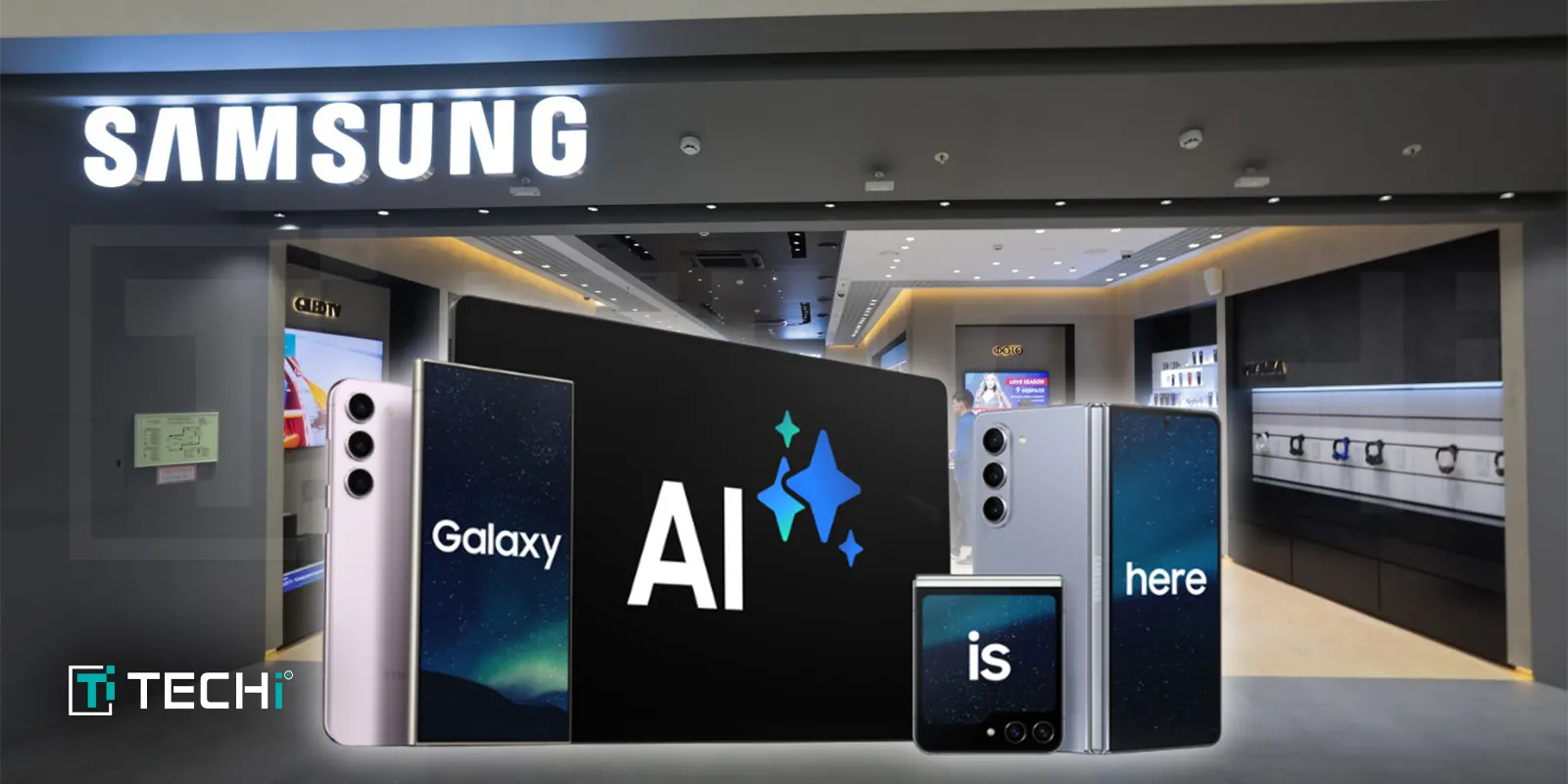
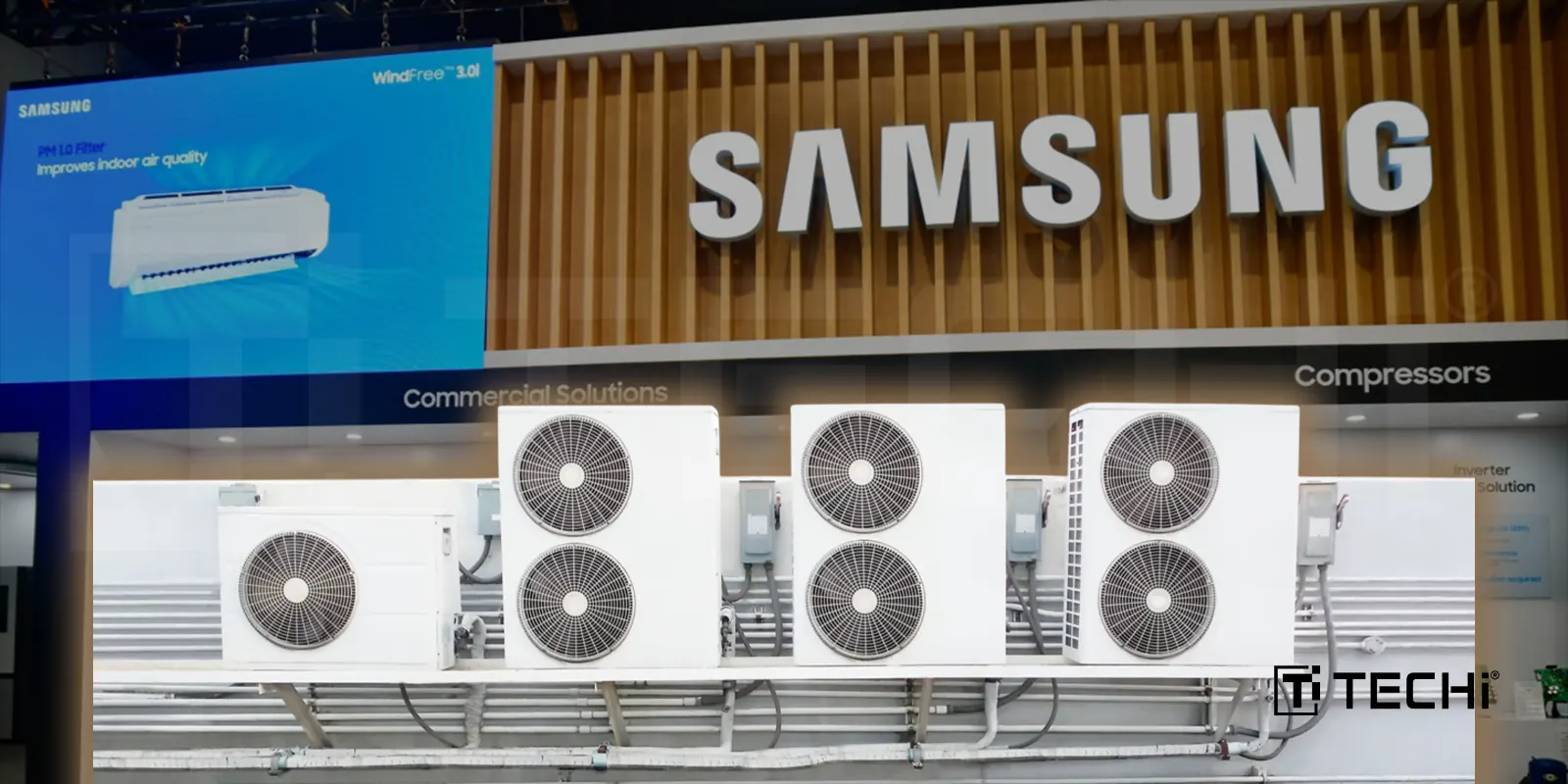
Samsung has set up a huge booth to display its latest advancements in AI with special emphasis on the True AI Companion Galaxy S25 Mobile phone. The phone was released earlier in this year, and it has been making noise since for all the right reasons.
AI Doing The Magic

The visitors were shown what AI can do for humans with a simple voice command. You could tell your mobile to find the schedule of an upcoming event and add it to the mobile calendar. Bang, the mobile would complete the wish in no time. You will have a nice reminder set in the calendar to make sure you are not missing out on anything important to you. At the same time, AI saves you the hassle and, more importantly, time.

AI Doing The Magic
Image Credits:Samsung

Gemini, The New Bixby

Samsung booth was full of visitors engaging with Gemini Live, the new AI assistant. It facilitates the user with brainstorming ideas/solutions while learning through interactions with the user. It also supports image file input, PDF file input, and more. Gemini provides a multimodal AI experience that will increase productivity and creativity.

Gemini, The New Bixby
Image Credits: Samsung

Faithful Personal Assistant – Now Brief

One of the other features appreciated by the visitors at the Samsung booth was “Now Brief”. The feature used the “Now Bar” to show content on the mobile lock screen. It learns from the routines of the users and then provides relevant, personalized snapshots of information that could prove to be beneficial to the user. For example. It can share the ideal time to depart for a planned trip or the most efficient route to your destination. The visitors experienced first-hand how “Now Brief” helps you kickstart your morning with your schedule. In the evening, it shows a summary of the daily activities and insights so you can keep track of your performance for the day and plan tomorrow accordingly.

Faithful Personal Assistant - Now Brief
Image Credits: Samsung

Sleep with peace like never before

Galaxy S25 shows you your sleep data from last night, and you can also review a comprehensive sleep analysis through the Samsung Health app. It includes duration, sleep stages, and blood oxygen levels. It also considers the different factors affecting your sleep, such as room brightness, temperature, humidity level, etc. Then, it helps you to optimize your sleep quality.

Say Hello to Your Beautiful Pictures

Galaxy S25 has a state-of-the-art camera that the ProVisual Engine powers. At the Samsung booth, the guests were shown how new AI-enhanced photography tools create amazing pictures. There are new and exciting editing options available. You can also organize your content seamlessly and intuitively. The Portrait Studio and Filters allow you to apply AI-generated effects on the photos. Attendees were very excited to use these feature. It creates a unique artistic touch to each image.

Say Hello to Your Beautiful Pictures
Image Credits: Samsung

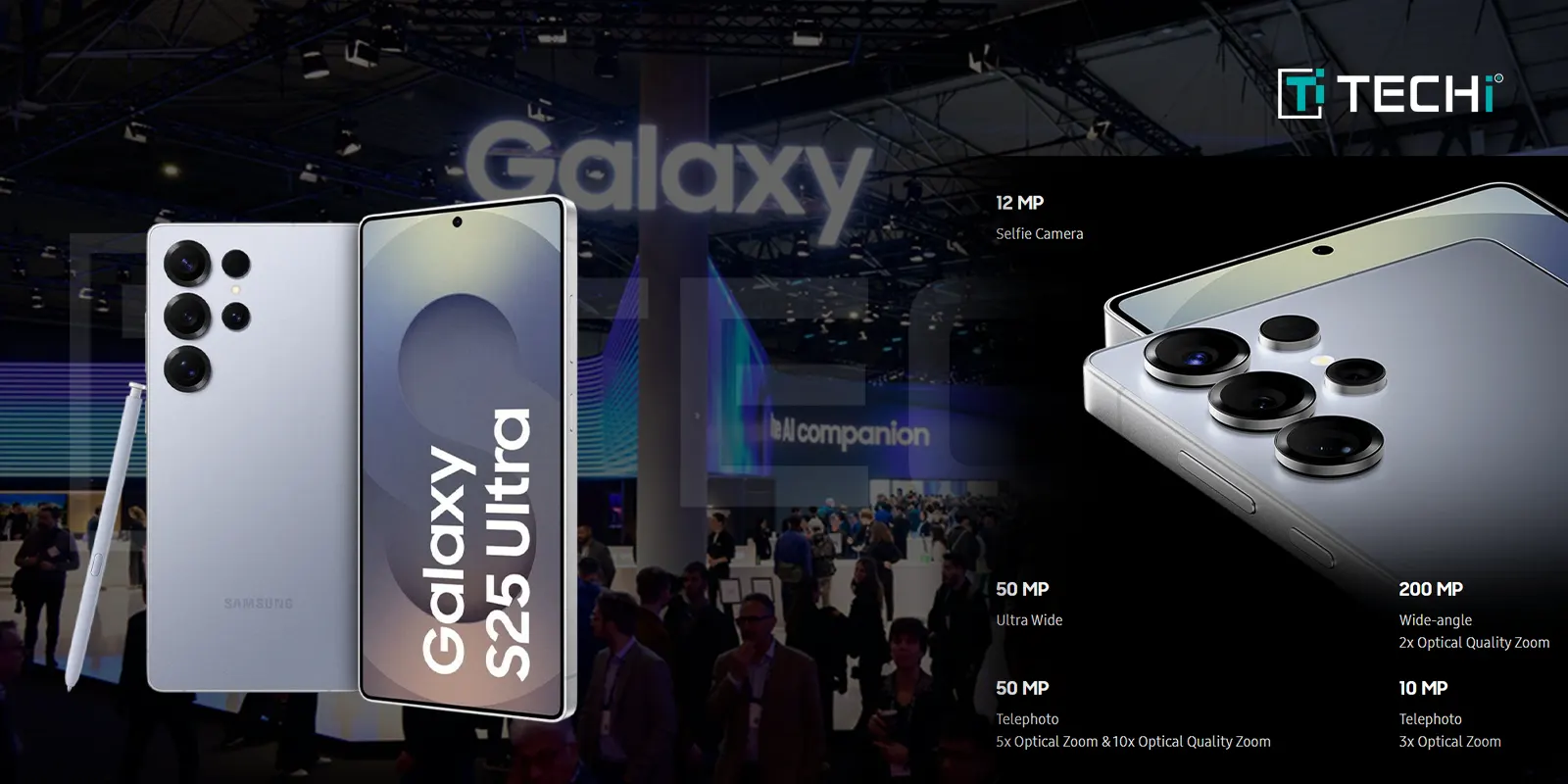
Another improved feature is Nightography. Along with Galaxy AI, nightography has also evolved to take low-light photography and videography to a new level. Visitors were also amazed by the Galaxy S25 Ultra’s 50MP ultra-wide-angle camera. It allows users to capture group photos of family and friends like never before. Also, it is very easy to capture beautiful landscapes using wide-angle features.

Awake The Artist Inside You

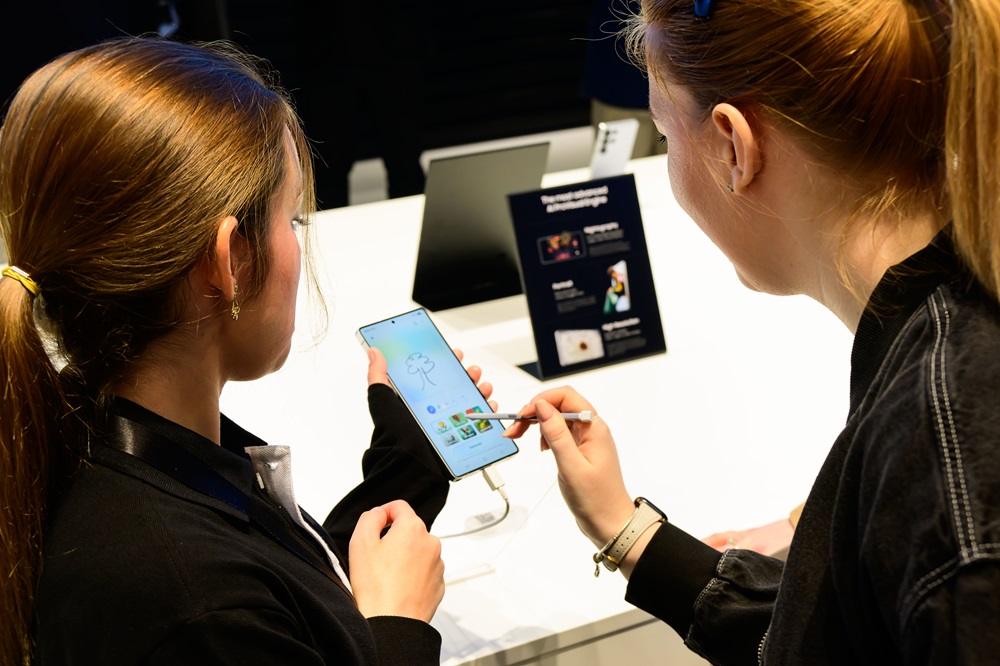
The Drawing assistant feature bewitched the guests. It converts hand-made sketches into high-quality works of art in various styles. Attendees were shown how AI took input through text, images, or freehand drawings, creating a beautiful piece of art with flair and precision like never before.

Awake The Artist Inside You
Image Credits: Samsung

Gamers Get Ready For Games

People also showed keen interest in the last item in the booth. Snapdragon 8 Elite for Galaxy, the Galaxy A35 Series’ customized processor, showed its high-speed gaming with stunning visuals. Also, it allows for seamless multitasking. Galaxy S25 Ultra has a vapor chamber that is 40% larger than its predecessor. It will help maintain powerful performance for extended periods.

Gamers Get Ready For Games
Image Credits: Samsung

Conclusion

The Samsung S25 Series, the True AI companion, has some serious upgrades to offer users. It is bound to help us save time and improve the quality of our lives. You can say goodbye to old pictures, see a new face of yourself with creative photography, and take pictures at night like you do in the day. You can bring your creative ideas to life using the Drawing assistant. You can enjoy games without any slowness or pauses with the powerful processor. Samsung has put up powerful products to empower people all over the world. The innovation is breaking new bearers and will have an impact on the human race.

Samsung Unveils Mind-Blowing AI Innovations in Mobile, Health, Home, and Networks!

Samsung has once again proved itself in the world of technology as it presented a breathtaking extravaganza of AI-oriented innovations at the Mobile World Congress 2025, held in Barcelona. From mobile experiences to intelligent health solutions, secure smart homes, and advanced network functionalities, Samsung’s futuristic innovations are set on reconfiguring the technological universe as we know it.

The Galaxy S25 series comes with powerful AI features, including Google’s Gemini AI Assistant, making mobile technology more exciting. The new AI updates in Samsung Health can transform personal health management by providing real-time insights and smart recommendations. At home, the improved SmartThings platform and Knox Matrix security offer a safer and smarter living environment. Samsung’s AI-driven solutions also promise better networks for everyone.
A Look Back at Samsung’s AI Pathway

Samsung’s concentration on artificial intelligence is nothing new. Over the past ten years, the company has substantially invested in researching and developing AI, buying companies like Viv Labs in 2016 to curtail its AI assistant. With Bixby’s introduction in 2017, this major AI effort directed toward mobile devices was intended to create a more natural, conversational user experience. In the coming years, Samsung would broaden the scope of these AI initiatives by putting intelligent features in all of its products, from smart TVs to home appliances. The transformation of AI was accelerated by Samsung Research’s launching of global AI centers, enabling the company to investigate AI applications across health, home automation, and network optimization.

AI in Mobile: The Galaxy S25 Series

Unveiled at MWC 2025, the Galaxy S25 series was brimming with AI-enhanced features. In particular, the flagship Galaxy S25 Ultra, with Snapdragon 8 Elite, featured “AI Select,” an intelligent feature that optimizes apps and battery usage by observing user behavior patterns. The inclusion of Google Gemini AI Assistant within the Samsung Bixby ecosystem has created a seamless experience with predictive suggestions and advanced voice recognition. Such a progression in AI capabilities can be attributed wholly to Samsung’s sustained R&D in this field and strategic partnerships. 

Smart Health Solutions: Personalized Care at Your Fingertips

Samsung Health has made major advances in AI-assisted features for personalized health insights. The redesigned app analyzes user data and generates comprehensive reports on sleep quality, stress levels, and even recommendations for lifestyle changes. The “Now Brief” feature delivers real-time health assessments so users can make informed choices. This approach is characteristic of Samsung’s efforts to infuse AI into health management, a vision it hinted at with the introduction of BioActive sensors on Galaxy watches.

AI-Driven Smarter Homes

Samsung’s hope for a connected home has taken a significant step forward with enhancing the SmartThings platform. Advanced AI technology offers predictive automation, whereas security-configured rules allow users to control connected devices. Both limbs are unified via the Knox matrix to provide a fortified layer for all connected things. Shell-shocked by the purchase of SmartThings in 2014, Samsung entered the smart home technology stage to bring AI-powered solutions to today’s doorstep.

AI-Empowered Networks: Redefining Connectivity

Samsung threw its hat in the ring for AI-based solutions, dishing out products like the Cognitive Network Operations Suite (NOS), while AI Energy Saving Manager manages energy consumption through intelligent analytics based on reference operations. The South Korean company’s AI focuses on the networking aspect, a key pillar of its broader growth roadmap that is aimed at eventual 5G leadership, which started full-fledged with commercial 5G solutions launched in 2019.

Our Take: A Bright Future Ahead

Samsung’s AI innovations are leading the tech industry by making mobile, health, home, and network devices smarter, safer, and more efficient. If Samsung continues to expand its AI capabilities, we could see devices that not only understand but also think for their users. These advancements could greatly improve productivity, security, and quality of life, positioning Samsung as a leader in creating a smarter and more connected world.

Infinix Unveils Solar Charging Phone Concept at MWC 2025 for a Greener Future

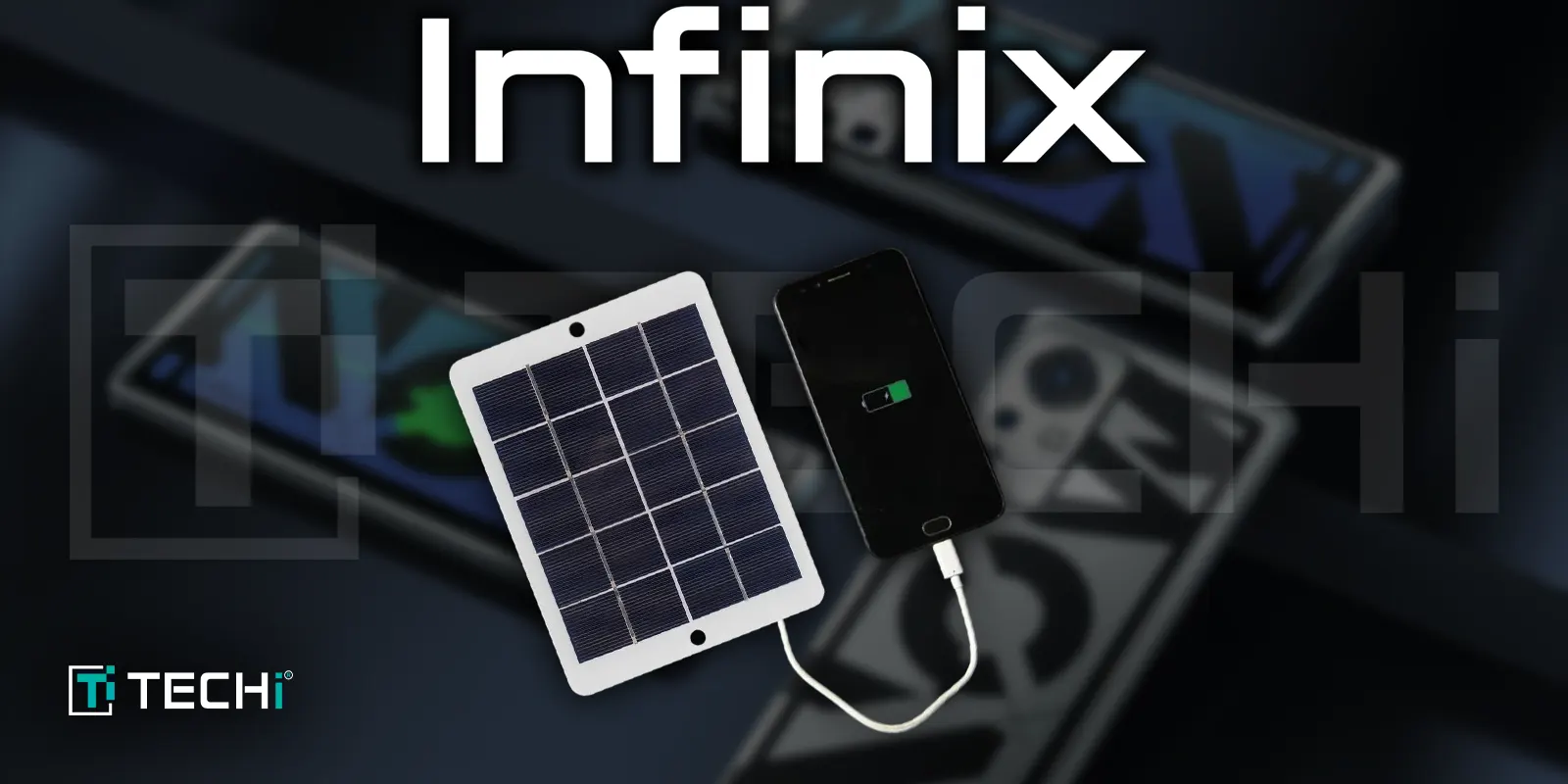
Let’s fast forward to the future and imagine, what if all smartphones are not wall-charged or power-banked but rather are enabled to charge through sunlight? This very dream is being unveiled by Infinix at MWC 2025 with the introduction of solar charging concepts. With a built-in solar panel on the back of the phone, it becomes the solar charging case that rethinks how we keep our devices charged and running. These concepts, although still in the experimental phase, show the prospect of a greener and more sustainable mobile technology.

At this year’s MWC, Infinix has made an eco-conscious decision by advancing solar phone charging solutions. The Chinese manufacturer, noted for pushing the frontiers of innovation, presented two revolutionary concepts: a solar panel integrated into a smartphone and a solar charging case. Although still in concept mode, both prototypes were fully working, thus indicating a possible future where solar energy can give an environmentally friendly charge to mobile devices.

Solar Energy-Reserving Technology:

Infinix’s Solar Energy-Reserving technology uses Perovskite Solar Cells, which are cheaper and thinner alternatives to silicon solar panels. This technology has also been applied to other concepts, including Anker solar beach umbrella and the concept of cloak. The system aims at the highest conversion efficiency of solar energy while managing panel temperature, incorporating the Maximum Power Point Tracking (MPPT) for voltage control. Due to the overheating hazards under solar irradiance, this regulation will avoid overheating and thus control damage.

Currently, this solar technology has a power output of up to 2W to charge the phone battery when not being used, rather than fully recharge it. The concept of a built-in solar panel on the phone sounds simple enough, but the solar charging case presents a lot of flexibility. It has been designed to connect through the small side contacts on a prototype phone and charge power directly into the device. This removable option allows users to switch in and out between a regular case and a solar-powered case, thus proving true practicality for some emergency situations, travel, or power outages.

Second Generation Color Changing E Ink Phone:

A more advanced second generation of color-changing E Ink phones with more personalization options was also present at Infinix. Instead of the previous model that requires plugging to change color, the new one runs on internal rechargeable batteries, giving the user an increased level of customization. Users can now choose designs and color palettes, even the ability to generate colors from an image or dynamically change colors according to weather. Just as it goes with the tech trends of 2025, Artificial Intelligence acts as the brain behind this feature and adds yet another level of personalized experience that users can utilize.

Sustainable Future:

The recent innovations of Infinix will, therefore, provide evidence for a growing trend toward renewable energy solutions among consumer electronics. Solar charging might be just on the verge of beginning, but these innovations will lead to a more energy-efficient and eco-friendly smartphone in the near future. Concepts like solar charging accessories and AI customization may soon become mainstream, with a consequential influence on the future of mobile devices, as the demand rises for sustainable technology. While these distinct features are still only concepts, they present a vision of what a future of environmentally responsible, smart, and energy-efficient phones could be like. With the rising consumer demand for longer battery life and eco-friendliness, Infinix’s experimental designs are quite a hype and stand at the forefront of the next phase of smartphone innovation.

Read More: Samsung Expands AI-Powered Galaxy A-Series with Three New 5G Models

Xiaomi 15 Ultra Launches as a Premium Flagship to Challenge Apple and Samsung

All the moves made by Xiaomi, this was the most daring and yet greatest of all, amidst the tussle for smartphone supremacy. Rolling out the Xiaomi 15 Ultra, the Chinese electronic giant does not limit itself to the budget and mid-range segment, as this flagship is determined with its intent on clashing head on with Apple and Samsung at the premium level. With mind-boggling camera technology, a nifty design, and going beyond just being hardware, that kind of powerhouse device is an indication of pure commitment.

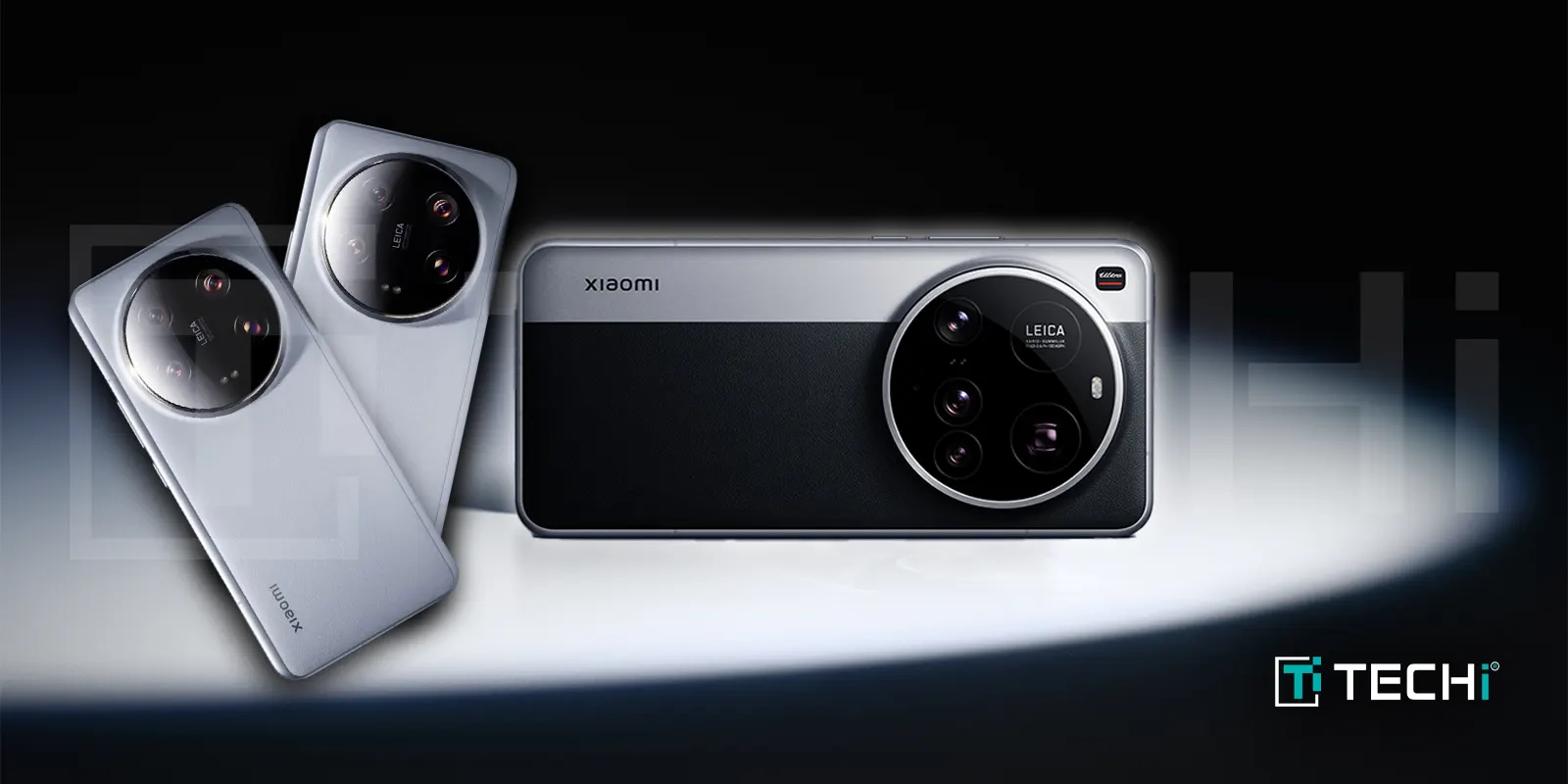
Xiaomi formally launched its latest flagship smartphone, Xiaomi 15 Ultra, establishing a rare and serious foray into the premium market previously reigned by Apple and Samsung. Priced at 1,499 euros (S$2,108), the premium device was unveiled at Mobile World Congress (MWC) Barcelona, thereby demonstrating the company’s intent to recalibrate its position in the smartphone sector.

Powerhouse for Camera:

The Xiaomi 15 Ultra incorporates a quad-camera setup, it features some of the most advanced image sensors from the Sony Group along with Leica Camera optics. This reinforced persistence on camera quality, falls somewhere in line with Xiaomi’s recent forays into camera centric top devices, thereby identifying themselves from the competition in the premium segment.

Beyond Smartphones:

With the Xiaomi 15 Ultra, the company introduced a completely new range of smart personal devices, such as introducing a Smartwatch, the new electric scooter, and wireless earbuds. With the latest figures from market tracker Canalys report, the dominance of Xiaomi in the smart personal audio market has become evident and it led growth amongst audio brands in 2024.

Furthermore, Xiaomi has proven to be resilient even in the smartphone front. After all, it still ranks third in the world as a smartphone vendor, behind such companies as Samsung and Apple. According to IDC, the company saw a 15% increase in phone shipments during the year due to which it accounted for a fairly large share in the overall downturn in shipments among top brands.

Emerging Influence in Tech and Automotive:

Besides devices, the company has even gotten investors excited about Xiaomi’s foray into electric vehicles (EVs), which has caused a massive rise in its shares listed in Hong Kong over the last year. To this extent, its smartphones and EVs now carry the “Ultra” tagline, marking an entry point to the continuing branding efforts toward a high end image. The 15 Ultra even offers a faux-leather back option designed to correspond with the interiors of its electric vehicles.

Launch of Xiaomi’s latest most expensive smartphone is symbolic and strategic, as it indicates how Xiaomi is looking beyond product launches. The company already has an ecosystem of smart devices, strongholds in global smartphone rankings, and interests in the emerging electronic vehicle business, with these, it positions itself to be a major contender in consumer technology. Whether this ambitious push turns out to be a success in the long run will show up later, but for the moment, Xiaomi is shaking things up in the high end technology space.

Read More: Samsung Expands AI-Powered Galaxy A-Series with Three New 5G Models

Samsung Expands AI-Powered Galaxy A-Series with Three New 5G Models

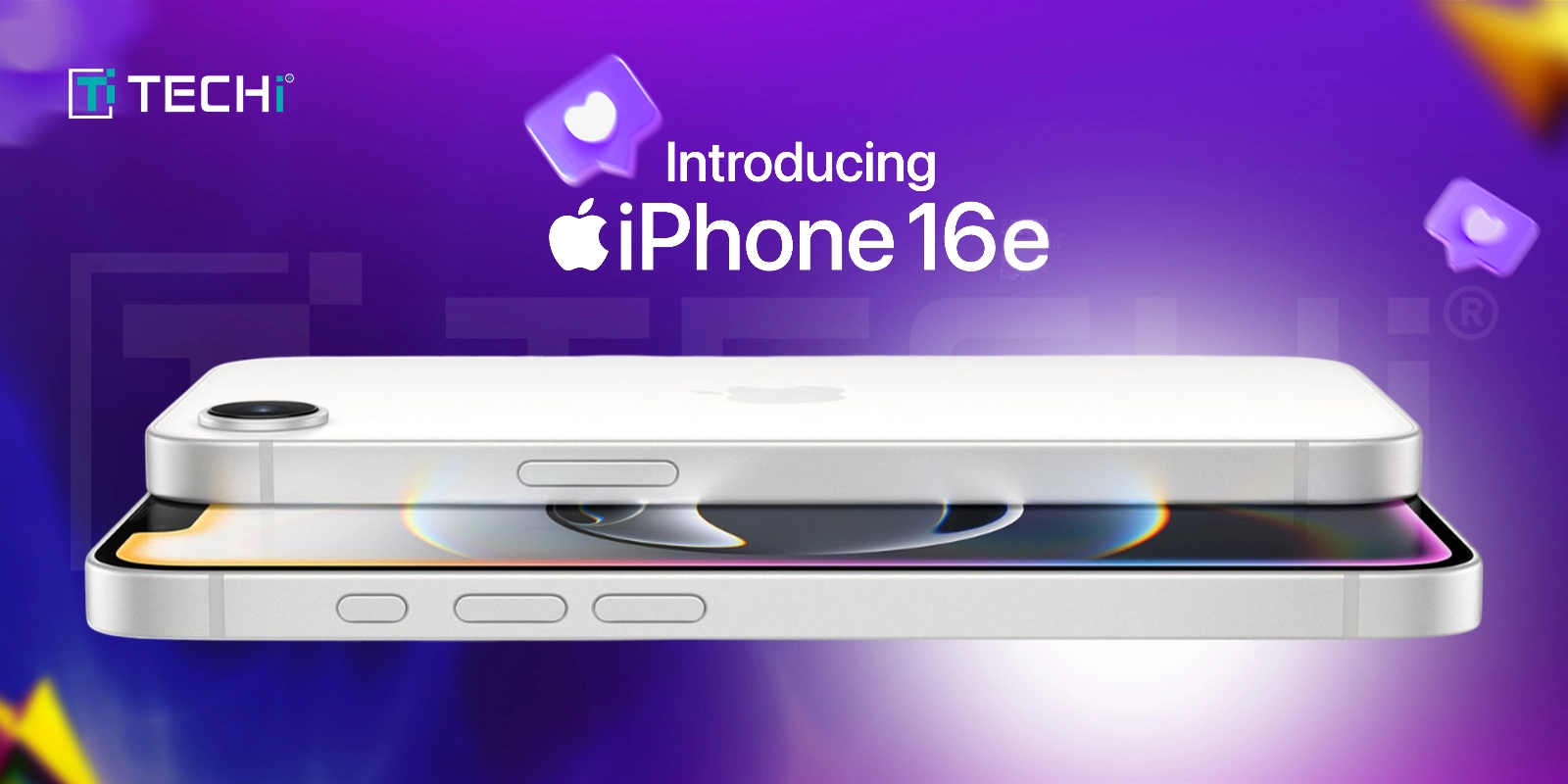
The two major players in mobile technology duel – Samsung and Apple are competing with each other for supremacy in AI and mobile technology. Samsung and Apple have been among the leaders in the world for mobile technology and both have made considerable steps in the AI-infused cellular phone market. With technology improving everyday, the mobiles prices have seen an upward trend in recent year. But lately, in surprising turn of event, a good trend has started, mobile companies are recognizing the potential in cheaper mobiles. Normally, you would associate Apple with expensive mobile iPhone models only. But recently, they launched a cheap AI-based iPhone 16e. Now, Samsung has also released three mobiles that have new AI features enabled.

Samsung’s AI-Powered A-Series

Samsung unveils of three AI-Powered models in their popular A-Series, a bold move towards competition. It comes days after Apple revealed its cheaper iPhone 16e. Samsung is leveraging its own AI capabilities along with Alphabet’s Google, which operates the Android AI Operating System used in Samsung mobiles. On the contrary, Apple is pursuing its own Apple Intelligence suite with other AI systems. There is Open AI’s ChatGPT and AI solutions from Alibaba, which Apple is reportedly adopting for its devices in the USA and China respectively.

Here’s a breakdown of Samsung’s new AI-powered A-Series models and their pricing:

  • Galaxy A26 is priced at US$299.99
  • Galaxy A36 comes at $400
  • Galaxy A56 is available for $500

The Future of AI in Smartphones

The way things are moving forward, we can expect more intelligent features, more sophisticated personalization from all mobile companies worldwide. With the intense competition in mobile AI technology, we expect it will turn mobiles into intelligent assistants that will help with day-to-day activities of the people. This is a very good initiative, and people all over the world will benefit from the cheap prices, making AI more accessible to users. With the competition intensifying, we believe the next generation of mobile phones is very near. Soon, current mobiles will be a thing of the past, just as we now reminisce about the famous Nokia 3310.

Read More: Samsung Galaxy A56 Unveiled with AI Upgrades at a Budget-Friendly Price

Flora Introduces AI-Powered Infinite Canvas For Creative Professionals

AI-generated art has become a widespread trend, but many professional designers and artists argue that existing AI tools are not built for real creative work. Flora, launched this week, aims to change that narrative with its AI-powered “infinite canvas,” designed specifically for creative professionals. While AI tools like Midjourney, DALL·E, and Stable Diffusion have made it easy for non-creatives to generate images with simple text prompts, Flora takes a different approach. Instead of focusing solely on generative AI models, Flora provides a structured visual interface that allows professionals to control and refine their creative output.

Flora: AI for True Creativity, Not Just AI Slop

Flora’s founder and CEO, Weber Wong, believes that most AI tools today cater to hobbyists rather than professionals. Flora’s mission is to build an AI tool that complements, rather than replaces, human creativity.

“AI creative tools should be more than toys for generating AI slop. We are obsessed with building a power tool that will profoundly shape the future of creative work,” Flora’s manifesto states. Instead of building yet another generative AI model, Flora integrates with existing AI tools to provide users with an intuitive and interactive infinite canvas. This workspace allows creatives to generate and refine text, images, and videos in a collaborative, visual-first environment.

“The model does not matter, the technology does not matter. It’s about the interface,” Wong explained.

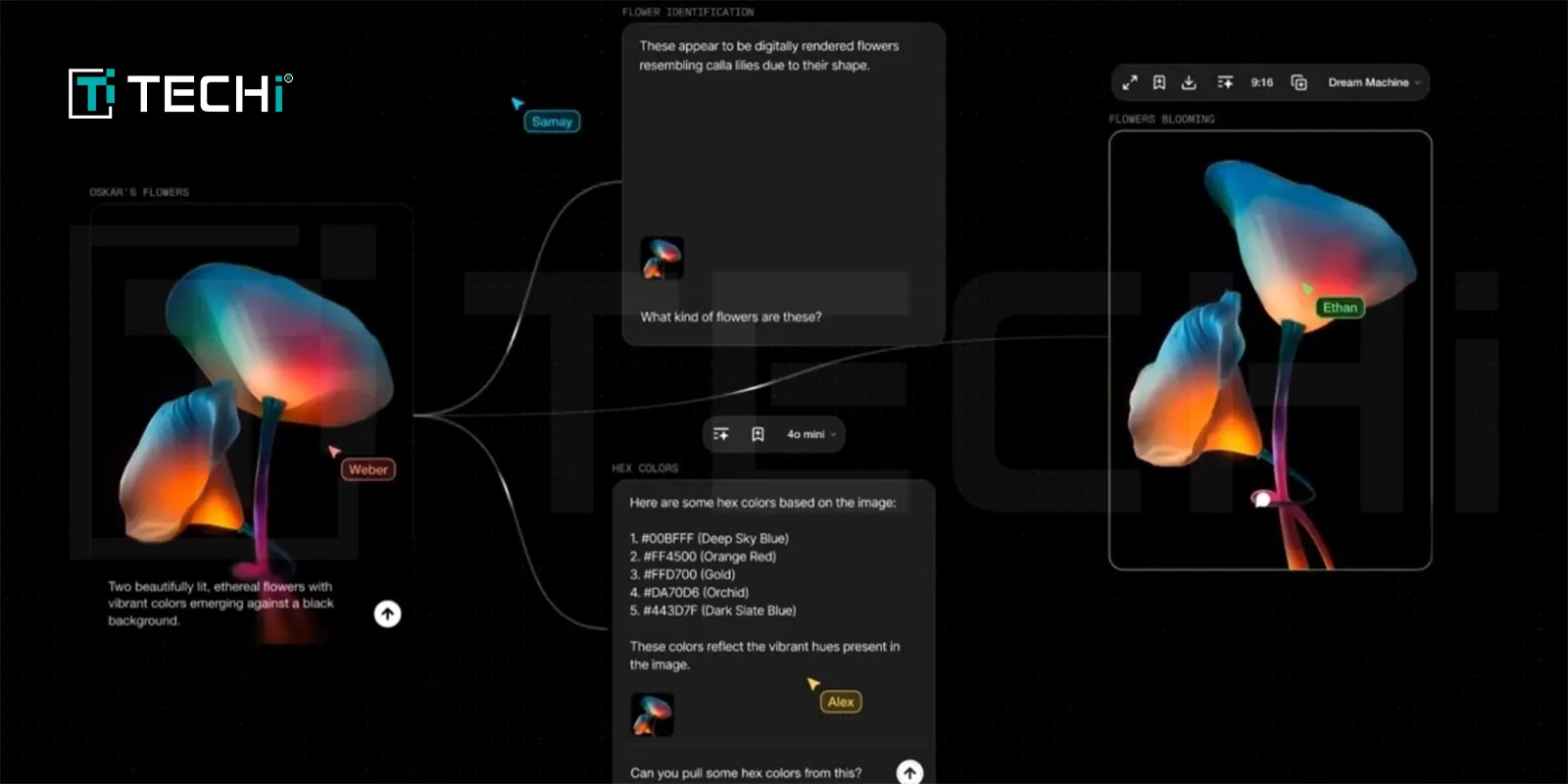
AI-powered interface with a glowing glass flower
Image Credits:Flora /

How Flora Works

Flora enables a more structured, exploratory approach to AI-powered creativity. A designer can start with a simple image prompt, refine elements step by step, add annotations, and build variations. The canvas structure allows for iteration, making it easier to explore different creative directions.

Some key features include:

Visual-first workflow – AI-generated elements are mapped on an interactive canvas.
Collaborative editing – Teams and clients can modify, approve, and refine content in real time.
AI-powered iteration – Creatives can quickly generate and compare multiple design variations.

Designed for Professional Creatives

While Wong envisions Flora being useful to all kinds of artists and designers, the company is initially focusing on design agencies. Wong’s team is actively working with designers from Pentagram, a world-renowned agency, to refine the product for professional use. “Our goal is to help creatives do 100X more work without compromising quality,” Wong said.

He compared Flora to how music production evolved, stating that today, a single musician can create orchestral-quality compositions from their home studio, thanks to modern software. Similarly, Flora could redefine the creative process for digital artists.

AI’s Controversial Role in Creativity

Flora’s launch comes at a time when many artists remain skeptical of AI’s impact on creative industries. Wong acknowledges these concerns, especially regarding copyright and intellectual property issues, but insists that Flora’s goal is not to replace artists, but to empower them.

“Flora isn’t training its own AI models, we integrate existing models while ensuring we follow societal standards,” Wong said. Flora’s approach aims to provide transparency and creative control, making AI more acceptable to professionals who have previously been wary of its use in art and design.

Flora’s Funding and Pricing Model

While Flora has not publicly disclosed its total funding, it has secured backing from major investors, including A16Z Games Speedrun, Menlo Ventures, and Long Journey Ventures. Angel investors from Midjourney, Stability AI, and Pika have also supported the project. The product is currently available for free with limited features, while a professional subscription starts at $16 per month.

The Future of AI-Driven Creative Workflows

As AI tools continue to evolve, platforms like Flora may set new industry standards by providing a balance between automation and human creativity. Whether it becomes an essential tool for designers or just another AI experiment remains to be seen. But with growing interest from design professionals, Flora is already making waves as a potential game-changer for AI-powered creative work.

Read More: Xiaomi SU7 Ultra Officially Hits the Market with a Starting Price of RMB 529,900

Xiaomi SU7 Ultra Officially Hits the Market with a Starting Price of RMB 529,900

Xiaomi has officially launched the Xiaomi SU7 Ultra, a high-performance electric sedan that aims to redefine luxury and speed in the EV industry. Priced at RMB 529,900, the SU7 Ultra is now available for purchase. With its groundbreaking speed, aerodynamics, and smart technology, it sets a new standard for four-door sports sedans.

The launch includes optional configurations such as the “Racing Package” and the Nürburgring Nordschleife Limited Edition,” both of which will be available once Xiaomi completes its Nürburgring Nordschleife track challenge.

A New Benchmark in EV Performance

The Xiaomi SU7 Ultra comes equipped with a tri-motor configuration and a high-performance battery, delivering an astonishing 1,548PS. It accelerates from 0 to 100 km/h in just 1.98 seconds and reaches a top speed of 350 km/h, making it the fastest mass-produced four-door sedan in the world.

Designed for high-speed track performance, the SU7 Ultra features:

  • Enhanced Cooling System – Prevents overheating, ensuring stable performance over long races.
  • Top-Level Braking System – Achieves a braking distance of 30.8m from 100km/h to 0.
  • Peak Chassis System – Tuned at the Nürburgring Nordschleife for superior control.

The SU7 Ultra has already proven its dominance by securing record lap times at major racetracks in China:

Xiaomi also plans to take on the Nürburgring Nordschleife track later this year with the SU7 Ultra.

Luxury Meets Performance

The Xiaomi SU7 Ultra is designed for both track and luxury car enthusiasts, combining aerodynamic efficiency with high-end materials.

  • Five Exclusive Exterior Colors: Lightning Yellow, Space Silver, Verdant Green, Pearl White, and Obsidian Black.
  • Aerodynamic Enhancements: Large front splitter, air curtains, active rear diffuser, and carbon fiber rear spoiler for enhanced downforce.
  • Carbon Fiber Integration: The roof and multiple body components use carbon fiber to reduce weight while maintaining strength.

Inside, the SU7 Ultra delivers luxury and comfort with:

  • Premium Alcantara® Microfiber Fabric – Covers seats, dashboard, and steering wheel for a high-end feel.
  • Sporty Steering Wheel Design – Features carbon fiber, Alcantara grip, and a yellow centering marker.
  • Racing-Inspired Seat Design – Improved side support, ventilation, massage, and heating for ultimate comfort.

The interior color options include Bright Yellow, Black/Yellow, and Black/Red, ensuring a customized, premium experience for every driver.

Advanced Tech for a Next-Level Driving Experience

Xiaomi integrates its HyperOS Smart Cabin, XiaoAi AI assistant, and Snapdragon 8295 chip to create a seamless, connected driving experience.

  • Racetrack Master App: Tracks real-time lap times, car performance, and driving mode adjustments.
  • Immersive Sound System: Includes new driving sound enhancements and external speakers.
  • Smartphone & AI Voice Integration: Allows control via voice commands or smartphone apps.

Unmatched Safety & Control

Xiaomi has upgraded the safety features of the SU7 Ultra to ensure maximum driver protection.

  • MAI (Mis-Acceleration Inhibition) – Prevents accidental acceleration in risky situations.
  • LAEB (Low-Speed Autonomous Emergency Braking) – Enhances safety in crowded areas.
  • Reinforced Battery Protection – Features bulletproof coating to protect against damage and punctures.

Available Now

The Xiaomi SU7 Ultra is available exclusively via the Xiaomi EV App and Xiaomi EV WeChat Mini Program. With a blend of cutting-edge performance, luxury, and smart technology, the SU7 Ultra marks a new era in electric vehicle innovation.

About Xiaomi Corporation

Founded in 2010, Xiaomi Corporation has grown into one of the world’s leading technology companies, with its focus on smartphones, smart home devices, and now electric vehicles. Listed on the Hong Kong Stock Exchange, Xiaomi has been included in the Fortune Global 500 list for six consecutive years.

With its “Human × Car × Home” smart ecosystem, Xiaomi is shaping the future of AI-driven consumer technology worldwide.

Read More: China Restricts AI Leaders to Avoid US Travel Citing Security Concerns

Mark Cuban Offers to Fund Ex-Government Tech Workers After 18F Shutdown

Billionaire investor Mark Cuban has stepped in to support recently laid-off federal tech workers, offering to invest in a new consulting firm formed by the displaced employees. His offer came after the General Services Administration (GSA) abruptly shut down 18F, a key government technology unit, in a late-night layoff that affected around 70 employees. Cuban took to the social network Bluesky on Saturday, urging the affected engineers and designers to turn the government upheaval into an opportunity.

“If you worked for 18F and got fired, group together to start a consulting company,” Cuban posted. “It’s just a matter of time before DOGE needs you to fix the mess they inevitably created. They will have to hire your company as a contractor to fix it. But on your terms. I’m happy to invest and/or help.”

His message quickly gained traction, sparking discussions about the future of civic tech and government outsourcing. The layoffs, which were announced around 1 a.m. on Saturday, were part of a broader federal workforce reduction directed by the Department of Government Efficiency (DOGE), an agency created under the Trump administration and overseen by Elon Musk.

Could Former 18F Employees Reshape Government Tech?

18F was a government tech unit that helped agencies develop and implement technology solutions. The team was behind Login.gov, a secure portal for public access to agencies like Social Security and the Department of Veterans Affairs. Two dozen employees were already cut in February as part of GSA’s workforce reduction. According to Politico, employees received their termination notices in the middle of the night, and many had also received Friday night emails from DOGE titled: “What did you do last week? Part II.”

These emails, requiring employees to list their weekly accomplishments by Monday, were reportedly sent to multiple agencies, including the State Department, IRS, and NIH. Cuban’s offer raises an interesting question: Could the very workers being pushed out of government now reshape the future of government tech from the private sector? As DOGE accelerates its agency cuts, even Elon Musk has acknowledged the unintended consequences. Just this past Wednesday, Musk admitted that the USAID Ebola prevention program was accidentally canceled—briefly—due to rushed downsizing.

Public health experts argue that funding for the program still hasn’t been fully restored. With more experienced government tech workers being displaced, Cubans see an opportunity for former public employees to launch their own independent tech firm—one that the government may eventually have no choice but to rely on. One Bluesky user even proposed a tongue-in-cheek name for the new startup, suggesting: “Name the new company 18FU.”

With the growing number of laid-off government tech workers, Cuban’s backing of a new civic tech startup could be the first step in turning government job cuts into a private-sector business opportunity. Will former 18F employees seize the moment and turn their expertise into a powerful private-sector force? Or will this shake-up weaken the government’s ability to handle its own tech infrastructure in the long run?

Read More: Amazon Plans Global Expansion for Its Discount Platform Haul, Taking on Shein and Temu

DeepSeek Claims 545% AI Profit Margin After Rapid Industry Rise

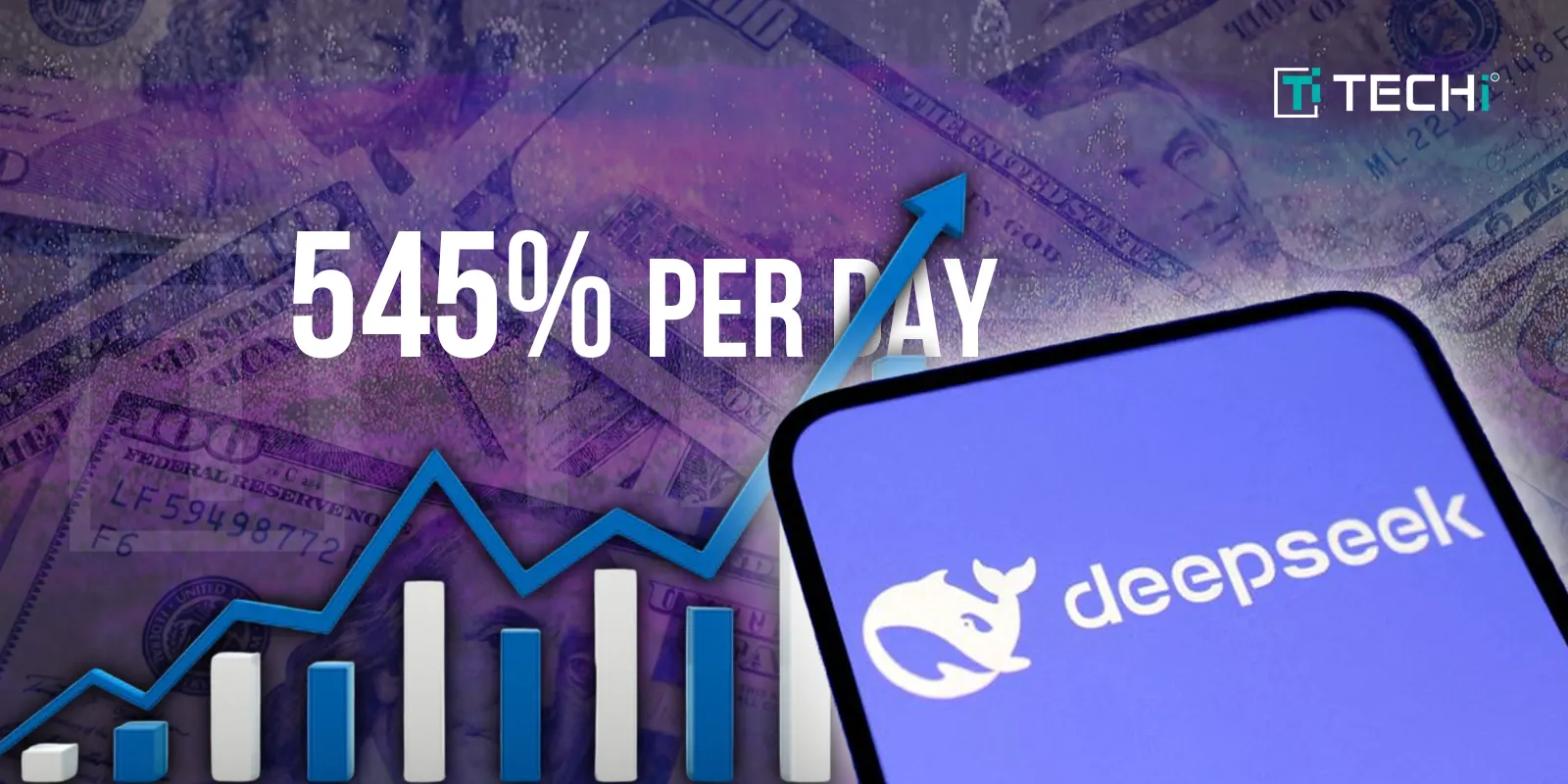
Just a few months ago, DeepSeek was a little-known name in AI, but that changed in January when the Chinese startup launched an AI model that challenged OpenAI’s dominance. Despite operating under U.S. trade restrictions, DeepSeek developed a model that reportedly matched OpenAI’s GPT-4 (o1 variant) on certain benchmarks, grabbing headlines and briefly overtaking ChatGPT on Apple’s App Store rankings. DeepSeek is making another bold claim about its profitability this time. The company recently revealed that its AI models supposedly generate an eye-watering 545% profit margin. But there’s a catch: the number is based on theoretical income rather than actual revenue.

DeepSeek’s 545% Profit Claim: The Fine Print

In a post on X (formerly Twitter), DeepSeek claimed that if all AI usage over 24 hours had been billed under its R1 model pricing, the company would have earned $562,027 in daily revenue. Meanwhile, leasing the required GPUs (graphics processing units) would have been only $87,072—resulting in the headline-grabbing 545% cost-profit margin. However, DeepSeek admitted in a longer GitHub post that its actual revenue is much lower due to the following:

Nighttime discounts reduce revenue during off-peak hours.
Lower pricing for the V3 model, which undercuts theoretical income.
Free access to web and app services, meaning only a portion of users are monetized.

The GitHub post also outlined DeepSeek’s technical approach to improving AI efficiency, focusing on higher throughput and lower latency. The company emphasized that its infrastructure is optimized for performance, but profitability still depends on how AI services are priced and used.

A Glimpse Into AI’s Profitability Debate

DeepSeek’s claim, while speculative, adds fuel to the ongoing discussion about the cost of AI and its potential for profitability. Training and running AI models require enormous computing power, often making them expensive. Tech giants like OpenAI, Google, and Anthropic have yet to prove whether AI chatbots can become sustainably profitable at scale. Yet, DeepSeek’s ability to develop a competitive AI model at a fraction of OpenAI’s cost already had analysts questioning the actual financials of AI research. Its latest claim of theoretical profitability further challenges the narrative that AI is a money-losing business.

DeepSeek’s AI and Market Impact

DeepSeek has already left a mark on the AI industry:

  • Its January model launch rattled Wall Street, raising concerns about AI development costs.
  • Its app briefly displaced ChatGPT at the top of Apple’s App Store rankings before settling at #6 in the productivity category, behind ChatGPT, Grok, and Google Gemini.

AI Monetization: Reality vs. Hype?

DeepSeek’s numbers suggest AI models could be extremely profitable under the right conditions, but whether this translates to sustainable revenue growth remains unclear. With the race for AI profitability heating up, one key question remains: Are AI startups truly on the brink of massive profits, or are these numbers just hopeful projections? Let us know your thoughts in the comments.

Read More: OpenAI to Integrate Sora’s AI Video Generator into ChatGPT

Samsung Galaxy A56 Unveiled with AI Upgrades at a Budget-Friendly Price

Not too long ago, AI-powered features were found in costly mobile phones. However, Samsung is altering this tendency by incorporating capable AI tools into its affordable Samsung Galaxy A56, A36, and A26 mobile models. Though these phones may lack major hardware renovations, the objective is clear: Samsung wants to bring brilliant AI abilities to more individuals without the top-tier cost. Is this enough to distinguish them in the competitive mid-range phone market? Let’s examine this more closely.

Artificial Intelligence Capabilities Now Accessible in Budget Phones

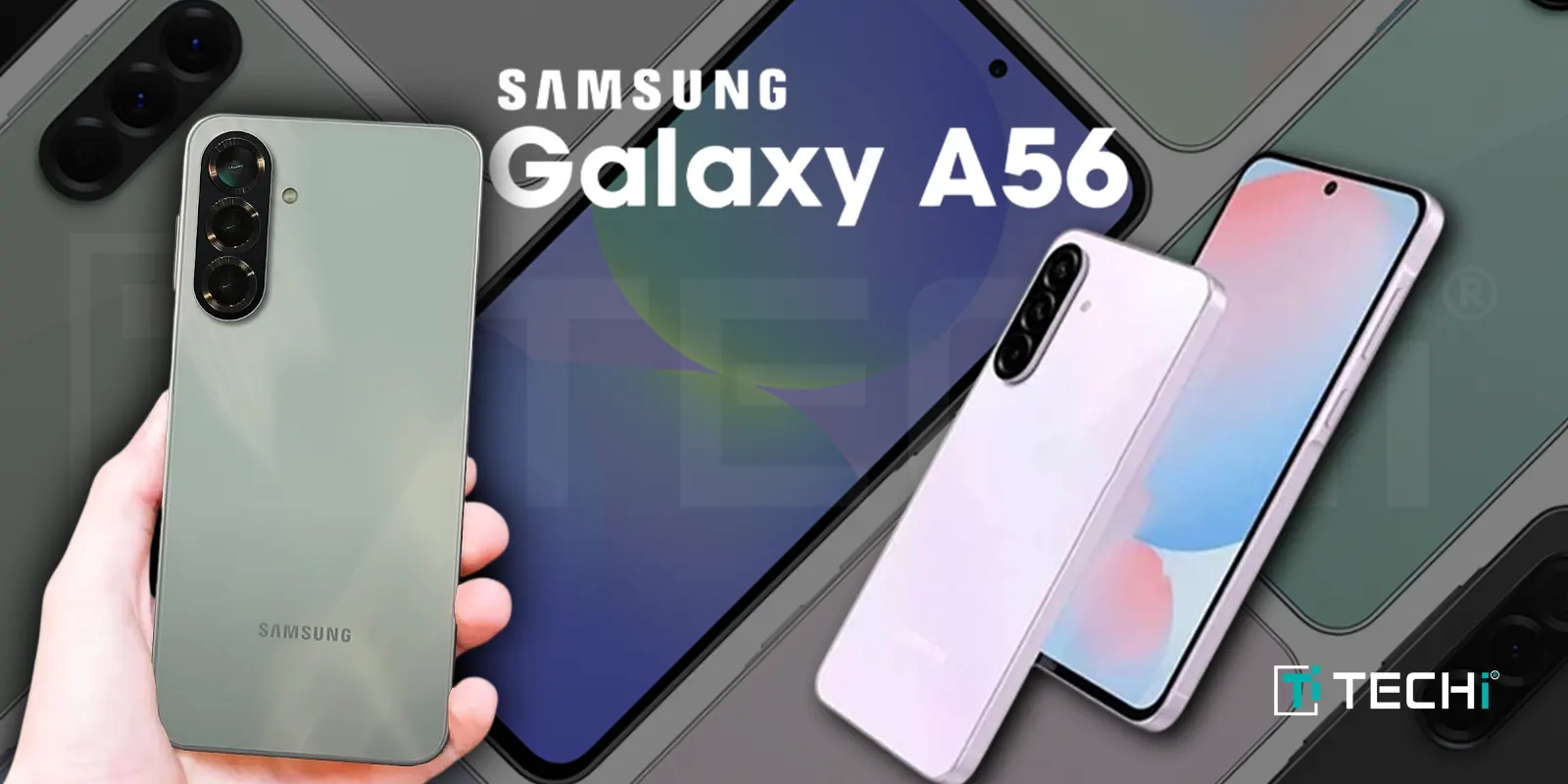
Samsung Galaxy A56 in black

Samsung is promoting its new AI-driven instruments as “remarkable intelligence,” a fun way of saying that inexpensive phones are becoming brainier. One of the handiest fresh features is Best Face, an AI-guided instrument that enables you to swap expressions in group images. If someone blinks or gazes away, Samsung’s AI can fix it. This resembles Google Pixel’s Best Shot, which debuted last year. Another significant addition is Google’s Circle to Search, which allows you to look for anything on your screen merely by encircling it.

This feature was first unveiled in Samsung’s high-end phones but is now available in the budget-friendly A-series. Samsung has also improved its AI-powered object elimination tool, making cleaning up undesirable parts of your photos simpler. Most significantly, Samsung is extending software program support, providing six years of Android OS and security updates. This implies that A-series users will get longer-lasting performance and security updates—a major win for cost-conscious buyers.

Design and Hardware: Small Adjustments, Big Impact

Samsung Galaxy A36 in Awesome Lavender

While AI is the headline feature, Samsung has made subtle design changes to enhance the overall look and feel of the A-series.

  • New Oval-Shaped Camera Module: Provides the phones with a more premium appearance.
  • Bigger Displays: All three models now feature a 6.7-inch Full HD+ display with a 120Hz refresh rate, making them smoother and more immersive.

The Galaxy A36 has a dazzling Awesome Lavender hue and boasts a vibrant 6.7-inch Full HD+ display.

Under the hood:

Samsung has added IP67 dust and water resistance to the A26 for the first time, making it more durable than before. The Galaxy A56 receives a fresh Exynos 1580 chipset, whereas the A36 sticks with the older Snapdragon 6 Gen 3—both the Samsung Galaxy A56 and A36 support 45W fast charging, unlike the A26, which lacks this feature.

Costing and Availability

Samsung has strategically priced the A-series phones to cater to different budgets:

  • Galaxy A56$499, launching later this year in the US (£499 in the UK on March 19th)
  • Galaxy A36$399, available March 26th at Best Buy (£399 in the UK)
  • Galaxy A26$299, debuting March 28th (£299 in the UK)

Is Samsung’s AI Push Enough to Make an Impact?

Samsung’s decision to bring AI to its budget phones is a smart move, but will it be enough to convince buyers? Many consumers still prioritize hardware aspects like camera quality, battery life, and overall performance over AI-powered features. However, as AI technology continues to shape how we use smartphones, Samsung may be setting a new trend that other brands will soon follow. Will AI features become the key selling point for budget phones? Or do buyers still prefer traditional hardware upgrades? Let us know your thoughts!

Read More: Microsoft Has Officially Announced Skype Shuts Down in May

WhatsApp Beta for Android Introduces Sticker Photos in Status Updates

WhatsApp continues to refine its status update features, bringing them closer to Instagram’s dynamic storytelling tools. With the latest WhatsApp beta for Android (2.25.5.20), a fresh addition is making waves—sticker photos for status updates. This feature allows users to overlay images onto their statuses, adding a more engaging and creative touch to their shared moments. But why is this significant? To understand WhatsApp’s shift, let’s look at the evolution of status updates across platforms.

From Plain Text to Interactive Visuals: The Status Update Evolution

Once a simple text-based feature, WhatsApp’s status updates have transformed into a multi-media-rich experience. Inspired by Snapchat and Instagram Stories, WhatsApp introduced image and video status updates years ago, but creativity was limited. Unlike Instagram, where users could layer stickers, GIFs, and additional media onto their stories, WhatsApp primarily allowed users to post separate images or videos without much personalization. The new sticker photo feature represents a major leap forward, allowing users to customize their status updates like never before.

What’s New? How the Sticker Photo Feature Works

With the latest beta update, some users can now:

  • Overlay additional images on photos or videos in their status updates.
  • Choose from predefined sticker shapes, including rectangles, circles, squares, hearts, and stars.
  • Resize and reposition sticker photos for more creative freedom.
  • Create structured layouts using rectangular stickers, perfect for collages and visual storytelling.
  • Use heart and star-shaped stickers to highlight romantic moments or special occasions.

This functionality mirrors Instagram’s content sticker, allowing for a layered storytelling approach where multiple images can be placed within a single status update rather than uploaded separately.

WhatsApp beta for Android 2.25.5.20

A More Interactive Status Experience? Why This Update Matters

  • More Personalization – Users can now express emotions, highlight key moments, and create themed status updates more flexibly.
  • Better Storytelling – Users can now consolidate their memories into a single, engaging visual post instead of posting multiple updates.
  • A Step Closer to Instagram & Snapchat – WhatsApp is aligning itself with the visual creativity of competing platforms, making its status feature more interactive and engaging.
  • Potential for Business Use – Brands, influencers, and businesses on WhatsApp can use sticker photos to create mini-promotions, event highlights, or storytelling-based updates, making their content more engaging for customers.

Who Gets It First? Beta Testing & Wider Rollout

This feature is available for select beta testers who have updated to WhatsApp beta 2.25.5.20 on Android via the Google Play Store. WhatsApp plans to expand access in the coming weeks, meaning more users will soon get to experiment with this new status customization tool.

A Step in the Right Direction?

WhatsApp has often been cautious with feature rollouts, preferring functionality over flashy additions. However, with increasing competition from Instagram, Snapchat, and Telegram, this update suggests WhatsApp is ready to embrace richer visual communication. But will users embrace this change and use sticker photos creatively? Or will WhatsApp need further refinements to match Instagram’s more dynamic sticker capabilities?

Read More: WhatsApp to Introduce Viewer Count for Channel Updates on Web Client

Amazon Plans Global Expansion for Its Discount Platform Haul, Taking on Shein and Temu

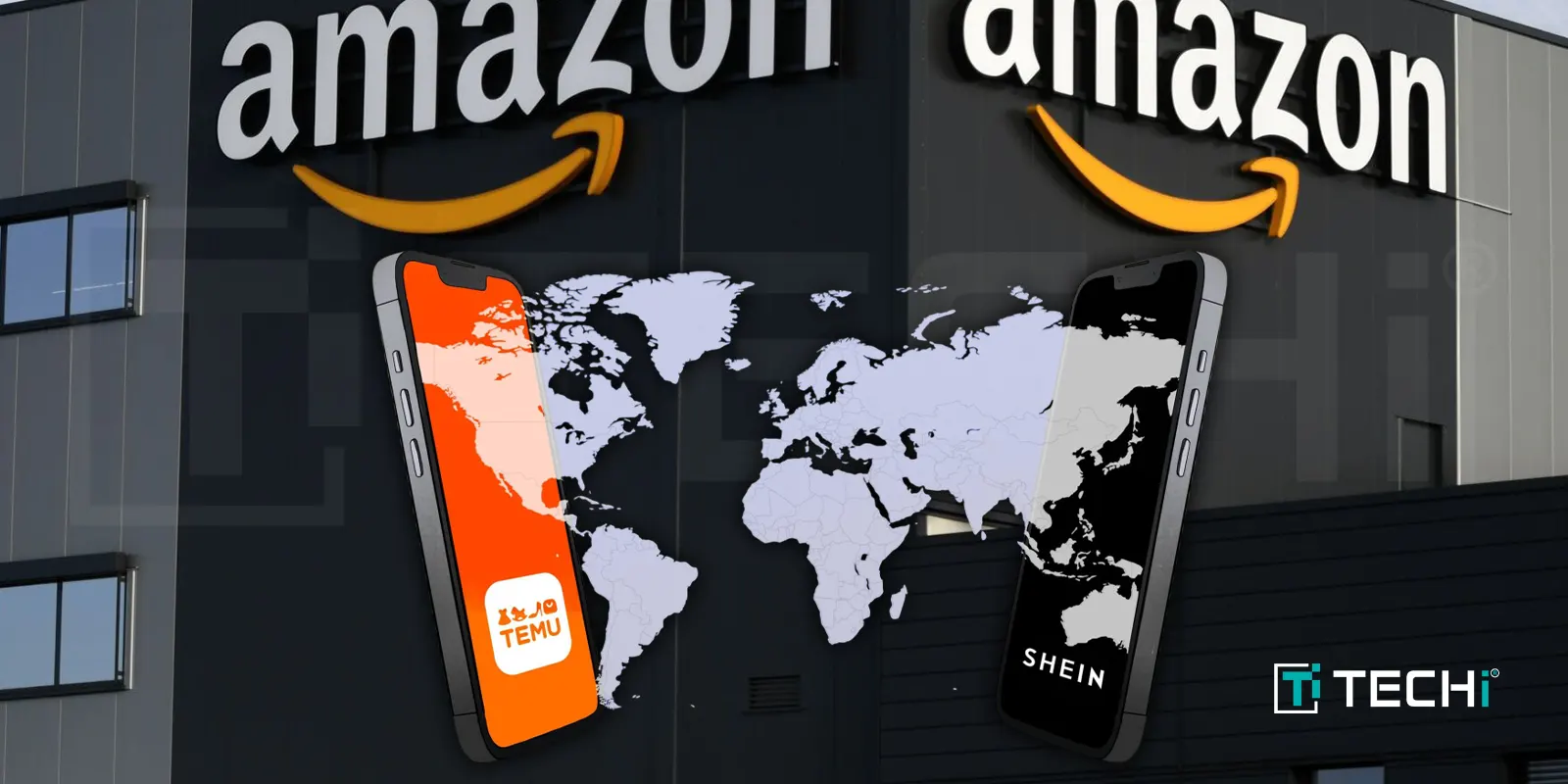
Amazon is set to expand Haul, its discount-focused shopping platform, beyond the United States, marking a strategic move to compete with Shein, Temu, and TikTok Shop on a global scale. Sources familiar with the matter indicate that Amazon is preparing to launch Haul in Europe later this year, with further expansion plans in progress.

Amazon’s Global Push for Haul

Recent job postings suggest Amazon is gearing up for an international launch of Haul, with hiring efforts focused on regions outside the U.S. One such listing sought a software development engineer for the Haul team to support a worldwide expansion, while another role targeted a senior product manager for a launch in Mexico. Both job openings, which were posted earlier this month, have since been removed.

While Amazon has yet to make an official announcement, a company spokesperson provided a general statement regarding its expansion strategy:

“We are always exploring new ways to work with our selling partners to delight our customers around the world with more selection, lower prices, and greater convenience.”

What Is Amazon Haul?

Launched in November 2023, Haul is Amazon’s answer to Shein and Temu, offering ultra-low-cost products across various categories, including fashion, beauty, and home goods. Most items on Haul are priced under $20, with some products—such as $1 eyelash curlers and $2.99 cubic zirconia rings mirroring the budget-friendly pricing strategies of its competitors.

Unlike Amazon’s main e-commerce site, Haul is only accessible via the Amazon mobile app, aiming to create a more engaging, app-driven shopping experience.

Challenges in Amazon’s Expansion Strategy

Amazon’s ambitions for Haul’s European launch may face some hurdles, particularly concerning sustainability policies. The company has committed to eco-friendly packaging in the region, eliminating plastic in favor of recyclable paper bags and cardboard. However, Haul shipments may rely on plastic packaging, which could pose a challenge to Amazon’s green initiatives in Europe.

Additionally, Amazon’s expansion of Haul comes at a time when the de minimis rule, a U.S. trade regulation that allows goods valued under $800 to enter the country duty-free, is under political scrutiny. The rule has allowed companies like Shein and Temu to import goods from China without tariffs, an advantage that Haul also leverages.

Former President Donald Trump briefly suspended the de minimis rule earlier this month before reinstating it. However, the rule is expected to be permanently revised once new customs systems are in place. If stricter regulations are implemented, it could impact Haul’s supply chain, given that many of its sellers operate from China.

Amazon CEO Andy Jassy addressed concerns about the de minimis rule during an interview with Bloomberg Television, stating:

“We have a certain number of items that are shipped in that way for Haul, but likely fewer than Chinese e-commerce companies like Shein and Temu.”

Amazon’s Strategy to Monetize Haul

Beyond product sales, Amazon is integrating ads and influencer marketing into Haul to drive revenue. The company has introduced sponsored product placements in Haul search results, similar to the advertising strategies used on its main marketplace, which helped generate $56.2 billion in ad revenue in 2024.

Additionally, Amazon is partnering with influencers to promote Haul’s offerings. The platform now features curated storefronts from lifestyle influencers, including TikTok’s Michaela Delvillar, who has over 150,000 followers and is labeled as a “Top Creator” on Amazon’s storefront.

The Future of Haul

Amazon’s expansion of Haul signals a strong commitment to competing in the budget e-commerce space. While regulatory challenges and sustainability concerns remain, the company’s aggressive monetization strategy and global ambitions indicate that Haul could become a permanent fixture within Amazon’s ecosystem.

With Europe and Mexico in its sights, Amazon appears to be positioning Haul as a key competitor in the low-cost shopping market, one that could challenge Shein, Temu, and TikTok Shop on a global scale.

Read More: SymbyAI Secures $2.1M Seed Funding to Revolutionize Scientific Research with AI

Google Sheets Gets a Gemini AI Upgrade for Smarter Data Analysis

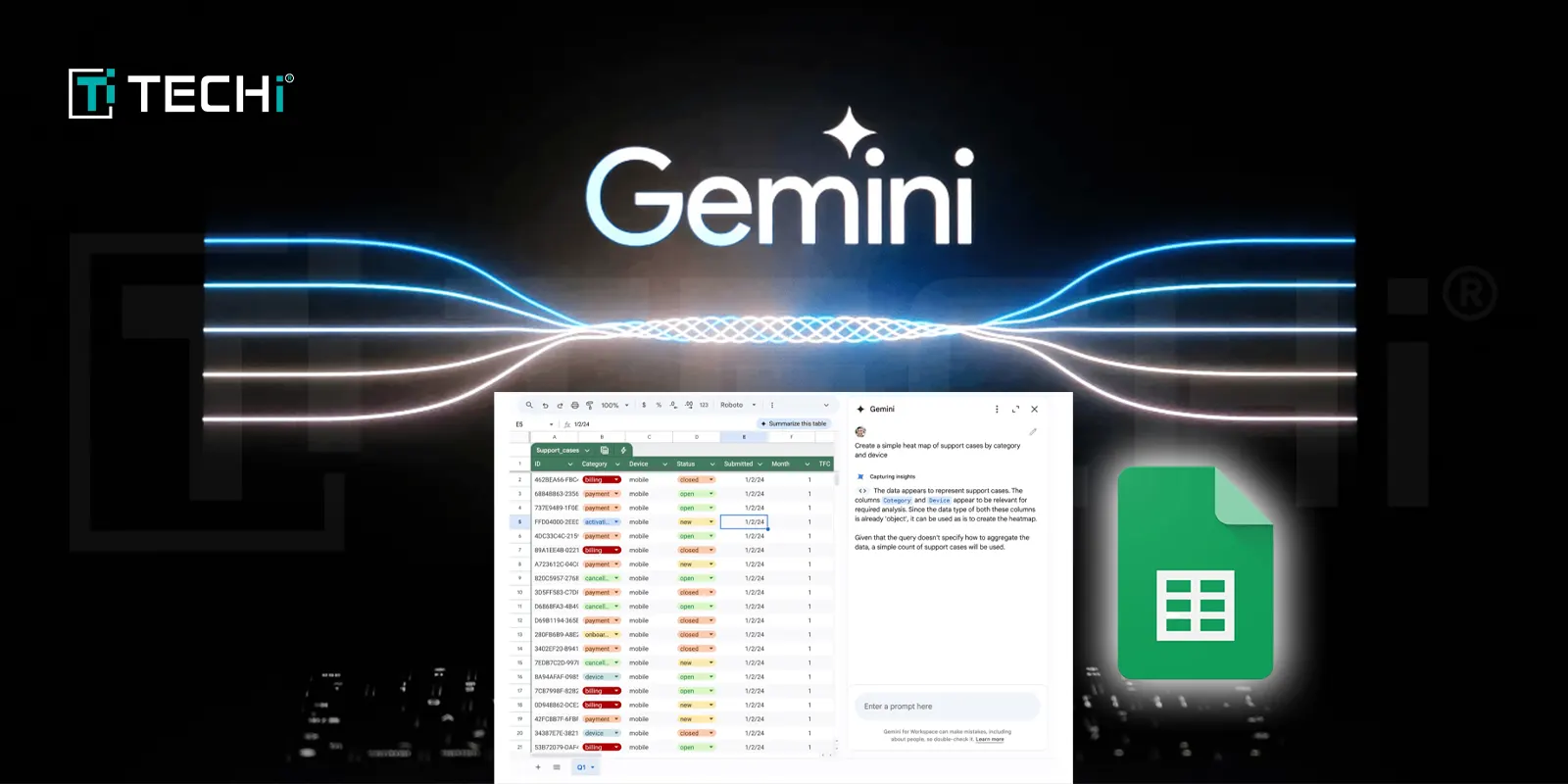
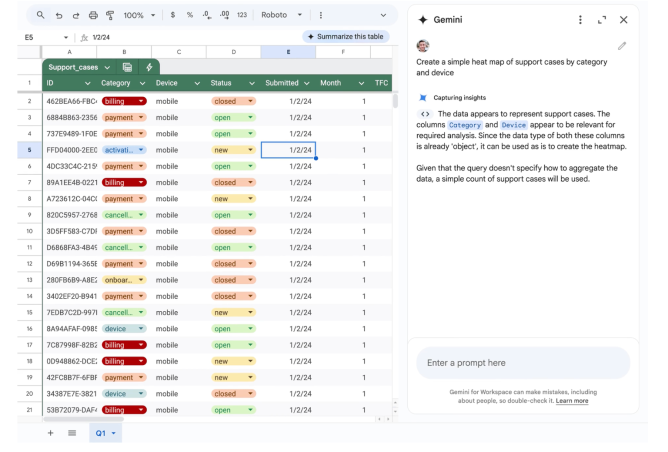
Google is integrating Gemini AI into Google Sheets, giving users a powerful new way to analyze data, identify trends, and create advanced visualizations faster. The feature, now available to all Google Workspace business users, enables AI-driven insights directly within spreadsheets. With Gemini, users can quickly generate correlation insights, detect anomalies, and even create heatmaps that appear as static images in their sheets. The update eliminates the need for manual analysis, making it easier for professionals to extract valuable data insights in real time. Although the update was announced last month, Google confirmed on Friday that it is now available to all Workspace business users.

How Can Users Access This Feature?

To use Gemini in Google Sheets, users must click on the Gemini icon in the top-right corner of their spreadsheet. From there, they can enter queries such as:

“Predict my net income for the next quarter based on historical data.”
“Create a heatmap of support cases by category and device.”
“Identify anomalies in inventory levels for Product X.”

Gemini processes these requests using Python code for complex analyses while handling simpler queries with built-in formulas. For optimal results, Google advises users to ensure their data is structured with clear headers and no missing values.

Google Sheets with color-coded support cases and a Gemini AI panel on the right

What This Means for Users

The integration of Gemini AI into Google Sheets represents a significant shift in how businesses and professionals interact with data. Instead of relying on traditional spreadsheet formulas and manual calculations, users now have AI-powered analytics at their fingertips. This move also reflects Google’s growing focus on AI-driven productivity, competing with advanced business intelligence tools while maintaining the familiar ease of spreadsheets. As AI continues to evolve, the future of spreadsheets could shift toward fully automated data interpretation and decision-making support. With AI now embedded into Google Sheets, is this the beginning of a new era for spreadsheets, or will users still prefer manual control?

Read More: Google Announces Layoffs HR and Cloud Divisions Amid Cost-Saving Strategy

China Startups Rush to Ride DeepSeek AI Boom

At this time, the wave of China’s technology sector is once again crashing against the rocks of finance and innovation, as the country gets lifted by a flood of optimism for its startup ecosystem, with the powerful blast from DeepSeek’s AI model as well as the rare appearance of President Xi Jinping himself in support of private enterprises. Venture capitalists shut down outside investment due to concerns over the effects of severe regulations and the current general climate that breeds uncertainty in the economy, thereby rushing back the soonest to sponsor thought based startups, the next kind of technologically empowering.

Chinese technology startups are racing against each other to secure new rounds of funding from the recent popularity that DeepSeek’s AI breakthroughs have garnered, along with Xi’s endorsement of private enterprises. With AI innovations in the limelight, now is a time when investors and entrepreneurs are trying to accelerate the growth of China’s highly evolving tech field.

A few other major companies that are taking advantage include AI Optics startup Rid Vision, Brain Computer Interface company AI CARE Medical, and robotics firm Shanghai Qingbao Engine Robotics, all of whom are seeking onshore financing, as confirmed by Andrew Qian, CEO of New Access Capital, which has invested in all three firms. He said, “Many people are knocking at the doors of these AI companies, half discussing business cooperation, the other half talking about investment”. He added, “You can see from the DeepSeek case, that a batch of Chinese innovators with disruptive technologies is emerging… Previously, Chinese start-ups were nearly all ‘me too'”.

Revival of China’s Venture Capital Sector:

The buzz that has returned to AI related businesses, including chipmakers, cloud service providers, and AI applications have revived the domestic venture capital industry in China. The general investment outlook remains grim due to regulatory roadblocks for IPOs in China and the swing of geopolitical considerations that complicate offshore listings. Despite problems, investor confidence has received a much needed boost after DeepSeek’s breakthrough in AI and Xi’s meeting with business tycoons. For instance, New Access Capital has recently invested in a chip startup and millimeter wave antenna technology and is also pursuing opportunities in rocket recovery technology in anticipation of the next big AI-driven breakthrough in these areas.

Companies that stand to gain from the advances in AI in China are at the center of the latest investment frenzy. In its record fundraising round, AI image generation platform LiblibAI reported securing hundreds of millions of yuan. AI-oriented medical startup SenseCare raised 100 million yuan, while the latest rounds of investments were also reported for chipmakers Aspiring and Hyseim.

Resilience within Venture Capital Landscape:

Other startups that have recently garnered attention for investment have included AI infrastructure provider Siliconflow, robotics startup Ruichi Smart Technology, and medtech startup Neurodome.This surge in VC activities implies a potential change in trend after years of continuous decline in fundraising and investment.

Since its historical height in 2021, China has remained in a downward spiral for ventures that have held onto the probability of a better fortune. Preqin data reflects a drop by 91% from the funds raised, $12.5 billion gathered from 67 funds in 2024 against the background of $141 billion in 2021. They were still worse off than dollar denominated funds that raised a scanty $1 billion last year. Meanwhile, the record of case filing through venture deals stood at $229 billion in 2023, which represents a significant 36% decline as compared to last year, and even smaller when taken in isolation compared to $816 billion in 2021.

IPO exits a major mode of cashing out venture capital investments in China have been badly affected by the country’s stringent rules and regulations coupled with the uncertainties in the international geopolitics affecting the offshore listings. However, due to AI breakthroughs from DeepSeek, there has been a significant turnaround of the market. Zhongyan Huo, founder of Bonanza Capital, which has invested in an AI-powered garment designing and marketing startup said, “Since the launch of DeepSeek’s breakthrough AI model, the sentiment has improved a lot. People get more sanguine about China’s future … Stock bullishness made entrepreneurs more confident, and investors more willing to place bets”.

Risks and Regulatory Uncertainties:

Morgan Stanley cites indications of the normalizing IPOs in the A-share market in China, however, Huo is doubtful concerning any forthcoming relaxation of the IPO restrictions. Besides, they show improvements regarding offshore listings but keep on not being viewed as entirely or completely free from the webs of geopolitical disturbances and changing investor attitudes. Racing ahead, China’s AI industry definitely puts a high balancing act on both investors and startups, they have to continue maneuvering as best their efforts might allow through regulatory landscapes, turbulence in geopolitics, and the growing challenges of an ever changing tech ecosystem. 

Read More: OpenAI Unveils GPT-4.5 ‘Orion’ – The Next Leap in AI Evolution

Microsoft Expands AI Reach with Copilot App for Mac

Microsoft officially launched the Copilot application for Mac OS and brought the full power of AI assistant into the Apple ecosystem. This step marked the great leap of making AI accessible across platforms so much that Mac users can now interact with Copilot with the same ease as Windows users.

Features of Copilot on macOS

Microsoft’s AI assistant has been designed for fast, intuitive, and efficient operation on MacBooks and iMacs.

These key features include:

Native macOS Support: Optimized for Apple devices, ensuring smooth usage.

AI-Enhanced Content Creation Ability: To write text, analyze pictures, and otherwise enhance productivity.

Easy Shortcut Access: Activating the tool is as simple as hitting Command + Space like Spotlight.

 Dark Mode Friendly: An elegant, user-friendly interface that works in low-light settings.

 Multi-device Support: It is designed to work on Mac, iPhone, and iPad, enjoying simultaneous screen mode on an iPad.

Apple ID Functionality: A seamless login with Apple credentials.

Enhanced Voice Interaction: Certainly more intelligent with voice requests and deeper reasoning abilities.

AI Capability that is Further Enhanced by Microsoft

Amid this launch, Microsoft opens “Think Deeper” from restrictions and voice interactions for really long and deep conversations with AI. Besides, upcoming file-upload functionalities will let users upload text files, PDFs, and images for AI processing.

Availability Around the World & Future Updates

The Copilot app for Mac is now available for download in selected regions, notably the U.S., the U.K., and Canada, and a global rollout is imminent. Nonetheless, Microsoft is continuously developing further AI capabilities and cross-tool compatibility enhancements, making Copilot an even more incredible tool for its users. 

Are you ready to enjoy AI functioning with your Macintosh? The Copilot application is available for download in the Mac Store now.

Read More: OpenAI Unveils GPT-4.5 ‘Orion’ – The Next Leap in AI Evolution

OpenAI Unveils GPT-4.5 ‘Orion’ – The Next Leap in AI Evolution

The artificial intelligence race took a turn with OpenAI’s new revolutionizing release of GPT-4.5, the most powerful kind of model and most compute intensive to date. Designed internally as “Orion,” its newest version is an OpenAI assertion of continuing to win in an industry where the bigger the model, the better the results. So, what do these new moves mean for the general user and the AI landscape at large? 

OpenAI holds on to its “big is better” philosophy, after pouring in billions scaling up infrastructure, Anthropic and DeepSeek have continued to disrupt this modeling field by introducing cost-effective models that both go up against one another. Hence, the GTP-4.5 is not just another incremental upgrade, rather it makes a clear strategic statement of an index of OpenAI’s fighting spirit in its approach. As users get the first glimpses of the model via the exclusive $200 a month ChatGPT Pro subscription, the question now is, does OpenAI step rolling along a progressively risky thin rope against a shifting landscape?

The release continues OpenAI’s tradition of scaling AI models to enhance their performance and usability. GPT-4.5 is reportedly better at understanding user prompts than prior models, producing results that are accordingly natural and nuanced in the response. While no specific details about its weight and computer requirements have been noted, OpenAI maintains that this model minimizes the problem of hallucinations, thanks to its enhanced knowledge. Mia Glaese, who leads OpenAI’s alignment team and human data team says, “If you know more things, you don’t need to make things up,”

Competition and GPT’s Growth:

The release of GPT-4.5 follows a sequence of substantial AI developments in 2025. Competitors such as Anthropic have developed hybrid reasoning models for Claude, and Chinese researchers at DeepSeek have made remarkable achievements on very low budgets. OpenAI, however, believes strongly that bigger models mean better AI and has invested billions into building AI infrastructure to support this philosophy.

While growth is the major focus, GPT-4.5 is not considered a reasoning model in the sense of their `o’ series, as it has been stated by Sam Altman, CEO, to be the last model non-integrated with chain of thought reasoning, pointing towards a shift towards integrated and adaptive AI experiences in its next releases. He posted on social media earlier in February, “ship GPT-4.5, the model we called Orion internally, as our last non chain-of-thought model.” The researchers are also putting efforts into streamlining user interactions so ChatGPT can dynamically select the best model for a prompt without requiring the user to select the model from a dropdown.

Future of AI and the OpenAI’s Vision:

With the introduction of GPT-4.5, web search, file and image uploads, and the canvas feature all come into play, but the present course has no AI Voice Mode support. Benchmarking results are competitive in some instances with promising language performance from the system but losing out to o3-mini in assessments of certain areas of math and science, although OpenAI says that the real success of GPT-4.5 will show itself through the user experience.

At a time when competition is heating up in AI, OpenAI is still committed to widen the frontiers in unsupervised learning by data scaling, compute, and training efficiency. According to researchers like Nick Ryder, enlargement of model size does not in itself make it hard to interpret and all current methods of interpretation can still be applied to these huge AI systems. Ryder says, “Saying this is the last non-reasoning model really means we’re really striving to be in a future where all users are getting routed to the right model”. He added, “By increasing the amount of compute we use, by increasing the amount of data we use, and focusing on really efficient training methods. We push the frontier of unsupervised learning.”

This is also the extent of OpenAI’s ambition with regard to things technical, as it develops the emotional intelligence, intuition, and aesthetic preferences of the future AI, it defines an intelligent machine quite unique in productivity with impressive soft skills and cuts a little closer to the time, when AI incorporates itself in the workflow of human beings.

As OpenAI puts new AI initiatives in overdrive with models like GPT-4.5, the audience becomes even more demanding in terms of scaling versus efficiency. Whereas many industry voices are contending with optimising performance against a thinner budget, for OpenAI, this part of the race is still all about bigger and more complex models toward seeking better ability for AI to understand and respond to human nuance. Whether it will keep its place in the front or slip into the point of diminishing returns is yet to be determined. 

Read More: Meta Gears Up to Launch Standalone AI Chatbot to Challenge ChatGPT & Gemini

Meta Gears Up to Launch Standalone AI Chatbot to Challenge ChatGPT & Gemini

The rapid landscape of artificial intelligence in evolution has placed tech giants in an all-out war to dominate the AI-driven chatbot space. While Meta has often changed the game in digital communications, it is now aiming for a somewhat loftier challenge with an AI chatbot experience independent of its parent applications. With OpenAI’s ChatGPT and Google’s ‎Gemini both garnering formidable attention, Meta is ready to launch a standalone app for its Meta AI assistant, which not only extends the technology but represents a strategic initiative to carve out its position in the AI arena. As leverage continues to be exercised, will this be defined by Meta as its own paradigm shift toward realizing the future of AI engagements?

Anticipated Timeline for Launch:

Reports say that Meta is working on launching a standalone application for its AI assistant called Meta AI. The new application is expected to push Meta further into competition with AI-driven chatbots such as OpenAI’s ChatGPT and Google Gemini. According to a report from CNBC, Meta would have the possibility of rolling out the standalone Meta AI sometime in its next quarter (April to June). As of now, Meta AI is embedded into various services within the Meta ecosystem, including Facebook, WhatsApp, and dedicated websites. A separate app would give Meta’s AI more visibility in the competitive AI chatbot space.

Paid Subscription Model and Investment in AI:

A paid membership plan is also being researched for the Meta AI, which should provide additional user capabilities for premium members. CNBC’s sources did state that they were unsure about the pricing and the exact capabilities offered to premium members. With over 700 million monthly active users already, Meta AI constituted a major component of Meta’s overall strategy in AI. Besides the chatbot application, Meta has been investing in the open source AI development space mainly through its Llama models. The company is going after OpenAI, which is beginning to shape up the AI industry.

Anticipated AI-Centric Development:

Along with all such activity, Meta is also launching its very first and distinctly elite AI developer conference called LlamaCon in late April. The goal of that intervention would be to further showcase the very latest developments in Meta’s AI technologies and assist the developer community. Such is the development in Meta that the giant promises to become one of the best in the AI industry, matching each proprietary and open-source undertaking toward the future development of AI applications. The introduction of a standalone chatbot app could neutralize all competitive strategies as Meta continues its relentless voyage into AI. Combining its massive user base with next-generation AI technology, Meta can change the very contours of the chatbot market and usher AI into seamless user interactions. Yet, in the wake of serious competition posed by occupants OpenAI and Google, the overrunning success of the app will depend on how much the app drives innovation, simplicity, and utility for the users. 

Read More: Meta May Launch a Separate Video App for Instagram Reels

Pokémon Champions is Announced as a New Competitive Battle Game for Switch and Mobile

For decades, Pokémon battles have been the franchise’s heart, evolving from classic turn-based showdowns to the highly competitive world of VGC (Video Game Championships). The Pokémon Company has officially announced Pokémon Champions, a game designed to bring core-series battling to a broader audience across Nintendo Switch and mobile platforms.

A Competitive Battler With Pokémon HOME Integration

Pokémon Champions was unveiled during this year’s Pokémon Presents livestream, an annual event celebrating Pokémon Day on February 27. Unlike traditional RPG Pokémon titles, this game is focused purely on competitive battles, bringing back classic turn-based mechanics alongside Mega Evolution, Terastallization, and more battle features. One of the biggest highlights is its compatibility with Pokémon HOME, allowing players to import Pokémon from past games and engage in strategic 2v2 battles, a format used in official Pokémon VGC tournaments. This move is set to unify competitive play across different Pokémon generations, providing a stable environment for players to refine their skills.

Pokémon Champions vs. Pokémon Showdown: A Shift in Competitive Play

For years, Pokémon Showdown has been the go-to platform for fans wanting to simulate competitive battles in an easy, customisable format. However, Pokémon Champions could mark the first official step toward replacing unofficial battle simulators by providing an accessible, mobile-friendly competitive game. The game’s multiplatform availability ensures that casual and hardcore players can participate without needing a dedicated console, a first-for-the-core Pokémon battle experience.

A Spiritual Successor to Pokémon Stadium?

The last major Pokémon battle-focused game was Pokémon Stadium on the Nintendo 64, a beloved title that allowed players to experience high-quality battles without the RPG elements. Pokémon Champions seems to follow in its footsteps, offering a modernized version of pure Pokémon battling with enhanced features that appeal to both longtime fans and competitive players. While no release date has been announced, the fact that Game Freak is leading development signals that this will be a major addition to the franchise. Whether it can live up to expectations as the next big step for competitive Pokémon remains to be seen, but one thing is clear—Pokémon Champions has the potential to redefine Pokémon battles for a new generation.

Read More: Baidu Set to Launch Ernie 4.5 AI Model in Mid-March, Adopting Open-Source Strategy

The Future of Data Resilience; Lonestar and Phison Launch First Lunar Data Center

Data storage is not so limited and is not only found in clouds, rather it goes beyond Earth’s atmosphere. This bold step takes the form of a collaboration between Lonestar and Phison to launch the first ever lunar data center. With cyber threats, climate risks, and AI-driven data demand soaring, of course, the race toward safeguarding the most prized human asset, information, has officially gone planetary.

The move to achieve data storage and resilience has now become more pronounced for Lonestar, along with Phison in rolling out a data center infrastructure aboard a SpaceX Falcon 9 rocket destined to the moon. The flight, which took place on Wednesday, will pave the way for developing a data storage site on the moon, a phenomenon mentored into changing the way humankind guards its dearest digital artifacts. The mission carries Phison’s PASCARI storage such as solid state drives engineered for data centers, all packed in Lonestar clients’ data. An initial lunar data center, landing on March 4, and then scaling to an eventual total capacity of a petabyte.

Future of a Space Storage Vision:

Chris Stott, Founder, Chair, and CEO of Lonestar, said that he has had this idea of an off-Earth data center since 2018. It has been since before any possible AI forwards has beaten up all the new demands on data storage about the development to house critical information outside the planet’s vulnerabilities took form. Stott said, “Humanity’s most precious item, outside of us, is data. They see data as the new oil. I’d say it’s more precious than that”.

Phison seemed a natural choice for partnership, as they were engaged in space missions already such as, its storage solutions powering NASA’s Perseverance Rover on Mars where Phison loaned its knowledge in designing customized SSDs for extreme conditions in space. Imagine Plus service customized the needed hardware according to Lonestar’s requirements. Michael Wu, the General Manager and President of Phison said, “We were very excited when there’s a call from Chris. We took a standard product and were able to customize whatever they need for these products and we launched it. So it’s a very exciting journey”.

Since their partnership in 2021, Lonestar and Phison took turns testing their technology rigorously to support it reliably before launch. Apparently, the SSDs needed to have high endurance for space. Stott said, “[This is] why SSDs are so important. No moving parts. It’s remarkable technology that’s allowing us to do what we’re doing for these governments and hopefully almost every government in the world as we go forward and almost every company and corporation”.

Growing Industry:

The tech has been ready for launch since 2023, with a successful test flight carried out in early 2024. Wednesday’s mission involved sending data from several governments concentrating on disaster recovery and a space agency testing a large language model. Even Imagine Dragons sent along a music video for the soundtrack from the Starfield space game!

Within this segment of companies wanting space data centers, Lonestar finds itself not alone. Starcloud, a Y Combinator Summer 2024 startup, was previously named Lumen Orbit, after closing over $21 million in funding. More companies will start looking at space solutions for massive storage and unlimited solar energy, which terrestrial data centers cannot compete with, as we know, in the time of ramping AI hardware demand.

Expansion Plans:

Presuming that everything goes as planned, it is anticipated that Lonestar will work alongside satellite producer Sidus Space to create a fleet of six dedicated data storage spacecraft with the launches scheduled for 2027 to 2030. Stott said, “It’s fascinating to see the level of professionalism, it is tremendous. This isn’t 60 years ago with the Apollo program. Apollo flight computers, they had 2 kilobytes of RAM and they had 36 kilobytes of storage. Here we are on this mission, flying 1 Gigabyte of RAM and 8 terabytes of storage with Phison Pascari. It’s tremendous”.

For reshaping the digital experience through artificial intelligence and cloud computing, secure and scalable data storage is now more urgent than ever. With Lonestar and Phison at the helm, the phrase becomes more than just stargazing, it becomes reality with space based data centers. Should such a mission succeed, it would herald a new age in which data resilience is no longer bound by Earth’s limitations. So, with many more launches forthcoming and increasing competition in the air, the future of space based infrastructure is about to take off.

Read More: Meta May Launch a Separate Video App for Instagram Reels

Meta May Launch a Separate Video App for Instagram Reels

Meta has long been chasing dominance in the short-form video space. From acquiring Instagram to launching Lasso in 2018—a failed attempt to rival TikTok—the company has explored multiple ways to keep users engaged. Now, sources suggest Instagram is considering turning Reels into a standalone app, signalling a renewed push to capture the short-video market. Unlike its past experiments, the landscape is shifting in Meta’s favour this time. With TikTok’s uncertain regulatory status in the U.S., Meta sees a potential opportunity to attract users looking for alternatives. While Reels is integrated into Instagram, a dedicated app would allow for deeper monetisation, better content discovery, and an experience tailored exclusively to short-form video creators.

Meta has already shown interest in expanding its video ecosystem. In January, the company launched Edits, a video-editing app designed to compete with CapCut, the tool owned by TikTok’s parent company ByteDance. A separate Reels app could follow a similar strategy—offering users an independent space for content creation and engagement while still being linked to Instagram’s massive audience. While Meta has not officially confirmed the move, the company has consistently adapted its products based on shifting user behaviour and competitor threats. Whether this is a preemptive strike against TikTok’s dominance or a new approach to boosting Instagram’s engagement, separating Reels could mark a significant shift in the short-video industry.

Read More: Alibaba Goes All-In on Open-Source AI With Wan 2.1 Release

Baidu Set to Launch Ernie 4.5 AI Model in Mid-March, Adopting Open-Source Strategy

Baidu has long been a dominant player in China’s artificial intelligence landscape. In 2016, it pioneered AI-driven innovations like Baidu Brain and launched Ernie, a ChatGPT-style chatbot, in 2023. However, as AI competition heats up, Baidu is shifting gears to stay ahead. The company is preparing to launch its upgraded AI model, Ernie 4.5, in mid-March. This model will introduce improved reasoning and multimodal capabilities to more effectively process text, images, video, and audio.

Baidu had previously announced that it would gradually roll out the Ernie 4.5 series over the coming months, with a fully open-source release planned for 30 June. This represents a significant shift in the company’s approach. CEO Robin Li, who once believed in keeping AI models closed-source, has recently acknowledged that growing competition from the Chinese AI startup DeepSeek influenced Baidu’s decision to adopt open-source development.

Despite Baidu’s early entry into the AI chatbot arena, Ernie has struggled to secure mass adoption. DeepSeek, which has launched affordable AI models comparable to leading Western competitors, has further compelled Baidu to reassess its AI strategy. With the impending launch of Ernie 4.5, Baidu is making a clear statement—it is prepared to adapt and compete with both domestic challengers and AI leaders such as OpenAI and Google.

The AI race in China is intensifying, particularly after Alibaba recently announced that its video and image-generating AI model, Wan 2.1, would also be open-source. Baidu’s latest move suggests that the future of AI development in China may favour greater transparency and collaboration, a trend that could reshape the industry. As the official launch of Ernie 4.5 approaches in mid-March, the coming months will be crucial in determining whether Baidu’s strategic shift will enable it to strengthen its position in the AI landscape.

Read More:
After R1’s Success, DeepSeek Fast-Tracks Launch of New AI Model R2


Amazon Unveils Alexa+ AI Assistant to Revolutionize Smart Living

This is a world where intelligent assistants are kept exclusively to setting alarms and playing music along with it misunderstanding some basic commands. However, this latest foray into Alexa+ from Amazon promises something beyond simple task accomplishments, it is a real agent with an AI engine. All things should go according to plan, for this system will update its activities to include not just stating the weather but also reserving tables and ordering grocery items, with the addition of possibly remembering one’s birthday. Alexa+ presents a dramatic foray into the world of consumer AI agents, it is a brand new evolution of the voice assistant towards which Alexa will go in helping manage day to day activities.

The big announcement was made in a keynote on a Wednesday, Alexa+ set up beyond booking reservations to managing home maintenance, and integrated a really wide net of both first and third party services. If it succeeds, Alexa+ is poised to become the most far reaching consumer AI agent, surpassing even the most ambitious competitors in terms of capability and access. Amazon signals a future where intelligent AI assistants do not just perform tasks for users, but also engage in so-called inter-agent behavior with other intelligent AI assistants for seamless integration across digital ecosystems.

Future of AI Assistance:

Amazon’s Alexa and Echo VP Daniel Rausch said, “We believe that the future is full of agents — we have believed this for some time. “There will be many AI agents out there doing things for customers, many of them will have specialized skills … And we’ve also always believed that in a world full of AI, these agents should interact with each other. They should interoperate seamlessly for customers.”

It comes at a significant time for the company, now that it is trying to revive Alexa, which hasn’t managed to generate much revenue despite years of investment. According to reports, Amazon’s hardware division has burned hundreds of billions of dollars, so Alexa+ could shape a turning point in evolution for the assistant.

AI Agents and Alexa+ Abilities:

The virtual assistants that are autonomous in their actions and can take proactive actions on the user’s behalf have become somewhat of a concept in the tech world. OpenAI and Anthropic have worked toward that goal with the development of AI models, but many implementations remain unsuccessful and inefficient, thus requiring a human in the loop for their actions.

Alexa+ from Amazon is presented in a different light as a polished and intuitive assistant capable of performing tasks that require the least amount of contact. The assistant showcased its ability to coordinate between several information sources in this case, emails, calendars, and user preferences automating mundane tasks with great efficiency. Some key capabilities showcase:

  • It automates your grocery shopping with Amazon Fresh, Whole Foods, and other retailers.
  • When products are offered at reduced prices, it smartly chooses to order them by itself.
  • It schedules bookings for the spa and fitness appointments through Vagaro.
  • It integrates with everyday services, including food through Grubhub, rides through Uber, and tickets through Ticketmaster.
  • The smart event planner always extracts useful information from flyers to create the right reminders.

Major Challenges:

Alexa+ seems very promising for the future but remains faced with challenges. Ever since the beginning, the AI agents have been poor at reliability, and there were reports that Alexa+ was delayed multiple times because its earlier iterations failed at even the most basic tasks of turning on and off smart home devices.

The research assistant from OpenAI, ChatGPT deep research, has been inaccurate in its results and Gemini has faced issues with providing factually accurate summaries. These issues must be dealt with for Alexa+ to become a reality for Amazon. Then there is the ever existing question about data privacy. Alexa+ depends heavily on user data to create personalized experiences, and while this welcomes greater utility, it also raises concerns about how Amazon handles sensitive personal information.

Amazon’s Strategic Advantage:

Amazon has a multitude of favorable conditions. Its position is already strong in consumers’ homes, with over 600 million Alexa enabled devices in circulation. Moreover, providing Alexa+ free of charge to Prime subscribers and charging $19.99 per month to non-prime users could speed up implementation by Amazon’s most committed users. Amazon’s vision for Alexa+ is extensive, futuristic, and ambitious. Suppose it can indeed deliver as an intelligent and autonomous AI agent. In that case, it will have a far-reaching impact on how people relate to technology within the sphere of everyday life.

Should Alexa+ meet its promises, then it could really transform how average consumers interact with AIs, setting an example for personal digital assistants. Otherwise, it could just add to Amazon’s list of grand experiments in AI and machine learning. The real challenge now will be in actualising that promise, can Alexa+ avoid the pitfall of AI limitations where other consumer agents have failed? Will it truly integrate with the intricate alliances of services and tasks it promises to manage? As yet, we do not know all the answers to these questions. Amazon is placing its wager on AI for the future, and now the world is looking for the answer to the question of whether Alexa+ will eventually become the intelligent assistant awaited by all.

Read More: Alibaba Goes All-In on Open-Source AI With Wan 2.1 Release

Alibaba Goes All-In on Open-Source AI With Wan 2.1 Release

Alibaba is making big waves in artificial intelligence. The Chinese e-commerce giant has now released its latest AI model, Wan 2.1, to the public, opening the doors for developers, researchers, and businesses worldwide. This move signals a major push toward open-source AI, a trend that’s shaking up the competition among tech giants.

The announcement follows a similar move by DeepSeek, a startup that caught attention earlier this year with low-cost AI models delivering impressive performance. Now, Alibaba is stepping up, releasing four versions of Wan 2.1, T2V-1.3B, T2V-14B, I2V-14B-720P, and I2V-14B-480P. Each is designed to generate highly detailed images and videos from text or image inputs. The 14B variants are the most powerful, handling 14 billion parameters, making them capable of processing vast amounts of data for more realistic visuals.

Global Access & Industry Disruption

Alibaba is rolling out these models worldwide, making them available on Alibaba Cloud’s ModelScope and HuggingFace, two of the biggest platforms for AI development. By doing this, Alibaba is not just competing with rivals like OpenAI but also giving independent developers and businesses powerful AI tools without the usual heavy price tag.

Since its launch in January, Wan 2.1 has climbed to the top of VBench a leaderboard ranking video AI models, outperforming competitors in tasks like multi-object interaction and realism. The company is doubling down on AI dominance, revealing plans to invest 380 billion yuan ($52 billion) in cloud computing and AI infrastructure over the next three years.

Not stopping there, Alibaba also previewed a new reasoning model, QwQ-Max, which will soon be open-source. The company is making it clear: AI accessibility and innovation will be key to its strategy moving forward.

By embracing open-source AI, Alibaba is positioning itself not just as a leader in e-commerce. Still, as a major force in the AI industry and with billions invested, it’s only just getting started.

Read More: German Startup Proxima Fusion Accelerates Stellarator Breakthrough

German Startup Proxima Fusion Accelerates Stellarator Breakthrough

Possibly dating back to the era of sci-fi, humanity’s dream of infinite clean energy has always seemed extravagant until now. With barely a two year existence, Proxima Fusion, a German startup, has taken a gigantic leap toward fulfilling that dream by making its well-argued plans for a real life fusion power plant. Proxima is not just making some heady claims, it is proving that the energy future is closer than we think. If its design works, then we enter an era where the power will be cheap, clean, and devoid of carbon and radioactive waste.

Proxima Fusion, a German startup, is now receiving praises for its disruptive fusion reactor design, a major step forward for nuclear fusion technology. The young company, just two years old, has already published detailed plans for a working fusion power plant in a peer-reviewed journal, possibly turning the tide in the global race to achieve unlimited clean energy.

New Era of Nuclear Fusion:

Unlike traditional nuclear fission reactors producing radioactive wastes, nuclear fusion can generate large amounts of energy, leaving no carbon footprint and little radiation. The two main classes of fusion reactors, Tokamak and Stellarator, confine fusion plasma with a large electromagnetic force. The Tokamaks have external electromagnets and induced plasma current but suffer from stability, whereas the Stellarators with external electromagnets allow theoretically for stable continuous operation.

According to Proxima Fusion co-founder and CEO, Francesco Sciortino, the ‘Stellaris’ design is based on the Stellarator concept and it is the first peer-reviewed fusion power plant model that is able to show reliable continuous operation absent of the instabilities typical for Tokamaks and other fusion methods.

Proxima’s Dedication:

The research of startup Proxima got published in the journal Fusion Engineering and Design, which points out Proxima’s dedication to transparency and improved cooperation in the scientific community. Sciortino said, “Our American friends can see it. Our Chinese friends can see it. Our claim is that we can execute on this faster than anyone else, and we do that by creating a framework for integrated physics, engineering and economics. So we’re not a science project anymore”.

He added, “We started out as a group of founders saying it’s going to take us two years to get to the Stellaris design… We actually finished after one year. So we’ve accelerated by a year”. This extraordinary vision has already brought tremendous results. Proxima had set a two year goal for the Stellaris design, but it managed to accomplish it in just one year. The company bagged $35 million from the European Union and the German government, as well as $30 million from venture capital, raising its total funding to $65 million to build a fully operational fusion reactor by 2031.

Competitive Scenario:

Proxima Fusion is going to encounter some serious competitors as it works its way up in the global fusion race. Commonwealth Fusion Systems is another rival that has proved to be one of the toughest during this race since it is backed by Breakthrough Energy Ventures Fund led by Bill Gates. However, the breakthrough achieved by Proxima with Stellaris puts QI-HTS Stellarators at the forefront of commercial fusion technology. Ian Hogarth, a Partner at Plural, one of Proxima Fusion’s earliest investors, said, “When Proxima started its journey, the founders said, ‘This is possible, we’ll prove it to you.’ And they did. Stellaris positions QI-HTS Stellarators as the leading technology in the global race to commercial fusion”.

With its phenomenal design, considerably advanced development timeline, and commitment to open-source science, Proxima Fusion is indeed well on its way toward becoming a leading player in the future quest for sustainable energy. A target year of 2031 looms ahead for the working fusion reactor, and everyone will be waiting to see whether Proxima is able to truly make reality out of the future harvest of limitless energy.

Read More: OpenAI Expands Deep Research Tool to More ChatGPT Subscribers

OpenAI Expands Deep Research Tool to More ChatGPT Subscribers

As AI-powered tools become more integral to professional and academic research, OpenAI is broadening access to its Deep Research feature. Previously reserved for ChatGPT Pro users, this advanced web browsing agent is now available to all paying users, including Plus, Team, Enterprise, and Edu subscribers. With this expansion, OpenAI gives users 10 deep research queries per month, allowing them to generate comprehensive reports on various topics. Meanwhile, ChatGPT Pro users, who subscribe at $200 per month, will now receive 120 queries, up from 100 at launch.

The move highlights OpenAI’s strategy to make AI-powered research tools a key selling point for its premium tiers. As competition in AI research tools heats up, Google and Perplexity are racing to roll out similar deep research capabilities. Google recently launched its deep research agent for Gemini Advanced users, signaling a clear industry shift toward AI-generated long-form analysis.

For AI companies, deep research features are more than just an added tool—they are a way to demonstrate the value of premium AI subscriptions. However, OpenAI acknowledges that it must refine how these agents interact with users and how they could influence decision-making. By expanding Deep Research to a broader audience, OpenAI is positioning itself at the forefront of AI-driven knowledge generation, reinforcing AI’s role in assisting professionals, educators, and researchers with in-depth, automated analysis.

Read More: OpenAI to Shift AI Compute from Microsoft to SoftBank


Perplexity Launches $50M AI Venture Fund to Back Future Tech Innovators

Creating the best chatbot is no longer a race nowadays; it’s got to do with who is throwing the biggest dollars in the future. With that in mind, here comes Perplexity, the latest in technology, and now with its own venture capital fund, an AI-powered search engine that caused rather a stir in the industry. Perplexity walks into the investor’s hall with fresh $50 million reserved for early startup investment, ready to discover what’s next big in AI and tech. It seems like Perplexity’s AI is smart enough to invest in people for now. However, with big bucks come big questions about who is getting funded and is Perplexity setting itself up as the Google of startup investments?

Perplexity, developer of an AI-powered search engine, has ventured into the venture capital arena by launching a $50 million seed and pre-seed fund, as reported by CNBC. Following their recent funding of $500 million at a $9 billion valuation, the company is using some of its own money in the fund’s cornerstone, while well proclaimed money comes from limited partners.

Perplexity dives into Venture Capital:

Kelly Graziadei and Joanna Lee Shevelenko are the GPs for the new fund. They previously co-founded f7 Ventures, an early-stage investment firm backing companies like women’s health startup Midi. It is still unclear if Graziadei and Shevelenko will continue in an advisory capacity with f7 Ventures or concentrate on Perplexity’s venture fund.

Through its venture capital foray, Perplexity seeks to nurture forward-thinking early-stage companies in AI and technology. This puts the company in the same league as other AI giants that have set up funds aimed at nurturing the next generation of tech immigrant businesses.

Perplexity VS OpenAI Investment Approach:

With the formation of its very own venture fund, Perplexity creates the juxtaposition with OpenAI, which itself has an investment scheme, namely the OpenAI Startup Fund. The contours of distinction arise in that OpenAI explained that it does not use its own funds to invest. Perplexity, however, has decided to use at least some part of its funds to capitalize its new venture.

Implications for the Ecosystem of Startups:

With this fund development, Perplexity is not just establishing itself in the AI and tech ecosystem but also providing necessary capital for startups that resonate with its vision. This action gives a nod to the heightened trend where AI firms are increasingly flexing their financial muscles to start their own investment vehicles to ensure innovation and strike strategic partnerships in the industry. It would be interesting to see what startups come into play as the fund emerges and how Perplexity’s investment strategy will put a mark in contributing to the shaping of AI and technology businesses. Now that the fund is beginning to deploy capital, all eyes will be on Perplexity to see if it can search for, and invest in the next billion-dollar idea.

Read More: After R1’s Success, DeepSeek Fast-Tracks Launch of New AI Model R2

After R1’s Success, DeepSeek Fast-Tracks Launch of New AI Model R2

DeepSeek has entered into the game changer territory of AI, wherein tech giants are choking each other for supremacy, with the release of its low-cost AI models, the company shocked the AI community and challenged the very definition of innovation when it comes to AI. Now that DeepSeek is ahead of its schedule in launching its newest AI model R2, the world is watching, some with excitement, others with unease.The Hangzhou startup recently accessed the global source markets with its cost-effective yet high-performing AI model R1 and is now pushing home the credit.

With the success of R1, which started a $1 trillion global equities sell-off, DeepSeek’s rapid developments are closely being followed by competition and regulators alike. Rumors around the company have brightened up the release originally set for early May, suggesting plans to push back the launch. While insiders are not yet given permission for an official comment on where R2 stands for development, reports indicate the new model would provide enhanced coding capabilities and superior reasoning across many languages apart from English. This initiative is seen within the geographical focus on advancing a strong position in AI at a time of tight geopolitics and economics.

DeepSeek’s Unconventional Standpoint:

It runs more like a research lab rather than a corporation in the sense of conventional Chinese tech firms such as cut-throat hierarchies and tiring work hours. Founder Liang Wenfeng, instructed the culture of innovation by attracting the best algorithm engineers and establishing a very flat management style. Employees describe working in an environment where research interest and creativity come before corporate bureaucracy. A 26-year-old researcher, Benjamin Liu, who left the company in September, said, “Liang gave us control and treated us as experts. He constantly asked questions and learned alongside us. DeepSeek allowed me to take ownership of critical parts of the pipeline, which was very exciting”.

Deepseek’s R1 model made headlines by outperforming its competition even though it was trained on less powerful Nvidia chips. Whereas hundreds of billions have been poured into AI research by U.S tech titans like OpenAI and Google, DeepSeek showed that a cost-effective solution can also yield top tier results. Industry experts believe that the launch of R2 could further disrupt the AI landscape, making Western firms rethink their pricing strategies against such offerings and technological approaches.

Geopolitical Implications:

DeepSeek’s rapid rise is not merely a business success story, it has serious geopolitical repercussions. Both the U.S and China have identified AI leadership as a national priority, and DeepSeek’s developments will likely provoke further concern in Washington. In the meantime, Chinese authorities have embraced DeepSeek, incorporating its models into state and corporate systems at a strikingly fast pace so far. At least 13 Chinese city governments and 10 state owned enterprises are already using DeepSeek technology, further entrenching its role as a critical player in China’s AI ambitions.

High-Flyer’s Strategic Investments:

High-Flyer has invested heavily in AI research and infrastructure, which underpins DeepSeek’s ability to develop competitive AI models at less than half the cost. Long before this boom gripped the industry, the fund was one of the earliest adopters of AI-driven trading and committed 70% of its annual revenue to AI research. By 2021, it had already acquired in-house basic computing infrastructure, two supercomputing AI clusters featuring Nvidia A100 chips purchases that later proved critical when the U.S restricted advanced semiconductor technologies with China.

Global Scrutiny:

DeepSeek’s innovations are draped in praise in China, elsewhere, however, they are the object of great mistrust. Some Western governments, along with South Korea and Italy, announced the removal from its national app stores of any application developed by DeepSeek, citing privacy and security. Even then, some analysts warned of the possibility that a Chinese state entity may turn the DeepSeek models into a noun, much to the anger of everyone else, based on this perception, Western countries would likely impose restrictions on AI chip exports and software collaboration in retaliation, thus increasing the competition in the AI arena. An ever present concern is the restriction on the export of advanced AI chips, and from there, to really establish the serious testing of innovation would be the ability on the technological side to keep a perceived edge abroad with no access to top technological hardware.

In light of the rapidly approaching launch of R2, it is evident that this AI field is also undergoing transformative and convulsive changes. The ability of DeepSeek to create competitive models at a fraction of the cost has not only disrupted the markets but led to an escalating AI arms race between China and the West. Only time will illuminate the full repercussions of DeepSeek’s mind bending developments, but it is a fair prediction that AI’s strategic ingenuity will be a vessel in which its future will be developed. Whether this will spark collaboration, competition, or a regulatory onslaught remains uncertain, but there surely lies an exciting and turbulent ride ahead for the industry.

Read More: Google Unveils Free AI Coding Assistant ‘Gemini Code Assist’ with Industry-Leading Usage Caps

Google Unveils Free AI Coding Assistant ‘Gemini Code Assist’ with Industry-Leading Usage Caps

Picture a world where cryptic error messages never confront you and debugging over hours never crosses your mind just because of a missing semicolon, welcome to the AI-assisted coding age! A global game changer has been announced by Google, Gemini Code Assist for Individuals. It is an AI coding assistant that is completely free and very generous when it comes to usage caps. Although GitHub Copilot remains the undeniable ruler over AI-powered coding aids, Google has now embarked on an ambitious drive for AI dominance in developer tools.

With a strong contender in AI-based coding assistants, Google released Gemini Code Assist for Individuals on Tuesday, the free consumer version of its AI code completion and assistance tool. Gemini Code Assist for GitHub, which automates code reviews, finds bugs, and generates recommendations inside GitHub, was also launched.

Strong AI Partner for Developers:

Gemini Code Assist for Individuals enables developers to communicate with Google AI by natural language in a chat window. Like GitHub Copilot, it can fix bugs in projects, write code snippets, and explain complex code within a developer’s project. It’s powered by a fine modified version of Google’s Gemini 2.0 AI model, engineered for coding applications. It integrates seamlessly with coding environments, including Visual Studio Code and JetBrains, via plugins and supports many programming languages.

Massive Usage Caps Feature:

One of its most striking features is the massive usage caps that Gemini Code Assist offers Individuals. In comparison, Google offers 180,000 code completions in a month, which is 90 times what GitHub Copilot’s free plan offers with a limited 2,000 completions max per month. Additionally, users will receive 240 chat requests per day, which is roughly five times the allowable amount on GitHub Copilot’s free plan.

Aside from such usage caps, Gemini Code Assist also has a huge 128,000 token context window, allowing it to process large code bases far better than other contenders. According to Google, the context window is four times what other AI coding assistants of the company can handle, thus supporting better reasoning over grand scale projects.

Public Preview and GitHub Integration:

Developers can now sign up for the free public preview of Gemini Code Assist for Individuals. Meanwhile, Gemini Code Assist for GitHub carries the AI-assisted development process a step further by scanning pull requests automatically to identify potential issues and providing actionable recommendations. These launches mark a greater effort from Google in AI-powered development tools, which puts it in direct competition with Microsoft’s GitHub Copilot. Google notably recruited Ryan J. Salva, former head of GitHub Copilot, to lead its developer tooling efforts some seven months ago.

Google’s Strategy:

Providing a powerful free AI coding assistant with generous usage caps, Google hopes to tempt beginning developers. Ryan Salva notes that some of them may someday migrate to enterprise level Code Assist plans, thereby generating income for Google. Although free for Individuals, Google has been selling enterprise versions of the tool for the past 12 months. It announced integrations with GitLab, GitHub, and Google Docs in December, providing extra features such as audit logs, cloud product integrations, and support for private repositories for its business customers.

As AI-powered coding tools are evolving with unrelenting speed, Google creating Gemini Code Assist for individuals comes as an alluring alternative against Microsoft’s GitHub Copilot. With much higher usage caps and the more reliable computer coding assistant, it could change the entire AI coding assistant realm. With the current competition picking pace, developers ought to be beneficiaries of such developments since they stand to receive intelligent AI-driven tools. Coding is not getting automated yet, but it sure is becoming more intelligent and a little less painful.

Read More: Automattic’s Beeper Unveils Redesigned Desktop and iOS Messaging Apps Post-Merger

Automattic’s Beeper Unveils Redesigned Desktop and iOS Messaging Apps Post-Merger

Automattic, widely recognized as the parent company of WordPress.com, has made notable progress in redefining the multi-platform messaging space following its $125 million acquisition of Beeper last year. Now integrated with Automattic’s earlier acquisition, Texts.com, Beeper has just announced the beta launch of its newly redesigned messaging apps for desktop and iOS users, marking the first significant update since the merger. In an official blog post, Beeper revealed that the new desktop application leverages the robust underlying technology originally developed by Texts.com. At the same time, the iOS app was completely rebuilt from the ground up, ensuring an optimized mobile experience. Early tests indicate that both apps offer significant performance improvements, including enhanced speed and reduced battery consumption.

Highlighting the transition strategy, Kishan Bagaria, founder of Texts.com, assured users via his recent update on X (formerly Twitter) that while the existing Beeper application remains accessible, the company will eventually introduce a seamless migration path to the redesigned apps. This migration aims to provide users ample time to adapt comfortably, preventing disruptions in their messaging experience. One of the key concerns users often express regarding unified messaging platforms relates to privacy and security. Addressing this, Beeper’s upcoming versions will shift from cloud-based storage to a more secure on-device data storage model. Furthermore, the new apps will feature on-device encryption, significantly enhancing user privacy and data security. Additionally, users can look forward to a multi-account feature, allowing them to manage multiple accounts for the same messaging service effortlessly.

Interestingly, Bagaria teased another exciting feature in the pipeline: the future Mac app will enable direct sending and receiving of Apple’s iMessage. This anticipated feature could be a game changer, potentially attracting a broader user base looking for seamless integration between popular messaging platforms. Beeper’s original founder, Eric Migicovsky, known for launching the Pebble smartwatch and serving as a partner at Y-Combinator, initially headed Automattic’s messaging strategy after the acquisition. However, in a surprising move last month, Migicovsky announced he would return his focus to reviving Pebble, signaling Automattic’s confidence in the Beeper and Texts.com teams to carry forward the merged product vision.

Automattic’s investment into unified messaging reflects its broader strategy of enhancing productivity and connectivity tools. As users increasingly prefer integrated platforms that consolidate communications, Beeper’s refreshed approach positions it strategically in this competitive market, aligning perfectly with Automattic’s expansive vision. By significantly prioritizing user experience and security, Beeper’s newly redesigned apps represent not just an evolution of its own platform but also a promising development in the broader messaging landscape, setting higher expectations for future unified communication solutions.

Read More: Anthropic Nears $3.5 Billion Fundraising as AI Investment Surges

Anthropic Nears $3.5 Billion Fundraising as AI Investment Surges

Anthropic, the AI startup behind the Claude chatbot, is reportedly securing a massive $3.5 billion funding round, pushing its valuation to $61.5 billion, according to The Wall Street Journal. Initially, the company aimed to raise $2 billion, but strong investor demand has led to an expanded round, signaling growing confidence in AI-driven innovation.

Several major investors, including Lightspeed Venture Partners, General Catalyst, Bessemer Venture Partners, and Abu Dhabi-based MGX, are expected to participate in this funding. If the round closes at the projected amount, Anthropic’s total capital raised will surpass $18 billion, solidifying its position as one of the most well-funded AI startups. The company recently launched Claude 3.7 Sonnet, an upgraded AI model designed to enhance response speed and reasoning capabilities, strengthening its position in the generative AI space. However, Anthropic has not achieved profitability despite technological advancements, making the latest fundraising crucial for further AI model development and business expansion.

This influx of funding reflects the broader trend of soaring AI investments, with nearly half of U.S. venture capital funding directed toward AI startups last year. The demand for cutting-edge AI continues to fuel investor enthusiasm, but global competition is also intensifying. Chinese AI alternatives like DeepSeek are emerging as cost-effective rivals, challenging U.S. dominance in the field. Meanwhile, OpenAI, Anthropic’s key competitor, is reportedly pursuing a new funding round that could push its valuation to an astonishing $300 billion. As the AI race accelerates, Anthropic’s increasing valuation underscores the growing financial stakes in artificial intelligence development. With billions flowing into AI research, startups like Anthropic must continue innovating while proving their long-term sustainability in an increasingly competitive market.

Read More: Musk Starlink Battles Chinese Rivals in Fierce Satellite Internet Race

Alibaba Surpasses a Decade of AI Investment with its $52 Billion in AI and Cloud Computing

In this ongoing race of AI, Alibaba has made a statement, the company has now pledged an outlay of about $52 billion over the next three years on artificial intelligence and cloud computing. This isn’t just pocket money but this is a statement that just screams, “We’re here to rule.” While global tech giants race to secure footing regarding their future in AI, Alibaba ensures it’s not just keeping up but rather showing the world how to lead.

On Monday, Alibaba detailed its plans to invest at least 380 billion yuan ($52.44 billion) in artificial intelligence (AI) and cloud computing infrastructure over the next three years. This is the company’s largest-ever investment in these two segments, far exceeding its investments in these two segments dating back a decade.

Alibaba’s Strategy:

Earlier on Friday, the Chinese e-commerce technology giant said it planned to invest more in AI but refrained from specifying the amount until later. The intervention can be viewed as striving to put Alibaba firmly at the forefront of the race for AI in China, where competition is fierce among technology companies. For the December quarter ending on 31st, Alibaba recorded a revenue of 280.15 billion yuan, slightly more than what analysts had expected. Year to date, the stock has gained more than 68%, reflecting fresh confidence from investors in the growth strategy driven by AI.

AI Investment in China:

Alibaba is not the only one aggressively pursuing the path of AI. Other Chinese tech giants, such as ByteDance (the parent company of TikTok) have been employing huge resources for AI. Reports that came in, quoted sources as saying that ByteDance has planned more than 150 billion yuan in capital expenditure for 2025, with a major share being given to AI.

The AI investment capital surplus within China’s technology sector proves a strategic pivot as companies rush toward development and commercialization of novel AI models, cloud computing services, and digital infrastructure. This intensified attention on AI is in collaboration with global trends, where initial tech companies are laying bets on AI for rapid scaling and returns.

Significance of Tech Industry:

Strengthening AI capabilities for Alibaba was a step towards gaining a competitive advantage in aspects of machine learning, generative artificial intelligence, or solutions offered via the cloud, as these sectors underlie the drivers of the coming economic and technological growth. The next three years will be crucial for Alibaba as it executes its strategy for AI expansion. As China’s tech giants clash for supremacy in the new artificial transformational frontier, Alibaba’s bold commitment puts one into the warm-up lap for the competition and the novel industry innovations that this commitment generates.

Alibaba’s big investment in AI is thus more than a financial investment, it is a statement of intent. In this AI revolution, businesses that refuse to adapt will be scorned as irrelevant. With this investment foray, Alibaba is putting its money where its mouth is on the AI growth strategy, with an intention to redefine the future of clouding, e-commerce, and more. Whether action creates disruptive innovations or further aggravates the already heightened tech competition is still anyone’s guess, but it is evident that Alibaba is not playing it safe. Indeed, the race for AI supremacy has become far more interesting.

Read More: Grok 3’s Brief Censorship of Trump and Musk Sparks Controversy

Google Veo 2 AI Video Model Pricing Revealed at 50 Cents per Second

Google has long been a pioneer in artificial intelligence, consistently leading advancements and breakthroughs through its dedicated AI research divisions, such as Google DeepMind and Google AI. Over the years, the tech giant introduced transformative AI models like BERT for language understanding, Imagen for image generation, and Gemini, its versatile generative AI model, significantly shaping how industries approach AI-driven tasks.

In its latest development, Google has quietly disclosed pricing for Veo 2, Google latest AI video tool Veo 2 used for video generation, and was initially announced in December. According to details published on Google’s official pricing page, utilizing Veo 2 will cost users 50 cents per second of generated video, which equates to roughly $30 per minute or $1,800 per hour.

To put these figures into perspective, Google DeepMind researcher Jon Barron compared Veo 2’s pricing to the production costs of Marvel’s blockbuster, “Avengers: Endgame,” which had an enormous budget of approximately $356 million, or about $32,000 per second of footage. This comparison effectively highlights the relative affordability of Google’s AI-generated video content against traditional filmmaking costs.

However, it’s worth noting that users may not ultimately use every second of footage generated through Veo 2, especially since Google has indicated that the model typically creates videos of around two minutes in length. Users could pay for footage they don’t incorporate into their final projects.

Google’s pricing strategy also stands in contrast to rival OpenAI’s Sora model, which recently became available through a subscription-based pricing model—part of a $200-per-month ChatGPT Pro subscription.

Overall, Google per-second pricing positions Veo 2 as a premium service targeted at professionals and enterprises. While the upfront cost might appear significant, the model’s efficiency and flexibility could notably reduce production expenses and timelines, making it a compelling option for short, impactful, and commercially oriented video projects. Users, however, should carefully manage their content-generation planning to optimize cost-effectiveness.

Read More: Apple Launches iPhone 16e in China to Compete with Local Brands

Apple’s iPhone 16e Brings AI & A18 Chip at $599, Launching Feb 28

AI meets affordability, as top of the line smartphones smash the barrier of $1,000, Apple is extraordinary for bringing such a change and providing this new range with a low cost but powerful alternative. The iPhone 16e, an AI-integrated device that brings value to affordability along with giving some very sleek redesigns and its latest see-through internal chip has entered the world of AI technologies.

The new iPhone 16e budget friendly smartphone, has been officially introduced by Apple. It is priced at $599 for the fourth-generation device. Not only is it the recipient of the latest AI capabilities introduced by Apple, but it also comes with the makeover and updated internals. It’s supposed to make its market debut on February 28, and that’s just the bridging element, from being pretty affordable to being all high-tech.

Apple Intelligence:

The major feature of the iPhone 16e is Apple Intelligence with its response to AI assistant competitors such as OpenAI’s ChatGPT and Google’s Gemini. This advanced model is even able to run locally on devices, which will offer services such as text summarization, letter writing, and picture generation.

Along with the exclusive club of devices that have Apple Intelligence features, the 16e joins the iPhone 16 lineup. The brain of the device is powered by an A18 processor, on which superb AI performance is delivered and also users are granted access to ChatGPT via Siri without having an OpenAI account.

Hardware and Design Changes:

The iPhone 16e has several major design and hardware improvements which are the following;

  •  Processor; the new Apple A18 chip has a 16-core AI processing-neural engine and a 4-core GPU.
  • Display; a larger 6.1 inches of OLED display is compared to a previous 4.8-inch screen on the SE.
  • Camera; a single 48-megapixel rear camera with 2x zoom, which produces 24-megapixel images.
  • Face ID & Notch; for Face ID, it was done away with the Touch ID home button similar to the notch style of an iPhone X.
  •  USB-C Port; it moves away from Lightning ports to USB-C for standardization of the entire Apple’s hardware.
  •  Battery Life; it offers what Apple calls “the best battery life ever on a 6.1-inch iPhone” and claims to give 12 hours more battery life than its predecessor.
  • The most described milestone, iPhone 16e, is also synonymous with the debut of the new Apple brand modem, known as the C1, populating the pages of the history book. So now, Apple will stop depending on companies like Qualcomm and Intel for modem chips.

Strategic Timing for a Shifting Marketplace:

The iPhone 16e is coming at a critical time for Apple, especially due to the recent 11% drop in its market share in China. Increased competition from Huawei and limited AI availability in China were to be blamed for this drop. The company is working to integrate major Chinese tech firms, like Tencent, ByteDance, and Alibaba, to create a localized AI experience in the region. The iPhone SE series, historically, has had good sales mainly in key markets of China and India. While the new price tag of $599 is a $100 increase from its predecessor, premium features and AI capabilities may help Apple claw back in these markets.

Availability and Preorders:

Preorders start on February 21, while shipping is scheduled to begin on the 28th of February. The iPhone 16e is really not just any other low-cost device but rather a statement. With its AI capabilities, an improved battery, and a redesigned modern look, Apple is demonstrating how innovation does not only lie with high priced models. In a rapidly changing market environment with increasing competition, the iPhone 16e may be instrumental in appealing to new users wanting technology with a value for money proposal. As Apple continues stretching the boundaries of AI and smartphone technologies, the iPhone 16e could become a game changer in the midrange space.

Read More: Thousands of Apps Removed from EU App Store as Apple Enforces DSA

Samsung Unveils Hylex™, Next-Gen HVAC Innovations at AHR Expo 2025

With the changes in the heating, ventilation and air conditioning(HVAC) industry, innovation is the name of the game now. This year, Samsung unleashed its greatest offerings at the AHR Expo, 2025, as it literally turns up the heat, this time with lots of innovative heating, ventilation, and air conditioning solutions. From the highly efficient Hylex™ universal inverter-driven heat pumps to next-generation VRF systems, Samsung is positioned to fully sophisticate climate control’s future. The emphasis here is on sustainability, efficiency, and smarter connectivity, so now when you’re cooling down in summertime or keeping warm in winter, you’re doing it smarter than ever before.

Samsung Electronics announced its participation in the 2025 International Air-Conditioning, Heating, Refrigerating Exposition (AHR Expo), which took place from February 10-12 in Orlando, Florida. In booth 6043, Samsung showcased heating, ventilating, and air conditioning (HVAC) innovations, which includes universal inverter-driven heat pumps called Hylex™, EHS Mono air to water heat pumps, and R32 variable refrigerant flow (VRF) systems called DVM S2. The products were showcased in four designated areas: featured products, light commercial, commercial, and residential/controls/compressors.

AHR Expo:

The AHR Expo held at the Orange County Convention Center is co-sponsored by the Air-Conditioning, Heating, and Refrigeration Institute and American Society of Heating, Refrigerating and Air-Conditioning Engineers. Since its inception in 1930, it has grown to become the biggest event for OEMs, engineers, contractors, and other professionals working in HVAC, the most suitable arena for Samsung to unveil the latest in technologies and innovations.

Hangseok Choi, Corporate VP and Head of Air Solution Business Team, Digital Appliances (DA) Business at Samsung Electronics stated, “The AHR Expo serves as an annual bellwether for the industry, which is why we’ve decided to introduce cutting-edge products like the Hylex™ series of heat pumps at this event. We are confident that the newest iterations of Samsung’s innovative HVAC technology will help to uplift the user experience across consumer and commercial applications around the globe.”

Hylex™ Heat Pumps:

The Hylex™ universal inverter-driven heat pump is intended to revolutionize residential HVAC solutions with ease of installation and high efficiency. Its key features includes:

  •  Compatible with existing refrigerant piping, providing flexibility in installation.
  • Compatible with existing control wiring and most 24VAC thermostats.
  •  Available in Premium, Deluxe+, and Deluxe series.
  •  From Samsung’s SmartThings platform, complimentary Wi-Fi enabled monitoring of energy consumption and unit performance.

EHS Mono:

Samsung’s EHS Mono system, a ClimateHub or Hydro indoor unit combined with an EHS Mono HT outdoor unit, is a high-performance water heating solution. Here are some of its key features:

  •  Ability to provide hot water temperature of 158°F (70°C) even in extreme conditions.
  • Operating range of -13°F to 95°F (-25°C to 35°C).
  • Low-temperature heating enhancement by flash injection compressor technology.
  •  Noise-reducing technologies allow operation as low as 35 dB(A) in low-noise mode.

DVM S2:

DVM S2 is a Samsung next-generation variable refrigerant flow system that provides energy efficient heating and cooling with advanced features such as:

  •  Optimization of heating cycles based on fan motor current and temperature information.
  •  Decrease in defrost periods for better comfort.
  •  High- and low-pressure controls for fine-tuning system operation.
  • Automatic recognition of pipe lengths to enable compressor energy with savings of 15%.
  • Smart sensor technology for refrigerant volume detection, early maintenance alerts, and improved system efficiency.
  •  Reduction of liquid pipe diameters, resulting in an average reduction of 28% of the system refrigerant charge.

Samsung’s approach for HVAC Industry:

Samsung being a participant at the 2025 AHR Expo is not simply a marketing show but rather a statement on its own. Designed with energy efficiency, ease of installation, and smart connectivity in mind, Samsung is recommitting itself to push the HVAC industry forward. As the demand from the professionals and consumers alike for sustainable and adaptable systems peaks, the newest technologies from Samsung assure that comfort and innovation can go hand in hand. Be it the multifaceted Hylex™ heat pumps, the quiet EHS Mono, or the high-performance DVM S2 VRF systems, Samsung is not only meeting standards but setting them.

Read More: Samsung Introduces Cobalt Recycling for the Galaxy S25

Gemini is No Longer in the Google App, as Google Pushes it into a Standalone App

Google just pulled its classic “now you see me, now you don’t,” with respect to its AI assistant Gemini, from the main Google app on iOS, but hold your horses, all is not lost. It has been moved into another place, the standalone Gemini app. Whether this is a significant step in AI independence or just another treat that users would hate, remains to be seen.

Gemini, an Artificial Intelligence Assistant, will, however, be one of the first big shifts Google is making in delivering it to its iOS customers. The company now says Gemini will no longer be available in the main Google app on any iOS devices, as users will have to download a separate app called Gemini to use the AI assistant.

The move made by Google indicates the intention to position Gemini more as an independent, consumer-facing AI, directly in competition with others like OpenAI’s ChatGPT, Anthropic’s Claude, or Perplexity. Although, the risky bit is that the Google app already has millions of users, many of whom may not wish to download a separate app just to access Gemini, limiting its reach.

Official Announcement:

The customers were informed about this change through an email from Google, stating, “Gemini is no longer available in the Google app.” The email goes on to recommend that users wishing to continue using Gemini’s features should download Gemini’s dedicated application that was launched worldwide for iOS users last year. Until this point in time, Gemini had also been made available in the main Google app.

The email also included a warning for the users, reminding them that Gemini still makes mistakes, and they should always fact-check any response given by it. On the other hand, whenever iOS users attempt to open Gemini from the general Google app, a message for full screen now appears saying “Gemini now has its own app” with a link to download it from the App Store.

Gemini App Features and Premium Access:

Standalone Gemini app users on iOS will be entitled to enjoy various AI-related features that includes; live voice conversation with Gemini, connecting with other Google services such as Search, YouTube, Maps, and Gmail, To Ask questions, make travel plans, and explore topics, avail AI summaries, deep dives, and images, Interact via text, voice, or using a camera. Those in search of advanced AI functionalities will be able to use the Google One AI Premium plan, including Gemini Advanced, with the Gemini app. Users can subscribe to this service through in-app purchase.

Impact of Google’s Strategy Shift:

This strategic change brings opportunities and threats to Google. Although it allows Gemini to move into a standalone app so features can change quicker and compete head-on with AI-enabled chatbots, it would risk losing customers who would resist downloading yet another application. Whether this gamble pays off for Google remains to be seen, but in any case, it adds to the credibility of Google keeping its AI-worshipping leg out there in front of search functionality.

Read More: Elon Musk’s AI Revolution Continues as xAI Unveils Grok 3 AI Model

HP Acquires Humane Assets for $116M, Shutting Down AI Pin for Good

Full of dreams and larger than life disasters, it seemed for a while that the world of tech startups is meant for the Humane Ai Pin. Once celebrated as the future of wearable AI, the product is indeed fading fast along with its parent startup. In a typical twist of this drama, HP clawed Humane’s assets for $116 million, taking the AI Pin off life support just 10 months after its grand launch. I guess the lesson to learn here is that sometimes tech dreams do not translate into reality, and in the case of the Humane AI Pin, reality came knocking hard at the door with “No, thanks!” from the market.

After having its assets bought for $116 million by HP, the hardware startup Humane, which was once looking to change personal computing with its AI-powered wearable device, is essentially shutting down its operations. The acquisition was announced on Tuesday and it signals the demise of Humane’s aspirations for an AI Pin that once served as hope for a smartphone alternative.

This instant effect means sales of the AI Pin are being halted by Humane, the AI Pin is priced at $499. Customers who purchased the AI Pin have been notified that their pins would stop working on 28th of February, 2025 at 12 PM PST. Upon that date, the devices will lose connectivity to Humane’s servers, rendering them incapable of performing core functions like calling, messaging, AI queries, and cloud access. Humane is advising existing owners of the AI Pin to save their important data and videos on some external device before the date of shutdown. Among the consequences of the closure is that the customers who bought their AI Pin in the last 90 days will get their money back, but those who bought it before this will get no refund.

Short-Term Vision:

When launched in April of 2024, the AI Pin brought in a lot of hype, and it was promoted as an entirely new ecosystem that bluntly contrasted with the smartphone way of life. Founded by ex-Apple executives Bethany Bongiorno and Imran Chaudhri, the startup from the Bay Area raised over $230 million to bring the product to market. However, raised expectations gave way to reality as the AI Pin was amazed to find acceptance.

Early reviews and user comments revealed significant shortcomings in the product, causing massive disappointment. Reports emerged in which it was indicated that return rates for AI Pin sales surpassed new sales beginning that summer of 2024. Humane further complicated the matter by issuing a safety warning asking users to stop using the device’s charging case over fire risks concerning the battery. The company tried to excite interest once again in October 2024 by announcing a price reduction for the AI Pin from $699 to $499, but it failed to gain any momentum.

HP’s AI Ambitions:

As part of the acquisition process, HP is absorbing numerous engineers and product managers from Humane, who will set the foundation of the new division of HP called HP IQ. According to HP, this newly formed innovation lab for AI is set to focus on integrating artificial intelligence within its product ecosystem specifically relating to applications of the future of work. HP is also acquiring some proprietary technologies from Humane. Among those is the CosmOS AI operating system, which Humane recently presented with a vision such that CosmOS would power a multitude of smart devices, including car entertainment systems, smart speakers, TVs, and Android smartphones.

HP is expected to investigate how CosmOS could eventually be utilized in their PCs and printers, thus creating an opportunity for AI hardware differentiation. Interestingly, in May 2024, Humane was reportedly looking for a much bigger deal, reportedly valuing itself between $750 million and $1 billion, as per Bloomberg. The final deal struck with HP was for a much lower amount, although Humane has not commented on the acquisition. With this acquisition, HP wants access to Humane’s AI know-how and technology in support of its AI-driven innovations, which signify a crucial strategic shift in HP’s approach to AI-integrated hardware.

Humane’s AI Pin now adds itself to the list of insatiable and ambitious tech products, some of which failed to engage and please the audience. True to its charms, the device promised wearers a screenless AI-enabled accessory but ended up disappointing, not only in practicality but also in the appeal of the mass market. As the dust settles, one thing becomes clear that there is no such thing as easy access to a deep-rooted industry, and even the richest and most well-funded ideas may not survive if real value does not add to them.

Read More: Legal AI Startup Luminance Secures $75M to Advance AI-Powered Contracts

Legal AI Startup Luminance Secures $75M to Advance AI-Powered Contracts

The law is often depicted as an extremely slow industry, slow because of its heavy contracts and legalese, the very vocabulary that takes years to master. What if artificial intelligence would do the heavy lifting for legal chores, making things faster, more accurate, and, dare we say, less mind-numbing? This is precisely what a new wave of legal tech startups seeks to accomplish with revolutionizing AI. A technology field that has perhaps benefited the most from this kind of advancement, surely legal technology is one of them, wherein AI-based solutions are really changing the way legal professionals interact with complex documents and contracts. Among these startups leading the pack is Luminance, which just had a big addition of $75 million to take its “legal-grade” AI to the next level. This momentum will further accelerate funding in legal tech, with several companies getting investments to develop their AI-driven platforms better.

Recently, Luminance, a legal tech startup that claims to provide “legal-grade” AI, received a $75 million Series C funding led by Point72 Private Investments. This raise is significant as it is probably the largest round of investment in a pure play legal AI company in the U.K and Europe. The round brings Luminance’s total amount raised to $165 million, with more than $115 million in the last 12 months alone.

The recent heavy funding in the legal tech space seems to have been growing ever so commonly with several startups scoring sizable rounds in the last months. Only last week did Eudia raise $105 million, while U.S based Harvey secured a whopping $300 million round led by Sequoia. Last year, Genie AI from London raised €16 million, and Lawhive raised $40 million to focus on ‘main street’ U.S lawyers. Luminance’s latest fundraising places it firmly in the category of such high-growth legal AI companies.

Luminance AI Approach:

At its core, Luminance uses what it calls a “Panel of Judges” AI system, designed to automate and augment a business’s approach to contracts, including generation, negotiation, and post-execution analysis. Unlike many other AI startups that rely heavily on general purpose large language models, Luminance has created its proprietary legal pre-trained transformer (LPT). It was trained using over 150 million verified legal documents, many of which were not publicly disclosed with the goal of giving the firm a significant strategic edge over its peers that build their applications on top of general purpose AI models.

Luminance offers:

Using Lumi Go, its flagship product, businesses can send draft agreements to counterparties through the platform and have the AI negotiate on their behalf. Unlike the GPT-based models, with their wide but sometimes not reliable outputs, Luminance’s LPT is specifically formed for legal application resulting in greater accuracy and defensibility.

Eleanor Lightbody, Luminance’s CEO, who took over from the founders after its Series A round said, “It’s a domain-specialized AI that is built with lawyers in mind […] They need to understand that the outputs have been validated and can be trusted, and that’s exactly what our specialized AI can achieve”. She emphasized that Luminance follows a “mixed model approach” in which different models verify each other’s outputs to ensure both transparency and accuracy. She said, “The platform was built with the understanding that each model is good at different things. What you want is to have a mixed model approach, where the models can check each other’s ‘homework,’ and you can get the most accurate and the most transparent answers”.

Global Expansion and Future Plans:

Luminance has rapidly flourished and now counts among its clients over 700 entities in more than 70 countries, including AMD, Hitachi, LG Chem, SiriusXM, Rolls-Royce, and Lamborghini, as well as several large scale corporations. The organization has also sought to enter the North American market aggressively, tripling its headcount while establishing offices in San Francisco, Dallas, and Toronto as it expanded its headquarters footprint in New York.

The Series C round saw participation from several investors, including Forestay Capital, RPS VENTURES, and Schroders Capital, alongside existing backers March Capital, National Grid Partners, and Slaughter and May. Now with newly injected capital, Luminance is set to further develop its AI capabilities while consolidating its status as a player in the legal tech arena.

The rising stock of luminance testifies to the innovative applications of artificial intelligence in different sectors, particularly in the so-called law where precision and reliability matter a lot. This recent funding has just placed the company in a better position to extend its footprint internationally to enhance its specialized legal AI models. With artificial intelligence being used in legal work plans, it will be clear that a future in law is going to be one with human expertise accompanied by intelligent automation. With this latest funding, the company is set to revolutionize legal automation to ensure efficiency, accuracy, and reliability worldwide.

Read More: Elon Musk’s AI Revolution Continues as xAI Unveils Grok 3 AI Model

Elon Musk’s AI Revolution Continues as xAI Unveils Grok 3 AI Model

Artificial intelligence has evolved rapidly along with xAI certainly taking up the challenge with the launch of Grok 3 AI Model that promises advanced reasoning capabilities, deep search, and a voice mode, making it the most intelligent chatbot around. Although, in the current super competitive AI race, one question is raised in people’s minds, will Grok 3 outwit, outlast, and out-GPT its competitors?

The xAI’s Grok 3, founded by Elon Musk, became the latest flagship AI model launched, with new features being introduced in Grok apps on iOS and the Web. It is designed to compete with OpenAIs’ models GPT-4o or Google ‎Gemini. Grok 3 has extensive capabilities in image analysis, reasoning, and deep research functions, categorically establishing an AI performance benchmark.

Grok 3 AI Model step ahead in AI:

Grok 3 AI Model had reportedly been under development for a few months and was in need of massive training in a data center in Memphis with nearly 200,000 GPUs. Musk in his post on X claimed that, “Grok 3 was developed with 10x more computing than Grok 2, its predecessor, and with an expanded training data set that ostensibly includes filings from court cases”.

During a live-streamed presentation Musk said, “Grok 3 is an order of magnitude more capable than Grok 2. [It’s a] maximally truth-seeking AI, even if that truth is sometimes at odds with what is politically correct”. Grok 3 is not one model, but rather a family of models, including the Grok 3 mini, which works faster but with less accuracy. Not all features are available right away but the launch has started this Monday.

Performance and Benchmarks:

According to xAI, Grok 3 surpasses GPT-4o in major AI benchmarks, including American Invitational Mathematics Examination (AIME) (resolution of mathematically inclined questions) and Graduate-Level Google-Proof Q&A Benchmark (GPQA). Early on, Grok 3 was found to compete with others in the Chatbot Arena, which is a crowdsourced platform to assess AI performances.

Grok 3 also has two special variants, Grok 3 reasoning and Grok 3 mini reasoning, in contrast to OpenAI o3-mini and DeepSeek R1 models in certain problem solving tasks. Whereas these reasoning models are working on a deep self-verification path before delivering their answers, thereby significantly increasing the level of correctness on mathematical, scientific, and programming questions. xAI claims Grok 3 Reasoning is better than OpenAI’s leading o3-mini-high model for mathematics, especially for AIME 2025. Users can interact with these models from the Grok app, using Think mode for general reasoning or Big Brain mode for complex computations requiring additional processing.

DeepSearch and Subscription Plans:

Reasoning in Grok 3 is also present in DeepSearch, an AI powered research tool by xAI where the internet and X delivers complete analyses. DeepSearch is xAI’s answer to similar tools from OpenAI and other AI firms. Access to Grok 3 is first limited to subscribers of X Premium+ plan, which costs $22 per month. Meanwhile, an upgraded subscription tier, SuperGrok, is rumored to cost $30 per month or $300 per year, offering additional reasoning queries, DeepSearch capabilities, and unlimited image generation. Musk also announced that Grok 3 will soon gain a voice mode, enhancing user interaction with synthesized speech.

Within weeks, Grok 3 models will be available in xAI’s enterprise API alongside DeepSearch functionality. Additionally, Musk revealed plans to open source Grok-2 in the coming months, stating that, “Our general approach is that we will open-source the last version [of Grok] when the next version is fully out. When Grok 3 is mature and stable, which is probably within a few months, then we’ll open-source Grok 2.”

Political Controversy:

Musk originally pitched Grok as being a way for people to get away from mainstream AIs, promising it would be “edgy, unfiltered, and anti-woke.” In previous versions, however, Grok could not resist becoming politically sensitive or aligning with leftist views prevailing in most social issues. Musk attributed that to Grok’s training data and promised to change its tone toward political neutrality.

Whether Grok 3 will achieve that remains to be seen, as well as how its stance on “truth-seeking” AI will be able to shape public discourse and governance over AI. It’s a milestone in the changing AI landscape, and this latest release from xAI promises to stretch what AI models are capable of. How far Grok 3 will go in terms of its perceived capabilities remains to be seen, while Musk continues to pursue the population of AI with truth seeking.

Read More: Apple Maps May Introduce Google-Style Ads to Expand Its Revenue Stream

Elon Musk Announces Live Demonstration of Grok 3 AI Chatbot

Tech billionaire Elon Musk has announced that Grok 3, the latest iteration of xAI’s artificial intelligence chatbot, will be officially unveiled in a live demonstration on Monday at 8 p.m. Pacific Time (0400 GMT on Tuesday). Musk’s xAI, positioned as a competitor to OpenAI, has been developing Grok 3 as an advanced AI chatbot aimed at rivaling the capabilities of ChatGPT and other leading AI models.

Grok 3 in Final Stages of Development 

Earlier this week, Musk announced that Grok 3 was nearing completion and that its launch was expected within one to two weeks. This announcement aligns with Musk’s ongoing efforts to expand xAI’s role in the AI sector, following the introduction of earlier Grok models, which were integrated into his social media platform, X (formerly Twitter).

Musk Claims Grok 3 Outperforms Existing AI Models 

Musk has been vocal about Grok 3’s capabilities, hinting at significant improvements in reasoning and language understanding. While no official benchmarks have been released, he suggested that Grok 3 has demonstrated superior performance compared to existing chatbots in internal tests. This launch is expected to be a critical moment for xAI as it attempts to establish itself in the increasingly competitive AI race, currently dominated by OpenAI, Google DeepMind, and Anthropic.

xAI in Talks for $10 Billion Investment 

Beyond the Grok 3 release, reports indicate that xAI is in discussions to secure up to $10 billion in funding, potentially valuing the company at $75 billion. If successful, this would further solidify xAI’s position as a major player in the AI industry, providing the necessary resources to scale its technology and infrastructure.

 What to Expect from the Grok 3 Launch? 

The live demonstration of Grok 3 will likely showcase real-time AI interactions, emphasizing improvements in contextual understanding, speed, and reasoning abilities. Industry experts and AI enthusiasts will be watching closely to see how Grok 3 stacks up against ChatGPT and Google Gemini. With the AI landscape evolving rapidly, Musk’s xAI is aiming to disrupt the market by delivering a more advanced, responsive, and intuitive AI assistant. Whether Grok 3 lives up to the hype remains to be seen, but one thing is certain—the competition in AI innovation is intensifying.

Read More: Google’s Most Advanced AI Model Gemini 2.0 Now Available for Everyone

Baidu Goes Open-Source With its Latest Ernie AI Model

The AI battlefield is getting more interesting day by day. Baidu, one of the top technology giants in China has decided to take a drastic step forward in the AI race by opening its Ernie AI model. Baidu of China has now declared making its next-generation artificial intelligence model Ernie open source starting June 30, in a major departure from the company’s previous exclusive hardcore AI development model. Such a shocking twist comes at a time when competition heats up in the domain of artificial intelligence with new entrants like DeepSeek, disrupting the field with accessible and cheaper AI solutions, along with intensifying competition in this sector has led to such a big leap.

Baidu’s Shifting Approach:

Baidu CEO Robin Li, a long-time advocate of closed-source AI models being the best ways to live with things, seems to be wavering on the issue. The growth of DeepSeek, a startup that offers open-source AI solutions with performance stated to rival that of OpenAI’s most developed systems, has shaken the environment. Cost effectiveness and accessibility have forced Baidu to reconsider its competitive strategy due to availability of open-source inputs.

Along with the open-sourcing of Ernie ai model, Baidu also made the announcement that starting April 1, its AI chatbot, Ernie Bot, will not require any payment to use. This move takes a very significant turn in the story since Ernie Bot was launched, premium versions were to be sold under exclusive services.

Market Share:

When OpenAI came up with its ChatGPT in 2022, Baidu was one of the first major Chinese entities that really poured money into AI ventures. Even with a lot of resources poured in, Ernie ai model still cannot fully compete with the adoption of public use. According to January statistics of AI product tracker Aicpb.com, present active monthly users are, Doubao chatbot by ByteDance at 78.6 million, followed by DeepSeek with 33.7 million, and Baidu’s Ernie Bot closes, with only 13 million users. Through open-sourcing Ernie, Baidu hopes to facilitate greater adoption and use of its AI technology.

Future of Ernie AI Model:

The gradual rollout of the Ernie 4.5 series will continue in the coming months, with the open-source release expected to take place on June 30. Baidu said in a WeChat post, “We will gradually launch the Ernie 4.5 series in the coming months and officially open-source it from June 30”. 

For the long term, Baidu is already working with future generations of their most up-to-date model, Ernie 5. This new model is expected to hit the market in the latter half of 2025. Li also emphasized the open-source aspects, arguing in effect that they would make models available to accelerate the process of tech adoption. He said, “If you open things up, a lot of people will be curious enough to try it. This will help spread the technology much faster”.

Baidu’s Strategy:

Baidu is positioning itself strategically in opening up Ernie, to work for and gain acceptance in increased AI adoption and compete with emerging rivals in the field. The decision by Baidu to open-source Ernie ai model is a big departure from its formerly closed view on AI development. With the fast-changing industry leaning towards accessibility and collaboration, could this position Baidu as a leader in open AI innovation, or is it merely a parting shot to remain relevant amid rising competitors?

With Ernie 5 coming up soon and open-source models releasing in June, only the next chapter of the AI race is beginning. How this might play out could be anyone’s guess, but it seems like one way or another, the AI space is trending towards quite an extraordinarily impulsive scenario. However, the strategy Baidu has for AI in the long term would prove to be very instrumental toward determining the future architecture and future avenues of artificial intelligence, both in China and globally.

Read More: Google’s Most Advanced AI Model Gemini 2.0 Now Available for Everyone

OpenAI Drops o3 AI Model to Unify AI Strategy with Game-Changing GPT-5

The gigantic leap in AI technology has allowed competing organizations to race ahead in building the most powerful and efficient models. OpenAI, a prime name in AI, has been at the forefront of its very transformation. However, it has now strategically scrapped its much publicized o3 AI model development in favor of a more unifying and integrated approach. This raises important questions about OpenAI’s long-term vision, competitive positioning, and the way AI development is shaping the landscape of technology.

OpenAI has canceled its much anticipated next-generation o3 model and has instead adopted a bigger platform to cast a greater net over AI technologies. According to its Chief Executive, Sam Altman, the organization has thus decided to focus on a new model, GPT-5, which is designed to unify all OpenAI’s AI technologies in one integrated and more specialized offer. Altman said, “In the coming months, OpenAI will release a model called GPT-5 that integrates a lot of [OpenAI’s] technology, including o3, in its AI-powered chatbot platform ChatGPT and API”. As a result of that roadmap decision, OpenAI no longer plans to launch o3 as a stand-alone model.

The new development marks a change in the path of OpenAI’s AI roadmap toward a more unified ecosystem from several standalone models. Altman wrote in his post on X, “We realize how complicated our model and product offerings have gotten. We want to do a better job of sharing our intended roadmap, and a much better job simplifying our product offerings. We want AI to ‘just work’ for you; we realize how complicated our model and product offerings have gotten. We hate the model picker [in ChatGPT] as much as you do and want to return to magic unified intelligence”.

OpenAI’s AI Models:

OpenAI had originally planned to launch o3 in early 2024, with a possible suggested timeline of February to March given by Chief Product Officer Kevin Weil. However, the latest pronouncement from Altman makes it clear that o3 would not be released as a separate model. Instead, the competencies would now be merged into GPT-5, which would not only power OpenAI’s ChatGPT platform but also its API services as well. The next GPT-5 release will be available in several tiers which includes; The Standard Access, that has unlimited chat access at base intelligence level, free but subjected to some abuse thresholds. ChatGPT Plus Subscribers will be able to have higher intelligence level with better reasoning and lastly, ChatGPT Pro Subscribers will have the access to highest intelligence level with advanced reasoning, deep research, and multimodal function included.

Altman said, “[GPT-5] will incorporate voice, canvas, search, deep research, and more. A top goal for us is to unify our models by creating systems that can use all our tools, know when to think for a long time or not, and generally be useful for a very wide range of tasks”. Before the arrival of GPT-5, OpenAI would experiment by introducing GPT-4.5 (the codename is Orion), which will happen in a few weeks. It would mark the last time that the company would be pitching a “non-chain of thought” model, such a model being a model prior to the movement toward reasoning based systems that check their own outputs.

Competition against o3 AI Model:

The delay of o3 and quick shift to GPT-5 by OpenAI is truly happening when all the activities at the moment are heating up with regards to global competition in AI. The latest news from Chinese AI Assistant, DeepSeek, surrounding its R1 model is creating big headlines, as this open-source alternative has reported some strong performance in important benchmarks against the previous works from OpenAI. While OpenAI adopts a proprietary format for users, DeepSeek’s model is open for software developers’ use under threat of potential challenge against OpenAI’s command.

Altman admitted that DeepSeek has reduced OpenAI’s technological lead, and in response said, “OpenAI would pull up some releases to better compete”. However, according to reports by Bloomberg, The Information, and The Wall Street Journal, Orion (GPT-4.5) has not met performance expectations and falls short of the improvements that have typically been associated with previous upgrades in models relative to GPT-4o.

Future AI Scenarios:

Such “integrated AI” would then get interpreted as a major industry trend itself, it would mean improving user experience and exceptional reasoning power capacity beyond what OpenAI offers with its new capabilities in GPT-5, featuring voice, canvas, search, and deep research functions.

While all AI companies are racing to make the next great breakthrough, it appears that OpenAI is readjusting its strategy by renouncing o3 and turning to GPT-5. Whether that strengthens the company’s lead in the arms race for the next-generation AI or makes room for new competitors is yet to be seen. One thing is very certain, as the AI environment evolves, so does the need for adaptability along with innovation.

Read More: Elon Musk’s $97.4B Bid for OpenAI Sparks Controversy and Industry Shockwaves

Saudi Arabia’s Grand Vision at Leap 2025; a $15 Billion Plan for AI Leadership

AI has come a long way, from being merely a figment of imagination in the minds of science fiction writers, it has translated to something real in today’s economies and industries, where billion dollar headlines are created. With this, Saudi Arabia upped its stakes by $15 billion in AI, underlining its efforts to establish itself among the major players in the global technology arena. More profoundly than the showcase of such investments, the questions raised at the LEAP 2025 tech show is whether AI is indeed a tool for persistence in the human condition or whether we are on the verge of some identity crisis where AI might know us better than we know ourselves?

For more than a decade, Leap 2025 has served as the Saudi capital city’s stage for the performance of advertisements and arguments related to artificial intelligence investment. Building projects worth about $15 billion have been announced by the kingdom yet again as part of its AI investment promising Leap 2025 tech show. In the last two years, AI has grown so much, almost like one step out of fiction that the next step seems like an inevitable focus on agentive AIs, that is, an artificial intelligence operating in the background to improve human output. Still, with advancements, comes the erosion of freedom and autonomy, possible cloning of identities, as well as disruption of society.

Saudi Arabia’s Vision 2030:

As for the announcement of investment in AI, the Saudi Vision 2030 constitutes a long-term economic strategy that would steer the kingdom away from dependence on oil and broaden its scope into technological improvement. AI is therefore earmarked as a prime theme with good discussion at LEAP 2025 on its applications as well as future developments. Other significant AI Investments include a $1.5 billion pact between Groq, the provider of AI infrastructure, and Aramco Digital to enhance AI-powered inference infrastructure and cloud computing, along with a $2 billion agreement between Saudi manufacturing conglomerate ALAT and Lenovo to create an advanced manufacturing center for AI and robotics, an expansion by Google in AI-backed digital infrastructure and new computing cluster, and an ALLaM, Arabic LLM launched by Qualcomm on Qualcomm Cloud AI.

The event also marks Saudi Arabia’s investment since 2022 into technology infrastructure projects, amounting to $42.4 billion, which includes; investment of Databricks of $300 million in AI tools development for development of PaaS, SambaNova committed $140 million to build advanced AI infrastructure, Salesforce invests $500 million in Hyperforce enhancement and the development of regional cloud, and Tencent Cloud allocates $150 million to build AI empower cloud regions in the Middle East.

Agentic AI’s Future and Risks:

A definite theme throughout Leap 2025 seemed to be the transition of artificial intelligence from simple user interplay to agentic AI, where AI becomes the almost invisible assistant who works for the individual. Yaser Al-Onaizan, CEO of the National Center for AI in the Saudi Data and AI Authority (SDAIA), elaborated on the transition and said, “The promise of AI is that it will be in everything that we do and we touch every day. It needs to be invisible. It cannot be in your face – it should be listening to you, understanding you and doing things based on your opinion”.

He went on to say that next-generation AI models would do more than just answer queries. They would plan and act without requiring anything more than tacit user consent to book flights or make reservations.

Although the possibilities of AI seem boundless, the experts at the conference also expressed some concerns regarding the risks it poses. Lambert Hogenhout, Chief of data, analytics, and emerging technologies with the United Nations, drew attention to threats against human independence posed by AI. He warned that unchecked AI could contribute to fraud, convolute identity determination, and corrode human-purpose connection to society. He stated, “We want to make sure AI increases living connections, that we are not eliminated. That it makes a good society. The society where a number of people are excluded is not going to work. It will create problems.”

Productivity and Innovation in AI:

Another main point was how firms should best be onward to the AI industry. Cohere’s Canadian Generation AI CEO, Aidan Gomez, compared generative AI to acting as CPUs, stating that generative AI is valuable only for how it integrates and actually is implemented for business specifications. He said, “A generative model is kind of like a CPU – it’s a general piece of technology. You could deploy it inside any vertical for any purpose, like a CPU. But, in and of itself, just owning a CPU isn’t valuable. It’s what you build with it that is valuable. So, for that piece, you do have to be technical. You need to be a developer, to be able to build something on top of this model to create value on the other side.”

Saudi Arabia’s $15 billion investment in AI is a key sign of the country’s desire to become a progressive world leader in AI. Discussions at Leap 2025 pointed out AI’s enormous potential to drive productivity and the need to address pertinent ethical issues. With Vision 2030 as the kingdom’s inspiration, harnessing AI for development versus human autonomy will be the key counterpoint before the kingdom’s decision makers, businesses, and society.

Read More: UK Minister Urges Western AI Leadership to Dominate AI Development

Apple’s iPhone SE 4 Leaks, Reveals New Design and Features

The whole iPhone SE series for Apple has been a nostalgic nod to the past, whereas out there, the whole world is charging ahead with dynamic islands, multi-camera setups, and everything is AI-powered, but now the iPhone SE 4 looks like it might have a glow-up. The design leak suggests this could be the first time Apple may not be using retro design in the iPhone SE lineup for a while now. Thus, it might be just about time to say goodbye to your dear home-buttoned SE and actually get a Face ID like the rest of the lot.

Apple is rolling out updates for its budget friendly iPhone SE, and the iPhone SE 4 will totally be different in a way that it will change its typical way. This has long been anticipated and much awaited, as it finally brings the longtime old model closer to that of the modern designs and great features replaced with those of the iPhone 14. An introduction of an even bigger 6.1-inch OLED display with Face ID support and 5G will make this phone a life changer for those who want to buy an affordable yet feature rich iPhone.

Modern Look with New Features:

From the information leaked by the case maker Spigen, the iPhone SE 4 is going to ditch its thick bezels and the home button seen on its previous models. Like the iPhone 14, it would feature some thinner bezels with a notch. A dual camera system that comes with iPhone 14 has been replaced with a single 48MP rear camera. With just one camera, the SE 4 boasts a massive upgrade from its predecessor. Though it already features a home button, the SE 4 is reportedly being further improved into this by being equipped with Apple’s Face ID technology. The set also includes most of Apple’s other iPhone models, so the device isn’t meant to be any different.

Rumour has it that the iPhone SE 4 will contain an A18 Bionic chip, which has become synonymous with even the cheap kinds of iPhones that exist. All this would possibly contribute to higher speed, improved efficiency, and greater battery life. It is also claimed that the phone is going to have 8 GB of RAM, which makes even smoother operation in numerous tasks. The most substantial change includes the USB-C port, steering away from Apple’s traditional Lightning port. In this diversion, Apple falls in line with USB-C in all its products and also assures better compatibility with third-party accessories and better speed for fast charging in the future.

Budget Friendly:

It would seem unlikely that Apple would hold a major event to launch the SE 4. It is rumored that the iPhone SE 4 may be presented via YouTube and a press release on February 11, 2025. Pricing continues to remain unknown, but speculation suggests a launch price just below $500 (roughly Rs.49,000 in India). Although this is slightly more than prior SE editions, it still represents a good choice for budget conscious smartphone users compared to some of Apple’s other flagship offerings.

The SE 4 could be an option for those who want a modern iPhone without spending too much, but weigh your requirements beforehand to see if the iPhone SE 4 really meets the bar set by your expectations. With a completely reworked design, improved performance, and a reasonable price, Apple would be hoping to win over a lot of users with this budget friendly iPhone.

Read More: Apple May Reveal Next-Gen iPhone SE in Upcoming Event

OpenAI’s $14M Super Bowl Gamble: Can It Beat Google & Meta in the AI Ad Wars?

OpenAI is making history without using AI. Strange? Let’s find out!
Last night during Super Bowl LIX, OpenAI revealed its first-ever Super Bowl commercial that cost them $14 million. The most exciting part was that it was made entirely by humans without any AI help. This was OpenAI’s first time at the Super Bowl and it was famous as the most expensive cost-per-sec advertising in the world. The ad was developed under new CMO Kate Rouch. The ad was top-notch but missed the OpenAI core mission; mentioning AGI or superintelligence 

The ad ‘The Intelligence Age’ showcases the greatest human inventions throughout history in a black-and-white pointillism-style animation that begins with a single pulsing dot and builds through innovations including fire, space exploration, and the internet, culminating with the arrival of AI. It showed how ChatGPT handles everyday tasks like making business plans, language tutoring and brainstorming new ideas.

OpenAI used text-to-video AI Sora during conception to prototype ideas and explore different camera treatments, but the final animation was created entirely by human artists. According to Rouch, it was a mutual decision not to use AI-generated content in the final product by using a combination of human creativity with a sprinkle of an extension of human creativity (AI). Not only Rouch CEO Sam Altman recently gave a sneak peek of what the technological future holds.

Technology brought us from the Stone Age to the Agricultural Age and then to the Industrial Age. From here, the path to the Intelligence Age is paved with computing, energy, and human will. In the next couple of decades, we will be able to do things that would have seemed like magic to our grandparents. – Sam Altman talks about The Intelligence Age.

The ‘Ad’ significance:

The OpenAI’s Super Bowl ad is a critical moment for the company. Following are the four major reasons behind this:

  1. High Stakes: OpenAI is aiming for a $300 billion valuation and expects $11.6 billion in revenue this year. The Super Bowl ad was part of that campaign too.
  2. Competition is Heating Up: Google and Meta are also running Super Bowl ads showcasing their AI products like Google promoting Gemini and Meta featuring Ray-Ban smart glasses which makes competition tough.
  3. Learning from Google’s Mistakes: Google faced backlash recently when an AI-generated letter in its Olympics ad was criticized for lacking authenticity. OpenAI making sure ‘not to repeat it’ 
  4. Authenticity is Key: OpenAI constantly working and learning on how to present AI in a way that feels real and trustworthy

Public Opinion Matters:

OpenAI wants to hear ideas from the public. They created ‘The OpenAI Forum’ to have an open streamed talk and roundtable discussion this Wednesday at noon, featuring OpenAI’s Chief Marketing Officer Kate Rouch and Accenture Song/droga5 CEO David Droga.

Read More: DeepSeek’s R1 Model More Prone to Jailbreaking Than Other AI Models

Google Expands NotebookLM Plus Access to Individual Users with AI Premium Features

Envision a world where your notes do not merely lie resting on a page, but rather actively collaborate with you in answering questions, summarizing research, and generating podcasts. Sounds futuristic? Well! Google is turning this imagination into a reality. The upgrade of AI-powered note taking brings with it the extension of NotebookLM Plus to individual users.

Google has unwrapped the NotebookLM Plus, a paid version of its AI-powered note and research assistant. It is available to individual users with the subscription to the Google One AI Premium plan, nearly two months after the launch of this service tailored to enterprises through Google Cloud and Google Workspace.

Improved Features for Subscribers:

Initially launched in December, following a pilot, NotebookLM Plus offers expanding higher usage limits and premium capabilities to subscribers. The subscribers’ access includes, five times the usage of free NotebookLM version, they can avail 500 notebooks and up to 300 sources per notebook and can access bigger 500 chat queries and 20 AI audio clips, all derived in a day.

These enhanced features now became available for individual users under the Google One AI Premium Plan at $20 per month. Google has also provided a 50% student discount through selling eligible U.S students above 18 years at $9.99 per month. Kelly Schaefer, director of product and domain lead at Google Labs said, “We have always wanted to get NotebookLM Plus out to enterprises and consumers, and have seen really a ton of interest from consumers, and in particular students from the beginning”.

Evolution of NotebookLM:

NotebookLM, launched in 2023, made waves and influenced when it featured Audio Overviews in September 2023. This feature lets users create audio conversations that sound like a podcast based on the content uploaded, and later on can be copied by its competitors like ElevenLabs and Meta. Google has kept refreshing NotebookLM with all sorts of improvements to keep up with the rest of the world, including advanced AI audio guidance. The firm is working on further extending support for other languages beyond English.

Schaefer explained, “We are thinking about how to prioritize the languages and then, most importantly, how to make sure that they feel really genuine and just as seamless and natural as our current Audio Overviews do”. Google has not described about adding which specific ‎Gemini AI models are powering NotebookLM, however, Schaefer confirmed that the same AI model underlies both Plus and free versions. Google Labs still experiments with several Gemini model variants to best optimize experience with specific tasks.

Advanced AI Integrations and Market Growth: 

Schaefer also elaborated on Google’s plan to come up with a NotebookLM mobile application that is programmed to create a seamless but customized mobile experience, although a date was not mentioned. On the other hand, Google is trying to visualize how advanced reasoning models can really come in handy for NotebookLM in improving the assistant’s capacity to set up complex thought processes and reasoning tasks. Schaefer said, “We want mobile to feel in many ways similar to the desktop experience but also really tailor it for the use cases that are most common for mobile”.

While NotebookLM Plus always strives to improve for paying subscribers, the company’s commitment remains that of providing a wonderful experience for all free users. As Schaefer explained, “We want folks to get an excellent experience on NotebookLM, whether they’re free or paid, and it’s very important to us that the NotebookLM free experience is excellent. So, we’re thinking more about how we offer even more to the Plus users versus degrading any experience for free users”.

Google has not revealed any figures regarding the number of users on NotebookLM, but market intelligence firm Similarweb suggests that the AI assistant was able to garner 28.18 million visits in the last three months, 9 million of those in January alone. As more users join NotebookLM Plus, a combination of sustained improvability and planned diversification could further uphold Google in the AI-driven research assistant market.

Read More: Your Favorite App Might Be Gone! Apple & Google Removed Dangerous App

Apple May Reveal Next-Gen iPhone SE in Upcoming Event

Apple’s next SE might be just a few days away, ahead of it being on sale later in February. However, the new phone has already appeared through photos and videos. Bloomberg says, Apple’s inventory of the current iPhone SE has started running down, which is also an indication of imminent launch. 

The next iPhone SE is expected to be the same as iPhone 14 in terms of visual representation and will have an A18 chip, which will help the AI features to run smoothly, according to Bloomberg. This new phone will be Apple’s first in-house cellular modem. And it’s easy to get a USB-C port, which theoretically means Apple can sell that iPhone again in the EU. 

That description typically comes up with the photos and video of iPhone from leaker Majin Bu. Based on those leaks, this phone will only have one camera on the back. 

According to Bloomberg, the price of the iPhone SE will be roughly around $500. This is how it will make it more expensive than the iPhone SE of 2022 which was $429. 

Apple didn’t respond to that comment even on request. Bloomberg says the company might not have a revealing event and they will launch it through their website.

This year, Apple is also rumoured to reveal the thin IPhone that may be known as “IPhone 17 Air,” and Bloomberg says that IPhone 17 & IPhone 17 Pro will get the best updates.  

Read More: OpenAI Joins the Super Bowl Ad League: Tough competition to tech giants

Google’s Most Advanced AI Model Gemini 2.0 Now Available for Everyone

The future of AI is unfolding before our eyes, and Google is leading the charge with its latest advancements in the Gemini model family. Gemini 2.0 is now available to everyone, from faster processing to deeper reasoning it promises a new era of AI powered creation, interaction, and collaboration. Google has officially launched the most recently updated AI model, Gemini 2.0 that brings in improved capabilities as well as better accessibility for developers and users worldwide. It is a major milestone in AI evolution, indicating an array of models for a collection of tasks ranging from high speed reasoning to very cost effective AI solutions.

Evolution of Gemini 2.0:

In December, Google introduced the revolutionized era with an experimental release of Gemini 2.0 Flash, an advanced model characterized by efficiency, low latency, and performance enhancement. Following that, advanced updates have since been made in some of its better capabilities, with a version integrated into Google AI Studio for complex and problem solving skills.

Last week, Google again widened the scope of 2.0 Flash in terms of accessibility to all Gemini users across all desktop and mobile platforms. It is now taking a significant step in offering general availability of the updated Gemini 2.0 Flash via the Gemini API in Google AI Studio and Vertex AI for developers to easily build and deploy production applications.

Introducing Gemini 2.0 Pro and Flash-Lite:

Gemini 2.0 Pro (Experimental) is for coding and really complicated prompts, this is the most powerful model Google has put out yet. With an enormous 2 million token context window, it has deep analytical capabilities and can call tools, like Google Search and code execution. The model is currently available to Gemini Advanced users on Google AI Studio, Vertex AI, and the Gemini app.

Gemini 2.0 Flash-Lite is very cost-efficient where it slightly surpasses in quality over its predecessor (1.5 Flash) without sacrificing speed or cost. The context window of Flash-Lite is 1 million tokens, and it is optimized for jobs that can have AI work very fast for very little. For example, in the paid tier of Google AI Studio, it charges less than 1 dollar to generate 40,000 unique photos with a one liner caption that is very relevant to each photo. It is now available via Google AI Studio and Vertex AI.

Upgrades for the Advanced Era:

All Gemini 2.0s provide a multimodal input with text output and are extending into other upgrades in a few months. Features like image generation and text to speech are also under consideration, giving enhanced interaction possibilities to AI. Meanwhile, as AI technology matures, Google remains committed to its safety and responsible use. The reinforcement learning systems used in the Gemini 2.0 series allow the AI to critique its own answers with a view of being more accurate and sensitive towards prompts. Automated Red Teaming is also being employed to counter security threats such as indirect prompt injection attacks.

Google, with Gemini 2.0 now available to a wider audience, is hopeful to flourish in a whole new age of AI-driven solutions. The powers of this gem can be put to the test by developers and users alike in the Gemini app, Google AI Studio, or Vertex AI. As AI models continue to evolve, Gemini 2.0 provides the perfect platform for the next generation of highly sophisticated, accessible, and secure applications. 

Read More: Google Revises AI Ethics, No Longer Rules Out AI‘s use for Weapons and Surveillance

Amazon Prepares to Unveil Next-Gen Alexa With AI Upgrades in February

As Amazon is all set for perhaps one of its largest product revamps in years, it went on to set the stage for the introduction of a generative AI-powered version of its renowned voice assistant, Alexa. Amazon has taken a giant leap into the future with a generative AI-powered Alexa that claims to be more conversational, more intuitive, and perhaps even more useful. The generational change is to be aired for preview on February 26 in New York, and enhanced conversational ability with advanced automation is promised for the new generation. While the massive upgrade comes with an opportunity for Amazon, it also poses consequential risks, with a lot of talk about AI reliability and user adoption.

Upgrades and Bezos Vision:

Launched in 2014, Alexa was a paradigm shifter in the competition of smart assistants that saw herself outperform Apple’s Siri in usability and household adoption. Unfortunately, technology has stagnated over the years, thus causing many users to restrict Alexa for simple tasks like setting timers and checking the weather. The plan of a new AI-driven renewal from Amazon is all set to turn that around. The new Alexa will not only respond to many prompts in sequence, but it will also act as an agent, executing tasks for the user without them being involved directly. This upgrade is the closest Alexa has come to the original Amazon vision of that Star Trek type voice assistant that could take on a myriad of requests without breaking a sweat.

The Amazon founder, Jeff Bezos pictured the futuristic voice assistant to fulfil the dreams of an AI-powered computer from Star Trek. The main vision was that Alexa would seamlessly do the tasks of turning lights on, preheating the oven, setting schedules, web surfing, and even placing orders. As former Amazon’s chief of devices, Dave Limp, said nearly a decade ago, “Someday in the future that might be years or decades away – it could answer everything that you would ever ask it”. In its early days, Alexa showed great promise, but little improvements have been met today, as it performs only rudimentary functions. With the change in the AI paradigm soon to launch, Amazon is certainly looking to breathe new life into Alexa to fulfil Bezos’ vision.

Challenges and Opportunities

The new Alexa faces abundant challenges. For instance, generative AI models have been plagued with inaccuracies and so-called “hallucinations”. In an interview with the Financial Times in January, Rohit Prasad, Senior VP and head scientist for AGI at Amazon talked about some of the hurdles in developing what is an entirely new service, and especially working to eliminate hallucinations. Such a showcase of misinformation in vehicles, smart homes, and even handheld devices is vital for ensuring Amazon’s bold brand reliability.

An internal Amazon meeting is booked on February 14, for the discerning executives to think through whether or not AI is ready for launch. In the event this goes through, new versions of Alexa will see the trial as a first stop, with a few selected users for free, however, if rumours are to be believed, a paid membership in the range of $5-$10 a month is under consideration by the company.

Despite selling more than 500 million Alexa-enabled devices, the product is not making any real profits. Therefore, Amazon’s drive for a more capable Alexa is not simply out of innovation, rather it is to generate some profit. The analysts from Bank of America claim that, if 10% of Alexa’s active users opt for a subscription of $5, Amazon could make an extra $600 million in annual revenues.

AI Partnerships and Customer Preferences:

Amazon is principally leveraging the AI technologies of Anthropic, a startup funded $8 billion by Amazon itself, in the creation of its next-gen Alexa. Presumably, this cooperation will be instrumental in making Alexa’s replies more natural and in developing the use of actions. An early version of the new Alexa had been introduced by Amazon in September 2023, but delays in fulfilling response quality postponed several launch dates. Internally, the codename for the project has been Banyan and Remarkable Alexa, however, whether these will eventually serve as the product’s name is unclear.

The new Alexa is orientated to fit with existing Alexa devices, so it will be easy for active users to embrace the technology. It is set up to keep in mind customer preferences and recommend them, which could serve as an indication of an intelligent and human-like digital assistant shortly. Amazon has great hopes for Alexa, but the ability of the system to improve on its predecessor will determine if it succeeds or not. The updates will be watched closely by tech lovers and industry opponents, as AI-based voice assistants are undergoing rapid evolution. Only time will tell if this upgrade will be worth it or would be just another tiny improvement.

Read More: SoftBank moves closer to Acquiring Renee James’ Ampere for $6.5 billion: An unexpected alliance

SoftBank moves closer to Acquiring Renee James’ Ampere for $6.5 billion: An unexpected alliance

In another episode of corporate chess, SoftBank is said to be on the verge of acquiring Ampere, the deal might still be fragile and it is clear that Ampere’s destiny is about to turn, but it raises the question about why SoftBank is eager to add another chip company to its collection?

Reports have suggested that SoftBank is close to acquiring Ampere, a semiconductor company founded by Renee J. James, a former Intel executive, for about $6.5 billion. This deal is a huge development in the controversy surrounding Ampere’s ongoing ownership narrative and could be viewed as a continued investment of SoftBank into the semiconductor space.

As per the report, the supposed acquisition price is lower from Ampere’s $8 billion valuation in 2021 when SoftBank was considering purchasing a minority stake. However, even with a downgraded valuation, the deal is considered to be very strategic, given that Ampere’s expertise in designing ARM-based data center chips fits well with SoftBank holding a major stake in ARM Holdings, the chip designer.

Ampere’s rise:

Founded in 2017 by Renee James, who has had a 28 year long career at Intel, Ampere was formed with the view of producing data center chips based on ARM low-energy designs. That was a truly novel idea in the context of that time. Backed by Oracle and private equity firm Carlyle, Ampere gained a fast grip, luring in key cloud computing customers such as Microsoft and Oracle.

Oracle in its annual report disclosed a 29% stake in Ampere, has put in place options and convertible notes that could confer on it a controlling interest in Ampere. Oracle wrote, “If either of such options is exercised by us or our co-investors, we would obtain control of Ampere and consolidate its results with our results of operation”.

These financial arrangements have fed speculation on the eventual future of Ampere. Conversely, the most recent speculation has it that, after serving on the board since 2015, Renee James would depart from it, which raises even more questions.

A Strategic Acquisition for SoftBank:

For SoftBank to be interested in Ampere, the demand from the AI perspective for efficient data center chips at scale is on the increase. With ARM Holdings as its other asset, the ARM chip technology of Ampere is enhancing the prospect of SoftBank as a player in the AI and cloud computing revolution.

Negotiations are underway, and there is a possibility that terms may change or the acquisition may not happen at all, as the deal is not concluded yet. Should it be concluded, this acquisition could be transformative for the future of Ampere and will further sustain its reputation in the semiconductor business. The semiconductor industry is fast in being merged and transformed with companies racing to establish AI-driven processing power.

If SoftBank goes through with the Ampere acquisition, this will represent yet another turning point in the rapidly changing world of chip manufacturing and data center computing. Whether the deal goes on or dies is one thing that needs not be clarified now but the struggle for dominance in the semiconductor world will go on.

Read More: An Unconventional Alliance Forging AI Innovation; SoftBank and OpenAI Joint Venture in Japan

Google’s Search Will Evolve into a Personal AI Assistant by 2025

Google Search is undergoing a transformation that could mark a defining moment for search technology in 2025. Sundar Pichai, Google CEO, in an interview during his opening remarks said, “As AI continues to expand the universe of queries that people can ask, 2025 is going to be one of the biggest years for search innovation yet”.

The company’s vision is to evolve Search from a simple tool that provides links into an AI assistant to be capable of browsing the internet, analyzing web pages, and delivering well-structured answers.

Evolution of AI Assistant:

This transition began with AI Overviews, a fundamental shift in how Google processes and presents information to users. As the rollout has been controversial due to some bizarre errors which include suggesting users eat rocks, Google remains committed to integrating AI into Search. Pichai said that, “You can imagine the future with Project Astra”, this implies that he believes AI can handle a broader range of queries, and in 2025, Google aims to introduce more advanced features.

One of the key multimodal AI system that contributes to this modification is DeepMind’s Project Astra. Unlike conventional search engines, Astra can process and analyze live video or images in real time, providing answers based on what it perceives. This innovation could accelerate Google’s vision for AR smart glasses, moving the company further into an AI-driven future.

Search and AI Research:

Another major feature of Google is the Gemini Deep Research, which is an AI agent that is designed to work in creating extensive and comprehensive research reports. This can then change everything about how users interact with Google Search, rather than going through tons of links, users would receive complete AI-generated insights on very complex topics. This would help in automating tasks that are usually done manually.

On the other hand, Project Mariner, another AI initiative, carries automation even further by attempting to perform online tasks on behalf of users. This could massively change how people browse the web, potentially making it unnecessary to visit a website. Google would like to further enhance these developments by making Search more conversational, allowing a user-friendly experience where follow-up conversations and queries will upgrade the interaction, resulting much like that of a chatbot.

Google’s AI-driven Search is a way to counter the esteemed chatbots, its great rivals, and not just more of a benefit for the enhancement of user experience. The rapid rise of ChatGPT proves to be an even greater challenge to the dominance of Google in online search. Its strategy of throwing AI deep into Search, Google wants to remain relevant in the age when users expect an intelligent instant response rather than a simple list of links.

However, the first generation of Google Search AI was nevertheless full of bumps and faced challenges but a whole string of unfortunate mess ups followed the rollout of AI overviews, as it dished out improper and at times, even foolish responses. Google accepted the mishaps and promised improvements, while continuing to make sure to refine the AI-supported Search rollout for a reliable experience of users.

Future of Google Search:

Sundar Pichai regarding the future of Google stated, “You are really dramatically expanding the types of use cases for which Search can work – things which don’t always get answered instantaneously, but can take some time to answer. Those are all areas of exploration, and you will see us putting new experiences in front of users through the course of 2025.” This hinted towards some new ways that users will be able to interact with Search, mainly through conversational features and a more robust capability over time to respond to complex queries.

He also said, “I think the [Search] product will evolve even more. As you make it more easy for people to interact and ask follow-up questions, etc., I think we have an opportunity to drive further growth.” It shows us that regardless of criticisms and hurdles, Google aims to spearhead the AI revolution in search technology.

Read More: Google Partners with HTC in $250M XR Deal: A Bold Step to Rival Apple and Meta in Immersive Tech

OurSky and PlaneWave Merge to Launch Observable Space: Shaping the Future of Telescopes

2025 came with lots of exciting collaborations. On Feb 4, 2025, Los Angeles startup OurSky announced a merger with PlaneWave instruments – a telescope manufacturer to create ‘Observable Space’ – An integrated software and hardware products company. With a goal of creating a next-generation telescope platform to improve usability and expand market opportunities.

Backstory:

But how does this merger come to mind? The idea was born when OurSky, a space data software platform, realized that even top-notch telescope manufacturers relied on cobbled-together, inefficient software to process images. Also, when they secured a $9.5 million seed funding round led by Upfront Ventures.This reliance made complex software integration, long setup times and inefficiencies in telescopic operations. So both of the startups put their strengths on the table – integrating their software and hardware into a single, proper system  and decided to create Observable Space.

OurSky X PlaneWave = Observable Space.

Observable Space will open doors to new capabilities and allows users to:

  1. Easily connect and control the very powerful, top-of-the-line telescopes from a smartphone or laptop.
  2. Improve space object tracking (useful and non-negotiable for NASA, the U.S. Space Force, and etc.)
  3. Cost-effective and scalable solutions for scientific institutions and the space industry.

“Our combined vision continues to support all our many partners across the space industry from commercial space companies, researchers, scientists, space domain awareness partners, laser communications, and global defense and intelligence.” 

Co-founder & CEO Observable Space Daniel Roelker in his recent post on LinkedIn.

The company already serves high-profile clients NASA, U.S Space force and Georgia State University centre for high angular resolution astronomy. Both OurSky founder Dan Roelker and PlaneWave founder Richard Hedrick highlighted the potential of combining their expertise. 

The Market’s Potential:

The Space Industry’s growth in 2025 is inevitable. Launch of more satellites and objects into orbit is supporting the fact. Observable Space and its predecessors have raised $11 million. Investors include In-Q-Tel, the U.S. intelligence community’s investment arm, Upfront Ventures, Venrex Investment Management, Oceans Ventures, Marlinspike Partners and Embedded Ventures. They see Observable Space as a key player in tracking and communication solutions for satellites, defense, and commercial space ventures. They also believe in its impact on global space infrastructure. Also what makes it unique is its U.S based telescope manufacturing, it holds a competitive edge over those who rely on foreign-made equipment.

Observable Space will maintain its operations in Michigan. They remain revenue generating and plan to expand its market further by offering advanced integrated solutions for space observation and research.

Read More: Dialing into the Future; Nokia and AT&T’s Multi-Year Expansion Agreement

DeepSeek Disrupts the AI Titans: Google, Meta, and Microsoft Fight Back with Unprecedented Spending

In the last two weeks, we have seen speculations that DeepSeek will revolutionize investments in AI and (might give tough competition to Tech Giants like Meta, Google and Microsoft. They caused Nvidia stocks to go down rapidly and investors feared that the demand for AI chips and data centers would no longer be the same. DeepSeek’s huge success also put a question mark on whether Meta, Google, and Microsoft will be spending less on AI investments.

But in Google parent company Alphabet’s latest earnings call, CEO Sundar Pichai ended the rumours. He noticed a Chinese AI company, DeepSeek, praised what they do and compared it with some Gemini models, stating that they are good enough, too.

He also talked about his plans. Instead of stepping back, Alphabet is doubling down on AI investments, with a massive increase of capital expenditures to $75 billion in 2025, a 42% jump from the previous. Alphabet spent $32.3 billion on capital expenditures in 2023, so $75 billion in 2025 would be a big jump.

The reason? 

Cheaper AI could drive higher demand for Google’s AI-powered services. More people will use it, leading to more business opportunities.

Mark’s Meta:

Not only Sundar, but Meta’s CEO Mark Zuckerberg also announced massive long-term AI spending. Zuckerberg already announced last week that Meta would spend more than $60 billion in 2025 alone on capital expenditures, primarily on data centres. Sparking his confidence from his statement over leading the AI dominance race. He also suggests that tech giants aren’t slowing down despite DeepSeek or any newcomer AI model popularity or success.

What is Meta up to:

Meta’s goal with its next model, Llama 4, is to make it the world’s most competitive, even compared to closed models (like ChatGPT). Zuckerberg expects Llama 4 to have agentic capabilities, a mixture of both OpenAI and Anthropic and multimodal ones.

Microsoft’s Agenda:

Microsoft CEO Satya also has a take on DeepSeek’s ‘lower cost’ agenda. He said the spending would ease capacity constraints that have hampered the technology giant’s ability to capitalize on AI.

“As AI becomes more efficient and accessible, we will see exponentially more demand,” he said on a call with analysts.

With this, Microsoft has earmarked $80 billion for AI in its current fiscal year, while Meta has pledged as much as $65 billion. All 3 tech giants seem to have healthy competition in the AI global dominance race. Less concerned about newcomers with their ‘new strategies’.

But here comes the real question:

  • Will this huge spending actually pay off? 
  • Time will surely unfold this mystery.
    Stay tuned to learn more.

Read More: OpenAI Seals Partnership with Kakao, Expanding Its Asian Collaborations

An Unconventional Alliance Forging AI Innovation; SoftBank and OpenAI Joint Venture in Japan

With Sam Altman bringing the brains and Masayoshi Son bringing in billions together, they’re on the way to raising the Tech Industry’s standard bar in Japan. SoftBank’s chairman, Masayoshi Son, and OpenAI’s CEO, Sam Altman, have announced the joint venture to provide AI services for corporate clients in Japan, which is named SB OpenAI Japan. It is a newly created SoftBank entity with its telecom arm in Japan, further cementing Japan’s investments into artificial intelligence. SB OpenAI Japan is jointly owned by OpenAI and a SoftBank-established company.

A Multimillion-dollar Engagement:

SoftBank’s share valuation soared when the firm invested $100 million in Yahoo! and other struggling tech companies. However, the trouble started when Son lost $70 billion out of his $78 billion and 95% of SoftBanks’s stock market value disappeared during the crash of 2000. Son did not give up and invested $30 million in a Chinese company called Alibaba that made the investment reach $130 billion over time. Today, SoftBank’s investments include companies like Uber, Slack, SoFi, DoorDash and its Vision Fund is the largest technology venture in the world.

SoftBank is paying $3 billion every year in using OpenAI technologies in its subsidiaries, marking a deepening interest from Son in AI. Furthermore, SoftBank is looking at investing an additional $15 to $25 billion into OpenAI further to solidify its position within the global AI ecosystem. SoftBank, outside Japan, will also put $15 billion into Stargate, another joint venture with OpenAI and Oracle to build AI infrastructure in the United States. The $500 billion Stargate AI Project, a landmark development for AI and economic growth is a collaborative venture spearheaded by OpenAI, SoftBank, Oracle and MGX and was announced by Trump. Msayoshi Son along with Altman appeared with Trump at the Stargate launch, they plan on investing $100 billion to create thousands of jobs under Trump’s presidency. This marks a wider commitment to the growth of AI beyond Japan.

The rise of the AI competition has not come easy, as the emergence of DeepSeek from China evokes a skepticism revolving around the radical capital invasion into AI technology. Altman did stand his ground, saying, “The world is going to just need so much compute.” With his endorsement of OpenAI, Son has made a comeback to the power circle of investing for the rest of SoftBank’s tech portfolio. He has a long history of partnerships with American tech firms, dating back to 2008, when SoftBank first brought Apple’s iPhone to Japan, transforming the mobile industry in that country.

Political Endorsement:

With a view for enriching their visions, Son and Altman met Japanese Prime Minister Shigeru Ishiba on Monday (Feb 3, 2025) which is a sign of government support for AI-led economic transformation. This joint venture by SoftBank and OpenAI aims to launch AI into a new advanced era in the corporate world of Japan. The partnership may flourish in the next realm of business and technological evolution with an increased implementation of AI in the region.

Read More: SoftBank’s Biggest AI Gamble Yet: What $25B Means for OpenAI & Stargate


Run AI on Your Laptop! Microsoft’s Bold Move with DeepSeek R1

Microsoft X DeepSeek R1?  It’s the biggest collaboration of 2025 for sure.

What’s happening?

Microsoft has announced that it will support the DeepSeek R1 AI model on its Azure cloud platform, GitHub tools, and Windows 11 Copilot+ PCs. Simply it means that you and the developers will be able to run DeepSeek R1 directly on their laptops without the need for high-powered cloud servers.

DeepSeek R1 will be ready & optimized for different PC processors:

  • Qualcomm Snapdragon X devices will be served first.
  • Intel Lunar Lake PCs will be the second
  • AMD Ryzen AI 9 processors will be on the third number on the list.

Developers will also get smaller versions of DeepSeek models (7B & 14B) through Microsoft’s AI Toolkit.

Why does it hold importance?

Microsoft is expanding its AI strategy.

Microsoft has three basic agendas behind this move:

  • Go beyond OpenAI (which powers ChatGPT & Microsoft Copilot) by integrating more AI models like DeepSeek.
  • Users will be given more AI choices grabbing a major audience.
  • Reduces Microsoft’s reliance on a single provider.

AI that runs directly on your laptop

AI models require cloud servers. DeepSeek gives the edge of running locally on powerful PCs. To run AI models on-device, 

Windows 11 Copilot+ PCs must have:

  • 256GB storage
  • 16GB RAM
  • An NPU with 40 TOPS of power (Neural Processing Unit).

Check these boxes, and you’re good to go.

DeepSeek is gaining traction (Smart moves as usual)

Low-cost models optimized for less powerful chips, DeepSeek competes with OpenAI by following this agenda. This smart move can make AI more accessible for businesses & developers. Is it as easy as it may sound? No, it is not.

The controversies behind:

  1. DeepSeek is facing the allegation of stealing intellectual property rights from U.S. tech companies (or tech giants)
  2. DeepSeek’s authenticity is a question. Microsoft is finding signs of distillation (where one AI learns from another) in DeepSeek whether it copied OpenAI’s technology or not.
  3. DeepSeek’s data servers are in China. A big question mark on data security and government control.
  4. Privacy is a priority. Some U.S. users might avoid DeepSeek due to privacy risks.
  5. DeepSeek censors some responses. However, users are already finding ways to jailbreak the AI model and bypass restrictions.

What are Netizens saying?

You may wonder what all the excitement about DeepSeek R1 is about. An excellent and easy way to find out is to install DeepSeek R1 locally on your PC. DeepSeek radically changes the AI landscape. DeepSeek R1 can be installed and up and running under 10 minutes, really! It’s honestly that simple. John Zoetebier in his recent post about DeepSeek on LinkedIn. DeepSeek is shaking up the AI industry, and Microsoft’s quick support could be a game-changer.

  • Will this move help Microsoft to let it free from any dependence?
  • Or do legal & security issues make DeepSeek too risky to support?

Stay tuned to learn more about who will rule the upcoming AI world.

Read More: Tim Cook praises China’s DeepSeek AI Strategy

China’s New Tech Star? DeepSeek AI’s Founder Gets a Hero’s Welcome

DeepSeek founder, not a common man anymore?

Let’s find out!

Liang Wenfeng, the founder of DeepSeek, returned to his hometown in Guangdong, China, for the Lunar New Year. Where locals were praising his success with admiration. He was protected by bodyguards showing his high status.

But he really made a fortune out of just ‘DeepSeek’?

No, that’s not true! Wenfeng, now a billionaire at 40, originally made his fortune through his hedge fund, High-Flyer. After graduating from Zhejiang University, he co-founded the quantitative hedge fund High-Flyer in 2015 and incorporated AI in its trading strategies to predict market trends and help make smart and better investment and financial decisions.

Liang didn’t just stop at an undergraduate degree. No, he was just getting started. In 2010, he earned a Master of Engineering in information and communication engineering, a field that would serve as a springboard for his future ventures.

The reason behind the popularity of Liang Wenfeng:

DeepSeek. A simple yet realistic answer. In 2021, he bought thousands of Nvidia chips as part of an AI side project, then launched DeepSeek in 2023. Not only AI chatbot, but his locality and exceptional track background also play a huge role in his influence and popularity.

Liang Wenfeng Achievements

DeepSeek’s AI breakthrough

DeepSeek. A simple yet realistic answer. In 2021, he started buying thousands of Nvidia chips as part of an AI side project, then launched DeepSeek in 2023. The founder worked on the agenda of ‘making AI accessible for everyone’ Powerful AI models can be built using fewer and less powerful Nvidia chips (of course, funds too) Can change the entire AI development landscape in China, where access to high-end U.S. chips is restricted. Also, His work is seen as one of China’s chip shortage solutions, making AI more accessible despite tech restrictions.

Exceptional track background

Not only AI chatbot, but his locality and exceptional track background also play a huge role in his influence and popularity. A top student in school with a dire love of math, comic books and being a football fanatic. His success not only makes him but makes the whole hometown feel proud.

But why doesn’t he get a stardom like Elon Musk or Bill Gates?

In China, high-profile tech CEOs often attract government scrutiny. Chinese tech billionaires like Jack Ma (Alibaba) and Pony Ma (Tencent) faced ultimate consequences like political pressure after becoming too powerful. He stays lowkey and out of the spotlight to avoid being in trouble.

Next Jack Ma on the way?

But there are some questions in everyone’s mind:

  • Will Liang Wenfeng’s Success Lead to the Same Fate as Jack Ma?
  • Could DeepSeek AI’s success put Wenfeng at risk of political intervention like Alibaba and Tencent?
  • Will Liang be able to handle success maturely? 
  • Time will surely unfold this mystery.

Stay Tuned to learn more.

Read More: Impossible to Block Deepseek? Why Stopping China’s AI Growth is Harder Than Ever for OpenAI

OpenAI launched Deep Research, ChatGPT’s new AI agent for advanced level research

OpenAI with its new AI agent, Deep Research, will serve its users in conducting complex and in-depth research. Deep Research is much nerdier than it sounds, it is designed to assist professionals in fields such as, finance, science, engineering, and policy making, as it is an instrument for time consuming and intensive knowledge work. Deep Research is perfect for users who seek comprehensive, accurate, and reliable research and not just quick summaries or overviews.

For people who need to cross-source data analysis, along with ensuring a more rigorous approach to gathering information from multiple resources, the new AI agent is well equipped for that. OpenAI mentioned that, “Deep Research was aimed for people who do intensive knowledge work in areas like finance, science, policy, and engineering and need thorough, precise, and reliable research. It could also be useful for anyone making purchases that typically require careful research, like cars, appliances, and furniture.”

Availability and Access:

The features can be accessed by selecting “Deep Research” in the ChatGPT composer, entering a question and optionally adding files or spreadsheets. In contrast to typical chatbots, Deep Research takes a considerable time before being fully tested, it takes from 5 to 30 minutes to complete its queries, and users are alerted once the results are available. Although OpenAI was initially restricted to the web, it is set to be released soon in both mobile and desktop versions.

The Deep Research feature is currently accessible to ChatGPT Pro users, with a monthly limit of 100 queries. Enterprise customers will have additional access to Plus and Team, as well as other levels of functionality provided by OpenAI. The access for Deep Research is currently restricted to few areas, and OpenAI has not made it available to users in the U.K, Switzerland, or the European Economic Area.

Enhanced Capabilities and Future Upgrades:

Initially, Deep Research only provides text-based outputs, but OpenAI has announced that it will soon provide embedded images, data visualizations and analytic output in upcoming versions. Moreover, the company is striving to integrate the tool with specialized data sources such as subscriptions and internal resources.

One of the primary challenges with AI-driven research is its accuracy, to overcome that OpenAI has arranged for all Deep Research outputs to be fully documented with citations and a summary of reasoning, it will be easier for users to verify information. OpenAI admits that AI-generated content is plagued by hallucinations, misinterpretations and citation errors and to facilitate user verification of information, OpenAI said, “Every ChatGPT Deep Research output will be fully documented, with clear citations and a summary of [the] thinking, making it easy to reference and verify the information.

AI Model and Performance:

A specialized version of OpenAI’s o3 “reasoning” AI model is being used for Deep Research. This model has been trained in strengthening the learning for real-world tasks, such as searching the web and analyzing data in Python. OpenAI claims that o3 is designed to comprehend and scrutinize vast amounts of online material along with adapting as it processes information. OpenAI stated, “This version of o3 is optimized for web browsing and data analysis, it leverages reasoning to search, interpret, and analyze massive amounts of text, images, and PDFs on the internet, pivoting as needed in reaction to information it encounters.

The model is also able to browse over user-uploaded files, and plot and iterate on graphs using [a Python] tool, embed both generated graphs and images from websites in its responses, and cite specific sentences or passages from its sources.” Deep Research scored an accuracy of 26.6% in the Humanity’s Last Exam benchmark, which included 3,000 expert-level questions and was a high level difficulty test, while it outperformed other competitors such as Gemini Thinking (6.2%), Grok-2 (3.8%), and OpenAI’S GPT-4o (3.99%). Despite the scores, OpenAI asserts that Humanity’s Last Exam is designed to be more challenging than a typical AI test.

Competitive Landscape:

Google is not the only one in this race to achieve AI research, as it recently unveiled an artificial intelligence tool bearing the same name. This is just one example of the growing competition, as AI-led research assistants are increasingly being sought after as they go beyond basic chatbot functionality. Deep Research offers an exciting prospect for researchers, students, and professionals to explore knowledge facilitated by AI and is a promising area, but it’s not entirely free of obstacles.

The AI limitations in this particular agent are set out to be a caution for the users, as the tool can occasionally misunderstand authoritative sources, fail to indicate uncertainty and produce formatting errors in reports and citations. It is crucial for users to be willing to rely on the validity and critique of AI-generated content before accepting it. As AI progresses, only time can give an insight about whether the presence of AI-controlled research personnel will improve human knowledge or will they simply make it more accessible to copy and paste.

Read More: OpenAI Launches o3-Mini Reasoning Model with Free ChatGPT Access

OpenAI Launches o3-Mini Reasoning Model with Free ChatGPT Access

San Francisco, CA — OpenAI has officially launched its latest reasoning model, o3-mini, which is now available in ChatGPT and through API services. For the first time, a version of this advanced model will be accessible to free ChatGPT users, albeit with rate limits.

o3-Mini Delivers Faster, Smarter Responses

OpenAI CEO Sam Altman had hinted two weeks ago that o3-mini would be released soon, and today it’s live. Originally announced during OpenAI’s “12 Days of Ship-mas” in December, o3-mini is engineered to match the performance of the earlier o1 model in math, coding, and science—but with a significant boost in speed and accuracy. OpenAI claims o3-mini responds 24% faster than o1-mini while offering more precise answers. Like its predecessor, o3-mini explains the reasoning behind its responses, enhancing transparency.

Benchmark Results Highlight Improvements

Early benchmarks provided by OpenAI indicate that the o3 model outperformed o1 in December, and the newly launched o3-mini continues this trend. The model excels in coding and reasoning tasks, offering lower costs and reduced latency for developers using OpenAI’s API services including Chat Completions API, Assistants API, and Batch API.

Advanced Options for Paid Users

For paid users, OpenAI is offering o3-mini-high, described as the “best coding option in ChatGPT.” This variant delivers higher intelligence responses, though they may take slightly longer to generate. Additionally, o3-mini integrates search capabilities, providing answers linked to credible web sources.

Free Access for ChatGPT Users

This marks the first time that free ChatGPT users can experience OpenAI’s advanced reasoning models. This move follows Microsoft’s recent decision to make o1 free for all Copilot users and the growing competition from AI platforms like DeepSeek. Free users can try o3-mini by selecting the Reason feature in the chat bar, with rate limits similar to GPT-4o.

Expanded Availability and Increased Limits

Starting today, o3-mini is available to ChatGPT Plus, Team, and Pro users worldwide. OpenAI is tripling the message limits for Plus and Team users to 150 messages per day. Pro users, who pay $200 a month, will enjoy unlimited access to o3-mini.

Additionally, Microsoft has announced that o3-mini is now available via the Azure OpenAI Service, GitHub Copilot, and other GitHub models.

Read More: Impossible to Block Deepseek? Why Stopping China’s AI Growth is Harder Than Ever for OpenAI

Apple Intelligence suite brings in inclusivity and goes multilingual

As we are entering into an advanced future, it’s time for Apple intelligence to become multilingual. In order to make its AI more accessible worldwide, Apple is broadening its horizon by supporting other languages and incorporating it in its system. The emergence of Apple’s ability to learn new languages is mainly due to the fact that not everyone speaks English with a Siri-like accent.

This signifies a major focus on what the world requires and not what the company implies, this shifts the future approach of bringing in advanced features. Launching in April, the CEO of Apple, Tim Cook affirmed that the Apple Intelligence (AI suite) would support and incorporate other languages in different parts of the world, during Q4 2024 earnings call.

Apple’s AI Suite integrating more languages:

Apple Intelligence service will support languages other than U.S English and the update will include French, Italian, Portuguese, Spanish, Japanese, Korean and Simplified Chinese, all these languages will be supported. Furthermore, English access on the local level will be made available for India and Singapore. Apple Intelligence (AI suit) was first introduced in America in the English language. Support for iOS 18.2 was expanded in December, resulting in the inclusion of English localizations for Australia, Canada, New Zealand, South Africa, and the U.K.

There has not been any announcements regarding launching Apple’s AI suite in China or the European Union. Cook highlighted the language expansion and revealed that the next Siri will be launched in the near future, with enhancements to the on-screen context awareness. This update is designed to make things more user-friendly while also allowing users to integrate Apple’s AI into their daily lives more effectively. Apple Intelligence is getting smarter, more global, and more useful, let’s just hope it doesn’t start talking back in every language.

Read More: Starlink Satellite Access for the iPhone is a progressive groundbreaking approach

Alibaba Disclosed a new AI Model, Qwen 2.5-Max, and made a strong claim of Outshining DeepSeek.

Alibaba’s Qwen 2.5-Max and Domestic Competitors:

Alibaba and DeepSeek are lighting up the flames with their latest AI products and claims. The Chinese tech company Alibaba introduced a new version of its Qwen2.5 artificial intelligence model that boldly claims to outperform the highly-praised DeepSeek-V3. DeepSeek has placed significant pressure on domestic competitors that haven’t quite learned to appreciate the open-source principle, as they chose to publicly announce it on the first day of the Chinese New Year. DeepSeek has indeed served as an eye-opener for the Chinese tech giants. The Lunar New Year’s AI release is probably happy news, but I don’t think the local AI competitors see it the same way. Following the release of the DeepSeek R1 model, ByteDance rushed to release an updated version of its flagship AI model that claimed to surpass the o1 model of OpenAI in the AIME benchmark test, which assesses the AI’s ability to follow complex instructions. On the contrary, the claim by DeepSeek that its R1 model scored better on various metrics has set an AI race among domestic rivals into motion.

Tech Giants price war:

DeepSeek-V2’s arrival in May 2020 sparked the most dramatic action. Its price-cutting benchmark variations provoked the reduction of prices by major Chinese tech companies, using a seemingly great maneuver; the framework was first deployed at a very low cost of just 1 yuan ($0.14) per 1 million tokens. Alibaba’s cloud unit had to announce price reductions of up to 97% on various models, while Baidu and Tencent were among the Chinese tech companies that followed suit and did not lag. However, DeepSeek founder Liang Wenfeng confirmed that the price war competition would not distract him from prioritizing artificial general intelligence (AGI) as his primary focus.

AGI Vision and Upgrades in AI:

DeepSeek demonstrated his AGI Vision through DeepTopia, and its projects have grown in reputation. Now, DeepTopia is very famous among the most favored online video platforms in China. While big firms like Alibaba employ large numbers of employees, DeepSeek is a research laboratory based on the investigations done by a core team of young graduates and doctorate students from top universities in China. Liang has spoken openly regarding the structural inefficiencies of prominent corporations, contrasting their high costs and rigid hierarchies with DeepSeek’s flexible and innovative approach. As the future of AI lies in agility and creativity rather than magnitude or price wars alone, AGI as an autonomous system outperforms humans in economically significant tasks and is a novelty approach. 

Read More: DeepSeek vs The Tech Giants: The AI Disruption No One Saw Coming

Helion has secured an investment of $425 Million to seal the Fusion Power Deal with Microsoft

I have grown up watching many sci-fi movies, and trust me when I say Helion’s fusion reactor is no less than a showstopper reactor, which is worth fighting for in the world of sci-fi superhero films. Helion’s approach of thinking outside the box and creating a fusion reactor asserts the rise of the Tech Industry and an innovative future. Helion, a fusion power startup, has secured an investment of $425 million to support the construction of a fusion reactor for Microsoft. Helion, supported by Sam Altman, received $425 million in Series F funding, raising its value to $5.25 billion. The probability is to generate and supply electricity for Microsoft by 2028, which would be a significant leap from its competitors in the fusion market.

Polaris and Helion’s other innovative approaches:

Fusion Energy’s innovative approach assures a cost-effective solution. Helion’s seventh prototype, Polaris, is located within a 27,000-square-foot facility in Everett, Washington. If Helion’s reactor was a superhero, I believe Polaris would be a perfect name for him. In order to achieve its ambitious 2028 goal, Helion will need to speed up the commercial-scale power plant. The startup uses a new reactor called a Field-reversed configuration reactor, which does not work with steam turbine systems, to directly convert fusion energy into electricity. This unusual design may allow for 50 megawatts of energy per reactor. Helion has a short timetable for the engineering challenges, such as scaling up the pulse-power system. CEO David Kirtley said several years of planning were needed to secure key components such as capacitors and semiconductors.

Strategies for a new paradigm:

The primary funding will increase the company’s production and further accelerate the development of the reactor. Helion’s bold strategies are causing a stir in the fusion market, as Helion’s technologies could provide innovative and advanced ways to convert energy production into a new paradigm. Helion’s daring approach with high ambitions for the future causes the company’s technology to maintain the potential to revolutionize energy production by providing clean and efficient power at a lower cost.

Read More: Microsoft’s Relationship with OpenAI Cracked When it Hired Mustafa Suleyman

OpenAI CEO, Sam Altman is fascinated with DeepSeek R1 model

Sam Altman applauds the new AI competitor:

Let’s enter into a much more affordable AI era, which is indeed good news for AI users and perhaps bad news for AI competitors. OpenAI CEO Sam Altman has recently praised the Chinese AI startup DeepSeek R1 model as remarkable. DeepSeek recently emerged and is selling its system for roughly $15 to $100, demonstrating its affordability and high-performance commitment compared to OpenAI on its platforms. Not only is its cost-friendly attribute gaining global attention, but its DeepSeek-V3 model variant has also been trained using Nvidia’s lower capacity H800 chips, which are under $6 million, and is making headlines.  Altman on X applauds DeepSeek R1, the newly launched WeChat version, for its low cost, as R1 is said to be 20 to 50 times cheaper than OpenAI’s o1 model and possesses high performance. OpenAI, on the other hand, emphasized that computing power was crucial for its success and acknowledged the critical need for high computing power to advance AI.

DeepSeek’s launch has raised concerns about the significant investments of U.S. tech giants in AI technology. As Nvidia’s stock price falls, the market could be redirected towards low-cost AI choices like DeepSeek R1 in the future. DeepSeek indicates the growing awareness and affordability of innovative and cost-effective solutions in the highly competitive AI field. OpenAI continues to execute its research plan and refine the importance of developing and innovating to achieve its mission.

Read More: OpenAI Faces Loss Due to Excessive ChatGPT Pro Usage

Trump Orders Crypto Working Group to Draft New Regulations, Explore National Stockpile

U.S. President Donald Trump to reshape cryptocurrency policy?

Trump has a legacy of making bold decisions when it comes to U.S. government policy.

Initially, Trump was sceptical of cryptocurrencies. But now, in favour.

Let’s see what he is up to now.

Biden Administration’s Crypto Crackdown:

Before Trump’s administration, President Joe Biden’s regulators took a strict stance on cryptocurrencies. Major exchanges like Coinbase and Binance faced lawsuits for allegedly violating U.S. laws. This crackdown created frustration in the crypto industry.

Trump’s Return to Power:

However, After regaining office, Trump moved quickly to act on his campaign promises. He framed cryptocurrencies as an innovation that could fuel economic growth and ensure U.S. leadership in financial technology.

Key Actions in the Executive Order:

Quick Action in First Days of Office:

Trump issued the executive order within his first few days back in the White House, signalling his administration’s commitment to crypto reform.

Actions meet strategy, positioning the U.S. as a global leader in innovation and technology.

Taskforce and Leadership:

Trump appointed David Sacks, a well-known venture capitalist and former PayPal executive, as the “crypto and artificial intelligence czar.” The task force includes key officials such as the Treasury Secretary and the heads of the SEC and others.

Together, they are responsible for creating comprehensive crypto regulations.

Key Objectives of the Order:

  1. Develop a regulatory framework to clarify how digital assets should be categorized. (e.g., as securities, commodities, or other categories).
  2. Explore the creation of a national cryptocurrency stockpile, which could use seized crypto assets for potential government reserves.
  3. Remove previous policies seen as anti-crypto.
  4. Ban the creation of central bank digital currencies (CBDCs) to prevent competition with private cryptocurrencies.

Read More: Trump VS Biden: The AI Showdown Reshaping America’s Tech Future

Why Now?

Pressure from the Crypto Industry:

Tired of hostility perceived under Biden’s administration, players in the crypto industry were desperate for new regulations which they hoped to be in their favour. They were pushing for reforms that would make it easier for businesses to innovate and operate.

Market Opportunity:

Cryptocurrencies like Bitcoin and Ethereum have become significant players in the global economy, with institutional investors and nations recognizing their potential. Trump likely sees this as an opportunity to position the U.S. as a leader in the digital asset space.

      Economic and Political Strategy:

      By supporting cryptocurrencies, Trump appeals to investors, financial innovators, and a younger generation of voters who are enthusiastic about crypto.

      It’s also a way to differentiate his administration from Biden’s.

          Impact of the Executive Order

          On the Crypto Industry:

          The order has been warmly received by the crypto industry. Clearer regulations are expected to boost adoption and innovation. Bitcoin and other cryptocurrencies saw price increases after the announcement, reflecting market optimism.

          In the U.S. Economy:

          The order could help integrate cryptocurrencies into mainstream finance, potentially driving economic growth and attracting international crypto businesses to the U.S.

          Potential Challenges:

          Critics argue that banning CBDCs might hinder the U.S. from competing with countries like China, which are advancing their state-backed digital currencies.

          However, the success of these efforts will depend on effective implementation and balancing the risks associated with fraud, money laundering, and volatility in the crypto market.

          Read More: Will Neko Health Revolutionize Healthcare with its Body-Scanning Tech?

          Meet Operator: OpenAI’s Bold Step Toward an AI That Works for You

          Remember ‘Operator’?

          I’ve previously introduced and given a sneak peek of the upcoming AI agent to you guys!

          In that post, we talked about what we’ve learned from the leaks. But now OpenAI has launched its latest innovation ‘Operator’. For a test drive, of course.

          Let me tell you what it is actually.

          An AI agent designed to perform tasks autonomously.

          No, it will not do laundry for you but,

          • Can take actions on behalf of you, like booking travel, shopping online, or making restaurant reservations.
          • It uses a dedicated browser interface to interact with websites, much like a human would (e.g., clicking buttons, navigating menus, filling forms).

          Mimicking humans? Yes, maybe.

          Key Features:

          1. Autonomy: Operator can independently complete tasks like online bookings and purchases.
          2. Supervision: It requires user confirmation for critical tasks like finalizing payments or sending emails, ensuring accuracy and security. (control in your hands)
          3. Technology: It’s powered by OpenAI’s Computer-Using Agent (CUA) model, which combines vision and reasoning capabilities from GPT-4o and other advanced models.
          4. Collaborations: OpenAI is working with platforms like DoorDash, Uber, and eBay to ensure Operator aligns with their terms of service. (trying to get your daily tasks done in seconds)
          5. Limited Launch: Initially available in the U.S. for users of ChatGPT’s $200/month Pro subscription plan, with plans to expand to more users and countries.

          Limitations:

          • Initial stage so can’t do complex jobs.
          • May struggle with tasks requiring users to step in when needed like asking for passwords.
          • Security measures can be a hurdle for it like completing bank transactions etc.

          Why Is This a Big Deal?

          • Step Toward AI Agents: Major move into the aura of AI agents; tools capable of taking real world actions.
          • Vision of the Future: AI agents X ChatGPT shortly?! Potentially revolutionize how people interact with technology.

          Concerns and Precautions:

          • Prevention of misuse can be a big concern for both users and OpenAI. Adding safety measures will be non-negotiable.
          • The release is a research preview, meaning OpenAI is still exploring its full capabilities and limitations.

          Why Does It Matters?

          • A step closer to where  AI doesn’t just inform but acts.
          • It sets the stage for competition with similar AI agent technologies from Google, Anthropic, and others.

          Stay Tuned!

          To learn more about how this technology unfolds.

          Related Articles:

          Microsoft’s Relationship with OpenAI Cracked When it Hired Mustafa Suleyman, Rival Marc Benioff Says

          OpenAI Gains More Flexibility as Microsoft Backs $500B Stargate Initiative

          Meet Operator: OpenAI’s AI Tool That Could Take Over Your Computer Tasks

          Will Neko Health Revolutionize Healthcare with its Body-Scanning Tech?

          Spotify Co-founder in the health sector?

          Weird collaboration? 

          Let’s find out!

          Daniel Ek’s Next Big Bet!

          The Spotify co-founder’s startup raises $260 million to disrupt the healthcare industry.  

          What’s so special about it?

          1. What is Neko Health?

          Neko Health is a health tech startup founded by Daniel Ek in 2018. 

          It specializes in full-body scanning technology designed to detect:  

          • Skin cancer  
          • Stroke and heart disease risks  
          • Other potential health issues  

          2. Big funding on the way?

          Neko Health raised $260 million in its latest funding round, led by Lightspeed Venture Partners.  

          This puts the company’s valuation at $1.8 billion.  

          3. What makes Neko Health unique? 

          • For £299 ($368) per scan  
          • 10,000 scans completed in Stockholm and London.  
          •  A waiting list ten times larger is proof of its popularity.  

          4. Why is this significant?

          • Not limited to the UK and Sweden, plans to expand in the US market.
          • Can challenge traditional health diagnostics

          5. How does this compare to its past growth? 

          In July 2023, Neko Health raised $65 million, showing consistent growth and investor interest.  

          Is Neko Health paving the way for a new era in preventive healthcare?  

          Can this innovation scale globally, reshaping how we approach health diagnostics?  

          Stay tuned to see how Daniel Ek’s vision unfolds with techi.com!

          Read More: Artificial intelligence to improve Surrey’s Pothole Detection and Road Repairs

          Google Partners with HTC in $250M XR Deal: A Bold Step to Rival Apple and Meta in Immersive Tech

          Google’s Latest & Bold Move!!

          Acquiring a part of HTC’s XR business for $250 million?

          Trying to rule the XR space?

          Google is damn serious about competing in the advanced technology space.

          What’s happening?

          Let’s start from scratch.

          1. What is XR?

          • XR, or Extended Reality, is a collective term that includes:
            • Virtual Reality (VR): Fully immersive digital environments.
            • Augmented Reality (AR): Digital overlays on the real world (think Pokémon GO).
            • Mixed Reality (MR): A mix of both VR and AR.

          2. What’s the Deal About?

          • Google is buying a part of HTC’s XR business for $250 million.
          • The deal includes:
            • Engineering staff: HTC VIVE engineers known for their expertise in VR headsets and technology will now work for Google.
            • Intellectual Property (IP): Google gets non-exclusive rights to HTC’s XR technology, meaning HTC can still use and develop it.

          3. Why Is This Important?

          • Google recently launched its Android XR platform, a system for running XR applications (like headsets and smart glasses). This acquisition will speed up the development of this platform.
          • Google will be a strong competitor to companies like:
            • Meta (Facebook): Known for Oculus VR headsets.
            • Apple: Vision Pro and much more (who doesn’t know them?)

          4. History Between Google and HTC

          Lifetime collaboration on the way?

           5. What Does this deal have for HTC?

          • HTC will retain the rights to use and develop XR technology, so it’s not about losing its entire XR division.
          • This allows HTC to still innovate in the XR space while having funds from Google.

          6. The Bigger Picture

          Who will play a long-run game?

          Google is trying to catch Meta and Apple, which are already ahead in their XR devices. Investing heavily to become Top 1 and become a key part of the future.

          Google, Apple, Meta or any other pro player rule the XR game?

          Time will tell.

          Stay tuned to techi.com to get regular updates.

          Read More: Google Stance on European Union Fact-checking Mandates

          OpenAI Gains More Flexibility as Microsoft Backs $500B Stargate Initiative

          Microsoft, OpenAI, SoftBank, Oracle, and MGX have joined forces to launch the “Stargate Project,” a groundbreaking initiative aiming to invest $500 billion in the U.S.-based artificial intelligence (AI) infrastructure over the next four years. This joint venture represents one of the largest commitments to AI development in history and is set to transform the landscape of AI innovation in the United States.

          The project will kick off with a $100 billion initial investment, focusing on building state-of-the-art data centres in Texas, with plans to expand into other states. These data centres are expected to support advanced AI model training and deployment, making the U.S. a global hub for AI research and infrastructure.

          In a significant development, Microsoft has loosened its exclusive grip on OpenAI’s use of data centres. This change allows OpenAI to collaborate with other companies in establishing these centres, fostering greater scalability and innovation. However, Microsoft continues to hold exclusive rights to OpenAI’s API services, and key elements of their partnership, including revenue-sharing, will remain in place until 2030.

          The Stargate Project will also see OpenAI significantly increasing its reliance on Microsoft’s Azure cloud services to power its AI models and operations. Alongside Azure, other technological heavyweights like Nvidia and Arm Holdings will provide critical hardware and software support, ensuring the project meets its ambitious goals.

          This massive investment is being positioned as a strategic move to solidify the U.S.’s position as a leader in AI development, particularly in light of growing competition from China and other global players. Beyond boosting technological capabilities, the project is expected to create thousands of jobs, drive economic growth, and establish the U.S. as a frontrunner in AI research and infrastructure development.

          Read More: Meet Operator: OpenAI’s AI Tool That Could Take Over Your Computer Tasks

          Political Bias or Technical Issue: Meta Faces Backlash Over Instagram Hashtag Error

           #Democrat and #Democrats to display “results hidden” on Instagram.

          What’s the problem with that?

          Technical error or Informed decision?

          However, 

          #Republicans show millions of posts, which makes the situation seem one-sided.

          Curious how people come to know about this?

          Zuckerberg and team take on this?

          It’s not about politics – It’s a technical error. Not just #Democrat and #Democrats, some Republican-related ones, need fixation too. Promised to handle the errors.

          Social media expert Matt Navarra told BBC, describing the situation as “embarrassing” for Meta

          “In today’s hyper-partisan environment, even unintentional errors can lead to accusations of bias,” he explained. “If Meta doesn’t resolve this quickly, they risk escalating conspiracy theories and damaging their reputation further.”

          What’s the current status? Has Meta solved it?

          No, The error hasn’t been fixed till today.

          Searching for Democrats manually (without the hashtag) also shows no results and claims it’s due to sensitive content. Will these minor-seeming errors cause a bad reputation and conspiracy theories for Meta and Mark?

          Stay Tuned to Techi.com to get regular updates.

          Read More: Venture Capitals’ Major investment is ineffective for struggling startups

          Meet Operator: OpenAI AI Tool That Could Take Over Your Computer Tasks

          What’s Happening?

          OpenAI is reportedly working on a new AI tool named ‘Operator’.

          Okay, they have been doing this a lot, what is so special about it?

          The operator is rumoured to be an AI-powered Computer Use Agent (CUA) that can perform tasks independently and mimic human interactions with computers.

          For example, it might:

          • Write and debug code.
          • Manage your online bookings.
          • Interact with websites and software programs.

          It is OpenAI’s Bold Step towards autonomous AI agents.

          Tibor Blaho (@btibor91), a software engineer known for his accurate leaks, recently revealed key details about Operator in his posts on X.

          What we have learned from the leaks?

          1. Hidden Features in ChatGPT for Mac: Features in the Mac version of Chatgpt like “Toggle Operator” and “Force Quit Operator,” indicating the news being true
          2. References on Open AI’s website: Blaho found hidden pages on OpenAI’s website comparing the Operator’s performance to similar tools from competitors like Google and Anthropic (another AI company)
          3. Performance:
            • ‘Operator’ scored 38.1%, beating Anthropic’s model but falling short of the human score of 72.4%, on OSWorld, a test that simulates real computer use.
            • ‘Operator’ is good at some tasks, like navigating websites, but struggles with complex jobs.

          OpenAI has a history of launching products before they are fully ready. 

          Always prioritizing product development over safety. 

          However, with an Operator, things might differ.

          • They have delayed its launch just to refine safety measures.
          • It has performed well in tests to avoid and prevent dangerous activities like searching for illicit data.

          Great Job, Need More Effort.

          Google and Anthropic are working on similar tools making it a tough competition.

          Let’s see who rules the Market of AI agents.

          OpenAI, Google, Anthropic or a new player in the game.

          This market could grow to $47 billion by 2030.

          Stay tuned!

          If Operator lives up to the hype, it might just redefine how we use AI in everyday life.

          Read More: Meet Humphrey As Your New AI Assistant

          Meet Humphrey As Your New AI Assistant

          UK Governments’ AI Assistant:

          The UK government is introducing a suite of AI tools, humorously named “Humphrey” after the devious and cunning Sir Humphrey Appleby from the classic sitcom “Yes, Minister”. The name, while amusing, has sparked criticism for potentially undermining the seriousness of the government’s digital transformation efforts. The Humphrey AI tool helps streamline government processes by accelerating most civil servants’ workloads and minimizes expensive reliance on high-cost consultants. According to the analysis of the government, such tools might save taxpayers enormous sums, including £100,000 for every public consultation that took place in the past for a consultant’s expertise.

          Humphrey’s Innovative Tools:

          Humphrey generative AI models that make complex information easier to understand have tools such as Consult, which summarizes public responses to calls for information, replacing expensive consultant-led analysis. Parlex is another tool which allows policymakers to search past parliamentary debates and even predicts how MPs might respond to proposed policies. Improved data-sharing capabilities are also being developed to enhance collaboration across departments.

          Broader AI vision comprehends controversy:

          The name “Humphrey” has drawn scepticism over the promising tools. According to Tim Flagg, the COO of the UKAI trade body that represents the AI sector, “Humphrey for me is a name which is very associated with the Machiavellian character from Yes, Minister. It gives the impression of being manipulative rather than empowering”. Humphrey is part of a broader government push to embrace AI, following the recent release of their AI Opportunities Action Plan. Other upcoming digital tools include apps for managing government documents and digital driving licenses. Despite reservations about the name, Flagg remains optimistic that the government has some great developers that will deliver advanced-level products by leaning into AI-powered solutions, modernising its services and making them more efficient.

          Read More: Smart TV Based Cloud Gaming Progresses Towards Inclusive and Cost Effective Gaming

          Meta Announces CapCut-like Video Editing App Called Edits

          Meta has entered the competitive video editing space with the launch of Edits, its answer to popular apps like CapCut. The company aims to tap into the growing demand for easy-to-use video editing tools, offering a feature-packed platform designed to cater to both casual creators and professionals.

          Edits is backed by the Meta suite of platforms to bring together a very easy interface and advanced editing features to allow for videotaping. It helps put together a polished video equipped with diverse effects, transitions, captions, and even audio embellishments. The app is quite integrated with Meta’s social media profiles; thus, anyone can post their creation straight onto Instagram, Facebook, and WhatsApp, all without the help of other applications.

          Apart from the basic editing features, Edits includes outside-the-box editing enhancements propelled by AI. Among these are automatic scene detection and smart cropping, along with intelligent recommendations to improve the quality of one’s video. This will particularly attract a variety of content creators toward the app, who want a very high-quality output in minimal time.

          After all, Meta got into video editing as a reaction to the increased demand for short-form videos, particularly on call sites such as Instagram Reels and Facebook Stories. With Edits, the giant hopes to open video production to as many people as possible, yet still enjoy the same fluidity and ease of use engraved in the minds of users when it comes to Meta products.

          What Edits Offers:

          • AI-Powered Editing: Smart features for automatic scene detection, cropping, and quality improvements.
          • Seamless Integration: Share directly to Instagram, Facebook, and WhatsApp, streamlining the editing-to-sharing process.
          • Intuitive Interface: Simple, user-friendly design catering to both beginners and experienced creators.
          • Customization Tools: Text, effects, and audio options for fully personalized videos.

          As Meta competes with established players like CapCut and iMovie, the focus will be on whether Edits can offer unique features that set it apart and attract a broad user base. For now, it stands as a promising option for Meta’s social media-savvy audience looking to enhance their video content creation process.

          Read More: Artificial intelligence to improve Surrey’s Pothole Detection and Road Repairs

          Artificial intelligence to improve Surrey’s Pothole Detection and Road Repairs

          AIs’ role in Road Maintenance:

          Artificial intelligence (AI) is being used by Surrey County Council to address the major issue of road maintenance. The cameras installed in highway vehicles, computer vision cameras, will be used by the council to automatically detect and record potholes, improving the efficiency of repair procedures. Along with detecting other road imperfections like potholes, the AI will also be able to identify overgrown vegetation and missed warning signs, setting the stage for future improvements. This innovative measure ensures that highway inspectors are no longer physically present on the road, making it safer for staff. Regular monitoring will be implemented to detect potholes that don’t require immediate repairs, ensuring timely response and making our roads safer with better control, according to the council. According to Matt Furniss, the council’s highways cabinet member, nearly £300 million will be spent on improving Surrey’s roads by 2028. Their teams will resurface 100 miles of roads and 30 miles in pavements, marking the first-ever effort in road maintenance in the region.

          Read More: AI Benchmarking Group Faces Backlash Over Hidden OpenAI Funding

          One and Done: BT Cancels EV Charger Project after Trial Run

          When there’s a far distance between plan and execution, disasters happen. Started with a great ambition only to end up closing early. BT, a UK company known for phone and internet services, had a big idea to turn its green street boxes (those metal cabinets for cables) into electric vehicle (EV) charging points.

          Plan: Make 60,000 Chargers

          Execution: 1 Charger

          They have decided to cancel the project. But, what’s the problem behind it?

          Plan A: The project was announced in Jan 2024, and decided to resolve the key barrier to EV adoption; the lack of accessible charging points.

          Logistics and Technical challenges made project scaling unfeasible.

          Plan B: Decided to address a different EV-relevant issue: Improving Wifi connectivity at charging points, which often disrupts due to poor signal strength.

          This decision led to the following positive aspects:

          1. Wi-Fi Focus Applauded: Industry experts, including Stuart Masson from The Car Expert, applauded BT’s pivot, and highlighted driver’s frustration while driving EVs due to the inaccessibility of charging points with poor connectivity.
          • Rapid Growth: In 2024, the UK added almost 20,000 new electric car chargers, happening faster than before. This is a good sign because it makes owning and charging electric cars easier for people.

          But it also leads to some concerns:

          Missed opportunities: Some experts see BT’s withdrawal as an expert because most new chargers are concentrated in busy areas rather than residential areas, where they are most needed.

          What’s Next?

          While BT’s project didn’t work out, their focus on improving Wi-Fi at charging points could make things easier for EV drivers. Let’s see if this decision will be a new success in town or a new withdrawal on the way.

          Read More: UNSC Meeting Aims To Prevent The Abuse Caused By Commercial Spyware

          Apple’s Store App Launch in India

          Apple’s Customized Features:

          Apple’s recently launched Apple Store app in India is a significant expansion of its reach, where customers can enjoy individualized shopping experiences. The app can be downloaded and offers personalized shopping suggestions for each item from the newly launched App Store in India. The app allows Indian users to customize their Mac with enhanced chips, additional memory or storage along with providing customers the advantage of arranging delivery or pickup of their purchased items.

          Expansion Strategy in India:

          The company’s first physical stores were opened in Mumbai and Delhi in 2023, the plan is to expand into Bengaluru, Pune, and other parts of Mumbai. This move is part of Apple’s overall strategy to build a strong presence in India. Karen Rasmussen, Apple’s Head of Retail Online, explained that contributing to our existing customers in India through innovative retail solutions and efforts to expand our reach is the main purpose and upcoming move of the company.

          Personalized Experiences:

          Beyond just shopping, the app offers post-purchase assistance along with Apple experts offering to set up an online session. Furthermore, Apple provides customers with options for trade-ins and financing free training and ad-free engraving services on devices like AirPods or iPads in eight languages. The expansion of Apple’s manufacturing operations outside of China is making India, the second-largest smartphone market in the world.

          Read More: Apple’s Unsolved Problems with iPhone Alarms

          SpaceX company faced yet another setback while doing a test flight of its flagship rocket, Starship

          SpaceX Launches Seventh Starship TestFlight

          On Thursday, Jan. 16, Elon Musk’s company, SpaceX, launched its seventh TestFlight of its Starship rocket. However, it lost communication with the Starship rocket after about 9 minutes into the flight. The Starship rocket had 10 Starlink simulators on board that were planned to be deployed once it had reached space.

          SpaceX Confirms Loss of Ship

          One of the SpaceX senior managers for quality said, “We can confirm that we did lose the ship.”SpaceX further shared that the ship was broken during the ascent as they continue to review data from the test light to understand the root cause. It is believed that the ship developed fire that resulted in test flight failure, but the findings were still going on at the moment.

          Social Media Reaction and Debris in the Atlantic Ocean

          Many users on social media posted private photos and videos of what appeared to be a fireball created by the test flight incident near the Caribbean islands. Space X also said that the debris from the resulting incident fell into the Atlantic Ocean, but thankfully, it was within the predefined hazard areas.

          FAA Issues Warning and Reviews Incident

          As a result of the debris, the FAA issued a warning to pilots of dangerous areas for possible falling debris from Starship rockets. Multiple flights over the Caribbean were turning around, including commercial as well as cargo planes, as seen from different flight tracking websites/mobile apps. Additionally, the FAA confirmed that they are reviewing the SpaceX Starship incident. The FAA has the authority to ground rockets after such failures and ask space companies to perform a proper investigation and place corrective measures so such an incident can be avoided in the future.

          SpaceX’s Statement on Starship Incident

          SpaceX’s account on the X platform said, “Starship experienced a rapid unscheduled disassembly during its ascent burn. Teams will continue to review data from today’s flight test to better understand the root cause. With a test like this, success comes from what we learn, and today’s flight will help us improve Starship’s reliability.

          click here to read: RedNote: This is the Chinese App to make it popular among TikTok Creators- But had Unendurable Consequences

          SpaceX Faces Setback as Blue Origin Succeeds

          This latest setback for SpaceX comes at the time when Blue Origin just launched its first Glenn rocket, and it reached orbit successfully. SpaceX team needs to recover from this setback quickly and take their lessons from this failure while moving forward at the same time.

          MiniMax’s Advanced Models are Industry’s New Competition

          Industry’s new rival:

          The Chinese AI startup, MiniMax, claims to have developed the most advanced AI models to compete with major global players like OpenAI and Google. Alibaba, Tencent, and other firms contributed $850 million to support these models. Their aim is to establish innovative and unique boundaries in text processing and comprehension across various modes

          MiniMax Models’ advanced features:

          The three models, MiniMax-Text-01, MiniMax-VL-01, and T2A-01-HD possess highly advanced and unusual features. The text-based games of MiniMax-Text-01 contains an impressive 4 million tokens and can consume more than 3 million words in one go, surpassing the competencies of rivals like GPT-4o and Llama 3. MiniMax-VL-01 is a multimodal model that includes text and images features, although it is less advanced than Google’s Gemini 2.0, the model can handle graphing interpretation tasks. T2A-01-HD is a model that uses audio and can generate 17 speech languages, with the ability to articulate voices in 10 seconds.

          Controversies:

          MiniMax’s app, “Talkie,” has been the subject of controversy. The App Store took down Talkie in December for unclear technical reasons, the app features AI-enabled figures also termed as avatars from popular personalities such as Donald Trump, Taylor Swift, LeBron James, Elon Musk and others without any of them providing consent. As, video generators MiniMax were able to mimic the logos of British television channels in December, reported by Broadcast magazine, this suggested that their models were trained on the content of those channels and are sued by iQIYI over the allegations of the claim that the company has included copyrighted material in its model training.

          Restrictions and accessibilities:

          Hailuo AI and its associated APIs are not open-source models. The use of MiniMax’s licensed materials to enhance competing models is prohibited by the company and they reserve the right to permit their usage on platforms with over 100 million users. The launch of this amazing AI startup is considered as a hindrance in the development of high-tech chips that are vital for AI advancements, as the Biden administration has tightened its export controls on AI technologies to China. MiniMax’s range of ambitious models is a testament to its ability to compete with high level AI companies, despite facing geopolitical challenges.

          Read More: Delta’s in-Flight Experiences are Enriched With Advancements Along With a Sustainable Future

          Lenovo’s Take on Innovation of PCs

          High Risk Advancements:

          Lenovo takes risks and goes beyond the boundaries to make sure that their products will hold a high standard in the market which is usually dominated by rather predictable advancements. The company each year, pushes the limits of the PC design by introducing such bold concepts and products, reminding that the creativity in consumer hardware is certainly evolving with time. At CES 2025, Lenovo once again captured the attention where they showcased such innovations that redefine the boundaries of practicality. From rollable laptops to motion-tracking desktops, the company continues to amaze us with the existing possibilities in the realm of PCs.

          Rollable and Motion Tracking Features:

          ThinkBook Plus Gen 6, a rollable laptop which will be available later in the year at $3,500 has quite made some headlines in the news. This device can expand its display size from the regular size to a maximum width of 16.7 inches in around ten seconds. The purpose behind it is that it allows for a bigger screen in a form that is portable and easy to carry along with its mesmerizing look. Much like foldable smartphones, it is innovative and usable. Lenovo’s launched laptops are not the only thing worthy of attention, rather their desktop computer with a big screen along with features that allow motion tracking is another praiseworthy innovation. The screen will move up and down or from side to side as the user shifts position, following them around the room. It is an improvement over Lenovo’s Auto Twist AI PC concept that was revealed last September but is now adjusted for usage on the desktop.

          Click here to read: OpenAI Faces Loss Due to Excessive ChatGPT Pro Usage, Says CEO

          A Glimpse into Sustainability:

          Lenovo’s eco-friendly manufacturing of a desktop’s case and base, made from bamboo and corn is indicative of sustainability. Its wireless keyboard that charges only using ambient light from the monitor adds to its commitment to maintaining a sustainable environment. Many of these innovations will probably never see market shelves, but all of them remind us that advancements in the world of PCs are alive.

          Arc’s Sport boat, an Aspiring Watercraft of The Future

          Rise of Arc’s Innovation:

          The new Sport Electric Boat, Arc’s latest innovation has not gone unnoticed, rather its waves and splashes are causing an uproar for good reasons in the world of boating. Arc was founded by SpaceX engineers and is Los Angeles-based, the company entered the market in  2021 with the exquisite invention of its first boat, Arc One. In 2023, $300,000 worth of Arc One boats were delivered and are set to make progress worth $258,000 with their latest Arc Sport model. Mitch Lee, founder and CEO, explained that “The Arc One for us was that [Tesla] Roadster. The first step was, let’s go manufacture this boat. Let’s do it at a small scale, and let’s learn from what it’s like to have these boats in the field with customers.” This is a quick rise of Arc as evidence of its focus on innovation itself.

          Attributes and Aesthetics:

          The Arc Sport isn’t just a sleek 23-foot boat, rather it’s a carefully engineered powerhouse. Its weight gives it stability on the water, making it feel more like a heavy jet ski than an inconvenient vehicle. Its power comes from a 226 kWh battery pack, with 500 horsepower attached to it which can deliver one smooth exhilarating ride. The high-performance Arc Sport boat attains very appealing aesthetics, its Tesla-inspired horizontal touchscreen, together with fluid software is modern and user-friendly. It consists of a second screen positioned behind the wheel showing important metrics such as speed, battery life, and an outlook from the forward-facing camera. The boat amazes us with its discreet motor which is less loud than most gas-powered vessels and allows us to have easy conversations at high speed. A ride in Arc Sport seems to be worthy of every splash as it promises adventure, innovation and a glimpse into the future of watercraft.

          Forthcoming Ambitions:

          Compared to a typical boat, one for what the industry is heading towards, it is clear that Arc has much greater ambitions and it opts towards the electrification of every watercraft. The Arc Sport shows us a thrilling view of electric boating, representing a fun, cleaner and quieter way to absorb the waterways. With investment by Andreessen Horowitz, the company will continue innovating and expanding and will definitely contribute in an adventure worth having.

          Delta’s in-Flight Experiences are Enriched With Advancements Along With a Sustainable Future

          Delta’s High-Tech Upgrade:

          Air travel in Delta would soon see a major technological revolution as the airline revealed plans to install futuristic 4K HDR QLED in-flight screens on aircraft, offering the passengers ultra-high-definition entertainment at 35,000 feet. During Delta’s CES keynote address in Las Vegas, several new features were disclosed to improve enjoyment during air travel from the airline’s new partnerships with YouTube and Uber to an AI Chat Bot for customer service. Delta CEO, Ed Bastian said, “Technology has the power to transform travel and create moments for our customers to enjoy the journey as much as the destination. Whether through fast, free Wi-Fi, our industry-leading seatback screens or any of the other personalized channels in Delta’s digital ecosystem, we’re committed to creating a seamless and enriching experience for our SkyMiles Members.

          SkyMiles Membership Benefits and In-flight Experiences:

          Delta’s Skyline Membership promises to deliver a more stable and reliable internet, allowing travellers to stream with less friction, including free ads on YouTube. The members are also offered an option to link their Uber account and compile the mileage reward through an association with Uber by Delta, earning through taking rides covered to and from the airport as well as with the service delivery option for Uber Eats. To upgrade its seat-back displays to 4K HDR screens for passengers who were not very impressed with the currently available options, the airline is working with Thales Avionics. The same company is helping Emirates bring high-definition screens to its planes and the best bit is that according to Delta’s representative Allen Pham, “the new screens would be available in all cabins and not just in first class.

          By 2026, along with fancy new screens, travellers will be able to watch Delta-sourced content through a “binge button” and can easily pair their wireless headphones to all cabins through Bluetooth connectivity.

          Significant Advancements:

          Delta’s upgrades include enhancements in stacking its inflight entertainment system with an advanced recommendation engine that will automatically make content recommendations to the passengers. Another advancement is set to be an updated app featuring an “AI Concierge” designed to make travel planning easier. The feature will offer custom advice based on the user’s location, flight details, and even when the user expects their passport to expire. It is also expected to have some future applications of packing tips and weather updates as well.

          Delta’s Sustainable Future:

          Sustainability is an important aspect in today’s world and Delta seems to have a vision of a greener future. The airline collaborates with Airbus in designing more fuel-efficient aeroplanes and is studying the sustainability of fuels with a target to fill 95 per cent of its fuel consumption by 2050. Innovations such as hydrogen-powered flights and new wing configurations are part of the plan to yield net-zero emissions. The passengers will have to wait a couple of years before they see some of Delta’s eco-friendly and high-tech futuristic plans.

          xAI Testing Standalone iOS App for Grok Chatbot

          xAI, the artificial intelligence startup founded by Elon Musk, is reportedly testing a standalone app for its generative AI chatbot, Grok, exclusively for Apple’s iOS platform. Currently, the app is in beta and available in select countries. This move marks an effort to untether Grok from the X platform, offering users a more direct way to access its advanced AI capabilities.

          Last month, X introduced a free version of the AI chatbot in limited regions, and earlier this month, it was made available for everyone. Now, xAI seems to be taking the next step by testing a dedicated app for Grok, further expanding its reach. Alongside the app, a dedicated website for the chatbot has also been unveiled, displaying a “coming soon” message, signalling potential web-based access shortly.

          Grok’s AI Features

          The Grok chatbot boasts a range of generative AI features, recently enhanced with the addition of image generation capabilities. Using an autoregressive image model, Grok can predict token inputs based on text and image data. Moreover, it can generate images using existing inputs, enabling creative outputs tailored to user requirements.

          Free Access with Limitations

          While the standalone app is still in beta, users can try out Grok’s free version, albeit with some restrictions. The current version allows users to:

          ●     Ask 10 questions every 2 hours

          ●     Analyze up to three images per day

          A Competitive Leap

          According to the Wall Street Journal, creating a standalone app aligns with X’s vision to decouple Grok from the main platform, likely aiming to compete with standalone AI assistants like OpenAI’s ChatGPT. This move could help xAI build its presence in the AI space while attracting a broader audience through dedicated tools like the iOS app.

          Stay tuned for further updates as xAI’s Grok continues to evolve. Users can now explore the beta version on iOS or the free version on the X app.

          Astrohaus Unveils a Specialized Mechanical Keyboard for Writers

          A Mechanical Keyboard for Writers at CES 2025

          Astrohaus launched the Freewrite Wordrunner, a mechanical keyboard for writers, at CES 2025. Developed over nearly four years and initially known as ‘Maestro’ in earlier publicity, the keyboard was originally scheduled for release in 2022 but faced delays, making its debut at CES 2025.

          Purpose-Built for the Writer

          Created for the writer, the Wordrunner is designed exclusively for writers, breaking away from the gamer-focused trend of mechanical keyboards. Its tenkeyless layout streamlines writing tasks by replacing the function row with custom keys for features like find and replace, undo, redo, and paragraph navigation. The tenkeyless design incorporates custom keys that replace the function row and streamline writing tasks by simplifying access and speeding up the use of everyday functions like find and replace, undo, redo, and paragraph navigation. A person’s use of such a keyboard will ensure that they can work while minimizing frustration caused by undue keypress and switches.

          Innovative Media Controls

          No media controls, but artists use a fantastic big red joystick/button to adjust the volume, skip tracks, play or pause-they make up for it. So it is for a writer focusing entirely on work but not shifting gears or rakes between tools or devices.

          Ergonomics and Typing Satisfaction

          In the new Wordrunner model, Astrohaus took care in thinking about ergonomics and typing satisfaction: backlit, satisfying mechanical key switches with an internal wrist rest to improve comfort in long writing sessions; Bluetooth connection.

          Nvidia CEO Claims His AI Chips Are Improving Faster Than Moore’s Law

          Nvidia’s advanced AI chip:

          An AI chip has exceeded the advancement of Moore’s Law, Nvidia’s latest innovation. CEO Jensen Huang claims in an interview with TechCrunch on Tuesday that the performance of his company’s AI chip has progressed beyond the principle that made computers twice as powerful through transistors on a chip that doubles yearly, this drove the technology sector for half a century, known as Moore’s Law. Despite its role in cost reduction and technological advancement, the progress in computing has declined over the past few years. On the other hand, Nvidia’s newest data superchip can process AI commands more than 30 times faster than its previous version.

          Innovation and Cost Benefits:

          According to Huang, the key to progress more rapidly than Moore’s Law lies in the idea of innovation across multiple areas, such as building the architecture of chips to enhance design efficiency, creating a system for integration, developing an algorithm and restructuring libraries and tools for developers. These enhancements enable us to innovate and advance in technology.  Nvidia’s AI chips are utilized by AI research institutions like Google, OpenAI and Anthropic to operate and activate AI models, with time the chip enhancements would be able to improve the model proficiency. The early AI models were not budget-friendly but the development costs have considerably reduced with the steady pace of implementing new technology.

          Super Moore’s Law and AI progression:

          Huang firmly believes that his AI chip has transcended Moore’s Law, in a podcast last year he mentioned a mechanism to boost the AI sector. Huang presented Super Moore’s Law, a set of mechanisms of three guiding principles under which AI is evolving. These principles are; Pre-training, Post-training and Test-time compute. In pre-training the models identify patterns from datasets before any modifications, post-training refines model responses through human feedback, and test-time computing allows AI models additional time for complex problem-solving. With such a level of productivity, Moore’s Law had a role in reducing the cost of computation which implies an increase in value and AI progression.

          AI development:

          Nvidia’s new data centre superchip GB200 NVL72 was presented by Huang, he mentioned that the chip works 30 to 40 times faster in its updated version and it is designed for AI inference tasks. This would help lower the expense of highly running models such as one used by OpenAI o3, which is extremely costly. Huang’s goal is to create chips that perform better and are cost-friendly, furthermore, he claims that his AI chip is 1000 times better than what he made 10 years ago. Ensuring quality and accessibility to the developers of the future is a primary goal and perhaps a future outcome.

          Era of AI Evolution, Disclosure of Nvidia’s personal AI supercomputer “Project Digits”

          Project Digits and Progression of AI:   

          Nvidia introduced its latest device as a ‘personal AI supercomputer‘ during CES 2025 in Las Vegas. Labelled Project Digits, this invention revolutionizes an era due to AI’s progressive nature. This technology is an infusion of high-calibre AI tools, and its upgraded version is the epitome of fascination. The technology boasts Nvidia’s exclusive Grace Blackwell hardware, which greatly enhances the performance of researchers, data scientists, and educators alike. 

          An Efficient Desktop AI Workstation:

          Project Digits is huge for every industry, business and company, while showcasing the growth opportunities it obtains, Nvidia CEO Huang Ian made some remarks about the incredible business potential Digital Twins acquire. The creators of virtual worlds will have the ability to move the physical objects into the Meta Verse ensuring that it never goes away. In terms of accessibility, it is considered even as a workstation referred to by Huang Ian. He mentioned, “It is a cloud computing platform that sits on your desk, it is even a workstation if you like it to be.” This supercomputer transforms the current definition of AI accessibility from being a high-end cloud-based technology to an efficient desktop AI workstation.

          The Future of AI:

          The ability to use Project Digits in conjunction with MediaTek resulted in the formation of GB10 Grace Blackwell Superchip, it is one of the strongest highlights of the Project Digits. It has a power delivery rating of one Petaflop, this new hardware allows users to rapidly and effortlessly build, refine, and run AI models. It has the following specifications;

          • Compatible with Windows and Mac PCs
          • Up to 4TB of flash storage
          • Up to 200 billion processing parameters with an expansion limit of four hundred and five billion parameters with dual-unit links
          • 128GB of unified memory

          The AI models that can be used with Live Chat Projects are still very much in development and do require extensive computing capabilities, which this particular model is suitable for besides the other models.

          High Performance Comes at a Cost:

          Building a supercomputer is easy but minimizing the price and cost is not. This range is set to and has exceeded the likes of $3,000, rather than casual use it is more used by students and professionals working with AI. Huang highlights the transformative potential of this product by emphasizing bringing supercomputers to the desk of every data scientist, AI researcher, and student, after all, it will become a necessity of a much more AI-revolutionized and progressive era.

          Market Impact:

          Project Digits is utilizing Nvidia’s DGX operating system, working with the likes of Linux and other operating systems, which will be available from May 2025 to the top distribution partners of Nvidia. This aims to further allow innovations to take place by providing a specific slot for growing AI developers and researchers.

          Conclusion:

          The Nividia Project Digits AI supercomputer is the beginning of an advanced technological era that blurs the boundaries of mere digital devices as it allows high-performing AI experiences to everyone and sets a new standard in the AI domain.