US DOJ Drops Bid To Make Google Sell AI Investment in Antitrust Case

Google has a little respite in the antitrust case. The U. S. Department of Justice (DOJ) dropped the clause to force Google to sell its AI Investments , including the Anthropic company, to boost competition. Anthropic had contended to the court that losing the investment would hand competitive advantage to its rivals OpenAI and Microsoft. The prosecutors obtained evidence that shows a risk if Google’s AI investments are banned. The risk is that it could have unintended consequences in the evolving landscape of AI. Google holds minority stakes worth billions of dollars in Anthropic.

The prosecutors asked that in future, Google should inform the government about its plan for investment in generative AI beforehand to get the approval. Google said it is going to appeal against this investment restriction order. The Lawsuit was filed back on 20 October 2020  with a primary focus on Google’s monopoly in the search engine market. It was said in the lawsuit that google is unlawfully maintained monopolies in search and online advertising markets through its anticompetitive practices.

However, a separate lawsuit was filed on January 24, 2023, by the DOJ, which focused more on digital advertising and was much harsher than the first lawsuit. It described how Google gained an unfair advantage by buying out the ad tools and serving technology. It asked for Google to sell significant portions of its ad tech business and stop certain business practices. However, that trial for second lawsuit was completed in November 2024, and a ruling is expected by August 2025

US DOJ also wants Google to sell off its Chrome browser as a part of its final remedy proposal in the antitrust case. It also requires google to stop paying partners for special treatment of its search engine. It is an unfair advantage if you are the default search engine. As per Reliablesoft, Google has an 89.74% share in the market, and Bing is languishing in 2nd place with just 3.97%. The tech world is eagerly looking forward to the conclusion of this case, which has the potential to change the tech world a great deal. It remains to be seen what the final verdict will be. Google has its task cut out, and there is a fair chance that it will get some unfavorable orders in the final ruling.

Reddit Drops Game-Changing Tools For Content Moderation and Analytics For User

Reddit has taken a big step to make things easier for its users by launching new tools that help follow the rules and track post performance more effectively. This move comes after a recent slowdown in user growth caused by changes in Google’s algorithm, which affected traffic from the search engine. However, The traffic from Google has recovered, CEO Steve Huffman said last month.

One of the standout features is Rules Check,” which warns users if their post might break subreddit rules before sharing it. This feature is the currency being tested on smartphones. Users can now easily repost a post to another suitable subreddit if it gets removed. The best communities will now be recommended from the content of a post by Reddit so that posts reach the most relevant audience. Also, the users may give metrics, such as the views, number of upvotes, and shares, through which they could have information on the performance of their posts. These are expected to make Reddit even more user-friendly and thoroughly engaging.

Key Features:

  • Rules Check: Currently being trialed on iOS and Android, it warns the user of a potential breach of subreddit rules before posting and suggests fixes.
  • Post Recovery: If a post is found to breach the posted rules, it will then be easy to share again in a different and relevant subreddit.
  • Specified Community Info: Raddit will suggest subreddits based on what users post and tell them the rules for posting in specific communities.
  • Post Insights: Users will be able to learn about how many people viewed, upvoted and shared their post, which can help improve future content. 

In December, Reddit introduced an AI-powered search tool called Reddit Answers. This tool summarizes community discussions and is currently in testing and available to a limited number of users in the U.S.
Reddit’s new tools are helpful for users. They make understanding the rules easier and help you see how well posts are doing. If these tools work well, more people might want to use Reddit. I believe such updates are important to give everyone a better experience.

Google Co-Founder Larry Page’s New AI Startup Dynatomics Aims to Transform Manufacturing

The Co-Founder of Google has always done things out of the ordinary by betting big on the future, be it how Google would revolutionize search, funding self-flying taxis, or making moon shot investments. According to The Information, Google Co-Founder Larry Page has thrown himself back into tech with a new startup in artificial intelligence and he’s creating waves with Dynatomics, a stealthy AI company already demonstrating the beginnings of changing how products are designed and manufactured.

Upon a positive outcome, this effort could consequently pave the way for a new world where AI will no longer assist in manufacturing but, even more shockingly, will conceive, optimize, and lead the production of real, physical objects at an efficiency never before realized. If robots designing robots isn’t the start of a sci-fi movie, I don’t know what is. As companies rush toward integrating their products into AI software, healthcare, and finance, Page’s vision targets a unique area of AI-driven manufacturing that is largely untouched and unpopularized.

AI-Powered Manufacturing:

Page is working with specific engineers to create AI that will eventually automate the production process of highly optimized designs for products that effortlessly transition to factory production. Chris Anderson, the former CTO of KittyHawk, the electric aircraft startup backed by Page, leads this effort. This Startup is currently running in stealth mode. Little news is available about it, but its suggestions offer a hopeful glimpse into an AI-centered future that significantly streamlines manufacturing processes, thereby improving efficiency and reducing material waste.

Expanding Role of AI in Manufacturing:

Larry Page is just one of the others who are pursuing the AI-manufacturing nexus. Here are few of the other companies developing similar AI-based solutions; Orbital Materials is developing an AI platform that is meant to discover advanced materials for other next-generation applications, including batteries and carbon capturing cells. PhysicsX offers AI simulation tools to engineers in various industries, including automotive, aerospace, and materials. Instrumental uses AI and computer vision to detect quality control and abnormalities in the factory in real time to help improve production quality and efficiency.

Catalyst for the AI Industry:

AI has done remarkable things for the software, healthcare, and finance industries, and much attention is given to the potential of AI to create the next industrial revolution. One could say Dynatomics could be a catalyst for Larry Page’s vision of transforming AI integration into industrial design with an insight into achieving smarter, faster, and more sustainable production methods.

Dynatomics isn’t merely another AI startup, rather it could also signal a possible turning point in the way physical structures are designed and built. With sufficient funding from Larry Page, an elite team of engineers and a clear focus on AI-driven optimization is guaranteed. If the world truly needs AI to tackle its complex problems, then Dynatomics will shape the future of that industry. After all, given Page’s history for backing transformational technologies, this startup is one to watch.

Google Reports AI Deepfake Terrorism Complaints to Australia’s eSafety Commission

In an era where artificial intelligence has almost reshaped the digital landscape, the concerning bit is it keeps dusting ugly issues where misuse is concerned. The big technology companies are increasingly under pressure to stamp out every evil application of innovation, be it deepfake terrorism propaganda or AI-generated abusive child pornography. Google, at this point, has provided one of the rare instances where scale is demonstrated with regard to how big AI abuse has become, as hundreds of users report from its Gemini programs specifically relating to such disturbing implications. This disclosure to Australia’s eSafety Commission raises immediate questions about AI governance, regulatory oversight, and the ethical responsibilities of tech companies.

In an almost year-long complaint period from April 2023 to February 2024, Google informed an authority in Australia about receiving over 250 global complaints regarding its artificial intelligence software, Gemini, in misuse to produce contagious content of terrorism related to deepfakes. This report by Google was submitted to the Australian eSafety Commission as part of a regulatory commitment to reporting harm minimization efforts by technology companies or facing penalties in Australia.

Furthermore, the deepfake content concerns AI-generated extremists turned up dozens of warnings from users that Gemini had been able to create child sexual abuse material. The eSafety Commission characterized Google’s report as one of a “world-first insight” into how the new technology would be used for harmful and illegal content and activities. Julie Inman Grant, the eSafety Commissioner, said,

“This underscores how critical it is for companies developing AI products to build in and test the efficacy of safeguards to prevent this type of material from being generated”.

Google’s AI Safety Measures Faces Challenges:

According to Reuters, The report mentions that Google received a total of 258 complaints from users regarding suspected AI-generated deepfake terrorism content, in addition to further reports regarding 86 complaints concerning AI-generated child exploitation or abuse material. However, Google has not made public how many of these complaints were verified. Through an e-mail statement, a Google spokesperson emphasized the firm’s policy against the generation and distribution of content tied to violent extremism, child exploitation, and any other illegal activities. The spokesperson added that through email.

“We are committed to expanding on our efforts to help keep Australians safe online.”

According to the Google Spokesperson,

“The number of Gemini user reports we provided to eSafety represent the total global volume of user reports, not confirmed policy violations.”

Google now employs a hash-matching system to detect and eliminate AI-generated instances of child abuse material automatically. However, the company does not utilize the same system to detect terrorist or violent extremist content generated by Gemini, which is a limitation pointed out by the regulator.

Regulatory Pressure and Industry Scrutiny:

Generative AI tools like ChatGPT by OpenAI, which blasted the public’s attention late in 2022, triggered global concerns among regulators about AI’s misuse. Governments and regulators are asking for severe measures and regulations specifying that it should not be used for committing acts of terrorism, fraud, deepfake pornography, or any other forms of abuse. The eSafety Commissioner of Australia has traditionally fined social media platforms like Telegram and X (formerly Twitter) for not meeting the required regulations regarding the reporting requirements. X has already lost an appeal against its A$610,500 penalty but intends to rechallenge the ruling; Telegram has also made known its intention to challenge its penalty.

Such is the speed with which AI technologies are racing ahead, and so must the requirements for protecting users from their possible misuse. This requires strengthening regulations, improving AI monitoring systems, and introducing increased transparency from technology firms. With such a move now, there are certainly eagle eyes across the world on how the future of AI governance will pan out in the balance between innovation and the ethical responsibility of companies. 

Google Sheets Gets a Gemini AI Upgrade for Smarter Data Analysis

Google is integrating Gemini AI into Google Sheets, giving users a powerful new way to analyze data, identify trends, and create advanced visualizations faster. The feature, now available to all Google Workspace business users, enables AI-driven insights directly within spreadsheets. With Gemini, users can quickly generate correlation insights, detect anomalies, and even create heatmaps that appear as static images in their sheets. The update eliminates the need for manual analysis, making it easier for professionals to extract valuable data insights in real time. Although the update was announced last month, Google confirmed on Friday that it is now available to all Workspace business users.

How Can Users Access This Feature?

To use Gemini in Google Sheets, users must click on the Gemini icon in the top-right corner of their spreadsheet. From there, they can enter queries such as:

“Predict my net income for the next quarter based on historical data.”
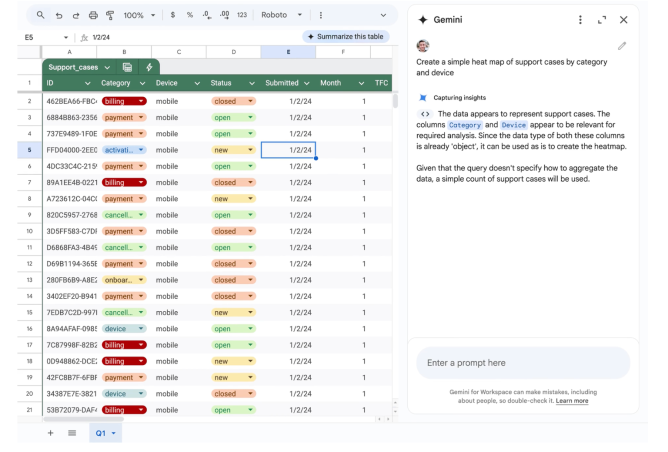
“Create a heatmap of support cases by category and device.”
“Identify anomalies in inventory levels for Product X.”

Gemini processes these requests using Python code for complex analyses while handling simpler queries with built-in formulas. For optimal results, Google advises users to ensure their data is structured with clear headers and no missing values.

Google Sheets with color-coded support cases and a Gemini AI panel on the right

What This Means for Users

The integration of Gemini AI into Google Sheets represents a significant shift in how businesses and professionals interact with data. Instead of relying on traditional spreadsheet formulas and manual calculations, users now have AI-powered analytics at their fingertips. This move also reflects Google’s growing focus on AI-driven productivity, competing with advanced business intelligence tools while maintaining the familiar ease of spreadsheets. As AI continues to evolve, the future of spreadsheets could shift toward fully automated data interpretation and decision-making support. With AI now embedded into Google Sheets, is this the beginning of a new era for spreadsheets, or will users still prefer manual control?

Read More: Google Announces Layoffs HR and Cloud Divisions Amid Cost-Saving Strategy

Google Announces Layoffs HR and Cloud Divisions Amid Cost-Saving Strategy

As Google continues optimising costs and restructuring operations, the company has announced new layoffs in its People Operations (HR) and Cloud divisions. The move is part of a broader effort to streamline business operations while increasing investment in AI infrastructure. Google informed its People Operations division employees that it will offer a voluntary exit program to U.S.-based full-time employees starting in early March. The initiative targets mid-to-senior level employees (Level 4 and Level 5), offering a severance package of 14 weeks’ salary plus one additional week for each year of service.

The layoffs align with Google’s cost-reduction priorities, as outlined by Finance Chief Anat Ashkenazi, who recently emphasized the company’s need to redirect spending toward AI development. Google’s recent Q4 earnings report highlighted strong demand for AI products but noted capacity limitations that require strategic investments.

Cloud Division Layoffs and Relocations

In addition to HR buyouts, several teams within Google Cloud have also been affected by internal restructuring. The sales operations, customer experience, internal deal, and go-to-market teams are among those impacted. Some of these roles are being relocated to India and Mexico City as part of the company’s effort to restructure global operations. Google confirmed the cloud division cuts, stating that reorganizations are a routine part of business operations. However, the company emphasized that the largest employee presence for its cloud business remains in the U.S. and that it continues hiring for critical sales and engineering positions.

Despite these layoffs, Google Cloud remains a high-growth unit, generating a 30% revenue increase year-over-year in Q4 2024. The company continues to compete with Amazon Web Services (AWS) and Microsoft Azure, leveraging AI-driven cloud solutions to expand its market share.

Google’s Strategy Moving Forward

This round of layoffs follows Google’s January announcement of workforce reductions in its Platforms and Devices unit, which includes Android, Chrome, Google Photos, Pixel, Fitbit, and Nest. The company maintains that streamlining operations is essential for long-term success as it prepares for massive AI-driven growth in the coming years. While the exact number of layoffs remains unclear, Google reassured that affected employees will receive support and opportunities to apply for other roles within the company.

Industry Reactions and Future Outlook

As tech giants continue to restructure their workforces, cost-cutting measures across major AI and cloud businesses are becoming more frequent. With companies like Meta, Amazon, and Microsoft also implementing similar workforce adjustments, the industry is shifting its focus to AI infrastructure and cloud computing dominance.

Read More: Meta Fires 20 Employees for Leaking Confidential Information

Google Unveils Free AI Coding Assistant ‘Gemini Code Assist’ with Industry-Leading Usage Caps

Picture a world where cryptic error messages never confront you and debugging over hours never crosses your mind just because of a missing semicolon, welcome to the AI-assisted coding age! A global game changer has been announced by Google, Gemini Code Assist for Individuals. It is an AI coding assistant that is completely free and very generous when it comes to usage caps. Although GitHub Copilot remains the undeniable ruler over AI-powered coding aids, Google has now embarked on an ambitious drive for AI dominance in developer tools.

With a strong contender in AI-based coding assistants, Google released Gemini Code Assist for Individuals on Tuesday, the free consumer version of its AI code completion and assistance tool. Gemini Code Assist for GitHub, which automates code reviews, finds bugs, and generates recommendations inside GitHub, was also launched.

Strong AI Partner for Developers:

Gemini Code Assist for Individuals enables developers to communicate with Google AI by natural language in a chat window. Like GitHub Copilot, it can fix bugs in projects, write code snippets, and explain complex code within a developer’s project. It’s powered by a fine modified version of Google’s Gemini 2.0 AI model, engineered for coding applications. It integrates seamlessly with coding environments, including Visual Studio Code and JetBrains, via plugins and supports many programming languages.

Massive Usage Caps Feature:

One of its most striking features is the massive usage caps that Gemini Code Assist offers Individuals. In comparison, Google offers 180,000 code completions in a month, which is 90 times what GitHub Copilot’s free plan offers with a limited 2,000 completions max per month. Additionally, users will receive 240 chat requests per day, which is roughly five times the allowable amount on GitHub Copilot’s free plan.

Aside from such usage caps, Gemini Code Assist also has a huge 128,000 token context window, allowing it to process large code bases far better than other contenders. According to Google, the context window is four times what other AI coding assistants of the company can handle, thus supporting better reasoning over grand scale projects.

Public Preview and GitHub Integration:

Developers can now sign up for the free public preview of Gemini Code Assist for Individuals. Meanwhile, Gemini Code Assist for GitHub carries the AI-assisted development process a step further by scanning pull requests automatically to identify potential issues and providing actionable recommendations. These launches mark a greater effort from Google in AI-powered development tools, which puts it in direct competition with Microsoft’s GitHub Copilot. Google notably recruited Ryan J. Salva, former head of GitHub Copilot, to lead its developer tooling efforts some seven months ago.

Google’s Strategy:

Providing a powerful free AI coding assistant with generous usage caps, Google hopes to tempt beginning developers. Ryan Salva notes that some of them may someday migrate to enterprise level Code Assist plans, thereby generating income for Google. Although free for Individuals, Google has been selling enterprise versions of the tool for the past 12 months. It announced integrations with GitLab, GitHub, and Google Docs in December, providing extra features such as audit logs, cloud product integrations, and support for private repositories for its business customers.

As AI-powered coding tools are evolving with unrelenting speed, Google creating Gemini Code Assist for individuals comes as an alluring alternative against Microsoft’s GitHub Copilot. With much higher usage caps and the more reliable computer coding assistant, it could change the entire AI coding assistant realm. With the current competition picking pace, developers ought to be beneficiaries of such developments since they stand to receive intelligent AI-driven tools. Coding is not getting automated yet, but it sure is becoming more intelligent and a little less painful.

Read More: Automattic’s Beeper Unveils Redesigned Desktop and iOS Messaging Apps Post-Merger

Chegg Sues Google Over AI Summaries, Citing Unfair Competition and Revenue Losses

In a significant legal development, educational technology firm Chegg has filed a lawsuit against Alphabet Inc.’s Google, alleging that Google’s AI-generated search summaries are undermining original content creators and diverting web traffic away from educational publishers. Filed in Washington, D.C., the lawsuit contends that Google’s AI overviews utilize content from third-party sites like Chegg to provide instant answers directly on the search page, reducing the need for users to visit the source sites. This practice, according to Chegg, diminishes the financial incentives for publishers to produce original content, potentially leading to a degraded information ecosystem.

Chegg’s Concerns Over AI-Generated Content

Chegg’s CEO, Nathan Schultz, emphasized the broader implications, stating that the lawsuit addresses concerns about the future of digital publishing and the quality of student learning resources. He argues that students are increasingly encountering low-quality, unverified AI summaries instead of reliable, step-by-step educational content. This shift not only impacts Chegg’s visitor and subscriber numbers but also raises questions about the integrity of the information available online.

Google’s Response to the Allegations

In response, Google spokesperson Jose Castaneda dismissed the claims as unfounded, asserting that AI overviews enhance the search experience by making it more helpful and increasing opportunities for content discovery. Castaneda noted that Google continues to direct substantial traffic to websites across the internet, with AI overviews contributing to a more diverse range of sites receiving visitors.

Impact on the Digital Publishing Environment

The lawsuit underscores a significant challenge in today’s online content sphere: balancing AI-driven information delivery with the viability of original content creation. As AI tools become more embedded in search engines, creators and publishers are increasingly worried about maintaining their visibility and revenue streams. The resolution of this legal dispute could establish new standards for managing and monetizing AI-generated content, potentially reshaping the relationships between major tech companies and content creators.

This case also underscores the challenges faced by educational platforms like Chegg in adapting to rapidly changing technologies. As AI tools become more prevalent, traditional models of content delivery and monetization are being disrupted, prompting companies to reassess their strategies to remain competitive and relevant in the digital age.

Read More: Musk Starlink Battles Chinese Rivals in Fierce Satellite Internet Race

Google Veo 2 AI Video Model Pricing Revealed at 50 Cents per Second

Google has long been a pioneer in artificial intelligence, consistently leading advancements and breakthroughs through its dedicated AI research divisions, such as Google DeepMind and Google AI. Over the years, the tech giant introduced transformative AI models like BERT for language understanding, Imagen for image generation, and Gemini, its versatile generative AI model, significantly shaping how industries approach AI-driven tasks.

In its latest development, Google has quietly disclosed pricing for Veo 2, Google latest AI video tool Veo 2 used for video generation, and was initially announced in December. According to details published on Google’s official pricing page, utilizing Veo 2 will cost users 50 cents per second of generated video, which equates to roughly $30 per minute or $1,800 per hour.

To put these figures into perspective, Google DeepMind researcher Jon Barron compared Veo 2’s pricing to the production costs of Marvel’s blockbuster, “Avengers: Endgame,” which had an enormous budget of approximately $356 million, or about $32,000 per second of footage. This comparison effectively highlights the relative affordability of Google’s AI-generated video content against traditional filmmaking costs.

However, it’s worth noting that users may not ultimately use every second of footage generated through Veo 2, especially since Google has indicated that the model typically creates videos of around two minutes in length. Users could pay for footage they don’t incorporate into their final projects.

Google’s pricing strategy also stands in contrast to rival OpenAI’s Sora model, which recently became available through a subscription-based pricing model—part of a $200-per-month ChatGPT Pro subscription.

Overall, Google per-second pricing positions Veo 2 as a premium service targeted at professionals and enterprises. While the upfront cost might appear significant, the model’s efficiency and flexibility could notably reduce production expenses and timelines, making it a compelling option for short, impactful, and commercially oriented video projects. Users, however, should carefully manage their content-generation planning to optimize cost-effectiveness.

Read More: Apple Launches iPhone 16e in China to Compete with Local Brands

Gemini is No Longer in the Google App, as Google Pushes it into a Standalone App

Google just pulled its classic “now you see me, now you don’t,” with respect to its AI assistant Gemini, from the main Google app on iOS, but hold your horses, all is not lost. It has been moved into another place, the standalone Gemini app. Whether this is a significant step in AI independence or just another treat that users would hate, remains to be seen.

Gemini, an Artificial Intelligence Assistant, will, however, be one of the first big shifts Google is making in delivering it to its iOS customers. The company now says Gemini will no longer be available in the main Google app on any iOS devices, as users will have to download a separate app called Gemini to use the AI assistant.

The move made by Google indicates the intention to position Gemini more as an independent, consumer-facing AI, directly in competition with others like OpenAI’s ChatGPT, Anthropic’s Claude, or Perplexity. Although, the risky bit is that the Google app already has millions of users, many of whom may not wish to download a separate app just to access Gemini, limiting its reach.

Official Announcement:

The customers were informed about this change through an email from Google, stating, “Gemini is no longer available in the Google app.” The email goes on to recommend that users wishing to continue using Gemini’s features should download Gemini’s dedicated application that was launched worldwide for iOS users last year. Until this point in time, Gemini had also been made available in the main Google app.

The email also included a warning for the users, reminding them that Gemini still makes mistakes, and they should always fact-check any response given by it. On the other hand, whenever iOS users attempt to open Gemini from the general Google app, a message for full screen now appears saying “Gemini now has its own app” with a link to download it from the App Store.

Gemini App Features and Premium Access:

Standalone Gemini app users on iOS will be entitled to enjoy various AI-related features that includes; live voice conversation with Gemini, connecting with other Google services such as Search, YouTube, Maps, and Gmail, To Ask questions, make travel plans, and explore topics, avail AI summaries, deep dives, and images, Interact via text, voice, or using a camera. Those in search of advanced AI functionalities will be able to use the Google One AI Premium plan, including Gemini Advanced, with the Gemini app. Users can subscribe to this service through in-app purchase.

Impact of Google’s Strategy Shift:

This strategic change brings opportunities and threats to Google. Although it allows Gemini to move into a standalone app so features can change quicker and compete head-on with AI-enabled chatbots, it would risk losing customers who would resist downloading yet another application. Whether this gamble pays off for Google remains to be seen, but in any case, it adds to the credibility of Google keeping its AI-worshipping leg out there in front of search functionality.

Read More: Elon Musk’s AI Revolution Continues as xAI Unveils Grok 3 AI Model

Google’s YouTube TV Reaches New Deal to Keep Paramount Content Available

Finally, YouTube TV subscribers may heave a sigh of relief after a long tussle as Google and Paramount came to an agreement just in time to keep all of the latter’s content under the streaming service. As reported late Saturday, this particular deal would guarantee full availability without interruption to popular networks such as CBS and CBS Sports as well as Nickelodeon, among others, for subscribers of YouTube TV.

For a few moments, the nerve wracking experiences of YouTube TV subscribers seem just about to play out, hitting the power button only to find CBS, Nickelodeon, and their Paramount favorites nowhere to be seen in the digital realm. Just then, panic was about to set in and some were even considering the unthinkable cable. This was when Google and Paramount decided to inject a bit of drama into the agonizing contract fight by relenting and coming to terms, thus preserving Paramount’s channels on YouTube TV. The part of the deal seems to be an expanded streaming relationship, possibly with Paramount + more tightly integrated into Google’s ecosystem.

Deal for Subscribers:                              

Only a few days earlier, YouTube TV went as far as warning users that had almost cleared all of the Paramount content as it approached the final deadline of February 13, and emphasized that this collection of programming will soon be for replacement. Google, however, was still working on the signing of a deal that would prevent their subscribers from having to endure any new increases in the subscription price and give them more flexibility in the bundling of channels.

While the deal itself is still under wraps, a Paramount spokesperson defined it as an “expanded streaming relationship” and said that, “not only will YouTube Primetime Channels continue to offer streaming services Paramount +, with Showtime and BET+ as add-ons, but Google also gets the right to make Paramount + available to qualifying YouTube TV customers”.

Negotiations under High Stakes:

Neither is this the first time that YouTube TV has entered into major contracts that have involved high profile contract disputes with media giants. Previously, Google lost Disney and came almost to the brink of losing key Disney owned networks before striking a last minute deal. Negotiations of the same kind between Google and Paramount demonstrate what has continuously been often called strains between the traditional media and the streaming media regarding content distribution and the rapidly changing tastes of viewers.

In its own announcement, Google said, “We’re happy to share that we’ve reached a deal to continue carrying Paramount channels, including CBS, CBS Sports, Nickelodeon and more … To our subscribers, we appreciate your patience while we negotiated on your behalf”. At the time, Google said it was “fighting for an agreement that avoids passing along additional costs and offers [subscribers] more flexibility in how you watch your favorite sports and shows.” 

In a harsh internal memo, Paramount’s co-CEOs, George Cheeks, Chris McCarthy, and Brian Robbins, declared Google as “unwilling to agree to reasonable terms consistent with the market, choosing to jeopardize the entertainment experience at the expense of consumers”. They further cited Paramount’s importance, saying, “The reality is, you can’t have a successful video product without Paramount, one of the leading media families in TV viewing”.

Broader Implications:

The immediate takeaway for YouTube TV subscribers is quite simple, no more sudden blackouts of their favorite Paramount channels but, the implications are broader. The giant content and pricing war between technology champions like Google and legacy studio Paramount is still far from over. Under this new agreement, YouTube TV subscribers can breathe easy with Paramount channels CBS, Nickelodeon, and CBS Sports will remain on board.

As streaming platforms and media giants engage one another in their tug of war over contracts and revenues, there is no doubt that the real winners or losers are always viewers. For now, at least, they can be left to relax and enjoy their favorite shows until the next round of negotiation. Similar arguments about content availability, pricing, and consumer choice will continue to occur as streaming services dominate the entertainment landscape.

Read More: TikTok Returns to App Stores in the US and the Ownership Battle Continues

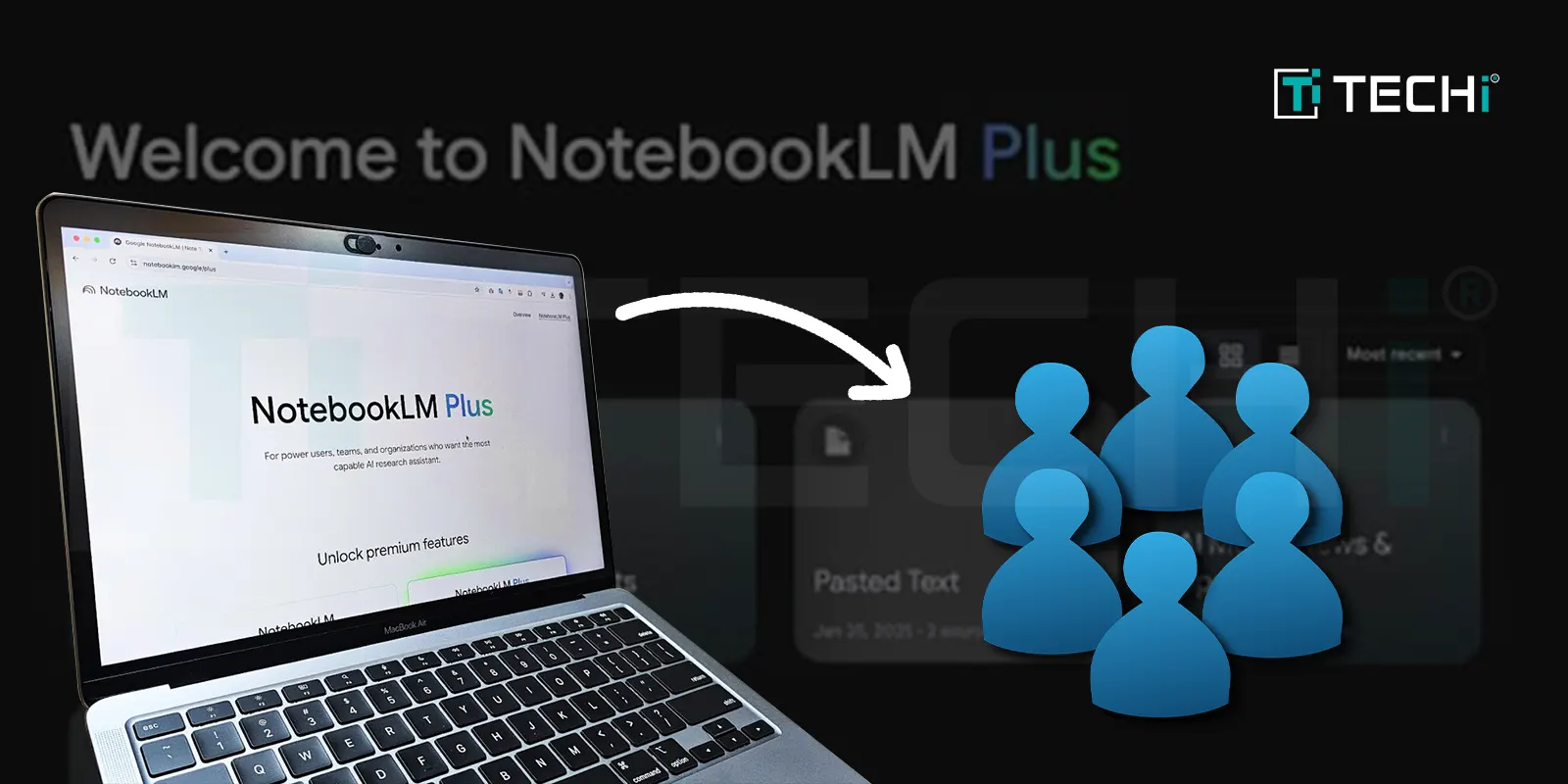
Google Expands NotebookLM Plus Access to Individual Users with AI Premium Features

Envision a world where your notes do not merely lie resting on a page, but rather actively collaborate with you in answering questions, summarizing research, and generating podcasts. Sounds futuristic? Well! Google is turning this imagination into a reality. The upgrade of AI-powered note taking brings with it the extension of NotebookLM Plus to individual users.

Google has unwrapped the NotebookLM Plus, a paid version of its AI-powered note and research assistant. It is available to individual users with the subscription to the Google One AI Premium plan, nearly two months after the launch of this service tailored to enterprises through Google Cloud and Google Workspace.

Improved Features for Subscribers:

Initially launched in December, following a pilot, NotebookLM Plus offers expanding higher usage limits and premium capabilities to subscribers. The subscribers’ access includes, five times the usage of free NotebookLM version, they can avail 500 notebooks and up to 300 sources per notebook and can access bigger 500 chat queries and 20 AI audio clips, all derived in a day.

These enhanced features now became available for individual users under the Google One AI Premium Plan at $20 per month. Google has also provided a 50% student discount through selling eligible U.S students above 18 years at $9.99 per month. Kelly Schaefer, director of product and domain lead at Google Labs said, “We have always wanted to get NotebookLM Plus out to enterprises and consumers, and have seen really a ton of interest from consumers, and in particular students from the beginning”.

Evolution of NotebookLM:

NotebookLM, launched in 2023, made waves and influenced when it featured Audio Overviews in September 2023. This feature lets users create audio conversations that sound like a podcast based on the content uploaded, and later on can be copied by its competitors like ElevenLabs and Meta. Google has kept refreshing NotebookLM with all sorts of improvements to keep up with the rest of the world, including advanced AI audio guidance. The firm is working on further extending support for other languages beyond English.

Schaefer explained, “We are thinking about how to prioritize the languages and then, most importantly, how to make sure that they feel really genuine and just as seamless and natural as our current Audio Overviews do”. Google has not described about adding which specific ‎Gemini AI models are powering NotebookLM, however, Schaefer confirmed that the same AI model underlies both Plus and free versions. Google Labs still experiments with several Gemini model variants to best optimize experience with specific tasks.

Advanced AI Integrations and Market Growth: 

Schaefer also elaborated on Google’s plan to come up with a NotebookLM mobile application that is programmed to create a seamless but customized mobile experience, although a date was not mentioned. On the other hand, Google is trying to visualize how advanced reasoning models can really come in handy for NotebookLM in improving the assistant’s capacity to set up complex thought processes and reasoning tasks. Schaefer said, “We want mobile to feel in many ways similar to the desktop experience but also really tailor it for the use cases that are most common for mobile”.

While NotebookLM Plus always strives to improve for paying subscribers, the company’s commitment remains that of providing a wonderful experience for all free users. As Schaefer explained, “We want folks to get an excellent experience on NotebookLM, whether they’re free or paid, and it’s very important to us that the NotebookLM free experience is excellent. So, we’re thinking more about how we offer even more to the Plus users versus degrading any experience for free users”.

Google has not revealed any figures regarding the number of users on NotebookLM, but market intelligence firm Similarweb suggests that the AI assistant was able to garner 28.18 million visits in the last three months, 9 million of those in January alone. As more users join NotebookLM Plus, a combination of sustained improvability and planned diversification could further uphold Google in the AI-driven research assistant market.

Read More: Your Favorite App Might Be Gone! Apple & Google Removed Dangerous App

Google’s Most Advanced AI Model Gemini 2.0 Now Available for Everyone

The future of AI is unfolding before our eyes, and Google is leading the charge with its latest advancements in the Gemini model family. Gemini 2.0 is now available to everyone, from faster processing to deeper reasoning it promises a new era of AI powered creation, interaction, and collaboration. Google has officially launched the most recently updated AI model, Gemini 2.0 that brings in improved capabilities as well as better accessibility for developers and users worldwide. It is a major milestone in AI evolution, indicating an array of models for a collection of tasks ranging from high speed reasoning to very cost effective AI solutions.

Evolution of Gemini 2.0:

In December, Google introduced the revolutionized era with an experimental release of Gemini 2.0 Flash, an advanced model characterized by efficiency, low latency, and performance enhancement. Following that, advanced updates have since been made in some of its better capabilities, with a version integrated into Google AI Studio for complex and problem solving skills.

Last week, Google again widened the scope of 2.0 Flash in terms of accessibility to all Gemini users across all desktop and mobile platforms. It is now taking a significant step in offering general availability of the updated Gemini 2.0 Flash via the Gemini API in Google AI Studio and Vertex AI for developers to easily build and deploy production applications.

Introducing Gemini 2.0 Pro and Flash-Lite:

Gemini 2.0 Pro (Experimental) is for coding and really complicated prompts, this is the most powerful model Google has put out yet. With an enormous 2 million token context window, it has deep analytical capabilities and can call tools, like Google Search and code execution. The model is currently available to Gemini Advanced users on Google AI Studio, Vertex AI, and the Gemini app.

Gemini 2.0 Flash-Lite is very cost-efficient where it slightly surpasses in quality over its predecessor (1.5 Flash) without sacrificing speed or cost. The context window of Flash-Lite is 1 million tokens, and it is optimized for jobs that can have AI work very fast for very little. For example, in the paid tier of Google AI Studio, it charges less than 1 dollar to generate 40,000 unique photos with a one liner caption that is very relevant to each photo. It is now available via Google AI Studio and Vertex AI.

Upgrades for the Advanced Era:

All Gemini 2.0s provide a multimodal input with text output and are extending into other upgrades in a few months. Features like image generation and text to speech are also under consideration, giving enhanced interaction possibilities to AI. Meanwhile, as AI technology matures, Google remains committed to its safety and responsible use. The reinforcement learning systems used in the Gemini 2.0 series allow the AI to critique its own answers with a view of being more accurate and sensitive towards prompts. Automated Red Teaming is also being employed to counter security threats such as indirect prompt injection attacks.

Google, with Gemini 2.0 now available to a wider audience, is hopeful to flourish in a whole new age of AI-driven solutions. The powers of this gem can be put to the test by developers and users alike in the Gemini app, Google AI Studio, or Vertex AI. As AI models continue to evolve, Gemini 2.0 provides the perfect platform for the next generation of highly sophisticated, accessible, and secure applications. 

Read More: Google Revises AI Ethics, No Longer Rules Out AI‘s use for Weapons and Surveillance

Google’s Search Will Evolve into a Personal AI Assistant by 2025

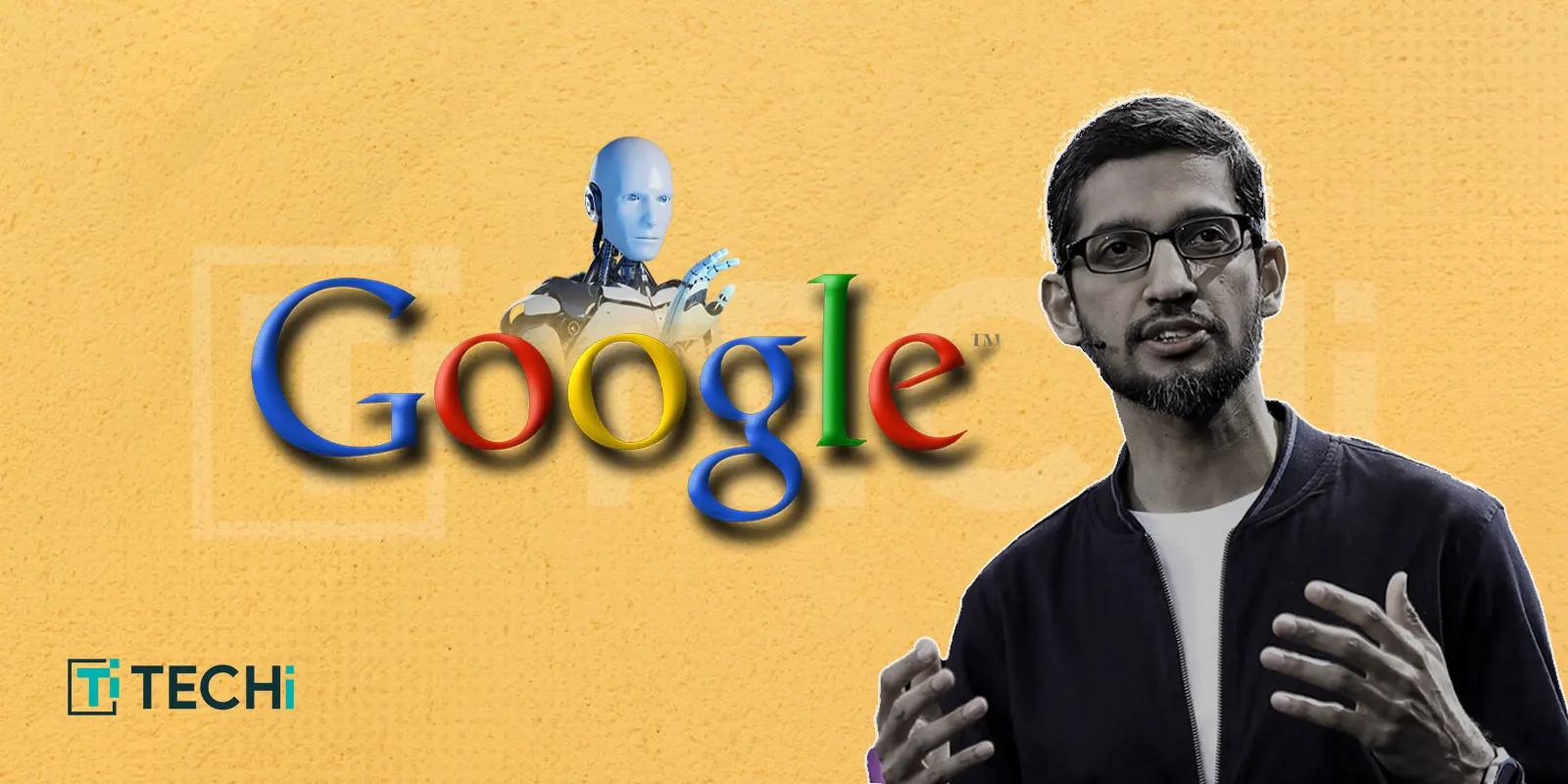
Google Search is undergoing a transformation that could mark a defining moment for search technology in 2025. Sundar Pichai, Google CEO, in an interview during his opening remarks said, “As AI continues to expand the universe of queries that people can ask, 2025 is going to be one of the biggest years for search innovation yet”.

The company’s vision is to evolve Search from a simple tool that provides links into an AI assistant to be capable of browsing the internet, analyzing web pages, and delivering well-structured answers.

Evolution of AI Assistant:

This transition began with AI Overviews, a fundamental shift in how Google processes and presents information to users. As the rollout has been controversial due to some bizarre errors which include suggesting users eat rocks, Google remains committed to integrating AI into Search. Pichai said that, “You can imagine the future with Project Astra”, this implies that he believes AI can handle a broader range of queries, and in 2025, Google aims to introduce more advanced features.

One of the key multimodal AI system that contributes to this modification is DeepMind’s Project Astra. Unlike conventional search engines, Astra can process and analyze live video or images in real time, providing answers based on what it perceives. This innovation could accelerate Google’s vision for AR smart glasses, moving the company further into an AI-driven future.

Search and AI Research:

Another major feature of Google is the Gemini Deep Research, which is an AI agent that is designed to work in creating extensive and comprehensive research reports. This can then change everything about how users interact with Google Search, rather than going through tons of links, users would receive complete AI-generated insights on very complex topics. This would help in automating tasks that are usually done manually.

On the other hand, Project Mariner, another AI initiative, carries automation even further by attempting to perform online tasks on behalf of users. This could massively change how people browse the web, potentially making it unnecessary to visit a website. Google would like to further enhance these developments by making Search more conversational, allowing a user-friendly experience where follow-up conversations and queries will upgrade the interaction, resulting much like that of a chatbot.

Google’s AI-driven Search is a way to counter the esteemed chatbots, its great rivals, and not just more of a benefit for the enhancement of user experience. The rapid rise of ChatGPT proves to be an even greater challenge to the dominance of Google in online search. Its strategy of throwing AI deep into Search, Google wants to remain relevant in the age when users expect an intelligent instant response rather than a simple list of links.

However, the first generation of Google Search AI was nevertheless full of bumps and faced challenges but a whole string of unfortunate mess ups followed the rollout of AI overviews, as it dished out improper and at times, even foolish responses. Google accepted the mishaps and promised improvements, while continuing to make sure to refine the AI-supported Search rollout for a reliable experience of users.

Future of Google Search:

Sundar Pichai regarding the future of Google stated, “You are really dramatically expanding the types of use cases for which Search can work – things which don’t always get answered instantaneously, but can take some time to answer. Those are all areas of exploration, and you will see us putting new experiences in front of users through the course of 2025.” This hinted towards some new ways that users will be able to interact with Search, mainly through conversational features and a more robust capability over time to respond to complex queries.

He also said, “I think the [Search] product will evolve even more. As you make it more easy for people to interact and ask follow-up questions, etc., I think we have an opportunity to drive further growth.” It shows us that regardless of criticisms and hurdles, Google aims to spearhead the AI revolution in search technology.

Read More: Google Partners with HTC in $250M XR Deal: A Bold Step to Rival Apple and Meta in Immersive Tech

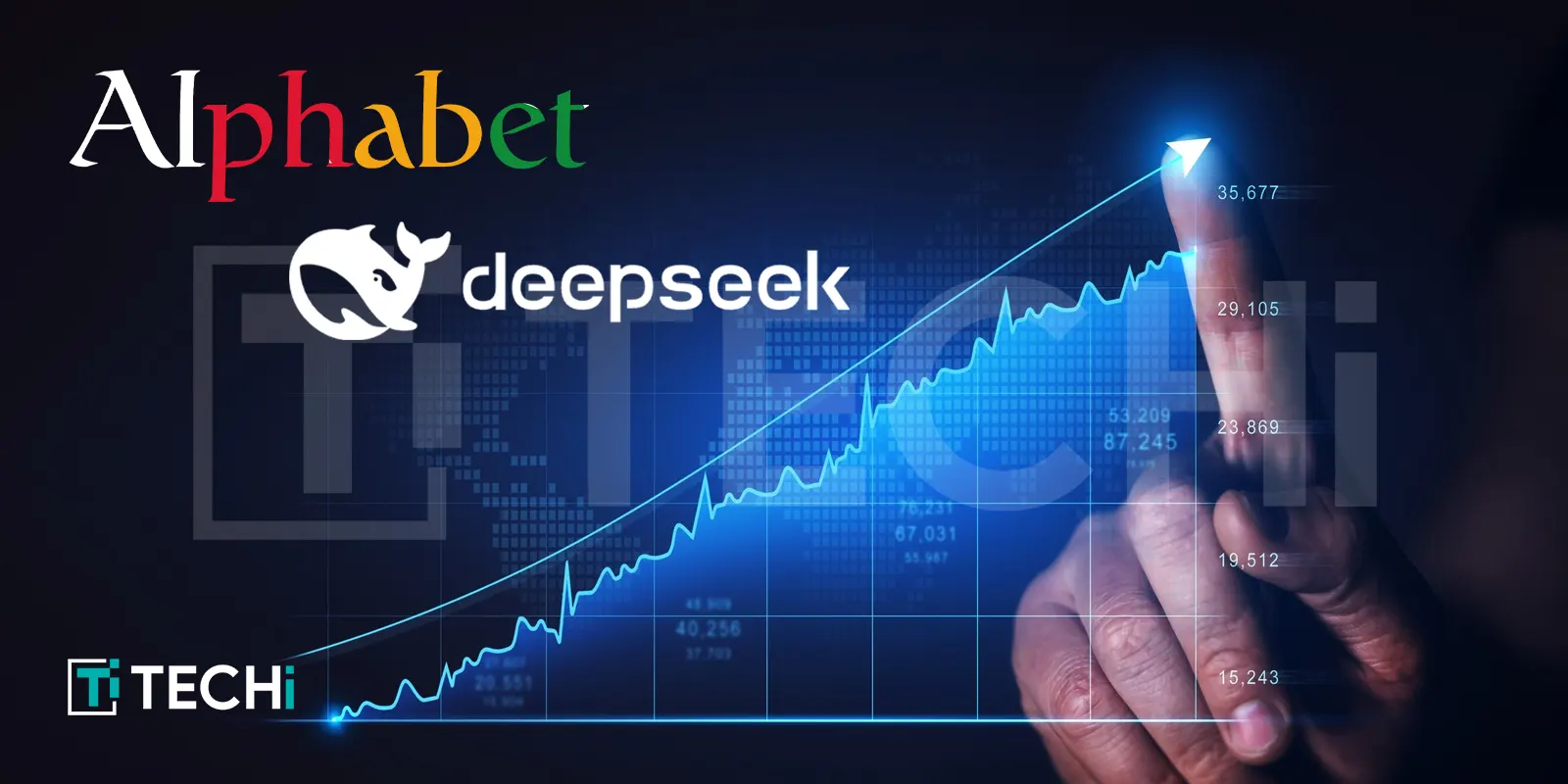
DeepSeek Disrupts the AI Titans: Google, Meta, and Microsoft Fight Back with Unprecedented Spending

In the last two weeks, we have seen speculations that DeepSeek will revolutionize investments in AI and (might give tough competition to Tech Giants like Meta, Google and Microsoft. They caused Nvidia stocks to go down rapidly and investors feared that the demand for AI chips and data centers would no longer be the same. DeepSeek’s huge success also put a question mark on whether Meta, Google, and Microsoft will be spending less on AI investments.

But in Google parent company Alphabet’s latest earnings call, CEO Sundar Pichai ended the rumours. He noticed a Chinese AI company, DeepSeek, praised what they do and compared it with some Gemini models, stating that they are good enough, too.

He also talked about his plans. Instead of stepping back, Alphabet is doubling down on AI investments, with a massive increase of capital expenditures to $75 billion in 2025, a 42% jump from the previous. Alphabet spent $32.3 billion on capital expenditures in 2023, so $75 billion in 2025 would be a big jump.

The reason? 

Cheaper AI could drive higher demand for Google’s AI-powered services. More people will use it, leading to more business opportunities.

Mark’s Meta:

Not only Sundar, but Meta’s CEO Mark Zuckerberg also announced massive long-term AI spending. Zuckerberg already announced last week that Meta would spend more than $60 billion in 2025 alone on capital expenditures, primarily on data centres. Sparking his confidence from his statement over leading the AI dominance race. He also suggests that tech giants aren’t slowing down despite DeepSeek or any newcomer AI model popularity or success.

What is Meta up to:

Meta’s goal with its next model, Llama 4, is to make it the world’s most competitive, even compared to closed models (like ChatGPT). Zuckerberg expects Llama 4 to have agentic capabilities, a mixture of both OpenAI and Anthropic and multimodal ones.

Microsoft’s Agenda:

Microsoft CEO Satya also has a take on DeepSeek’s ‘lower cost’ agenda. He said the spending would ease capacity constraints that have hampered the technology giant’s ability to capitalize on AI.

“As AI becomes more efficient and accessible, we will see exponentially more demand,” he said on a call with analysts.

With this, Microsoft has earmarked $80 billion for AI in its current fiscal year, while Meta has pledged as much as $65 billion. All 3 tech giants seem to have healthy competition in the AI global dominance race. Less concerned about newcomers with their ‘new strategies’.

But here comes the real question:

  • Will this huge spending actually pay off? 
  • Time will surely unfold this mystery.
    Stay tuned to learn more.

Read More: OpenAI Seals Partnership with Kakao, Expanding Its Asian Collaborations

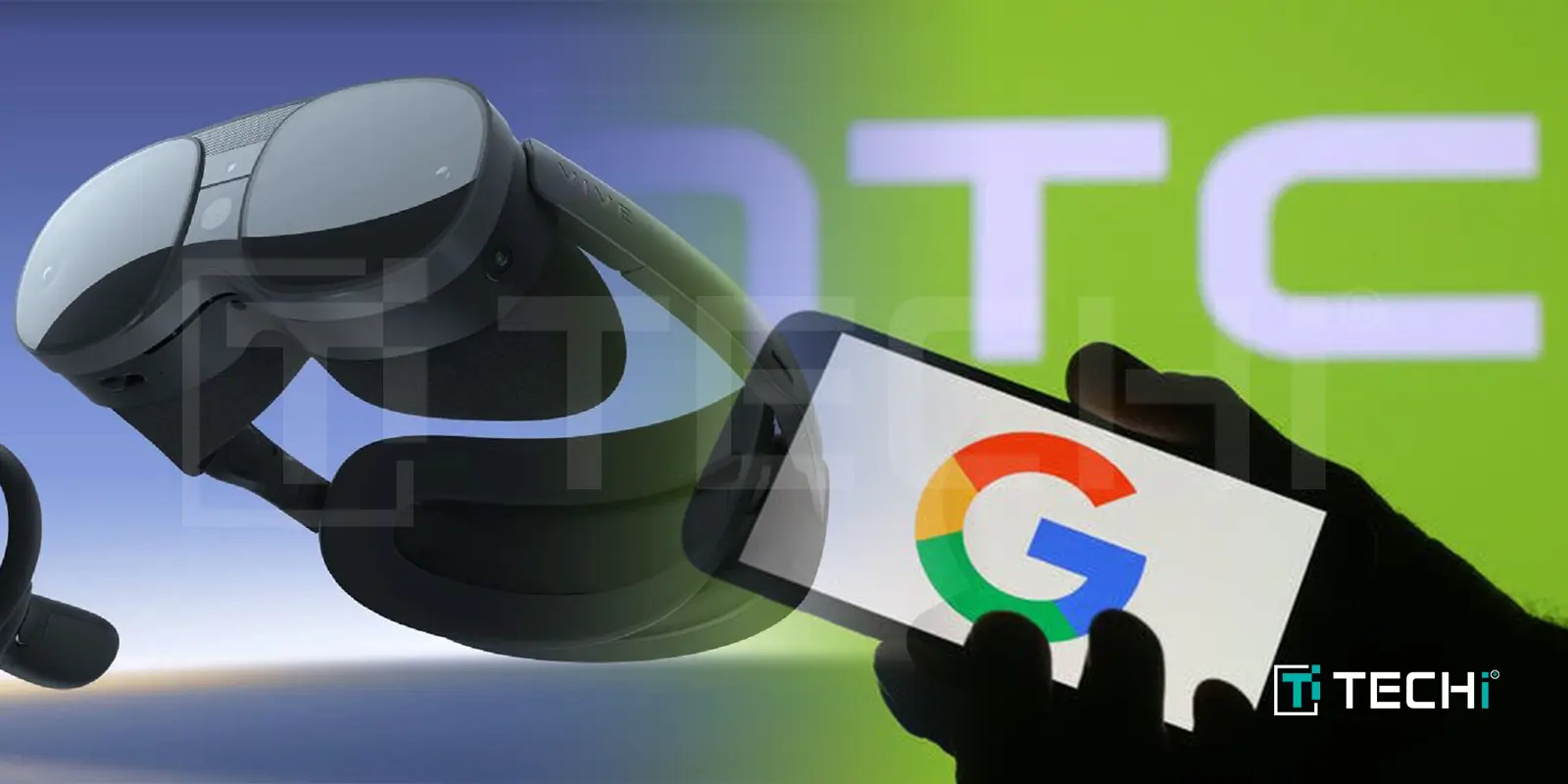
Google Partners with HTC in $250M XR Deal: A Bold Step to Rival Apple and Meta in Immersive Tech

Google’s Latest & Bold Move!!

Acquiring a part of HTC’s XR business for $250 million?

Trying to rule the XR space?

Google is damn serious about competing in the advanced technology space.

What’s happening?

Let’s start from scratch.

1. What is XR?

  • XR, or Extended Reality, is a collective term that includes:
    • Virtual Reality (VR): Fully immersive digital environments.
    • Augmented Reality (AR): Digital overlays on the real world (think Pokémon GO).
    • Mixed Reality (MR): A mix of both VR and AR.

2. What’s the Deal About?

  • Google is buying a part of HTC’s XR business for $250 million.
  • The deal includes:
    • Engineering staff: HTC VIVE engineers known for their expertise in VR headsets and technology will now work for Google.
    • Intellectual Property (IP): Google gets non-exclusive rights to HTC’s XR technology, meaning HTC can still use and develop it.

3. Why Is This Important?

  • Google recently launched its Android XR platform, a system for running XR applications (like headsets and smart glasses). This acquisition will speed up the development of this platform.
  • Google will be a strong competitor to companies like:
    • Meta (Facebook): Known for Oculus VR headsets.
    • Apple: Vision Pro and much more (who doesn’t know them?)

4. History Between Google and HTC

Lifetime collaboration on the way?

 5. What Does this deal have for HTC?

  • HTC will retain the rights to use and develop XR technology, so it’s not about losing its entire XR division.
  • This allows HTC to still innovate in the XR space while having funds from Google.

6. The Bigger Picture

Who will play a long-run game?

Google is trying to catch Meta and Apple, which are already ahead in their XR devices. Investing heavily to become Top 1 and become a key part of the future.

Google, Apple, Meta or any other pro player rule the XR game?

Time will tell.

Stay tuned to techi.com to get regular updates.

Read More: Google Stance on European Union Fact-checking Mandates

Google SEO: Proven Steps to Explode Your Website Traffic

Unlock the Power of Google: A Comprehensive Guide for Website Success

In today’s digital landscape, a strong online presence is paramount for success. And when it comes to online presence, Google reigns supreme. Understanding how Google works and how to optimize your website for its algorithms is no longer optional; it’s essential. Whether you’re a small business owner, a marketing professional, or a budding entrepreneur, leveraging the power of Google can significantly impact your visibility, traffic, and ultimately, your bottom line.

This guide will provide you with a comprehensive overview of key Google services and strategies you can implement to enhance your website’s performance. We’ll delve into search engine optimization (SEO  dsadsadasd), explore Google Ads for targeted advertising, uncover the potential of Google Analytics for data-driven decisions, and highlight other valuable Google tools. By the end of this guide, you’ll have a solid foundation for building a Google-friendly website and achieving your online goals.

Let’s embark on this journey to unlock the power of Google and propel your website to new heights.

Mastering Search Engine Optimization (SEO) for Google

SEO is the cornerstone of a successful Google strategy. It involves optimizing your website to rank higher in search engine results pages (SERPs) for relevant keywords. A higher ranking translates to increased visibility, more organic traffic, and ultimately, more conversions.

Keyword Research: Understanding Your Audience’s Language

Keyword research is the foundation of any effective SEO strategy. It involves identifying the terms and phrases your target audience uses when searching for information related to your business. Tools like Google Keyword Planner, SEMrush, and Ahrefs can help you discover relevant keywords, analyze their search volume, and assess their competition.

  • Long-tail keywords: These are longer, more specific phrases that often have lower search volume but higher conversion rates. For example, instead of targeting “running shoes,” you might target “best running shoes for flat feet.”
  • Competitor analysis: Analyze your competitors’ websites to identify the keywords they’re targeting and the strategies they’re using to rank.
  • User intent: Consider the user’s intent behind each keyword. Are they looking for information, a product to buy, or a specific service?

On-Page Optimization: Making Your Website Google-Friendly

On-page optimization involves optimizing the content and HTML source code of your website to improve its ranking in search results. This includes optimizing title tags, meta descriptions, headings, and content.

  • Title tags: These are the titles that appear in search results and are crucial for attracting clicks. Keep them concise, compelling, and relevant to the page’s content.
  • Meta descriptions: These are short summaries of the page’s content that appear below the title tag in search results. Use them to entice users to click on your link.
  • Headings: Use headings (H1, H2, H3, etc.) to structure your content and make it easier to read. Include relevant keywords in your headings.
  • Content optimization: Create high-quality, informative, and engaging content that is relevant to your target keywords. Use keywords naturally throughout your content and avoid keyword stuffing.

Off-Page Optimization: Building Authority and Trust

Off-page optimization involves building your website’s authority and trust through external factors, such as backlinks from other reputable websites. Backlinks are a signal to Google that your website is a valuable resource.

  • Link building: Earn backlinks from high-quality websites in your industry. This can be achieved through guest blogging, creating valuable content that others will link to, and participating in industry forums and communities.
  • Social media: Promote your content on social media platforms to increase its visibility and reach. Social signals can indirectly influence your search rankings.
  • Brand mentions: Encourage mentions of your brand on other websites and online publications.

Leveraging Google Ads for Targeted Advertising

Google Ads is a powerful advertising platform that allows you to reach potential customers who are actively searching for your products or services. It’s a pay-per-click (PPC) advertising model, meaning you only pay when someone clicks on your ad.

Setting Up Your Google Ads Campaign

Creating a successful Google Ads campaign requires careful planning and execution. Here’s a step-by-step guide:

  1. Define your goals: What do you want to achieve with your Google Ads campaign? Increase website traffic, generate leads, or drive sales?
  2. Choose your keywords: Select relevant keywords that your target audience is likely to search for. Use the Google Keyword Planner to identify the best keywords for your campaign.
  3. Create compelling ad copy: Write clear, concise, and persuasive ad copy that highlights the benefits of your products or services.
  4. Set your budget: Determine how much you’re willing to spend on your campaign. You can set a daily budget or a total campaign budget.
  5. Track your results: Monitor your campaign’s performance and make adjustments as needed. Google Ads provides detailed reports on your campaign’s clicks, impressions, and conversions.

Understanding Different Ad Formats

Google Ads offers a variety of ad formats to suit different advertising goals. Some popular ad formats include:

  • Search ads: These are text-based ads that appear in Google search results.
  • Display ads: These are image or video ads that appear on websites and apps across the Google Display Network.
  • Shopping ads: These are product ads that appear in Google Shopping results.
  • Video ads: These are video ads that appear on YouTube and other video platforms.

Optimizing Your Google Ads Campaign for ROI

To maximize your return on investment (ROI) with Google Ads, it’s crucial to continuously optimize your campaign. This includes:

  • Improving your Quality Score: Your Quality Score is a metric that Google uses to assess the quality and relevance of your ads and keywords. A higher Quality Score can lead to lower ad costs and better ad positions.
  • A/B testing your ad copy: Test different versions of your ad copy to see which performs best.
  • Refining your keyword targeting: Add negative keywords to prevent your ads from appearing for irrelevant searches.
  • Analyzing your conversion data: Track your conversions and identify the keywords and ads that are driving the most sales or leads.

Harnessing the Power of Google Analytics for Data-Driven Decisions

Google Analytics is a free web analytics service that provides valuable insights into your website’s traffic, user behavior, and performance. By tracking and analyzing this data, you can make informed decisions to improve your website and achieve your business goals.

Setting Up Google Analytics on Your Website

Implementing Google Analytics on your website is a straightforward process:

  1. Create a Google Analytics account: If you don’t already have one, create a free Google Analytics account.
  2. Add your website: Add your website to your Google Analytics account and obtain your tracking code.
  3. Install the tracking code: Install the tracking code on every page of your website. This can be done by adding the code directly to your website’s HTML or by using a plugin or tag management system.

Understanding Key Metrics in Google Analytics

Google Analytics provides a wealth of data, but it’s important to focus on the key metrics that are most relevant to your business goals. Some important metrics include:

  • Users: The number of unique visitors to your website.
  • Sessions: The number of times users visited your website.
  • Pageviews: The total number of pages viewed on your website.
  • Bounce rate: The percentage of users who leave your website after viewing only one page.
  • Average session duration: The average amount of time users spend on your website during a session.
  • Conversion rate: The percentage of users who complete a desired action, such as making a purchase or filling out a form.

Using Google Analytics to Improve Your Website

Google Analytics can be used to identify areas for improvement on your website. For example:

  • Identify underperforming pages: Use the Behavior reports to identify pages with high bounce rates or low average session durations.
  • Optimize your website for mobile: Use the Mobile reports to see how your website performs on different devices.
  • Track your marketing campaigns: Use the Campaigns reports to track the performance of your marketing campaigns.
  • Understand your audience: Use the Demographics and Interests reports to learn more about your website’s visitors.

Exploring Other Valuable Google Tools

Beyond SEO, Google Ads, and Google Analytics, Google offers a wide array of tools that can help you manage your website and grow your business.

Google Search Console: Monitoring Your Website’s Performance in Google Search

Google Search Console is a free tool that helps you monitor your website’s performance in Google Search. It provides valuable insights into your website’s indexing status, search traffic, and technical issues.

Google My Business: Managing Your Online Presence

Google My Business allows you to manage your business’s online presence across Google, including Search and Maps. It’s essential for local SEO and helps customers find your business online.

PageSpeed Insights: Improving Your Website’s Speed

PageSpeed Insights analyzes your website’s speed and provides recommendations for improving its performance. A faster website can improve user experience and search rankings.

Conclusion: Embracing Google for Website Success

In conclusion, mastering Google is crucial for website success in today’s digital age. By implementing effective SEO strategies, leveraging Google Ads for targeted advertising, harnessing the power of Google Analytics for data-driven decisions, and exploring other valuable Google tools, you can significantly enhance your website’s visibility, traffic, and ultimately, your bottom line.

Take the first step today. Start implementing the strategies outlined in this guide and continuously monitor your progress. With dedication and a data-driven approach, you can unlock the full potential of Google and propel your website to new heights. Don’t wait, start optimizing your website for Google now and watch your online presence flourish!