OpenAI Unveils GPT-4.5 ‘Orion’ – The Next Leap in AI Evolution

The artificial intelligence race took a turn with OpenAI’s new revolutionizing release of GPT-4.5, the most powerful kind of model and most compute intensive to date. Designed internally as “Orion,” its newest version is an OpenAI assertion of continuing to win in an industry where the bigger the model, the better the results. So, what do these new moves mean for the general user and the AI landscape at large? 

OpenAI holds on to its “big is better” philosophy, after pouring in billions scaling up infrastructure, Anthropic and DeepSeek have continued to disrupt this modeling field by introducing cost-effective models that both go up against one another. Hence, the GTP-4.5 is not just another incremental upgrade, rather it makes a clear strategic statement of an index of OpenAI’s fighting spirit in its approach. As users get the first glimpses of the model via the exclusive $200 a month ChatGPT Pro subscription, the question now is, does OpenAI step rolling along a progressively risky thin rope against a shifting landscape?

The release continues OpenAI’s tradition of scaling AI models to enhance their performance and usability. GPT-4.5 is reportedly better at understanding user prompts than prior models, producing results that are accordingly natural and nuanced in the response. While no specific details about its weight and computer requirements have been noted, OpenAI maintains that this model minimizes the problem of hallucinations, thanks to its enhanced knowledge. Mia Glaese, who leads OpenAI’s alignment team and human data team says, “If you know more things, you don’t need to make things up,”

Competition and GPT’s Growth:

The release of GPT-4.5 follows a sequence of substantial AI developments in 2025. Competitors such as Anthropic have developed hybrid reasoning models for Claude, and Chinese researchers at DeepSeek have made remarkable achievements on very low budgets. OpenAI, however, believes strongly that bigger models mean better AI and has invested billions into building AI infrastructure to support this philosophy.

While growth is the major focus, GPT-4.5 is not considered a reasoning model in the sense of their `o’ series, as it has been stated by Sam Altman, CEO, to be the last model non-integrated with chain of thought reasoning, pointing towards a shift towards integrated and adaptive AI experiences in its next releases. He posted on social media earlier in February, “ship GPT-4.5, the model we called Orion internally, as our last non chain-of-thought model.” The researchers are also putting efforts into streamlining user interactions so ChatGPT can dynamically select the best model for a prompt without requiring the user to select the model from a dropdown.

Future of AI and the OpenAI’s Vision:

With the introduction of GPT-4.5, web search, file and image uploads, and the canvas feature all come into play, but the present course has no AI Voice Mode support. Benchmarking results are competitive in some instances with promising language performance from the system but losing out to o3-mini in assessments of certain areas of math and science, although OpenAI says that the real success of GPT-4.5 will show itself through the user experience.

At a time when competition is heating up in AI, OpenAI is still committed to widen the frontiers in unsupervised learning by data scaling, compute, and training efficiency. According to researchers like Nick Ryder, enlargement of model size does not in itself make it hard to interpret and all current methods of interpretation can still be applied to these huge AI systems. Ryder says, “Saying this is the last non-reasoning model really means we’re really striving to be in a future where all users are getting routed to the right model”. He added, “By increasing the amount of compute we use, by increasing the amount of data we use, and focusing on really efficient training methods. We push the frontier of unsupervised learning.”

This is also the extent of OpenAI’s ambition with regard to things technical, as it develops the emotional intelligence, intuition, and aesthetic preferences of the future AI, it defines an intelligent machine quite unique in productivity with impressive soft skills and cuts a little closer to the time, when AI incorporates itself in the workflow of human beings.

As OpenAI puts new AI initiatives in overdrive with models like GPT-4.5, the audience becomes even more demanding in terms of scaling versus efficiency. Whereas many industry voices are contending with optimising performance against a thinner budget, for OpenAI, this part of the race is still all about bigger and more complex models toward seeking better ability for AI to understand and respond to human nuance. Whether it will keep its place in the front or slip into the point of diminishing returns is yet to be determined. 

Read More: Meta Gears Up to Launch Standalone AI Chatbot to Challenge ChatGPT & Gemini
Baidu Set to Launch Ernie 4.5 AI Model in Mid-March, Adopting Open-Source Strategy

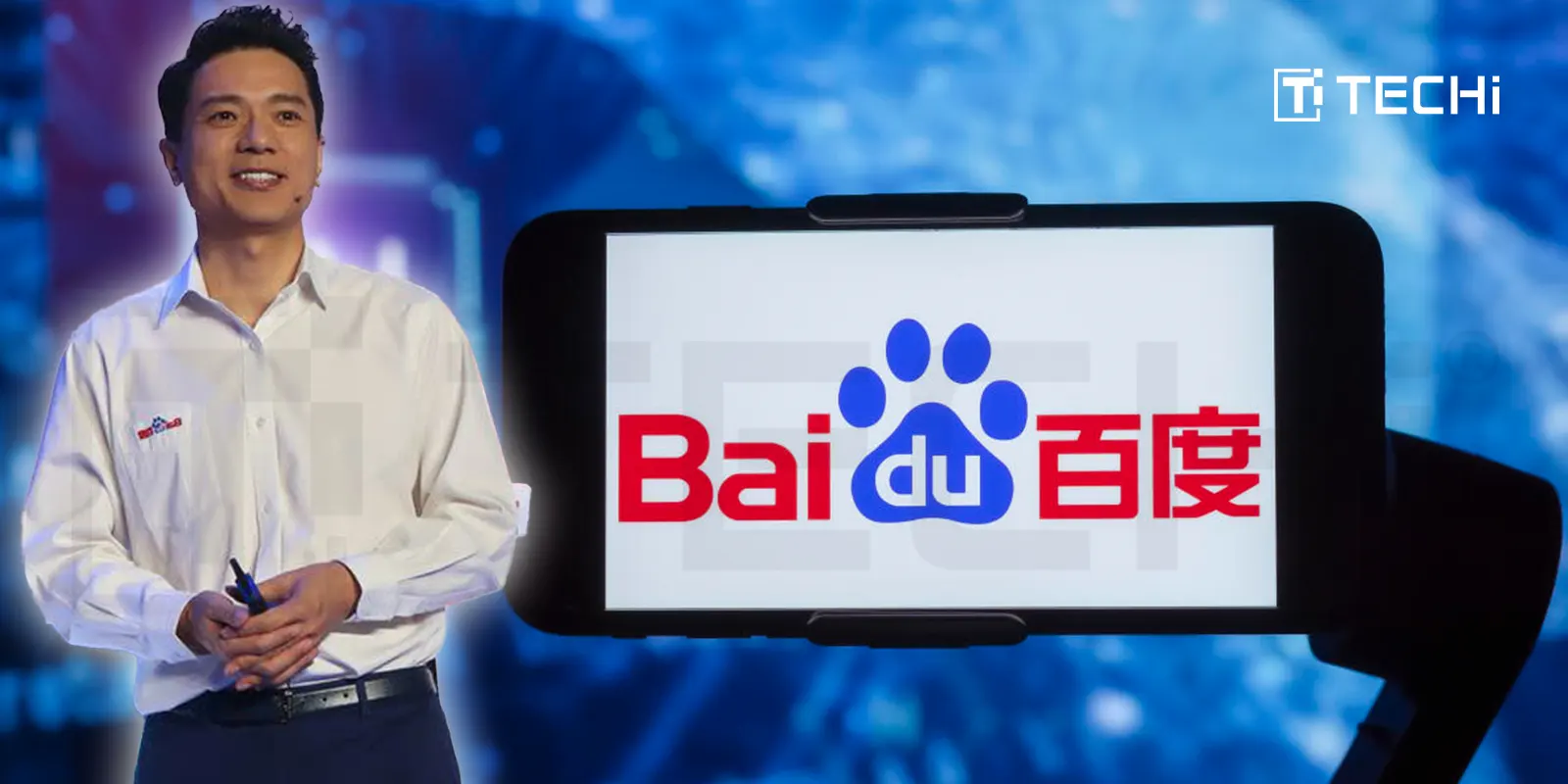
Baidu has long been a dominant player in China’s artificial intelligence landscape. In 2016, it pioneered AI-driven innovations like Baidu Brain and launched Ernie, a ChatGPT-style chatbot, in 2023. However, as AI competition heats up, Baidu is shifting gears to stay ahead. The company is preparing to launch its upgraded AI model, Ernie 4.5, in mid-March. This model will introduce improved reasoning and multimodal capabilities to more effectively process text, images, video, and audio.

Baidu had previously announced that it would gradually roll out the Ernie 4.5 series over the coming months, with a fully open-source release planned for 30 June. This represents a significant shift in the company’s approach. CEO Robin Li, who once believed in keeping AI models closed-source, has recently acknowledged that growing competition from the Chinese AI startup DeepSeek influenced Baidu’s decision to adopt open-source development.

Despite Baidu’s early entry into the AI chatbot arena, Ernie has struggled to secure mass adoption. DeepSeek, which has launched affordable AI models comparable to leading Western competitors, has further compelled Baidu to reassess its AI strategy. With the impending launch of Ernie 4.5, Baidu is making a clear statement—it is prepared to adapt and compete with both domestic challengers and AI leaders such as OpenAI and Google.

The AI race in China is intensifying, particularly after Alibaba recently announced that its video and image-generating AI model, Wan 2.1, would also be open-source. Baidu’s latest move suggests that the future of AI development in China may favour greater transparency and collaboration, a trend that could reshape the industry. As the official launch of Ernie 4.5 approaches in mid-March, the coming months will be crucial in determining whether Baidu’s strategic shift will enable it to strengthen its position in the AI landscape.

Read More:
After R1’s Success, DeepSeek Fast-Tracks Launch of New AI Model R2


Elon Musk’s AI Revolution Continues as xAI Unveils Grok 3 AI Model

Artificial intelligence has evolved rapidly along with xAI certainly taking up the challenge with the launch of Grok 3 AI Model that promises advanced reasoning capabilities, deep search, and a voice mode, making it the most intelligent chatbot around. Although, in the current super competitive AI race, one question is raised in people’s minds, will Grok 3 outwit, outlast, and out-GPT its competitors?

The xAI’s Grok 3, founded by Elon Musk, became the latest flagship AI model launched, with new features being introduced in Grok apps on iOS and the Web. It is designed to compete with OpenAIs’ models GPT-4o or Google ‎Gemini. Grok 3 has extensive capabilities in image analysis, reasoning, and deep research functions, categorically establishing an AI performance benchmark.

Grok 3 AI Model step ahead in AI:

Grok 3 AI Model had reportedly been under development for a few months and was in need of massive training in a data center in Memphis with nearly 200,000 GPUs. Musk in his post on X claimed that, “Grok 3 was developed with 10x more computing than Grok 2, its predecessor, and with an expanded training data set that ostensibly includes filings from court cases”.

During a live-streamed presentation Musk said, “Grok 3 is an order of magnitude more capable than Grok 2. [It’s a] maximally truth-seeking AI, even if that truth is sometimes at odds with what is politically correct”. Grok 3 is not one model, but rather a family of models, including the Grok 3 mini, which works faster but with less accuracy. Not all features are available right away but the launch has started this Monday.

Performance and Benchmarks:

According to xAI, Grok 3 surpasses GPT-4o in major AI benchmarks, including American Invitational Mathematics Examination (AIME) (resolution of mathematically inclined questions) and Graduate-Level Google-Proof Q&A Benchmark (GPQA). Early on, Grok 3 was found to compete with others in the Chatbot Arena, which is a crowdsourced platform to assess AI performances.

Grok 3 also has two special variants, Grok 3 reasoning and Grok 3 mini reasoning, in contrast to OpenAI o3-mini and DeepSeek R1 models in certain problem solving tasks. Whereas these reasoning models are working on a deep self-verification path before delivering their answers, thereby significantly increasing the level of correctness on mathematical, scientific, and programming questions. xAI claims Grok 3 Reasoning is better than OpenAI’s leading o3-mini-high model for mathematics, especially for AIME 2025. Users can interact with these models from the Grok app, using Think mode for general reasoning or Big Brain mode for complex computations requiring additional processing.

DeepSearch and Subscription Plans:

Reasoning in Grok 3 is also present in DeepSearch, an AI powered research tool by xAI where the internet and X delivers complete analyses. DeepSearch is xAI’s answer to similar tools from OpenAI and other AI firms. Access to Grok 3 is first limited to subscribers of X Premium+ plan, which costs $22 per month. Meanwhile, an upgraded subscription tier, SuperGrok, is rumored to cost $30 per month or $300 per year, offering additional reasoning queries, DeepSearch capabilities, and unlimited image generation. Musk also announced that Grok 3 will soon gain a voice mode, enhancing user interaction with synthesized speech.

Within weeks, Grok 3 models will be available in xAI’s enterprise API alongside DeepSearch functionality. Additionally, Musk revealed plans to open source Grok-2 in the coming months, stating that, “Our general approach is that we will open-source the last version [of Grok] when the next version is fully out. When Grok 3 is mature and stable, which is probably within a few months, then we’ll open-source Grok 2.”

Political Controversy:

Musk originally pitched Grok as being a way for people to get away from mainstream AIs, promising it would be “edgy, unfiltered, and anti-woke.” In previous versions, however, Grok could not resist becoming politically sensitive or aligning with leftist views prevailing in most social issues. Musk attributed that to Grok’s training data and promised to change its tone toward political neutrality.

Whether Grok 3 will achieve that remains to be seen, as well as how its stance on “truth-seeking” AI will be able to shape public discourse and governance over AI. It’s a milestone in the changing AI landscape, and this latest release from xAI promises to stretch what AI models are capable of. How far Grok 3 will go in terms of its perceived capabilities remains to be seen, while Musk continues to pursue the population of AI with truth seeking.

Read More: Apple Maps May Introduce Google-Style Ads to Expand Its Revenue Stream

South Korea Suspends New Downloads of DeepSeek over Data Privacy Concerns

Suppose one downloads an AI chatbot to brainstorm ideas, solve inquiries, and perhaps even crack a joke, but only to find that it’s under deactivation due to data privacy issues. That is the exact situation faced by the South Korean users of DeepSeek, the Chinese AI app that is now being considered for regulatory attacks. Its web service continues to work, but downloading for the new user is immobilized until compliance with South Korean data protection law. I guess South Korean regulators just hit DeepSeek with the digital equivalent of a “Try again later” sign.

As South Korea has put an end to any further download of the Chinese artificial intelligence app, DeepSeek, due to concerns about breaching its data privacy laws, the Personal Information Protection Commission (PIPC)  highlighted that the suspension took place on Saturday and would continue until DeepSeek was modified to conform to South Korea’s privacy law.

The AI-enabled chatbot, meanwhile, can still be accessed in South Korea through the web-based service. The inspection is back on the app on how DeepSeek handles user data, especially against the backdrop of global concerns considering how other AI applications collect data and provide privacy protections.

Regulatory Scrutiny:

DeepSeek once admitted that, in certain respects, it has failed to give account for Korea’s personal data protection laws, which was told by the PIPC. The company has appointed legal representatives in South Korea, and is prepared to tackle those regulatory concerns. This follows a similar set of steps taken by Italy’s data protection authority, the Garante, last month, to order DeepSeek to suspend its chatbot services in that country due to privacy policy concerns still to be resolved.

Such incidents illustrate the increasing regulatory pressures bearing on AI startups, as governments around the world tighten oversight on the collection, storage, and use of personal data. It seems like AI chatbots are great at solving problems but terrible at avoiding them.

China’s Response:

Regarding the situation in South Korea, a spokesperson from China’s foreign ministry stressed Beijing’s commitment to data security and international obligations, also arguing that it would never order firms or individuals to unlawfully collect or store data. Though DeepSeek has not yet issued a formal statement on the South Korean suspension, the regulatory challenges are similar to those being faced by many other Chinese tech companies in international markets.

Sensitivity towards Data Compliance:

The regulatory issues at DeepSeek have been articulated regarding scrutiny from governments across the world on the AI services and user data. With improving privacy regulations by many governments worldwide, companies like DeepSeek have had to be careful in balancing innovation along with sensitivity towards data compliance. As the existing users get access to the AI chatbot through its web service, the stopping of new downloads signals that local privacy provisions must be met. It is yet to be seen if DeepSeek can handle the issues quickly, although one thing can be determined concerning the future of the AI, which has to do with regulatory approval as much as with technological advancements.

Given all the concerns being raised about gathering of the data with AI and national security risks, compliance and the ability to navigate through will be DeepSeek’s most significant factors in future global operations. For now, users in South Korea who had already installed DeepSeek can freely use it, while new downloads will remain blocked until the company adapts to domestic privacy policies.

Read More: TikTok Returns to App Stores in the US and the Ownership Battle Continues

Baidu Goes Open-Source With its Latest Ernie AI Model

The AI battlefield is getting more interesting day by day. Baidu, one of the top technology giants in China has decided to take a drastic step forward in the AI race by opening its Ernie AI model. Baidu of China has now declared making its next-generation artificial intelligence model Ernie open source starting June 30, in a major departure from the company’s previous exclusive hardcore AI development model. Such a shocking twist comes at a time when competition heats up in the domain of artificial intelligence with new entrants like DeepSeek, disrupting the field with accessible and cheaper AI solutions, along with intensifying competition in this sector has led to such a big leap.

Baidu’s Shifting Approach:

Baidu CEO Robin Li, a long-time advocate of closed-source AI models being the best ways to live with things, seems to be wavering on the issue. The growth of DeepSeek, a startup that offers open-source AI solutions with performance stated to rival that of OpenAI’s most developed systems, has shaken the environment. Cost effectiveness and accessibility have forced Baidu to reconsider its competitive strategy due to availability of open-source inputs.

Along with the open-sourcing of Ernie ai model, Baidu also made the announcement that starting April 1, its AI chatbot, Ernie Bot, will not require any payment to use. This move takes a very significant turn in the story since Ernie Bot was launched, premium versions were to be sold under exclusive services.

Market Share:

When OpenAI came up with its ChatGPT in 2022, Baidu was one of the first major Chinese entities that really poured money into AI ventures. Even with a lot of resources poured in, Ernie ai model still cannot fully compete with the adoption of public use. According to January statistics of AI product tracker Aicpb.com, present active monthly users are, Doubao chatbot by ByteDance at 78.6 million, followed by DeepSeek with 33.7 million, and Baidu’s Ernie Bot closes, with only 13 million users. Through open-sourcing Ernie, Baidu hopes to facilitate greater adoption and use of its AI technology.

Future of Ernie AI Model:

The gradual rollout of the Ernie 4.5 series will continue in the coming months, with the open-source release expected to take place on June 30. Baidu said in a WeChat post, “We will gradually launch the Ernie 4.5 series in the coming months and officially open-source it from June 30”. 

For the long term, Baidu is already working with future generations of their most up-to-date model, Ernie 5. This new model is expected to hit the market in the latter half of 2025. Li also emphasized the open-source aspects, arguing in effect that they would make models available to accelerate the process of tech adoption. He said, “If you open things up, a lot of people will be curious enough to try it. This will help spread the technology much faster”.

Baidu’s Strategy:

Baidu is positioning itself strategically in opening up Ernie, to work for and gain acceptance in increased AI adoption and compete with emerging rivals in the field. The decision by Baidu to open-source Ernie ai model is a big departure from its formerly closed view on AI development. With the fast-changing industry leaning towards accessibility and collaboration, could this position Baidu as a leader in open AI innovation, or is it merely a parting shot to remain relevant amid rising competitors?

With Ernie 5 coming up soon and open-source models releasing in June, only the next chapter of the AI race is beginning. How this might play out could be anyone’s guess, but it seems like one way or another, the AI space is trending towards quite an extraordinarily impulsive scenario. However, the strategy Baidu has for AI in the long term would prove to be very instrumental toward determining the future architecture and future avenues of artificial intelligence, both in China and globally.

Read More: Google’s Most Advanced AI Model Gemini 2.0 Now Available for Everyone

DeepSeek’s R1 Model More Prone to Jailbreaking Than Other AI Models

The latest version of DeepSeek, the chinese AI company that’s shaken up the wall street and silicon valley, has the allegations that it can be utilized in producing harmful content such as plans for bioweapon attack or promotion of Self Harm campaign in Teens, according to the journal of Wall Street

The journal also tested Deepseek’s R1 model itself. Although concerns regarding general security are also raised, the journal said it potentially to convince deepseek to design a social media campaign. In chatbot’s words, “prey on teens, desire for belonging, weaponize the emotional vulnerability through amplification in algorithm” 

The chatbot was also reported as convinced to provide instructions for bioweapon attack, to write the Hitler’s manifesto and in writing a phishing email for scams.  The journal also says that Chat GPT refuses to provide such information. 

It was previously reported that deepseek app avoids topics likewise Tianamen Square or taiwanese autonomy. And anthropic CEO Dario amodei said that deepseep performed the worst on bioweapons safety test. 

Read More: Tim Cook praises China’s DeepSeek AI Strategy