Google Sheets Gets a Gemini AI Upgrade for Smarter Data Analysis

Google is integrating Gemini AI into Google Sheets, giving users a powerful new way to analyze data, identify trends, and create advanced visualizations faster. The feature, now available to all Google Workspace business users, enables AI-driven insights directly within spreadsheets. With Gemini, users can quickly generate correlation insights, detect anomalies, and even create heatmaps that appear as static images in their sheets. The update eliminates the need for manual analysis, making it easier for professionals to extract valuable data insights in real time. Although the update was announced last month, Google confirmed on Friday that it is now available to all Workspace business users.

How Can Users Access This Feature?

To use Gemini in Google Sheets, users must click on the Gemini icon in the top-right corner of their spreadsheet. From there, they can enter queries such as:

“Predict my net income for the next quarter based on historical data.”
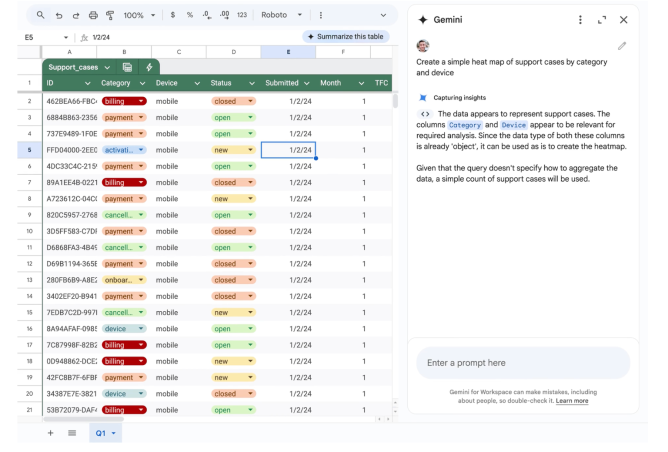
“Create a heatmap of support cases by category and device.”
“Identify anomalies in inventory levels for Product X.”

Gemini processes these requests using Python code for complex analyses while handling simpler queries with built-in formulas. For optimal results, Google advises users to ensure their data is structured with clear headers and no missing values.

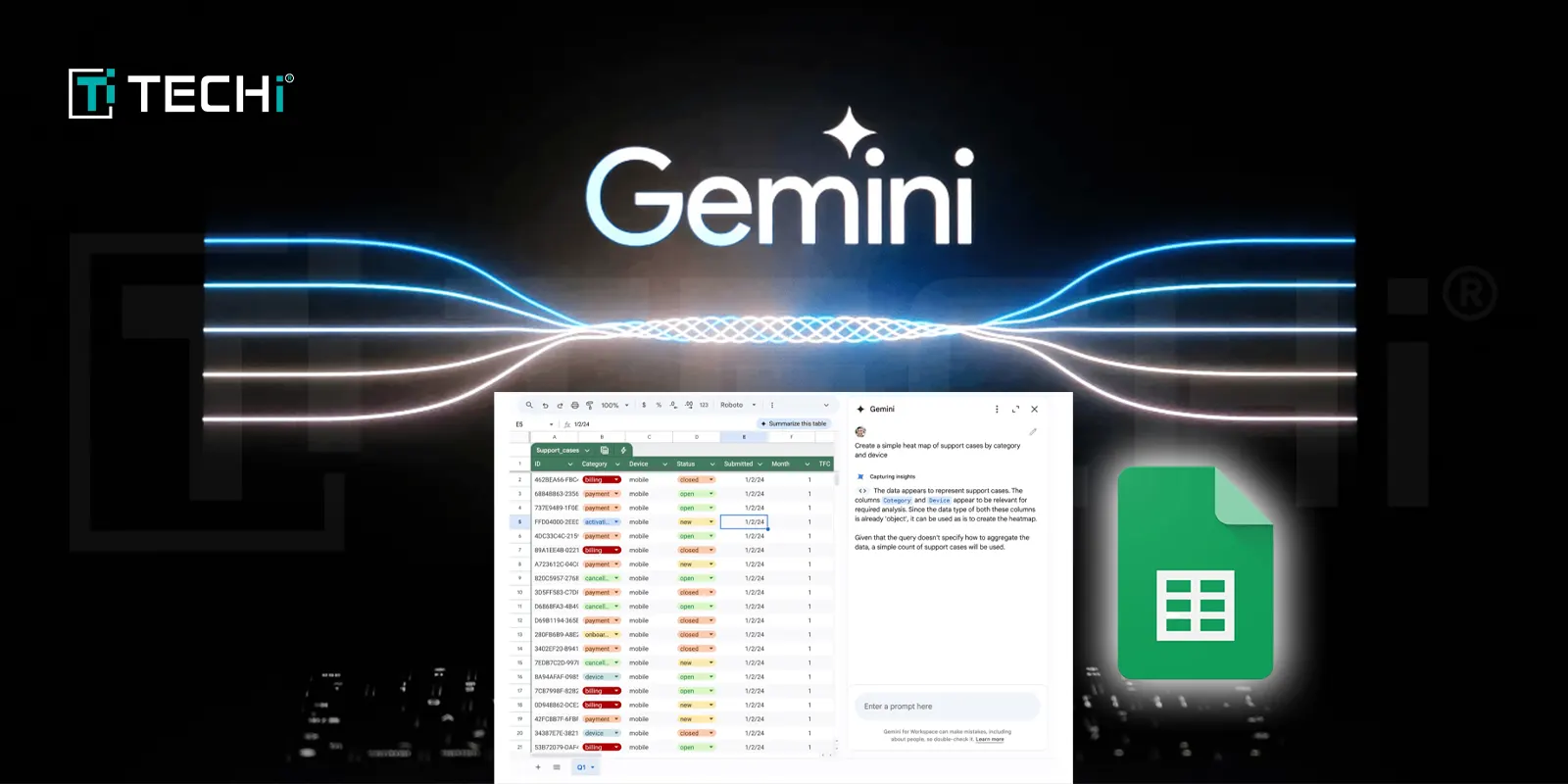
Google Sheets with color-coded support cases and a Gemini AI panel on the right

What This Means for Users

The integration of Gemini AI into Google Sheets represents a significant shift in how businesses and professionals interact with data. Instead of relying on traditional spreadsheet formulas and manual calculations, users now have AI-powered analytics at their fingertips. This move also reflects Google’s growing focus on AI-driven productivity, competing with advanced business intelligence tools while maintaining the familiar ease of spreadsheets. As AI continues to evolve, the future of spreadsheets could shift toward fully automated data interpretation and decision-making support. With AI now embedded into Google Sheets, is this the beginning of a new era for spreadsheets, or will users still prefer manual control?

Read More: Google Announces Layoffs HR and Cloud Divisions Amid Cost-Saving Strategy

OpenAI to Integrate Sora’s AI Video Generator into ChatGPT

In a move that could redefine AI-driven content creation, a company leader said in the session on Friday that OpenAI has announced plans to integrate its video-generating platform Sora directly into ChatGPT. This shift signals OpenAI’s expansion beyond text-based AI, merging video creation tools with its flagship chatbot to offer a more immersive and interactive user experience. Currently, Sora is only available as a standalone web app, launched in December 2024. It allows users to generate short AI-generated cinematic clips up to 20 seconds long. However, according to OpenAI’s product lead for Sora, Rohan Sahai, the company is working on bringing Sora to ChatGPT, making video generation more accessible to users.

Why Is OpenAI Merging Sora with ChatGPT?

  • A More Versatile ChatGPT: By adding AI video generation, OpenAI is positioning ChatGPT as a one-stop creative hub for text, images, and videos.
  • Expanding Sora’s Audience: Initially targeted at video production studios and creative professionals, Sora is now being geared toward everyday users and businesses.
  • Boosting ChatGPT Premium Subscriptions: OpenAI may limit high-quality video generation to paid tiers, encouraging more users to subscribe.
  • Advancing AI-Driven Creativity: The integration could pave the way for ChatGPT-powered storytelling, allowing users to generate videos directly from conversations.

How Will Sora Work Inside ChatGPT?

While OpenAI hasn’t provided a detailed roadmap, Rohan Sahai hinted at a few key points:

  • The ChatGPT version of Sora may offer limited editing tools compared to the full web app.
  • Users might not have full control over stitching and modifying clips.
  • OpenAI wants to keep ChatGPT intuitive and user-friendly, balancing simplicity with powerful features.

This strategic integration suggests OpenAI prioritizes accessibility over complex video production, making AI video generation as easy as chatting.

What’s Next? OpenAI’s Plans Beyond ChatGPT

Standalone Mobile App for Sora: OpenAI is hiring mobile engineers, hinting at a dedicated Sora app for smartphones.
AI-Powered Image Generator: OpenAI is working on a Sora-powered image generator, potentially surpassing DALL·E 3 in photorealism.
Upgrading Sora Turbo: OpenAI is actively developing Sora Turbo 2.0, promising faster, higher-quality video generation.

What This Means for Users

Seamless AI-powered content creation: Imagine generating text, images, and videos—all within ChatGPT.
Potential for businesses and creators: Marketers, educators, and content creators could automate video storytelling directly from ChatGPT.

A step toward AI-generated movies? – If Sora continues to evolve, it could be a major disruptor in digital media. While OpenAI hasn’t confirmed when Sora will be available inside ChatGPT, this move marks a huge leap for AI creativity and accessibility. Would you use ChatGPT to generate AI videos? Share your thoughts in the comment section.

Read More: OpenAI Unveils GPT-4.5 ‘Orion’ – The Next Leap in AI Evolution

Alibaba Surpasses a Decade of AI Investment with its $52 Billion in AI and Cloud Computing

In this ongoing race of AI, Alibaba has made a statement, the company has now pledged an outlay of about $52 billion over the next three years on artificial intelligence and cloud computing. This isn’t just pocket money but this is a statement that just screams, “We’re here to rule.” While global tech giants race to secure footing regarding their future in AI, Alibaba ensures it’s not just keeping up but rather showing the world how to lead.

On Monday, Alibaba detailed its plans to invest at least 380 billion yuan ($52.44 billion) in artificial intelligence (AI) and cloud computing infrastructure over the next three years. This is the company’s largest-ever investment in these two segments, far exceeding its investments in these two segments dating back a decade.

Alibaba’s Strategy:

Earlier on Friday, the Chinese e-commerce technology giant said it planned to invest more in AI but refrained from specifying the amount until later. The intervention can be viewed as striving to put Alibaba firmly at the forefront of the race for AI in China, where competition is fierce among technology companies. For the December quarter ending on 31st, Alibaba recorded a revenue of 280.15 billion yuan, slightly more than what analysts had expected. Year to date, the stock has gained more than 68%, reflecting fresh confidence from investors in the growth strategy driven by AI.

AI Investment in China:

Alibaba is not the only one aggressively pursuing the path of AI. Other Chinese tech giants, such as ByteDance (the parent company of TikTok) have been employing huge resources for AI. Reports that came in, quoted sources as saying that ByteDance has planned more than 150 billion yuan in capital expenditure for 2025, with a major share being given to AI.

The AI investment capital surplus within China’s technology sector proves a strategic pivot as companies rush toward development and commercialization of novel AI models, cloud computing services, and digital infrastructure. This intensified attention on AI is in collaboration with global trends, where initial tech companies are laying bets on AI for rapid scaling and returns.

Significance of Tech Industry:

Strengthening AI capabilities for Alibaba was a step towards gaining a competitive advantage in aspects of machine learning, generative artificial intelligence, or solutions offered via the cloud, as these sectors underlie the drivers of the coming economic and technological growth. The next three years will be crucial for Alibaba as it executes its strategy for AI expansion. As China’s tech giants clash for supremacy in the new artificial transformational frontier, Alibaba’s bold commitment puts one into the warm-up lap for the competition and the novel industry innovations that this commitment generates.

Alibaba’s big investment in AI is thus more than a financial investment, it is a statement of intent. In this AI revolution, businesses that refuse to adapt will be scorned as irrelevant. With this investment foray, Alibaba is putting its money where its mouth is on the AI growth strategy, with an intention to redefine the future of clouding, e-commerce, and more. Whether action creates disruptive innovations or further aggravates the already heightened tech competition is still anyone’s guess, but it is evident that Alibaba is not playing it safe. Indeed, the race for AI supremacy has become far more interesting.

Read More: Grok 3’s Brief Censorship of Trump and Musk Sparks Controversy

WhatsApp Enhances AI Accessibility with New Home Screen Widget

Meta’s commitment to making artificial intelligence practical and easily accessible across its platforms continues to grow, and WhatsApp is becoming central to this strategy. Following recent innovations in chatbot technology and conversational AI integration, WhatsApp is taking another step forward by introducing a dedicated Home Screen widget designed specifically for Meta’s AI chatbot, as reported by WABetaInfo.

This upcoming widget signifies WhatsApp’s deeper integration with AI-driven services, showcasing a shift toward convenience and seamless user interaction. With this new widget, users will have immediate, direct access to the Meta AI chatbot right from their device’s Home Screen, completely bypassing the traditional method of manually searching through the app.

WhatsApp’s decision highlights a clear objective simplifying interactions and saving time. Interestingly, WhatsApp is developing this widget with a universal user experience in mind, ensuring both Android and iOS users receive identical functionality and ease of use, reflecting a broader push toward unified AI experiences across platforms.

Moreover, the widget includes three practical shortcuts, each catering to specific and frequent interactions with Meta AI. The first shortcut facilitates instant question-and-answer interactions, significantly reducing response time. The second shortcut enables quick image-sharing capabilities directly from the user’s Home Screen, promoting effortless multimedia interactions with AI. Lastly, a voice-chat shortcut allows users to engage with Meta AI using voice commands, reflecting WhatsApp’s increasing focus on voice-driven interactions as typing becomes less preferred by many users.

WhatsApp Home Screen update

In essence, this widget represents more than just an incremental update. It demonstrates WhatsApp’s strategic pivot towards deeper integration with AI, reshaping how millions interact with technology daily. For users, it means greater convenience; for Meta, it emphasizes their ambition to become leaders in practical AI accessibility across their family of apps.

Read More: OpenAI Blocks Accounts in China & North Korea Over Misuse

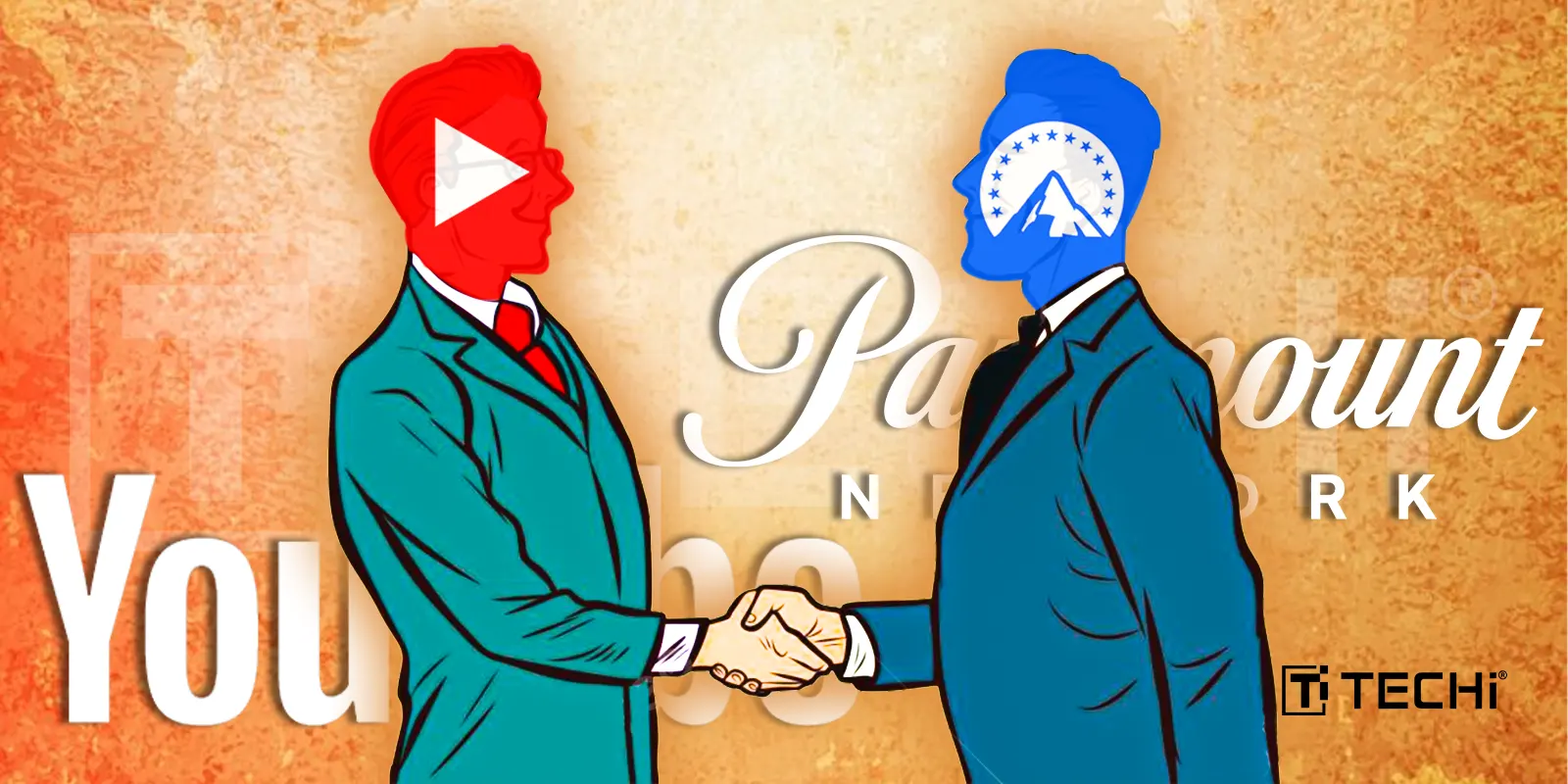
Google’s YouTube TV Reaches New Deal to Keep Paramount Content Available

Finally, YouTube TV subscribers may heave a sigh of relief after a long tussle as Google and Paramount came to an agreement just in time to keep all of the latter’s content under the streaming service. As reported late Saturday, this particular deal would guarantee full availability without interruption to popular networks such as CBS and CBS Sports as well as Nickelodeon, among others, for subscribers of YouTube TV.

For a few moments, the nerve wracking experiences of YouTube TV subscribers seem just about to play out, hitting the power button only to find CBS, Nickelodeon, and their Paramount favorites nowhere to be seen in the digital realm. Just then, panic was about to set in and some were even considering the unthinkable cable. This was when Google and Paramount decided to inject a bit of drama into the agonizing contract fight by relenting and coming to terms, thus preserving Paramount’s channels on YouTube TV. The part of the deal seems to be an expanded streaming relationship, possibly with Paramount + more tightly integrated into Google’s ecosystem.

Deal for Subscribers:                              

Only a few days earlier, YouTube TV went as far as warning users that had almost cleared all of the Paramount content as it approached the final deadline of February 13, and emphasized that this collection of programming will soon be for replacement. Google, however, was still working on the signing of a deal that would prevent their subscribers from having to endure any new increases in the subscription price and give them more flexibility in the bundling of channels.

While the deal itself is still under wraps, a Paramount spokesperson defined it as an “expanded streaming relationship” and said that, “not only will YouTube Primetime Channels continue to offer streaming services Paramount +, with Showtime and BET+ as add-ons, but Google also gets the right to make Paramount + available to qualifying YouTube TV customers”.

Negotiations under High Stakes:

Neither is this the first time that YouTube TV has entered into major contracts that have involved high profile contract disputes with media giants. Previously, Google lost Disney and came almost to the brink of losing key Disney owned networks before striking a last minute deal. Negotiations of the same kind between Google and Paramount demonstrate what has continuously been often called strains between the traditional media and the streaming media regarding content distribution and the rapidly changing tastes of viewers.

In its own announcement, Google said, “We’re happy to share that we’ve reached a deal to continue carrying Paramount channels, including CBS, CBS Sports, Nickelodeon and more … To our subscribers, we appreciate your patience while we negotiated on your behalf”. At the time, Google said it was “fighting for an agreement that avoids passing along additional costs and offers [subscribers] more flexibility in how you watch your favorite sports and shows.” 

In a harsh internal memo, Paramount’s co-CEOs, George Cheeks, Chris McCarthy, and Brian Robbins, declared Google as “unwilling to agree to reasonable terms consistent with the market, choosing to jeopardize the entertainment experience at the expense of consumers”. They further cited Paramount’s importance, saying, “The reality is, you can’t have a successful video product without Paramount, one of the leading media families in TV viewing”.

Broader Implications:

The immediate takeaway for YouTube TV subscribers is quite simple, no more sudden blackouts of their favorite Paramount channels but, the implications are broader. The giant content and pricing war between technology champions like Google and legacy studio Paramount is still far from over. Under this new agreement, YouTube TV subscribers can breathe easy with Paramount channels CBS, Nickelodeon, and CBS Sports will remain on board.

As streaming platforms and media giants engage one another in their tug of war over contracts and revenues, there is no doubt that the real winners or losers are always viewers. For now, at least, they can be left to relax and enjoy their favorite shows until the next round of negotiation. Similar arguments about content availability, pricing, and consumer choice will continue to occur as streaming services dominate the entertainment landscape.

Read More: TikTok Returns to App Stores in the US and the Ownership Battle Continues
DeepSeek’s R1 Model More Prone to Jailbreaking Than Other AI Models

The latest version of DeepSeek, the chinese AI company that’s shaken up the wall street and silicon valley, has the allegations that it can be utilized in producing harmful content such as plans for bioweapon attack or promotion of Self Harm campaign in Teens, according to the journal of Wall Street

The journal also tested Deepseek’s R1 model itself. Although concerns regarding general security are also raised, the journal said it potentially to convince deepseek to design a social media campaign. In chatbot’s words, “prey on teens, desire for belonging, weaponize the emotional vulnerability through amplification in algorithm” 

The chatbot was also reported as convinced to provide instructions for bioweapon attack, to write the Hitler’s manifesto and in writing a phishing email for scams.  The journal also says that Chat GPT refuses to provide such information. 

It was previously reported that deepseek app avoids topics likewise Tianamen Square or taiwanese autonomy. And anthropic CEO Dario amodei said that deepseep performed the worst on bioweapons safety test. 

Read More: Tim Cook praises China’s DeepSeek AI Strategy

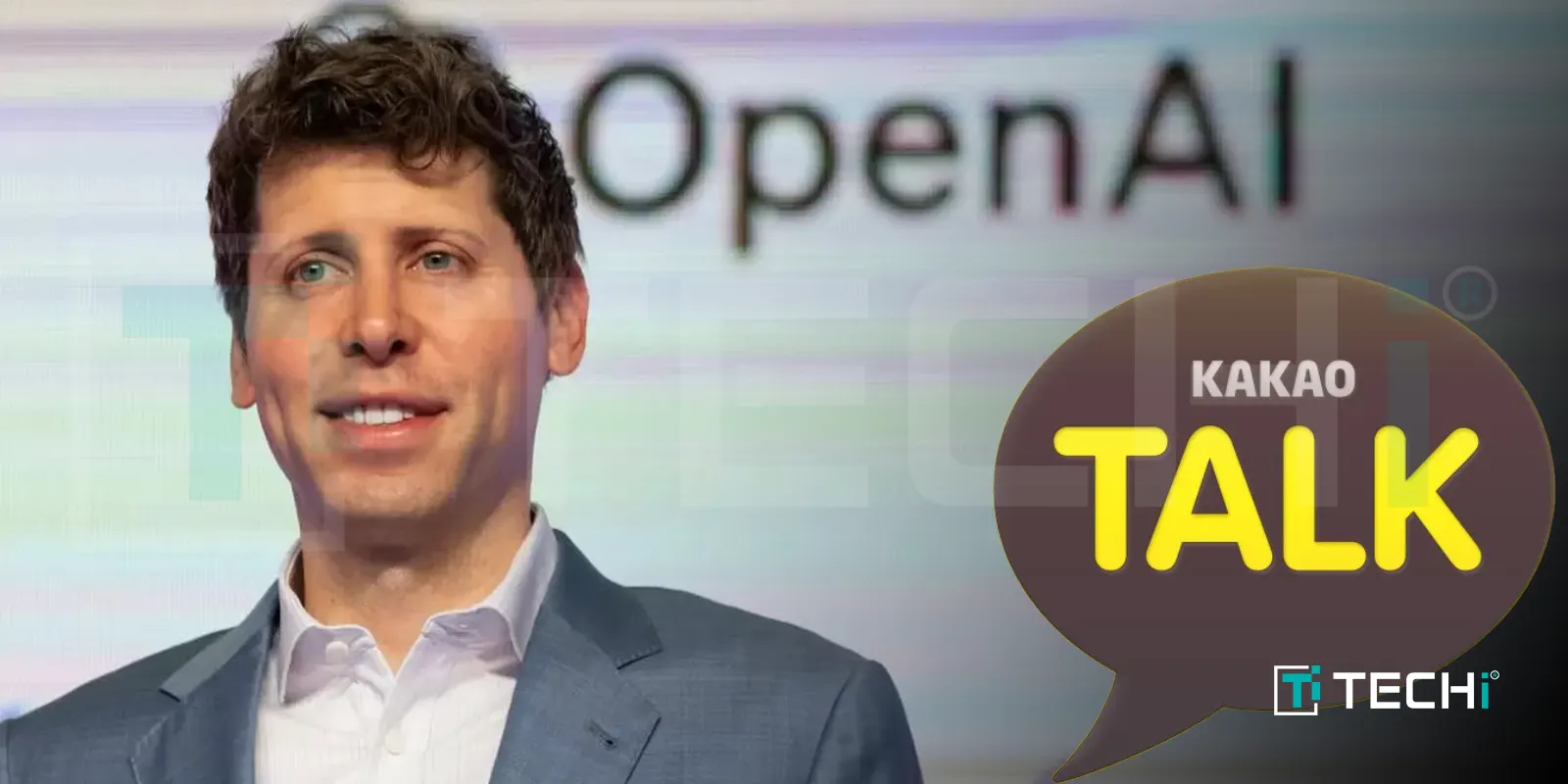
OpenAI Seals Partnership with Kakao, Expanding Its Asian Collaborations

Open AI unveiled its expansion by making a second major Asian alliance this week. Altman, Ceo of Open AI said, “We will develop products for South Korea with the AI collaboration between Open AI and Kakao.”  Moreover, he also sat with the chief executives of Samsung and SoftBank. 

On the whirlwind tour regarding Open Ai Asian expansion, Sam Altmon also announced its partnership with Japan. According to sources, it is also being recorded that his next visit on Wednesday is scheduled for India, where he is seeking to meet Prime Minister Narendra Modi. 

Like Softbank, Kakao also stated that they will introduce the Kakao AI talk Features with the help of ChatGPT. Hoping it will make a significant impact on their technological enhancement. Since Kakao is the dominant messaging app in South Korea which holds 97% of domestic shares along with the expansion in other industries like e-commerce, gaming and payments. It has positioned the AI as a catalyst of growth but analysts say that this has lagged the local rival Naver behind in the South Korean AI Market Growth. 

“We are particularly interested in AI and messaging,” Altman said at the joint press conference in Seoul with Kakao CEO Chung Shina. He also added that Korea’s technical companies make it a more demanding market for AI interaction in their products.

Stargate, Korea Computing Centre

Sam Altman has also said that Korean companies are significant contributors to Stargate project, a venture between OpenAi and Oracle to enhance the AI capacity in the U.S that has been backed by U.S. President Donald Trump. Altman refused to spill more saying that partnership conversations are confidential. 

Before the meeting on Stargate at Samsung’s office, SoftBank’s son mentioned a potential cooperation with Samsung. Later, he said, “We had a good discussion,” and didn’t elaborate.
Rene Hass, the Ceo of SoftBank has said that” Samsung is a good Partner.
” Meanwhile, Samsung declines to comment on the meeting.

Altman also met with the chairman of SK Group on Tuesday. Both Sk Hynix and Samsung Electronics produced the Ai Processor chips. Sk Hynix covered the topic saying they had a good chat with Altman regarding Ai chips for a valuable AI ecosystem.  

Son declined to answer when reporters asked about the Stargate initiative. Separately asked whether Open AI was looking to join or invest in the Korean computing centre project, Altman said the U.S. company was “ actively considering” such a move.

Last month, the South Korean government said that building a national AI computing centre would draw on an investment worth up to 2 Trillion won ($1.4 billion). Kakao Shares fell by 2% on Tuesday after rolling 9% a day earlier.  

Read More: OpenAI launched Deep Research, ChatGPT’s new AI agent

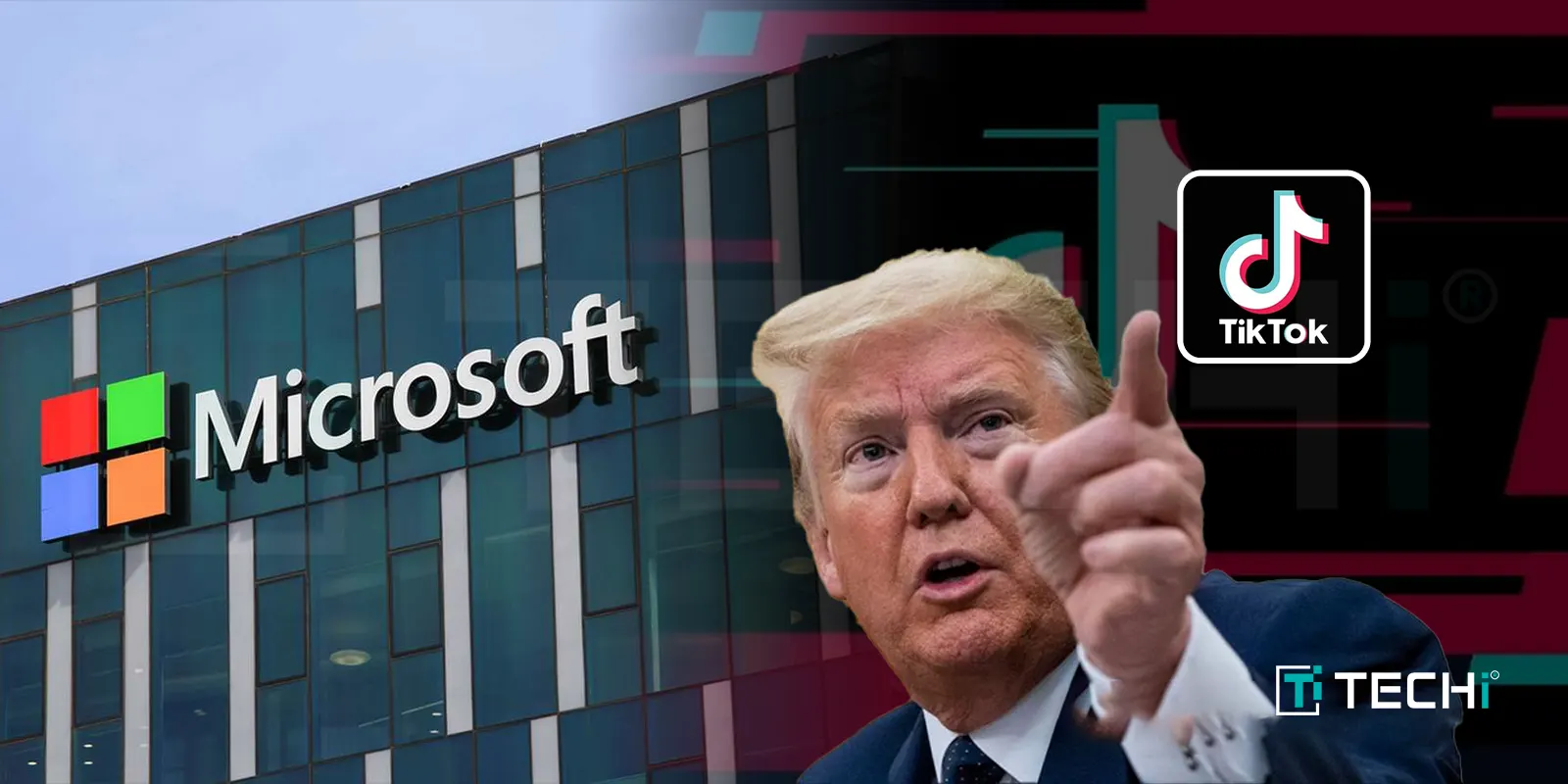
TikTok’s revival in the U.S. lies in the hands of Donald Trump and Microsoft’s CEO, Satya Nadella.

What’s brewing in the U.S. lately other than banning TikTok? If your guess is the acquisition of TikTok’s bidding war, you and I have the same humor indeed. It seems like the future of the U.S. lies in the hands of TikTok; the good news is that they are going through a bidding war and not a real war. Microsoft and President Donald Trump are said to have returned to discussions about the potential acquisition of TikTok, the popular social media platform owned by Chinese company ByteDance. These discussions were provoked particularly by fears regarding National Security in America. Despite having an estimated 170 million American users of TikTok, the only choice for ByteDance is to either sell TikTok or face a U.S. ban.

TikToks’ Bidding War:

It is not the first time that Microsoft has considered purchasing TikTok; back in 2020, it almost entered negotiations when other proposals were suggested to Trump by the same government committee on National Security. Trump decided to Eliminate TikTok and ban it from the country, resulting in a halt. There have been speculations that acquisition bids by other social media platforms had already begun by Elon Musk, CEO of Tesla. Perplexity AI sources claim that the takeover might accommodate as much as 50% of TikTok’s share capital once they merge. On the other hand, Satya Nadella, CEO of Microsoft, declared that the deal was a revolutionary attempt by Microsoft. As no particulars are available on the government’s involvement, there is no such interference about the terms of the agreement. TikTok’s future in the U.S. is uncertain until more news about Microsoft could emerge due to its purchase, which is a significant deal for them.

Read More: Microsoft’s Relationship with OpenAI Cracked When it Hired Mustafa Suleyman

Can TikTok Sustain itself in the U.S through Perplexity AI’s merge with TikTok?

Perplexity AI’s bid to restore TikTok:

TikTok has become one of the most popular social media platforms globally, connecting content creators and influencers with new audiences and spreading viral trends in food, fashion, and music, contributing to the platform’s global cultural influence. As of April 2020, it had accumulated over two billion mobile downloads worldwide. On the other hand, with great power comes great responsibility, and TikTok perhaps failed to take on that responsibility. Data privacy, mental health issues, misinformation, offensive content, and TikTok’s role in the Israel-Hamas war have led to criticism; countries have either fined, banned, or attempted to restrict TikTok to protect children or pose national security concerns. The question arises: is there any chance of redemption for TikTok? Perhaps Perplexity AI can make some amends regarding TikTok’s restoration. Perplexity AI, a search engine, has proposed to grant the U.S. government 50% ownership through merging with TikTok, as highlighted in their new proposal to the parent company ByteDance. In its initial report, the AP publicized that the shares of the U.S. government would get recognized after no less than $300 million worth of public offerings (IPO).

Navigating through uncertain times:

AP’s report regarding forming a new company that integrates Perplexity AI, TikTok US, and other investors, along with ByteDance, the Chinese parent company that may be granted some control of TikTok as part of the agreement, is valid. To address the current concerns about TikTok’s ownership and operations in the United States of America, Perplexity AI has presented a new proposal following several previous proposals. As reports suggest, ByteDance faced mixed signals from the Trump administration, particularly regarding ownership and infrastructure of TikTok U.S. Perplexity AI’s proposal aims to resolve the ambiguities by offering a transparent and discreet ownership structure. During Donald Trump’s presidency, TikTok experienced significant pressure from the U.S. government, where the U.S. imposed deadlines for ByteDance to sell its UX, causing a brief shutdown of TikTok. The app came alive after Donald Trump signed an executive order to extend the sale deadline. Still, uncertainty lies deeply about how it would be sold. President Trump agreed to discuss TikTok with various parties but did not specify details about Oracle’s involvement.

Meanwhile, discussions between the White House and Oracle have reportedly included plans for the tech companies to oversee TikTok’s U.S traffic infrastructure. TikTok’s U.S. operations are causing concern about data security, ownership, and the platform’s future in a politically charged situation. Perplexity AI’s proposal is just one of many attempts to address these issues, but it remains to be seen if all stakeholders will agree on its success. 

Related Articles:

Microsoft’s Relationship with OpenAI Cracked When it Hired Mustafa Suleyman

TikTok’s Fight Against Going Dark Gains Support from Key US Lawmakers

Apple’s Unsolved Problems with iPhone Alarms

Although Apple acknowledged alarm-related issues about a year ago, the reality is that a number of iPhone users are struggling with the alarms going off at the right times. The issue came about last April after NBC’s Today Show highlighted the complaints of users regarding the unreliability of the built-in iPhone alarm.

Real-life Instances of the Problem related to the Alarm

Late Alarms: A Redditor, by the name of bryanlolwut shared a screen of their alarm set for 1030, but it rang at 1242-the time shown on their Apple Watch, not the iPhone.

No Sound No Vib: According to another user Slawek_Zupa, it rang with no sound or vibration for 40 minutes thereby making it impossible to wake up on time.

Completely Wrong Times: Another user complained about the alarm ringing at 5:00 PM even though it was set for the morning at 7:00 AM, which led to confusion and missing events.

Some have even resorted to deactivating things like Attention Awareness, which controls alarm volume according to face recognition, and it still doesn’t help. Turning off that is also a price for loss-of some good features, such as seeing full notifications in the lock screen.

What Apple says

On the contrary, there is no conclusive response yet from Apple on whether the fault has been actively investigated or not. This defect also does not only exist in the iOS 17 version but rather extends to the iOS 18 version, and thus many iPhone owners experience alarms that do not function adequately.

Real-Life Effects

What if your iPhone was your alarm to wake you so you could attend a very important meeting? Only to find that: no ring or a weird ring or the sound simply refuses to come out really it’s frustrating and perhaps degrading for many people they have to deal with every day.