UK Investigates TikTok, Reddit, and Imgur Over Children’s Data Privacy Concerns

Rising online platforms have increasingly become characters that create the web experience for millions, in turn growing concern among parents regarding the safety of children and data privacy. Nowadays, when social media algorithms decide what users shall see, this hazard of inappropriate content being exposed to today’s young audiences or personal information being misused has become very real. The British Information Commissioner’s Office (ICO) has come into play, undertaking a major investigation into TikTok, Reddit, and Imgur for alleged breaches of Children’s Data Protection Law. The decision of the inquiry may set a whole new pattern for the way tech companies interact with online privacy regarding children.

The investigation into TikTok and Reddit was announced by the UK Information Commissioner’s Office (ICO) for the alleged mishandling of children’s personal data and online safety, as the inquiry will examine whether these platforms operate within the boundaries of data protection laws and age assurance regulations aimed at protecting young users.

Algorithm Driven Content and Age Verification:

Social media platforms employ highly sophisticated algorithms to recommend content and keep users engaged but these machines, while doing that, often expose children to content that might be harmful or inappropriate. The ICO is specifically interested in how TikTok, a Chinese based app owned by parent company ByteDance, assembles and uses personal data of minors, 13 to 17 years of age, to recommend content on their feeds.

On the other hand, Reddit and Imgur are also being looked into for their age verification efforts to assess whether they effectively inspect and restrict child users. Given the fines in the past against the big social media platforms for failure to comply with UK data protection laws, compliance with these laws is critical.

Regulatory Actions:

The Information Commissioner’s Office said in a statement, “If we find there is sufficient evidence that any of these companies have broken the law, we will put this to them and obtain their representations before reaching a final conclusion”. They are very clear that these firms would have to face them if they were found to be in breach of the law before a final verdict. That same year, TikTok was penalized $16 million (£12.7 million) for the violation of data protection laws, which included such violations as using without account the personal data of children under the age of 13.

Reddit has assured all that they will cooperate with such a venture as it is legally binding with all their users’ adults, and then it will be put in place. The Reddit spokesperson said, “Most of our users are adults, but we have plans to roll out changes this year that address updates to UK regulations around age assurance”. However, there is little word from major players such as TikTok, ByteDance, and Imgur.

Strengthening Online Safety Regulations:

This makes Britain tough on social media, as they have mandated stricter age verification for online social media platforms for the protection of children against harmful content. Proposed regulations also require algorithmic changes for filtering or reducing exposure to harmful content for platforms like Facebook, Instagram, and TikTok.

The ICO investigation is yet another step towards the worldwide efforts to check the social media platforms in holding them accountable against the usage of these platforms by the young people. Just as companies are being scrutinized for their actions, the likes of TikTok, Reddit and Imgur find themselves under tremendous pressure to increase transparency, adopt stricter age verification, and modify the algorithm to reduce exposure to harmful content. It’s unclear yet what final consequences this investigation may bring, penalties, policy changes, or stricter enforcement but this issue holds significance and has to be addressed one way or the other.

Read More: TikTok (with Douyin) Becomes First Non-Gaming App to Surpass $6B Revenue

TikTok (with Douyin) Becomes First Non-Gaming App to Surpass $6B Revenue
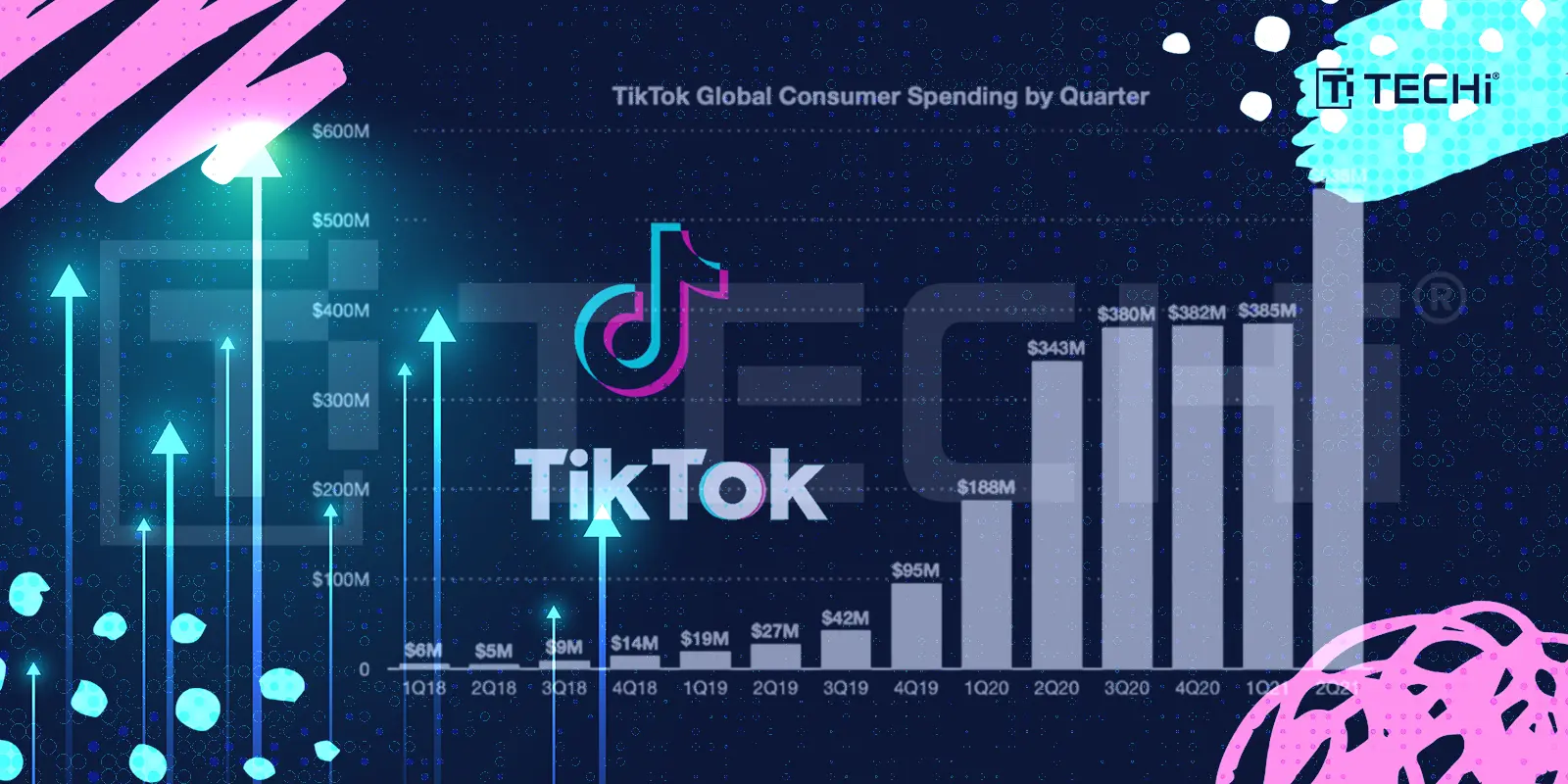
TikTok, the virtual stage where blooming viral trends and some dance moves dare to question cultural viability, has now dipped its toe into history. Along with its Chinese counterpart, Douyin, it made headlines by becoming the first non-gaming app to generate a staggering $6 billion in revenue from in-app purchases in the year 2024. As per the report of Sensor Tower on App Intelligence, it is a new record for TikTok to have grossed $1.9 billion in IAP revenue in the fourth quarter of last year. If any social media has done a definite financial mic drop, that would be it.

TikTok’s Revenue and Other Apps:

From all the non-gaming apps, only YouTube and Google One can feasibly provoke TikTok’s Q4 revenue for a full calendar year. In any case, TikTok’s annual IAP revenue surpassed all other competitors and, in fact, is more than double the revenue of any other app or game in 2024. MONOPOLY GO!, TikTok’s closest competitor, could only bag $2.6 billion in the past year in IAP revenue, thus coming in a very distant second.

TikTok has had a successful economic run, starting with a sudden year on year rise from $4.4 billion in 2023 to a new high of $6 billion in 2024. The app did seal the second most downloaded app position in Q4 2024, with Instagram taking the top slot. WhatsApp, Facebook, and Temu for e-commerce made up the remainder of the top five.

TikTok-Douyin Comparison:

Money makes the direct comparison between TikTok and other apps inherently flawed in itself because of revenue accounts being pushed for Douyin, the Chinese counterpart. ByteDance owns the two platforms and follow relatively similar short-form video models. However, they serve entirely different markets, Douyin implements a tighter integration with e-commerce, heavy regulation with respect to Chinese authorities, while TikTok contains various forms of content in an audience oriented manner across the globe.

Challenges for TikTok’s Market:

In the U.S. regulatory scrutiny, there have been some attempts to take TikTok down from app stores for national security purposes. However, there was a 75-day delay following an executive order from Donald Trump, during which the ban could potentially be extended. TikTok has left an economically permanent mark through thick and thin, especially with regard to the creator economy. Users can buy virtual gifts for their favorite creators, who, in turn, may convert them into real currency. TikTok will keep 50% of the cash from these transactions, where the transactions go back to its revenue in the momentum.

TikTok has secured its way as a giant in digital entertainment and social media. With in-app revenue amounting to $6 billion and a catch on global culture that no other platform can rival, TikTok creates a financial dominance that is impossible to hide. Its ability to monetize virtual gifts, engage users, and power the economy of creators has cemented its place as the unstoppable force that it is, notwithstanding the restrictions and competition in social media. Whether by means of viral dance challenges or shopping via the app, TikTok is not just a social media app, it is an economic powerhouse that is redefining digital entertainment.

Read More: What’s Next for TikTok in the U.S.? Billion-Dollar Bids and High-Stakes Battles

What’s Next for TikTok in the U.S.? Billion-Dollar Bids and High-Stakes Battles

Fate has not been kind to TikTok in US lately, with tantrums of a legal battle between political turns and the suffering caused by billion-dollar bidding processes on a daily basis. One day it is banned, and the next day it is back with presidential blessings. Here it comes again, several of the high-profile investors take a stab at delving their fingers into the viral platform, the question remains about who is going to own a platform that creates trends, fuels influencer careers and keeps millions scrolling at 2 AM? As the battle heats up over TikTok, let’s break down what’s been going on so far and who has eyes on buying it.

TikTok’s Ongoing Controversy:

The last four years have been a storm of discontent for TikTok, which has had to crawl down in the U.S with a strong debate. The site is owned by a Chinese company, ByteDance, and this has raised worries in this country that the Chinese government might gain access to its users’ data. This has led to many legal actions, executive orders, and now, perhaps, the possible forced sale of TikTok’s U.S operations. Adding to the uncertain atmosphere, TikTok suffered a minor outage in the U.S last month leaving millions of users in suspense. The app was restored very quickly but reminded users about how fragile its hold exists in the country.

According to CFRA Research, Senior Vice President Angelo Zino, the value of TikTok’s U.S business could grow beyond $60 billion, with the demand from the U.S government to sell or ban TikTok. There have been several buyers emerging to snatch this most effective social media platform in the world.

TikTok’s Ban:

To make sense of that very uncertain future now with TikTok, we must revisit critical events in history that have forged its bumpy relationship with the U.S government. In August of 2020, President Donald Trump signed an executive order prohibiting transactions with ByteDance, virtually seeking to ban the app from usage within the U.S. The administration pushed for a forced sale of TikTok’s U.S operations, with Microsoft, Oracle, and Walmart lining up as potential buyers. A U.S judge temporarily blocked Trump’s executive order, allowing TikTok to continue its operations while legal proceedings were taking place.

Bipartisan efforts to address National Security concerns related to TikTok continued under former President Joe Biden. In April 2024, the U.S House of Representatives passed legislation that directly targeted TikTok, it later made its way through the Senate. President Biden signed the bill into law, making mandatory that TikTok either sell itself or be prohibited in the country.

In return, TikTok sued the U.S government, claiming that the ban was unconstitutional and a violation of First Amendment rights. The U.S Supreme Court upheld the Protecting Americans from Foreign Adversary Controlled Applications Act (PAFACA), popularly named as “the TikTok ban.

Trump’s Reversal and Temporary Extension:

Astonishingly, Trump submitted a court statement countering the expected ban on TikTok, suggesting that he wanted to find a way to keep TikTok in the U.S. In the aftermath of the Supreme Court’s ruling, TikTok swiftly shut down for a brief period in the U.S and it made its comeback within another less than 12-hour period with a statement that, “As a result of President Trump’s efforts, TikTok is back in the U.S”.

On January 20, Trump signed an executive order delaying the ban for 75 days, which will give TikTok additional time to sell a stake or sign some kind of agreement. Trump has proposed a 50-50 ownership deal between ByteDance and a U.S company, although nothing has been finalized yet.

Potential Buyers for TikTok in US:

Clearly, some potential investors and companies have emerged as prospective buyers of TikTok’s U.S operations. Here is who is contesting for the ownership;

1. The People’s Bid for TikTok:

Organized by Project Liberty founder Frank McCourt, The People’s Bid seeks to promote open-source initiatives that privilege privacy and data control. Kevin O’Leary, an investor and television personality, joined The People’s Bid on 6th January and has previously signaled interest in buying TikTok for $20 billion. Tim Berners-Lee, Prolific inventor of the World Wide Web said in a statement that, “users should have an ability to control their own data”, is also interested in bidding for it along with David Clark, a senior research scientist at MIT Computer Science and Artificial Intelligence Laboratory.

2. American Investor Consortium:

Headed by Jesse Tinsley, CEO of Employer.com, this consortium recently issued an all-cash $30 billion bid for TikTok U.S operation and the participants include: David Baszucki, Co-founder and CEO of Roblox, Nathan McCauley, CEO of crypto platform Anchorage Digital, and Jimmy Donaldson (MrBeast), the famous YouTube content creator.

3. Other Interested Buyers:

Other interested buyers are; Bobby Kotick, Former Activision CEO who is likely looking at how he can integrate TikTok into gaming. Steven Mnuchin, has come back into the discussion after being the U.S Treasury Secretary under Trump. Oracle has tried to acquire TikTok in 2020, but co-founder Larry Ellison is said to still have an interest. Walmart expressed interest in 2020 and it could have value in TikTok’s e-commerce potential. Microsoft, formerly a top player in 2020 who renewed interest according to reports. Rumble, the alternative video-sharing platform, which wants to purchase TikTok and be its cloud technology partner with it and Perplexity AI also submitted its bid last month.

TikTok’s Future in US:

The future of TikTok in the U.S will soon be determined by the months coming ahead as to whether the app will continue with new ownership or face another legal battle. The outcome might reshape how social media is being used by millions of creators and businesses and will be setting an example on how the U.S would treat digitally owned foreign platforms. What is for sure is that TikTok will shape not only the future of social media but also the broader conversation regarding data privacy, tech regulations, and digital influence. 

Read More: TikTok Returns to App Stores in the US

TikTok Returns to App Stores in the US and the Ownership Battle Continues

The odyssey of TikTok in the United States has been an exciting reality show with a high stakes infused series of courtroom battles and political backroom dealings along with last minute plot twists in between. A month-long disappearing act has made its grand re-entry to app stores of the U.S, however the drama might not be over yet. With concerns over national security, executive orders, and the prospect of U.S ownership looming, the events of the TikTok saga continue to unfold like a binge worthy series.

TikTok returns to the app stores in the United States, marking yet another chapter in its motto to survive. For nearly a month, the highly hyped short-video app, TikTok, was not available for download. Then, it re-entered the U.S today when Apple and Google reinstated it in their respective app stores. This follows the temporary ban earlier on national security grounds. Similarly, other apps of ByteDance, including the video editor CapCut and social media platform Lemon8, were also restored. However, without certainty as to whether it is going to be bought by one of the many incoming tech giants waiting in line for the apparent bidding war, the app’s future hangs in the balance.

TikTok’s Ban:

Government scrutiny of TikTok has been ongoing in the U.S for several years, with concerns related to national security risks from China’s ownership of ByteDance. In 2024, former President Biden signed a law requiring that by January 19, 2025, ByteDance has to dissociate from operating TikTok in the U.S or see the app outlawed altogether.

The law threatened significant financial penalties against any app store operators who failed to comply with it, resulting in Apple and Google pulling TikTok from their platforms. ByteDance tried to challenge the ruling, but on January 17, the Supreme Court reaffirmed the law making an obligation for TikTok to find a non-Chinese buyer or be permanently banned in the United States.

Trump’s Order and TikTok’s Return:

However, things turned around on January 20 when the newly elected President of the U.S, Donald Trump, signed an executive order putting the ban on hold for 75 days. This afforded ByteDance further tried to find a buyer for TikTok’s U.S operations, thus renewing support for the application from service providers like Oracle.

That is not the end of the road, rather the Apple and Google postponed TikTok’s return to their stores on account of uncertainty about the legal penalties that would be imposed under the law’s deferral. This makes a rather different situation for those users who had installed TikTok would be able to continue to use it, whereas others who uninstalled it would not be able to download it again. Thanks to the immediate tech industry response regarding potential U.S ownership of TikTok, the long-standing competitor of short video-sharing apps is witnessing one of the greatest upsurge of all time.

Of course, Trump would have the government owning 50% of the stake jointly with partner companies and setting up, as part of the deal, a sovereign wealth fund for the possible purchase of TikTok’s U.S operations, supposedly, Oracle and Microsoft are notable contenders for the acquisition. On the other hand, TikTok enemies have been aggressive in squeezing the situation. Social platforms such as X and Bluesky have introduced specific vertical video feeds to appeal to TikTok users, while Meta announced that it would develop a video-editing app for CapCut competition.

TikTok’s Popularity and Beyond:

As it stands in the year 2023, TikTok remains one of the most popular apps in the world in the United States. According to analytics company Sensor Tower, in 2022, it was the second most downloaded app in the U.S, with 52 million downloads. While the immediate future of TikTok in the U.S seems secured, its long term future depends on whether ByteDance would negotiate a sale to please regulators.

There is little doubt that the app’s popularity will be affected by all these factors, but more by how the company, U.S regulators, and future investors move forward as they all navigate through what will be a complex political and legal maze. All eyes will be on negotiating drama between ByteDance, U.S tech giants, and the federal government as time runs out with the 75-day extension. The one thing absolutely certain is that this is not the final twist, and the world will wait to see what happens next with the effects of this latest change in TikTok.

Read More: Elon Musk’s Battle to Buy OpenAI

Can TikTok Sustain itself in the U.S through Perplexity AI’s merge with TikTok?

Perplexity AI’s bid to restore TikTok:

TikTok has become one of the most popular social media platforms globally, connecting content creators and influencers with new audiences and spreading viral trends in food, fashion, and music, contributing to the platform’s global cultural influence. As of April 2020, it had accumulated over two billion mobile downloads worldwide. On the other hand, with great power comes great responsibility, and TikTok perhaps failed to take on that responsibility. Data privacy, mental health issues, misinformation, offensive content, and TikTok’s role in the Israel-Hamas war have led to criticism; countries have either fined, banned, or attempted to restrict TikTok to protect children or pose national security concerns. The question arises: is there any chance of redemption for TikTok? Perhaps Perplexity AI can make some amends regarding TikTok’s restoration. Perplexity AI, a search engine, has proposed to grant the U.S. government 50% ownership through merging with TikTok, as highlighted in their new proposal to the parent company ByteDance. In its initial report, the AP publicized that the shares of the U.S. government would get recognized after no less than $300 million worth of public offerings (IPO).

Navigating through uncertain times:

AP’s report regarding forming a new company that integrates Perplexity AI, TikTok US, and other investors, along with ByteDance, the Chinese parent company that may be granted some control of TikTok as part of the agreement, is valid. To address the current concerns about TikTok’s ownership and operations in the United States of America, Perplexity AI has presented a new proposal following several previous proposals. As reports suggest, ByteDance faced mixed signals from the Trump administration, particularly regarding ownership and infrastructure of TikTok U.S. Perplexity AI’s proposal aims to resolve the ambiguities by offering a transparent and discreet ownership structure. During Donald Trump’s presidency, TikTok experienced significant pressure from the U.S. government, where the U.S. imposed deadlines for ByteDance to sell its UX, causing a brief shutdown of TikTok. The app came alive after Donald Trump signed an executive order to extend the sale deadline. Still, uncertainty lies deeply about how it would be sold. President Trump agreed to discuss TikTok with various parties but did not specify details about Oracle’s involvement.

Meanwhile, discussions between the White House and Oracle have reportedly included plans for the tech companies to oversee TikTok’s U.S traffic infrastructure. TikTok’s U.S. operations are causing concern about data security, ownership, and the platform’s future in a politically charged situation. Perplexity AI’s proposal is just one of many attempts to address these issues, but it remains to be seen if all stakeholders will agree on its success. 

Related Articles:

Microsoft’s Relationship with OpenAI Cracked When it Hired Mustafa Suleyman

TikTok’s Fight Against Going Dark Gains Support from Key US Lawmakers

Could TikTok Ever Be Banned in the UK too?

TikTok has grown into one of the most sought-after applications of the time in the last few years, offering millions of people a platform to share and view short video clips on an everyday basis within the UK. However, the increasing nagging worries about international security and data privacy have led many governments to begin a closer examination of the app. The US has had its fair share of banning the app, and now questions have started emerging about whether or not the UK could do the same thing.

Growing Concerns About TikTok

It is a subsidiary of the Chinese giant ByteDance, which has repeatedly accused TikTok’s data collection practices of putting user information in jeopardy by Chinese government access. Although TikTok refutes such claims, citing extensive data security measures, Western scepticism abounds. Concerns have been expressed in the UK by Members of Parliament and cybersecurity experts, claiming that the policies of data retention in TikTok could be harmful from the viewpoint of national security. The UK government has imposed a ban from March 2023, which forbids the installation of TikTok in government devices due to the risk of misuse of sensitive data. This is the banning and restriction of TikTok similar to those placed by the US and European countries.

The Case for a UK Ban

With such a ban possibly emerging, there would likely be pressure for the UK to conform with allies such as the United States or growing discontentment about the fact that many young people are becoming so accustomed to TikTok. Critics point to the fact that not only is there much personal information about users stored in the application but it can also serve as a platform for the dissemination of wrong information and through its algorithms manipulate content and, hence, create a public perception. It is also the more general subject of cybersecurity. Indeed, there have been increasing strains between China and the West, especially in the geopolitical area. Covertly becoming warier, government to foreign-owned apps and platforms. A ban may be used as a protective shield to safeguard citizens as well as national interests.

Challenges of Implementing a Ban

For all that there is a thought of a ban on TikTok in the UK, numerous problems seem to be behind its reach. All these make the arena weighty on its back. Youngsters occupy the greatest part of the chunk of users in the country. As well as entertainment, TikTok has been central to education and even marketing mini businesses. Implementation of a ban would entail desperate protests of users and creators: many of whom take TikTok as their lifeblood source of revenue. Besides that, it is also likely to bring forth the freedom-of-speech question and the role of the government in supervision over technology platforms.

What TikTok Does to Keep Operating

The company has been busy cutting off ties with its Chinese heritage to address this concern. Under the “Project Clover” campaign, committed to reinforcing data security as well as being transparent, the company has now agreed to host all European user’s info in Ireland and Norway. It has also thrown itself open to audit by third parties for government and public reassurance. 

It is difficult to figure out if all these will be sufficient for the company to avoid a ban. But they speak a lot about how much the company knows about the growing threat to its activities in Western markets.


Could the UK Really Ban TikTok?

Nevertheless, there were no suggestions from the UK concerning any immediate plans that may lead to the banning of TikTok. However, the ban would depend on the accumulation of proof of foul play or growing geopolitical tensions. For the moment, TikTok keeps working as one of the most coveted apps in the UK, although the future does not hold that much merit. As the government does its careful balancing act between national security concerns and the rights of citizens, where they’d ever actually be able to ban TikTok now becomes a kind of unclear question in and of itself.

Read More: Meta Announces CapCut-like Video Editing App Called Edits

TikTok’s fight Against Going Dark Gains Support From key US Lawmakers

TikTok is currently at a crossroads in the United States, with a government deadline to threaten operations coming up. This deadline is very particular because it is part of the 2025 law that will require the app to divest from the United States because of national security worries whether a child has direct or indirect links with its Chinese parent company, ByteDance. But expect things to turn in some new direction when political bigwigs show aggrandizing support for the app’s existence within the space.

Support from American lawmakers and presidential allies

With the arrival of the January 19 deadline, U.S. lawmakers have begun to vociferously weigh in on how they consider the future of TikTok on the U.S. landscape. Among those whose voices are heard on this issue is Senate Democratic Leader Chuck Schumer, who has asked for a 90-day extension to allow for ample time needed for an orderly transition or resolution concerning divestiture.

President-elect Donald Trump, adding his own page to this chapter, also seems to have taken upon himself the consideration of changing position. The whirlwind winds of public opinion are not lost even on Trump, for he now reportedly contemplates an executive order delaying enforcement by 60 to 90 days regarding the prohibition he initially spewed forth against the use of the app.

Legal Challenges and the Supreme Court’s Role

Amid the buzz, legal analysts and civil rights proponents are putting their concerns forward showing how the clauses being included can be unconstitutional. Some contend that unless the government provides clear evidence of possible national security threats, it would be a violation of the Americans’ First Amendment rights by prohibiting TikTok. The Supreme Court has already stepped in to review the law that forced divestment from TikTok, clearing the way for what is foreseen to be a major legal ruling in this subject area.

Read More: RedNote: This is the Chinese App to make it popular among TikTok Creators- But had Unendurable Consequences

RedNote: This is the Chinese App to make it popular among TikTok Creators- But had Unendurable Consequences.

With an uncertain future for TikTok in the western world, these creators are turning to the next best alternative platform, RedNote or Xiaohongshu-or the Little Red Book. Not that one took a first glance at RedNote and it was paradise-there would be glossy lifestyle posts and polished recommendations with the familiar influencer culture attached. Yet, going further deep the reality gets more worrying.” Not just another app, it is a tightly controlled platform exporting censorship, influencing youth culture, and quietly subverting democratic values.

The Luring facade of RedNote: Free to Creatives?

Most great things about TikTok are found on this platform, then RedNote is like some otherwise familiar venue for expressing creativity and virality. It’s a space where they could continue engaging with audiences in the ways which were earlier enabled by TikTok. But there is a fundamental difference between these two platforms.

There is RedNote-a Chinese-owned platform- which means that whatever applies to all the content moderation and privacy policies is limited and constricted to the laws specified by China’s strict regulatory framework. Whereas TikTok promotes open discussions, RedNote imposes restrictions largely upholding the “core socialist values” as against freedom of expression. Posts, comments, and likes are all monitored in an ecosystem where China’s social control is promoted.

In Plain Sight Censorship and Self-Censorship

Though it is branded an app to attract western creators through the features that resemble those of TikTok, RedNote operates under the kind of censorship that is a lot stricter than the average. Posts that deal with topics politically sensitive-the likes of the Chinese human rights issue, criticisms of censorship laws, or advocacy of freedoms in regions that would have implications for issues within these categories-is prone to deletion before anyone reads anything.

Mad Hatter does take pride in their adaptations of thus app, which come with great benefits not just for the selling of the creators’ content, but also for empowering their audiences.

They’re a tool for absolute creativity, where people can be crazy and just lose their minds directing or curating their content. Really crazy, absurd style,’ says one user from Recherches. Imagine creating perfect looping videos using RedNote’s features.

With all the pomp and glamour that glitter at RedNote, one would not help attain a good first impression. Just like every other innovative app, however, there is a more profound reality underneath. RedNote is in fact, as far as cell control goes, definite.

This dwells on how the app may gain its strength as far as money matters regarding RedPost are concerned. For instance, Users care about all residual things. Inevitability comes into being when the main point centers around the primary concern which brings wealth into play.

Such “uses” as
“Photo sharing”
“Video posting”
“Very often”
“Later”

and many more such words keep on popping up and extend their number day by day.

In fact, at least for America, Red Note is going to take a while to capture the user’s attention. It’s not just another app; it is a tightly controlled platform exporting censorship, influences youth culture, and quietly undermines democratic values.

There are more such words- “Photo sharing”, “Video posting”, “Very often”, “Later”, and many more-with each passing day that keeps on multiplying in number.

Will it take long for Red Note to gain popularity among users in America?

Clearly, Red Note is not an app that connects users freely, but a highly regulated platform on which censorship is exported, which influences youth culture and quietly undermines democratic values. One would be hard pressed to find a first impression just as pretty with all the pomp and glamour that glitter at RedNote, but like every other innovative app, there is a more profound reality underneath it all. One would be hard pressed to find a first impression just as pretty with all the pomp and glamour that glitter at rednote, but like every other innovative app, there is a more profound reality underneath it all.

Read More: Cloud Transformation Conference Global 2025: The Premier Technology Event of the Year