DeepSeek Claims 545% AI Profit Margin After Rapid Industry Rise

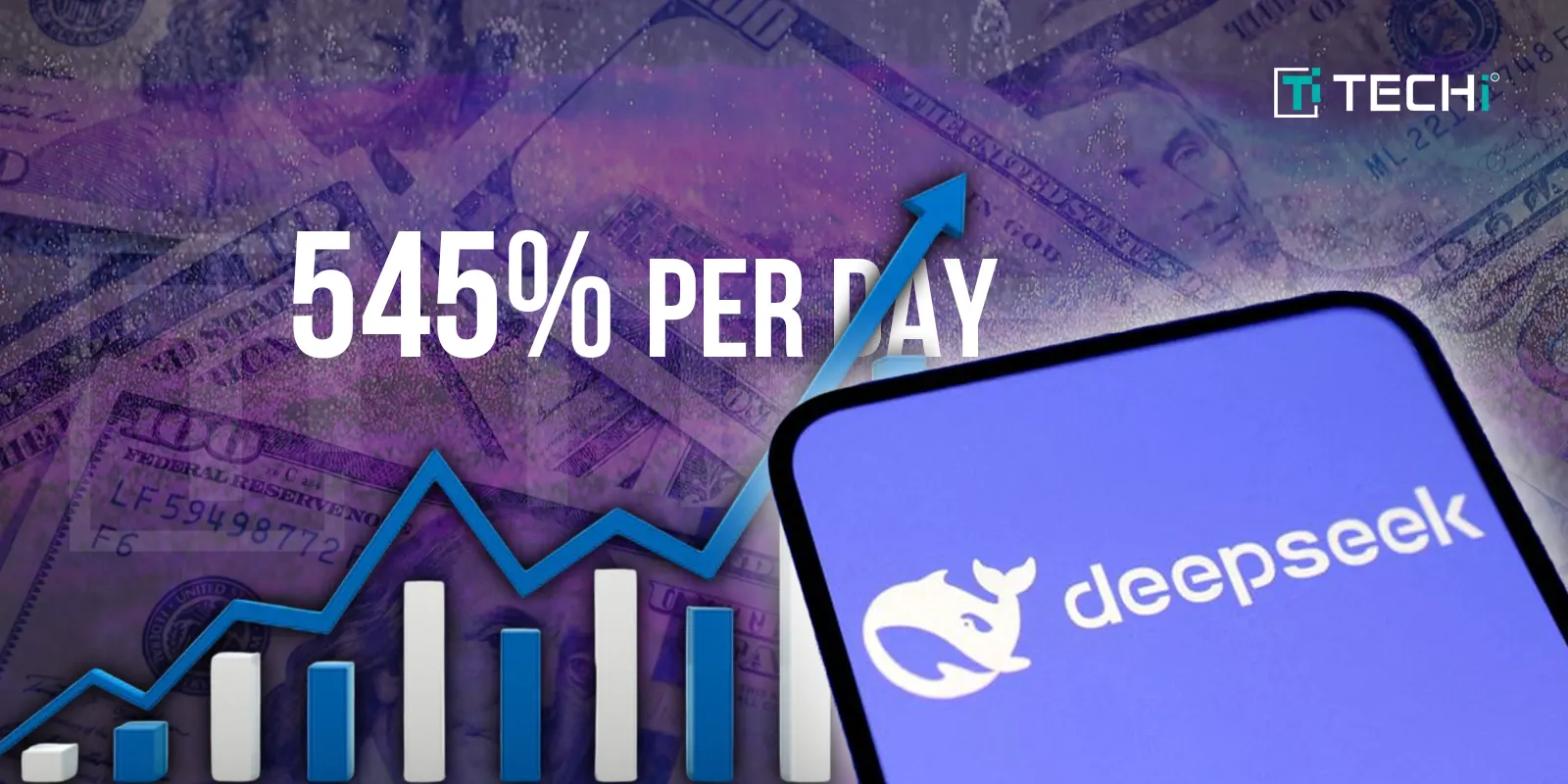
Just a few months ago, DeepSeek was a little-known name in AI, but that changed in January when the Chinese startup launched an AI model that challenged OpenAI’s dominance. Despite operating under U.S. trade restrictions, DeepSeek developed a model that reportedly matched OpenAI’s GPT-4 (o1 variant) on certain benchmarks, grabbing headlines and briefly overtaking ChatGPT on Apple’s App Store rankings. DeepSeek is making another bold claim about its profitability this time. The company recently revealed that its AI models supposedly generate an eye-watering 545% profit margin. But there’s a catch: the number is based on theoretical income rather than actual revenue.

DeepSeek’s 545% Profit Claim: The Fine Print

In a post on X (formerly Twitter), DeepSeek claimed that if all AI usage over 24 hours had been billed under its R1 model pricing, the company would have earned $562,027 in daily revenue. Meanwhile, leasing the required GPUs (graphics processing units) would have been only $87,072—resulting in the headline-grabbing 545% cost-profit margin. However, DeepSeek admitted in a longer GitHub post that its actual revenue is much lower due to the following:

Nighttime discounts reduce revenue during off-peak hours.
Lower pricing for the V3 model, which undercuts theoretical income.
Free access to web and app services, meaning only a portion of users are monetized.

The GitHub post also outlined DeepSeek’s technical approach to improving AI efficiency, focusing on higher throughput and lower latency. The company emphasized that its infrastructure is optimized for performance, but profitability still depends on how AI services are priced and used.

A Glimpse Into AI’s Profitability Debate

DeepSeek’s claim, while speculative, adds fuel to the ongoing discussion about the cost of AI and its potential for profitability. Training and running AI models require enormous computing power, often making them expensive. Tech giants like OpenAI, Google, and Anthropic have yet to prove whether AI chatbots can become sustainably profitable at scale. Yet, DeepSeek’s ability to develop a competitive AI model at a fraction of OpenAI’s cost already had analysts questioning the actual financials of AI research. Its latest claim of theoretical profitability further challenges the narrative that AI is a money-losing business.

DeepSeek’s AI and Market Impact

DeepSeek has already left a mark on the AI industry:

  • Its January model launch rattled Wall Street, raising concerns about AI development costs.
  • Its app briefly displaced ChatGPT at the top of Apple’s App Store rankings before settling at #6 in the productivity category, behind ChatGPT, Grok, and Google Gemini.

AI Monetization: Reality vs. Hype?

DeepSeek’s numbers suggest AI models could be extremely profitable under the right conditions, but whether this translates to sustainable revenue growth remains unclear. With the race for AI profitability heating up, one key question remains: Are AI startups truly on the brink of massive profits, or are these numbers just hopeful projections? Let us know your thoughts in the comments.

Read More: OpenAI to Integrate Sora’s AI Video Generator into ChatGPT
China Startups Rush to Ride DeepSeek AI Boom

At this time, the wave of China’s technology sector is once again crashing against the rocks of finance and innovation, as the country gets lifted by a flood of optimism for its startup ecosystem, with the powerful blast from DeepSeek’s AI model as well as the rare appearance of President Xi Jinping himself in support of private enterprises. Venture capitalists shut down outside investment due to concerns over the effects of severe regulations and the current general climate that breeds uncertainty in the economy, thereby rushing back the soonest to sponsor thought based startups, the next kind of technologically empowering.

Chinese technology startups are racing against each other to secure new rounds of funding from the recent popularity that DeepSeek’s AI breakthroughs have garnered, along with Xi’s endorsement of private enterprises. With AI innovations in the limelight, now is a time when investors and entrepreneurs are trying to accelerate the growth of China’s highly evolving tech field.

A few other major companies that are taking advantage include AI Optics startup Rid Vision, Brain Computer Interface company AI CARE Medical, and robotics firm Shanghai Qingbao Engine Robotics, all of whom are seeking onshore financing, as confirmed by Andrew Qian, CEO of New Access Capital, which has invested in all three firms. He said, “Many people are knocking at the doors of these AI companies, half discussing business cooperation, the other half talking about investment”. He added, “You can see from the DeepSeek case, that a batch of Chinese innovators with disruptive technologies is emerging… Previously, Chinese start-ups were nearly all ‘me too'”.

Revival of China’s Venture Capital Sector:

The buzz that has returned to AI related businesses, including chipmakers, cloud service providers, and AI applications have revived the domestic venture capital industry in China. The general investment outlook remains grim due to regulatory roadblocks for IPOs in China and the swing of geopolitical considerations that complicate offshore listings. Despite problems, investor confidence has received a much needed boost after DeepSeek’s breakthrough in AI and Xi’s meeting with business tycoons. For instance, New Access Capital has recently invested in a chip startup and millimeter wave antenna technology and is also pursuing opportunities in rocket recovery technology in anticipation of the next big AI-driven breakthrough in these areas.

Companies that stand to gain from the advances in AI in China are at the center of the latest investment frenzy. In its record fundraising round, AI image generation platform LiblibAI reported securing hundreds of millions of yuan. AI-oriented medical startup SenseCare raised 100 million yuan, while the latest rounds of investments were also reported for chipmakers Aspiring and Hyseim.

Resilience within Venture Capital Landscape:

Other startups that have recently garnered attention for investment have included AI infrastructure provider Siliconflow, robotics startup Ruichi Smart Technology, and medtech startup Neurodome.This surge in VC activities implies a potential change in trend after years of continuous decline in fundraising and investment.

Since its historical height in 2021, China has remained in a downward spiral for ventures that have held onto the probability of a better fortune. Preqin data reflects a drop by 91% from the funds raised, $12.5 billion gathered from 67 funds in 2024 against the background of $141 billion in 2021. They were still worse off than dollar denominated funds that raised a scanty $1 billion last year. Meanwhile, the record of case filing through venture deals stood at $229 billion in 2023, which represents a significant 36% decline as compared to last year, and even smaller when taken in isolation compared to $816 billion in 2021.

IPO exits a major mode of cashing out venture capital investments in China have been badly affected by the country’s stringent rules and regulations coupled with the uncertainties in the international geopolitics affecting the offshore listings. However, due to AI breakthroughs from DeepSeek, there has been a significant turnaround of the market. Zhongyan Huo, founder of Bonanza Capital, which has invested in an AI-powered garment designing and marketing startup said, “Since the launch of DeepSeek’s breakthrough AI model, the sentiment has improved a lot. People get more sanguine about China’s future … Stock bullishness made entrepreneurs more confident, and investors more willing to place bets”.

Risks and Regulatory Uncertainties:

Morgan Stanley cites indications of the normalizing IPOs in the A-share market in China, however, Huo is doubtful concerning any forthcoming relaxation of the IPO restrictions. Besides, they show improvements regarding offshore listings but keep on not being viewed as entirely or completely free from the webs of geopolitical disturbances and changing investor attitudes. Racing ahead, China’s AI industry definitely puts a high balancing act on both investors and startups, they have to continue maneuvering as best their efforts might allow through regulatory landscapes, turbulence in geopolitics, and the growing challenges of an ever changing tech ecosystem. 

Read More: OpenAI Unveils GPT-4.5 ‘Orion’ – The Next Leap in AI Evolution

Elon Musk’s Battle to Buy OpenAI, Five Crucial Insights from His Offer Letter

In the life of tech billionaires, the drama tends to arise sooner than a software update. Musk’s next move is all about bidding to the tune of nearly $97 billion to reclaim OpenAI, a company he once championed but is now suing. While OpenAI CEO, Sam Altman brushed his offer aside, the court filings reveal Musk’s detailed offer to tell the whole saga, including lawsuits, power wrangling, and strategic chess moves that have entangled two of the most powerful names in the AI Industry.

An investment syndicate led by Elon Musk’s xAI has proposed an unlikely offer of $97.4 billion to acquire OpenAI. Altman has anyway very quickly declared the offer as impossible because it is seen as a method to block OpenAI from making nonprofit transition, an action in which Musk is also challenging with his own suit. In a legal filing on Wednesday, Altman’s team argued that Musk’s position is contradictory, attempting to buy the assets of OpenAI while also trying to prevent its conversion to nonprofit.

Musk’s team countered that they would withdraw the offer if OpenAI’s efforts to move away from its nonprofit status ceased. Musk’s entire letter of intent to buy open AI was published as part of this legal turmoil, this opened up a broader understanding of his plan and motivation.

The five key details from Musk’s Offer Letter are following;

1. Deadline for the Offer:

A definite expiration date for May 10, 2025, is that of the unsolicited bid by Musk’s consortium. It goes off the track only if the parties to the interests finalize the deal, or they mutually decide to terminate discussions, or if OpenAI explicitly rejects the offer in writing.

Altman has publicly dismissed such offers (including a humorous counter offer to buy X at tenth of the price) but OpenAI has yet to issue an official rejection statement. Even offers between competitors must get consideration before being outright dismissed due to legal requirements.

2. Cash Transaction:

Musk’s financing group with notable venture capitalists like Joe Lonsdale’s 8VC and SpaceX investor Vy Capital has offered just $97.375 billion in cash. This is because, in the past, he has borrowed money to finance such acquisitions, like the $13 billion borrowed from banks to acquire twitter in 2022, and though self-proclaimed as having a fortune of about $400 billion, mostly raised by a boost from Donald Trump, it was not disqualified from consideration. Interestingly, the letter mentions seven investors, including Musk’s x.AI, alongside others unnamed, implying that Musk is not relying solely upon his wealth to finance the deal.

3. Access to all Financial and Operational Data:

The consortium of Musk demands full access to OpenAI’s financial records, assets, employees, and business operations before it commits a ginormous buy. “Assets, facilities, equipment, books, and records” is mentioned in the letter to indicate such needs.

This stress has indeed been caused, given that the said due diligence is normal in major transactions for such things, as making an acquisition review that is much more compelling opens it up to very internal and state of the art sensitive knowledge that might be a possible conflict of interest based on xAI’s having a direct market competitive claim in OpenAI to gain such level of access.

4. Undermining Musk’s Lawsuit:

Musk’s legal battle against OpenAI revolves around his contention that OpenAI’s assets can never be “transferred away” for private gain. However, in a filing on Wednesday, the lawyers for OpenAI pointed out that Musk’s offer contradicts this claim and emphasized that he is making an offer to dispose of an acquisition effort just to weaken a competitor. They said, “The offer isn’t serious, but an improper bid to undermine a competitor.”

According to OpenAI, the offer is not genuine and was strategically timed to complicate its privatization. Musk’s camp insisted otherwise, claiming that the bid was legitimate and that funding would be funneled straight into OpenAI’s nonprofit purpose.

5. Musk’s withdrawal from the offer:

Musk’s legal team stated that if the board of OpenAI decides not to convert into non-profit operation, he would withdraw the offer. More speculation would be reinforced with this statement that Musk’s bid was not aimed at buying OpenAI altogether but only bumping up the figure that would make Altman and other top executives acquire the company privately.

OpenAI board legal representative dismissed such an offer from Musk and said, “Musk’s bid doesn’t set a value for [OpenAI’s] non-profit and that the nonprofit is not for sale”.

The Repercussions:

This adds to the already complicated legal and financial drama over OpenAI, which is still far from being resolved. The rejection of the bid from OpenAI would give Musk the further ground to challenge the legitimacy of its nonprofit conversion. On the other hand, if OpenAI accepts or considers the offer, it risks getting into trouble over its governance. Either way, whether Musk’s offer is a genuine attempt to acquire OpenAI or just a tactic within his legal showdown, it has put OpenAI in a difficult position.

Truly, one wonders, whether the billionaire indeed wants to acquire OpenAI or is using the bid as a bluff or a feint to disrupt its transition into nonprofit status. Well, one thing is clear, it isn’t merely a corporate dispute rather it’s the critical moment of evolution regarding what artificial intelligence is and what big tech makes it into in the future. As both continue their game of legal and financial chess, the world waits to see who blinks first.

Read More: OpenAI Drops o3 AI Model to Unify AI Strategy with Game-Changing GPT-5