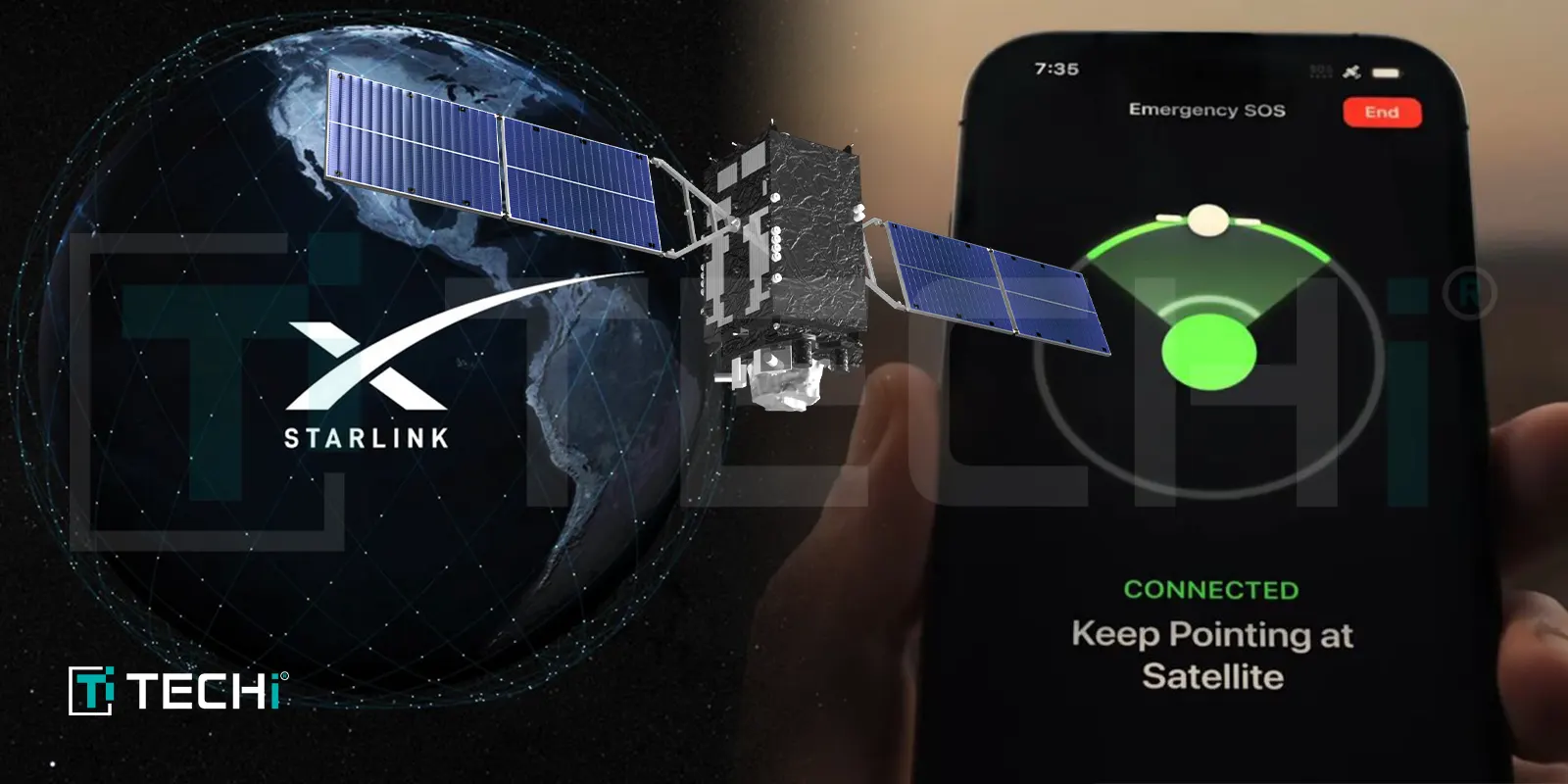
The industry finds itself in a new space-age contest between companies to provide internet to every corner of the Earth and not just plant its flags here or there. Musk’s Starlink was the only game in town with satellite broadband, but now it has come across stiff competitive forces from state-backed Chinese projects and rival billionaires. With thousands of satellites already in orbit and more on the way, the skies are getting pretty thick, and it has become a digital land grab where orbital real estate is the new gold.
With rising competition against Chinese state-backed initiatives and rival networks funded by tech giants such as Jeff Bezos’s Amazon, the satellite internet race is heating up against Musk’s Starlink. The battle for supremacy in Low-Earth orbit (LEO) satellite communications has been getting furious, with Chinese companies rapidly reaching out and snatching international concessions.
Chinese SpaceSail Takes over Global Stage:
Shanghai-based SpaceSail is becoming a strong contender against Starlink. In November 2024, it signed an agreement to enter the Brazilian market and shortly thereafter commenced operations in Kazakhstan as an indicator of its fast pace of expansion. Brasília is also entertaining talks with Bezos’s Project Kuiper and Canada’s Telesat, indicating a global shift away from monopolistic satellite internet providers.
Starlink has launched more LEO satellites since 2020 than all its competitors combined, now the challenge becomes more formidable with China’s massive invasions into space. These intrusions comprise heavy investments by the Chinese government in rival satellite networks and military research on Satellite constellation monitoring and tracking. 2023 saw China launching a record setting number of 263 LEO satellites, a new single year milestone of its growing aspirations.
Strategic Importance and Geopolitical Implications:
China’s push into satellite internet has been welcomed by some governments looking for alternative providers, particularly in those regions where Musk’s Starlink has been held up in political and commercial disputes. State owned or state controlled SpaceSail plans to establish a 648 Low Earth Orbit resident satellite system this year, with 15,000 satellites in orbit by 2030. A comparison shows that Starlink, with around 7,000 satellites actively working, aims to target a total of 42,000 by the end of this decade.
The Qianfan or “Thousand Sails” constellation is China’s first meaningful international effort in satellite broadband, with three additional ones under development. Meanwhile, Beijing is pursuing plans for several LEO satellites totaling 43,000 in forthcoming decades and is investing heavily in rocket technology to facilitate the efficient launching of satellites.
According to Chaitanya Giri, an Aerospace Technology expert with India’s Observer Research Foundation, “The endgame is to occupy as many orbital slots as possible.” In the view of many Western policymakers, this would moreover be a Chinese tool for extending its digital influence, of which the expansion of the Internet censorship procedure outside of China becomes a major point of concern.
Military and Economic Interests:
Space technology and geopolitics are intertwined through China’s greater race for the establishment of treaties on LEO satellite networks. The American Foreign Policy Council (AFPC) expresses fears that China’s foray into digital dominance through space infrastructure is an essential leg of its Belt and Road Initiative (BRI), a $1 trillion undertaking deeply criticized as a tool of geopolitical development.
Chinese military research institutions, including the National University of Defense Technology, are also deeply engaged in researching satellite constellations. State backed companies such as HongQing Technology are receiving a considerable amount of investments, the recent 340 million yuan funding round was largely supported by state affiliated investors. Meanwhile, SpaceSail raised 6.7 billion yuan (US$930 million) in a funding round led by a state owned fund to develop China’s manufacturing capabilities.
Increased satellite related rights reflect China’s determination to bridge the technology gap. In 2023, the country published an unprecedented 2,449 patents on LEO satellite technology, as compared to just 162 in 2019. Many of these are directed toward cheap satellite networks and low latency communication systems that are essential to ensure China’s competitiveness.
Military Utility of Starlink and Counterstrategies from China:
Starlink, developed by Musk, has been part of military actions since Ukraine as being aligned with military operations. Growing worries in China have translated into more state funding for Chinese alternatives. Chinese scientists are very interested in decoding Starlink’s satellite network. They recently had a study from two PLA-affiliated institutes suggesting that it invented a crazy tracking system inspired by how whales encircle and trap their prey using spiraling bubbles. The necessity of tools such as monitoring mega constellations like Starlink has been stressed due to increasing militarization trends in space.
Satellite internet is still one of the fast-moving frontiers, with early movers defining the pace and nature of things before the tightening of regulatory frameworks. Thus, Antoine Grenier, the Global Head of Space at Analysys Mason, said, “The space world is moving fast and busy experimenting. Pioneers are enjoying this relative freedom and are shaping it to their advantage to claim key positions before rules become more stringent—like the Wild West.“
Furthermore, the researchers wrote that, “With the growing trend of space militarization, developing tools to monitor and track these megaconstellations is critically important”. The market that Starlink had once dominated is quickly shifting toward the current, all-out lean from China into the LEO Satellite. Musk’s Starlink is facing its greatest test amid an aggressive Chinese expansion. What will result from that remains to be seen, such as whether enhanced internet connectivity reaches distant communities or increases geopolitical contention.
Read More: Alibaba Surpasses a Decade of AI Investment with its $52 Billion in AI and Cloud Computing