SpaceX’s 8th Starship Test Flight Exploded After Multiple Engine Failures

A back-to-back failure occurred as the 8th test flight of SpaceX’s starship ran into critical problems and eventually blasted after 8 minutes of launch. There were huge roars of celebration and success from an enthusiastic team for a successful takeoff while it was broadcast Live. The ship was safely separated and went into space, after which the super booster that propels the ship out to space successfully returned to its Texas tower.

There were happy claps and screams at the sight of Booster clinging back to its tower. After only a few minutes, the ship spiraled out of control. Engineers lost control of multiple engines, followed by a gigantic blast. The debris started coming back like a shower of meteoroids and shooting stars. Then, the Federal Aviation Administration had to take quick action to reduce the number of flights in major Florida airports.
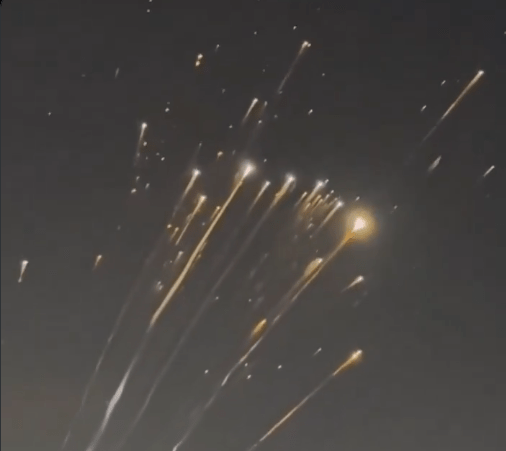
SpaceX Starship explosion debris resembling a meteor shower in the night sky

The Shower of Shooting Stars, Posted by OPTeemyst. It was the second failure in a row, as the seventh test flight met the same fate. The FAA immediately asked for a mishap investigation, and they sprang into action, halting and diverting flights to avoid any accidents due to debris falling from space. SpaceX communications manager Dan Huot said during the broadcast,

“We just saw some engines go out. It looks like we are losing attitude control of the ship.” Later, he mentioned that “at this point, we have lost contact with the ship.”

The ship exploded over the skies of the Bahamas and the Dominican Republic, and SpaceX had to post an immediate message on X that the vehicle experienced a rapid unscheduled disassembly and contact was lost. They are reviewing the data from this flight to understand the causes behind it. Given all that went wrong, SpaceX is an organization that never sits back, as the next test flight might already be on the cards.
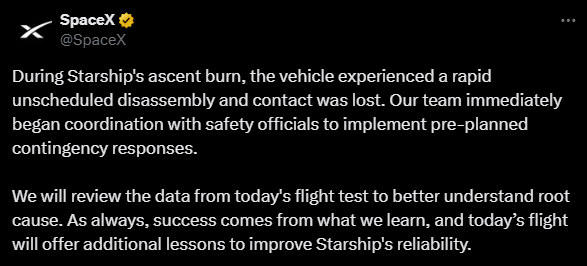
SpaceX's official statement on Starship's explosion during ascent burn.

SpaceX has shared the complete launch video on their official site with explanations and experience. There were 6 Raptor engines in the ship, and they stopped responding one by one until a sonic boom was heard. Elon Musk has been caught in many controversies over the past few days, including losing a lawsuit against OpenAI for stopping it from becoming a for-profit entity. This is an additional shock after the 7th flight broke down during its January 16th, 2025 test run.

During this 7th test flight, engines experienced premature shutdowns and a complete loss of control. Roughly two to three minutes later, the vehicle disintegrated over the Turks and Caicos Islands, though no injuries were reported. That incident also resulted in airspace closures for over an hour, and the FAA had to call for a mishap investigation. After 7th test flight, the booster successfully returned to its Launchpad. The SpaceX team can celebrate and can again stay hopeful and proud for the 3rd booster return as well during the 8th test.

Scores of appreciation and public sentiments were expressed on the 8th test flight, and people praised the SpaceX team’s positivity and struggles.

Social media reactions to SpaceX's 8th Starship test flight

These tests are part of SpaceX’s mission of starting commercial flights into space, and SpaceX will continue to send the dummy versions of its Starlink satellites. They posted an investigation for their 7th test flight and changed several things to fix the previous issues, including improvements to the fuel system and the propellant. The company has always stayed very transparent in sharing the details of all its test flights and the glitches caught at any stage of the tests.

The 8 Starlink Flights’ Tests and Their Outcomes

Test # Date Launch Outcome Booster Landing Ship Landing Problems Positives
Test 1 April 20, 2023 Failure Failure Precluded Engine Failures within 4 min. Most powerful, heaviest rocket ever flown. Reached 39 km height.
Test 2 Nov 18, 2023 Failure Failure (Ocean) Precluded Leak in aft section during liquid oxygen venting, causing a combustion event that interrupted communication between the craft’s flight computers, leading to full engine shutdown. Reached 150 km altitude. Powerful show of all 33 Raptors working and a successful hot stage separation.
Test 3 March 14, 2023 Success Failure (Ocean) Failure (Ocean) Booster successfully propelled the spacecraft to staging, with 13 engines successfully ignited for a boostback burn, though 6 engines failed a few seconds before the end of the burn. Reached 462 meters in altitude and seven minutes into the mission. All Raptor engines started successfully and powered the vehicle to its expected orbit, becoming the first Starship to complete its full-duration ascent burn.
Test 4 June 6, 2024 Success Controlled (Ocean) Controlled (Ocean) Only one engine lost shortly after liftoff. Mission lasted for 1 hour and 6 minutes with a soft landing in the Indian Ocean. Executed first flip maneuver.
Test 5 Oct 13, 2024 Success Success (OLP A) Controlled (Ocean) The Booster RETURNED to LAUNCH Site. The greatest success ever achieved. Successful hot-staging separation, igniting its six Raptor engines and completing ascent into outer space.
Test 6 Nov 19, 2024 Success Controlled (Ocean) Controlled (Ocean) Second attempt at booster recovery. The ship completed in-space engine relight test and re-entered, splashing down in the Indian Ocean during daylight for the first time for any Starship.
Test 7 Jan 16, 2025 Failure Success (OLP A) Precluded Engines experienced premature shutdowns due to a propellant leak larger than the Ship’s systems could handle, followed by a total loss of telemetry. Vehicle exploded within 3 minutes. Booster successfully returned to its launch pad.
Test 8 Failure Success (OLP A) Precluded Engines lost after 8 min into the space. Booster successfully returned to its launch pad.

Elon Musk is a man on a mission. He is spending his energy and resources on these impactful technological developments. He has succeeded in many of his previous endeavors, and he has the guts to try one more time.
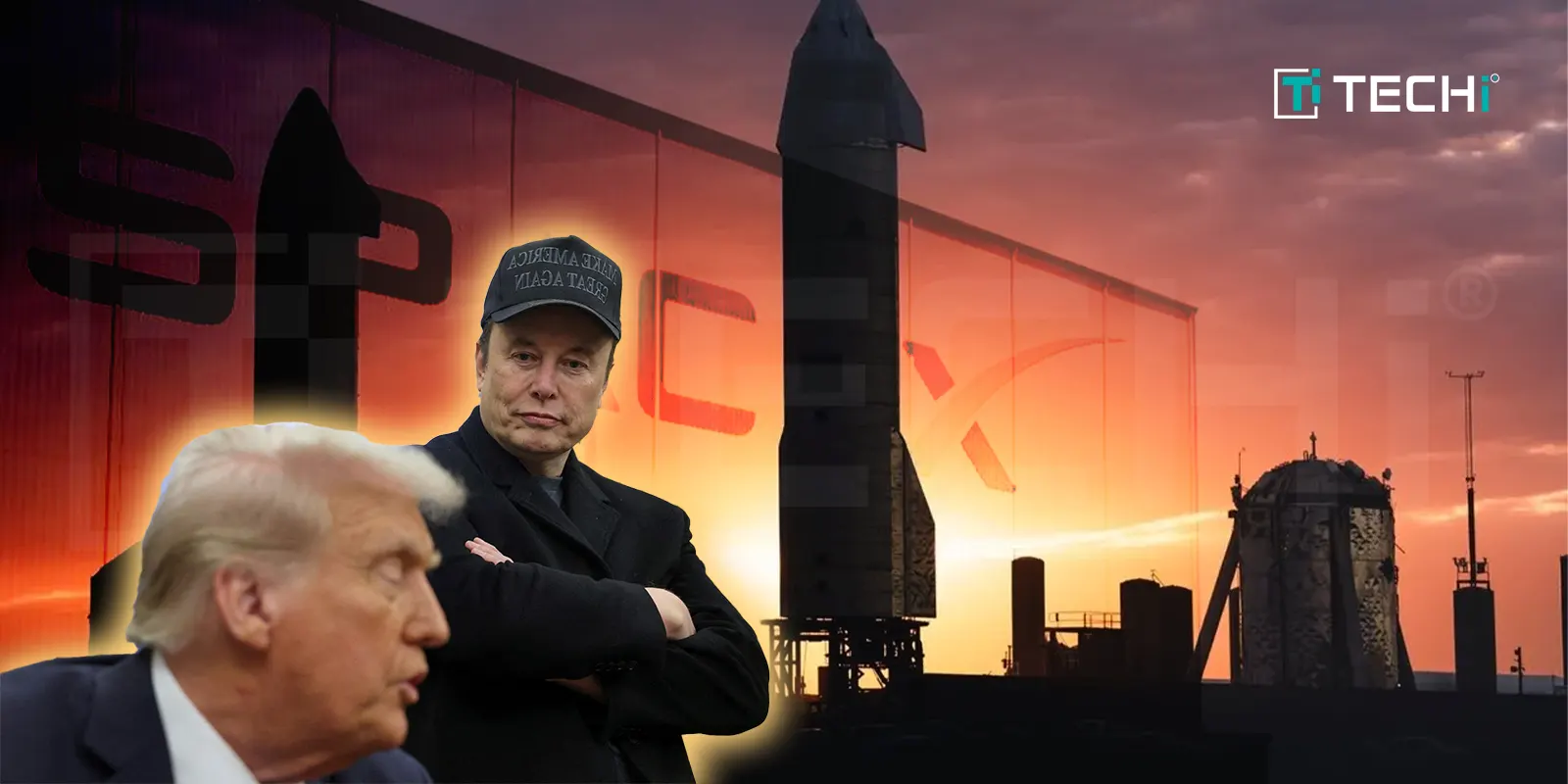
Trump Fires FAA Workforce as Musk’s SpaceX Enters Air Traffic Control

“You are fired!” seems to be apparently the new in-flight announcement. As Commercial aviation is the art of balancing both technological precision along with human expertise, what happens when one end of the equation is suddenly compromised overnight? The most recent mass firings at the Federal Aviation Administration (FAA), which have taken place alongside the introduction of yet an undefined role for SpaceX in the future of air traffic control, have raised eyebrows, sparked debates, and left a lot of people wondering if the skies have suddenly perhaps became a bit more turbulent. 

According to a CNN source, the Trump administration has dismissed hundreds of Federal Aviation Administration (FAA) employees assigned to critical air traffic control infrastructure. The terminations began late Friday night, just as SpaceX, under Elon Musk, was contracted to assist with developing an entirely new air traffic control system.

Mass Firings:

The number of affected workers is still unknown. However, the union representing the employees, the Professional Aviation Safety Specialists (PASS), noted that among them were mainly terminations due to probationary employees. These were newly hired employees who had yet to complete at least a year of duty since employment. Notably, these are not air traffic controllers, as the sector is already plagued by a shortage of staff due to resignations and retirements.

As reported by Dave Spero, president of PASS, “the employees were fired without cause nor based on performance or conduct. The emails didn’t come from a government email address; they came from an exec order Microsoft email address”. These employees belonged to professionals whose work includes maintenance on FAA radar equipment, landing systems, and navigation aids. An anonymous air traffic controller disclosed to the Associated Press that the layoff also affected aircraft certification specialists, aviation technical system experts, engineers, architects, and flight procedures teams. Galen Munroe, Deputy Director of Public Affairs at the National Air Traffic Controllers Association (NATCA), confirmed that the layoffs reached across several essential aviation safety roles.

Safety Concerns:

Congress has been pushing for years for the FAA to deal with the systemic problems posed by recurring near-misses and the modernization of its infrastructure. In spite of alarm bells rung by aviation experts, the agency has been negligent in facilitating any of the most needed safety upgrades.

This wave of firings follows a crash that occurred over Washington National Airport this January. A single controller was responsible for helicopter and commercial airline traffic at the heavily trafficked airport, and several other aviation accidents have followed since. Nick Daniels, President of NATCA, said, “We will analyze the effect of these terminations on aviation safety and the national airspace system. It’s a sad day for those who chose to serve in aviation safety and public service, only to have their careers cut short.”

SpaceX and the Future of Air Traffic Control:

Just days after the Washington D.C crash, Musk took to X (formerly Twitter) to announce that Trump’s Department of Government Efficiency (DOGE) had approved efforts to “make rapid safety upgrades to the air traffic control system.” However, there have been no further details made available by either Trump or Musk on the expected upgrades.

Secretary of Transportation Sean Duffy posted on X that, “On Monday, members of Musk’s SpaceX team were at the Air Traffic Control System Command Center in Virginia. The purpose of the visit was to allow SpaceX to get a firsthand look at the current system, learn what air traffic controllers like and dislike about their current tools, and envision how we can make a new, better, modern, and safer system.”

While it seems that SpaceX may have added modernizing air traffic control to their portfolio, recent mass firings raise a lot of concerns regarding immediate risks to safety and disruption to air traffic operations. The involvement of SpaceX introduces uncertainty but also excitement for the future of air traffic control which could lead either to innovations or to turbulence. For now, travelers and industry experts alike will keep their seatbelts fastened and tray tables locked, watching closely to see if this new trajectory opens up with a clear sky or causes another chaos. While the implications of such a decision are being debated by various industry experts and policymakers, the future of American air traffic control seems far from certain. 

Read More: Elon Musk’s AI Revolution Continues as xAI Unveils Grok 3 AI Model

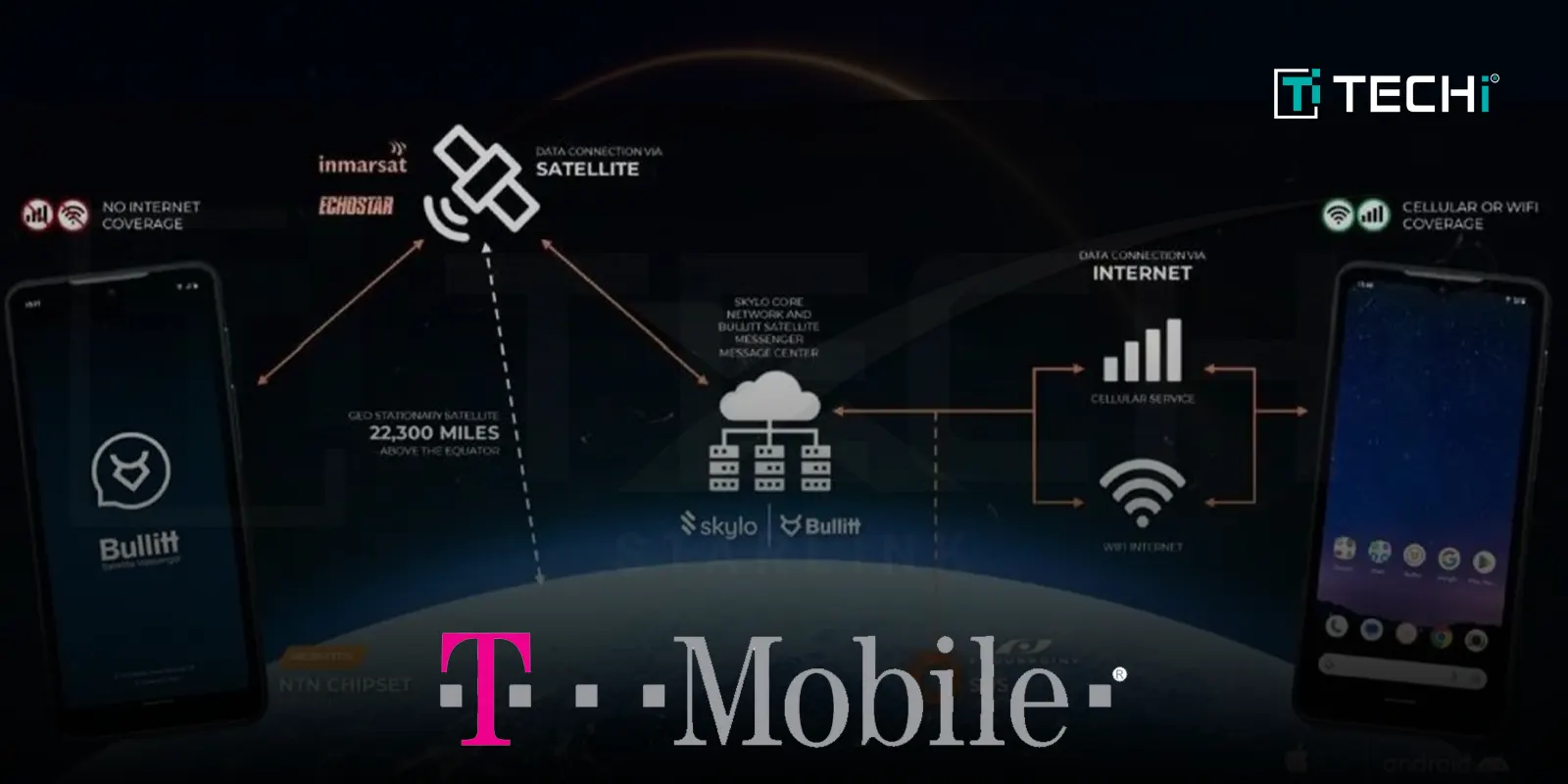
T-Mobile’s Game-Changing Collaboration with Starlink has begun Nationwide Testing of Satellite-Based Connectivity

For several years, mobile dead zones were an unavoidable source of annoyance, whether it was on the hike in the mountains, a drive on those long rural highways or standing alone in one of the most peculiar corners of a house where calls mysteriously drop. Thanks to T-Mobile and SpaceX’s Starlink, the two companies have now officially launched widespread testing of their satellite-to-cell service that aims to push mobile access to even the remotest locations. If you text “HELP” from a remote island and no one replies, at least you’ll know it’s personal. 

Game-Changer and edge in the Wireless Market:

T-Mobile, last Sunday launched a beta trial of the satellite service to allow such customers to send text messages via satellite. The company will make the service available for free to beta testers until July, after which it will be a standard offering in T-Mobile’s premium plan, Go5G Next, with no additional charges. Other T-Mobile customers can opt into the service for an additional $15 per month after the launch this summer.

Company estimates that about 500,000 square miles of the U.S, previously unreachable by traditional cell towers, will stay connected. Text messages are the first step, voice and data capabilities are expected to follow, hence eventually keeping the uninterrupted mobile coverage alive. Its market partner has given T-Mobile a competitive edge in relation to its competition.

This aspect also connects T-Mobile to other smartphone manufacturers such as Apple and Google to integrate the satellite connection capability into the operating systems. As Mike Katz, T-Mobile’s president of marketing, strategy and products, said, “T-Mobile has been working closely with Apple and Google to ensure that this experience is integrated directly into their OS (operating system), and this will be the default satellite system across both of those phones”.

He emphasized on the service’s performance on nearly all smartphones of the last four years, indicating no need for new devices or specialized hardware. Katz said, “This is something that nobody else in the U.S. has done, and one of the big distinctive things this network has is that it works across almost all smartphones from the last four years”.

T-Mobile has also opened its satellite service to rival customers, specifically those from AT&T and Verizon, without the requirement of switching networks. Katz said, “Customers who sign up for the trial will get a 33% discount when the service is commercially launched”. It seems that this could mark a paradigm shift in the way telecom companies will require cross-network cooperation on improvements in infrastructure.

Future of Satellite-Enabled Mobile Networks:

Satellite technology is the next frontier that mobile networks compete for as they strive to achieve universal connectivity. While T-Mobile and Starlink are taking the lead, the vision of customers of the extinction of “no service” zones will be a reality in the future. The trial invitation gives customers a glimpse of the future when portable companies will no longer be limited to cell towers but would attain a vast reach of a limitless space.

Read More: Starlink Satellite Access for the iPhone is a progressive groundbreaking approach; Apple’s latest update

SpaceX company faced yet another setback while doing a test flight of its flagship rocket, Starship

SpaceX Launches Seventh Starship TestFlight

On Thursday, Jan. 16, Elon Musk’s company, SpaceX, launched its seventh TestFlight of its Starship rocket. However, it lost communication with the Starship rocket after about 9 minutes into the flight. The Starship rocket had 10 Starlink simulators on board that were planned to be deployed once it had reached space.

SpaceX Confirms Loss of Ship

One of the SpaceX senior managers for quality said, “We can confirm that we did lose the ship.”SpaceX further shared that the ship was broken during the ascent as they continue to review data from the test light to understand the root cause. It is believed that the ship developed fire that resulted in test flight failure, but the findings were still going on at the moment.

Social Media Reaction and Debris in the Atlantic Ocean

Many users on social media posted private photos and videos of what appeared to be a fireball created by the test flight incident near the Caribbean islands. Space X also said that the debris from the resulting incident fell into the Atlantic Ocean, but thankfully, it was within the predefined hazard areas.

FAA Issues Warning and Reviews Incident

As a result of the debris, the FAA issued a warning to pilots of dangerous areas for possible falling debris from Starship rockets. Multiple flights over the Caribbean were turning around, including commercial as well as cargo planes, as seen from different flight tracking websites/mobile apps. Additionally, the FAA confirmed that they are reviewing the SpaceX Starship incident. The FAA has the authority to ground rockets after such failures and ask space companies to perform a proper investigation and place corrective measures so such an incident can be avoided in the future.

SpaceX’s Statement on Starship Incident

SpaceX’s account on the X platform said, “Starship experienced a rapid unscheduled disassembly during its ascent burn. Teams will continue to review data from today’s flight test to better understand the root cause. With a test like this, success comes from what we learn, and today’s flight will help us improve Starship’s reliability.

click here to read: RedNote: This is the Chinese App to make it popular among TikTok Creators- But had Unendurable Consequences

SpaceX Faces Setback as Blue Origin Succeeds

This latest setback for SpaceX comes at the time when Blue Origin just launched its first Glenn rocket, and it reached orbit successfully. SpaceX team needs to recover from this setback quickly and take their lessons from this failure while moving forward at the same time.