South Korea’s AI Power Play; Securing 10,000 GPUs for the Future

South Korea is on its way to procure about 10,000 high-performance GPUs during the year, with a view to furthering its interest in the rapidly accelerating global AI race. This falls under its wider plan to build a more cohesive national AI computing infrastructure and sustain the country’s innovation ecosystem. Artificial Intelligence has changed the face of this world, and all the countries are doing hard work to establish large computing infrastructures. Here, South Korea is one of the last countries to announce acquiring 10,000 high-end GPUs. The AI race is not just between the technological maharajas, it becomes an all-out national showdown among countries.

An Alternate Strategic View:

As artificial intelligence becomes a key driver for economic and technological growth, the intensified competition now encompasses not just corporate rivalries but also national innovation ecosystems. This strategic view was articulated by acting President Choi Sang-mok, who said, “As competition for dominance in the AI industry intensifies, the competitive landscape is shifting from battles between companies to a full-scale rivalry between national innovation ecosystems”.

In partnerships with the private sector, South Korea seeks to obtain the GPUs for its national AI computing center, set to start operations shortly, to support its AI aspirations.

Global Regulation for AI Chips:

This follows the recent regulations by the U.S government prohibiting exportation of AI chips. The new rulings, rank nations in different tiers and place South Korea among 18 countries that are exempt from export restrictions. Meanwhile, 120 other countries are facing export restrictions, whereas nations such as Iran, China, and Russia are virtually banned from accessing U.S AI chips.

The number of GPUs that would be needed for an AI model depends on factors like processing power demands, amount of data, complexity of the model, and time to train the model.The Ministry of Science and ICT in South Korea is yet to finalize its requirements regarding the budget, models of GPUs, and partners in the private sector. However, the government anticipates wrapping this up by September 2025.

Global GPU Market and South Korea AI Investment:

NVIDIA is considered to dominate the global GPU market by more than 80 percent and has continued to be a vital supplier for most AI companies across the globe. GPUs are publicized as general AI and accelerated computing application’s keystone hardware. However, all major companies like Microsoft backed OpenAI are now searching for alternatives to cut down their reliance on Nvidia. The company is finalizing the design of its own AI chip and for manufacturing, will turn to Taiwan Semiconductor Manufacturing Co (TSMC).

China is beginning to produce spectacular results in artificial intelligence, as the Chinese startup DeepSeek develops AI models that focus more on computational efficiency than on processing power, which could narrow the gap between Chinese and U.S AI chips.

Following its ambitious program of acquiring 10,000 GPUs, South Korea is driving very hard to assert itself into the ranks of highly competitive AI innovators. It builds partnerships with the private sector and takes exemption from the U.S chip restrictions to make sure it really leads the way in the revolution. The next few months will be vital for the government in ratifying procurement plans and advancing towards the national AI strategy. As long as technology keeps evolving, that investment by South Korea into infrastructure for AI may indeed prepare for revolutionary breakthroughs to arrive in the upcoming years.

Read More: South Korea Suspends New Downloads of DeepSeek over Data Privacy Concerns
South Korea Suspends New Downloads of DeepSeek over Data Privacy Concerns
Suppose one downloads an AI chatbot to brainstorm ideas, solve inquiries, and perhaps even crack a joke, but only to find that it’s under deactivation due to data privacy issues. That is the exact situation faced by the South Korean users of DeepSeek, the Chinese AI app that is now being considered for regulatory attacks. Its web service continues to work, but downloading for the new user is immobilized until compliance with South Korean data protection law. I guess South Korean regulators just hit DeepSeek with the digital equivalent of a “Try again later” sign.

As South Korea has put an end to any further download of the Chinese artificial intelligence app, DeepSeek, due to concerns about breaching its data privacy laws, the Personal Information Protection Commission (PIPC)  highlighted that the suspension took place on Saturday and would continue until DeepSeek was modified to conform to South Korea’s privacy law.

The AI-enabled chatbot, meanwhile, can still be accessed in South Korea through the web-based service. The inspection is back on the app on how DeepSeek handles user data, especially against the backdrop of global concerns considering how other AI applications collect data and provide privacy protections.

Regulatory Scrutiny:

DeepSeek once admitted that, in certain respects, it has failed to give account for Korea’s personal data protection laws, which was told by the PIPC. The company has appointed legal representatives in South Korea, and is prepared to tackle those regulatory concerns. This follows a similar set of steps taken by Italy’s data protection authority, the Garante, last month, to order DeepSeek to suspend its chatbot services in that country due to privacy policy concerns still to be resolved.

Such incidents illustrate the increasing regulatory pressures bearing on AI startups, as governments around the world tighten oversight on the collection, storage, and use of personal data. It seems like AI chatbots are great at solving problems but terrible at avoiding them.

China’s Response:

Regarding the situation in South Korea, a spokesperson from China’s foreign ministry stressed Beijing’s commitment to data security and international obligations, also arguing that it would never order firms or individuals to unlawfully collect or store data. Though DeepSeek has not yet issued a formal statement on the South Korean suspension, the regulatory challenges are similar to those being faced by many other Chinese tech companies in international markets.

Sensitivity towards Data Compliance:

The regulatory issues at DeepSeek have been articulated regarding scrutiny from governments across the world on the AI services and user data. With improving privacy regulations by many governments worldwide, companies like DeepSeek have had to be careful in balancing innovation along with sensitivity towards data compliance. As the existing users get access to the AI chatbot through its web service, the stopping of new downloads signals that local privacy provisions must be met. It is yet to be seen if DeepSeek can handle the issues quickly, although one thing can be determined concerning the future of the AI, which has to do with regulatory approval as much as with technological advancements.

Given all the concerns being raised about gathering of the data with AI and national security risks, compliance and the ability to navigate through will be DeepSeek’s most significant factors in future global operations. For now, users in South Korea who had already installed DeepSeek can freely use it, while new downloads will remain blocked until the company adapts to domestic privacy policies.

Read More: TikTok Returns to App Stores in the US and the Ownership Battle Continues

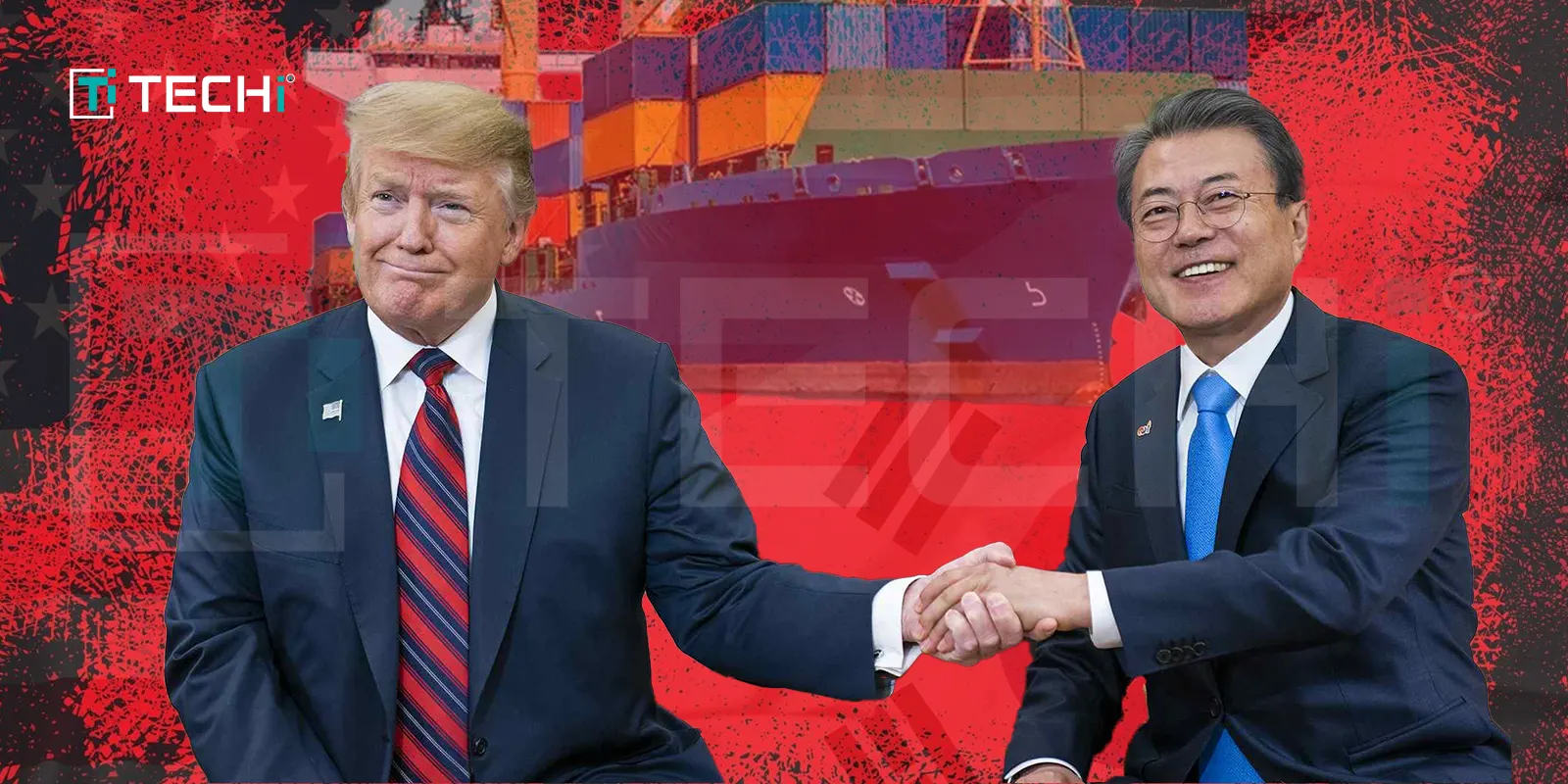
South Korea’s Acting President Choi Responds to Trump’s 25% Tariff Shock – What’s Next for Global Trade?

In the latest news, Trump’s remarks over import tariffs and taxes have caused immediate stress among global trading partners. On Monday, President Trump announced that the U.S. will impose 25% tariffs on all aluminium and steel imports as well as other import duties later this week, including Canada and Mexico. He broke this news on his way to attend the Super Bowl from Florida to New Orleans when asked about trade tax scenarios; he assured that aluminium was included as well.

Trump’s Tariffs Strategy:

In Trump’s presidency, this was the first time that tariffs came earlier than before his time at the White House, also when he prioritised tax cuts and deregulation. There are two sides of Trump’s tariff strategy:

  1. Import taxes as a tool to force concessions on issues like immigration.
  2. Source of revenue that would greatly help the government’s budget deficit.

After Effects:

This announcement has caused worry among financial markets and Americans. American citizens are expecting a high inflation rate in the upcoming months because of duties. Financial Markets fell on friday and stock prices also saw the drop because of reciprocal tariffs and of course ‘consumer sentiment’. Consumers of Shein and Temu weren’t able to receive their packages until customs officials could find an alternative way. The small packages have previously been exempt from tariffs.

Previously, he threatened 25% import taxes on all goods from Canada and Mexico but he paused them for 30 days a few days ago. Not only them, China has also been on the radar as he proceeded to add 10% duties on imports from China.

Global Trader’s Reaction:

Trump’s tax policies have caused some serious stress to global trading partners. On Monday, Choi Sang-Mok, South Korea’s acting president (who also serves as the country’s finance minister) called a meeting with the country’s trade and foreign policy officials to examine how Trump’s proposed tariffs on steel and aluminum would affect its industries as well as the U.S.-Japan summit. Also, Choi highlighted the need to strengthen the nation’s AI competitiveness while monitoring the growth of startup tech companies such as China’s DeepSeek. Specific details were not disclosed however according to him they discussed the impact and possible responses. The stock prices of major South Korean steelmakers, including POSCO and Hyundai Steel, dropped as the market opened on Monday.

From January to November, 2024, South Korea shipped about $4.7 billion worth of steel to the United States, which accounted for 21% of its global exports of the products during the period.

Read More: Trump’s Paris AI Summit: An Exclusive Showdown with AI Safety Institute Staff Being Ridiculed