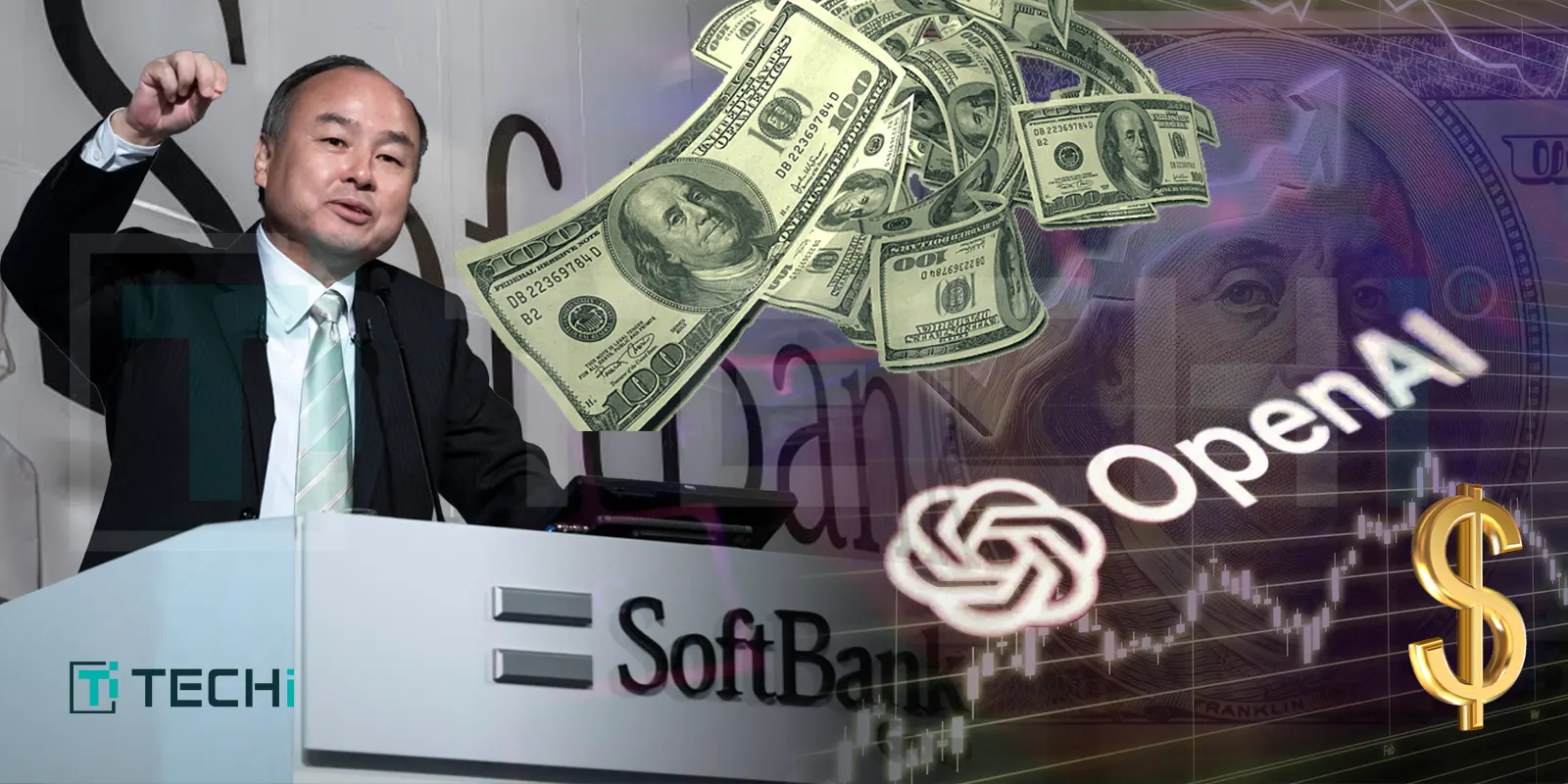
OpenAI to Shift AI Compute from Microsoft to SoftBank

According to The Information Report on Friday, OpenAI is forecasting a significant shift in the next five years around who it gets most of its computing power from. OpenAI is significantly shifting its AI infrastructure, moving away from Microsoft’s cloud services and toward SoftBank-backed Stargate. By 2030, OpenAI expects 75 percent of its computing power to come from Stargate, marking a shift that carries a lot of opportunity and risk. Though this shift is coming, OpenAI will keep increasing its spending on Microsoft’s data centers in the next few years. However , the company’s operational expenses are poised to increase significantly.

Reports indicate that OpenAI will burn through $20 billion in cash by 2027, marking a significant financial shift from previous years, a massive jump from the $5 billion spent in 2024. By the decade’s end, OpenAI forecasts that running AI models (inference costs) will surpass AI training expenses, marking a significant shift in its computing strategy. This move signals OpenAI’s push for greater independence in cloud infrastructure as it scales its AI models.

Why Is OpenAI Starting to Move Away from Microsoft?

With this move, OpenAI is positioning itself for a world where computing resources are more often distributed. But is this the right move? Moving computing power over from Microsoft (whose Azure powers OpenAI today) to the SoftBank-backed Stargate project is not something that happens overnight; there is a lot of work to be done. OpenAI has leaned heavily on Microsoft’s Azure cloud, but as AI costs have taken off, the company seems to be looking for more control and diversification over its compute resources. There might be several reasons why they decide this.

Microsoft increasing interest in its in-house AI research might lead to strategic conflicts with OpenAI in the future, which might end up resulting in conflicts of interest between the two. To OpenAI, this could be a mandate to secure its long-term independence. In addition, OpenAI’s rising operational outlays — projected to surpass $20 billion by 2027 — necessitate a more fluid funding approach, and SoftBank is famous for its mega tech bets. In addition, OpenAI may want to decrease the reliance on U.S. cloud providers for strategic reasons as well, whether it be aimed at mitigating risks from potential regulatory scrutiny or geopolitical factors.

What It Signals About OpenAI’s Future

In leaning toward SoftBank-backed computing, OpenAI is making a calculated gamble. This could offer more autonomy, tailor-made AI chips, and improved financial flexibility, in other words. However, SoftBank’s track record of putting money into volatile deals (think WeWork) begs the question of whether this is a sustainable partnership in the long term.

And inference costs (i.e., running AI models) are expected to exceed training costs by 2030, so OpenAI needs a long-term sustainable solution. This could blow up in the face of the SoftBank-funded Stargate project if it fails to deliver the same stability and efficiency that Microsoft Azure provides. Ultimately, OpenAI’s pivot away from Microsoft is a high-stakes transition that could determine its trajectory in the A.I. industry. If done right, it could solidify OpenAI’s role as a leading innovator in AI. However, if the transition faces major roadblocks, it could open up new challenges that slow down OpenAI’s momentum in the AI race.

Read More: OpenAI Drops o3 AI Model to Unify AI Strategy with Game-Changing GPT-5
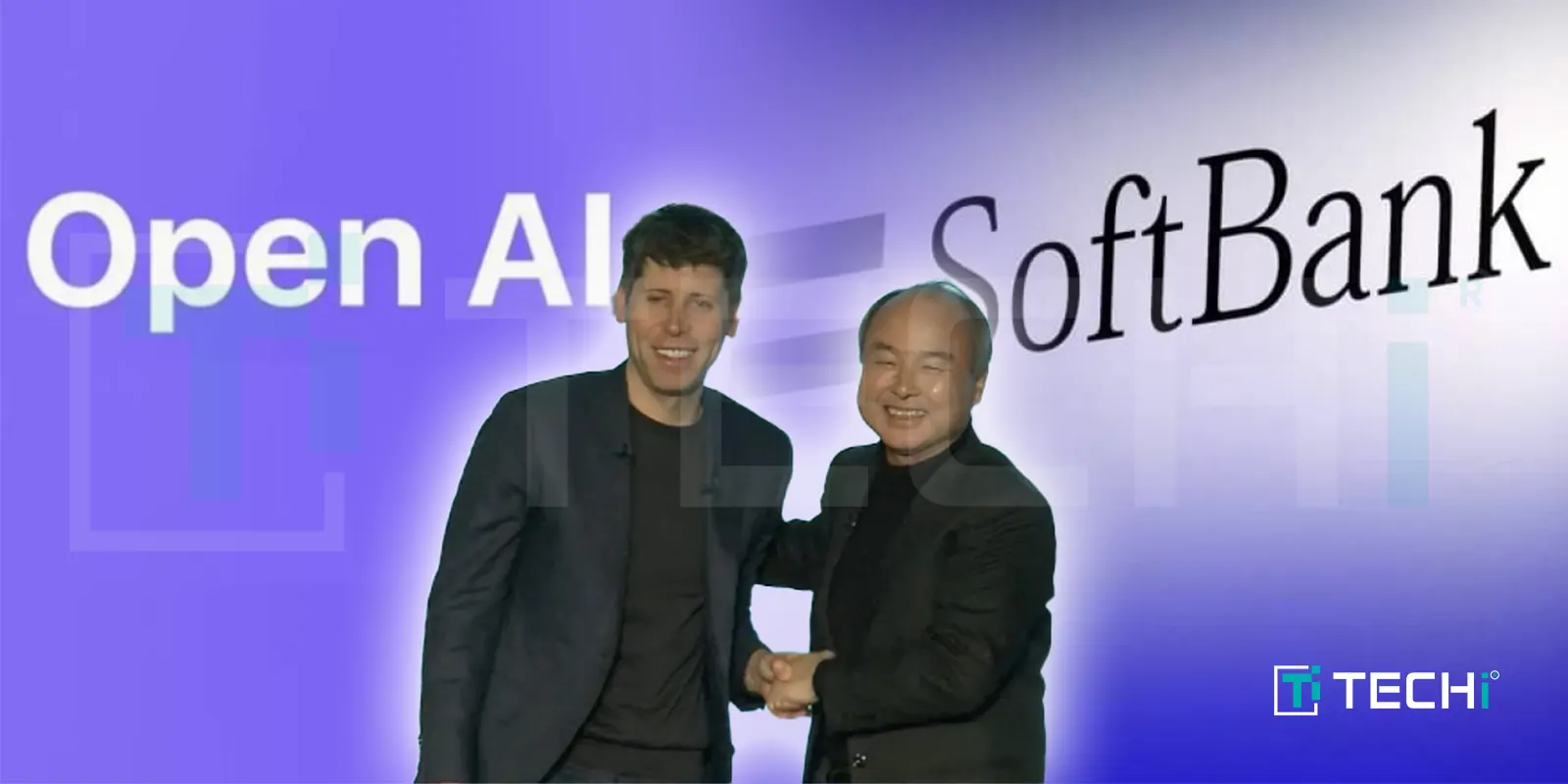
An Unconventional Alliance Forging AI Innovation; SoftBank and OpenAI Joint Venture in Japan

With Sam Altman bringing the brains and Masayoshi Son bringing in billions together, they’re on the way to raising the Tech Industry’s standard bar in Japan. SoftBank’s chairman, Masayoshi Son, and OpenAI’s CEO, Sam Altman, have announced the joint venture to provide AI services for corporate clients in Japan, which is named SB OpenAI Japan. It is a newly created SoftBank entity with its telecom arm in Japan, further cementing Japan’s investments into artificial intelligence. SB OpenAI Japan is jointly owned by OpenAI and a SoftBank-established company.

A Multimillion-dollar Engagement:

SoftBank’s share valuation soared when the firm invested $100 million in Yahoo! and other struggling tech companies. However, the trouble started when Son lost $70 billion out of his $78 billion and 95% of SoftBanks’s stock market value disappeared during the crash of 2000. Son did not give up and invested $30 million in a Chinese company called Alibaba that made the investment reach $130 billion over time. Today, SoftBank’s investments include companies like Uber, Slack, SoFi, DoorDash and its Vision Fund is the largest technology venture in the world.

SoftBank is paying $3 billion every year in using OpenAI technologies in its subsidiaries, marking a deepening interest from Son in AI. Furthermore, SoftBank is looking at investing an additional $15 to $25 billion into OpenAI further to solidify its position within the global AI ecosystem. SoftBank, outside Japan, will also put $15 billion into Stargate, another joint venture with OpenAI and Oracle to build AI infrastructure in the United States. The $500 billion Stargate AI Project, a landmark development for AI and economic growth is a collaborative venture spearheaded by OpenAI, SoftBank, Oracle and MGX and was announced by Trump. Msayoshi Son along with Altman appeared with Trump at the Stargate launch, they plan on investing $100 billion to create thousands of jobs under Trump’s presidency. This marks a wider commitment to the growth of AI beyond Japan.

The rise of the AI competition has not come easy, as the emergence of DeepSeek from China evokes a skepticism revolving around the radical capital invasion into AI technology. Altman did stand his ground, saying, “The world is going to just need so much compute.” With his endorsement of OpenAI, Son has made a comeback to the power circle of investing for the rest of SoftBank’s tech portfolio. He has a long history of partnerships with American tech firms, dating back to 2008, when SoftBank first brought Apple’s iPhone to Japan, transforming the mobile industry in that country.

Political Endorsement:

With a view for enriching their visions, Son and Altman met Japanese Prime Minister Shigeru Ishiba on Monday (Feb 3, 2025) which is a sign of government support for AI-led economic transformation. This joint venture by SoftBank and OpenAI aims to launch AI into a new advanced era in the corporate world of Japan. The partnership may flourish in the next realm of business and technological evolution with an increased implementation of AI in the region.

Read More: SoftBank’s Biggest AI Gamble Yet: What $25B Means for OpenAI & Stargate


SoftBank’s Biggest AI Gamble Yet: What $25B Means for OpenAI & Stargate

Is SoftBank ahead of Microsoft? Is the success of DeepSeek the primary reason behind this vast AI investment? Let’s have a look over investment strategies:

Direct Investment in OpenAI:

SoftBank is in discussions to invest between $15 billion and $25 billion directly into OpenAI. If the deal is finalized, it would position SoftBank as OpenAI’s largest investor, surpassing Microsoft’s commitment of $14 billion. Well, this is a small chunk. SoftBank and OpenAI will support the OpenAI Stargate project with a commitment of $19 B, a significant AI infrastructure announced on January 21, 2025. Key players like OpenAI, SoftBank, Oracle, and MGX came together in a joint $500 billion venture aiming to develop AI data centers in the U.S. over the next 4 years.

This deal marks SoftBank’s biggest AI push since its $16 billion investment in WeWork (which was abandoned later from $16B to $2B)

The reason behind this?

Multiple factors can be the reason for this:

  • Strong commitment to AI or biggest bet? It shows SoftBank’s deep commitment to Open AI’s future.
  • Power Shift: No reliance on Microsoft if the deal got set. As Microsoft was their exclusive cloud provider.
  • DeepSeek R1 impact? Their rapid rise and shaking of the market have raised questions and concerns as well. AI hardware investments like Nvidia have lost their charm. 
  • Nvidia’s stock drop: Investors fear that AI models like DeepSeek are built at a lower cost and could disrupt big AI infrastructure spending.
  • OpenAI vs DeepSeek: OpenAI has accused DeepSeek of using a technique called distillation to copy its models at a lower cost.
  • OpenAI’s Future Plans: Their New Year resolutions have one aim: to become a for-profit entity and attract (of course) more funding.

What’s Next?

  • If the deal got done, SoftBank’s investment could reshape OpenAI’s funding structure and reduce its dependency on Microsoft.
  • The AI competition just got heated up after this, with DeepSeek’s low-cost agenda challenging the U.S. giants.
  • Investors are rethinking their bet on AI infrastructures like Nvidia and Microsoft after seeing their major losses.

What are people saying?

SoftBank is in talks to invest as much as $25B in Open AI. Wait, but didn’t DeepSeek show that AI is cheap? Why would we see $25B investments? Maybe progress in technology doesn’t mean the destruction of computer needs. – Jose Najarro Stocks in his latest tweet on X. Well, on my behalf, Softbank’s investment in OpenAI isn’t shocking, but the stargate angle is interesting. Are they setting up for total AI infrastructure control? Time will surely unfold this mystery.

Read More: Revival of US Tech Stocks Ignited after DeepSeek’s AI sell-off