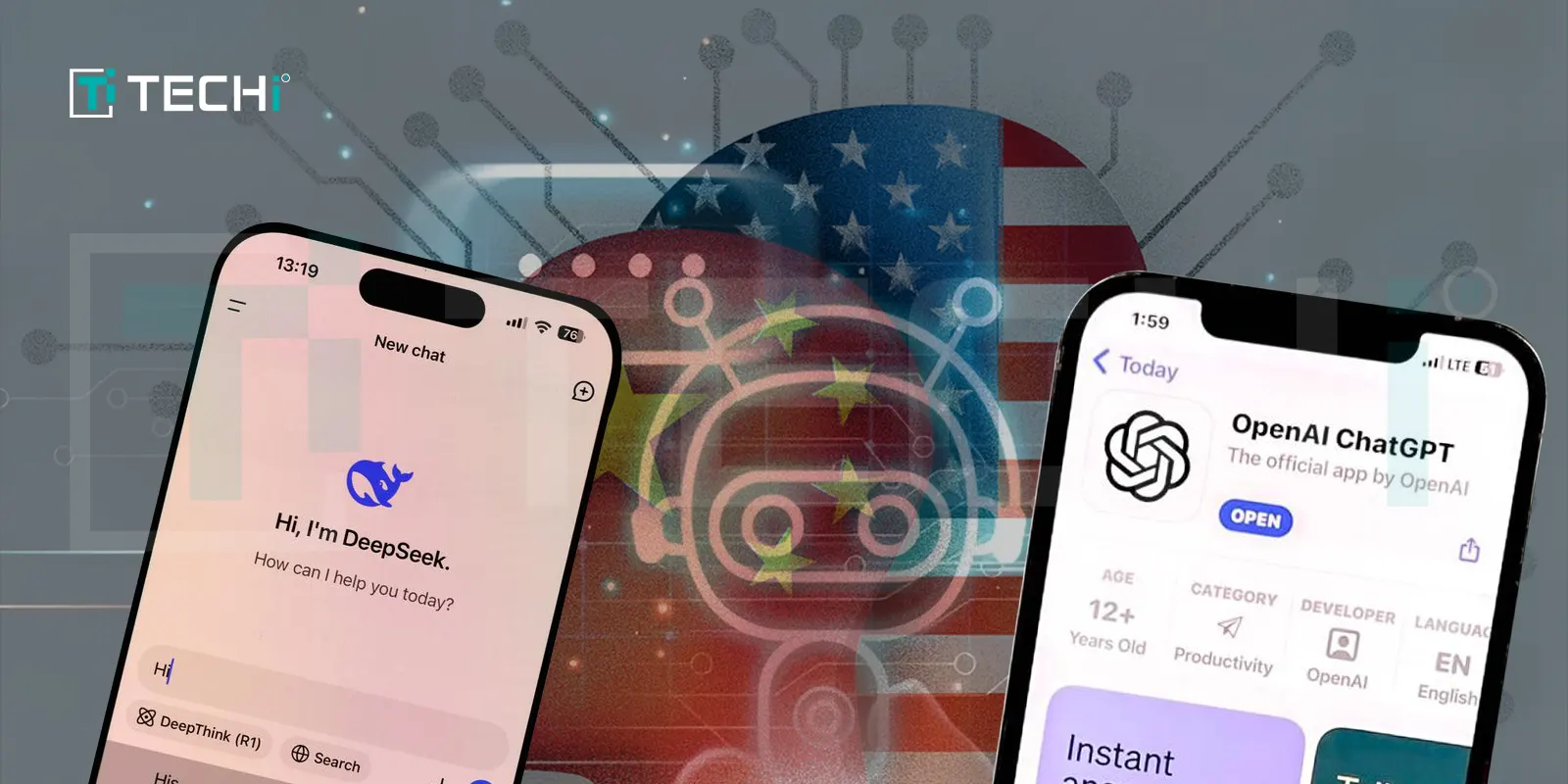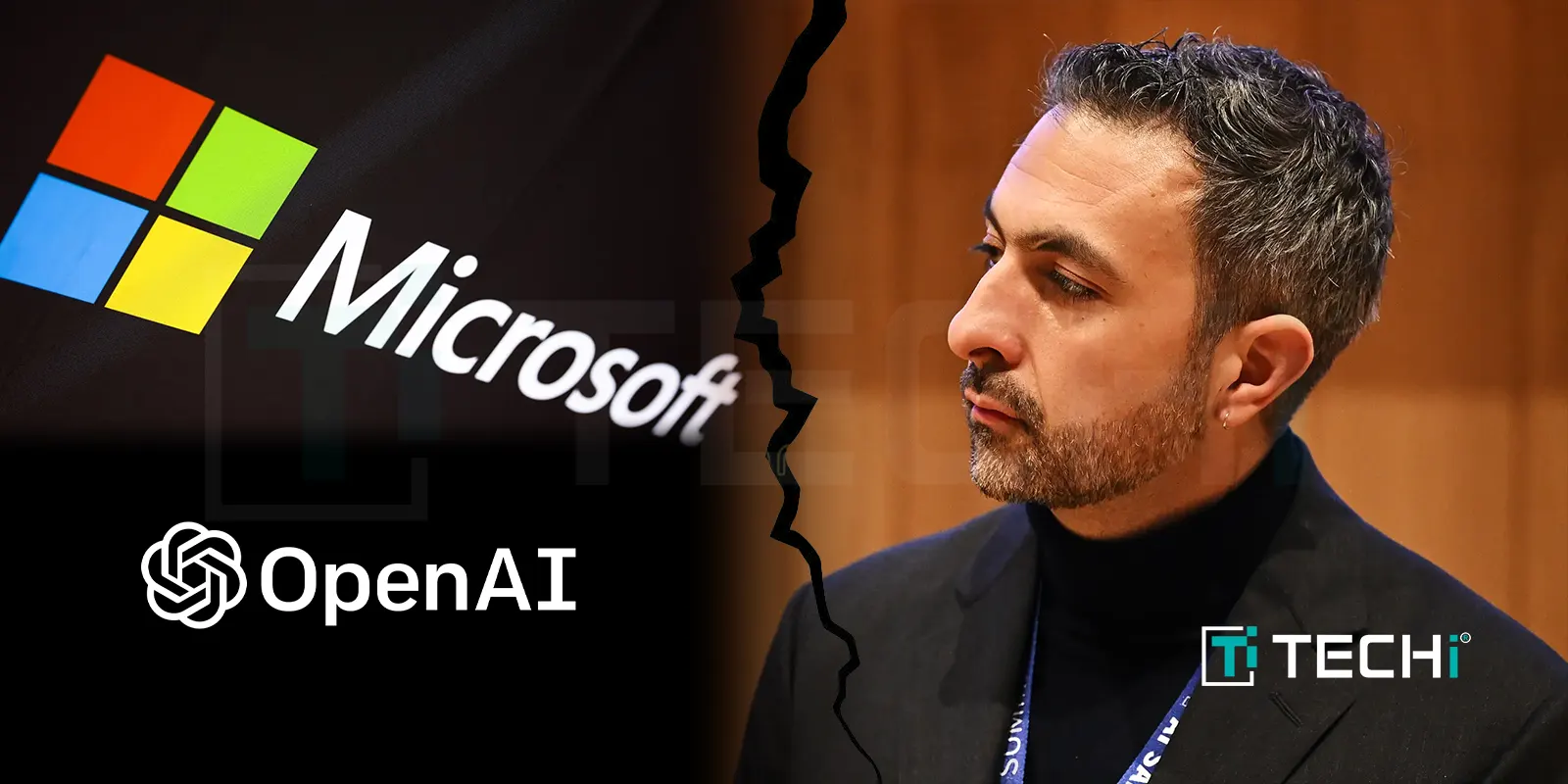
Microsoft Challenges OpenAI with Next-Generation AI Model

As per the news received, Microsoft is developing in-house artificial intelligence reasoning models that can compete with OpenAI and other rival models. The information was a surprise since Microsoft is a partner of OpenAI and has been using its models in its products. The partnership with OpenAI has been successful. Microsoft has positioned itself as one of the leaders among the big technology companies in AI race. Its seems like Microsoft is challenging OpenAI with this AI Model.

Although Microsoft has worked on some of its own models in the past, like Phi, interestingly, Phi was developed with the help of OpenAI, and it can perform similarly to OpenAI with far less computing power. Microsoft is testing models from xAI, Meta, and DeepSeek as potential replacements for OpenAI. Things are not getting any better for OpenAI lately. They already have a battlefront opened by Elon Musk, with that matter currently being heard in the US court. Microsoft has been using OpenAI in its flagship AI product, 365 Copilot. Copilot’s main attraction was that it used OpenAI’s GPT-4 model.

Last year, in March 2024, Mustafa Suleyman was appointed as CEO of Microsoft AI (MAI). Under his leadership, work was being done to create an alternative to OpenAI so they could start using it in their own product. The main reason is cost-effectiveness in the long run for the company. According to the report, the training has been completed, and the product is performing similarly to the OpenAI and Anthropic on commonly accepted benchmarks. At the same time, work is being done on the reasoning model as well.

It typically uses Chain-of-thought (CoT) techniques to analyze the input as humans do. This process involves calculations, logic, and decision-making. With this, MAI would be able to compete directly with OpenAI. The work to replace OpenAI’s models in Copilot with MAI is already in process. Microsoft is considering releasing the new model as an API (Application Programming Interface) that developers can use to benefit from these models in their own applications.

It is to be noted here that Microsoft has invested $14 billion in OpenAI so far. However, like a smart business entity, Microsoft is not keeping all its eggs in the same basket. OpenAI has had a series of setbacks lately, be it the DeepSeek computing power or the lawsuit by Musk. Now, it seems like they are getting stabbed in the back by their own partner, who established its AI standing using OpenAI itself. However, OpenAI is also being smart and it has already secured a deal with Apple back in June 2024. The deal involves using ChatGPT in Apple products iOS, iPadOS, and macOS. Even Siri would be able to tap into ChatGPT to get help when needed.

Both OpenAI and Microsoft are in an agreement till 2030 . Also, a lot of Microsoft products are using OpenAI, and they aren’t going to be replaced overnight. It is to be noted here that a recent change in their agreement in January 2025 allowed OpenAI to work with other cloud providers like Oracle. It seems like both companies are keeping their options open for now. Things are heating up in AI world and new developments are fast. Everyone is trying to outdo its competitors, and even the partners are not spared. It’s a cruel world out there, and you must always be awake and ensure you safeguard your interests.

OpenAI’s ChatGPT Hits 400 Million Users by Doubling Its User Base in Six Months

When OpenAI first introduced ChatGPT to the world in November 2022, it took the tech circle around the world by storm and was considered the fastest-ever consumer application in history. While the chatbot’s early success stemmed from people’s curiosity and novelty, it was widely discussed whether that initial buzz would continue or fade like the many other trends. All the indications throughout the past year that concern has been relieved, as ChatGPT is now certain to stay and continues to grow at an exceptional speed.

With immense progress being made in what AI can do and an upgrade to a more user-friendly interface, the chatbot has bounced back and doubled its active users in just under six months, solidifying its position on the top in the AI chatbot game. According to a report published by American VC firm Andreessen Horowitz (a16z), the AI chatbot ChatGPT has proved its worth, doubling its weekly active users in less than six months, where the report has pointed to the very impressive revival of the chatbot in the second semester of 2024 along with strategic updates and releases.

Speedy User Growth:

ChatGPT was originally famous for being the fastest app to cross the 100 million mark in monthly active users, a triumph it achieved within just 2 months of its debut in November 2022. The number had already increased to 100 million weekly active users by November 2023, rising to 200 million by August 2024. Even that increase has been outdone by this most recent surge in February 2025, when ChatGPT had achieved an incredible 400 million weekly active users.

Key Growth Drivers:

Major product releases in 2024 were key drivers for the increase in demand for ChatGPT which are;

  • Release of GPT-4o (April-May 2024): The launch of this AI model drew a sharp rise in user engagement since ChatGPT was able to handle text, image, and audio input with a greater level of accuracy and efficiency.
  • Advanced Voice Mode (July-August 2024): Launching a more natural, conversational voice feature contributed significantly to user interest and retention.
  • o1 Model Series (September-October 2024): These enhancements were like the cherry on the icing on the cake, creating an extra spike in usage, especially among enterprise and professional users.

ChatGPT’s user base continues to demonstrate a steady growth trend on mobile. There has been an approximately 5% to 15% increase in mobile users every month. Out of the 400 million weekly active users, about 175 million are accessing ChatGPT from mobile devices.

Competitive Landscape:

The industry has become quite competitive in developing AI chatbots, with emerging players like DeepSeek coming out strong from the launch pad. For instance, within ten days, DeepSeek ascended to the second position globally and attained 15% of the ChatGPT mobile users by February 2025. ChatGPT, nevertheless, maintains a strong lead in both web and mobile categories.

According to data from the market intelligence provider Similarweb, ChatGPT is ranked No. 1 as far as unique visits per month on the web and mobile active visitors are concerned. On the other hand, DeepSeek usage was measured to involve per user, slightly more than other competitors like Perplexity and Claude; however, ChatGPT remains dominant.

Future of ChatGPT:

ChatGPT isn’t just a superb thing, but it is also an omen of how AI is playing an increasingly important role in life today, whether it is for professional work, learning, education purposes or simply personal needs day to day, the millions of users who tap from the chatbot’s ongoing capabilities find value within its beneficial features, when these options become more popularized.

It will create the next round of interactions, primarily personal, real-time, and ever-developing into different digital ecosystems that match the level of the technology revolution. With AI adoption trending across industries, ChatGPT’s unparalleled growth suggests we have entered the age of generative AI, where fast paced technology development continues to redefine the way we interact and be productive worldwide.

Musk Attempt to Stop OpenAI Transition into a for-Profit Entity Turned Down by Judge

Elon Musk co-founded Open AI and was a major financial contributor to it from 2015 to 2020, as per the lawsuit. Musk claims, the original vision of OpenAI was to work as a non-profit entity with no personal gain. When ChatGPT was launched, Sam Altman started commercializing the product with a monthly fee for its pro users. At that time, Musk advocated having a separate for-profit entity. However, differences emerged while finalizing the plan as Musk wanted majority shares. In 2018, Musk resigned from the OpenAI board after the company refused to attach OpenAI to Tesla.

In Feb 2024, Musk filed a lawsuit against OpenAI and its leadership. This was withdrawn in June 2024 and a new revived lawsuit was filed in August 2024. This lawsuit had several allegations. One of them was the transition to for-profit entity. Musk highlighted that OpenAI is deviating from the original plan of keeping OpenAI as a non-profit and their vision to serve the masses was not being accomplished.

The Judge, Yvonne Gonzalez Rogers, dismissed the for-profit allegation because Musk wasn’t able to provide any substantial evidence in favour of his allegation. While the attempt to block OpenAI’s transformation was denied, the border lawsuit remained active. The Judge has offered to expedite the trial process so that this case can be concluded early to avoid any harm to the business.

It should be remembered that Elon Musk was among the 11 co-founders, including Sam Altman and Greg Brockman. Musk invested more than 44 Million as per the lawsuit point 82 in OpenAI. We believe any organization that wants to be involved in technological advancements needs to be a for-profit entity to sustain the consistent technological advancements in AI. The operational costs of research and development are ever so high, and inconsistent government and investor policies can hamper the process.

This legal battle is like a personal feud between Elon Musk and Sam Altman. Musk has no open ground to stop OpenAI from operating as a for-profit entity. Judges claimed the same. It is interesting to note that just as recently as February 2025, Musk offered $97.4bn to take over OpenAI and preserve the AI research lab’s original mission. However, the board rejected the offer.

In an interview with Bloomberg, Sam Altman said this of Musk

“I think he is probably just trying to show us down, he obviously is a competitor, its you know he’s working hard and he has raised a lot of money for xAI and they are trying to compete with us from a technological perspective from you know getting the product into the market and I wish he would complete by building a better product but I think there’s been a lot of tactics, you know mana many lawsuits, all kind of crazy stuff and now this. And we will try to just put our head down and keep working”.

With stiff competition from several prominent companies like DeepSeek, Anthropic, Google DeepMind, Meta AI and a few others, this legal battle is not good for OpenAI. Sam Altman needs to keep a clear head and ensure the company is making progress to keep the competition at bay while going through this legal battle. At the moment, it seems like they are moving in the right direction. Altman tweeted

“we are likely going to roll out GPT-4.5 to the plus tier over a few days.” There is no perfect way to do this; we wanted to do it for everyone tomorrow, but it would have meant we had to launch with a very low rate limit. We think people are gonna use this a lot and love it.”

On the other hand, Musk needs to keep driving his xAI company forward. Competition is heating up, with the recent announcement that DeepSeek computing power costs only $6 million. AI is heading to an era where we will see lower computing costs, but at the same time, data is increasing by many folds. It is a challenge for AI companies to keep evolving and coming up with new techniques to keep their noses in front; otherwise, they will be left far behind in this global race.

OpenAI Faces Legal Scrutiny over Copyright Claims, as Alec Radford gets Subpoenaed

Who knew AI models would end up needing copyright lawyers more than programmers? The more artificial intelligence transforms an industry, the more fire it ignites in the legal arena over how these models are trained. The war on AI and intellectual property has now reached a point as the boundaries are violated by exploiting the works of human creators. In this high-profile copyright case, former OpenAI Researcher and its leading Developer in Generative AI, Alec Radford, has been issued a subpoena, shedding further light on the confusing details of AI training data, Fair use, and the future of Generative models. Depending on how the case turns out, it might quite literally become a turning point in the ethics of AI, legal frameworks, and the protection of creative works in the digital age.

According to a court filing, Radford received the subpoena on 25 February, marking a key development in the lawsuit against OpenAI’s use of copyrighted materials in training its AI models. This was filed in the U.S District Court for the Northern District of California in the case entitled “re OpenAI ChatGPT Litigation”, which was previously initiated by several renowned book authors, Paul Tremblay, Sarah Silverman, and Michael Chabon. They claimed that OpenAI used their literary works without authorization to train its AI models, which is a copyright violation. They asserted that OpenAI’s ChatGPT produces text that is very similar to theirs and does not give any credit for it, which amounts to direct copyright infringement.

Radford’s Contribution to OpenAI:

Radford, who most recently left OpenAI to pursue independent research, has also been a key contributor in building the Generative Pre-Trained Transformer (GPT) on which OpenAI’s product, such as ChatGPT, runs. His other recent contributions have been to OpenAI’s speech recognition model Whisper, and its DALL·E image-generation model. Joining OpenAI in 2016, Radford was instrumental in developing the company’s AI capabilities.

Radford’s work as the lead author for OpenAI’s original paper on Generative Pre-trained Transformers provided the foundation for the AI models to support a surplus of applications today. His participation in the lawsuit gives an impression that the accusers are interested in seeking insider knowledge into OpenAI’s training processes and, more evidently, the usage of copyrighted content in making those models.

Legal Feuds:

The irony lies in that OpenAI needs a human lawyer to defend its non-human intelligence. As OpenAI has kept up its defense against copyrighted materials, the storm in the legal battle has intensified. Last year, the court dismissed two of the claims against OpenAI but allowed direct copyright infringement claims to go through. The accusers’ legal team are now seeking testimony from the former personnel of OpenAI to claim support towards justice further.

Radford is not the only big name involved in this legal battle; also caught in its net are Dario Amodei and Benjamin Mann, who left OpenAI to found Anthropic, an AI research company. Although these two former executives have resisted because the burden is too great, they are still answerable. Thus, this week, a U.S. magistrate judge ruled that Amodei must undergo questioning regarding his past work at OpenAI in two separate copyright cases, including one by The Authors Guild.

Broader Implications and Issue of Fair Use:

If the lawsuit is directed in favor of the accusers, it will have significant legal repercussions for the entire AI industry. A favorable ruling would likely force AI companies to re-examine their data collection and usage techniques for training models, followed by tighter controls, arrangements for licensing with content creators, and an alternative definition of copyright protection for AI-generated content.

At the heart of the OpenAI defense is a focus on the fair use doctrine, which allows limited use of copyrighted materials without permission under certain circumstances. On the other hand, the accusers argue that these AI models are commercial products that generate revenue for OpenAI, thus making fair use a questionable argument. As AI-generated content becomes widespread, courts will have to define the lines of fair use regarding machine learning and data scraping.

Therefore, the outcome of this lawsuit will affect both AI developers and content creators. If the courts determine that OpenAI’s use of copyright materials is outside fair use, this could bring new regulations and change how AI models are trained. It would heighten expectations requiring explicit licensing agreements with content creators. Conversely, a ruling in favor of OpenAI may further strengthen the positions of AI companies to scrape an enormous amount of data with minimum oversight.

With everything in mind, the case could be a pioneer for change within the AI sector. It is within the much wider framework of generative models, including not just generative adversarial networks or diffusion models, that gives birth to ethical/legal questions regarding training data. OpenAI claims its processes are protected by fair use, but what becomes an issue is the transparency regarding data sourcing, especially about any potential violation of intellectual property rights.

OpenAI Unveils GPT-4.5 ‘Orion’ – The Next Leap in AI Evolution

The artificial intelligence race took a turn with OpenAI’s new revolutionizing release of GPT-4.5, the most powerful kind of model and most compute intensive to date. Designed internally as “Orion,” its newest version is an OpenAI assertion of continuing to win in an industry where the bigger the model, the better the results. So, what do these new moves mean for the general user and the AI landscape at large? 

OpenAI holds on to its “big is better” philosophy, after pouring in billions scaling up infrastructure, Anthropic and DeepSeek have continued to disrupt this modeling field by introducing cost-effective models that both go up against one another. Hence, the GTP-4.5 is not just another incremental upgrade, rather it makes a clear strategic statement of an index of OpenAI’s fighting spirit in its approach. As users get the first glimpses of the model via the exclusive $200 a month ChatGPT Pro subscription, the question now is, does OpenAI step rolling along a progressively risky thin rope against a shifting landscape?

The release continues OpenAI’s tradition of scaling AI models to enhance their performance and usability. GPT-4.5 is reportedly better at understanding user prompts than prior models, producing results that are accordingly natural and nuanced in the response. While no specific details about its weight and computer requirements have been noted, OpenAI maintains that this model minimizes the problem of hallucinations, thanks to its enhanced knowledge. Mia Glaese, who leads OpenAI’s alignment team and human data team says, “If you know more things, you don’t need to make things up,”

Competition and GPT’s Growth:

The release of GPT-4.5 follows a sequence of substantial AI developments in 2025. Competitors such as Anthropic have developed hybrid reasoning models for Claude, and Chinese researchers at DeepSeek have made remarkable achievements on very low budgets. OpenAI, however, believes strongly that bigger models mean better AI and has invested billions into building AI infrastructure to support this philosophy.

While growth is the major focus, GPT-4.5 is not considered a reasoning model in the sense of their `o’ series, as it has been stated by Sam Altman, CEO, to be the last model non-integrated with chain of thought reasoning, pointing towards a shift towards integrated and adaptive AI experiences in its next releases. He posted on social media earlier in February, “ship GPT-4.5, the model we called Orion internally, as our last non chain-of-thought model.” The researchers are also putting efforts into streamlining user interactions so ChatGPT can dynamically select the best model for a prompt without requiring the user to select the model from a dropdown.

Future of AI and the OpenAI’s Vision:

With the introduction of GPT-4.5, web search, file and image uploads, and the canvas feature all come into play, but the present course has no AI Voice Mode support. Benchmarking results are competitive in some instances with promising language performance from the system but losing out to o3-mini in assessments of certain areas of math and science, although OpenAI says that the real success of GPT-4.5 will show itself through the user experience.

At a time when competition is heating up in AI, OpenAI is still committed to widen the frontiers in unsupervised learning by data scaling, compute, and training efficiency. According to researchers like Nick Ryder, enlargement of model size does not in itself make it hard to interpret and all current methods of interpretation can still be applied to these huge AI systems. Ryder says, “Saying this is the last non-reasoning model really means we’re really striving to be in a future where all users are getting routed to the right model”. He added, “By increasing the amount of compute we use, by increasing the amount of data we use, and focusing on really efficient training methods. We push the frontier of unsupervised learning.”

This is also the extent of OpenAI’s ambition with regard to things technical, as it develops the emotional intelligence, intuition, and aesthetic preferences of the future AI, it defines an intelligent machine quite unique in productivity with impressive soft skills and cuts a little closer to the time, when AI incorporates itself in the workflow of human beings.

As OpenAI puts new AI initiatives in overdrive with models like GPT-4.5, the audience becomes even more demanding in terms of scaling versus efficiency. Whereas many industry voices are contending with optimising performance against a thinner budget, for OpenAI, this part of the race is still all about bigger and more complex models toward seeking better ability for AI to understand and respond to human nuance. Whether it will keep its place in the front or slip into the point of diminishing returns is yet to be determined. 

Read More: Meta Gears Up to Launch Standalone AI Chatbot to Challenge ChatGPT & Gemini

OpenAI Expands Deep Research Tool to More ChatGPT Subscribers

As AI-powered tools become more integral to professional and academic research, OpenAI is broadening access to its Deep Research feature. Previously reserved for ChatGPT Pro users, this advanced web browsing agent is now available to all paying users, including Plus, Team, Enterprise, and Edu subscribers. With this expansion, OpenAI gives users 10 deep research queries per month, allowing them to generate comprehensive reports on various topics. Meanwhile, ChatGPT Pro users, who subscribe at $200 per month, will now receive 120 queries, up from 100 at launch.

The move highlights OpenAI’s strategy to make AI-powered research tools a key selling point for its premium tiers. As competition in AI research tools heats up, Google and Perplexity are racing to roll out similar deep research capabilities. Google recently launched its deep research agent for Gemini Advanced users, signaling a clear industry shift toward AI-generated long-form analysis.

For AI companies, deep research features are more than just an added tool—they are a way to demonstrate the value of premium AI subscriptions. However, OpenAI acknowledges that it must refine how these agents interact with users and how they could influence decision-making. By expanding Deep Research to a broader audience, OpenAI is positioning itself at the forefront of AI-driven knowledge generation, reinforcing AI’s role in assisting professionals, educators, and researchers with in-depth, automated analysis.

Read More: OpenAI to Shift AI Compute from Microsoft to SoftBank


Did xAI Mislead About Grok 3’s Benchmarks? OpenAI Disputes Claims

Debates over AI benchmarks have resurfaced following xAI’s recent claims about its latest model, Grok 3. An OpenAI employee publicly accused Elon Musk’s xAI of presenting misleading benchmark results, while xAI co-founder Igor Babushkin defended the company’s methodology. The controversy stems from a graph published by xAI showing Grok3 performance on AIME 2025, a benchmark based on complex mathematical problems. While some AI researchers question AIME’s validity as an AI benchmark, it remains a commonly used test for assessing AI models’ math capabilities.

The Missing Benchmark Data

In xAI’s chart, Grok3 Reasoning Beta and Grok3 mini Reasoning were shown to outperform OpenAI’s o3-mini-high model on AIME 2025. However, OpenAI employees quickly pointed out that xAI did not include o3-mini-high’s score at “cons@64.” The “cons@64” (consensus@64) metric allows a model to attempt each problem 64 times, selecting the most frequent response as the final answer. Since this significantly improves a model’s benchmark scores, omitting it from xAI’s comparison may have made Grok 3 appear more advanced than it actually is.

When comparing @1 scores (which measure a model’s first attempt accuracy), Grok 3 Reasoning Beta and Grok 3 mini Reasoning scored below OpenAI’s o3-mini-high. Additionally, Grok 3 Reasoning Beta trailed behind OpenAI’s o1 model set to “medium” computing, raising further questions about xAI’s claim that Grok 3 is the “world’s smartest AI.”

xAI Defends Its Approach, OpenAI Calls for Transparency

Igor Babushkin, co-founder of xAI, responded on X, arguing that OpenAI has also presented selective benchmarks, though mainly when comparing its models. A third-party AI researcher attempted to provide a more balanced view by compiling a graph displaying various models’ performance at cons@64, aiming to offer a more transparent comparison. However, AI researcher Nathan Lambert pointed out a key missing element in the debate: computational cost. Without knowing how much computational power (and cost) was required for each model to achieve its best scores, benchmarking alone does not fully convey an AI model’s efficiency or real-world capabilities.

What’s Next for AI Benchmarks?

The dispute between xAI and OpenAI highlights ongoing challenges in AI benchmarking. As AI labs race to demonstrate superiority, the lack of standardized, transparent, and cost-aware metrics continues to fuel debates over how AI models should be evaluated. While xAI stands by its claims, OpenAI’s criticism raises questions about how AI companies should present performance results to avoid misleading comparisons. The broader AI community may need to push for more standardized evaluation methods to ensure fairness and accuracy in future AI model comparisons.

Read More: Nvidia CEO Jensen Huang says market got it wrong about DeepSeek’s impact

OpenAI to Shift AI Compute from Microsoft to SoftBank

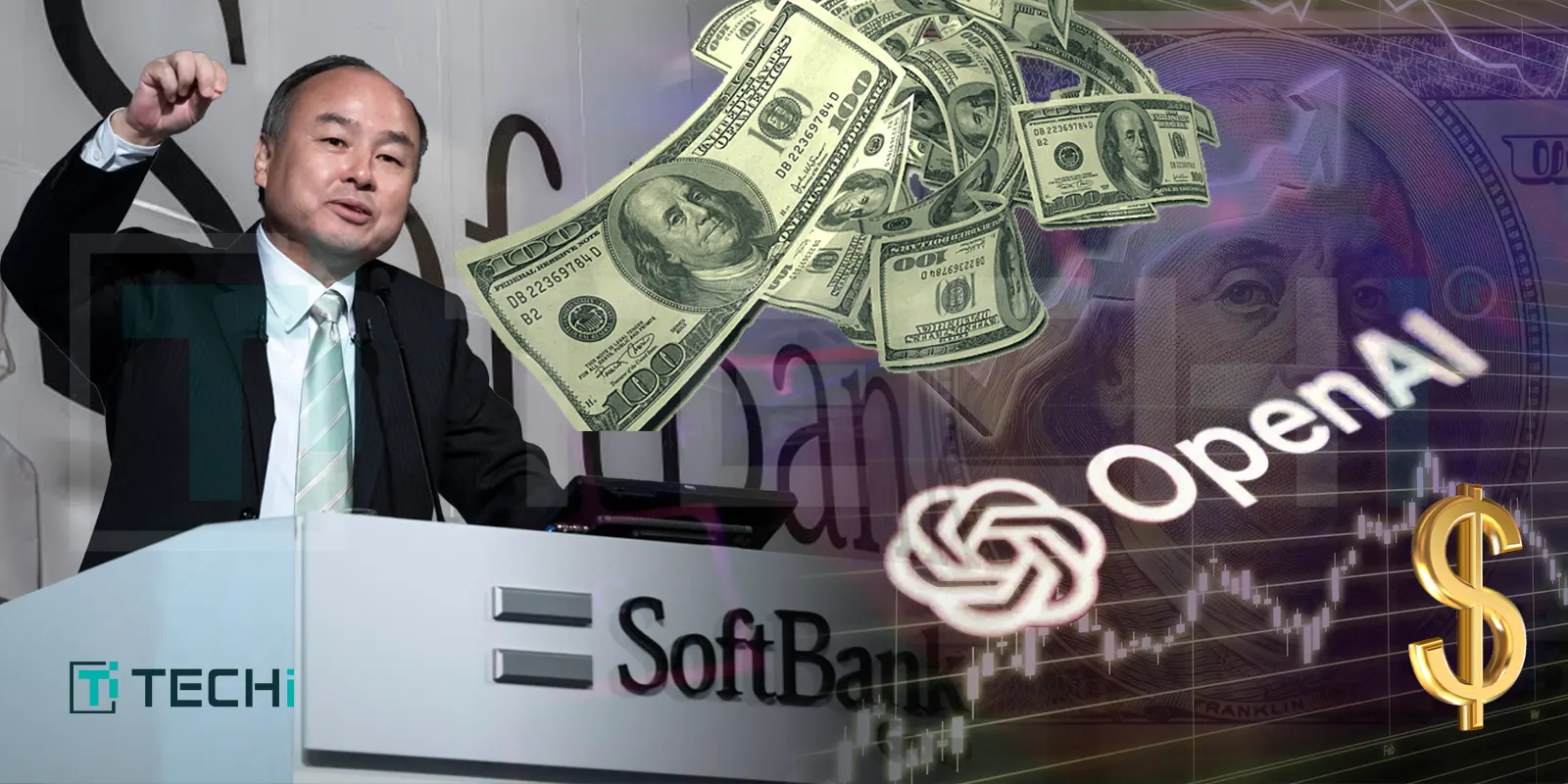
According to The Information Report on Friday, OpenAI is forecasting a significant shift in the next five years around who it gets most of its computing power from. OpenAI is significantly shifting its AI infrastructure, moving away from Microsoft’s cloud services and toward SoftBank-backed Stargate. By 2030, OpenAI expects 75 percent of its computing power to come from Stargate, marking a shift that carries a lot of opportunity and risk. Though this shift is coming, OpenAI will keep increasing its spending on Microsoft’s data centers in the next few years. However , the company’s operational expenses are poised to increase significantly.

Reports indicate that OpenAI will burn through $20 billion in cash by 2027, marking a significant financial shift from previous years, a massive jump from the $5 billion spent in 2024. By the decade’s end, OpenAI forecasts that running AI models (inference costs) will surpass AI training expenses, marking a significant shift in its computing strategy. This move signals OpenAI’s push for greater independence in cloud infrastructure as it scales its AI models.

Why Is OpenAI Starting to Move Away from Microsoft?

With this move, OpenAI is positioning itself for a world where computing resources are more often distributed. But is this the right move? Moving computing power over from Microsoft (whose Azure powers OpenAI today) to the SoftBank-backed Stargate project is not something that happens overnight; there is a lot of work to be done. OpenAI has leaned heavily on Microsoft’s Azure cloud, but as AI costs have taken off, the company seems to be looking for more control and diversification over its compute resources. There might be several reasons why they decide this.

Microsoft increasing interest in its in-house AI research might lead to strategic conflicts with OpenAI in the future, which might end up resulting in conflicts of interest between the two. To OpenAI, this could be a mandate to secure its long-term independence. In addition, OpenAI’s rising operational outlays — projected to surpass $20 billion by 2027 — necessitate a more fluid funding approach, and SoftBank is famous for its mega tech bets. In addition, OpenAI may want to decrease the reliance on U.S. cloud providers for strategic reasons as well, whether it be aimed at mitigating risks from potential regulatory scrutiny or geopolitical factors.

What It Signals About OpenAI’s Future

In leaning toward SoftBank-backed computing, OpenAI is making a calculated gamble. This could offer more autonomy, tailor-made AI chips, and improved financial flexibility, in other words. However, SoftBank’s track record of putting money into volatile deals (think WeWork) begs the question of whether this is a sustainable partnership in the long term.

And inference costs (i.e., running AI models) are expected to exceed training costs by 2030, so OpenAI needs a long-term sustainable solution. This could blow up in the face of the SoftBank-funded Stargate project if it fails to deliver the same stability and efficiency that Microsoft Azure provides. Ultimately, OpenAI’s pivot away from Microsoft is a high-stakes transition that could determine its trajectory in the A.I. industry. If done right, it could solidify OpenAI’s role as a leading innovator in AI. However, if the transition faces major roadblocks, it could open up new challenges that slow down OpenAI’s momentum in the AI race.

Read More: OpenAI Drops o3 AI Model to Unify AI Strategy with Game-Changing GPT-5

OpenAI Blocks Accounts in China & North Korea Over Misuse

OpenAI has announced the removal of user accounts from China and North Korea. OpenAI blocks accounts because the company believes these users use their accounts for malicious activities like surveillance and opinion-influence operations. This action underscores OpenAI’s commitment to ensuring its technology is used ethically and responsibly. Openai did not specify the total number of accounts that have been banned and the time frame of the action.

According to the Reuters chatgpt team said on last Friday:
The activities are ways authoritarian regimes could try to leverage AI against the U.S. as well as their own people, OpenAI said in a report, adding that it used AI tools to detect the operations.”

Identified Malicious Activities

OpenAI’s internal investigation revealed several concerning practices:

Propaganda Generation: Some users employed ChatGPT to create Spanish-language articles critical of the United States. These articles were subsequently published in mainstream Latin American media under the guise of a Chinese company’s authorship.

Fraudulent Employment Schemes: Actors with potential ties to North Korea utilized AI to fabricate resumes and online profiles. The objective was to deceitfully secure employment within Western corporations.

Financial Fraud Operations: A network based in Cambodia leveraged OpenAI’s technology to produce translated content. This content was disseminated across platforms like X (formerly Twitter) and Facebook, aiming to perpetrate financial scams.

OpenAI’s Proactive Measures

To detect and counteract these malicious endeavors, OpenAI harnessed its own AI-driven tools. While the company has not disclosed the exact number of accounts affected or the specific timeline of these activities, its swift response highlights the challenges tech companies face in preventing malicious entities’ exploitation of AI technologies.

The U.S. government has previously voiced apprehensions regarding the potential for AI technologies to be harnessed by authoritarian regimes for purposes such as domestic repression, dissemination of misinformation, and threats to international security. OpenAI’s recent actions align with efforts to prevent such misuse and emphasize the importance of vigilant monitoring and regulation in the AI sector.

The Future of AI Security

As AI continues to evolve and integrate into various facets of society, ensuring its ethical application remains paramount. OpenAI’s recent measures testify to the ongoing efforts required to safeguard technology from being weaponized for malicious intents.

Read More: OpenAI launched Deep Research, ChatGPT’s new AI agent for advanced level research

Elon Musk’s $97.4 Billion Offer to Acquire OpenAI Rejected

Tech billionaire Elon Musk, co-founder and former board member of OpenAI, recently made a staggering $97.4 billion offer to acquire full control of the artificial intelligence company. However, OpenAI’s board rejected the bid, citing concerns over its mission, autonomy, and ethical considerations. In an official statement released through OpenAI’s press account on X, board chair Bret Taylor described Musk’s offer as a deliberate move to interfere with his competition.

“OpenAI is not for sale, and the board has unanimously rejected Mr. Musk’s latest attempt to disrupt his competition,” Taylor said. “Any potential reorganization of OpenAI will strengthen our nonprofit and its mission to ensure [artificial general intelligence] benefits all of humanity.”

The New York Times reported that OpenAI also addressed a letter to Musk’s attorney, Marc Toberoff, stating that the proposal did not align with OpenAI’s mission and was not in its best interests. The decision has sparked widespread debate over the future of AI governance and Musk’s ambitions in the AI industry.

Why Did OpenAI’s Board Reject Musk’s Offer?

1. Preserving OpenAI’s Independence

OpenAI’s leadership believes that Musk’s takeover would jeopardize the organization’s autonomy, potentially shifting its priorities toward his business interests, mainly his AI venture, xAI. By rejecting the offer, the board aims to maintain control over its research direction and prevent external influence from dominating decision-making.

2. Conflict Between Mission-Driven and Profit-Driven Goals

Originally founded as a nonprofit, OpenAI transitioned into a capped-profit model to balance funding needs and ethical AI development. The board fears that Musk’s leadership could tilt the company towards a profit-driven agenda, undermining its commitment to developing AI for the broader good rather than commercial gain.

3. Musk’s History with OpenAI

Musk resigned from OpenAI’s board in 2018 after an unsuccessful attempt to take control of the company. The board considers this past power struggle as a key factor in rejecting his current bid, viewing it as a continuation of his previous efforts to dominate OpenAI’s direction.

4. Tensions with Microsoft and AI Ecosystem

OpenAI has a major partnership with Microsoft, which has invested billions in the organization. If Musk were to gain control, it could disrupt this collaboration, leading to legal and financial complications. The board is also concerned about potential conflicts between OpenAI’s roadmap and Musk’s competing AI firm, xAI.

5. Legal Risks and Regulatory Concerns

Musk has had numerous legal disputes and regulatory challenges in the past, including with the SEC and Tesla. OpenAI’s leadership fears that his control could introduce unnecessary instability, regulatory scrutiny, and delays in AI safety frameworks that are crucial for the industry’s responsible development.

Musk’s Response and Industry Reactions

Following the rejection, Musk expressed his displeasure, criticizing OpenAI for abandoning its original mission of creating open-source AI. He has also hinted at further legal action or alternative AI strategies, reinforcing his commitment to advancing artificial intelligence through xAI and other ventures.

Industry experts remain divided on the issue. Some argue that Musk’s resources and expertise could have accelerated OpenAI’s innovations, while others support the board’s stance on keeping AI development independent from corporate dominance.

What’s Next for OpenAI?

With Musk’s bid off the table, OpenAI will likely continue its current trajectory with Microsoft’s backing and expand its AI capabilities while maintaining governance safeguards. The rejection signals the board’s commitment to AI safety and ethical considerations, ensuring that advancements align with their foundational mission. As the AI race intensifies, OpenAI’s decision will shape the broader debate on who controls AI, how it is developed, and whether it remains a force for public benefit or corporate interests.

Read More: OpenAI Drops o3 AI Model to Unify AI Strategy with Game-Changing GPT-5

Elon Musk’s Battle to Buy OpenAI, Five Crucial Insights from His Offer Letter

In the life of tech billionaires, the drama tends to arise sooner than a software update. Musk’s next move is all about bidding to the tune of nearly $97 billion to reclaim OpenAI, a company he once championed but is now suing. While OpenAI CEO, Sam Altman brushed his offer aside, the court filings reveal Musk’s detailed offer to tell the whole saga, including lawsuits, power wrangling, and strategic chess moves that have entangled two of the most powerful names in the AI Industry.

An investment syndicate led by Elon Musk’s xAI has proposed an unlikely offer of $97.4 billion to acquire OpenAI. Altman has anyway very quickly declared the offer as impossible because it is seen as a method to block OpenAI from making nonprofit transition, an action in which Musk is also challenging with his own suit. In a legal filing on Wednesday, Altman’s team argued that Musk’s position is contradictory, attempting to buy the assets of OpenAI while also trying to prevent its conversion to nonprofit.

Musk’s team countered that they would withdraw the offer if OpenAI’s efforts to move away from its nonprofit status ceased. Musk’s entire letter of intent to buy open AI was published as part of this legal turmoil, this opened up a broader understanding of his plan and motivation.

The five key details from Musk’s Offer Letter are following;

1. Deadline for the Offer:

A definite expiration date for May 10, 2025, is that of the unsolicited bid by Musk’s consortium. It goes off the track only if the parties to the interests finalize the deal, or they mutually decide to terminate discussions, or if OpenAI explicitly rejects the offer in writing.

Altman has publicly dismissed such offers (including a humorous counter offer to buy X at tenth of the price) but OpenAI has yet to issue an official rejection statement. Even offers between competitors must get consideration before being outright dismissed due to legal requirements.

2. Cash Transaction:

Musk’s financing group with notable venture capitalists like Joe Lonsdale’s 8VC and SpaceX investor Vy Capital has offered just $97.375 billion in cash. This is because, in the past, he has borrowed money to finance such acquisitions, like the $13 billion borrowed from banks to acquire twitter in 2022, and though self-proclaimed as having a fortune of about $400 billion, mostly raised by a boost from Donald Trump, it was not disqualified from consideration. Interestingly, the letter mentions seven investors, including Musk’s x.AI, alongside others unnamed, implying that Musk is not relying solely upon his wealth to finance the deal.

3. Access to all Financial and Operational Data:

The consortium of Musk demands full access to OpenAI’s financial records, assets, employees, and business operations before it commits a ginormous buy. “Assets, facilities, equipment, books, and records” is mentioned in the letter to indicate such needs.

This stress has indeed been caused, given that the said due diligence is normal in major transactions for such things, as making an acquisition review that is much more compelling opens it up to very internal and state of the art sensitive knowledge that might be a possible conflict of interest based on xAI’s having a direct market competitive claim in OpenAI to gain such level of access.

4. Undermining Musk’s Lawsuit:

Musk’s legal battle against OpenAI revolves around his contention that OpenAI’s assets can never be “transferred away” for private gain. However, in a filing on Wednesday, the lawyers for OpenAI pointed out that Musk’s offer contradicts this claim and emphasized that he is making an offer to dispose of an acquisition effort just to weaken a competitor. They said, “The offer isn’t serious, but an improper bid to undermine a competitor.”

According to OpenAI, the offer is not genuine and was strategically timed to complicate its privatization. Musk’s camp insisted otherwise, claiming that the bid was legitimate and that funding would be funneled straight into OpenAI’s nonprofit purpose.

5. Musk’s withdrawal from the offer:

Musk’s legal team stated that if the board of OpenAI decides not to convert into non-profit operation, he would withdraw the offer. More speculation would be reinforced with this statement that Musk’s bid was not aimed at buying OpenAI altogether but only bumping up the figure that would make Altman and other top executives acquire the company privately.

OpenAI board legal representative dismissed such an offer from Musk and said, “Musk’s bid doesn’t set a value for [OpenAI’s] non-profit and that the nonprofit is not for sale”.

The Repercussions:

This adds to the already complicated legal and financial drama over OpenAI, which is still far from being resolved. The rejection of the bid from OpenAI would give Musk the further ground to challenge the legitimacy of its nonprofit conversion. On the other hand, if OpenAI accepts or considers the offer, it risks getting into trouble over its governance. Either way, whether Musk’s offer is a genuine attempt to acquire OpenAI or just a tactic within his legal showdown, it has put OpenAI in a difficult position.

Truly, one wonders, whether the billionaire indeed wants to acquire OpenAI or is using the bid as a bluff or a feint to disrupt its transition into nonprofit status. Well, one thing is clear, it isn’t merely a corporate dispute rather it’s the critical moment of evolution regarding what artificial intelligence is and what big tech makes it into in the future. As both continue their game of legal and financial chess, the world waits to see who blinks first.

Read More: OpenAI Drops o3 AI Model to Unify AI Strategy with Game-Changing GPT-5

OpenAI Drops o3 AI Model to Unify AI Strategy with Game-Changing GPT-5

The gigantic leap in AI technology has allowed competing organizations to race ahead in building the most powerful and efficient models. OpenAI, a prime name in AI, has been at the forefront of its very transformation. However, it has now strategically scrapped its much publicized o3 AI model development in favor of a more unifying and integrated approach. This raises important questions about OpenAI’s long-term vision, competitive positioning, and the way AI development is shaping the landscape of technology.

OpenAI has canceled its much anticipated next-generation o3 model and has instead adopted a bigger platform to cast a greater net over AI technologies. According to its Chief Executive, Sam Altman, the organization has thus decided to focus on a new model, GPT-5, which is designed to unify all OpenAI’s AI technologies in one integrated and more specialized offer. Altman said, “In the coming months, OpenAI will release a model called GPT-5 that integrates a lot of [OpenAI’s] technology, including o3, in its AI-powered chatbot platform ChatGPT and API”. As a result of that roadmap decision, OpenAI no longer plans to launch o3 as a stand-alone model.

The new development marks a change in the path of OpenAI’s AI roadmap toward a more unified ecosystem from several standalone models. Altman wrote in his post on X, “We realize how complicated our model and product offerings have gotten. We want to do a better job of sharing our intended roadmap, and a much better job simplifying our product offerings. We want AI to ‘just work’ for you; we realize how complicated our model and product offerings have gotten. We hate the model picker [in ChatGPT] as much as you do and want to return to magic unified intelligence”.

OpenAI’s AI Models:

OpenAI had originally planned to launch o3 in early 2024, with a possible suggested timeline of February to March given by Chief Product Officer Kevin Weil. However, the latest pronouncement from Altman makes it clear that o3 would not be released as a separate model. Instead, the competencies would now be merged into GPT-5, which would not only power OpenAI’s ChatGPT platform but also its API services as well. The next GPT-5 release will be available in several tiers which includes; The Standard Access, that has unlimited chat access at base intelligence level, free but subjected to some abuse thresholds. ChatGPT Plus Subscribers will be able to have higher intelligence level with better reasoning and lastly, ChatGPT Pro Subscribers will have the access to highest intelligence level with advanced reasoning, deep research, and multimodal function included.

Altman said, “[GPT-5] will incorporate voice, canvas, search, deep research, and more. A top goal for us is to unify our models by creating systems that can use all our tools, know when to think for a long time or not, and generally be useful for a very wide range of tasks”. Before the arrival of GPT-5, OpenAI would experiment by introducing GPT-4.5 (the codename is Orion), which will happen in a few weeks. It would mark the last time that the company would be pitching a “non-chain of thought” model, such a model being a model prior to the movement toward reasoning based systems that check their own outputs.

Competition against o3 AI Model:

The delay of o3 and quick shift to GPT-5 by OpenAI is truly happening when all the activities at the moment are heating up with regards to global competition in AI. The latest news from Chinese AI Assistant, DeepSeek, surrounding its R1 model is creating big headlines, as this open-source alternative has reported some strong performance in important benchmarks against the previous works from OpenAI. While OpenAI adopts a proprietary format for users, DeepSeek’s model is open for software developers’ use under threat of potential challenge against OpenAI’s command.

Altman admitted that DeepSeek has reduced OpenAI’s technological lead, and in response said, “OpenAI would pull up some releases to better compete”. However, according to reports by Bloomberg, The Information, and The Wall Street Journal, Orion (GPT-4.5) has not met performance expectations and falls short of the improvements that have typically been associated with previous upgrades in models relative to GPT-4o.

Future AI Scenarios:

Such “integrated AI” would then get interpreted as a major industry trend itself, it would mean improving user experience and exceptional reasoning power capacity beyond what OpenAI offers with its new capabilities in GPT-5, featuring voice, canvas, search, and deep research functions.

While all AI companies are racing to make the next great breakthrough, it appears that OpenAI is readjusting its strategy by renouncing o3 and turning to GPT-5. Whether that strengthens the company’s lead in the arms race for the next-generation AI or makes room for new competitors is yet to be seen. One thing is very certain, as the AI environment evolves, so does the need for adaptability along with innovation.

Read More: Elon Musk’s $97.4B Bid for OpenAI Sparks Controversy and Industry Shockwaves

Elon Musk’s $97.4B Bid for OpenAI Sparks Controversy and Industry Shockwaves

Artificial intelligence is on its way to an advanced level day by day. Speaking of advanced, there can be none more audacious than Musk’s new initiative. He is making an incredulous $97.4 billion bid for OpenAI. This stirred up the tech industry with shock waves and the rest of the tech world is understandably confused, seeing as how OpenAI’s board states that it has not received a formal offer.

The feud between Elon Musk and OpenAI has taken another turn this week, as sources reveal the OpenAI board has yet to receive a formal takeover offer by the billionaire consortium. However, Musk’s lawyers assert that the offer was sent, and OpenAI stands firm that the nonprofit operating ChatGPT is not for sale.

The Bid:

The day after Musk publicly made his offer of $97.4 billion to buy OpenAI, doubts remained as to whether the board has even seen it or not. An anonymous source close to the situation alleged that OpenAI’s board has not received a formal offer, contradicting claims made by Musk’s attorney, Marc Toberoff. Toberoff asserts that a bid in the form of a four-page Letter of Intent was sent via email to OpenAI’s outside counsel at Wachtell, Lipton, Rosen & Katz. The law firm, however, has yet to confirm or deny receipt of the document. Toberoff said, “The bid – attached to an email – was in the form of a detailed four-page Letter of Intent to purchase OpenAI’s assets, signed by Musk and other investors and addressed to the board”. He further emphasized, referring to OpenAI’s CEO, “Whether Sam Altman chose to provide or withhold this from OpenAI’s other Board members is outside of our control”.

OpenAI CEO Sam Altman fiercely refuted Musk’s proposal. Addressing the audience at an AI summit in Paris, Altman dismissed the bid as “ridiculous,” arguing that OpenAI’s nonprofit side is not for sale. Altman said, referring to Musk, “The Company is not for sale. It’s another one of his tactics to try to mess with us”. This suggested that Musk’s bid was more for disruption than legitimate acquisition.

OpenAI’s Transformation:

Co-organized by Musk, OpenAI was inaugurated in 2015, a non-profit with the mission of being engaged in enlightened development of AI. Musk parted ways from the company because of disagreement over the vision and funding mechanisms. Since then, OpenAI has grown into one of the most prestigious destinations in AI, raising billions in its for-profit transformation.

OpenAI now finds itself in a maze of legal and regulatory cobwebs as it seeks to raise $40 billion while moving from the status of a non-profit to a capped-profit one. The attorney general of Delaware, Kathy Jennings, is looking into whether or not OpenAI’s transformation into a profit-oriented organization fits the aim for charitable operation it was designed for, thus preventing the current leadership from pursuing commercial objectives instead of benefitting the general public. She said, “I am reviewing OpenAI’s proposed changes to ensure the company is adhering to its specific charitable purposes for the benefit of the public beneficiaries, as opposed to the commercial or private interests of OpenAI’s directors or partners.”

Meanwhile, Musk’s startup is establishing its own AI project through promoting xAI as a competitor to OpenAI. The recent attempt to acquire OpenAI now throws a wrench into ongoing discussions on OpenAI’s valuation and fair market value for assets held by the nonprofit.

Challenges and Market Implications:

Legal experts remained certain that Musk’s offer would indirectly create an asset price for OpenAI’s nonprofit status. Robert Weissman, Co-President of consumer rights group, Public Citizen, pointed out that regulators would be obliged to ensure that any dismantling of these assets takes place at fair market value should OpenAI’s nonprofit entity decide to obtain control of the process. Weissman said, “It does help set a price point for the thinking about the valuation of the nonprofit assets. If it were to occur as proposed, the regulators have a duty to ensure that if there’s a selloff of assets to a for-profit entity, that fair market value is obtained.”

In the meantime, amidst the present volatility, OpenAI is put in a situation to get funding for financing and push AI research forward. Right now, Altman’s message to Musk is definitely no offers whatsoever for the purchase of OpenAI, regardless of whatever price it puts on the table.

Musk sees himself as the rightful steward of AI’s future, while OpenAI stands firm on independence and funding for future progress. Whether this standoff escalates into legal battles, under regulatory scrutiny, or with another surprising turn remains to be seen. One thing is for sure, the future of AI is equally about corporate power plays as technological breakthroughs.

Read More: OpenAI Hunts for U.S. Sites to Build Trump-Backed ‘Stargate’ AI Superhub

OpenAI’s $14M Super Bowl Gamble: Can It Beat Google & Meta in the AI Ad Wars?

OpenAI is making history without using AI. Strange? Let’s find out!
Last night during Super Bowl LIX, OpenAI revealed its first-ever Super Bowl commercial that cost them $14 million. The most exciting part was that it was made entirely by humans without any AI help. This was OpenAI’s first time at the Super Bowl and it was famous as the most expensive cost-per-sec advertising in the world. The ad was developed under new CMO Kate Rouch. The ad was top-notch but missed the OpenAI core mission; mentioning AGI or superintelligence 

The ad ‘The Intelligence Age’ showcases the greatest human inventions throughout history in a black-and-white pointillism-style animation that begins with a single pulsing dot and builds through innovations including fire, space exploration, and the internet, culminating with the arrival of AI. It showed how ChatGPT handles everyday tasks like making business plans, language tutoring and brainstorming new ideas.

OpenAI used text-to-video AI Sora during conception to prototype ideas and explore different camera treatments, but the final animation was created entirely by human artists. According to Rouch, it was a mutual decision not to use AI-generated content in the final product by using a combination of human creativity with a sprinkle of an extension of human creativity (AI). Not only Rouch CEO Sam Altman recently gave a sneak peek of what the technological future holds.

Technology brought us from the Stone Age to the Agricultural Age and then to the Industrial Age. From here, the path to the Intelligence Age is paved with computing, energy, and human will. In the next couple of decades, we will be able to do things that would have seemed like magic to our grandparents. – Sam Altman talks about The Intelligence Age.

The ‘Ad’ significance:

The OpenAI’s Super Bowl ad is a critical moment for the company. Following are the four major reasons behind this:

  1. High Stakes: OpenAI is aiming for a $300 billion valuation and expects $11.6 billion in revenue this year. The Super Bowl ad was part of that campaign too.
  2. Competition is Heating Up: Google and Meta are also running Super Bowl ads showcasing their AI products like Google promoting Gemini and Meta featuring Ray-Ban smart glasses which makes competition tough.
  3. Learning from Google’s Mistakes: Google faced backlash recently when an AI-generated letter in its Olympics ad was criticized for lacking authenticity. OpenAI making sure ‘not to repeat it’ 
  4. Authenticity is Key: OpenAI constantly working and learning on how to present AI in a way that feels real and trustworthy

Public Opinion Matters:

OpenAI wants to hear ideas from the public. They created ‘The OpenAI Forum’ to have an open streamed talk and roundtable discussion this Wednesday at noon, featuring OpenAI’s Chief Marketing Officer Kate Rouch and Accenture Song/droga5 CEO David Droga.

Read More: DeepSeek’s R1 Model More Prone to Jailbreaking Than Other AI Models

OpenAI Joins the Super Bowl Ad League: Tough competition to tech giants

OpenAI is set to make its debut in the mainstream advertising market. They are about to air its first TV commercial during Sunday’s Super Bowl– reported The Wall Street Journal on Wednesday. The Super Bowl is the world’s most popular and covered TV event, facilitating advertisers and promoters with its huge audience and creativity as commercials of the Super Bowl can create a huge outsider buzz.

Super Bowl Sunday is one of the greatest days of the year — and not just because of football. It has the legacy of creating super hit commercials. Some Top names are E*Trade (2008) launched one of the most memorable marketing campaigns in recent years during Super Bowl XLII. Apple (1984) wanted to let the world know and promoted the upcoming release of the Macintosh computer. Volkswagen The Force (2011) tapped into those childhood memories during Super Bowl XLV.

Super Bowl’s Potential

The 2024 Super Bowl drew an estimated 210 million viewers – figure that highlights its potential. OpenAI isn’t the first one to opt for this, rivals like Google run ads promoting its AI prowess during last year’s Super Bowl. The spot is estimated to cost up to $8 million for a 30-second ad during the Super Bowl 2025. According to Adweek’s Chief Content Officer Zoe Ruderman, the same similar spot made $7 million last year. 

On February 9 at 6:30 pm ET, The 59th Super Bowl is scheduled. With an estimated 83,000 spectators, The NFL championship game will occur in New Orleans at the Caesars Superdome, home to the New Orleans Saints.

New Marketing Moves:

CEO OpenAI Sam Altman has not only taken the above marketing measure. Since the ChatGpt release in November 2022  and a wide reach of over 300 million weekly active users two years later. The AI developer is in talks and making strategies to raise up to $40 billion at a valuation of $300 billion. He also hired its first chief marketing officer, Kate Rough in December 2024.

OpenAI, Google AI or LamaAI? Tough competition.

Not only OpenAI or Google, other competitors are entering the Super Bowl market as well. Well… we had two choices: Spend millions of dollars on a flashy commercial, OR – invest in building the best #GenAI-powered #lending platform. We went with the exciting option of course (sorry, Hollywood). Because for bankers, business lending isn’t a game. It’s about making the right decisions—quickly, confidently, and without second-guessing.

Consider it our unofficial #SuperBowl debut. Lama AI sparks confidence from their latest post on linkedin to create the same legacy as of Apple 1984. Will Super Bowl advertising change the destiny of many brands? Stay tuned to learn more.

Read More: Musk’s Legal Battle with OpenAI May Head to Trial, Judge Rules

Shake-Up in AI: OpenAI Co-Founder John Schulman Departs from Rival Anthropic

In the latest news, One of the OpenAI’s eleven co-founders and leading AI alignment researcher, John Schulman has left his role at Anthropic after five months of joining. He has led the reinforcement learning team that developed ChatGPT. Schulman’s great contribution to the project was applying reinforcement learning with human feedback (RLHF) to OpenAI’s language models. His future plans might include to walk on the footsteps of other OpenAI co-founders and form a new venture.

His departure was confirmed by Anthropic on Feb 5, Wednesday. In 2023, he explained: “The idea was to align our models with human preference — try to get them to actually listen to us and try to do what we want.” Since then, John has continued to focus on the similar agenda. In 2024 he made a surprising decision to leave OpenAI with fellow co-founders Jan Leike and Mira Muratti walking in his footsteps and leaving the company too.

After he left, only three of the original founders led language and code generation, having OpenAI CEO Sam Altman, Brockman and Wojciech Zaremba in the team. John Schulman on his farewell post on X in August, 2024 announced the biggest transitions of his life: 

I’ve made the difficult decision to leave OpenAI. This choice stems from my desire to deepen my focus on AI alignment, and to start a new chapter of my career where I can return to hands-on technical work. I’ve decided to pursue this goal at Anthropic, where I believe I can gain new perspectives and do research alongside people deeply engaged with the topics I’m most interested in. 

At that time, he intended to take up the role at Anthropic to “focus on AI alignment” and “return to hands-on technical work.” As far as Anthropic’s revenue is concerned, a major competitor to OpenAI hits about $875 million annually.

John’s new AI startup on the way?

After his sudden departure from Anthropic, Schulman itself hasn’t disclosed his future plans. One possibility is that his own AI startup just like the other co-founders including Ilya Sutskever, who founded Safe Superintelligence, Andrej Karpathy, who launched Eureka Labs, and Vicki Cheung, who helped found Gantry.

Anthropic’s chief science officer Jared Kaplan said in an emailed statement to Reuters: “We are sad to see John go but fully support his decision to pursue new opportunities.”

Among the field’s leading researchers, lab-hopping is common. From OpenAI to Anthropic and from 9 years to 5 months, John’s career is interesting. He isn’t the only former employee who found Anthropic its home but include other fellow OpenAI co-founders Jared Kaplan and Durk Kingman, the leading AI safety researcher Jan Leike, and Anthropics CEO and President Dario and Daniela Amodei. However, his time at Anthropic is short-lived. The eyes are on his next career move and its impact on AI technology and the world.

Read More: Musk’s Legal Battle with OpenAI May Head to Trial, Judge Rules

Musk’s Legal Battle with OpenAI May Head to Trial, Judge Rules

A federal judge in California has ruled the sections of  Musk’s lawsuit will proceed to trials, requiring his testimony. On Tuesday, a judge said that portions of  Elon Musk’s case against OpenAI to stop its conversion to a for-profit-entity will proceed to trial. He also added that Tesla CEO will also appear in court for testimony,

“ Something is going to trial in this case,” District Judge Yvonne Gonzalez Rogers in Oakland, California, said in the early court session. 

Musk will sit on the stand and present his point to a jury, and a jury will decide who is on the right side. 

District judge Rogers was considering Musk’s recent request for a preliminary injunction to block the conversions generated by OpenAI before going to trial. Thus, the latest move in this battle is between the world’s richest person and CEO of OpenAI, Sam Altman, who is playing publicly. 

The last time Rogers was given a preliminary injunction was in Epic Games’ case against Apple in  May,2021. 

Musk has also been the Cofounder of OpenAi with Altman in 2015, but quit before the company took over and started the competing AI startup xAI in 2023. OpenAI is now shifting to a for-profit entity from nonprofit one, which clearly exhibits its need to generate a secure revenue for best AI models development

Last year, Musk filed a case against OpenAI and Sam Altman, saying that OpenAI founders approached him to fund a nonprofit AI development for humanity, but their focus is on making money. He later expanded the case to federal antitrust for more claims, and in December asked the judge presiding over the lawsuit to refrain AI from transitioning into a for-profit. 

In response to this filed case of Musk, Open AI has recorded their word, saying that the claims of Musks should be dismissed and that Musk “ should be competing in the market rather than the courtroom” 

The stakes on OpenAI’s transition has now moved after their last fundraising of around $6.6 billion with a new roundup of $25 billion under discussion with softbank are conditioned on the company restructuring to remove the non-profit entity’s control. 

Such reinstatement of AI would be a bit  unusual, said Rose Chan Loui, executive director of the UCLA law center for Philanthropy &  nonprofit entities. The shift of nonprofit work to for-profit has historically been for healthcare organizations like hospitals, not venture capital-backed organizations, she said. 

Read More: OpenAI Seals Partnership with Kakao

OpenAI Seals Partnership with Kakao, Expanding Its Asian Collaborations

Open AI unveiled its expansion by making a second major Asian alliance this week. Altman, Ceo of Open AI said, “We will develop products for South Korea with the AI collaboration between Open AI and Kakao.”  Moreover, he also sat with the chief executives of Samsung and SoftBank. 

On the whirlwind tour regarding Open Ai Asian expansion, Sam Altmon also announced its partnership with Japan. According to sources, it is also being recorded that his next visit on Wednesday is scheduled for India, where he is seeking to meet Prime Minister Narendra Modi. 

Like Softbank, Kakao also stated that they will introduce the Kakao AI talk Features with the help of ChatGPT. Hoping it will make a significant impact on their technological enhancement. Since Kakao is the dominant messaging app in South Korea which holds 97% of domestic shares along with the expansion in other industries like e-commerce, gaming and payments. It has positioned the AI as a catalyst of growth but analysts say that this has lagged the local rival Naver behind in the South Korean AI Market Growth. 

“We are particularly interested in AI and messaging,” Altman said at the joint press conference in Seoul with Kakao CEO Chung Shina. He also added that Korea’s technical companies make it a more demanding market for AI interaction in their products.

Stargate, Korea Computing Centre

Sam Altman has also said that Korean companies are significant contributors to Stargate project, a venture between OpenAi and Oracle to enhance the AI capacity in the U.S that has been backed by U.S. President Donald Trump. Altman refused to spill more saying that partnership conversations are confidential. 

Before the meeting on Stargate at Samsung’s office, SoftBank’s son mentioned a potential cooperation with Samsung. Later, he said, “We had a good discussion,” and didn’t elaborate.
Rene Hass, the Ceo of SoftBank has said that” Samsung is a good Partner.
” Meanwhile, Samsung declines to comment on the meeting.

Altman also met with the chairman of SK Group on Tuesday. Both Sk Hynix and Samsung Electronics produced the Ai Processor chips. Sk Hynix covered the topic saying they had a good chat with Altman regarding Ai chips for a valuable AI ecosystem.  

Son declined to answer when reporters asked about the Stargate initiative. Separately asked whether Open AI was looking to join or invest in the Korean computing centre project, Altman said the U.S. company was “ actively considering” such a move.

Last month, the South Korean government said that building a national AI computing centre would draw on an investment worth up to 2 Trillion won ($1.4 billion). Kakao Shares fell by 2% on Tuesday after rolling 9% a day earlier.  

Read More: OpenAI launched Deep Research, ChatGPT’s new AI agent

An Unconventional Alliance Forging AI Innovation; SoftBank and OpenAI Joint Venture in Japan

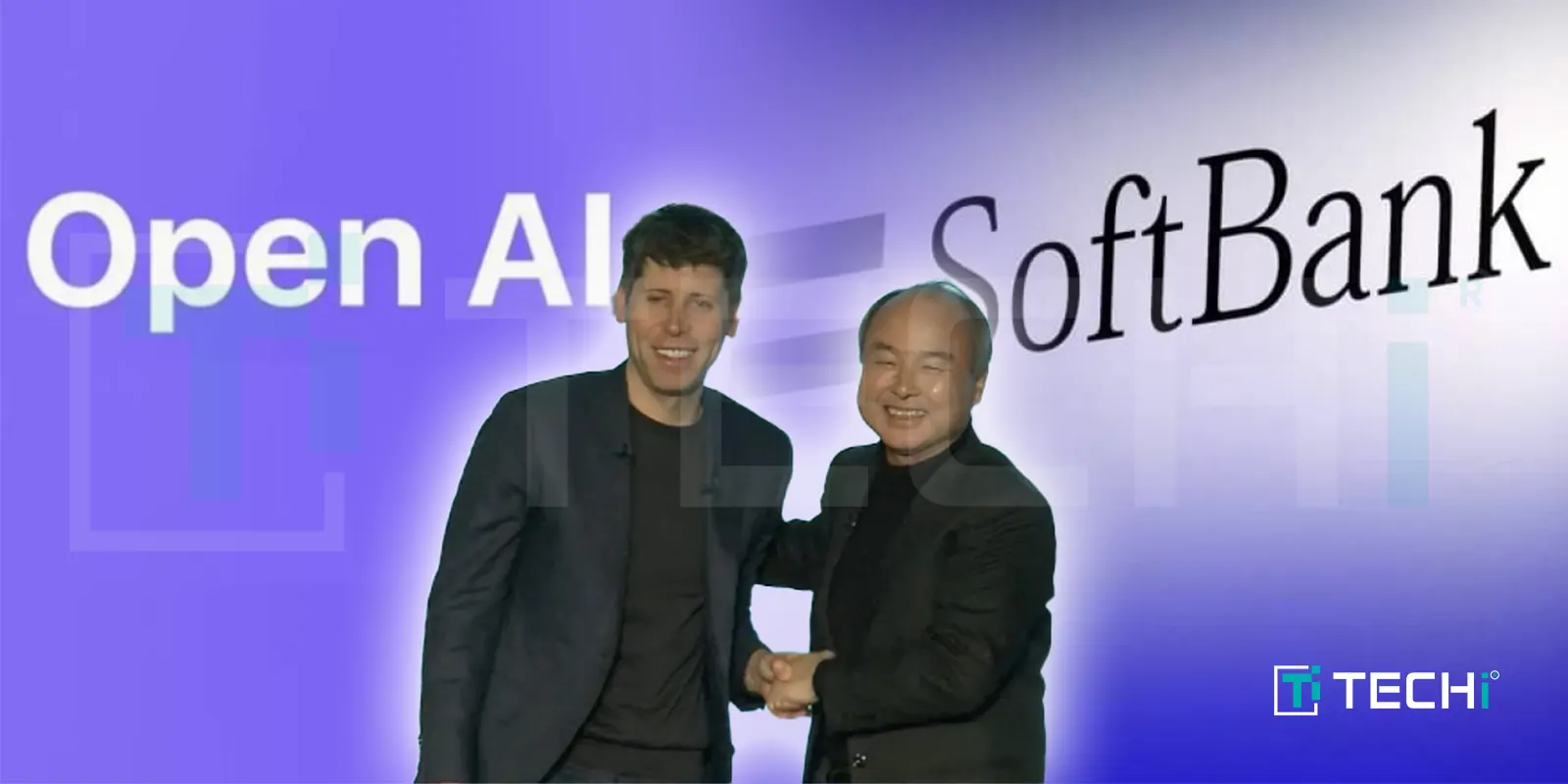
With Sam Altman bringing the brains and Masayoshi Son bringing in billions together, they’re on the way to raising the Tech Industry’s standard bar in Japan. SoftBank’s chairman, Masayoshi Son, and OpenAI’s CEO, Sam Altman, have announced the joint venture to provide AI services for corporate clients in Japan, which is named SB OpenAI Japan. It is a newly created SoftBank entity with its telecom arm in Japan, further cementing Japan’s investments into artificial intelligence. SB OpenAI Japan is jointly owned by OpenAI and a SoftBank-established company.

A Multimillion-dollar Engagement:

SoftBank’s share valuation soared when the firm invested $100 million in Yahoo! and other struggling tech companies. However, the trouble started when Son lost $70 billion out of his $78 billion and 95% of SoftBanks’s stock market value disappeared during the crash of 2000. Son did not give up and invested $30 million in a Chinese company called Alibaba that made the investment reach $130 billion over time. Today, SoftBank’s investments include companies like Uber, Slack, SoFi, DoorDash and its Vision Fund is the largest technology venture in the world.

SoftBank is paying $3 billion every year in using OpenAI technologies in its subsidiaries, marking a deepening interest from Son in AI. Furthermore, SoftBank is looking at investing an additional $15 to $25 billion into OpenAI further to solidify its position within the global AI ecosystem. SoftBank, outside Japan, will also put $15 billion into Stargate, another joint venture with OpenAI and Oracle to build AI infrastructure in the United States. The $500 billion Stargate AI Project, a landmark development for AI and economic growth is a collaborative venture spearheaded by OpenAI, SoftBank, Oracle and MGX and was announced by Trump. Msayoshi Son along with Altman appeared with Trump at the Stargate launch, they plan on investing $100 billion to create thousands of jobs under Trump’s presidency. This marks a wider commitment to the growth of AI beyond Japan.

The rise of the AI competition has not come easy, as the emergence of DeepSeek from China evokes a skepticism revolving around the radical capital invasion into AI technology. Altman did stand his ground, saying, “The world is going to just need so much compute.” With his endorsement of OpenAI, Son has made a comeback to the power circle of investing for the rest of SoftBank’s tech portfolio. He has a long history of partnerships with American tech firms, dating back to 2008, when SoftBank first brought Apple’s iPhone to Japan, transforming the mobile industry in that country.

Political Endorsement:

With a view for enriching their visions, Son and Altman met Japanese Prime Minister Shigeru Ishiba on Monday (Feb 3, 2025) which is a sign of government support for AI-led economic transformation. This joint venture by SoftBank and OpenAI aims to launch AI into a new advanced era in the corporate world of Japan. The partnership may flourish in the next realm of business and technological evolution with an increased implementation of AI in the region.

Read More: SoftBank’s Biggest AI Gamble Yet: What $25B Means for OpenAI & Stargate


OpenAI launched Deep Research, ChatGPT’s new AI agent for advanced level research

OpenAI with its new AI agent, Deep Research, will serve its users in conducting complex and in-depth research. Deep Research is much nerdier than it sounds, it is designed to assist professionals in fields such as, finance, science, engineering, and policy making, as it is an instrument for time consuming and intensive knowledge work. Deep Research is perfect for users who seek comprehensive, accurate, and reliable research and not just quick summaries or overviews.

For people who need to cross-source data analysis, along with ensuring a more rigorous approach to gathering information from multiple resources, the new AI agent is well equipped for that. OpenAI mentioned that, “Deep Research was aimed for people who do intensive knowledge work in areas like finance, science, policy, and engineering and need thorough, precise, and reliable research. It could also be useful for anyone making purchases that typically require careful research, like cars, appliances, and furniture.”

Availability and Access:

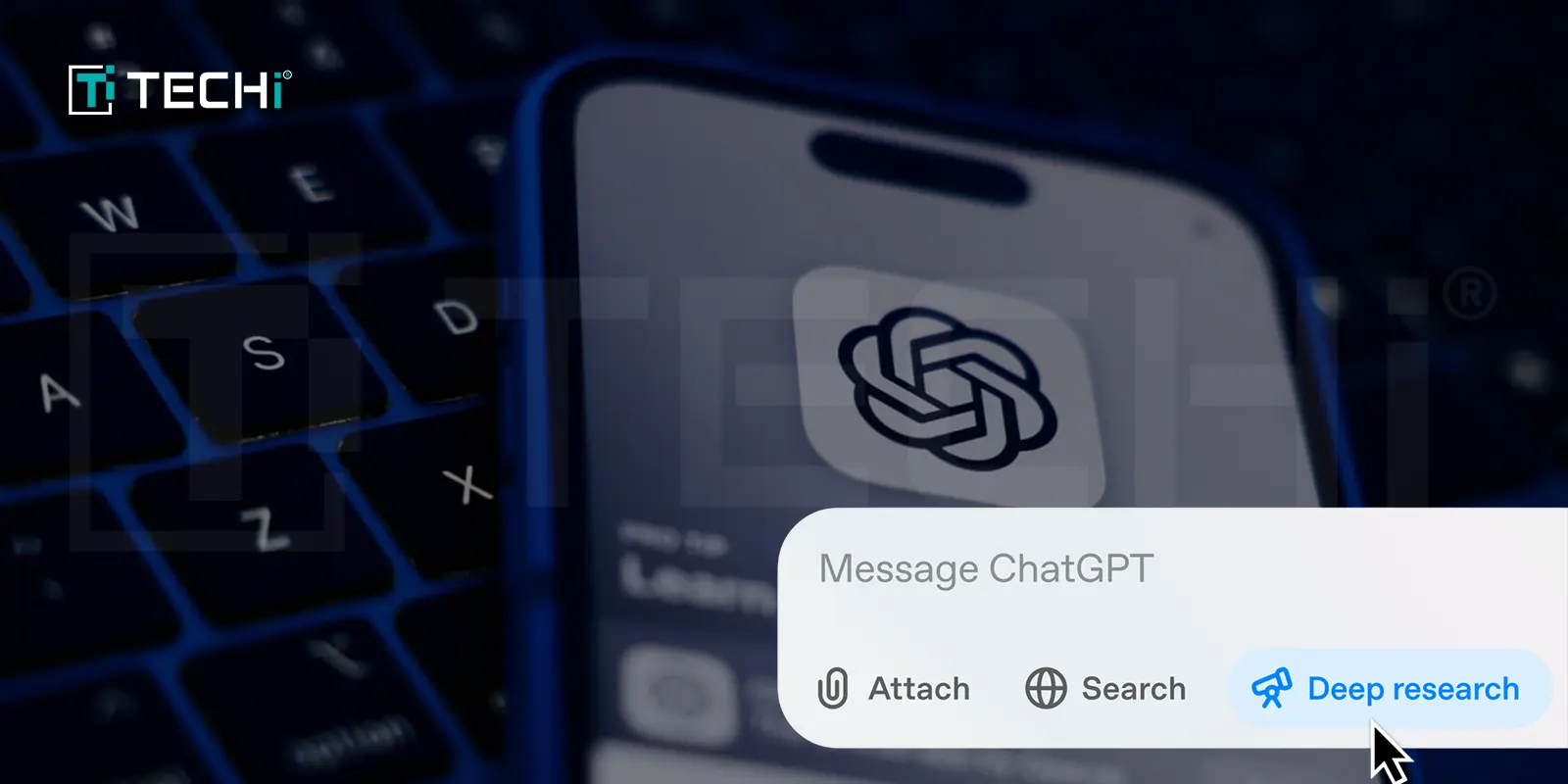
The features can be accessed by selecting “Deep Research” in the ChatGPT composer, entering a question and optionally adding files or spreadsheets. In contrast to typical chatbots, Deep Research takes a considerable time before being fully tested, it takes from 5 to 30 minutes to complete its queries, and users are alerted once the results are available. Although OpenAI was initially restricted to the web, it is set to be released soon in both mobile and desktop versions.

The Deep Research feature is currently accessible to ChatGPT Pro users, with a monthly limit of 100 queries. Enterprise customers will have additional access to Plus and Team, as well as other levels of functionality provided by OpenAI. The access for Deep Research is currently restricted to few areas, and OpenAI has not made it available to users in the U.K, Switzerland, or the European Economic Area.

Enhanced Capabilities and Future Upgrades:

Initially, Deep Research only provides text-based outputs, but OpenAI has announced that it will soon provide embedded images, data visualizations and analytic output in upcoming versions. Moreover, the company is striving to integrate the tool with specialized data sources such as subscriptions and internal resources.

One of the primary challenges with AI-driven research is its accuracy, to overcome that OpenAI has arranged for all Deep Research outputs to be fully documented with citations and a summary of reasoning, it will be easier for users to verify information. OpenAI admits that AI-generated content is plagued by hallucinations, misinterpretations and citation errors and to facilitate user verification of information, OpenAI said, “Every ChatGPT Deep Research output will be fully documented, with clear citations and a summary of [the] thinking, making it easy to reference and verify the information.

AI Model and Performance:

A specialized version of OpenAI’s o3 “reasoning” AI model is being used for Deep Research. This model has been trained in strengthening the learning for real-world tasks, such as searching the web and analyzing data in Python. OpenAI claims that o3 is designed to comprehend and scrutinize vast amounts of online material along with adapting as it processes information. OpenAI stated, “This version of o3 is optimized for web browsing and data analysis, it leverages reasoning to search, interpret, and analyze massive amounts of text, images, and PDFs on the internet, pivoting as needed in reaction to information it encounters.

The model is also able to browse over user-uploaded files, and plot and iterate on graphs using [a Python] tool, embed both generated graphs and images from websites in its responses, and cite specific sentences or passages from its sources.” Deep Research scored an accuracy of 26.6% in the Humanity’s Last Exam benchmark, which included 3,000 expert-level questions and was a high level difficulty test, while it outperformed other competitors such as Gemini Thinking (6.2%), Grok-2 (3.8%), and OpenAI’S GPT-4o (3.99%). Despite the scores, OpenAI asserts that Humanity’s Last Exam is designed to be more challenging than a typical AI test.

Competitive Landscape:

Google is not the only one in this race to achieve AI research, as it recently unveiled an artificial intelligence tool bearing the same name. This is just one example of the growing competition, as AI-led research assistants are increasingly being sought after as they go beyond basic chatbot functionality. Deep Research offers an exciting prospect for researchers, students, and professionals to explore knowledge facilitated by AI and is a promising area, but it’s not entirely free of obstacles.

The AI limitations in this particular agent are set out to be a caution for the users, as the tool can occasionally misunderstand authoritative sources, fail to indicate uncertainty and produce formatting errors in reports and citations. It is crucial for users to be willing to rely on the validity and critique of AI-generated content before accepting it. As AI progresses, only time can give an insight about whether the presence of AI-controlled research personnel will improve human knowledge or will they simply make it more accessible to copy and paste.

Read More: OpenAI Launches o3-Mini Reasoning Model with Free ChatGPT Access

Impossible to Block Deepseek? Why Stopping China’s AI Growth is Harder Than Ever for OpenAI

What’s Happening? Popularity often comes with its consequences. Well, in the Deepseek case, this can be true as its rapid rise welcomed some allegations too. First, Italy’s Data Protection Authority (DPA), now Open AI. OpenAI vs DeepSeek just got serious. Developing an AI model at a lower cost is the hottest news in town right now. But its free-of-cost model shook up the entire AI industry. However, DeepSeek may have used a technique called distillation – according to sources like The Indian Express. Using this technique, they gain the advantage of learning from Big AI players like OpenAI and ChatGPT.

Let’s understand the term AI Distillation

Distillation is a process where a newer AI model learns from an existing, more powerful AI model. It provides an edge to developers to transfer knowledge without investing a single penny inexpensive computing resources. Maybe that’s the reason why they created such outclass AI models at a fraction of the cost on behalf of U.S. companies.

Why is this even a problem?

  • Violation of privacy policy and terms of service: OpenAI and other companies prohibit using their AI models’ outputs to train competitors. It’s against their privacy policy.
  • Regulatory Challenges: Due to OpenAI’s open-source nature and digital access across the globe, preventing AI model distillation is next to impossible. Especially when compared to semiconductor export controls.

U.S reaction over this:

I think they [China] only care about themselves and seek to harm us. And so we need to protect ourselves,” Lutnick said Wednesday when asked how he will address competition threats from China during his confirmation hearing. In a recent Fox News Interview, David Sacks, The man behind the White House’s AI and crypto czar, also raised these concerns.

Other than that:

  • Technical Barriers: U.S. firms like Grog have started blocking Chinese IP addresses to prevent any kind of AI access.
  • Investigation: OpenAI is reviewing and looking for any suspicious activity that will prove that DeepSeek improperly used its models.
  • Potential U.S. Sanctions: OpenAI pledged to collaborate with the U.S. government to protect American AI technology that could provoke Potential U.S. Sanctions

Why Stopping DeepSeek is Difficult:

  • Small is enough: Even if there are signs of distillation in the DeepSeek model, they needed fewer than a million data points from a larger model to boost their AI. So, detection in this case will feel like finding a needle in a haystack.
  • Evasion Tactics: Even if the U.S. makes hurdles in its way or puts sanctions in place, China-based developers can find workarounds through third parties.
  • Open-Source Models Exist: AI models like Meta’s Llama and Mistral can be freely downloaded, making it hard to track unauthorized use.

What are Netizens saying?

DeepSeek that sounds so much like DeepFake? People over the internet have mixed opinions. Nitika Sawhney listed down out 3 points in her recent post on Linkedin:

1. The platform has already faced a cyberattack, compelling it to cease new user registrations.
2. Analysts are doubting that the platform could pose national security risks.
3. Microsoft is already exploring if they improperly obtained OpenAI data

What’s Next?

Will the U.S. opt for strict “know-your-customer” rules for AI companies? Like banking regulations, it is vital to have a track record of using American AI models. This theory will remain uncertain, especially with a potential shift in U.S. political leadership. Stay Tuned to learn more!

Suggested Topic: Italy Demands Answers from DeepSeek: Is Your Data at Risk?

SoftBank’s Biggest AI Gamble Yet: What $25B Means for OpenAI & Stargate

Is SoftBank ahead of Microsoft? Is the success of DeepSeek the primary reason behind this vast AI investment? Let’s have a look over investment strategies:

Direct Investment in OpenAI:

SoftBank is in discussions to invest between $15 billion and $25 billion directly into OpenAI. If the deal is finalized, it would position SoftBank as OpenAI’s largest investor, surpassing Microsoft’s commitment of $14 billion. Well, this is a small chunk. SoftBank and OpenAI will support the OpenAI Stargate project with a commitment of $19 B, a significant AI infrastructure announced on January 21, 2025. Key players like OpenAI, SoftBank, Oracle, and MGX came together in a joint $500 billion venture aiming to develop AI data centers in the U.S. over the next 4 years.

This deal marks SoftBank’s biggest AI push since its $16 billion investment in WeWork (which was abandoned later from $16B to $2B)

The reason behind this?

Multiple factors can be the reason for this:

  • Strong commitment to AI or biggest bet? It shows SoftBank’s deep commitment to Open AI’s future.
  • Power Shift: No reliance on Microsoft if the deal got set. As Microsoft was their exclusive cloud provider.
  • DeepSeek R1 impact? Their rapid rise and shaking of the market have raised questions and concerns as well. AI hardware investments like Nvidia have lost their charm. 
  • Nvidia’s stock drop: Investors fear that AI models like DeepSeek are built at a lower cost and could disrupt big AI infrastructure spending.
  • OpenAI vs DeepSeek: OpenAI has accused DeepSeek of using a technique called distillation to copy its models at a lower cost.
  • OpenAI’s Future Plans: Their New Year resolutions have one aim: to become a for-profit entity and attract (of course) more funding.

What’s Next?

  • If the deal got done, SoftBank’s investment could reshape OpenAI’s funding structure and reduce its dependency on Microsoft.
  • The AI competition just got heated up after this, with DeepSeek’s low-cost agenda challenging the U.S. giants.
  • Investors are rethinking their bet on AI infrastructures like Nvidia and Microsoft after seeing their major losses.

What are people saying?

SoftBank is in talks to invest as much as $25B in Open AI. Wait, but didn’t DeepSeek show that AI is cheap? Why would we see $25B investments? Maybe progress in technology doesn’t mean the destruction of computer needs. – Jose Najarro Stocks in his latest tweet on X. Well, on my behalf, Softbank’s investment in OpenAI isn’t shocking, but the stargate angle is interesting. Are they setting up for total AI infrastructure control? Time will surely unfold this mystery.

Read More: Revival of US Tech Stocks Ignited after DeepSeek’s AI sell-off

OpenAI vs Indian Newsrooms: OpenAI Faces Copyright Controversy

Lawsuit against OpenAI:

AI’s habit of “just borrowing” in legal language would translate into a Copyright issue. This ultimate drama has landed in India and made headlines, incorporating famous names like Ambani and Adani; AI deserves some credit for this. Yes, Mukesh Ambani and Gautam Adani, the Indian business tycoons, combined to fight against OpenAI in a copyright dispute and emphasize the importance of intellectual property. A legal battle in India over Copyright issues took place, which is considered parallel to the violation of rights. This has resulted in OpenAI being sued by Indian news outlets for violating Copyright laws. Indian news organizations, including The Indian Express, Hindustan Times, and other news agencies owned by Gautam Adani and Mukesh Ambani, have filed a lawsuit against OpenAI and other major digital outlets. The legal action alleges that the AI firm has been using Copyrighted material from its platforms to train its AI models without authorization or compensation. The lawsuit filed in New Delhi by the Digital News Publishers Association (DNPA) involves 20 other media companies, including Gautam Adani’s NDTV and Mukesh Ambani’s Network18. This leads to a rising concern among publishers. Copyright disputes have been intensifying lately, and writers, musicians, and media outlets continue to resist the exploitations of technology companies. Indian publishers claim that the variations carried by OpenAI in the content are a significant breach of their intellectual property rights.

OpenAI’s Global and Local Effects:

Perhaps OpenAI, being an Artificial Intelligence, is quite intelligent when it comes to attaining a human ability of ‘sharing is caring’ literally and making the copyright content as its diary. This is not the first time OpenAI has been sued due to the copyright issue; they have been in this position multiple times globally. For instance, The New York Times filed a lawsuit against OpenAI and Microsoft in 2023 for using its articles without authorization. In India, ANI filed the first legal lawsuit against OpenAI in 2024. Despite the Copyright accusations, OpenAI has established partnerships with outlets worldwide.

On the other hand, India’s rapidly growing 690 million smartphone users and the widespread growth of AI in the country give OpenAI essential market value. Among other companies, Time Magazine and Financial Times are comparatively at a disadvantage as they have not been able to secure comparable deals locally and globally. OpenAI, in its defense, claims that Indian courts cannot handle its operations as its servers are situated outside India. Indian publishers, on the other hand, are afraid that OpenAI’s actions will jeopardize and put the Indian media industry at stake. This implies that OpenAI is turning into a profit-driven organization while gaining revenues on a significant level from its generative output without providing suitable compensation for the Indian media industry. Although Copyright issues of OpenAI are something to be addressed and worked on, the rise of AI will result in legal challenges that affect how new technologies are incorporated into intellectual property laws.

Read More: Reliance Plans World’s Biggest AI Data Centre in India

Meet Operator: OpenAI’s Bold Step Toward an AI That Works for You

Remember ‘Operator’?

I’ve previously introduced and given a sneak peek of the upcoming AI agent to you guys!

In that post, we talked about what we’ve learned from the leaks. But now OpenAI has launched its latest innovation ‘Operator’. For a test drive, of course.

Let me tell you what it is actually.

An AI agent designed to perform tasks autonomously.

No, it will not do laundry for you but,

  • Can take actions on behalf of you, like booking travel, shopping online, or making restaurant reservations.
  • It uses a dedicated browser interface to interact with websites, much like a human would (e.g., clicking buttons, navigating menus, filling forms).

Mimicking humans? Yes, maybe.

Key Features:

  1. Autonomy: Operator can independently complete tasks like online bookings and purchases.
  2. Supervision: It requires user confirmation for critical tasks like finalizing payments or sending emails, ensuring accuracy and security. (control in your hands)
  3. Technology: It’s powered by OpenAI’s Computer-Using Agent (CUA) model, which combines vision and reasoning capabilities from GPT-4o and other advanced models.
  4. Collaborations: OpenAI is working with platforms like DoorDash, Uber, and eBay to ensure Operator aligns with their terms of service. (trying to get your daily tasks done in seconds)
  5. Limited Launch: Initially available in the U.S. for users of ChatGPT’s $200/month Pro subscription plan, with plans to expand to more users and countries.

Limitations:

  • Initial stage so can’t do complex jobs.
  • May struggle with tasks requiring users to step in when needed like asking for passwords.
  • Security measures can be a hurdle for it like completing bank transactions etc.

Why Is This a Big Deal?

  • Step Toward AI Agents: Major move into the aura of AI agents; tools capable of taking real world actions.
  • Vision of the Future: AI agents X ChatGPT shortly?! Potentially revolutionize how people interact with technology.

Concerns and Precautions:

  • Prevention of misuse can be a big concern for both users and OpenAI. Adding safety measures will be non-negotiable.
  • The release is a research preview, meaning OpenAI is still exploring its full capabilities and limitations.

Why Does It Matters?

  • A step closer to where  AI doesn’t just inform but acts.
  • It sets the stage for competition with similar AI agent technologies from Google, Anthropic, and others.

Stay Tuned!

To learn more about how this technology unfolds.

Related Articles:

Microsoft’s Relationship with OpenAI Cracked When it Hired Mustafa Suleyman, Rival Marc Benioff Says

OpenAI Gains More Flexibility as Microsoft Backs $500B Stargate Initiative

Meet Operator: OpenAI’s AI Tool That Could Take Over Your Computer Tasks

Microsoft’s Relationship with OpenAI Cracked When it Hired Mustafa Suleyman, Rival Marc Benioff Says

Reportedly, friction has arisen anew between the technology giants Microsoft and OpenAI, whose partnership in the past has broken new ground in artificial intelligence. According to Marc Benioff, the Salesforce CEO, Microsoft hit a snag in negotiating a ‘narrow moment’ after it hired Mustafa Suleyman, DeepMind co-founder, and currently CEO of Inflection AI, a key rival in generative AI.

Microsoft’s welcome to Suleyman is aligned with the company’s aggressive move to boost AI adoption, especially in generative and conversational AI technologies. But this seems to have rattled OpenAI, which has been closely collaborating with Microsoft in various joint ventures, including Azure OpenAI Service and the integration of GPT technology into Office 365 and Bing among other Microsoft products.

Although Suleyman’s vast experience of devising sophisticated AI systems might therefore settle under ‘strategic acquisition,’ it still raises issues regarding Microsoft’s general strategic direction. By attracting a key individual from an anti competitor company, Microsoft could be setting a marker that indicates it wants to develop more independent AI capabilities rather than rely solely on OpenAI.

Benioff’s comments are indicative of the duality within the technology space, which has partnerships but competes at the same time. Thus, alongside this loose partnership of Microsoft and OpenAI, such highly promising breakthroughs are being ushered in but may not necessarily uphold a positive dynamic from here onward.

The two companies are yet to comment on how the hiring of Suleyman by Microsoft would impact their relationship. However, industry experts believe that this development could catalyze further alignments and realignments in strategic partnerships. Today, the stakes are even higher for tech titans as AI technology changes rapidly and competitive boundaries shift.

This latest move underlines just how competitive the AI race is, where alliances can be tested as companies seek to secure their positions at the forefront of innovation.

Read More: Meet Operator: OpenAI’s AI Tool That Could Take Over Your Computer Tasks