Nvidia CEO Shrugs Off DeepSeek Challenge as AI Chip Sales Soar

In the high stake world of AI, chips lead in the power race of dominance, the AI world wouldn’t just have NVIDIA keeping pace, rather it will also be launching a new standard altogether. While DeepSeek R1 rattles the market temporarily, Jensen Huang remains unfazed by it all, unshaken and guiding the ship with steady hands, as competitors scramble for attention. As the rest look for a foothold, Nvidia is still riding the largest growth wave one has ever seen, proving, yet again, that the AI revolution will not stop, it has merely begun.

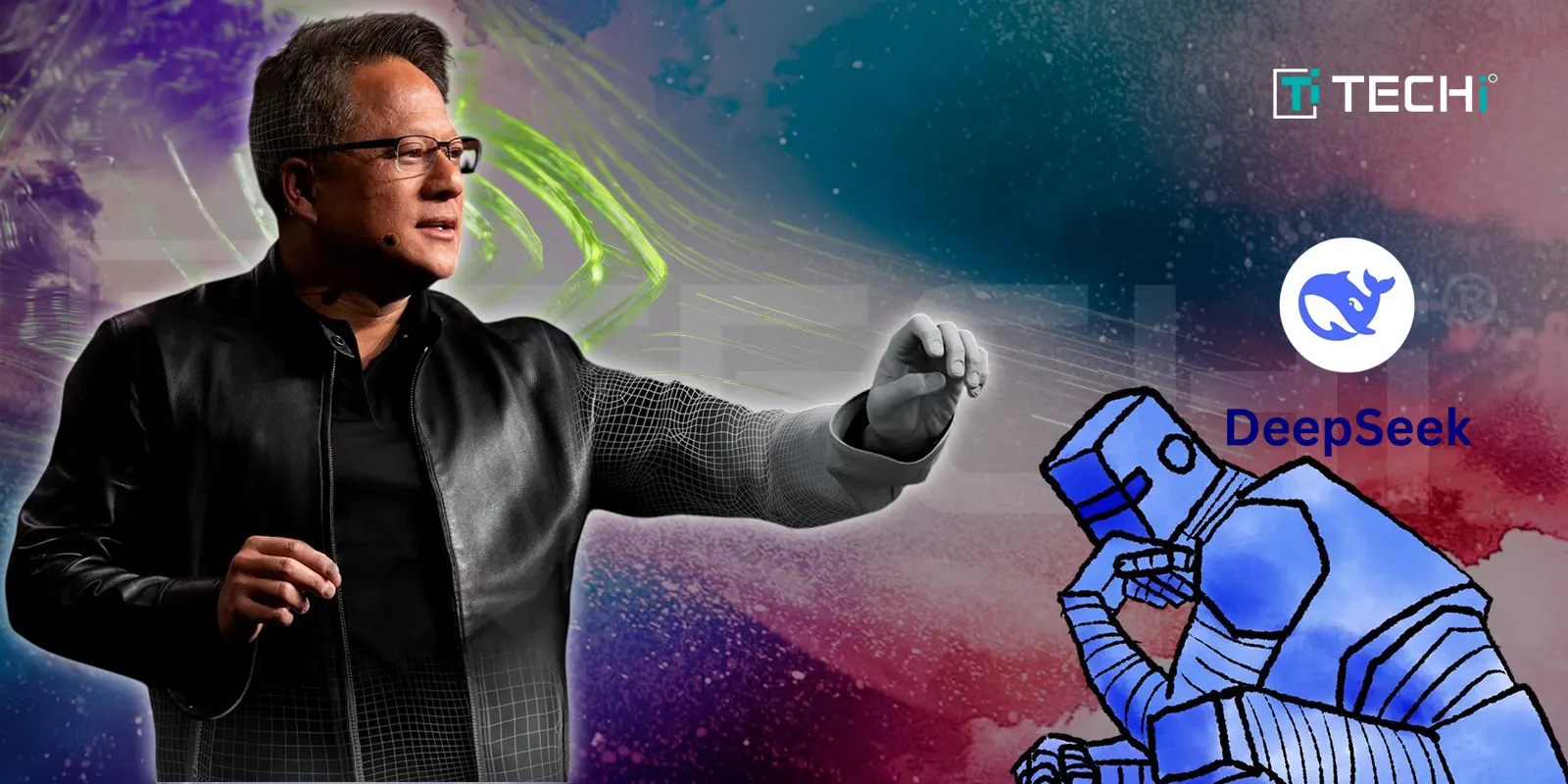
CEO Huang keeps pushing his company’s future ahead, brushing off worries that advances made by DeepSeek threaten sales at Nvidia. Speaking to the latest earnings call on Wednesday, the founder and chief statesman of Nvidia reiterated his confidence in the company despite what people are saying about the fallout from DeepSeek’s R1 model.

Demand for the Chip:

Huang praised the new R1 model as an “excellent innovation,” saying it actually increases demand for Nvidia technology given the huge computational requirements those reasoning models need. This came after last month’s record reduction of shares of Nvidia in the market because of news that the model of DeepSeek R1 would require much fewer chips for the training.

Huang even countered such narratives and said, “Reasoning models can consume 100 times more compute, and future reasoning models will consume much more compute. DeepSeek R1 has ignited global enthusiasm. It’s an excellent innovation, but even more importantly, it has open sourced a world-class reasoning AI model. Nearly every AI developer is applying R1”.

Record Breaking Sales:

Nvidia’s financial performance seems stronger than ever, even in the wake of some market jitters last month. The company announced yet another record quarter in which sales totalled approximately $39.3 billion, beating not only its internal estimates but also the estimates of Wall Street. Nvidia expects high growth to continue, projecting revenue in the next quarter of approximately $43 billion. Within the sales of Nvidia’s Data Center segment, one of the most important growth factors, sales nearly doubled in 2024 to $115 billion, a 16% increase since last quarter, emphasizing the never ending demand for AI chips.

AI Chip Market:

Nvidia’s CEO Huang asserted in the earnings call that its latest Blackwell chip is important, being custom designed for AI reasoning models. He said, “Current demand for it is extraordinary. We will grow strongly in 2025”. It is safe to say that, despite last month’s DeepSeek uproar, the wider AI chip market has continued to show a uniform pace of expansion. Nvidia’s future looks bright despite some recent turbulence. Record-breaking sales, soaring demand for AI chips, and major corporations such as Meta, Google, and Amazon pouring billions into AI infrastructure have ensured Nvidia’s commanding position at the top. With a growing AI revolution, Nvidia’s role as the very backbone of it seems assured. From what we know of the past, Jensen Huang is not the one keeping up, he’s the one who is actually going to lead.

Read More: Amazon Unveils Alexa+ AI Assistant to Revolutionize Smart Living
Nvidia CEO Jensen Huang says market got it wrong about DeepSeek’s impact

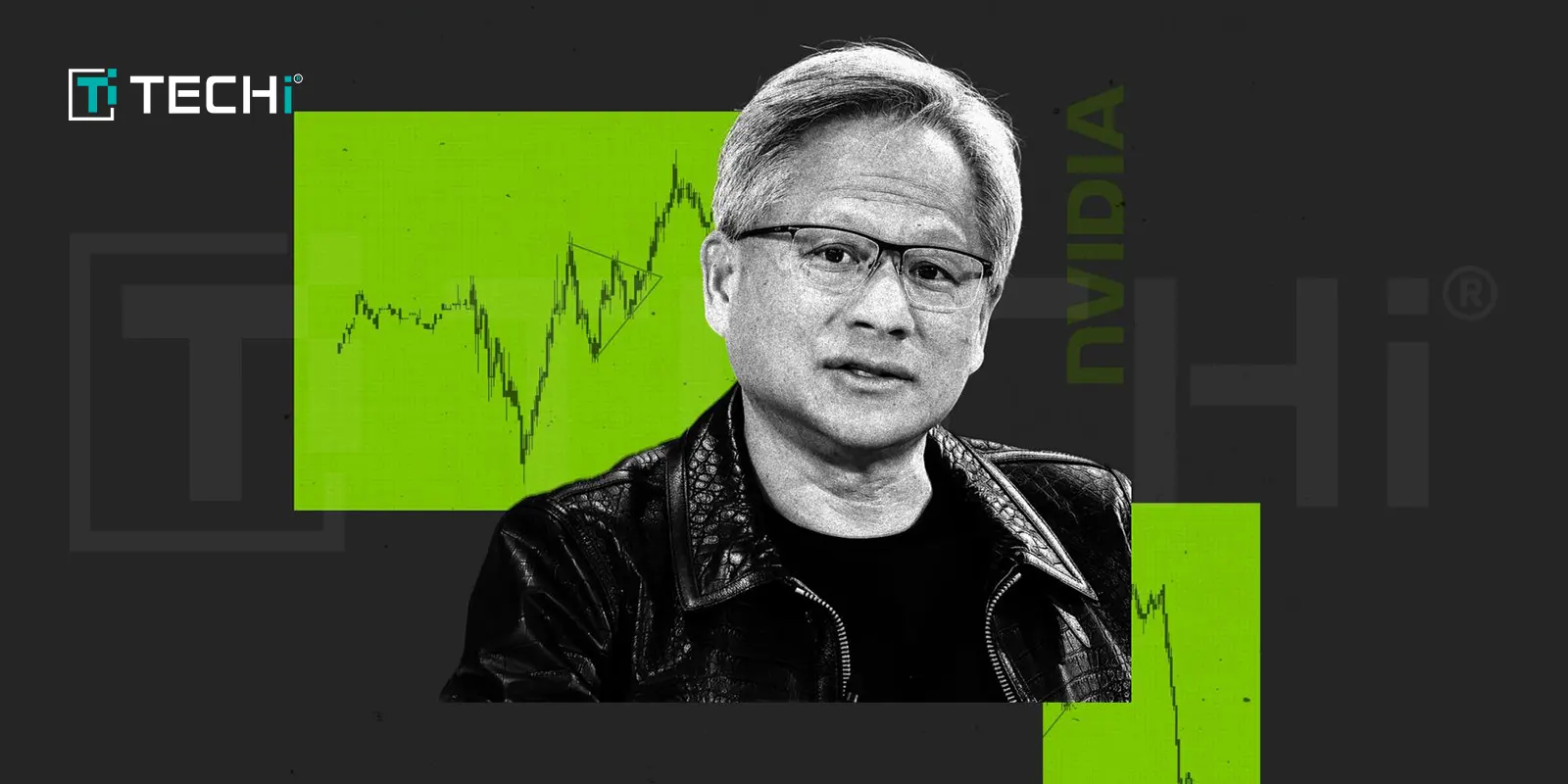
Nvidia founder and CEO Jensen Huang said the market got it wrong regarding DeepSeek’s technological advancements and its potential to impact the chipmaker’s business negatively. Instead, Huang called DeepSeek’s R1 open-source reasoning model “incredibly exciting” while speaking with Alex Bouzari, CEO of DataDirect Networks, in a pre-recorded interview that was released on Thursday.

“I think the market responded to R1, as in, ‘Oh my gosh. AI is finished,’” Huang told Bouzari. “You know, it dropped out of the sky. We don’t need to do any computing anymore. It’s exactly the opposite. It’s [the] complete opposite.”

Huang said that the release of R1 is inherently good for the AI market and will accelerate the adoption of AI as opposed to this release meaning that the market no longer had a use for compute resources — like the ones Nvidia produces.

“It’s making everybody take notice that, okay, there are opportunities to have the models be far more efficient than what we thought was possible,” Huang said. “And so it’s expanding, and it’s accelerating the adoption of AI.” He also pointed out that, despite DeepSeek’s advancements in pre-training AI models, post-training will remain important and resource-intensive.

“Reasoning is a fairly compute-intensive part of it,” Huang added.

Nvidia declined to provide further commentary. Huang’s comments come almost a month after DeepSeek released the open-source version of its R1 model, which rocked the AI market in general and seemed to affect Nvidia disproportionately. The company’s stock price plummeted 16.9% in one market day upon releasing DeepSeek’s news.

According to data from Yahoo Finance, Nvidia’s stock closed at $142.62 a share on January 24. The following Monday, January 27, the stock dropped rapidly and closed at $118.52 a share. This event wiped $600 billion off of Nvidia’s market cap in just three days. The chip company’s stock has almost fully recovered since then. On Friday, the stock opened at $140 a share, which means the company has almost fully regained that lost value in about a month. Nvidia reports its Q4 earnings on February 26, which will likely address the market reaction more. Meanwhile, DeepSeek announced on Thursday that it plans to open source five code repositories as part of an “open source week” event next week.

Read More: OpenAI to Shift AI Compute from Microsoft to SoftBank

US Authorities Investigate Whether DeepSeek Used Banned Nvidia AI Chips 

The U.S., with its God complex and a dogmatic perception regarding other nations, is quite a paradoxical situation. A source with knowledge of the situation revealed that the U.S Department of Commerce is investigating whether DeepSeek, the Chinese firm responsible for the AI model’s success in China, has been using U.S. chips that are prohibited for shipment to China. When your AI model becomes the talk of the tech world and wipes $1 trillion off U.S stocks, someone with a God complex can have suspicions that it might have a little ‘forbidden fruit’ involved.

U.S Dominance in AI:

Last week, China’s DeepSeek unveiled a free assistant that uses less data and is priced below other U.S models. In just a few days, it became the most downloaded app in Apple’s App Store and raised concerns about the United States’ dominance in AI, leading to a major drop in U.S tech stocks, costing almost $1 trillion in market value. The current exports of the A100 and H100 models are restricted from China, as Nvidia’s advanced artificial intelligence chips are designed to prevent them from competing with other nations regarding AI technology for market share. 

Yet, as per the source, organizations that are smuggling AI chips to China have been observed in countries like Malaysia, Singapore, and the United Arab Emirates. DeepSeek and the Commerce Department failed to respond immediately when questioned on this matter.

A spokesperson for Nvidia explained that many of Nvidia’s clients have established businesses in Singapore and overseas, while others may also be involved in shipping their products to the U.S. and Western countries. Nvidia said, “We insist that our partners comply with all applicable laws, and if we receive any information to the contrary, act accordingly.” However, previous reports by DeepSeek suggest that it used Nvidia’s H800 chips, which were available to purchase legally before the latest U.S. restrictions were enacted in 2023.

AI Chips Supply Chain at Risk:

DeepSeek really went from a promising AI startup to a suspect involved in smuggling, standing in the courts of the U.S. Nvidia’s H20s, which are less powerful and available for purchase on DeepSeek, are still legal to ship to China, as the U.S. contemplated controlling them during the Biden presidency, and this issue is being discussed by Trump’s new officials. Dario Amodei, the CEO of Anthropic AI firm stated, “it appears that a substantial fraction of DeepSeek’s AI chip fleet consists of chips that haven’t been banned (but should be), chips that were shipped before they were banned; and some that seem very likely to have been smuggled.”

This implies that a significant portion of DeepSeek’s AI chip inventory is made up of chips that were either shipped to the country before the ban or chips that are not banned but should be, and others might be smuggled. The ban on exporting AI chips to China has been imposed by the U.S government, and it is now considering expanding these restrictions to other nations. The analysis of DeepSeek’s chip usage reveals the rising tensions between nations and mutual trust surrounding AI technology and chip supply chains. 

Read More: Italy Bans DeepSeek But Banning AI Model is Harder Than You Think