Microsoft Challenges OpenAI with Next-Generation AI Model

As per the news received, Microsoft is developing in-house artificial intelligence reasoning models that can compete with OpenAI and other rival models. The information was a surprise since Microsoft is a partner of OpenAI and has been using its models in its products. The partnership with OpenAI has been successful. Microsoft has positioned itself as one of the leaders among the big technology companies in AI race. Its seems like Microsoft is challenging OpenAI with this AI Model.

Although Microsoft has worked on some of its own models in the past, like Phi, interestingly, Phi was developed with the help of OpenAI, and it can perform similarly to OpenAI with far less computing power. Microsoft is testing models from xAI, Meta, and DeepSeek as potential replacements for OpenAI. Things are not getting any better for OpenAI lately. They already have a battlefront opened by Elon Musk, with that matter currently being heard in the US court. Microsoft has been using OpenAI in its flagship AI product, 365 Copilot. Copilot’s main attraction was that it used OpenAI’s GPT-4 model.

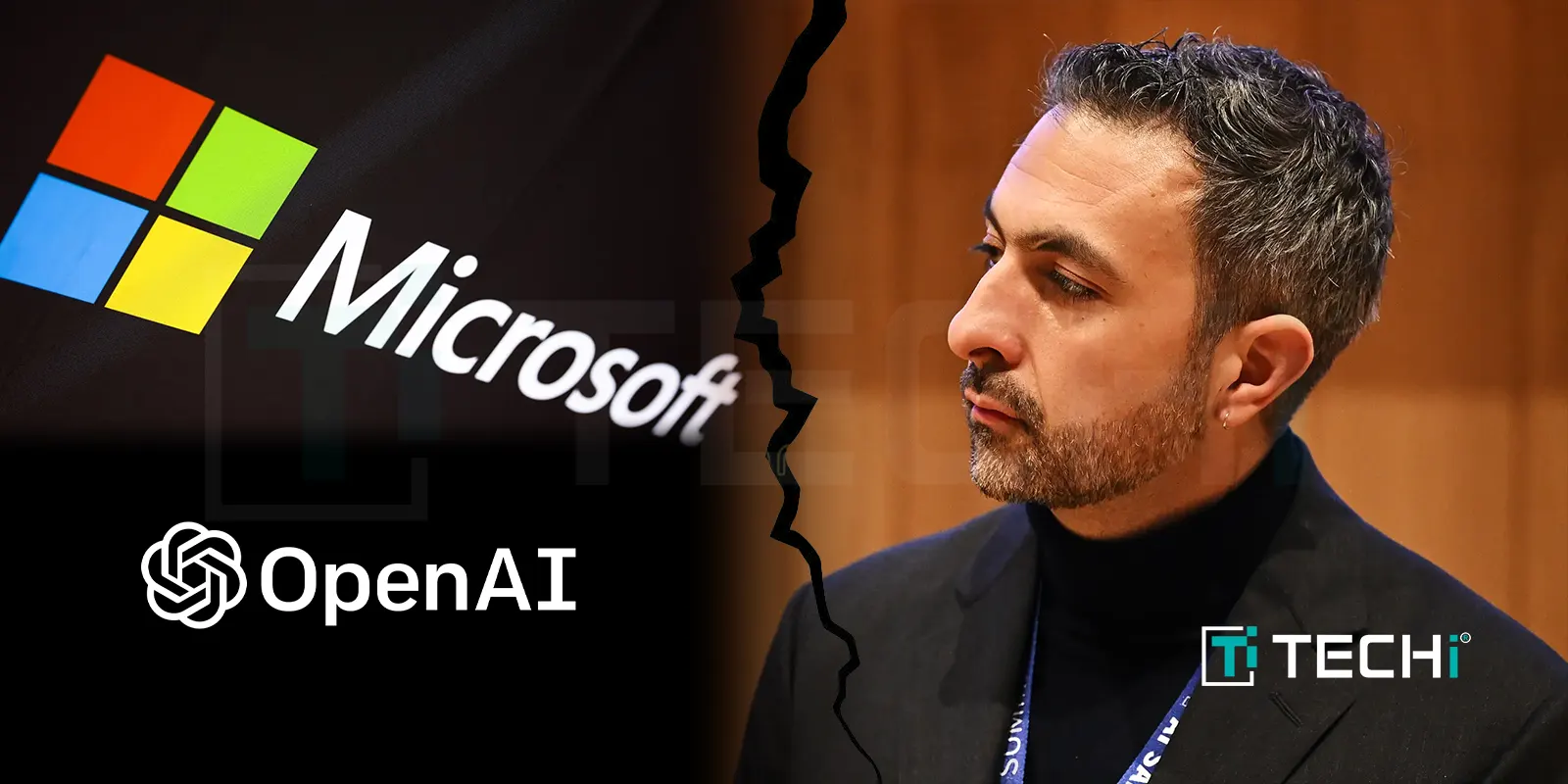
Last year, in March 2024, Mustafa Suleyman was appointed as CEO of Microsoft AI (MAI). Under his leadership, work was being done to create an alternative to OpenAI so they could start using it in their own product. The main reason is cost-effectiveness in the long run for the company. According to the report, the training has been completed, and the product is performing similarly to the OpenAI and Anthropic on commonly accepted benchmarks. At the same time, work is being done on the reasoning model as well.

It typically uses Chain-of-thought (CoT) techniques to analyze the input as humans do. This process involves calculations, logic, and decision-making. With this, MAI would be able to compete directly with OpenAI. The work to replace OpenAI’s models in Copilot with MAI is already in process. Microsoft is considering releasing the new model as an API (Application Programming Interface) that developers can use to benefit from these models in their own applications.

It is to be noted here that Microsoft has invested $14 billion in OpenAI so far. However, like a smart business entity, Microsoft is not keeping all its eggs in the same basket. OpenAI has had a series of setbacks lately, be it the DeepSeek computing power or the lawsuit by Musk. Now, it seems like they are getting stabbed in the back by their own partner, who established its AI standing using OpenAI itself. However, OpenAI is also being smart and it has already secured a deal with Apple back in June 2024. The deal involves using ChatGPT in Apple products iOS, iPadOS, and macOS. Even Siri would be able to tap into ChatGPT to get help when needed.

Both OpenAI and Microsoft are in an agreement till 2030 . Also, a lot of Microsoft products are using OpenAI, and they aren’t going to be replaced overnight. It is to be noted here that a recent change in their agreement in January 2025 allowed OpenAI to work with other cloud providers like Oracle. It seems like both companies are keeping their options open for now. Things are heating up in AI world and new developments are fast. Everyone is trying to outdo its competitors, and even the partners are not spared. It’s a cruel world out there, and you must always be awake and ensure you safeguard your interests.
Microsoft Has Officially Announced Skype Shuts Down in May

What was once a symbol of digital communication will soon be a thing of the past—Skype is officially shutting down in May 2025, marking the end of an era for video calls that once felt futuristic. Once a trailblazer in digital communication, Skype is officially shutting down in May 2025, marking the end of a platform that revolutionized video calling. Microsoft confirmed the news through Skype’s official X (formerly Twitter) account, urging users to transition to Microsoft Teams to continue their conversations. This decision follows years of Skype’s declining relevance, as competitors like WhatsApp, Zoom, and FaceTime overtook the market. Initially launched in 2003, Skype soared in popularity by offering free global voice and video calls, becoming a household name before Microsoft acquired it for $8.5 billion in 2011.

But as technology progressed and Microsoft pivoted to Teams, Skype slowly started disappearing into the background. With this closure, an era of internet history is over, leaving behind memories of a time when video calls seemed like a futuristic breakthrough.

Why is Skype Shutting Down?

Skype used to be the default video-calling app for millions, but its downfall began when:

  • Competition Acceleration: WhatsApp, Zoom, and Google Meet provided instant, mobile-native, and integrated solutions.
  • Unpopular Redesigns: Widely criticized in 2017 for an update that had mimicked Snapchat’s home screen.
  • Microsoft’s shift to Teams: When Microsoft rolled out Windows 11 in 2021, it no longer pre-installed Skype, signaling its phasing out.

Microsoft said this to the point in its official announcement and no more Skype.

What Happens to Skype Users?

Microsoft announced that All Skype accounts can now sign into Microsoft Teams, migrating chats and contacts. Before the final closure, users can export their chat history and contacts. Skype services, for-pay, will remain active until the coming renewal cycle. In the meantime, anyone who still uses Skype for personal or business calls will need to migrate to Teams or switch to one of the many other modern alternatives.

A Goodbye to Skype: How Could It Have Happened?

For many, Skype was not merely an app but a technological breakthrough that made video calling affordable, free, and worldwide, accessing loved ones in different parts of the world. in the mid-2000s, without costly phone bills was revolutionary. However, Skype’s decline was not simply a matter of growing competition. It was also one of missed opportunities and mismanagement. While competitors embraced mobile trends, AI-powered features, and cloud-based cooperation, Skype fell behind, becoming relict rather than cutting-edge. However, as the official end approaches, it will leave behind a legacy. and lose its relevance. However, will Microsoft Teams learn from the past?

Read More: Microsoft Expands AI Reach with Copilot App for Mac

Microsoft’s Strategic Shift in Data Center Expansion Raises Investor Concerns

Microsoft’s aggressive push into AI and cloud infrastructure has recently defined its growth strategy. Still, fresh reports suggest the company is now taking a more measured approach to its data center expansion. According to TD Cowen analysts, Microsoft has scrapped leases for several hundred megawatts of data center capacity in the U.S., a move that has caught investors’ attention and raised questions about whether the AI boom is hitting a slowdown.

The decision comes despite Microsoft’s commitment to investing over $80 billion in AI and cloud capacity this fiscal year. A company spokesperson acknowledged the adjustments but emphasized that Microsoft is still growing “strongly in all regions” and is simply pacing its infrastructure investments strategically.

Market Reaction and Investor Anxiety

While Microsoft’s stock remained largely unaffected, dipping only 1% on Monday, the ripple effect was felt across industries linked to data centers. Siemens Energy dropped 7%, Schneider Electric fell 4%, and U.S. power providers Constellation Energy and Vistra saw declines of 5.9% and 5.1%, respectively. The selloff extended to broader tech stocks, adding to growing market unease over whether the billions being poured into AI infrastructure will yield the expected returns.

Adding to the uncertainty is China’s rising competition in AI development. Chinese startup DeepSeek has showcased AI models at significantly lower costs than its Western counterparts, fueling concerns that companies like Microsoft may need to rethink their infrastructure spending to remain competitive.

A Sign of Oversupply or Just Smart Business?

Microsoft’s decision to pause or cancel leases could indicate a correction after years of rapid expansion. The company and rivals like Meta have been aggressively building data centers to support the surge in AI demand. However, as analysts point out, scaling AI infrastructure is costly, and companies are now balancing growth with financial sustainability.

Bernstein analyst Mark Moelder noted that the move could suggest a cooling in AI demand, especially following weaker-than-expected earnings from major cloud providers. However, not everyone is convinced this is a warning sign. Some industry experts argue that Microsoft is refining its strategy, ensuring it doesn’t overextend resources in a rapidly evolving market.

Whatever the case, this latest shift underscores a key reality: Even the biggest AI players are navigating a complex and uncertain landscape. The race to build next-generation AI systems isn’t just about who spends the most—it’s about who spends wisely.

Read More: Apple Launches iPhone 16e in China to Compete with Local Brands

OpenAI to Shift AI Compute from Microsoft to SoftBank

According to The Information Report on Friday, OpenAI is forecasting a significant shift in the next five years around who it gets most of its computing power from. OpenAI is significantly shifting its AI infrastructure, moving away from Microsoft’s cloud services and toward SoftBank-backed Stargate. By 2030, OpenAI expects 75 percent of its computing power to come from Stargate, marking a shift that carries a lot of opportunity and risk. Though this shift is coming, OpenAI will keep increasing its spending on Microsoft’s data centers in the next few years. However , the company’s operational expenses are poised to increase significantly.

Reports indicate that OpenAI will burn through $20 billion in cash by 2027, marking a significant financial shift from previous years, a massive jump from the $5 billion spent in 2024. By the decade’s end, OpenAI forecasts that running AI models (inference costs) will surpass AI training expenses, marking a significant shift in its computing strategy. This move signals OpenAI’s push for greater independence in cloud infrastructure as it scales its AI models.

Why Is OpenAI Starting to Move Away from Microsoft?

With this move, OpenAI is positioning itself for a world where computing resources are more often distributed. But is this the right move? Moving computing power over from Microsoft (whose Azure powers OpenAI today) to the SoftBank-backed Stargate project is not something that happens overnight; there is a lot of work to be done. OpenAI has leaned heavily on Microsoft’s Azure cloud, but as AI costs have taken off, the company seems to be looking for more control and diversification over its compute resources. There might be several reasons why they decide this.

Microsoft increasing interest in its in-house AI research might lead to strategic conflicts with OpenAI in the future, which might end up resulting in conflicts of interest between the two. To OpenAI, this could be a mandate to secure its long-term independence. In addition, OpenAI’s rising operational outlays — projected to surpass $20 billion by 2027 — necessitate a more fluid funding approach, and SoftBank is famous for its mega tech bets. In addition, OpenAI may want to decrease the reliance on U.S. cloud providers for strategic reasons as well, whether it be aimed at mitigating risks from potential regulatory scrutiny or geopolitical factors.

What It Signals About OpenAI’s Future

In leaning toward SoftBank-backed computing, OpenAI is making a calculated gamble. This could offer more autonomy, tailor-made AI chips, and improved financial flexibility, in other words. However, SoftBank’s track record of putting money into volatile deals (think WeWork) begs the question of whether this is a sustainable partnership in the long term.

And inference costs (i.e., running AI models) are expected to exceed training costs by 2030, so OpenAI needs a long-term sustainable solution. This could blow up in the face of the SoftBank-funded Stargate project if it fails to deliver the same stability and efficiency that Microsoft Azure provides. Ultimately, OpenAI’s pivot away from Microsoft is a high-stakes transition that could determine its trajectory in the A.I. industry. If done right, it could solidify OpenAI’s role as a leading innovator in AI. However, if the transition faces major roadblocks, it could open up new challenges that slow down OpenAI’s momentum in the AI race.

Read More: OpenAI Drops o3 AI Model to Unify AI Strategy with Game-Changing GPT-5

DeepSeek Disrupts the AI Titans: Google, Meta, and Microsoft Fight Back with Unprecedented Spending

In the last two weeks, we have seen speculations that DeepSeek will revolutionize investments in AI and (might give tough competition to Tech Giants like Meta, Google and Microsoft. They caused Nvidia stocks to go down rapidly and investors feared that the demand for AI chips and data centers would no longer be the same. DeepSeek’s huge success also put a question mark on whether Meta, Google, and Microsoft will be spending less on AI investments.

But in Google parent company Alphabet’s latest earnings call, CEO Sundar Pichai ended the rumours. He noticed a Chinese AI company, DeepSeek, praised what they do and compared it with some Gemini models, stating that they are good enough, too.

He also talked about his plans. Instead of stepping back, Alphabet is doubling down on AI investments, with a massive increase of capital expenditures to $75 billion in 2025, a 42% jump from the previous. Alphabet spent $32.3 billion on capital expenditures in 2023, so $75 billion in 2025 would be a big jump.

The reason? 

Cheaper AI could drive higher demand for Google’s AI-powered services. More people will use it, leading to more business opportunities.

Mark’s Meta:

Not only Sundar, but Meta’s CEO Mark Zuckerberg also announced massive long-term AI spending. Zuckerberg already announced last week that Meta would spend more than $60 billion in 2025 alone on capital expenditures, primarily on data centres. Sparking his confidence from his statement over leading the AI dominance race. He also suggests that tech giants aren’t slowing down despite DeepSeek or any newcomer AI model popularity or success.

What is Meta up to:

Meta’s goal with its next model, Llama 4, is to make it the world’s most competitive, even compared to closed models (like ChatGPT). Zuckerberg expects Llama 4 to have agentic capabilities, a mixture of both OpenAI and Anthropic and multimodal ones.

Microsoft’s Agenda:

Microsoft CEO Satya also has a take on DeepSeek’s ‘lower cost’ agenda. He said the spending would ease capacity constraints that have hampered the technology giant’s ability to capitalize on AI.

“As AI becomes more efficient and accessible, we will see exponentially more demand,” he said on a call with analysts.

With this, Microsoft has earmarked $80 billion for AI in its current fiscal year, while Meta has pledged as much as $65 billion. All 3 tech giants seem to have healthy competition in the AI global dominance race. Less concerned about newcomers with their ‘new strategies’.

But here comes the real question:

  • Will this huge spending actually pay off? 
  • Time will surely unfold this mystery.
    Stay tuned to learn more.

Read More: OpenAI Seals Partnership with Kakao, Expanding Its Asian Collaborations

Run AI on Your Laptop! Microsoft’s Bold Move with DeepSeek R1

Microsoft X DeepSeek R1?  It’s the biggest collaboration of 2025 for sure.

What’s happening?

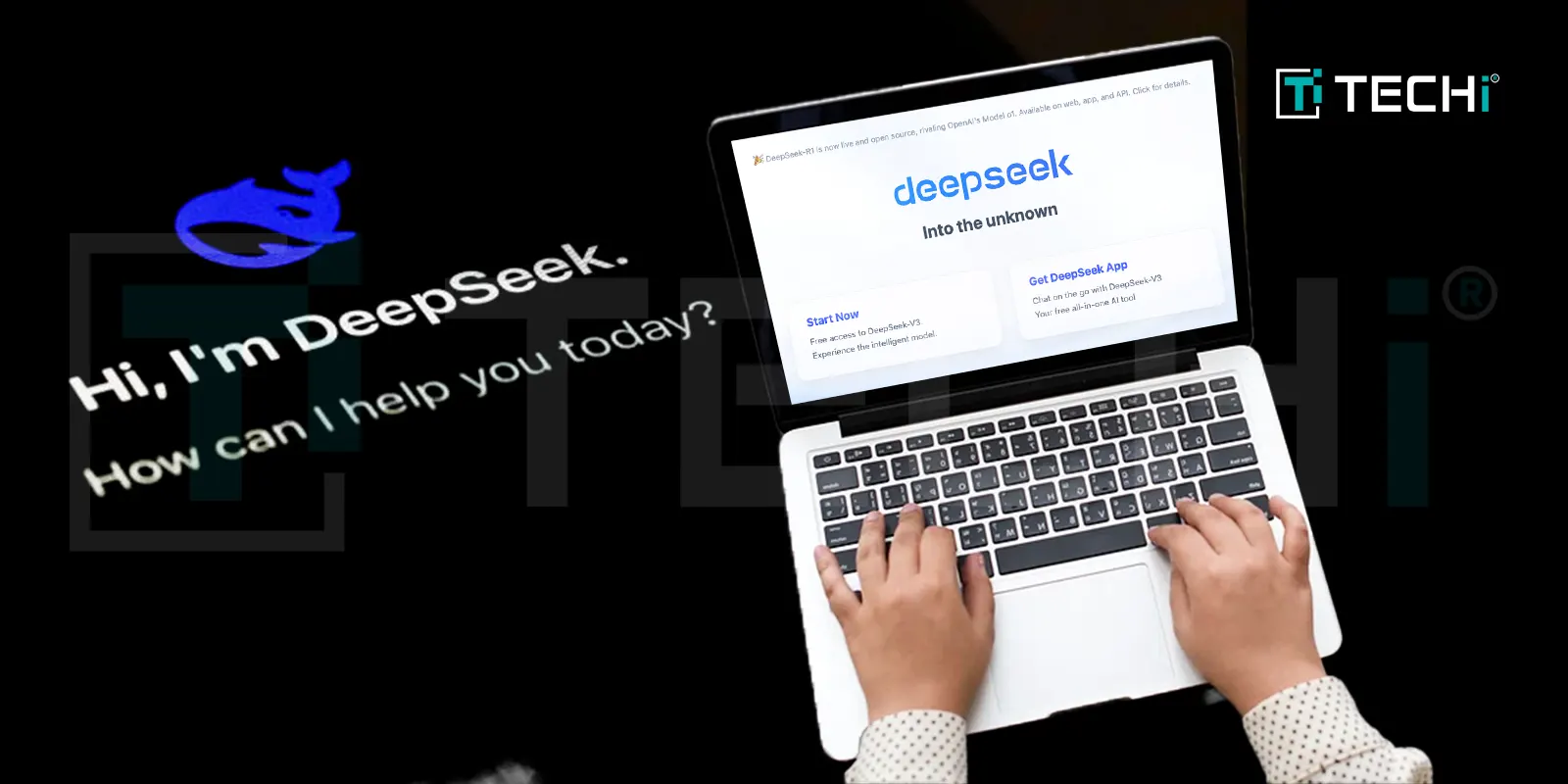
Microsoft has announced that it will support the DeepSeek R1 AI model on its Azure cloud platform, GitHub tools, and Windows 11 Copilot+ PCs. Simply it means that you and the developers will be able to run DeepSeek R1 directly on their laptops without the need for high-powered cloud servers.

DeepSeek R1 will be ready & optimized for different PC processors:

  • Qualcomm Snapdragon X devices will be served first.
  • Intel Lunar Lake PCs will be the second
  • AMD Ryzen AI 9 processors will be on the third number on the list.

Developers will also get smaller versions of DeepSeek models (7B & 14B) through Microsoft’s AI Toolkit.

Why does it hold importance?

Microsoft is expanding its AI strategy.

Microsoft has three basic agendas behind this move:

  • Go beyond OpenAI (which powers ChatGPT & Microsoft Copilot) by integrating more AI models like DeepSeek.
  • Users will be given more AI choices grabbing a major audience.
  • Reduces Microsoft’s reliance on a single provider.

AI that runs directly on your laptop

AI models require cloud servers. DeepSeek gives the edge of running locally on powerful PCs. To run AI models on-device, 

Windows 11 Copilot+ PCs must have:

  • 256GB storage
  • 16GB RAM
  • An NPU with 40 TOPS of power (Neural Processing Unit).

Check these boxes, and you’re good to go.

DeepSeek is gaining traction (Smart moves as usual)

Low-cost models optimized for less powerful chips, DeepSeek competes with OpenAI by following this agenda. This smart move can make AI more accessible for businesses & developers. Is it as easy as it may sound? No, it is not.

The controversies behind:

  1. DeepSeek is facing the allegation of stealing intellectual property rights from U.S. tech companies (or tech giants)
  2. DeepSeek’s authenticity is a question. Microsoft is finding signs of distillation (where one AI learns from another) in DeepSeek whether it copied OpenAI’s technology or not.
  3. DeepSeek’s data servers are in China. A big question mark on data security and government control.
  4. Privacy is a priority. Some U.S. users might avoid DeepSeek due to privacy risks.
  5. DeepSeek censors some responses. However, users are already finding ways to jailbreak the AI model and bypass restrictions.

What are Netizens saying?

You may wonder what all the excitement about DeepSeek R1 is about. An excellent and easy way to find out is to install DeepSeek R1 locally on your PC. DeepSeek radically changes the AI landscape. DeepSeek R1 can be installed and up and running under 10 minutes, really! It’s honestly that simple. John Zoetebier in his recent post about DeepSeek on LinkedIn. DeepSeek is shaking up the AI industry, and Microsoft’s quick support could be a game-changer.

  • Will this move help Microsoft to let it free from any dependence?
  • Or do legal & security issues make DeepSeek too risky to support?

Stay tuned to learn more about who will rule the upcoming AI world.

Read More: Tim Cook praises China’s DeepSeek AI Strategy

Helion has secured an investment of $425 Million to seal the Fusion Power Deal with Microsoft

I have grown up watching many sci-fi movies, and trust me when I say Helion’s fusion reactor is no less than a showstopper reactor, which is worth fighting for in the world of sci-fi superhero films. Helion’s approach of thinking outside the box and creating a fusion reactor asserts the rise of the Tech Industry and an innovative future. Helion, a fusion power startup, has secured an investment of $425 million to support the construction of a fusion reactor for Microsoft. Helion, supported by Sam Altman, received $425 million in Series F funding, raising its value to $5.25 billion. The probability is to generate and supply electricity for Microsoft by 2028, which would be a significant leap from its competitors in the fusion market.

Polaris and Helion’s other innovative approaches:

Fusion Energy’s innovative approach assures a cost-effective solution. Helion’s seventh prototype, Polaris, is located within a 27,000-square-foot facility in Everett, Washington. If Helion’s reactor was a superhero, I believe Polaris would be a perfect name for him. In order to achieve its ambitious 2028 goal, Helion will need to speed up the commercial-scale power plant. The startup uses a new reactor called a Field-reversed configuration reactor, which does not work with steam turbine systems, to directly convert fusion energy into electricity. This unusual design may allow for 50 megawatts of energy per reactor. Helion has a short timetable for the engineering challenges, such as scaling up the pulse-power system. CEO David Kirtley said several years of planning were needed to secure key components such as capacitors and semiconductors.

Strategies for a new paradigm:

The primary funding will increase the company’s production and further accelerate the development of the reactor. Helion’s bold strategies are causing a stir in the fusion market, as Helion’s technologies could provide innovative and advanced ways to convert energy production into a new paradigm. Helion’s daring approach with high ambitions for the future causes the company’s technology to maintain the potential to revolutionize energy production by providing clean and efficient power at a lower cost.

Read More: Microsoft’s Relationship with OpenAI Cracked When it Hired Mustafa Suleyman

Microsoft’s Relationship with OpenAI Cracked When it Hired Mustafa Suleyman, Rival Marc Benioff Says

Reportedly, friction has arisen anew between the technology giants Microsoft and OpenAI, whose partnership in the past has broken new ground in artificial intelligence. According to Marc Benioff, the Salesforce CEO, Microsoft hit a snag in negotiating a ‘narrow moment’ after it hired Mustafa Suleyman, DeepMind co-founder, and currently CEO of Inflection AI, a key rival in generative AI.

Microsoft’s welcome to Suleyman is aligned with the company’s aggressive move to boost AI adoption, especially in generative and conversational AI technologies. But this seems to have rattled OpenAI, which has been closely collaborating with Microsoft in various joint ventures, including Azure OpenAI Service and the integration of GPT technology into Office 365 and Bing among other Microsoft products.

Although Suleyman’s vast experience of devising sophisticated AI systems might therefore settle under ‘strategic acquisition,’ it still raises issues regarding Microsoft’s general strategic direction. By attracting a key individual from an anti competitor company, Microsoft could be setting a marker that indicates it wants to develop more independent AI capabilities rather than rely solely on OpenAI.

Benioff’s comments are indicative of the duality within the technology space, which has partnerships but competes at the same time. Thus, alongside this loose partnership of Microsoft and OpenAI, such highly promising breakthroughs are being ushered in but may not necessarily uphold a positive dynamic from here onward.

The two companies are yet to comment on how the hiring of Suleyman by Microsoft would impact their relationship. However, industry experts believe that this development could catalyze further alignments and realignments in strategic partnerships. Today, the stakes are even higher for tech titans as AI technology changes rapidly and competitive boundaries shift.

This latest move underlines just how competitive the AI race is, where alliances can be tested as companies seek to secure their positions at the forefront of innovation.

Read More: Meet Operator: OpenAI’s AI Tool That Could Take Over Your Computer Tasks

Microsoft Sets Up CoreAI Division for AI Development

Establishment of CoreAI

Microsoft announced a new engineering division, CoreAI – Platform and Tools to accelerate AI infrastructure and software development. The new body epitomizes a renewed focus within the company on AI through all platforms.

Headship and Structure

Jay Parikh, ex-VP at Meta, will head the division, which includes vast experience in data centre operations and technical infrastructure. He will report to Satya Nadella directly, as he has just joined Microsoft. CoreAI embraces teams from both Microsoft Developer Division and AI Platform, plus some portions of the Office of the CTO.

Microsoft’s AI Vision

In their internal memo, Nadella spoke about the company’s efforts to build “model forward” applications that address changes to the various categories of technology. Above all, this attests that the company ceaselessly aims to hold the lead in innovative advancement in artificial intelligence.

Strategic Impact

CoreAI is such a move that positions Microsoft to liquidate both its areas of AI tools and other assets in cloud computing and advanced applications. Restructuring ensures that staying on top of AI remains a high priority for the company overall so that it can keep up with developments at such a quick pace.

click here to read: Microsoft Files Suit Against Hundreds for Abuse of Az