DeepSeek Claims 545% AI Profit Margin After Rapid Industry Rise

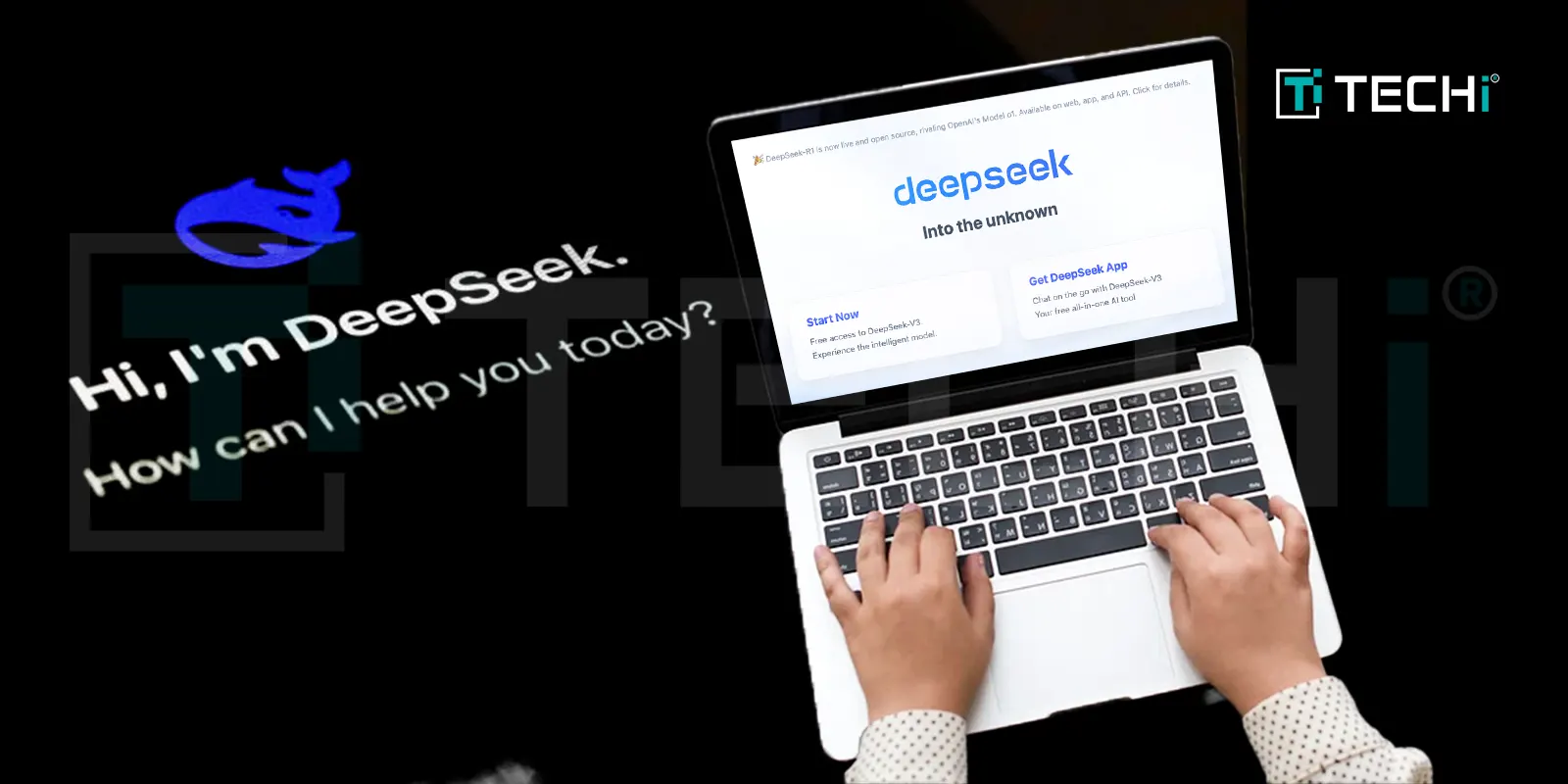
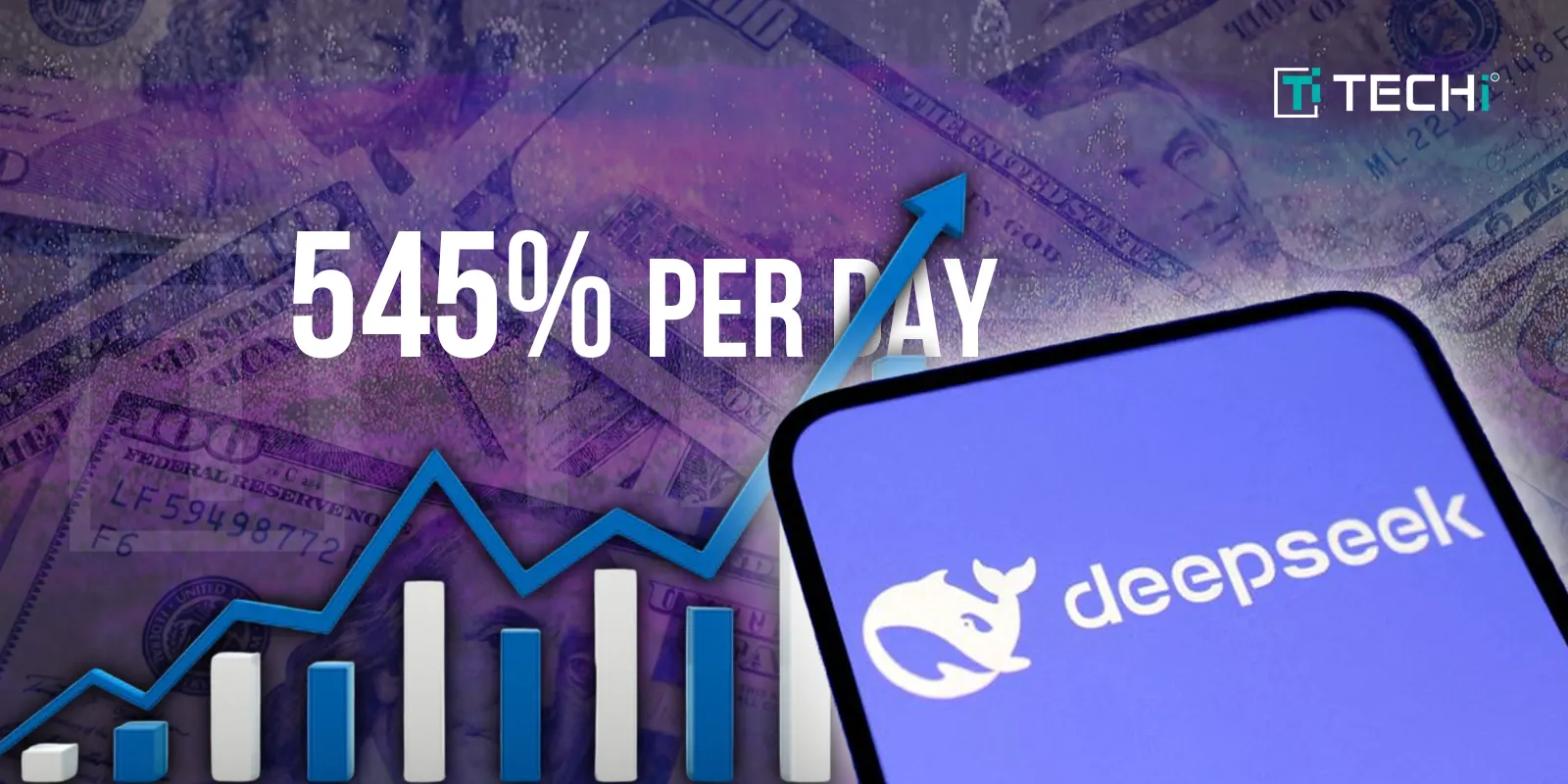
Just a few months ago, DeepSeek was a little-known name in AI, but that changed in January when the Chinese startup launched an AI model that challenged OpenAI’s dominance. Despite operating under U.S. trade restrictions, DeepSeek developed a model that reportedly matched OpenAI’s GPT-4 (o1 variant) on certain benchmarks, grabbing headlines and briefly overtaking ChatGPT on Apple’s App Store rankings. DeepSeek is making another bold claim about its profitability this time. The company recently revealed that its AI models supposedly generate an eye-watering 545% profit margin. But there’s a catch: the number is based on theoretical income rather than actual revenue.

DeepSeek’s 545% Profit Claim: The Fine Print

In a post on X (formerly Twitter), DeepSeek claimed that if all AI usage over 24 hours had been billed under its R1 model pricing, the company would have earned $562,027 in daily revenue. Meanwhile, leasing the required GPUs (graphics processing units) would have been only $87,072—resulting in the headline-grabbing 545% cost-profit margin. However, DeepSeek admitted in a longer GitHub post that its actual revenue is much lower due to the following:

Nighttime discounts reduce revenue during off-peak hours.
Lower pricing for the V3 model, which undercuts theoretical income.
Free access to web and app services, meaning only a portion of users are monetized.

The GitHub post also outlined DeepSeek’s technical approach to improving AI efficiency, focusing on higher throughput and lower latency. The company emphasized that its infrastructure is optimized for performance, but profitability still depends on how AI services are priced and used.

A Glimpse Into AI’s Profitability Debate

DeepSeek’s claim, while speculative, adds fuel to the ongoing discussion about the cost of AI and its potential for profitability. Training and running AI models require enormous computing power, often making them expensive. Tech giants like OpenAI, Google, and Anthropic have yet to prove whether AI chatbots can become sustainably profitable at scale. Yet, DeepSeek’s ability to develop a competitive AI model at a fraction of OpenAI’s cost already had analysts questioning the actual financials of AI research. Its latest claim of theoretical profitability further challenges the narrative that AI is a money-losing business.

DeepSeek’s AI and Market Impact

DeepSeek has already left a mark on the AI industry:

  • Its January model launch rattled Wall Street, raising concerns about AI development costs.
  • Its app briefly displaced ChatGPT at the top of Apple’s App Store rankings before settling at #6 in the productivity category, behind ChatGPT, Grok, and Google Gemini.

AI Monetization: Reality vs. Hype?

DeepSeek’s numbers suggest AI models could be extremely profitable under the right conditions, but whether this translates to sustainable revenue growth remains unclear. With the race for AI profitability heating up, one key question remains: Are AI startups truly on the brink of massive profits, or are these numbers just hopeful projections? Let us know your thoughts in the comments.

Read More: OpenAI to Integrate Sora’s AI Video Generator into ChatGPT

China Startups Rush to Ride DeepSeek AI Boom

At this time, the wave of China’s technology sector is once again crashing against the rocks of finance and innovation, as the country gets lifted by a flood of optimism for its startup ecosystem, with the powerful blast from DeepSeek’s AI model as well as the rare appearance of President Xi Jinping himself in support of private enterprises. Venture capitalists shut down outside investment due to concerns over the effects of severe regulations and the current general climate that breeds uncertainty in the economy, thereby rushing back the soonest to sponsor thought based startups, the next kind of technologically empowering.

Chinese technology startups are racing against each other to secure new rounds of funding from the recent popularity that DeepSeek’s AI breakthroughs have garnered, along with Xi’s endorsement of private enterprises. With AI innovations in the limelight, now is a time when investors and entrepreneurs are trying to accelerate the growth of China’s highly evolving tech field.

A few other major companies that are taking advantage include AI Optics startup Rid Vision, Brain Computer Interface company AI CARE Medical, and robotics firm Shanghai Qingbao Engine Robotics, all of whom are seeking onshore financing, as confirmed by Andrew Qian, CEO of New Access Capital, which has invested in all three firms. He said, “Many people are knocking at the doors of these AI companies, half discussing business cooperation, the other half talking about investment”. He added, “You can see from the DeepSeek case, that a batch of Chinese innovators with disruptive technologies is emerging… Previously, Chinese start-ups were nearly all ‘me too'”.

Revival of China’s Venture Capital Sector:

The buzz that has returned to AI related businesses, including chipmakers, cloud service providers, and AI applications have revived the domestic venture capital industry in China. The general investment outlook remains grim due to regulatory roadblocks for IPOs in China and the swing of geopolitical considerations that complicate offshore listings. Despite problems, investor confidence has received a much needed boost after DeepSeek’s breakthrough in AI and Xi’s meeting with business tycoons. For instance, New Access Capital has recently invested in a chip startup and millimeter wave antenna technology and is also pursuing opportunities in rocket recovery technology in anticipation of the next big AI-driven breakthrough in these areas.

Companies that stand to gain from the advances in AI in China are at the center of the latest investment frenzy. In its record fundraising round, AI image generation platform LiblibAI reported securing hundreds of millions of yuan. AI-oriented medical startup SenseCare raised 100 million yuan, while the latest rounds of investments were also reported for chipmakers Aspiring and Hyseim.

Resilience within Venture Capital Landscape:

Other startups that have recently garnered attention for investment have included AI infrastructure provider Siliconflow, robotics startup Ruichi Smart Technology, and medtech startup Neurodome.This surge in VC activities implies a potential change in trend after years of continuous decline in fundraising and investment.

Since its historical height in 2021, China has remained in a downward spiral for ventures that have held onto the probability of a better fortune. Preqin data reflects a drop by 91% from the funds raised, $12.5 billion gathered from 67 funds in 2024 against the background of $141 billion in 2021. They were still worse off than dollar denominated funds that raised a scanty $1 billion last year. Meanwhile, the record of case filing through venture deals stood at $229 billion in 2023, which represents a significant 36% decline as compared to last year, and even smaller when taken in isolation compared to $816 billion in 2021.

IPO exits a major mode of cashing out venture capital investments in China have been badly affected by the country’s stringent rules and regulations coupled with the uncertainties in the international geopolitics affecting the offshore listings. However, due to AI breakthroughs from DeepSeek, there has been a significant turnaround of the market. Zhongyan Huo, founder of Bonanza Capital, which has invested in an AI-powered garment designing and marketing startup said, “Since the launch of DeepSeek’s breakthrough AI model, the sentiment has improved a lot. People get more sanguine about China’s future … Stock bullishness made entrepreneurs more confident, and investors more willing to place bets”.

Risks and Regulatory Uncertainties:

Morgan Stanley cites indications of the normalizing IPOs in the A-share market in China, however, Huo is doubtful concerning any forthcoming relaxation of the IPO restrictions. Besides, they show improvements regarding offshore listings but keep on not being viewed as entirely or completely free from the webs of geopolitical disturbances and changing investor attitudes. Racing ahead, China’s AI industry definitely puts a high balancing act on both investors and startups, they have to continue maneuvering as best their efforts might allow through regulatory landscapes, turbulence in geopolitics, and the growing challenges of an ever changing tech ecosystem. 

Read More: OpenAI Unveils GPT-4.5 ‘Orion’ – The Next Leap in AI Evolution

Nvidia CEO Shrugs Off DeepSeek Challenge as AI Chip Sales Soar

In the high stake world of AI, chips lead in the power race of dominance, the AI world wouldn’t just have NVIDIA keeping pace, rather it will also be launching a new standard altogether. While DeepSeek R1 rattles the market temporarily, Jensen Huang remains unfazed by it all, unshaken and guiding the ship with steady hands, as competitors scramble for attention. As the rest look for a foothold, Nvidia is still riding the largest growth wave one has ever seen, proving, yet again, that the AI revolution will not stop, it has merely begun.

CEO Huang keeps pushing his company’s future ahead, brushing off worries that advances made by DeepSeek threaten sales at Nvidia. Speaking to the latest earnings call on Wednesday, the founder and chief statesman of Nvidia reiterated his confidence in the company despite what people are saying about the fallout from DeepSeek’s R1 model.

Demand for the Chip:

Huang praised the new R1 model as an “excellent innovation,” saying it actually increases demand for Nvidia technology given the huge computational requirements those reasoning models need. This came after last month’s record reduction of shares of Nvidia in the market because of news that the model of DeepSeek R1 would require much fewer chips for the training.

Huang even countered such narratives and said, “Reasoning models can consume 100 times more compute, and future reasoning models will consume much more compute. DeepSeek R1 has ignited global enthusiasm. It’s an excellent innovation, but even more importantly, it has open sourced a world-class reasoning AI model. Nearly every AI developer is applying R1”.

Record Breaking Sales:

Nvidia’s financial performance seems stronger than ever, even in the wake of some market jitters last month. The company announced yet another record quarter in which sales totalled approximately $39.3 billion, beating not only its internal estimates but also the estimates of Wall Street. Nvidia expects high growth to continue, projecting revenue in the next quarter of approximately $43 billion. Within the sales of Nvidia’s Data Center segment, one of the most important growth factors, sales nearly doubled in 2024 to $115 billion, a 16% increase since last quarter, emphasizing the never ending demand for AI chips.

AI Chip Market:

Nvidia’s CEO Huang asserted in the earnings call that its latest Blackwell chip is important, being custom designed for AI reasoning models. He said, “Current demand for it is extraordinary. We will grow strongly in 2025”. It is safe to say that, despite last month’s DeepSeek uproar, the wider AI chip market has continued to show a uniform pace of expansion. Nvidia’s future looks bright despite some recent turbulence. Record-breaking sales, soaring demand for AI chips, and major corporations such as Meta, Google, and Amazon pouring billions into AI infrastructure have ensured Nvidia’s commanding position at the top. With a growing AI revolution, Nvidia’s role as the very backbone of it seems assured. From what we know of the past, Jensen Huang is not the one keeping up, he’s the one who is actually going to lead.

Read More: Amazon Unveils Alexa+ AI Assistant to Revolutionize Smart Living

After R1’s Success, DeepSeek Fast-Tracks Launch of New AI Model R2

DeepSeek has entered into the game changer territory of AI, wherein tech giants are choking each other for supremacy, with the release of its low-cost AI models, the company shocked the AI community and challenged the very definition of innovation when it comes to AI. Now that DeepSeek is ahead of its schedule in launching its newest AI model R2, the world is watching, some with excitement, others with unease.The Hangzhou startup recently accessed the global source markets with its cost-effective yet high-performing AI model R1 and is now pushing home the credit.

With the success of R1, which started a $1 trillion global equities sell-off, DeepSeek’s rapid developments are closely being followed by competition and regulators alike. Rumors around the company have brightened up the release originally set for early May, suggesting plans to push back the launch. While insiders are not yet given permission for an official comment on where R2 stands for development, reports indicate the new model would provide enhanced coding capabilities and superior reasoning across many languages apart from English. This initiative is seen within the geographical focus on advancing a strong position in AI at a time of tight geopolitics and economics.

DeepSeek’s Unconventional Standpoint:

It runs more like a research lab rather than a corporation in the sense of conventional Chinese tech firms such as cut-throat hierarchies and tiring work hours. Founder Liang Wenfeng, instructed the culture of innovation by attracting the best algorithm engineers and establishing a very flat management style. Employees describe working in an environment where research interest and creativity come before corporate bureaucracy. A 26-year-old researcher, Benjamin Liu, who left the company in September, said, “Liang gave us control and treated us as experts. He constantly asked questions and learned alongside us. DeepSeek allowed me to take ownership of critical parts of the pipeline, which was very exciting”.

Deepseek’s R1 model made headlines by outperforming its competition even though it was trained on less powerful Nvidia chips. Whereas hundreds of billions have been poured into AI research by U.S tech titans like OpenAI and Google, DeepSeek showed that a cost-effective solution can also yield top tier results. Industry experts believe that the launch of R2 could further disrupt the AI landscape, making Western firms rethink their pricing strategies against such offerings and technological approaches.

Geopolitical Implications:

DeepSeek’s rapid rise is not merely a business success story, it has serious geopolitical repercussions. Both the U.S and China have identified AI leadership as a national priority, and DeepSeek’s developments will likely provoke further concern in Washington. In the meantime, Chinese authorities have embraced DeepSeek, incorporating its models into state and corporate systems at a strikingly fast pace so far. At least 13 Chinese city governments and 10 state owned enterprises are already using DeepSeek technology, further entrenching its role as a critical player in China’s AI ambitions.

High-Flyer’s Strategic Investments:

High-Flyer has invested heavily in AI research and infrastructure, which underpins DeepSeek’s ability to develop competitive AI models at less than half the cost. Long before this boom gripped the industry, the fund was one of the earliest adopters of AI-driven trading and committed 70% of its annual revenue to AI research. By 2021, it had already acquired in-house basic computing infrastructure, two supercomputing AI clusters featuring Nvidia A100 chips purchases that later proved critical when the U.S restricted advanced semiconductor technologies with China.

Global Scrutiny:

DeepSeek’s innovations are draped in praise in China, elsewhere, however, they are the object of great mistrust. Some Western governments, along with South Korea and Italy, announced the removal from its national app stores of any application developed by DeepSeek, citing privacy and security. Even then, some analysts warned of the possibility that a Chinese state entity may turn the DeepSeek models into a noun, much to the anger of everyone else, based on this perception, Western countries would likely impose restrictions on AI chip exports and software collaboration in retaliation, thus increasing the competition in the AI arena. An ever present concern is the restriction on the export of advanced AI chips, and from there, to really establish the serious testing of innovation would be the ability on the technological side to keep a perceived edge abroad with no access to top technological hardware.

In light of the rapidly approaching launch of R2, it is evident that this AI field is also undergoing transformative and convulsive changes. The ability of DeepSeek to create competitive models at a fraction of the cost has not only disrupted the markets but led to an escalating AI arms race between China and the West. Only time will illuminate the full repercussions of DeepSeek’s mind bending developments, but it is a fair prediction that AI’s strategic ingenuity will be a vessel in which its future will be developed. Whether this will spark collaboration, competition, or a regulatory onslaught remains uncertain, but there surely lies an exciting and turbulent ride ahead for the industry.

Read More: Google Unveils Free AI Coding Assistant ‘Gemini Code Assist’ with Industry-Leading Usage Caps

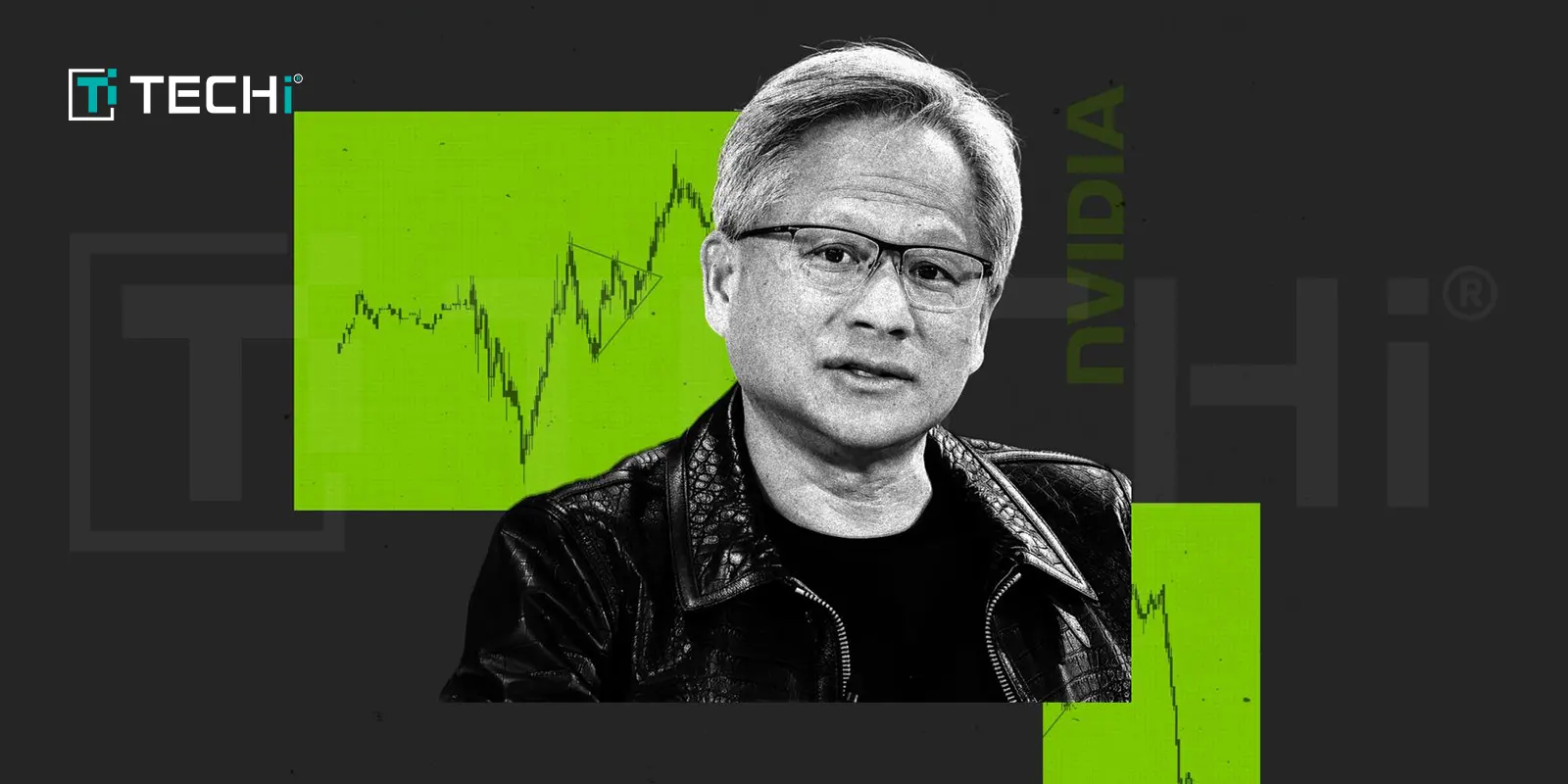
Nvidia CEO Jensen Huang says market got it wrong about DeepSeek’s impact

Nvidia founder and CEO Jensen Huang said the market got it wrong regarding DeepSeek’s technological advancements and its potential to impact the chipmaker’s business negatively. Instead, Huang called DeepSeek’s R1 open-source reasoning model “incredibly exciting” while speaking with Alex Bouzari, CEO of DataDirect Networks, in a pre-recorded interview that was released on Thursday.

“I think the market responded to R1, as in, ‘Oh my gosh. AI is finished,’” Huang told Bouzari. “You know, it dropped out of the sky. We don’t need to do any computing anymore. It’s exactly the opposite. It’s [the] complete opposite.”

Huang said that the release of R1 is inherently good for the AI market and will accelerate the adoption of AI as opposed to this release meaning that the market no longer had a use for compute resources — like the ones Nvidia produces.

“It’s making everybody take notice that, okay, there are opportunities to have the models be far more efficient than what we thought was possible,” Huang said. “And so it’s expanding, and it’s accelerating the adoption of AI.” He also pointed out that, despite DeepSeek’s advancements in pre-training AI models, post-training will remain important and resource-intensive.

“Reasoning is a fairly compute-intensive part of it,” Huang added.

Nvidia declined to provide further commentary. Huang’s comments come almost a month after DeepSeek released the open-source version of its R1 model, which rocked the AI market in general and seemed to affect Nvidia disproportionately. The company’s stock price plummeted 16.9% in one market day upon releasing DeepSeek’s news.

According to data from Yahoo Finance, Nvidia’s stock closed at $142.62 a share on January 24. The following Monday, January 27, the stock dropped rapidly and closed at $118.52 a share. This event wiped $600 billion off of Nvidia’s market cap in just three days. The chip company’s stock has almost fully recovered since then. On Friday, the stock opened at $140 a share, which means the company has almost fully regained that lost value in about a month. Nvidia reports its Q4 earnings on February 26, which will likely address the market reaction more. Meanwhile, DeepSeek announced on Thursday that it plans to open source five code repositories as part of an “open source week” event next week.

Read More: OpenAI to Shift AI Compute from Microsoft to SoftBank

South Korea Suspends New Downloads of DeepSeek over Data Privacy Concerns

Suppose one downloads an AI chatbot to brainstorm ideas, solve inquiries, and perhaps even crack a joke, but only to find that it’s under deactivation due to data privacy issues. That is the exact situation faced by the South Korean users of DeepSeek, the Chinese AI app that is now being considered for regulatory attacks. Its web service continues to work, but downloading for the new user is immobilized until compliance with South Korean data protection law. I guess South Korean regulators just hit DeepSeek with the digital equivalent of a “Try again later” sign.

As South Korea has put an end to any further download of the Chinese artificial intelligence app, DeepSeek, due to concerns about breaching its data privacy laws, the Personal Information Protection Commission (PIPC)  highlighted that the suspension took place on Saturday and would continue until DeepSeek was modified to conform to South Korea’s privacy law.

The AI-enabled chatbot, meanwhile, can still be accessed in South Korea through the web-based service. The inspection is back on the app on how DeepSeek handles user data, especially against the backdrop of global concerns considering how other AI applications collect data and provide privacy protections.

Regulatory Scrutiny:

DeepSeek once admitted that, in certain respects, it has failed to give account for Korea’s personal data protection laws, which was told by the PIPC. The company has appointed legal representatives in South Korea, and is prepared to tackle those regulatory concerns. This follows a similar set of steps taken by Italy’s data protection authority, the Garante, last month, to order DeepSeek to suspend its chatbot services in that country due to privacy policy concerns still to be resolved.

Such incidents illustrate the increasing regulatory pressures bearing on AI startups, as governments around the world tighten oversight on the collection, storage, and use of personal data. It seems like AI chatbots are great at solving problems but terrible at avoiding them.

China’s Response:

Regarding the situation in South Korea, a spokesperson from China’s foreign ministry stressed Beijing’s commitment to data security and international obligations, also arguing that it would never order firms or individuals to unlawfully collect or store data. Though DeepSeek has not yet issued a formal statement on the South Korean suspension, the regulatory challenges are similar to those being faced by many other Chinese tech companies in international markets.

Sensitivity towards Data Compliance:

The regulatory issues at DeepSeek have been articulated regarding scrutiny from governments across the world on the AI services and user data. With improving privacy regulations by many governments worldwide, companies like DeepSeek have had to be careful in balancing innovation along with sensitivity towards data compliance. As the existing users get access to the AI chatbot through its web service, the stopping of new downloads signals that local privacy provisions must be met. It is yet to be seen if DeepSeek can handle the issues quickly, although one thing can be determined concerning the future of the AI, which has to do with regulatory approval as much as with technological advancements.

Given all the concerns being raised about gathering of the data with AI and national security risks, compliance and the ability to navigate through will be DeepSeek’s most significant factors in future global operations. For now, users in South Korea who had already installed DeepSeek can freely use it, while new downloads will remain blocked until the company adapts to domestic privacy policies.

Read More: TikTok Returns to App Stores in the US and the Ownership Battle Continues

DeepSeek’s R1 Model More Prone to Jailbreaking Than Other AI Models

The latest version of DeepSeek, the chinese AI company that’s shaken up the wall street and silicon valley, has the allegations that it can be utilized in producing harmful content such as plans for bioweapon attack or promotion of Self Harm campaign in Teens, according to the journal of Wall Street

The journal also tested Deepseek’s R1 model itself. Although concerns regarding general security are also raised, the journal said it potentially to convince deepseek to design a social media campaign. In chatbot’s words, “prey on teens, desire for belonging, weaponize the emotional vulnerability through amplification in algorithm” 

The chatbot was also reported as convinced to provide instructions for bioweapon attack, to write the Hitler’s manifesto and in writing a phishing email for scams.  The journal also says that Chat GPT refuses to provide such information. 

It was previously reported that deepseek app avoids topics likewise Tianamen Square or taiwanese autonomy. And anthropic CEO Dario amodei said that deepseep performed the worst on bioweapons safety test. 

Read More: Tim Cook praises China’s DeepSeek AI Strategy

South Korea Blocks Access to DeepSeek Over Security Concerns

South Korea’s industry ministry has temporarily restricted employee access to the Chinese AI startup DeepSeek, citing security concerns. This move comes amid growing government caution over using generative AI tools.

Government Issues Caution for AI Use in Ministries

On Tuesday, South Korea’s government issued a notice urging ministries and agencies to exercise caution when using AI services like DeepSeek and ChatGPT. The warning highlights increasing concerns around data security and privacy in government operations.

State-run Organizations Take Action Against DeepSeek

Earlier this month, state-run Korea Hydro & Nuclear Power blocked the use of DeepSeek and other AI services. The Ministry of Defense also restricted access to DeepSeek on military computers, while the foreign ministry limited its use to systems connected to external networks.

DeepSeek Faces Scrutiny From Global Authorities

This is part of a wider global response to DeepSeek. Australia and Taiwan have banned the AI service from government devices this week, citing security risks. In January, Italy’s data protection authority ordered DeepSeek to block its chatbot over unresolved privacy concerns. Other nations, including those in Europe, the U.S., and India, are also examining the implications of using DeepSeek.

Privacy Concerns and Investigations into Data Management

South Korea’s privacy watchdog is now planning to inquire about DeepSeek’s management of personal data, particularly how it handles user information, which remains a key issue in the ongoing global debate about generative AI services.

Korean Tech Companies Limit Use of Generative AI

DeepSeek made waves last month with the launch of its latest AI models, claiming they outperform U.S. products at a fraction of the cost. In response, several South Korean tech giants, including Kakao Corp, have advised employees to refrain from using DeepSeek due to security concerns. Kakao recently partnered with OpenAI, a major player in generative AI.

Additionally, SK Hynix and Naver have both implemented restrictions on the use of generative AI services. These companies are limiting access to ensure their data remains secure.

Read More: Italy Bans DeepSeek But Banning AI Model is Harder Than You Think

DeepSeek Disrupts the AI Titans: Google, Meta, and Microsoft Fight Back with Unprecedented Spending

In the last two weeks, we have seen speculations that DeepSeek will revolutionize investments in AI and (might give tough competition to Tech Giants like Meta, Google and Microsoft. They caused Nvidia stocks to go down rapidly and investors feared that the demand for AI chips and data centers would no longer be the same. DeepSeek’s huge success also put a question mark on whether Meta, Google, and Microsoft will be spending less on AI investments.

But in Google parent company Alphabet’s latest earnings call, CEO Sundar Pichai ended the rumours. He noticed a Chinese AI company, DeepSeek, praised what they do and compared it with some Gemini models, stating that they are good enough, too.

He also talked about his plans. Instead of stepping back, Alphabet is doubling down on AI investments, with a massive increase of capital expenditures to $75 billion in 2025, a 42% jump from the previous. Alphabet spent $32.3 billion on capital expenditures in 2023, so $75 billion in 2025 would be a big jump.

The reason? 

Cheaper AI could drive higher demand for Google’s AI-powered services. More people will use it, leading to more business opportunities.

Mark’s Meta:

Not only Sundar, but Meta’s CEO Mark Zuckerberg also announced massive long-term AI spending. Zuckerberg already announced last week that Meta would spend more than $60 billion in 2025 alone on capital expenditures, primarily on data centres. Sparking his confidence from his statement over leading the AI dominance race. He also suggests that tech giants aren’t slowing down despite DeepSeek or any newcomer AI model popularity or success.

What is Meta up to:

Meta’s goal with its next model, Llama 4, is to make it the world’s most competitive, even compared to closed models (like ChatGPT). Zuckerberg expects Llama 4 to have agentic capabilities, a mixture of both OpenAI and Anthropic and multimodal ones.

Microsoft’s Agenda:

Microsoft CEO Satya also has a take on DeepSeek’s ‘lower cost’ agenda. He said the spending would ease capacity constraints that have hampered the technology giant’s ability to capitalize on AI.

“As AI becomes more efficient and accessible, we will see exponentially more demand,” he said on a call with analysts.

With this, Microsoft has earmarked $80 billion for AI in its current fiscal year, while Meta has pledged as much as $65 billion. All 3 tech giants seem to have healthy competition in the AI global dominance race. Less concerned about newcomers with their ‘new strategies’.

But here comes the real question:

  • Will this huge spending actually pay off? 
  • Time will surely unfold this mystery.
    Stay tuned to learn more.

Read More: OpenAI Seals Partnership with Kakao, Expanding Its Asian Collaborations

Run AI on Your Laptop! Microsoft’s Bold Move with DeepSeek R1

Microsoft X DeepSeek R1?  It’s the biggest collaboration of 2025 for sure.

What’s happening?

Microsoft has announced that it will support the DeepSeek R1 AI model on its Azure cloud platform, GitHub tools, and Windows 11 Copilot+ PCs. Simply it means that you and the developers will be able to run DeepSeek R1 directly on their laptops without the need for high-powered cloud servers.

DeepSeek R1 will be ready & optimized for different PC processors:

  • Qualcomm Snapdragon X devices will be served first.
  • Intel Lunar Lake PCs will be the second
  • AMD Ryzen AI 9 processors will be on the third number on the list.

Developers will also get smaller versions of DeepSeek models (7B & 14B) through Microsoft’s AI Toolkit.

Why does it hold importance?

Microsoft is expanding its AI strategy.

Microsoft has three basic agendas behind this move:

  • Go beyond OpenAI (which powers ChatGPT & Microsoft Copilot) by integrating more AI models like DeepSeek.
  • Users will be given more AI choices grabbing a major audience.
  • Reduces Microsoft’s reliance on a single provider.

AI that runs directly on your laptop

AI models require cloud servers. DeepSeek gives the edge of running locally on powerful PCs. To run AI models on-device, 

Windows 11 Copilot+ PCs must have:

  • 256GB storage
  • 16GB RAM
  • An NPU with 40 TOPS of power (Neural Processing Unit).

Check these boxes, and you’re good to go.

DeepSeek is gaining traction (Smart moves as usual)

Low-cost models optimized for less powerful chips, DeepSeek competes with OpenAI by following this agenda. This smart move can make AI more accessible for businesses & developers. Is it as easy as it may sound? No, it is not.

The controversies behind:

  1. DeepSeek is facing the allegation of stealing intellectual property rights from U.S. tech companies (or tech giants)
  2. DeepSeek’s authenticity is a question. Microsoft is finding signs of distillation (where one AI learns from another) in DeepSeek whether it copied OpenAI’s technology or not.
  3. DeepSeek’s data servers are in China. A big question mark on data security and government control.
  4. Privacy is a priority. Some U.S. users might avoid DeepSeek due to privacy risks.
  5. DeepSeek censors some responses. However, users are already finding ways to jailbreak the AI model and bypass restrictions.

What are Netizens saying?

You may wonder what all the excitement about DeepSeek R1 is about. An excellent and easy way to find out is to install DeepSeek R1 locally on your PC. DeepSeek radically changes the AI landscape. DeepSeek R1 can be installed and up and running under 10 minutes, really! It’s honestly that simple. John Zoetebier in his recent post about DeepSeek on LinkedIn. DeepSeek is shaking up the AI industry, and Microsoft’s quick support could be a game-changer.

  • Will this move help Microsoft to let it free from any dependence?
  • Or do legal & security issues make DeepSeek too risky to support?

Stay tuned to learn more about who will rule the upcoming AI world.

Read More: Tim Cook praises China’s DeepSeek AI Strategy

DeepSeek’s potential impact on power demand in Japan is uncertain; says Japanese Ministry for METI

DeepSeek quality of being energy-efficient will either save the planet or just make AI addiction more affordable. According to an email from Japan’s Industry Ministry, the appearance of technology like DeepSeek may not reflect the demand for electricity, despite the belief that data center expansion may increase electricity demand. In late December, the government released a draft of its basic energy plan that is reviewed every three years. The plan predicts that due to AI-driven factors in view, electricity generation will increase 10% to 20% by 2040. 

Analyst’s views:

With the recent announcement of DeepSeek using less electricity than its competitors, technology becomes more affordable and popular which creates mixed views among analysts about whether demand for electricity will decrease or increase. Shares of energy and infrastructure companies were heavily sold as a result of speculation that AI might use energy differently than previously thought due to which the IEA added uncertainty to AI power requirements simply because of DeepSeek’s breakthrough.

According to analysts’ views, on one hand, if AI models were to advance towards efficiency, this might disrupt the growth expectations held by energy providers. On the other hand, energy demand is not likely to drop materially with a higher general acceptance of AI. This seems consistent with Jevons paradox; whichever way technological advancement goes, efficiency leads to more consumption.

The Challenge of Future Projections:

In terms of the demand for electricity on AI, METI indicated through the email that the demand for AI related energy is influenced by various factors, including the expansion of AI usage through improved performance and cost-effectiveness along with the creation of energy-efficient technologies. The statement noted that “For this reason, it is difficult to describe the impact on future energy demand with a single example. Noting that Japan’s economic growth and industrial competitiveness will depend on whether it is possible to secure sufficient decarbonized power sources to address the demand.”

This implies that it is challenging to depict the impact of decarbonization on Japan’s energy demand, as there will have to be some availability of decentralized power sources that will generate the electricity to meet the demand in future.

Energy Plan and AI-Driven Usage:

The future of energy demand, however, will depend significantly on the trade-off between operational efficiency and technology adoption. The emergence of energy-efficient models such as DeepSeek’s R1 has accelerated a debate on whether AI applications will even have a chance to cut their power requirements or not.

Advancements such as DeepSeek’s attention towards saving energy in artificial intelligence asserts that the effect of the technology on electricity demand will depend on a variety of factors, including the technology’s rate of adoption, performance increments, cost declines, and new inventions that save energy. These developments must be closely monitored by the policymakers and other stakeholders in the industry so that energy infrastructure and policies could evolve accordingly with the rapidly changing picture of AI-related energy consumption.

Read More: Tim Cook praises China’s DeepSeek AI Strategy

Tim Cook praises China’s DeepSeek AI Strategy

As the AI rivalries are heating up and Tim Cook is praising DeepSeek, calling it a ‘good thing’ is making me wonder about the actual hidden meaning behind it. Does it mean, ‘let’s seal the deal’ or ‘we are watching you closely’? Either way, DeepSeek is floating high in the sky and I believe whether it’s negative comments or appraisals, they don’t bother about it.

After the app stores’ popularity in recent weeks, DeepSeek’s AI models were praised by Apple CEO Tim Cook for their efficiency enhancement. He announced a collaboration with ChatGPT on Apple’s hybrid AI initiative, but refrained from discussing the possibility of incorporating DeepSeek’s models due to competition from OpenAI.

Innovation driving efficiency:

During Apple’s earnings call with investors, Cook was asked about the impact of DeepSeek’ AI models on margins. He replied, “In general, I think innovation that drives efficiency is a good thing. And, you know, that’s what you see in that model.” As DeepSeek was dominating US app stores, it caused quite a chaos among AI giants as their perception of American dominance was challenged. This implies that the Chinese AI startup is leading the way in an efficient AI era, as innovation that drives efficiency is generally beneficial.

When asked about Apple’s AI strategy, Cook went into detail about the hybrid model strategy in the realm of AI, highlighting its effectiveness. He said, “From a CapEx point of view, we’ve always taken a very prudent, deliberative approach to our expenditure, and we continue to leverage a hybrid model, which I think continues to serve as well.” Although Apple has been open about incorporating AI models from Google and Anthropic, there is no definitive agreement on this matter, as it was not disclosed by Cook if Apple would include DeepSeek’s open-source models in future upgrades.

DeepSeek and OpenAI rivalry:

In a paper released last month, DeepSeek revealed that its V3 language model was constructed at apparently $5.6 million and was programmed in a ma\nner to operate on older-generation Nvidia H800 GPUs. Google, Anthropic, and OpenAI have spent billions of dollars on creating similar models as well but fail to surpass DeepSeek’s V3 model. On the other hand, OpenAI alleges DeepSeek that it is using a ‘distillation’ method to train its models with data from other AI systems. Whether this claim by OpenAI is another random assumption or if it holds some accuracy to it, concerns about DeepSeek and its potential impact on competitive AI markets are rising.

As DeepSeek has entered the Tech Industry, the two AI giants are facing a more intense competition. ChatGPT was no longer available on US app stores This is incorrect. Rephrase to clarify DeepSeek’s rise in popularity. “GPUs have not” – The sentence is unclear. Revise for clarity. The OpenAI vs. DeepSeek rivalry section needs better structure. Ensure facts are presented logically. Some sentences are repetitive. Trim unnecessary details for a smoother flow.

Read More: Impossible to Block Deepseek? Why Stopping China’s AI Growth is Harder Than Ever for OpenAI

US Authorities Investigate Whether DeepSeek Used Banned Nvidia AI Chips 

The U.S., with its God complex and a dogmatic perception regarding other nations, is quite a paradoxical situation. A source with knowledge of the situation revealed that the U.S Department of Commerce is investigating whether DeepSeek, the Chinese firm responsible for the AI model’s success in China, has been using U.S. chips that are prohibited for shipment to China. When your AI model becomes the talk of the tech world and wipes $1 trillion off U.S stocks, someone with a God complex can have suspicions that it might have a little ‘forbidden fruit’ involved.

U.S Dominance in AI:

Last week, China’s DeepSeek unveiled a free assistant that uses less data and is priced below other U.S models. In just a few days, it became the most downloaded app in Apple’s App Store and raised concerns about the United States’ dominance in AI, leading to a major drop in U.S tech stocks, costing almost $1 trillion in market value. The current exports of the A100 and H100 models are restricted from China, as Nvidia’s advanced artificial intelligence chips are designed to prevent them from competing with other nations regarding AI technology for market share. 

Yet, as per the source, organizations that are smuggling AI chips to China have been observed in countries like Malaysia, Singapore, and the United Arab Emirates. DeepSeek and the Commerce Department failed to respond immediately when questioned on this matter.

A spokesperson for Nvidia explained that many of Nvidia’s clients have established businesses in Singapore and overseas, while others may also be involved in shipping their products to the U.S. and Western countries. Nvidia said, “We insist that our partners comply with all applicable laws, and if we receive any information to the contrary, act accordingly.” However, previous reports by DeepSeek suggest that it used Nvidia’s H800 chips, which were available to purchase legally before the latest U.S. restrictions were enacted in 2023.

AI Chips Supply Chain at Risk:

DeepSeek really went from a promising AI startup to a suspect involved in smuggling, standing in the courts of the U.S. Nvidia’s H20s, which are less powerful and available for purchase on DeepSeek, are still legal to ship to China, as the U.S. contemplated controlling them during the Biden presidency, and this issue is being discussed by Trump’s new officials. Dario Amodei, the CEO of Anthropic AI firm stated, “it appears that a substantial fraction of DeepSeek’s AI chip fleet consists of chips that haven’t been banned (but should be), chips that were shipped before they were banned; and some that seem very likely to have been smuggled.”

This implies that a significant portion of DeepSeek’s AI chip inventory is made up of chips that were either shipped to the country before the ban or chips that are not banned but should be, and others might be smuggled. The ban on exporting AI chips to China has been imposed by the U.S government, and it is now considering expanding these restrictions to other nations. The analysis of DeepSeek’s chip usage reveals the rising tensions between nations and mutual trust surrounding AI technology and chip supply chains. 

Read More: Italy Bans DeepSeek But Banning AI Model is Harder Than You Think

Italy Bans DeepSeek But Banning AI Model is Harder Than You Think

Italy remains firm on their ‘no-nonsense’ agenda. You will not find DeepSeek AI chatbot on Apple’s App Store and Google Store in Italy. 

How does it go from popularity to banning?

The Italian DPA was acting based on a complaint filed by consumer coalition group Euroconsumers over DeepSeek’s personal data handling practices. DeepSeek has been given 20 days to respond as the watchdog is investigating DeepSeek’s storage of user data on servers in China, which violates Euroconsumers data protection laws.

What is the actual issue behind?

  • Data privacy: User data is stored in China, raising fears of government access.
  • Cybersecurity: Nation’s safety above all technology. The U.S. Navy has warned its personnel against using DeepSeek for both work and personal use to prevent any kind of Cybercrime.
  • Biasness: DeepSeek with its open source and free of cost agenda can be manipulated and censored to give biased information.

Nation’s safety and security above all

U.S suspects DeepSeek’s AI model was trained using U.S. AI models (like ChatGPT) through a technique called “distillation” . Distillation is a process where a newer AI model learns from an existing, more powerful AI model. It provides an edge to developers so that they can transfer knowledge without investing a single penny in expensive computing resources. The U.S government consistently evaluates that it might have a harmful effect to national security as well as AI dominance.

Is it really banned in Italy?

The DeepSeek app is blocked, but Italy users can still download its open-source model and run it locally. They can also access it via Perplexity (third-party platform) which hosts it on servers in the U.S and EU. (outside of china)

Why Banning DeepSeek is difficult?

Banning Deepseek is difficult because of the following reasons: 

  • AI distillation: It’s Hard to detect when data is extracted from AI models like ChatGPT.
  • Open-source models can be downloaded freely (that makes their enforcement difficult)

What are Netizens saying?

It Seems DeepSeek is getting blocked in Italy. Remember they also blocked ChatGPT as well in the beginning for a short amount. Will this trend continue or is this a nothing burger”.Dominik Filkus on his recent tweet on X.

Is there any solution?

Well, of now. Blocking all Chinese IP addresses can be an instant solution. (But you never know) users could still find ways to bypass these restrictions. Italy. U.S. or another country on their way to go against DeepSeek. DeepSeek app removal is never the ‘ultimate’ solution. Proper guidelines and law enforcement can be.

Will DeepSeek be able to tackle challenges like these? Stay Tune to learn more!

Read More: Impossible to Block Deepseek? Why Stopping China’s AI Growth is Harder Than Ever for OpenAI

Zuckerberg doubles down on AI investments despite DeepSeek’s impact on Tech Industry

DeepSeek is not a concern for Meta, as the company’s billions of users, trillions in assets, and future AI-powered plans create an unsurprising level of competition. I am not sure if money can buy happiness, but I am aware now that it can succeed in keeping Zuckerberg calm. The likelihood of DeepSeek’s AI models exceeding GPU demand led to a panic in U.S. markets, with Nvidia’s stock falling by almost 20%. Meta is said to be a major player in the betting industry, and Mark Zuckerberg, the CEO of Meta, confirmed during the company’s earnings call, that the firm would invest “hundreds of billions of dollars” in AI over the long term and is set to spend over $60 billion on capital expenditures in 2025, with a focus on data centers.

Meta’s AI Infrastructure: A Strategic Edge:

The company has emphasized the development of more data centers to support its expanding AI initiatives. Zuckerberg is not really worried about DeepSeek, as he believes that the company still has billions of users, and this is unrelated to its growth. He dismisses the notion that DeepSeek’s expansion has affected Meta. He believes that Meta’s dedication to building AI infrastructure would be a significant asset and advantage in terms of both service quality and scale, the focus on AI infrastructure will continue to give “a strategic edge” to the company. The industry’s potential for growth and the significant number of users it serves are highly valued.

Zuckerberg revealed that his new model, Llama 4, is intended to compete head-to-head with OpenAI’s ChatGPT, offering agentic capabilities and multimodal functionality, which are common attributes in OpenAI and Anthropic. He stated, “Our goal with Llama 3 was to make open source competitive with closed models, and our goal for Llama 4 is to lead.” There is still a debate over the AI competition, with Zuckerberg feeling confident about it and Meta showing signs of trouble.

Read More: SoftBank’s Biggest AI Gamble Yet: What $25B Means for OpenAI & Stargate

Italy Demands Answers from DeepSeek: Is Your Data at Risk?

What’s Happening?

The rapid rise in popularity? Here’s Italy’s Data Protection Authority (DPA). Italy’s Data Protection Authority (DPA) has officially asked DeepSeek, a Chinese AI company, to clarify how it handles user data. This is the first significant regulatory action against DeepSeek since its rise in popularity.

Before going to the actual news, I came across the company’s privacy policy and pointed out big red flags everyone should read:

  1. Data Storage? All in China. There’s no mention of any EU-approved data transfer mechanisms required if they handle EU user data.
  2. There is no EU Representative. Despite actively serving European users, DeepSeek has not designated a Data Protection Officer (DPO), an essential GDPR requirement.
  3. What About User Rights? They don’t clearly explain how EU users can exercise their data rights under GDPR.
  4. Vague on Data Retention & Legal Basis. There’s no clear breakdown of how and on what legal grounds they’re processing user data. GDPR requires specificity, and this policy just doesn’t have it.

Why Is This a Big Deal?

  • Lack of Transparency: What data does DeepSeek collect, its use, and how is it all gathered? Regulators want to know each and everything.
  • Children’s Data at Risk? Deepseek started with an agenda of only 18+. However, the DeepSeek minors’ data policy is still unclear. Regulators worry about minor’s data protection.
  • Possible Censorship Issues: Europe works on ‘Free Speech Mode’.Since Chinese AI and GDPR compliance can be controversial, there are concerns about whether it censors politically sensitive topics.

What are people and experts saying?

Italy’s no-nonsense approach is a masterclass in governance. It tells the world that compliance isn’t optional, whether you’re a Silicon Valley giant or an ambitious Chinese newcomer. Italy is a nation that guards privacy and sets a standard for ethical, transparent, and responsible AI. Clara Lin Hawking – an AI governance specialist, in her recent post on LinkedIn.

I would be very cautious about using Deepseek’s models in an enterprise setting and as a private citizen. – Simone Bussu Simm, a Data Analysis Specialist, in his recent post on LinkedIn.

What’s Next?

  • DeepSeek has 20 days to respond to the Italian authorities.
  • More European regulators may investigate DeepSeek’s privacy practices.
  • The European Commission on DeepSeek monitors the situation but hasn’t launched a formal investigation yet.

Italy is the first country to challenge DeepSeek GDPR compliance, but it might not be the last. If the AI company fails to comply with GDPR, it could face serious legal and financial consequences in Europe. Will Italy’s Data Protection Authority (DPA) put a full stop to DeepSeek’s popularity, grabbing their #1 spot on the Apple Store?

Read More: DeepSeek vs The Tech Giants: The AI Disruption No One Saw Coming

OpenAI CEO, Sam Altman is fascinated with DeepSeek R1 model

Sam Altman applauds the new AI competitor:

Let’s enter into a much more affordable AI era, which is indeed good news for AI users and perhaps bad news for AI competitors. OpenAI CEO Sam Altman has recently praised the Chinese AI startup DeepSeek R1 model as remarkable. DeepSeek recently emerged and is selling its system for roughly $15 to $100, demonstrating its affordability and high-performance commitment compared to OpenAI on its platforms. Not only is its cost-friendly attribute gaining global attention, but its DeepSeek-V3 model variant has also been trained using Nvidia’s lower capacity H800 chips, which are under $6 million, and is making headlines.  Altman on X applauds DeepSeek R1, the newly launched WeChat version, for its low cost, as R1 is said to be 20 to 50 times cheaper than OpenAI’s o1 model and possesses high performance. OpenAI, on the other hand, emphasized that computing power was crucial for its success and acknowledged the critical need for high computing power to advance AI.

DeepSeek’s launch has raised concerns about the significant investments of U.S. tech giants in AI technology. As Nvidia’s stock price falls, the market could be redirected towards low-cost AI choices like DeepSeek R1 in the future. DeepSeek indicates the growing awareness and affordability of innovative and cost-effective solutions in the highly competitive AI field. OpenAI continues to execute its research plan and refine the importance of developing and innovating to achieve its mission.

Read More: OpenAI Faces Loss Due to Excessive ChatGPT Pro Usage