Microsoft Challenges OpenAI with Next-Generation AI Model

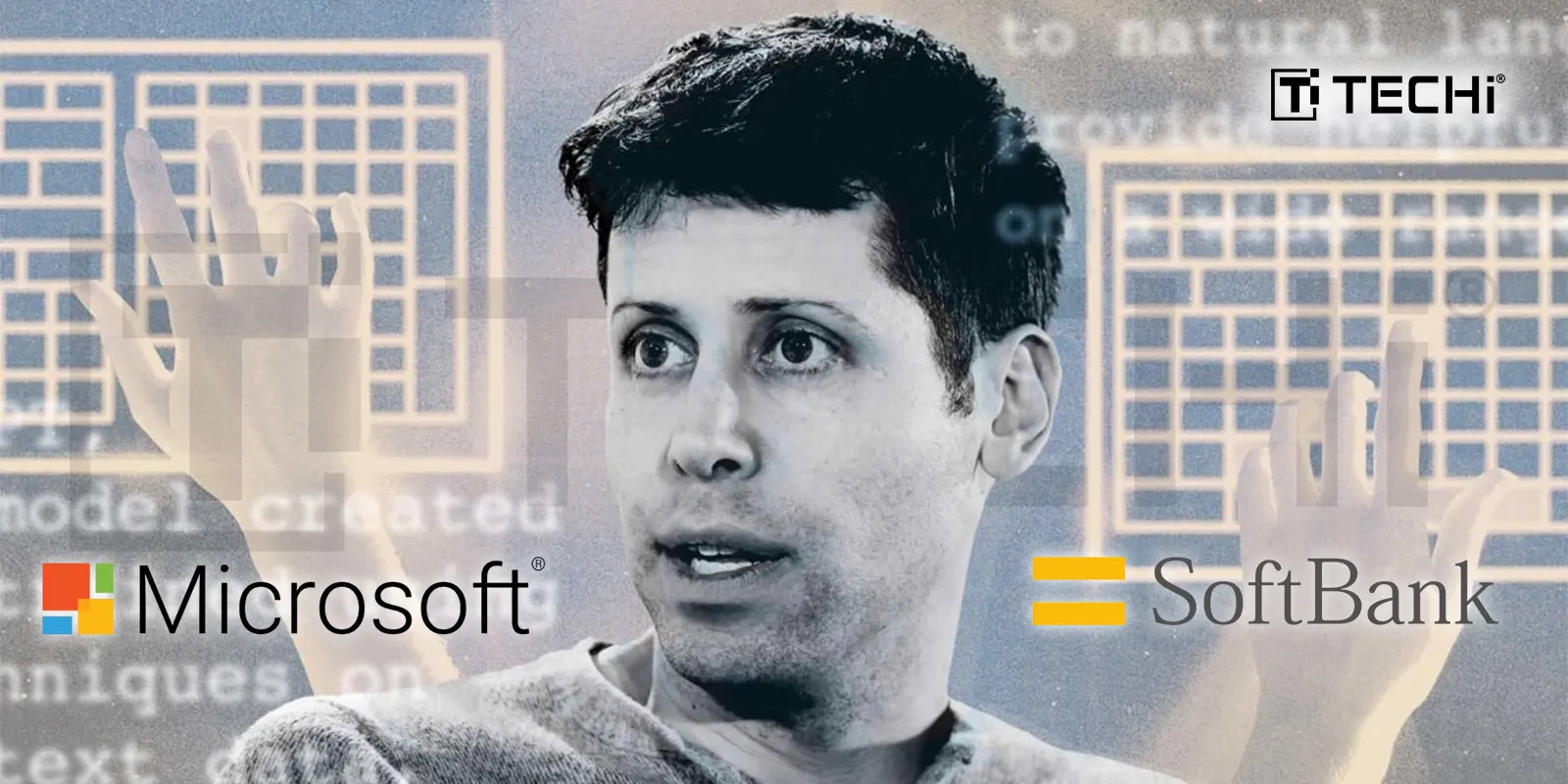
As per the news received, Microsoft is developing in-house artificial intelligence reasoning models that can compete with OpenAI and other rival models. The information was a surprise since Microsoft is a partner of OpenAI and has been using its models in its products. The partnership with OpenAI has been successful. Microsoft has positioned itself as one of the leaders among the big technology companies in AI race. Its seems like Microsoft is challenging OpenAI with this AI Model.

Although Microsoft has worked on some of its own models in the past, like Phi, interestingly, Phi was developed with the help of OpenAI, and it can perform similarly to OpenAI with far less computing power. Microsoft is testing models from xAI, Meta, and DeepSeek as potential replacements for OpenAI. Things are not getting any better for OpenAI lately. They already have a battlefront opened by Elon Musk, with that matter currently being heard in the US court. Microsoft has been using OpenAI in its flagship AI product, 365 Copilot. Copilot’s main attraction was that it used OpenAI’s GPT-4 model.

Last year, in March 2024, Mustafa Suleyman was appointed as CEO of Microsoft AI (MAI). Under his leadership, work was being done to create an alternative to OpenAI so they could start using it in their own product. The main reason is cost-effectiveness in the long run for the company. According to the report, the training has been completed, and the product is performing similarly to the OpenAI and Anthropic on commonly accepted benchmarks. At the same time, work is being done on the reasoning model as well.

It typically uses Chain-of-thought (CoT) techniques to analyze the input as humans do. This process involves calculations, logic, and decision-making. With this, MAI would be able to compete directly with OpenAI. The work to replace OpenAI’s models in Copilot with MAI is already in process. Microsoft is considering releasing the new model as an API (Application Programming Interface) that developers can use to benefit from these models in their own applications.

It is to be noted here that Microsoft has invested $14 billion in OpenAI so far. However, like a smart business entity, Microsoft is not keeping all its eggs in the same basket. OpenAI has had a series of setbacks lately, be it the DeepSeek computing power or the lawsuit by Musk. Now, it seems like they are getting stabbed in the back by their own partner, who established its AI standing using OpenAI itself. However, OpenAI is also being smart and it has already secured a deal with Apple back in June 2024. The deal involves using ChatGPT in Apple products iOS, iPadOS, and macOS. Even Siri would be able to tap into ChatGPT to get help when needed.

Both OpenAI and Microsoft are in an agreement till 2030 . Also, a lot of Microsoft products are using OpenAI, and they aren’t going to be replaced overnight. It is to be noted here that a recent change in their agreement in January 2025 allowed OpenAI to work with other cloud providers like Oracle. It seems like both companies are keeping their options open for now. Things are heating up in AI world and new developments are fast. Everyone is trying to outdo its competitors, and even the partners are not spared. It’s a cruel world out there, and you must always be awake and ensure you safeguard your interests.
OpenAI’s ChatGPT Hits 400 Million Users by Doubling Its User Base in Six Months

When OpenAI first introduced ChatGPT to the world in November 2022, it took the tech circle around the world by storm and was considered the fastest-ever consumer application in history. While the chatbot’s early success stemmed from people’s curiosity and novelty, it was widely discussed whether that initial buzz would continue or fade like the many other trends. All the indications throughout the past year that concern has been relieved, as ChatGPT is now certain to stay and continues to grow at an exceptional speed.

With immense progress being made in what AI can do and an upgrade to a more user-friendly interface, the chatbot has bounced back and doubled its active users in just under six months, solidifying its position on the top in the AI chatbot game. According to a report published by American VC firm Andreessen Horowitz (a16z), the AI chatbot ChatGPT has proved its worth, doubling its weekly active users in less than six months, where the report has pointed to the very impressive revival of the chatbot in the second semester of 2024 along with strategic updates and releases.

Speedy User Growth:

ChatGPT was originally famous for being the fastest app to cross the 100 million mark in monthly active users, a triumph it achieved within just 2 months of its debut in November 2022. The number had already increased to 100 million weekly active users by November 2023, rising to 200 million by August 2024. Even that increase has been outdone by this most recent surge in February 2025, when ChatGPT had achieved an incredible 400 million weekly active users.

Key Growth Drivers:

Major product releases in 2024 were key drivers for the increase in demand for ChatGPT which are;

  • Release of GPT-4o (April-May 2024): The launch of this AI model drew a sharp rise in user engagement since ChatGPT was able to handle text, image, and audio input with a greater level of accuracy and efficiency.
  • Advanced Voice Mode (July-August 2024): Launching a more natural, conversational voice feature contributed significantly to user interest and retention.
  • o1 Model Series (September-October 2024): These enhancements were like the cherry on the icing on the cake, creating an extra spike in usage, especially among enterprise and professional users.

ChatGPT’s user base continues to demonstrate a steady growth trend on mobile. There has been an approximately 5% to 15% increase in mobile users every month. Out of the 400 million weekly active users, about 175 million are accessing ChatGPT from mobile devices.

Competitive Landscape:

The industry has become quite competitive in developing AI chatbots, with emerging players like DeepSeek coming out strong from the launch pad. For instance, within ten days, DeepSeek ascended to the second position globally and attained 15% of the ChatGPT mobile users by February 2025. ChatGPT, nevertheless, maintains a strong lead in both web and mobile categories.

According to data from the market intelligence provider Similarweb, ChatGPT is ranked No. 1 as far as unique visits per month on the web and mobile active visitors are concerned. On the other hand, DeepSeek usage was measured to involve per user, slightly more than other competitors like Perplexity and Claude; however, ChatGPT remains dominant.

Future of ChatGPT:

ChatGPT isn’t just a superb thing, but it is also an omen of how AI is playing an increasingly important role in life today, whether it is for professional work, learning, education purposes or simply personal needs day to day, the millions of users who tap from the chatbot’s ongoing capabilities find value within its beneficial features, when these options become more popularized.

It will create the next round of interactions, primarily personal, real-time, and ever-developing into different digital ecosystems that match the level of the technology revolution. With AI adoption trending across industries, ChatGPT’s unparalleled growth suggests we have entered the age of generative AI, where fast paced technology development continues to redefine the way we interact and be productive worldwide.

OpenAI Faces Legal Scrutiny over Copyright Claims, as Alec Radford gets Subpoenaed

Who knew AI models would end up needing copyright lawyers more than programmers? The more artificial intelligence transforms an industry, the more fire it ignites in the legal arena over how these models are trained. The war on AI and intellectual property has now reached a point as the boundaries are violated by exploiting the works of human creators. In this high-profile copyright case, former OpenAI Researcher and its leading Developer in Generative AI, Alec Radford, has been issued a subpoena, shedding further light on the confusing details of AI training data, Fair use, and the future of Generative models. Depending on how the case turns out, it might quite literally become a turning point in the ethics of AI, legal frameworks, and the protection of creative works in the digital age.

According to a court filing, Radford received the subpoena on 25 February, marking a key development in the lawsuit against OpenAI’s use of copyrighted materials in training its AI models. This was filed in the U.S District Court for the Northern District of California in the case entitled “re OpenAI ChatGPT Litigation”, which was previously initiated by several renowned book authors, Paul Tremblay, Sarah Silverman, and Michael Chabon. They claimed that OpenAI used their literary works without authorization to train its AI models, which is a copyright violation. They asserted that OpenAI’s ChatGPT produces text that is very similar to theirs and does not give any credit for it, which amounts to direct copyright infringement.

Radford’s Contribution to OpenAI:

Radford, who most recently left OpenAI to pursue independent research, has also been a key contributor in building the Generative Pre-Trained Transformer (GPT) on which OpenAI’s product, such as ChatGPT, runs. His other recent contributions have been to OpenAI’s speech recognition model Whisper, and its DALL·E image-generation model. Joining OpenAI in 2016, Radford was instrumental in developing the company’s AI capabilities.

Radford’s work as the lead author for OpenAI’s original paper on Generative Pre-trained Transformers provided the foundation for the AI models to support a surplus of applications today. His participation in the lawsuit gives an impression that the accusers are interested in seeking insider knowledge into OpenAI’s training processes and, more evidently, the usage of copyrighted content in making those models.

Legal Feuds:

The irony lies in that OpenAI needs a human lawyer to defend its non-human intelligence. As OpenAI has kept up its defense against copyrighted materials, the storm in the legal battle has intensified. Last year, the court dismissed two of the claims against OpenAI but allowed direct copyright infringement claims to go through. The accusers’ legal team are now seeking testimony from the former personnel of OpenAI to claim support towards justice further.

Radford is not the only big name involved in this legal battle; also caught in its net are Dario Amodei and Benjamin Mann, who left OpenAI to found Anthropic, an AI research company. Although these two former executives have resisted because the burden is too great, they are still answerable. Thus, this week, a U.S. magistrate judge ruled that Amodei must undergo questioning regarding his past work at OpenAI in two separate copyright cases, including one by The Authors Guild.

Broader Implications and Issue of Fair Use:

If the lawsuit is directed in favor of the accusers, it will have significant legal repercussions for the entire AI industry. A favorable ruling would likely force AI companies to re-examine their data collection and usage techniques for training models, followed by tighter controls, arrangements for licensing with content creators, and an alternative definition of copyright protection for AI-generated content.

At the heart of the OpenAI defense is a focus on the fair use doctrine, which allows limited use of copyrighted materials without permission under certain circumstances. On the other hand, the accusers argue that these AI models are commercial products that generate revenue for OpenAI, thus making fair use a questionable argument. As AI-generated content becomes widespread, courts will have to define the lines of fair use regarding machine learning and data scraping.

Therefore, the outcome of this lawsuit will affect both AI developers and content creators. If the courts determine that OpenAI’s use of copyright materials is outside fair use, this could bring new regulations and change how AI models are trained. It would heighten expectations requiring explicit licensing agreements with content creators. Conversely, a ruling in favor of OpenAI may further strengthen the positions of AI companies to scrape an enormous amount of data with minimum oversight.

With everything in mind, the case could be a pioneer for change within the AI sector. It is within the much wider framework of generative models, including not just generative adversarial networks or diffusion models, that gives birth to ethical/legal questions regarding training data. OpenAI claims its processes are protected by fair use, but what becomes an issue is the transparency regarding data sourcing, especially about any potential violation of intellectual property rights.

OpenAI to Integrate Sora’s AI Video Generator into ChatGPT

In a move that could redefine AI-driven content creation, a company leader said in the session on Friday that OpenAI has announced plans to integrate its video-generating platform Sora directly into ChatGPT. This shift signals OpenAI’s expansion beyond text-based AI, merging video creation tools with its flagship chatbot to offer a more immersive and interactive user experience. Currently, Sora is only available as a standalone web app, launched in December 2024. It allows users to generate short AI-generated cinematic clips up to 20 seconds long. However, according to OpenAI’s product lead for Sora, Rohan Sahai, the company is working on bringing Sora to ChatGPT, making video generation more accessible to users.

Why Is OpenAI Merging Sora with ChatGPT?

  • A More Versatile ChatGPT: By adding AI video generation, OpenAI is positioning ChatGPT as a one-stop creative hub for text, images, and videos.
  • Expanding Sora’s Audience: Initially targeted at video production studios and creative professionals, Sora is now being geared toward everyday users and businesses.
  • Boosting ChatGPT Premium Subscriptions: OpenAI may limit high-quality video generation to paid tiers, encouraging more users to subscribe.
  • Advancing AI-Driven Creativity: The integration could pave the way for ChatGPT-powered storytelling, allowing users to generate videos directly from conversations.

How Will Sora Work Inside ChatGPT?

While OpenAI hasn’t provided a detailed roadmap, Rohan Sahai hinted at a few key points:

  • The ChatGPT version of Sora may offer limited editing tools compared to the full web app.
  • Users might not have full control over stitching and modifying clips.
  • OpenAI wants to keep ChatGPT intuitive and user-friendly, balancing simplicity with powerful features.

This strategic integration suggests OpenAI prioritizes accessibility over complex video production, making AI video generation as easy as chatting.

What’s Next? OpenAI’s Plans Beyond ChatGPT

Standalone Mobile App for Sora: OpenAI is hiring mobile engineers, hinting at a dedicated Sora app for smartphones.
AI-Powered Image Generator: OpenAI is working on a Sora-powered image generator, potentially surpassing DALL·E 3 in photorealism.
Upgrading Sora Turbo: OpenAI is actively developing Sora Turbo 2.0, promising faster, higher-quality video generation.

What This Means for Users

Seamless AI-powered content creation: Imagine generating text, images, and videos—all within ChatGPT.
Potential for businesses and creators: Marketers, educators, and content creators could automate video storytelling directly from ChatGPT.

A step toward AI-generated movies? – If Sora continues to evolve, it could be a major disruptor in digital media. While OpenAI hasn’t confirmed when Sora will be available inside ChatGPT, this move marks a huge leap for AI creativity and accessibility. Would you use ChatGPT to generate AI videos? Share your thoughts in the comment section.

Read More: OpenAI Unveils GPT-4.5 ‘Orion’ – The Next Leap in AI Evolution

OpenAI Unveils GPT-4.5 ‘Orion’ – The Next Leap in AI Evolution

The artificial intelligence race took a turn with OpenAI’s new revolutionizing release of GPT-4.5, the most powerful kind of model and most compute intensive to date. Designed internally as “Orion,” its newest version is an OpenAI assertion of continuing to win in an industry where the bigger the model, the better the results. So, what do these new moves mean for the general user and the AI landscape at large? 

OpenAI holds on to its “big is better” philosophy, after pouring in billions scaling up infrastructure, Anthropic and DeepSeek have continued to disrupt this modeling field by introducing cost-effective models that both go up against one another. Hence, the GTP-4.5 is not just another incremental upgrade, rather it makes a clear strategic statement of an index of OpenAI’s fighting spirit in its approach. As users get the first glimpses of the model via the exclusive $200 a month ChatGPT Pro subscription, the question now is, does OpenAI step rolling along a progressively risky thin rope against a shifting landscape?

The release continues OpenAI’s tradition of scaling AI models to enhance their performance and usability. GPT-4.5 is reportedly better at understanding user prompts than prior models, producing results that are accordingly natural and nuanced in the response. While no specific details about its weight and computer requirements have been noted, OpenAI maintains that this model minimizes the problem of hallucinations, thanks to its enhanced knowledge. Mia Glaese, who leads OpenAI’s alignment team and human data team says, “If you know more things, you don’t need to make things up,”

Competition and GPT’s Growth:

The release of GPT-4.5 follows a sequence of substantial AI developments in 2025. Competitors such as Anthropic have developed hybrid reasoning models for Claude, and Chinese researchers at DeepSeek have made remarkable achievements on very low budgets. OpenAI, however, believes strongly that bigger models mean better AI and has invested billions into building AI infrastructure to support this philosophy.

While growth is the major focus, GPT-4.5 is not considered a reasoning model in the sense of their `o’ series, as it has been stated by Sam Altman, CEO, to be the last model non-integrated with chain of thought reasoning, pointing towards a shift towards integrated and adaptive AI experiences in its next releases. He posted on social media earlier in February, “ship GPT-4.5, the model we called Orion internally, as our last non chain-of-thought model.” The researchers are also putting efforts into streamlining user interactions so ChatGPT can dynamically select the best model for a prompt without requiring the user to select the model from a dropdown.

Future of AI and the OpenAI’s Vision:

With the introduction of GPT-4.5, web search, file and image uploads, and the canvas feature all come into play, but the present course has no AI Voice Mode support. Benchmarking results are competitive in some instances with promising language performance from the system but losing out to o3-mini in assessments of certain areas of math and science, although OpenAI says that the real success of GPT-4.5 will show itself through the user experience.

At a time when competition is heating up in AI, OpenAI is still committed to widen the frontiers in unsupervised learning by data scaling, compute, and training efficiency. According to researchers like Nick Ryder, enlargement of model size does not in itself make it hard to interpret and all current methods of interpretation can still be applied to these huge AI systems. Ryder says, “Saying this is the last non-reasoning model really means we’re really striving to be in a future where all users are getting routed to the right model”. He added, “By increasing the amount of compute we use, by increasing the amount of data we use, and focusing on really efficient training methods. We push the frontier of unsupervised learning.”

This is also the extent of OpenAI’s ambition with regard to things technical, as it develops the emotional intelligence, intuition, and aesthetic preferences of the future AI, it defines an intelligent machine quite unique in productivity with impressive soft skills and cuts a little closer to the time, when AI incorporates itself in the workflow of human beings.

As OpenAI puts new AI initiatives in overdrive with models like GPT-4.5, the audience becomes even more demanding in terms of scaling versus efficiency. Whereas many industry voices are contending with optimising performance against a thinner budget, for OpenAI, this part of the race is still all about bigger and more complex models toward seeking better ability for AI to understand and respond to human nuance. Whether it will keep its place in the front or slip into the point of diminishing returns is yet to be determined. 

Read More: Meta Gears Up to Launch Standalone AI Chatbot to Challenge ChatGPT & Gemini

OpenAI Expands Deep Research Tool to More ChatGPT Subscribers

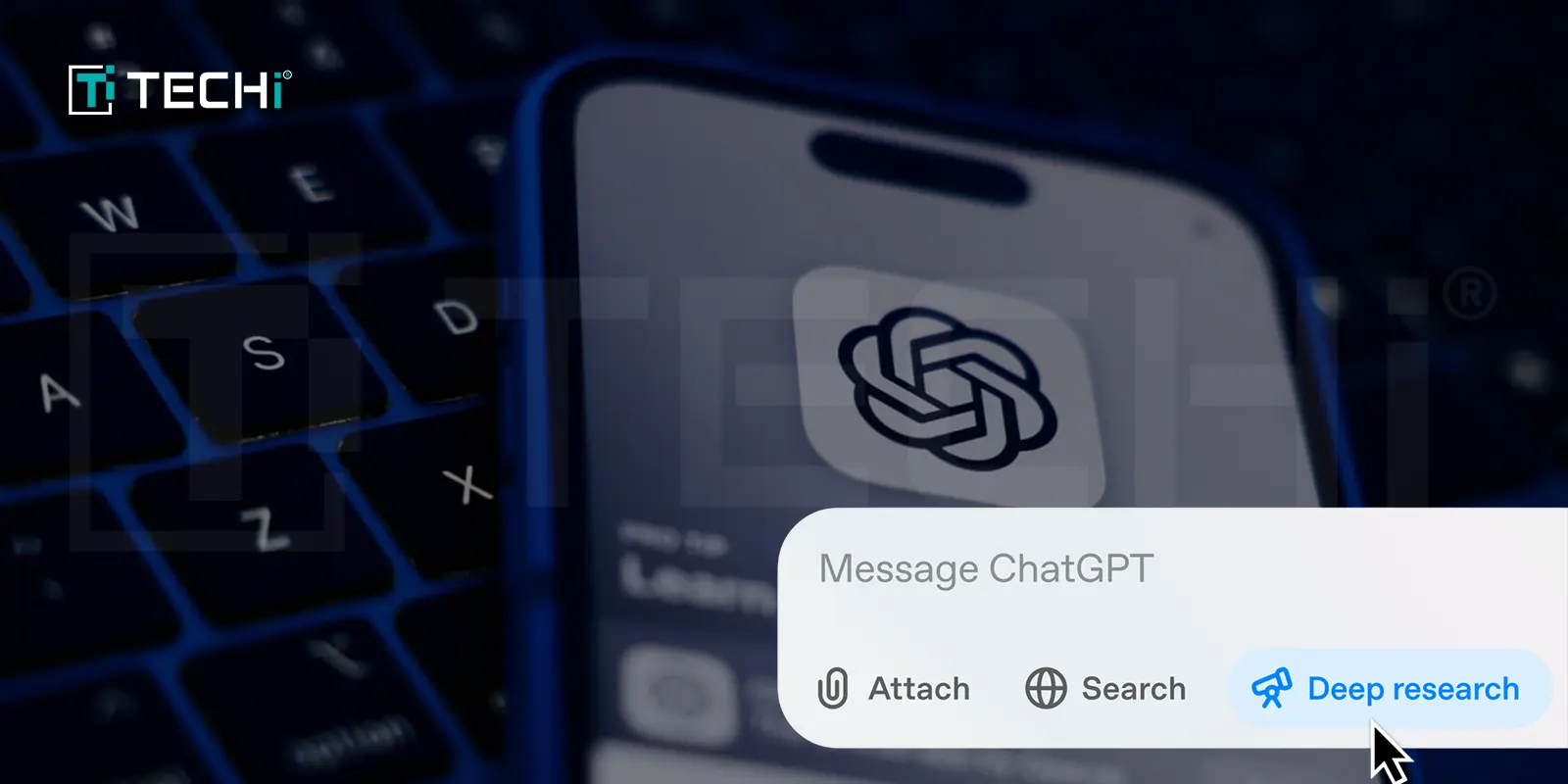
As AI-powered tools become more integral to professional and academic research, OpenAI is broadening access to its Deep Research feature. Previously reserved for ChatGPT Pro users, this advanced web browsing agent is now available to all paying users, including Plus, Team, Enterprise, and Edu subscribers. With this expansion, OpenAI gives users 10 deep research queries per month, allowing them to generate comprehensive reports on various topics. Meanwhile, ChatGPT Pro users, who subscribe at $200 per month, will now receive 120 queries, up from 100 at launch.

The move highlights OpenAI’s strategy to make AI-powered research tools a key selling point for its premium tiers. As competition in AI research tools heats up, Google and Perplexity are racing to roll out similar deep research capabilities. Google recently launched its deep research agent for Gemini Advanced users, signaling a clear industry shift toward AI-generated long-form analysis.

For AI companies, deep research features are more than just an added tool—they are a way to demonstrate the value of premium AI subscriptions. However, OpenAI acknowledges that it must refine how these agents interact with users and how they could influence decision-making. By expanding Deep Research to a broader audience, OpenAI is positioning itself at the forefront of AI-driven knowledge generation, reinforcing AI’s role in assisting professionals, educators, and researchers with in-depth, automated analysis.

Read More: OpenAI to Shift AI Compute from Microsoft to SoftBank


OpenAI to Shift AI Compute from Microsoft to SoftBank

According to The Information Report on Friday, OpenAI is forecasting a significant shift in the next five years around who it gets most of its computing power from. OpenAI is significantly shifting its AI infrastructure, moving away from Microsoft’s cloud services and toward SoftBank-backed Stargate. By 2030, OpenAI expects 75 percent of its computing power to come from Stargate, marking a shift that carries a lot of opportunity and risk. Though this shift is coming, OpenAI will keep increasing its spending on Microsoft’s data centers in the next few years. However , the company’s operational expenses are poised to increase significantly.

Reports indicate that OpenAI will burn through $20 billion in cash by 2027, marking a significant financial shift from previous years, a massive jump from the $5 billion spent in 2024. By the decade’s end, OpenAI forecasts that running AI models (inference costs) will surpass AI training expenses, marking a significant shift in its computing strategy. This move signals OpenAI’s push for greater independence in cloud infrastructure as it scales its AI models.

Why Is OpenAI Starting to Move Away from Microsoft?

With this move, OpenAI is positioning itself for a world where computing resources are more often distributed. But is this the right move? Moving computing power over from Microsoft (whose Azure powers OpenAI today) to the SoftBank-backed Stargate project is not something that happens overnight; there is a lot of work to be done. OpenAI has leaned heavily on Microsoft’s Azure cloud, but as AI costs have taken off, the company seems to be looking for more control and diversification over its compute resources. There might be several reasons why they decide this.

Microsoft increasing interest in its in-house AI research might lead to strategic conflicts with OpenAI in the future, which might end up resulting in conflicts of interest between the two. To OpenAI, this could be a mandate to secure its long-term independence. In addition, OpenAI’s rising operational outlays — projected to surpass $20 billion by 2027 — necessitate a more fluid funding approach, and SoftBank is famous for its mega tech bets. In addition, OpenAI may want to decrease the reliance on U.S. cloud providers for strategic reasons as well, whether it be aimed at mitigating risks from potential regulatory scrutiny or geopolitical factors.

What It Signals About OpenAI’s Future

In leaning toward SoftBank-backed computing, OpenAI is making a calculated gamble. This could offer more autonomy, tailor-made AI chips, and improved financial flexibility, in other words. However, SoftBank’s track record of putting money into volatile deals (think WeWork) begs the question of whether this is a sustainable partnership in the long term.

And inference costs (i.e., running AI models) are expected to exceed training costs by 2030, so OpenAI needs a long-term sustainable solution. This could blow up in the face of the SoftBank-funded Stargate project if it fails to deliver the same stability and efficiency that Microsoft Azure provides. Ultimately, OpenAI’s pivot away from Microsoft is a high-stakes transition that could determine its trajectory in the A.I. industry. If done right, it could solidify OpenAI’s role as a leading innovator in AI. However, if the transition faces major roadblocks, it could open up new challenges that slow down OpenAI’s momentum in the AI race.

Read More: OpenAI Drops o3 AI Model to Unify AI Strategy with Game-Changing GPT-5

OpenAI Blocks Accounts in China & North Korea Over Misuse

OpenAI has announced the removal of user accounts from China and North Korea. OpenAI blocks accounts because the company believes these users use their accounts for malicious activities like surveillance and opinion-influence operations. This action underscores OpenAI’s commitment to ensuring its technology is used ethically and responsibly. Openai did not specify the total number of accounts that have been banned and the time frame of the action.

According to the Reuters chatgpt team said on last Friday:
The activities are ways authoritarian regimes could try to leverage AI against the U.S. as well as their own people, OpenAI said in a report, adding that it used AI tools to detect the operations.”

Identified Malicious Activities

OpenAI’s internal investigation revealed several concerning practices:

Propaganda Generation: Some users employed ChatGPT to create Spanish-language articles critical of the United States. These articles were subsequently published in mainstream Latin American media under the guise of a Chinese company’s authorship.

Fraudulent Employment Schemes: Actors with potential ties to North Korea utilized AI to fabricate resumes and online profiles. The objective was to deceitfully secure employment within Western corporations.

Financial Fraud Operations: A network based in Cambodia leveraged OpenAI’s technology to produce translated content. This content was disseminated across platforms like X (formerly Twitter) and Facebook, aiming to perpetrate financial scams.

OpenAI’s Proactive Measures

To detect and counteract these malicious endeavors, OpenAI harnessed its own AI-driven tools. While the company has not disclosed the exact number of accounts affected or the specific timeline of these activities, its swift response highlights the challenges tech companies face in preventing malicious entities’ exploitation of AI technologies.

The U.S. government has previously voiced apprehensions regarding the potential for AI technologies to be harnessed by authoritarian regimes for purposes such as domestic repression, dissemination of misinformation, and threats to international security. OpenAI’s recent actions align with efforts to prevent such misuse and emphasize the importance of vigilant monitoring and regulation in the AI sector.

The Future of AI Security

As AI continues to evolve and integrate into various facets of society, ensuring its ethical application remains paramount. OpenAI’s recent measures testify to the ongoing efforts required to safeguard technology from being weaponized for malicious intents.

Read More: OpenAI launched Deep Research, ChatGPT’s new AI agent for advanced level research