Elon Musk’s $97.4 Billion Offer to Acquire OpenAI Rejected

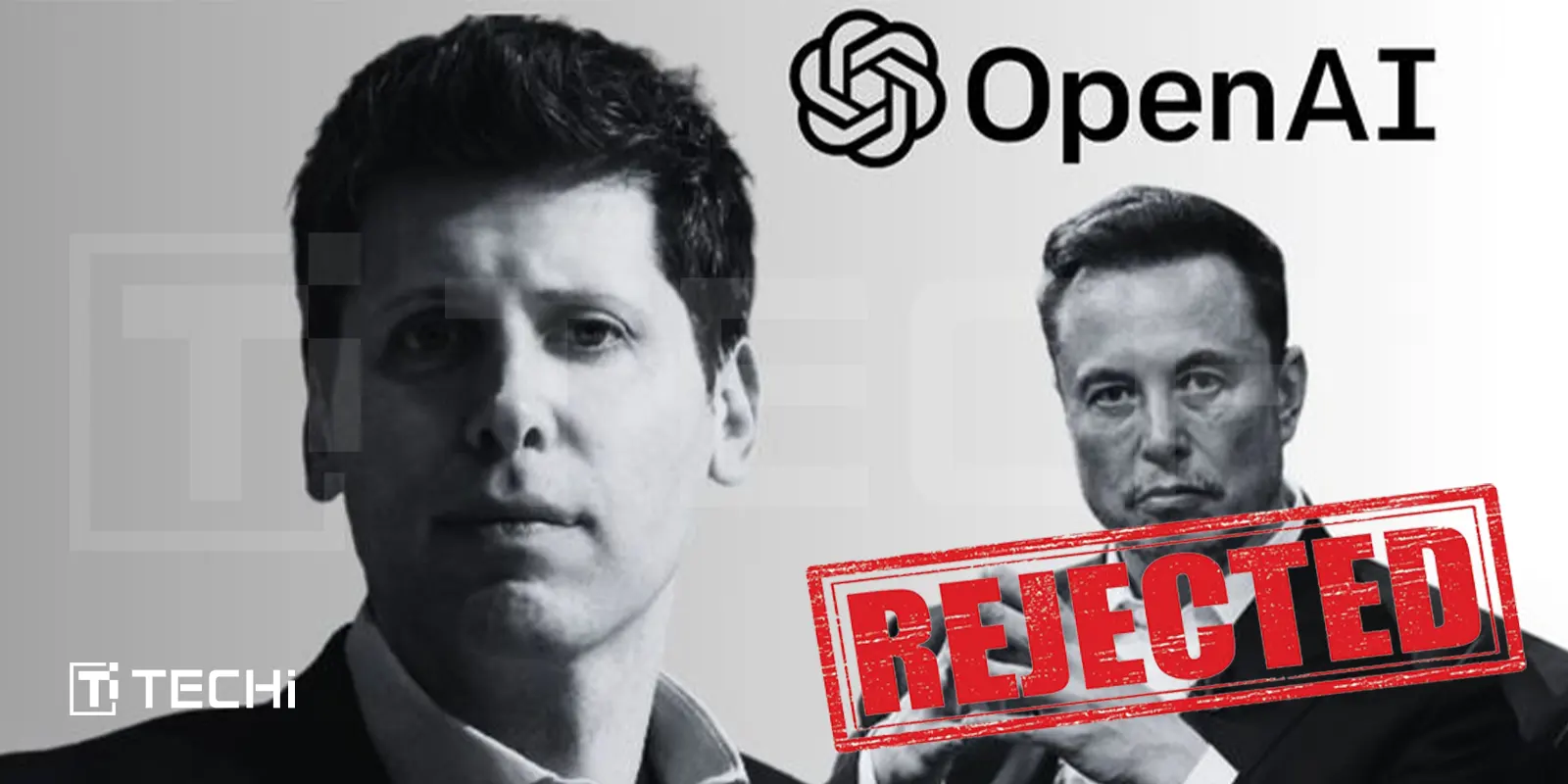
Tech billionaire Elon Musk, co-founder and former board member of OpenAI, recently made a staggering $97.4 billion offer to acquire full control of the artificial intelligence company. However, OpenAI’s board rejected the bid, citing concerns over its mission, autonomy, and ethical considerations. In an official statement released through OpenAI’s press account on X, board chair Bret Taylor described Musk’s offer as a deliberate move to interfere with his competition.

“OpenAI is not for sale, and the board has unanimously rejected Mr. Musk’s latest attempt to disrupt his competition,” Taylor said. “Any potential reorganization of OpenAI will strengthen our nonprofit and its mission to ensure [artificial general intelligence] benefits all of humanity.”

The New York Times reported that OpenAI also addressed a letter to Musk’s attorney, Marc Toberoff, stating that the proposal did not align with OpenAI’s mission and was not in its best interests. The decision has sparked widespread debate over the future of AI governance and Musk’s ambitions in the AI industry.

Why Did OpenAI’s Board Reject Musk’s Offer?

1. Preserving OpenAI’s Independence

OpenAI’s leadership believes that Musk’s takeover would jeopardize the organization’s autonomy, potentially shifting its priorities toward his business interests, mainly his AI venture, xAI. By rejecting the offer, the board aims to maintain control over its research direction and prevent external influence from dominating decision-making.

2. Conflict Between Mission-Driven and Profit-Driven Goals

Originally founded as a nonprofit, OpenAI transitioned into a capped-profit model to balance funding needs and ethical AI development. The board fears that Musk’s leadership could tilt the company towards a profit-driven agenda, undermining its commitment to developing AI for the broader good rather than commercial gain.

3. Musk’s History with OpenAI

Musk resigned from OpenAI’s board in 2018 after an unsuccessful attempt to take control of the company. The board considers this past power struggle as a key factor in rejecting his current bid, viewing it as a continuation of his previous efforts to dominate OpenAI’s direction.

4. Tensions with Microsoft and AI Ecosystem

OpenAI has a major partnership with Microsoft, which has invested billions in the organization. If Musk were to gain control, it could disrupt this collaboration, leading to legal and financial complications. The board is also concerned about potential conflicts between OpenAI’s roadmap and Musk’s competing AI firm, xAI.

5. Legal Risks and Regulatory Concerns

Musk has had numerous legal disputes and regulatory challenges in the past, including with the SEC and Tesla. OpenAI’s leadership fears that his control could introduce unnecessary instability, regulatory scrutiny, and delays in AI safety frameworks that are crucial for the industry’s responsible development.

Musk’s Response and Industry Reactions

Following the rejection, Musk expressed his displeasure, criticizing OpenAI for abandoning its original mission of creating open-source AI. He has also hinted at further legal action or alternative AI strategies, reinforcing his commitment to advancing artificial intelligence through xAI and other ventures.

Industry experts remain divided on the issue. Some argue that Musk’s resources and expertise could have accelerated OpenAI’s innovations, while others support the board’s stance on keeping AI development independent from corporate dominance.

What’s Next for OpenAI?

With Musk’s bid off the table, OpenAI will likely continue its current trajectory with Microsoft’s backing and expand its AI capabilities while maintaining governance safeguards. The rejection signals the board’s commitment to AI safety and ethical considerations, ensuring that advancements align with their foundational mission. As the AI race intensifies, OpenAI’s decision will shape the broader debate on who controls AI, how it is developed, and whether it remains a force for public benefit or corporate interests.

Read More: OpenAI Drops o3 AI Model to Unify AI Strategy with Game-Changing GPT-5
OpenAI Drops o3 AI Model to Unify AI Strategy with Game-Changing GPT-5

The gigantic leap in AI technology has allowed competing organizations to race ahead in building the most powerful and efficient models. OpenAI, a prime name in AI, has been at the forefront of its very transformation. However, it has now strategically scrapped its much publicized o3 AI model development in favor of a more unifying and integrated approach. This raises important questions about OpenAI’s long-term vision, competitive positioning, and the way AI development is shaping the landscape of technology.

OpenAI has canceled its much anticipated next-generation o3 model and has instead adopted a bigger platform to cast a greater net over AI technologies. According to its Chief Executive, Sam Altman, the organization has thus decided to focus on a new model, GPT-5, which is designed to unify all OpenAI’s AI technologies in one integrated and more specialized offer. Altman said, “In the coming months, OpenAI will release a model called GPT-5 that integrates a lot of [OpenAI’s] technology, including o3, in its AI-powered chatbot platform ChatGPT and API”. As a result of that roadmap decision, OpenAI no longer plans to launch o3 as a stand-alone model.

The new development marks a change in the path of OpenAI’s AI roadmap toward a more unified ecosystem from several standalone models. Altman wrote in his post on X, “We realize how complicated our model and product offerings have gotten. We want to do a better job of sharing our intended roadmap, and a much better job simplifying our product offerings. We want AI to ‘just work’ for you; we realize how complicated our model and product offerings have gotten. We hate the model picker [in ChatGPT] as much as you do and want to return to magic unified intelligence”.

OpenAI’s AI Models:

OpenAI had originally planned to launch o3 in early 2024, with a possible suggested timeline of February to March given by Chief Product Officer Kevin Weil. However, the latest pronouncement from Altman makes it clear that o3 would not be released as a separate model. Instead, the competencies would now be merged into GPT-5, which would not only power OpenAI’s ChatGPT platform but also its API services as well. The next GPT-5 release will be available in several tiers which includes; The Standard Access, that has unlimited chat access at base intelligence level, free but subjected to some abuse thresholds. ChatGPT Plus Subscribers will be able to have higher intelligence level with better reasoning and lastly, ChatGPT Pro Subscribers will have the access to highest intelligence level with advanced reasoning, deep research, and multimodal function included.

Altman said, “[GPT-5] will incorporate voice, canvas, search, deep research, and more. A top goal for us is to unify our models by creating systems that can use all our tools, know when to think for a long time or not, and generally be useful for a very wide range of tasks”. Before the arrival of GPT-5, OpenAI would experiment by introducing GPT-4.5 (the codename is Orion), which will happen in a few weeks. It would mark the last time that the company would be pitching a “non-chain of thought” model, such a model being a model prior to the movement toward reasoning based systems that check their own outputs.

Competition against o3 AI Model:

The delay of o3 and quick shift to GPT-5 by OpenAI is truly happening when all the activities at the moment are heating up with regards to global competition in AI. The latest news from Chinese AI Assistant, DeepSeek, surrounding its R1 model is creating big headlines, as this open-source alternative has reported some strong performance in important benchmarks against the previous works from OpenAI. While OpenAI adopts a proprietary format for users, DeepSeek’s model is open for software developers’ use under threat of potential challenge against OpenAI’s command.

Altman admitted that DeepSeek has reduced OpenAI’s technological lead, and in response said, “OpenAI would pull up some releases to better compete”. However, according to reports by Bloomberg, The Information, and The Wall Street Journal, Orion (GPT-4.5) has not met performance expectations and falls short of the improvements that have typically been associated with previous upgrades in models relative to GPT-4o.

Future AI Scenarios:

Such “integrated AI” would then get interpreted as a major industry trend itself, it would mean improving user experience and exceptional reasoning power capacity beyond what OpenAI offers with its new capabilities in GPT-5, featuring voice, canvas, search, and deep research functions.

While all AI companies are racing to make the next great breakthrough, it appears that OpenAI is readjusting its strategy by renouncing o3 and turning to GPT-5. Whether that strengthens the company’s lead in the arms race for the next-generation AI or makes room for new competitors is yet to be seen. One thing is very certain, as the AI environment evolves, so does the need for adaptability along with innovation.

Read More: Elon Musk’s $97.4B Bid for OpenAI Sparks Controversy and Industry Shockwaves

OpenAI Joins the Super Bowl Ad League: Tough competition to tech giants

OpenAI is set to make its debut in the mainstream advertising market. They are about to air its first TV commercial during Sunday’s Super Bowl– reported The Wall Street Journal on Wednesday. The Super Bowl is the world’s most popular and covered TV event, facilitating advertisers and promoters with its huge audience and creativity as commercials of the Super Bowl can create a huge outsider buzz.

Super Bowl Sunday is one of the greatest days of the year — and not just because of football. It has the legacy of creating super hit commercials. Some Top names are E*Trade (2008) launched one of the most memorable marketing campaigns in recent years during Super Bowl XLII. Apple (1984) wanted to let the world know and promoted the upcoming release of the Macintosh computer. Volkswagen The Force (2011) tapped into those childhood memories during Super Bowl XLV.

Super Bowl’s Potential

The 2024 Super Bowl drew an estimated 210 million viewers – figure that highlights its potential. OpenAI isn’t the first one to opt for this, rivals like Google run ads promoting its AI prowess during last year’s Super Bowl. The spot is estimated to cost up to $8 million for a 30-second ad during the Super Bowl 2025. According to Adweek’s Chief Content Officer Zoe Ruderman, the same similar spot made $7 million last year. 

On February 9 at 6:30 pm ET, The 59th Super Bowl is scheduled. With an estimated 83,000 spectators, The NFL championship game will occur in New Orleans at the Caesars Superdome, home to the New Orleans Saints.

New Marketing Moves:

CEO OpenAI Sam Altman has not only taken the above marketing measure. Since the ChatGpt release in November 2022  and a wide reach of over 300 million weekly active users two years later. The AI developer is in talks and making strategies to raise up to $40 billion at a valuation of $300 billion. He also hired its first chief marketing officer, Kate Rough in December 2024.

OpenAI, Google AI or LamaAI? Tough competition.

Not only OpenAI or Google, other competitors are entering the Super Bowl market as well. Well… we had two choices: Spend millions of dollars on a flashy commercial, OR – invest in building the best #GenAI-powered #lending platform. We went with the exciting option of course (sorry, Hollywood). Because for bankers, business lending isn’t a game. It’s about making the right decisions—quickly, confidently, and without second-guessing.

Consider it our unofficial #SuperBowl debut. Lama AI sparks confidence from their latest post on linkedin to create the same legacy as of Apple 1984. Will Super Bowl advertising change the destiny of many brands? Stay tuned to learn more.

Read More: Musk’s Legal Battle with OpenAI May Head to Trial, Judge Rules

Meet Operator: OpenAI’s Bold Step Toward an AI That Works for You

Remember ‘Operator’?

I’ve previously introduced and given a sneak peek of the upcoming AI agent to you guys!

In that post, we talked about what we’ve learned from the leaks. But now OpenAI has launched its latest innovation ‘Operator’. For a test drive, of course.

Let me tell you what it is actually.

An AI agent designed to perform tasks autonomously.

No, it will not do laundry for you but,

  • Can take actions on behalf of you, like booking travel, shopping online, or making restaurant reservations.
  • It uses a dedicated browser interface to interact with websites, much like a human would (e.g., clicking buttons, navigating menus, filling forms).

Mimicking humans? Yes, maybe.

Key Features:

  1. Autonomy: Operator can independently complete tasks like online bookings and purchases.
  2. Supervision: It requires user confirmation for critical tasks like finalizing payments or sending emails, ensuring accuracy and security. (control in your hands)
  3. Technology: It’s powered by OpenAI’s Computer-Using Agent (CUA) model, which combines vision and reasoning capabilities from GPT-4o and other advanced models.
  4. Collaborations: OpenAI is working with platforms like DoorDash, Uber, and eBay to ensure Operator aligns with their terms of service. (trying to get your daily tasks done in seconds)
  5. Limited Launch: Initially available in the U.S. for users of ChatGPT’s $200/month Pro subscription plan, with plans to expand to more users and countries.

Limitations:

  • Initial stage so can’t do complex jobs.
  • May struggle with tasks requiring users to step in when needed like asking for passwords.
  • Security measures can be a hurdle for it like completing bank transactions etc.

Why Is This a Big Deal?

  • Step Toward AI Agents: Major move into the aura of AI agents; tools capable of taking real world actions.
  • Vision of the Future: AI agents X ChatGPT shortly?! Potentially revolutionize how people interact with technology.

Concerns and Precautions:

  • Prevention of misuse can be a big concern for both users and OpenAI. Adding safety measures will be non-negotiable.
  • The release is a research preview, meaning OpenAI is still exploring its full capabilities and limitations.

Why Does It Matters?

  • A step closer to where  AI doesn’t just inform but acts.
  • It sets the stage for competition with similar AI agent technologies from Google, Anthropic, and others.

Stay Tuned!

To learn more about how this technology unfolds.

Related Articles:

Microsoft’s Relationship with OpenAI Cracked When it Hired Mustafa Suleyman, Rival Marc Benioff Says

OpenAI Gains More Flexibility as Microsoft Backs $500B Stargate Initiative

Meet Operator: OpenAI’s AI Tool That Could Take Over Your Computer Tasks