6 New AI-Powered Tech Startups Reach Unicorn Status in January 2025

The year 2025 started with a surge of billion-dollar valuations as six promising tech startups officially entered the unicorn club in January. These AI-powered tech startups, spanning artificial intelligence, healthcare, fintech, and industrial technology, have drawn massive investments from leading venture capital firms. The surge in funding signals a strong investor appetite for cutting-edge innovations in AI-driven automation, genomic research, cybersecurity, and defense technology. Here’s a closer look at the six AI-powered tech startups that have achieved unicorn status and how they shape the future.

Truveta: 

Founded in 2020, Truveta is a health-tech company specializing in AI-powered genetic research. The company aims to advance personalized medicine by creating a comprehensive and diverse genomic database. Terry Myerson serves as the Chief Executive Officer and co-founder of Truveta.

Codeium: 

Established in 2023, Codeium is an AI-driven coding assistant designed to help developers write and optimize code more efficiently. While specific details about its leadership are not publicly disclosed, the company is reportedly discussing raising new funding at a valuation of $2.85 billion.

Mercor: 

Launched in 2024, Mercor is an AI-powered recruiting platform that streamlines the hiring process by matching candidates with suitable job opportunities. The company was founded by three 21-year-old Thiel Fellows, with Brendan Foody serving as the Chief Executive Officer. Mercor recently raised $100 million in a Series B funding round, bringing its valuation to $2 billion.

Augury: 

Founded in 2011, Augury specializes in AI technology that detects malfunctions in industrial machinery, aiming to prevent equipment failures and reduce downtime. The company recently raised $75 million, pushing its valuation over the $1 billion mark. Saar Yoskovitz is the co-founder and Chief Executive Officer of Augury.

Neko Health: 

Established in 2022, Neko Health is a Swedish startup co-founded by Spotify’s Daniel Ek. The company focuses on developing advanced body-scanning technology for early disease detection and preventive healthcare. In a recent Series B funding round, Neko Health secured $260 million, though its exact valuation remains undisclosed.

Epirus: 

Founded in 2018, Epirus is a defense technology company specializing in advanced directed energy systems designed to counter emerging threats. The company is reportedly in talks to raise between $150 million and $200 million in a new funding round led by venture firm 8VC. Leigh Madden serves as the Chief Executive Officer of Epirus.

A Strong Start for Tech Innovation in 2025

The emergence of these six unicorns in January 2025 highlights a broader trend in the startup ecosystem—investors are increasingly placing their bets on AI-powered solutions, predictive analytics, fintech security, and next-gen healthcare innovations. The influx of capital into AI-driven automation, genomic research, and industrial AI demonstrates the tech industry’s resilience and its ability to drive breakthrough innovations despite ongoing economic uncertainties. As these startups continue to grow, they are set to redefine healthcare, cybersecurity, defense, and industrial efficiency, shaping the next generation of global technology leaders. With more startups poised to achieve unicorn status in the coming months, 2025 is shaping up to be a landmark year for disruptive tech innovation.

Read More: Elon Musk’s AI Revolution Continues as xAI Unveils Grok 3 AI Model
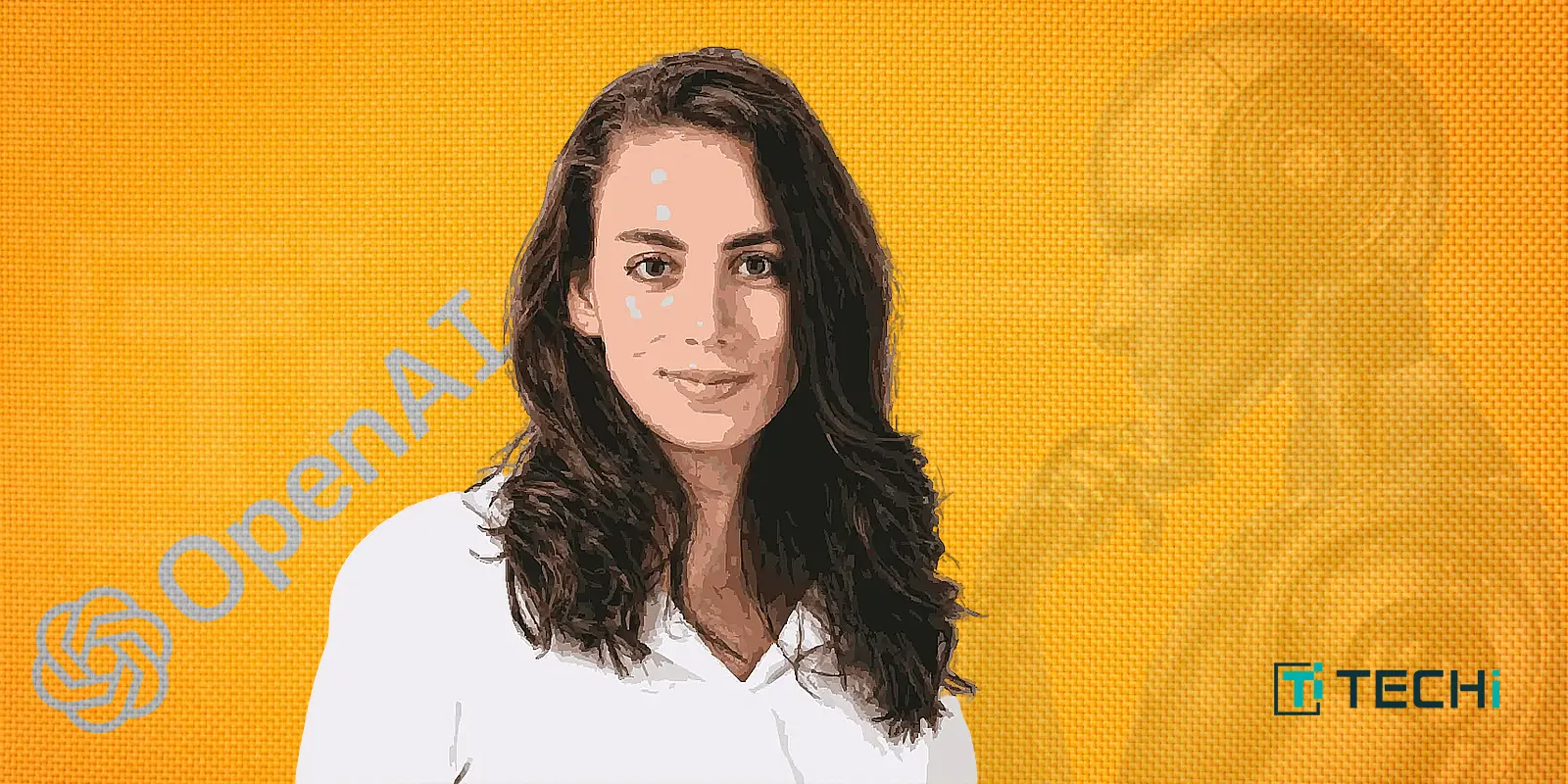
Mira Murati’s AI Vision gains Momentum with her new AI startup, Thinking Machines Lab

In the world of AI, where changes can be sweeping and instantaneous, similar is the dynamics of power. Mira Murati, ex-CTO of OpenAI, just set up her own AI startup, Thinking Machines Lab, and in this tech-world heist, she had 20 researchers from OpenAI join her. If AI were chess, Murati just shouted, “Check!” while sipping her coffee. So what does that mean for the future of AI, and why, suddenly, does OpenAI look like a coffee shop on a busy Monday morning with hardly any staff?

Former OpenAI Chief Technology Officer Mira Murati’s new AI startup, Thinking Machines Lab, is already throwing a major twist in the AI research space. Announced last Tuesday, the company has bragged of collecting the best researchers and engineers working in the leading AI companies, including OpenAI, Meta, and Mistral. The incident bears testament to Murati’s industry influence, as about two-thirds of the young startup’s workforce comprises such ex-OpenAI employees.

Powerhouse Team:

One of the most notable arrivals is Barret Zoph, the renowned AI researcher who left OpenAI on the same date as Murati late in September and will join the startup as the Chief Technology Officer. Another star player, John Schulman, who co-founded OpenAI will be the startup’s Chief Scientist. Schulman at one time went from OpenAI to Anthropic in August arguing that he wanted to shift his focus towards the area of AI alignment, a primal arena that ensures that the AI models remain aligned with human values in the spaces of safety and reliability.

According to sources, more ex-OpenAI employees are expected to join Murati’s venture. The company might have already begun talks to raise funding from venture capitalists, evidence of investors’ great interest in the mission established by the startup. At this stage, I believe that OpenAI might need an AI-powered therapist.

New Vision for AI Development:

Thinking Machines Lab is going to position itself as an AI company claiming to build something more visionary and carrying an ethical veil than any of the companies doing something similar. The startup said, “While current systems excel at programming and mathematics, we’re building AI that can adapt to the full spectrum of human expertise and enable a broader spectrum of applications”.

Another unique selling point of Thinking Machines Lab is its cross-design approach whereby teams from research and product development work together on a common problem. They build artificial intelligence solutions that are very innovative and also practical. The company has plans to dedicate a significant portion of its funds to AI alignment research by open-sourcing datasets, making model specifications available, and publishing research results.

Murati influence:

An active participant in the development of AI, Mira Murati began her work at OpenAI in 2018. She took a leadership position in the development of ChatGPT and many times represented OpenAI in public together with CEO Sam Altman. However, she abruptly left OpenAI amid the transition of its governance structure, joined by several other high-profile exits. Murati was formerly at the helm of numerous Tesla projects as well as those at augmented reality startup Leap Motion, gathering ample experience in cutting-edge technological advancement.

OpenAI’s Departure:

Murati is an additional name in the growing list of former OpenAI executives diversifying out into their new endeavours. Other famous AI projects set up by OpenAI alumni include Anthropic and Safe Superintelligence, which have managed to attract significant investment, and talent alike from OpenAI. Thinking Machines Labs looks poised to be a regular player able to build on its solid research base, courtesy of Murati’s industry experience.

As the AI ecosystem continues to change, Thinking Machines Lab ushers in yet another chapter in the race for building next-generation artificial intelligence. With an impressive cast, a heavy focus on AI alignment, and a commitment to openness in research, Murati’s newly birthed venture is expected to cause ripples across the industry and the future of AI just got a lot more competitive. 

Also Read: South Korea’s AI Power Play; Securing 10,000 GPUs for the Future

Shake-Up in AI: OpenAI Co-Founder John Schulman Departs from Rival Anthropic

In the latest news, One of the OpenAI’s eleven co-founders and leading AI alignment researcher, John Schulman has left his role at Anthropic after five months of joining. He has led the reinforcement learning team that developed ChatGPT. Schulman’s great contribution to the project was applying reinforcement learning with human feedback (RLHF) to OpenAI’s language models. His future plans might include to walk on the footsteps of other OpenAI co-founders and form a new venture.

His departure was confirmed by Anthropic on Feb 5, Wednesday. In 2023, he explained: “The idea was to align our models with human preference — try to get them to actually listen to us and try to do what we want.” Since then, John has continued to focus on the similar agenda. In 2024 he made a surprising decision to leave OpenAI with fellow co-founders Jan Leike and Mira Muratti walking in his footsteps and leaving the company too.

After he left, only three of the original founders led language and code generation, having OpenAI CEO Sam Altman, Brockman and Wojciech Zaremba in the team. John Schulman on his farewell post on X in August, 2024 announced the biggest transitions of his life: 

I’ve made the difficult decision to leave OpenAI. This choice stems from my desire to deepen my focus on AI alignment, and to start a new chapter of my career where I can return to hands-on technical work. I’ve decided to pursue this goal at Anthropic, where I believe I can gain new perspectives and do research alongside people deeply engaged with the topics I’m most interested in. 

At that time, he intended to take up the role at Anthropic to “focus on AI alignment” and “return to hands-on technical work.” As far as Anthropic’s revenue is concerned, a major competitor to OpenAI hits about $875 million annually.

John’s new AI startup on the way?

After his sudden departure from Anthropic, Schulman itself hasn’t disclosed his future plans. One possibility is that his own AI startup just like the other co-founders including Ilya Sutskever, who founded Safe Superintelligence, Andrej Karpathy, who launched Eureka Labs, and Vicki Cheung, who helped found Gantry.

Anthropic’s chief science officer Jared Kaplan said in an emailed statement to Reuters: “We are sad to see John go but fully support his decision to pursue new opportunities.”

Among the field’s leading researchers, lab-hopping is common. From OpenAI to Anthropic and from 9 years to 5 months, John’s career is interesting. He isn’t the only former employee who found Anthropic its home but include other fellow OpenAI co-founders Jared Kaplan and Durk Kingman, the leading AI safety researcher Jan Leike, and Anthropics CEO and President Dario and Daniela Amodei. However, his time at Anthropic is short-lived. The eyes are on his next career move and its impact on AI technology and the world.

Read More: Musk’s Legal Battle with OpenAI May Head to Trial, Judge Rules