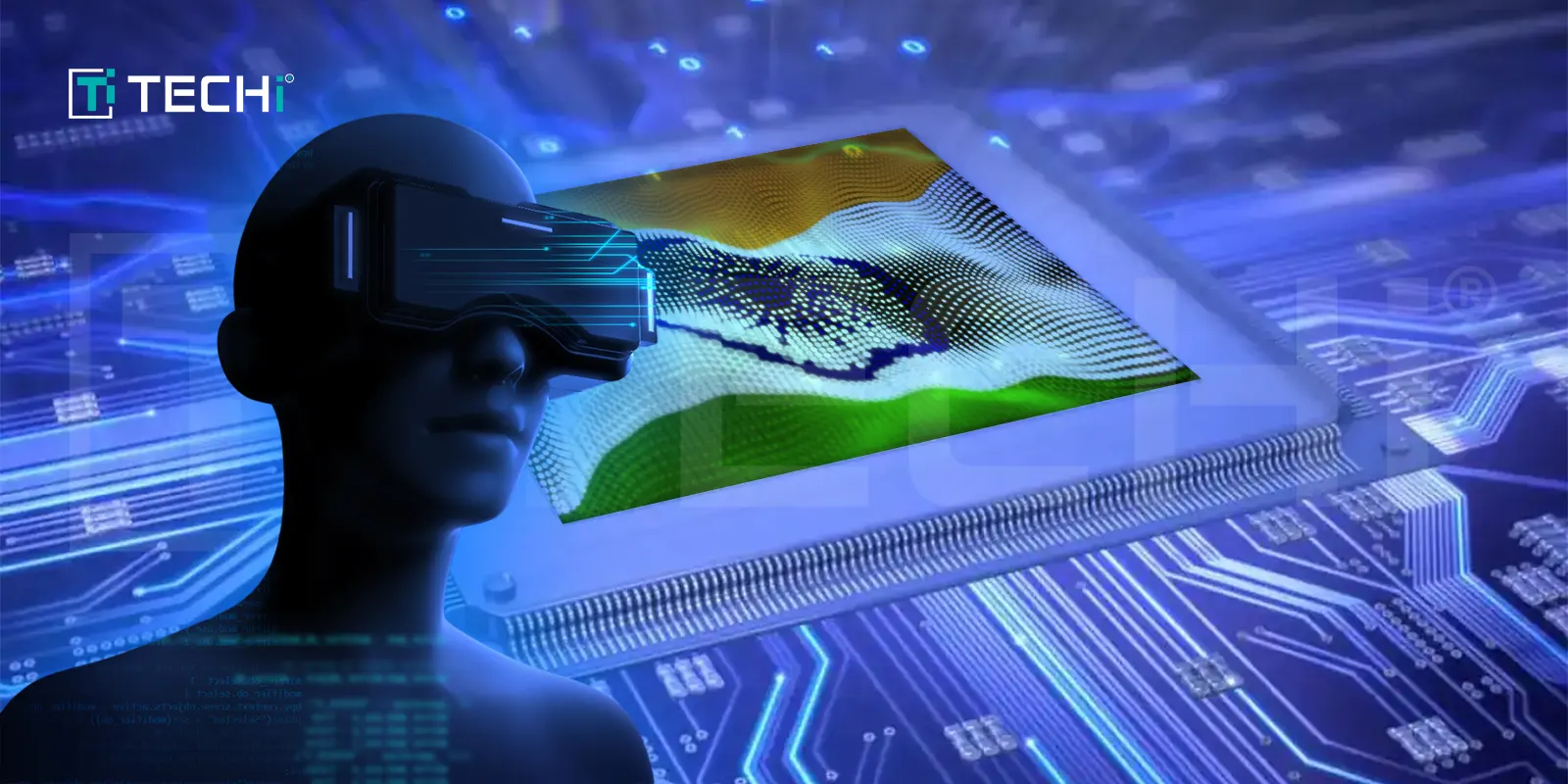
The world of Artificial Intelligence (AI) is evolving rapidly, with China and the US leading the way in developing powerful AI models. Recently, China’s DeepSeek stunned the tech industry by dramatically reducing the cost of building generative AI applications. Meanwhile, India is still playing catch-up in developing its foundational AI model.
The Indian government, however, remains confident. It has announced plans to provide thousands of high-end chips to startups, universities, and researchers, aiming to develop an AI model within 10 months. But with China and the US already years ahead, the question remains: Can India close the gap in time?
Global Tech Giants Bet on India’s AI Future
India’s AI potential is not going unnoticed. OpenAI CEO Sam Altman, who was once skeptical about India’s AI ambitions, now acknowledges the country’s capabilities, stating:
“India should be playing a leading role in the AI revolution.”
India is now OpenAI’s second-largest market by users, highlighting a rapid adoption of AI-driven tools.
Tech giants are also stepping in with major investments:
- Microsoft has committed $3 billion for cloud and AI infrastructure in India.
- Nvidia’s CEO Jensen Huang praised India’s technical talent, calling it key to unlocking AI’s full potential.
With over 200 AI startups, India has an active startup ecosystem working on generative AI. But despite this entrepreneurial energy, experts say India is still far behind in critical areas.
Why Is India Lagging Behind?
Limited AI Funding
While India has announced a $1 billion AI mission, this amount pales in comparison to the $500 billion investment the US has allocated for AI infrastructure (Stargate Project) and $137 billion by China.
Technology analyst Prasanto Roy points out that China and the US have a “four to five-year head-start”, thanks to massive funding in AI research, academia, and military applications.
Lack of India-Specific AI Datasets
A major roadblock for India is the lack of high-quality datasets for training AI models in local languages like Hindi, Marathi, Tamil, and Bengali. Without strong datasets, creating an India-first AI model remains a challenge.
Talent Drain & Weak Research Infrastructure
India has 15% of the world’s AI workforce, but many top Indian AI experts are moving abroad due to better research opportunities. AI consultant Jaspreet Bindra highlights a key issue:
“Foundational AI innovations typically come from deep R&D in universities and corporate research labs.”
Unlike China and the US, India’s academic institutions and corporate research labs have not yet produced groundbreaking AI innovations.
IT Sector Focused on Services, Not AI Development
India’s $200 billion IT outsourcing industry, centred in Bengaluru, employs millions of coders. However, IT companies have traditionally focused on service-based projects rather than foundational AI research.
As Prasanto Roy points out:
“It’s a huge gap which they left to the startups to fill.”
While startups are trying to bridge this gap, experts question whether they have the resources to match China’s and the US’s AI advancements.
India’s Path Forward: Can It Still Catch Up?
Leveraging Open-Source AI Models
Instead of building AI models from scratch, India can modify and improve existing open-source models like DeepSeek.
AI entrepreneur Bhavish Aggarwal, founder of Krutrim, recently wrote on X:
“India can continue to build and tweak applications upon existing open-source platforms like DeepSeek to leapfrog our own AI progress.”
Investing in Semiconductor Manufacturing
AI models require huge computational power, which means India must invest in semiconductor manufacturing. Currently, India depends on imports for AI chips, which increases costs and delays AI research.
Government-Industry Collaboration
Experts say that India’s success in digital payments through UPI (Unified Payments Interface) was possible because of strong government-industry-academia collaboration. A similar strategy is needed for AI, ensuring research, funding, and policy support AI breakthroughs.
Jaspreet Bindra warns that without sustained funding, India’s 10-month AI model deadline may not be realistic, stating:
“Despite what has been heard about DeepSeek developing a model with $5.6 million, there was much more capital behind it.”
The Race Is On, But India Must Act Fast
India has the talent, market size, and growing investment interest. But to truly compete with the US and China, it must address funding gaps, invest in research, and build AI infrastructure.
Experts agree that the next few years will determine whether India will emerge as an AI leader or continue to rely on foreign AI technology.
Read More: Thousands of Apps Removed from EU App Store as Apple Enforces DSA