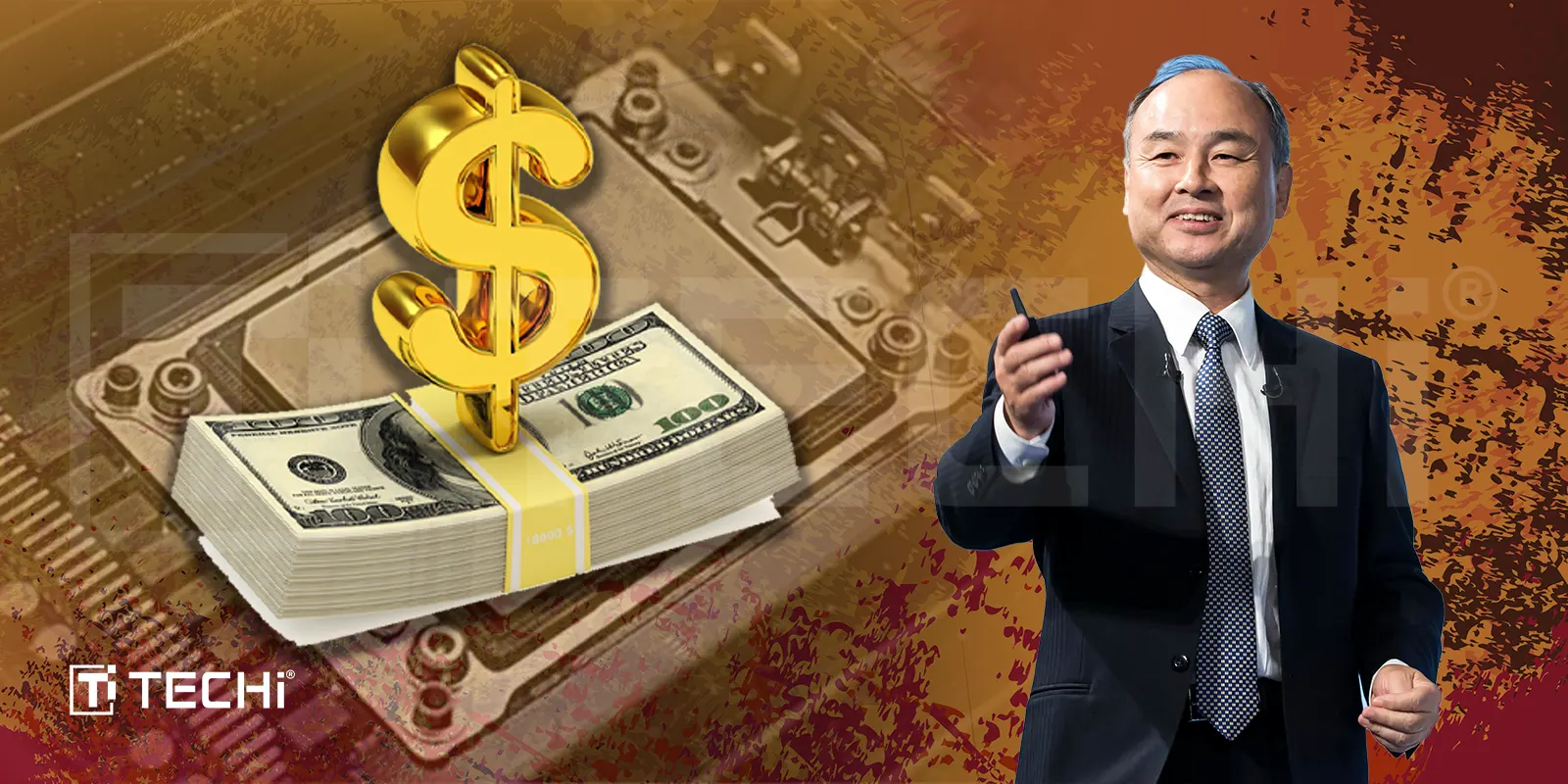
SoftBank moves closer to Acquiring Renee James’ Ampere for $6.5 billion: An unexpected alliance

In another episode of corporate chess, SoftBank is said to be on the verge of acquiring Ampere, the deal might still be fragile and it is clear that Ampere’s destiny is about to turn, but it raises the question about why SoftBank is eager to add another chip company to its collection?

Reports have suggested that SoftBank is close to acquiring Ampere, a semiconductor company founded by Renee J. James, a former Intel executive, for about $6.5 billion. This deal is a huge development in the controversy surrounding Ampere’s ongoing ownership narrative and could be viewed as a continued investment of SoftBank into the semiconductor space.

As per the report, the supposed acquisition price is lower from Ampere’s $8 billion valuation in 2021 when SoftBank was considering purchasing a minority stake. However, even with a downgraded valuation, the deal is considered to be very strategic, given that Ampere’s expertise in designing ARM-based data center chips fits well with SoftBank holding a major stake in ARM Holdings, the chip designer.

Ampere’s rise:

Founded in 2017 by Renee James, who has had a 28 year long career at Intel, Ampere was formed with the view of producing data center chips based on ARM low-energy designs. That was a truly novel idea in the context of that time. Backed by Oracle and private equity firm Carlyle, Ampere gained a fast grip, luring in key cloud computing customers such as Microsoft and Oracle.

Oracle in its annual report disclosed a 29% stake in Ampere, has put in place options and convertible notes that could confer on it a controlling interest in Ampere. Oracle wrote, “If either of such options is exercised by us or our co-investors, we would obtain control of Ampere and consolidate its results with our results of operation”.

These financial arrangements have fed speculation on the eventual future of Ampere. Conversely, the most recent speculation has it that, after serving on the board since 2015, Renee James would depart from it, which raises even more questions.

A Strategic Acquisition for SoftBank:

For SoftBank to be interested in Ampere, the demand from the AI perspective for efficient data center chips at scale is on the increase. With ARM Holdings as its other asset, the ARM chip technology of Ampere is enhancing the prospect of SoftBank as a player in the AI and cloud computing revolution.

Negotiations are underway, and there is a possibility that terms may change or the acquisition may not happen at all, as the deal is not concluded yet. Should it be concluded, this acquisition could be transformative for the future of Ampere and will further sustain its reputation in the semiconductor business. The semiconductor industry is fast in being merged and transformed with companies racing to establish AI-driven processing power.

If SoftBank goes through with the Ampere acquisition, this will represent yet another turning point in the rapidly changing world of chip manufacturing and data center computing. Whether the deal goes on or dies is one thing that needs not be clarified now but the struggle for dominance in the semiconductor world will go on.

Read More: An Unconventional Alliance Forging AI Innovation; SoftBank and OpenAI Joint Venture in Japan
US Authorities Investigate Whether DeepSeek Used Banned Nvidia AI Chips 

The U.S., with its God complex and a dogmatic perception regarding other nations, is quite a paradoxical situation. A source with knowledge of the situation revealed that the U.S Department of Commerce is investigating whether DeepSeek, the Chinese firm responsible for the AI model’s success in China, has been using U.S. chips that are prohibited for shipment to China. When your AI model becomes the talk of the tech world and wipes $1 trillion off U.S stocks, someone with a God complex can have suspicions that it might have a little ‘forbidden fruit’ involved.

U.S Dominance in AI:

Last week, China’s DeepSeek unveiled a free assistant that uses less data and is priced below other U.S models. In just a few days, it became the most downloaded app in Apple’s App Store and raised concerns about the United States’ dominance in AI, leading to a major drop in U.S tech stocks, costing almost $1 trillion in market value. The current exports of the A100 and H100 models are restricted from China, as Nvidia’s advanced artificial intelligence chips are designed to prevent them from competing with other nations regarding AI technology for market share. 

Yet, as per the source, organizations that are smuggling AI chips to China have been observed in countries like Malaysia, Singapore, and the United Arab Emirates. DeepSeek and the Commerce Department failed to respond immediately when questioned on this matter.

A spokesperson for Nvidia explained that many of Nvidia’s clients have established businesses in Singapore and overseas, while others may also be involved in shipping their products to the U.S. and Western countries. Nvidia said, “We insist that our partners comply with all applicable laws, and if we receive any information to the contrary, act accordingly.” However, previous reports by DeepSeek suggest that it used Nvidia’s H800 chips, which were available to purchase legally before the latest U.S. restrictions were enacted in 2023.

AI Chips Supply Chain at Risk:

DeepSeek really went from a promising AI startup to a suspect involved in smuggling, standing in the courts of the U.S. Nvidia’s H20s, which are less powerful and available for purchase on DeepSeek, are still legal to ship to China, as the U.S. contemplated controlling them during the Biden presidency, and this issue is being discussed by Trump’s new officials. Dario Amodei, the CEO of Anthropic AI firm stated, “it appears that a substantial fraction of DeepSeek’s AI chip fleet consists of chips that haven’t been banned (but should be), chips that were shipped before they were banned; and some that seem very likely to have been smuggled.”

This implies that a significant portion of DeepSeek’s AI chip inventory is made up of chips that were either shipped to the country before the ban or chips that are not banned but should be, and others might be smuggled. The ban on exporting AI chips to China has been imposed by the U.S government, and it is now considering expanding these restrictions to other nations. The analysis of DeepSeek’s chip usage reveals the rising tensions between nations and mutual trust surrounding AI technology and chip supply chains. 

Read More: Italy Bans DeepSeek But Banning AI Model is Harder Than You Think