OpenAI to Shift AI Compute from Microsoft to SoftBank

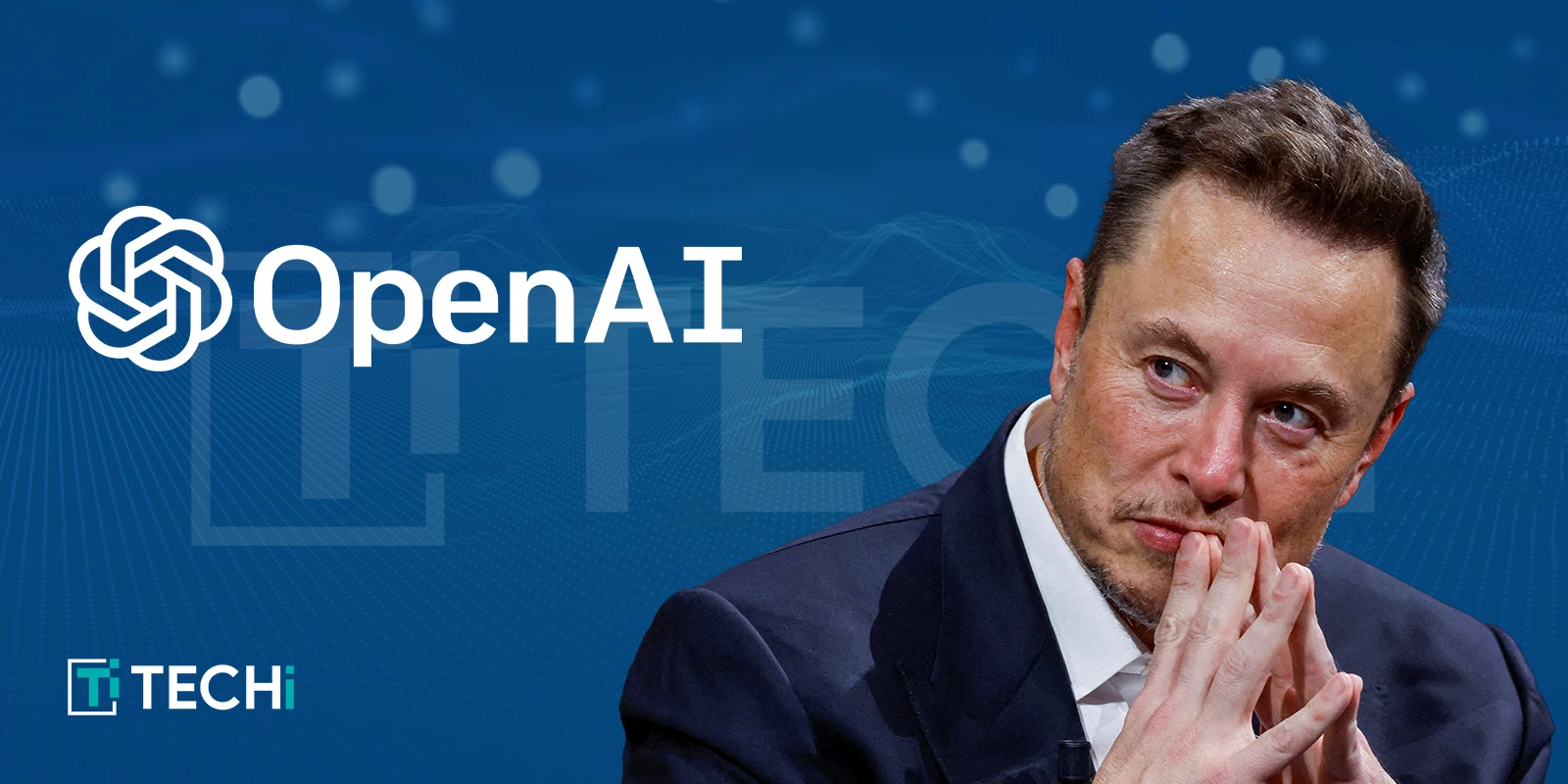
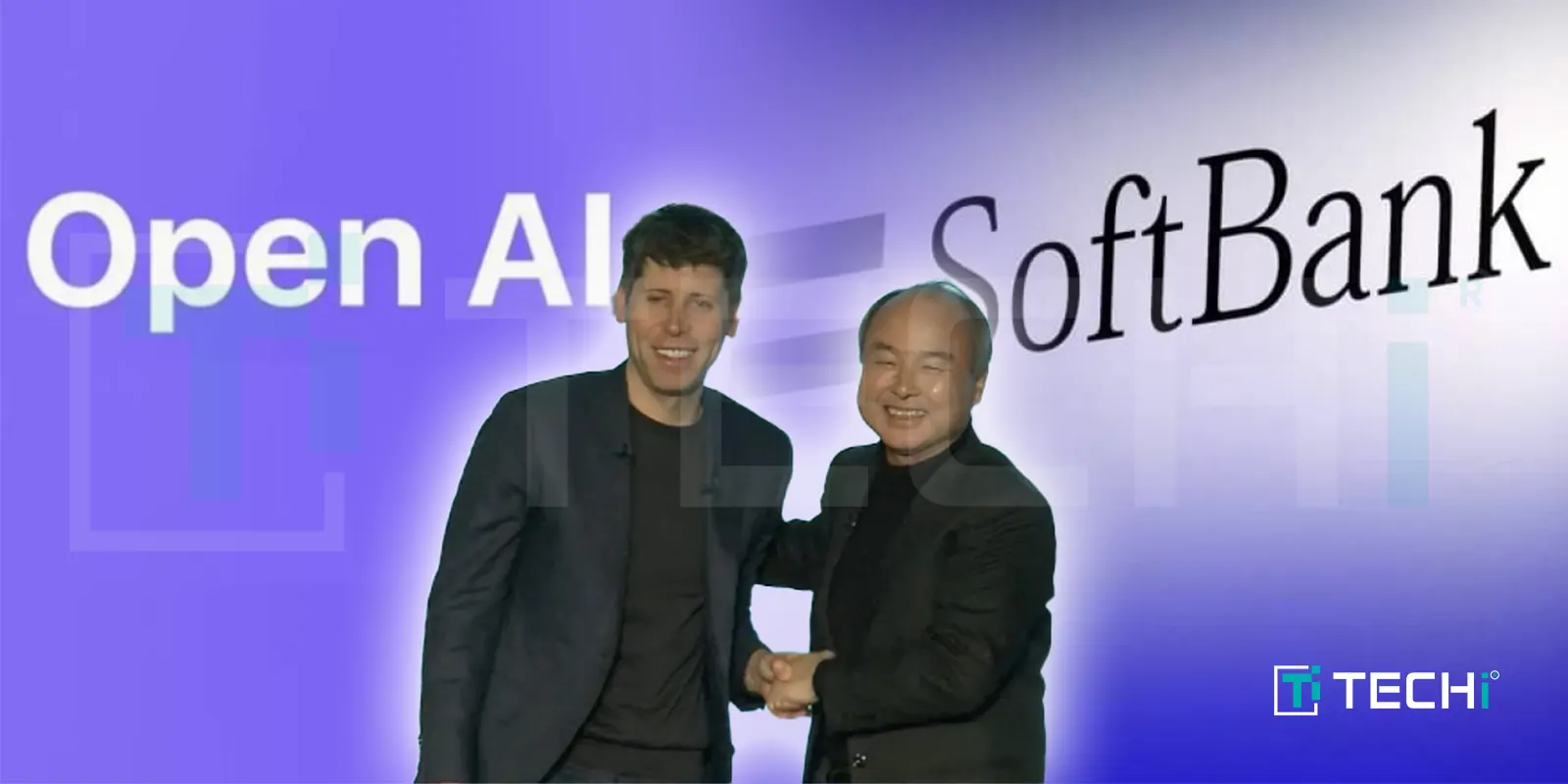
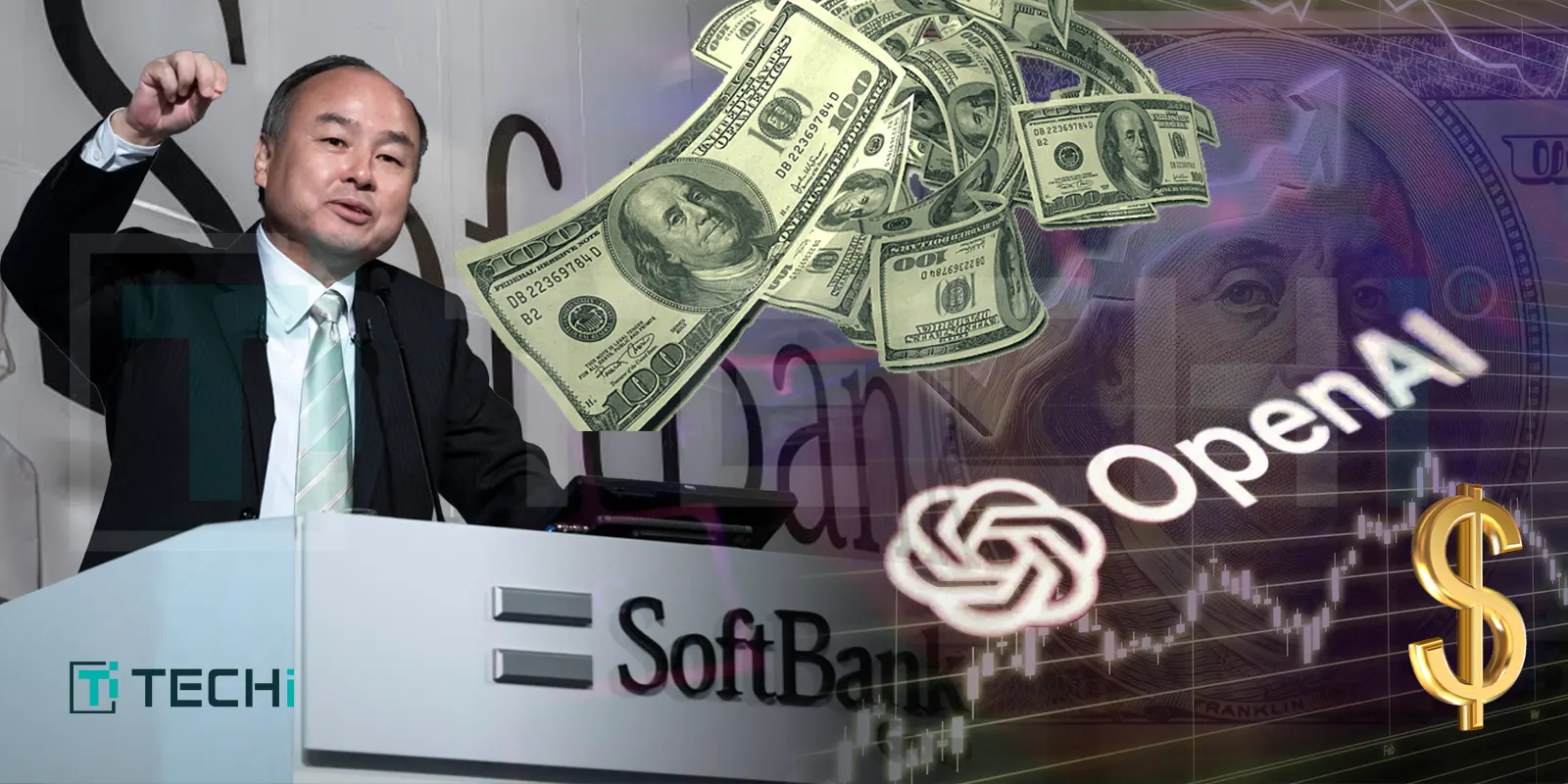
According to The Information Report on Friday, OpenAI is forecasting a significant shift in the next five years around who it gets most of its computing power from. OpenAI is significantly shifting its AI infrastructure, moving away from Microsoft’s cloud services and toward SoftBank-backed Stargate. By 2030, OpenAI expects 75 percent of its computing power to come from Stargate, marking a shift that carries a lot of opportunity and risk. Though this shift is coming, OpenAI will keep increasing its spending on Microsoft’s data centers in the next few years. However , the company’s operational expenses are poised to increase significantly.

Reports indicate that OpenAI will burn through $20 billion in cash by 2027, marking a significant financial shift from previous years, a massive jump from the $5 billion spent in 2024. By the decade’s end, OpenAI forecasts that running AI models (inference costs) will surpass AI training expenses, marking a significant shift in its computing strategy. This move signals OpenAI’s push for greater independence in cloud infrastructure as it scales its AI models.

Why Is OpenAI Starting to Move Away from Microsoft?

With this move, OpenAI is positioning itself for a world where computing resources are more often distributed. But is this the right move? Moving computing power over from Microsoft (whose Azure powers OpenAI today) to the SoftBank-backed Stargate project is not something that happens overnight; there is a lot of work to be done. OpenAI has leaned heavily on Microsoft’s Azure cloud, but as AI costs have taken off, the company seems to be looking for more control and diversification over its compute resources. There might be several reasons why they decide this.

Microsoft increasing interest in its in-house AI research might lead to strategic conflicts with OpenAI in the future, which might end up resulting in conflicts of interest between the two. To OpenAI, this could be a mandate to secure its long-term independence. In addition, OpenAI’s rising operational outlays — projected to surpass $20 billion by 2027 — necessitate a more fluid funding approach, and SoftBank is famous for its mega tech bets. In addition, OpenAI may want to decrease the reliance on U.S. cloud providers for strategic reasons as well, whether it be aimed at mitigating risks from potential regulatory scrutiny or geopolitical factors.

What It Signals About OpenAI’s Future

In leaning toward SoftBank-backed computing, OpenAI is making a calculated gamble. This could offer more autonomy, tailor-made AI chips, and improved financial flexibility, in other words. However, SoftBank’s track record of putting money into volatile deals (think WeWork) begs the question of whether this is a sustainable partnership in the long term.

And inference costs (i.e., running AI models) are expected to exceed training costs by 2030, so OpenAI needs a long-term sustainable solution. This could blow up in the face of the SoftBank-funded Stargate project if it fails to deliver the same stability and efficiency that Microsoft Azure provides. Ultimately, OpenAI’s pivot away from Microsoft is a high-stakes transition that could determine its trajectory in the A.I. industry. If done right, it could solidify OpenAI’s role as a leading innovator in AI. However, if the transition faces major roadblocks, it could open up new challenges that slow down OpenAI’s momentum in the AI race.

Read More: OpenAI Drops o3 AI Model to Unify AI Strategy with Game-Changing GPT-5
6 New AI-Powered Tech Startups Reach Unicorn Status in January 2025

The year 2025 started with a surge of billion-dollar valuations as six promising tech startups officially entered the unicorn club in January. These AI-powered tech startups, spanning artificial intelligence, healthcare, fintech, and industrial technology, have drawn massive investments from leading venture capital firms. The surge in funding signals a strong investor appetite for cutting-edge innovations in AI-driven automation, genomic research, cybersecurity, and defense technology. Here’s a closer look at the six AI-powered tech startups that have achieved unicorn status and how they shape the future.

Truveta: 

Founded in 2020, Truveta is a health-tech company specializing in AI-powered genetic research. The company aims to advance personalized medicine by creating a comprehensive and diverse genomic database. Terry Myerson serves as the Chief Executive Officer and co-founder of Truveta.

Codeium: 

Established in 2023, Codeium is an AI-driven coding assistant designed to help developers write and optimize code more efficiently. While specific details about its leadership are not publicly disclosed, the company is reportedly discussing raising new funding at a valuation of $2.85 billion.

Mercor: 

Launched in 2024, Mercor is an AI-powered recruiting platform that streamlines the hiring process by matching candidates with suitable job opportunities. The company was founded by three 21-year-old Thiel Fellows, with Brendan Foody serving as the Chief Executive Officer. Mercor recently raised $100 million in a Series B funding round, bringing its valuation to $2 billion.

Augury: 

Founded in 2011, Augury specializes in AI technology that detects malfunctions in industrial machinery, aiming to prevent equipment failures and reduce downtime. The company recently raised $75 million, pushing its valuation over the $1 billion mark. Saar Yoskovitz is the co-founder and Chief Executive Officer of Augury.

Neko Health: 

Established in 2022, Neko Health is a Swedish startup co-founded by Spotify’s Daniel Ek. The company focuses on developing advanced body-scanning technology for early disease detection and preventive healthcare. In a recent Series B funding round, Neko Health secured $260 million, though its exact valuation remains undisclosed.

Epirus: 

Founded in 2018, Epirus is a defense technology company specializing in advanced directed energy systems designed to counter emerging threats. The company is reportedly in talks to raise between $150 million and $200 million in a new funding round led by venture firm 8VC. Leigh Madden serves as the Chief Executive Officer of Epirus.

A Strong Start for Tech Innovation in 2025

The emergence of these six unicorns in January 2025 highlights a broader trend in the startup ecosystem—investors are increasingly placing their bets on AI-powered solutions, predictive analytics, fintech security, and next-gen healthcare innovations. The influx of capital into AI-driven automation, genomic research, and industrial AI demonstrates the tech industry’s resilience and its ability to drive breakthrough innovations despite ongoing economic uncertainties. As these startups continue to grow, they are set to redefine healthcare, cybersecurity, defense, and industrial efficiency, shaping the next generation of global technology leaders. With more startups poised to achieve unicorn status in the coming months, 2025 is shaping up to be a landmark year for disruptive tech innovation.

Read More: Elon Musk’s AI Revolution Continues as xAI Unveils Grok 3 AI Model

Apple’s iPhone 16e Brings AI & A18 Chip at $599, Launching Feb 28

AI meets affordability, as top of the line smartphones smash the barrier of $1,000, Apple is extraordinary for bringing such a change and providing this new range with a low cost but powerful alternative. The iPhone 16e, an AI-integrated device that brings value to affordability along with giving some very sleek redesigns and its latest see-through internal chip has entered the world of AI technologies.

The new iPhone 16e budget friendly smartphone, has been officially introduced by Apple. It is priced at $599 for the fourth-generation device. Not only is it the recipient of the latest AI capabilities introduced by Apple, but it also comes with the makeover and updated internals. It’s supposed to make its market debut on February 28, and that’s just the bridging element, from being pretty affordable to being all high-tech.

Apple Intelligence:

The major feature of the iPhone 16e is Apple Intelligence with its response to AI assistant competitors such as OpenAI’s ChatGPT and Google’s Gemini. This advanced model is even able to run locally on devices, which will offer services such as text summarization, letter writing, and picture generation.

Along with the exclusive club of devices that have Apple Intelligence features, the 16e joins the iPhone 16 lineup. The brain of the device is powered by an A18 processor, on which superb AI performance is delivered and also users are granted access to ChatGPT via Siri without having an OpenAI account.

Hardware and Design Changes:

The iPhone 16e has several major design and hardware improvements which are the following;

  •  Processor; the new Apple A18 chip has a 16-core AI processing-neural engine and a 4-core GPU.
  • Display; a larger 6.1 inches of OLED display is compared to a previous 4.8-inch screen on the SE.
  • Camera; a single 48-megapixel rear camera with 2x zoom, which produces 24-megapixel images.
  • Face ID & Notch; for Face ID, it was done away with the Touch ID home button similar to the notch style of an iPhone X.
  •  USB-C Port; it moves away from Lightning ports to USB-C for standardization of the entire Apple’s hardware.
  •  Battery Life; it offers what Apple calls “the best battery life ever on a 6.1-inch iPhone” and claims to give 12 hours more battery life than its predecessor.
  • The most described milestone, iPhone 16e, is also synonymous with the debut of the new Apple brand modem, known as the C1, populating the pages of the history book. So now, Apple will stop depending on companies like Qualcomm and Intel for modem chips.

Strategic Timing for a Shifting Marketplace:

The iPhone 16e is coming at a critical time for Apple, especially due to the recent 11% drop in its market share in China. Increased competition from Huawei and limited AI availability in China were to be blamed for this drop. The company is working to integrate major Chinese tech firms, like Tencent, ByteDance, and Alibaba, to create a localized AI experience in the region. The iPhone SE series, historically, has had good sales mainly in key markets of China and India. While the new price tag of $599 is a $100 increase from its predecessor, premium features and AI capabilities may help Apple claw back in these markets.

Availability and Preorders:

Preorders start on February 21, while shipping is scheduled to begin on the 28th of February. The iPhone 16e is really not just any other low-cost device but rather a statement. With its AI capabilities, an improved battery, and a redesigned modern look, Apple is demonstrating how innovation does not only lie with high priced models. In a rapidly changing market environment with increasing competition, the iPhone 16e may be instrumental in appealing to new users wanting technology with a value for money proposal. As Apple continues stretching the boundaries of AI and smartphone technologies, the iPhone 16e could become a game changer in the midrange space.

Read More: Thousands of Apps Removed from EU App Store as Apple Enforces DSA

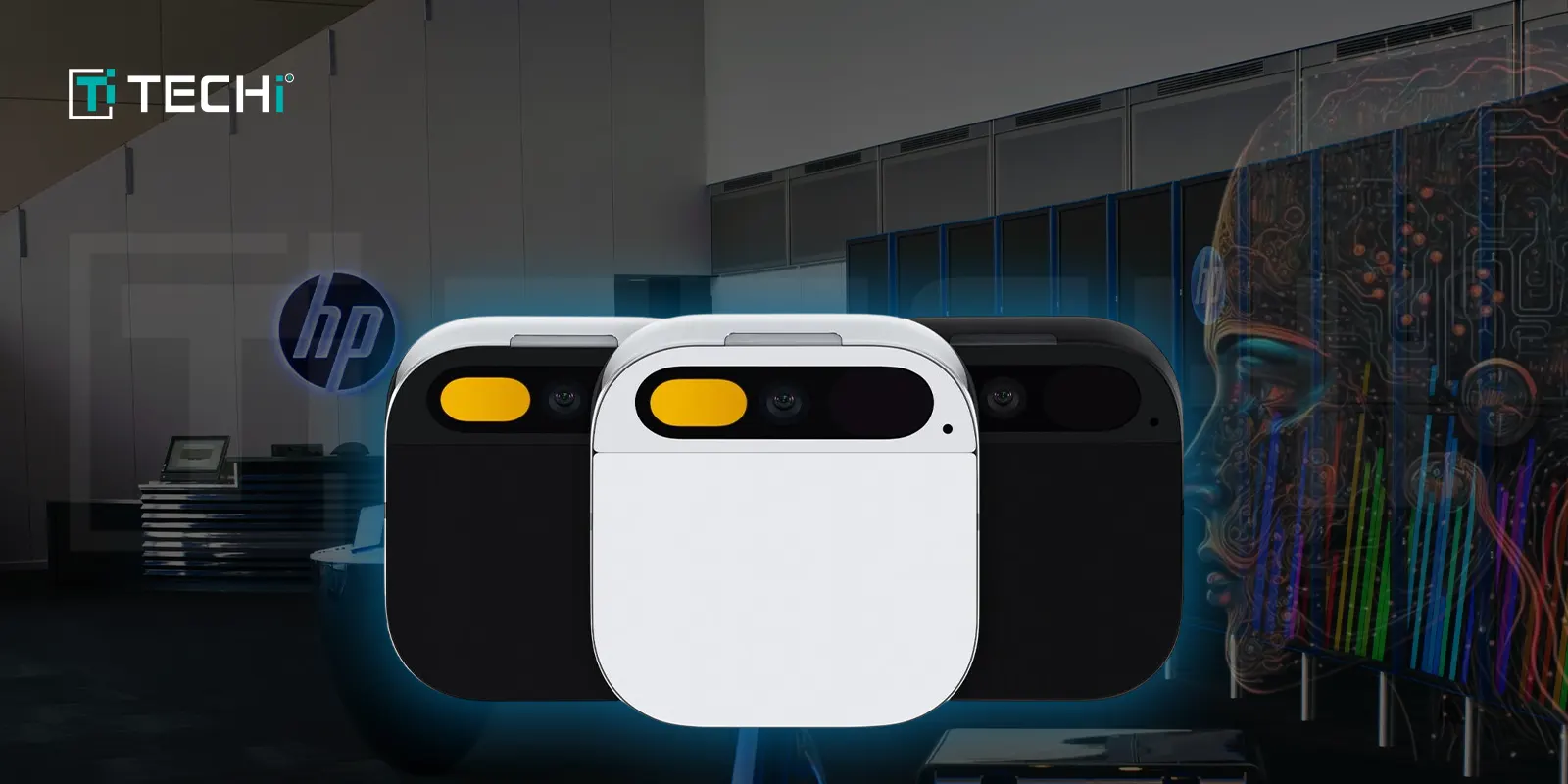
HP Acquires Humane Assets for $116M, Shutting Down AI Pin for Good

Full of dreams and larger than life disasters, it seemed for a while that the world of tech startups is meant for the Humane Ai Pin. Once celebrated as the future of wearable AI, the product is indeed fading fast along with its parent startup. In a typical twist of this drama, HP clawed Humane’s assets for $116 million, taking the AI Pin off life support just 10 months after its grand launch. I guess the lesson to learn here is that sometimes tech dreams do not translate into reality, and in the case of the Humane AI Pin, reality came knocking hard at the door with “No, thanks!” from the market.

After having its assets bought for $116 million by HP, the hardware startup Humane, which was once looking to change personal computing with its AI-powered wearable device, is essentially shutting down its operations. The acquisition was announced on Tuesday and it signals the demise of Humane’s aspirations for an AI Pin that once served as hope for a smartphone alternative.

This instant effect means sales of the AI Pin are being halted by Humane, the AI Pin is priced at $499. Customers who purchased the AI Pin have been notified that their pins would stop working on 28th of February, 2025 at 12 PM PST. Upon that date, the devices will lose connectivity to Humane’s servers, rendering them incapable of performing core functions like calling, messaging, AI queries, and cloud access. Humane is advising existing owners of the AI Pin to save their important data and videos on some external device before the date of shutdown. Among the consequences of the closure is that the customers who bought their AI Pin in the last 90 days will get their money back, but those who bought it before this will get no refund.

Short-Term Vision:

When launched in April of 2024, the AI Pin brought in a lot of hype, and it was promoted as an entirely new ecosystem that bluntly contrasted with the smartphone way of life. Founded by ex-Apple executives Bethany Bongiorno and Imran Chaudhri, the startup from the Bay Area raised over $230 million to bring the product to market. However, raised expectations gave way to reality as the AI Pin was amazed to find acceptance.

Early reviews and user comments revealed significant shortcomings in the product, causing massive disappointment. Reports emerged in which it was indicated that return rates for AI Pin sales surpassed new sales beginning that summer of 2024. Humane further complicated the matter by issuing a safety warning asking users to stop using the device’s charging case over fire risks concerning the battery. The company tried to excite interest once again in October 2024 by announcing a price reduction for the AI Pin from $699 to $499, but it failed to gain any momentum.

HP’s AI Ambitions:

As part of the acquisition process, HP is absorbing numerous engineers and product managers from Humane, who will set the foundation of the new division of HP called HP IQ. According to HP, this newly formed innovation lab for AI is set to focus on integrating artificial intelligence within its product ecosystem specifically relating to applications of the future of work. HP is also acquiring some proprietary technologies from Humane. Among those is the CosmOS AI operating system, which Humane recently presented with a vision such that CosmOS would power a multitude of smart devices, including car entertainment systems, smart speakers, TVs, and Android smartphones.

HP is expected to investigate how CosmOS could eventually be utilized in their PCs and printers, thus creating an opportunity for AI hardware differentiation. Interestingly, in May 2024, Humane was reportedly looking for a much bigger deal, reportedly valuing itself between $750 million and $1 billion, as per Bloomberg. The final deal struck with HP was for a much lower amount, although Humane has not commented on the acquisition. With this acquisition, HP wants access to Humane’s AI know-how and technology in support of its AI-driven innovations, which signify a crucial strategic shift in HP’s approach to AI-integrated hardware.

Humane’s AI Pin now adds itself to the list of insatiable and ambitious tech products, some of which failed to engage and please the audience. True to its charms, the device promised wearers a screenless AI-enabled accessory but ended up disappointing, not only in practicality but also in the appeal of the mass market. As the dust settles, one thing becomes clear that there is no such thing as easy access to a deep-rooted industry, and even the richest and most well-funded ideas may not survive if real value does not add to them.

Read More: Legal AI Startup Luminance Secures $75M to Advance AI-Powered Contracts

Legal AI Startup Luminance Secures $75M to Advance AI-Powered Contracts

The law is often depicted as an extremely slow industry, slow because of its heavy contracts and legalese, the very vocabulary that takes years to master. What if artificial intelligence would do the heavy lifting for legal chores, making things faster, more accurate, and, dare we say, less mind-numbing? This is precisely what a new wave of legal tech startups seeks to accomplish with revolutionizing AI. A technology field that has perhaps benefited the most from this kind of advancement, surely legal technology is one of them, wherein AI-based solutions are really changing the way legal professionals interact with complex documents and contracts. Among these startups leading the pack is Luminance, which just had a big addition of $75 million to take its “legal-grade” AI to the next level. This momentum will further accelerate funding in legal tech, with several companies getting investments to develop their AI-driven platforms better.

Recently, Luminance, a legal tech startup that claims to provide “legal-grade” AI, received a $75 million Series C funding led by Point72 Private Investments. This raise is significant as it is probably the largest round of investment in a pure play legal AI company in the U.K and Europe. The round brings Luminance’s total amount raised to $165 million, with more than $115 million in the last 12 months alone.

The recent heavy funding in the legal tech space seems to have been growing ever so commonly with several startups scoring sizable rounds in the last months. Only last week did Eudia raise $105 million, while U.S based Harvey secured a whopping $300 million round led by Sequoia. Last year, Genie AI from London raised €16 million, and Lawhive raised $40 million to focus on ‘main street’ U.S lawyers. Luminance’s latest fundraising places it firmly in the category of such high-growth legal AI companies.

Luminance AI Approach:

At its core, Luminance uses what it calls a “Panel of Judges” AI system, designed to automate and augment a business’s approach to contracts, including generation, negotiation, and post-execution analysis. Unlike many other AI startups that rely heavily on general purpose large language models, Luminance has created its proprietary legal pre-trained transformer (LPT). It was trained using over 150 million verified legal documents, many of which were not publicly disclosed with the goal of giving the firm a significant strategic edge over its peers that build their applications on top of general purpose AI models.

Luminance offers:

Using Lumi Go, its flagship product, businesses can send draft agreements to counterparties through the platform and have the AI negotiate on their behalf. Unlike the GPT-based models, with their wide but sometimes not reliable outputs, Luminance’s LPT is specifically formed for legal application resulting in greater accuracy and defensibility.

Eleanor Lightbody, Luminance’s CEO, who took over from the founders after its Series A round said, “It’s a domain-specialized AI that is built with lawyers in mind […] They need to understand that the outputs have been validated and can be trusted, and that’s exactly what our specialized AI can achieve”. She emphasized that Luminance follows a “mixed model approach” in which different models verify each other’s outputs to ensure both transparency and accuracy. She said, “The platform was built with the understanding that each model is good at different things. What you want is to have a mixed model approach, where the models can check each other’s ‘homework,’ and you can get the most accurate and the most transparent answers”.

Global Expansion and Future Plans:

Luminance has rapidly flourished and now counts among its clients over 700 entities in more than 70 countries, including AMD, Hitachi, LG Chem, SiriusXM, Rolls-Royce, and Lamborghini, as well as several large scale corporations. The organization has also sought to enter the North American market aggressively, tripling its headcount while establishing offices in San Francisco, Dallas, and Toronto as it expanded its headquarters footprint in New York.

The Series C round saw participation from several investors, including Forestay Capital, RPS VENTURES, and Schroders Capital, alongside existing backers March Capital, National Grid Partners, and Slaughter and May. Now with newly injected capital, Luminance is set to further develop its AI capabilities while consolidating its status as a player in the legal tech arena.

The rising stock of luminance testifies to the innovative applications of artificial intelligence in different sectors, particularly in the so-called law where precision and reliability matter a lot. This recent funding has just placed the company in a better position to extend its footprint internationally to enhance its specialized legal AI models. With artificial intelligence being used in legal work plans, it will be clear that a future in law is going to be one with human expertise accompanied by intelligent automation. With this latest funding, the company is set to revolutionize legal automation to ensure efficiency, accuracy, and reliability worldwide.

Read More: Elon Musk’s AI Revolution Continues as xAI Unveils Grok 3 AI Model

Elon Musk’s AI Revolution Continues as xAI Unveils Grok 3 AI Model

Artificial intelligence has evolved rapidly along with xAI certainly taking up the challenge with the launch of Grok 3 AI Model that promises advanced reasoning capabilities, deep search, and a voice mode, making it the most intelligent chatbot around. Although, in the current super competitive AI race, one question is raised in people’s minds, will Grok 3 outwit, outlast, and out-GPT its competitors?

The xAI’s Grok 3, founded by Elon Musk, became the latest flagship AI model launched, with new features being introduced in Grok apps on iOS and the Web. It is designed to compete with OpenAIs’ models GPT-4o or Google ‎Gemini. Grok 3 has extensive capabilities in image analysis, reasoning, and deep research functions, categorically establishing an AI performance benchmark.

Grok 3 AI Model step ahead in AI:

Grok 3 AI Model had reportedly been under development for a few months and was in need of massive training in a data center in Memphis with nearly 200,000 GPUs. Musk in his post on X claimed that, “Grok 3 was developed with 10x more computing than Grok 2, its predecessor, and with an expanded training data set that ostensibly includes filings from court cases”.

During a live-streamed presentation Musk said, “Grok 3 is an order of magnitude more capable than Grok 2. [It’s a] maximally truth-seeking AI, even if that truth is sometimes at odds with what is politically correct”. Grok 3 is not one model, but rather a family of models, including the Grok 3 mini, which works faster but with less accuracy. Not all features are available right away but the launch has started this Monday.

Performance and Benchmarks:

According to xAI, Grok 3 surpasses GPT-4o in major AI benchmarks, including American Invitational Mathematics Examination (AIME) (resolution of mathematically inclined questions) and Graduate-Level Google-Proof Q&A Benchmark (GPQA). Early on, Grok 3 was found to compete with others in the Chatbot Arena, which is a crowdsourced platform to assess AI performances.

Grok 3 also has two special variants, Grok 3 reasoning and Grok 3 mini reasoning, in contrast to OpenAI o3-mini and DeepSeek R1 models in certain problem solving tasks. Whereas these reasoning models are working on a deep self-verification path before delivering their answers, thereby significantly increasing the level of correctness on mathematical, scientific, and programming questions. xAI claims Grok 3 Reasoning is better than OpenAI’s leading o3-mini-high model for mathematics, especially for AIME 2025. Users can interact with these models from the Grok app, using Think mode for general reasoning or Big Brain mode for complex computations requiring additional processing.

DeepSearch and Subscription Plans:

Reasoning in Grok 3 is also present in DeepSearch, an AI powered research tool by xAI where the internet and X delivers complete analyses. DeepSearch is xAI’s answer to similar tools from OpenAI and other AI firms. Access to Grok 3 is first limited to subscribers of X Premium+ plan, which costs $22 per month. Meanwhile, an upgraded subscription tier, SuperGrok, is rumored to cost $30 per month or $300 per year, offering additional reasoning queries, DeepSearch capabilities, and unlimited image generation. Musk also announced that Grok 3 will soon gain a voice mode, enhancing user interaction with synthesized speech.

Within weeks, Grok 3 models will be available in xAI’s enterprise API alongside DeepSearch functionality. Additionally, Musk revealed plans to open source Grok-2 in the coming months, stating that, “Our general approach is that we will open-source the last version [of Grok] when the next version is fully out. When Grok 3 is mature and stable, which is probably within a few months, then we’ll open-source Grok 2.”

Political Controversy:

Musk originally pitched Grok as being a way for people to get away from mainstream AIs, promising it would be “edgy, unfiltered, and anti-woke.” In previous versions, however, Grok could not resist becoming politically sensitive or aligning with leftist views prevailing in most social issues. Musk attributed that to Grok’s training data and promised to change its tone toward political neutrality.

Whether Grok 3 will achieve that remains to be seen, as well as how its stance on “truth-seeking” AI will be able to shape public discourse and governance over AI. It’s a milestone in the changing AI landscape, and this latest release from xAI promises to stretch what AI models are capable of. How far Grok 3 will go in terms of its perceived capabilities remains to be seen, while Musk continues to pursue the population of AI with truth seeking.

Read More: Apple Maps May Introduce Google-Style Ads to Expand Its Revenue Stream

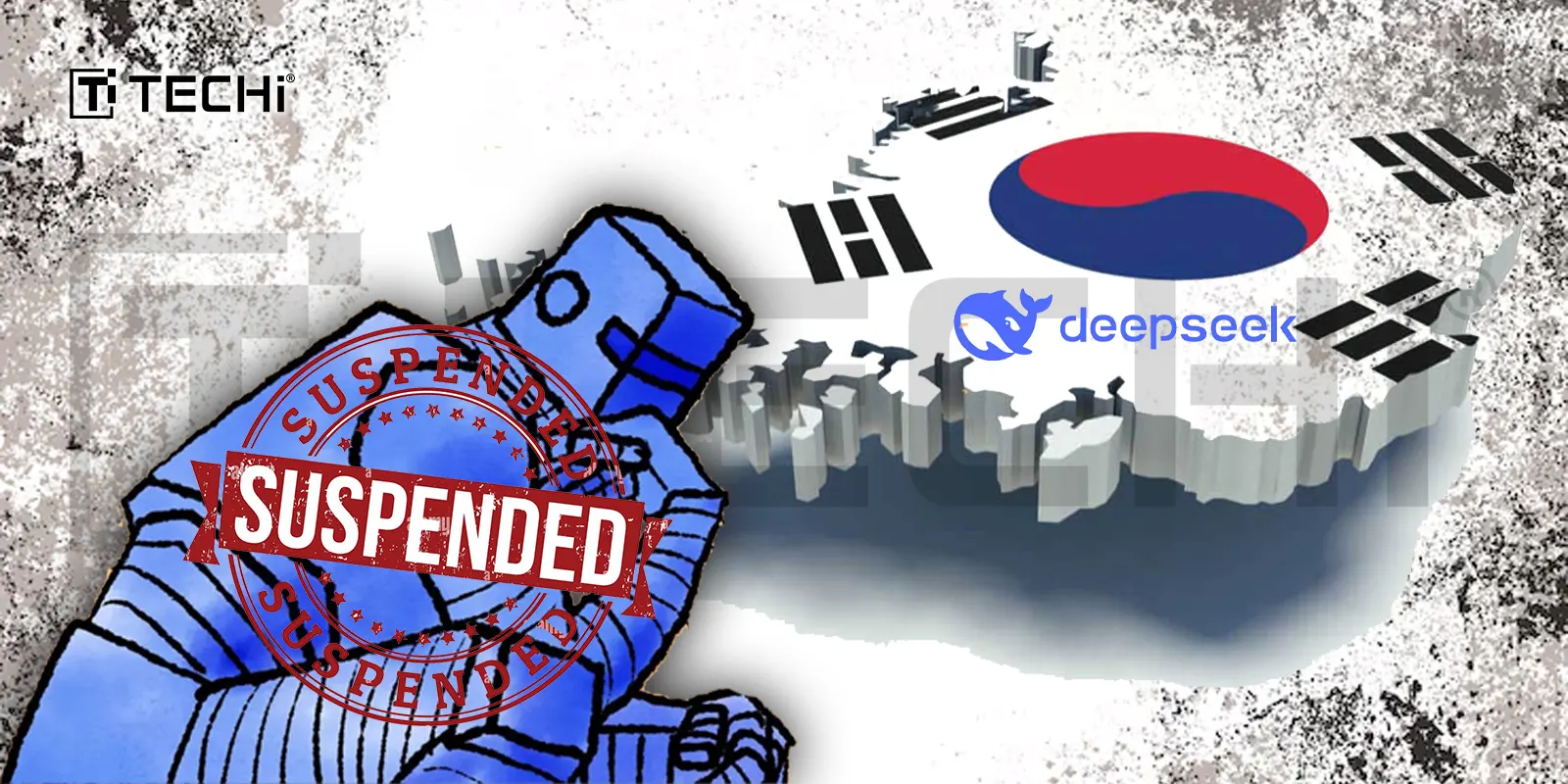
South Korea Suspends New Downloads of DeepSeek over Data Privacy Concerns

Suppose one downloads an AI chatbot to brainstorm ideas, solve inquiries, and perhaps even crack a joke, but only to find that it’s under deactivation due to data privacy issues. That is the exact situation faced by the South Korean users of DeepSeek, the Chinese AI app that is now being considered for regulatory attacks. Its web service continues to work, but downloading for the new user is immobilized until compliance with South Korean data protection law. I guess South Korean regulators just hit DeepSeek with the digital equivalent of a “Try again later” sign.

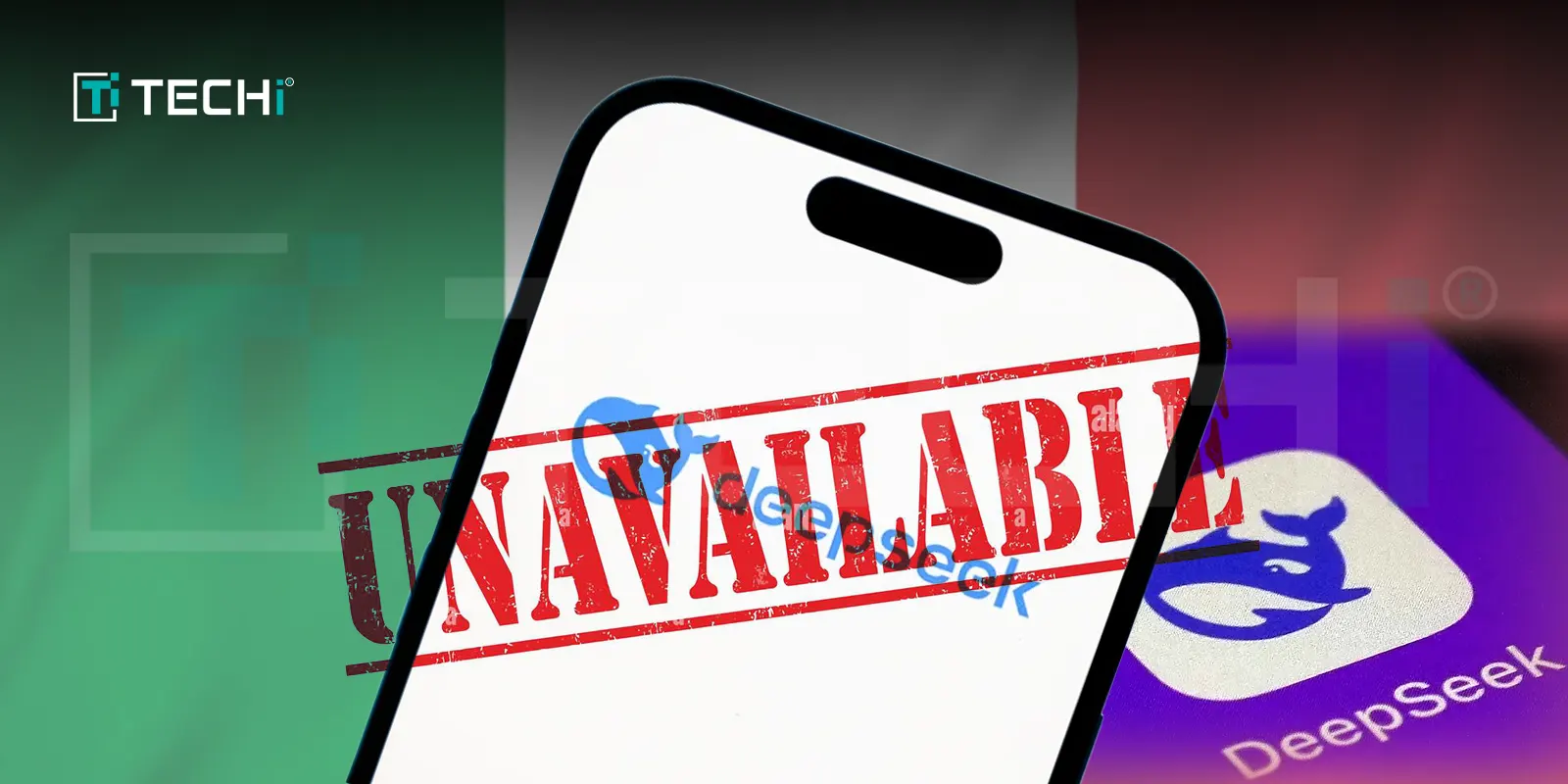
As South Korea has put an end to any further download of the Chinese artificial intelligence app, DeepSeek, due to concerns about breaching its data privacy laws, the Personal Information Protection Commission (PIPC)  highlighted that the suspension took place on Saturday and would continue until DeepSeek was modified to conform to South Korea’s privacy law.

The AI-enabled chatbot, meanwhile, can still be accessed in South Korea through the web-based service. The inspection is back on the app on how DeepSeek handles user data, especially against the backdrop of global concerns considering how other AI applications collect data and provide privacy protections.

Regulatory Scrutiny:

DeepSeek once admitted that, in certain respects, it has failed to give account for Korea’s personal data protection laws, which was told by the PIPC. The company has appointed legal representatives in South Korea, and is prepared to tackle those regulatory concerns. This follows a similar set of steps taken by Italy’s data protection authority, the Garante, last month, to order DeepSeek to suspend its chatbot services in that country due to privacy policy concerns still to be resolved.

Such incidents illustrate the increasing regulatory pressures bearing on AI startups, as governments around the world tighten oversight on the collection, storage, and use of personal data. It seems like AI chatbots are great at solving problems but terrible at avoiding them.

China’s Response:

Regarding the situation in South Korea, a spokesperson from China’s foreign ministry stressed Beijing’s commitment to data security and international obligations, also arguing that it would never order firms or individuals to unlawfully collect or store data. Though DeepSeek has not yet issued a formal statement on the South Korean suspension, the regulatory challenges are similar to those being faced by many other Chinese tech companies in international markets.

Sensitivity towards Data Compliance:

The regulatory issues at DeepSeek have been articulated regarding scrutiny from governments across the world on the AI services and user data. With improving privacy regulations by many governments worldwide, companies like DeepSeek have had to be careful in balancing innovation along with sensitivity towards data compliance. As the existing users get access to the AI chatbot through its web service, the stopping of new downloads signals that local privacy provisions must be met. It is yet to be seen if DeepSeek can handle the issues quickly, although one thing can be determined concerning the future of the AI, which has to do with regulatory approval as much as with technological advancements.

Given all the concerns being raised about gathering of the data with AI and national security risks, compliance and the ability to navigate through will be DeepSeek’s most significant factors in future global operations. For now, users in South Korea who had already installed DeepSeek can freely use it, while new downloads will remain blocked until the company adapts to domestic privacy policies.

Read More: TikTok Returns to App Stores in the US and the Ownership Battle Continues

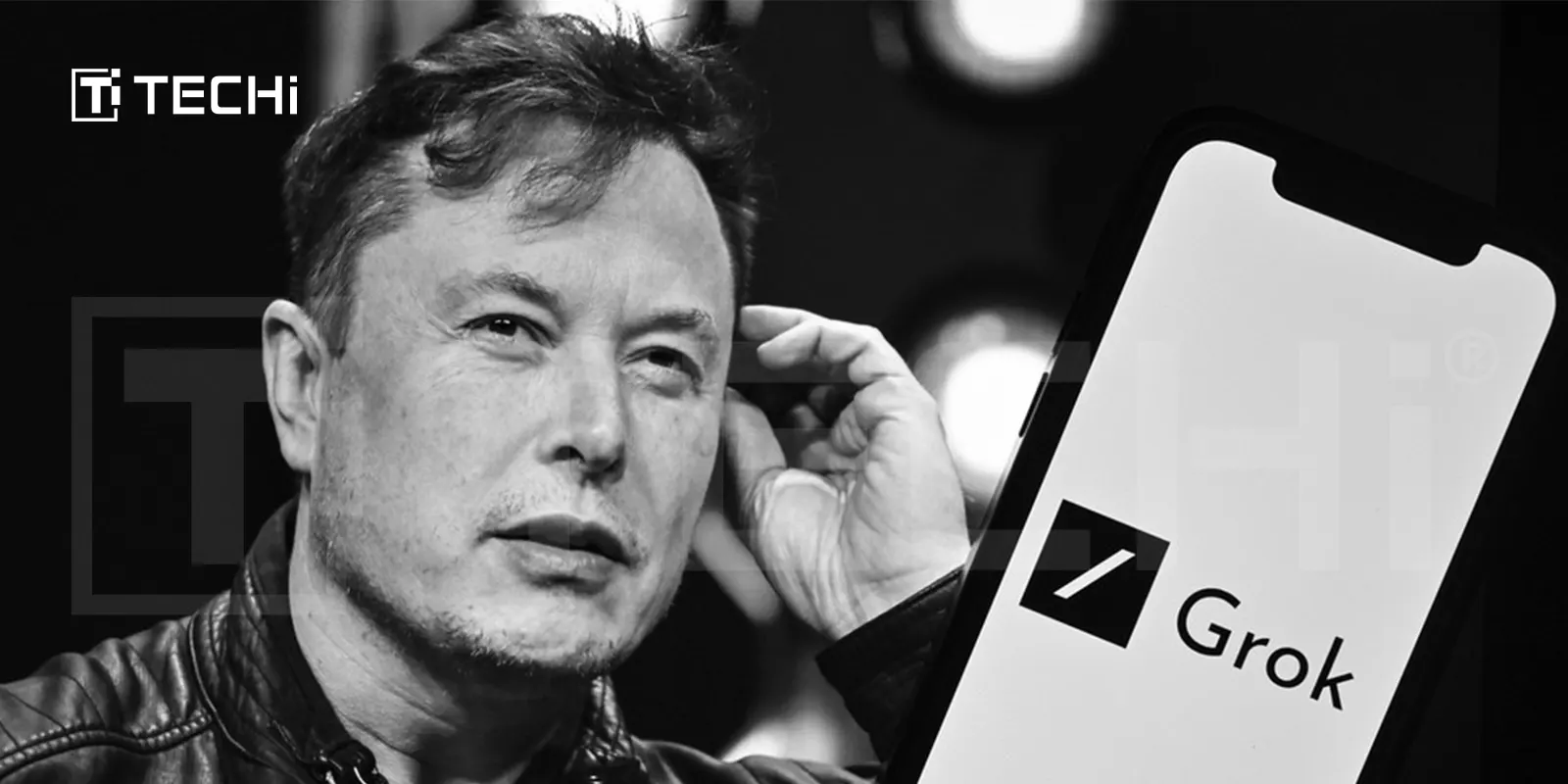
Elon Musk Announces Live Demonstration of Grok 3 AI Chatbot

Tech billionaire Elon Musk has announced that Grok 3, the latest iteration of xAI’s artificial intelligence chatbot, will be officially unveiled in a live demonstration on Monday at 8 p.m. Pacific Time (0400 GMT on Tuesday). Musk’s xAI, positioned as a competitor to OpenAI, has been developing Grok 3 as an advanced AI chatbot aimed at rivaling the capabilities of ChatGPT and other leading AI models.

Grok 3 in Final Stages of Development 

Earlier this week, Musk announced that Grok 3 was nearing completion and that its launch was expected within one to two weeks. This announcement aligns with Musk’s ongoing efforts to expand xAI’s role in the AI sector, following the introduction of earlier Grok models, which were integrated into his social media platform, X (formerly Twitter).

Musk Claims Grok 3 Outperforms Existing AI Models 

Musk has been vocal about Grok 3’s capabilities, hinting at significant improvements in reasoning and language understanding. While no official benchmarks have been released, he suggested that Grok 3 has demonstrated superior performance compared to existing chatbots in internal tests. This launch is expected to be a critical moment for xAI as it attempts to establish itself in the increasingly competitive AI race, currently dominated by OpenAI, Google DeepMind, and Anthropic.

xAI in Talks for $10 Billion Investment 

Beyond the Grok 3 release, reports indicate that xAI is in discussions to secure up to $10 billion in funding, potentially valuing the company at $75 billion. If successful, this would further solidify xAI’s position as a major player in the AI industry, providing the necessary resources to scale its technology and infrastructure.

 What to Expect from the Grok 3 Launch? 

The live demonstration of Grok 3 will likely showcase real-time AI interactions, emphasizing improvements in contextual understanding, speed, and reasoning abilities. Industry experts and AI enthusiasts will be watching closely to see how Grok 3 stacks up against ChatGPT and Google Gemini. With the AI landscape evolving rapidly, Musk’s xAI is aiming to disrupt the market by delivering a more advanced, responsive, and intuitive AI assistant. Whether Grok 3 lives up to the hype remains to be seen, but one thing is certain—the competition in AI innovation is intensifying.

Read More: Google’s Most Advanced AI Model Gemini 2.0 Now Available for Everyone

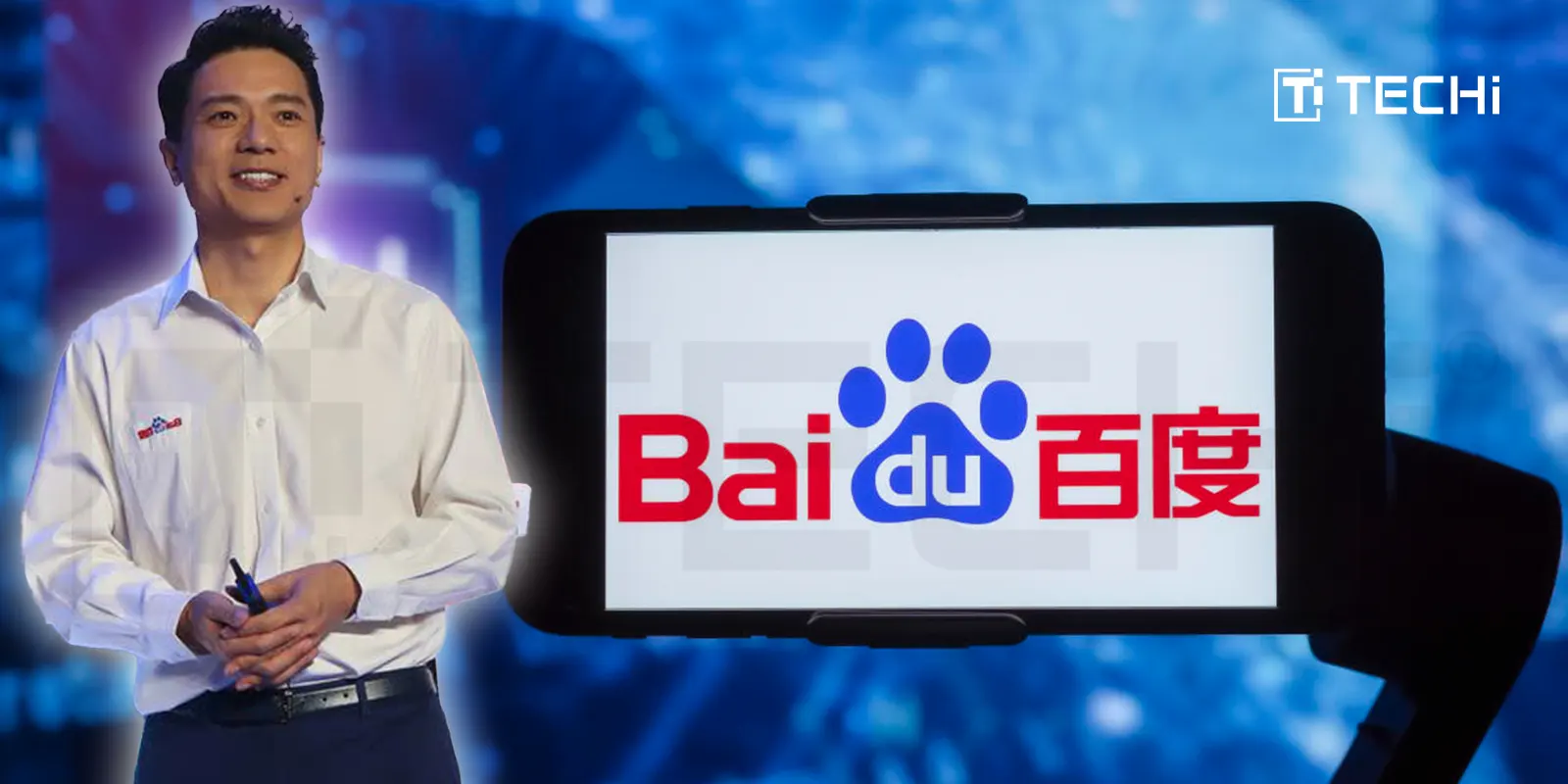
Baidu Goes Open-Source With its Latest Ernie AI Model

The AI battlefield is getting more interesting day by day. Baidu, one of the top technology giants in China has decided to take a drastic step forward in the AI race by opening its Ernie AI model. Baidu of China has now declared making its next-generation artificial intelligence model Ernie open source starting June 30, in a major departure from the company’s previous exclusive hardcore AI development model. Such a shocking twist comes at a time when competition heats up in the domain of artificial intelligence with new entrants like DeepSeek, disrupting the field with accessible and cheaper AI solutions, along with intensifying competition in this sector has led to such a big leap.

Baidu’s Shifting Approach:

Baidu CEO Robin Li, a long-time advocate of closed-source AI models being the best ways to live with things, seems to be wavering on the issue. The growth of DeepSeek, a startup that offers open-source AI solutions with performance stated to rival that of OpenAI’s most developed systems, has shaken the environment. Cost effectiveness and accessibility have forced Baidu to reconsider its competitive strategy due to availability of open-source inputs.

Along with the open-sourcing of Ernie ai model, Baidu also made the announcement that starting April 1, its AI chatbot, Ernie Bot, will not require any payment to use. This move takes a very significant turn in the story since Ernie Bot was launched, premium versions were to be sold under exclusive services.

Market Share:

When OpenAI came up with its ChatGPT in 2022, Baidu was one of the first major Chinese entities that really poured money into AI ventures. Even with a lot of resources poured in, Ernie ai model still cannot fully compete with the adoption of public use. According to January statistics of AI product tracker Aicpb.com, present active monthly users are, Doubao chatbot by ByteDance at 78.6 million, followed by DeepSeek with 33.7 million, and Baidu’s Ernie Bot closes, with only 13 million users. Through open-sourcing Ernie, Baidu hopes to facilitate greater adoption and use of its AI technology.

Future of Ernie AI Model:

The gradual rollout of the Ernie 4.5 series will continue in the coming months, with the open-source release expected to take place on June 30. Baidu said in a WeChat post, “We will gradually launch the Ernie 4.5 series in the coming months and officially open-source it from June 30”. 

For the long term, Baidu is already working with future generations of their most up-to-date model, Ernie 5. This new model is expected to hit the market in the latter half of 2025. Li also emphasized the open-source aspects, arguing in effect that they would make models available to accelerate the process of tech adoption. He said, “If you open things up, a lot of people will be curious enough to try it. This will help spread the technology much faster”.

Baidu’s Strategy:

Baidu is positioning itself strategically in opening up Ernie, to work for and gain acceptance in increased AI adoption and compete with emerging rivals in the field. The decision by Baidu to open-source Ernie ai model is a big departure from its formerly closed view on AI development. With the fast-changing industry leaning towards accessibility and collaboration, could this position Baidu as a leader in open AI innovation, or is it merely a parting shot to remain relevant amid rising competitors?

With Ernie 5 coming up soon and open-source models releasing in June, only the next chapter of the AI race is beginning. How this might play out could be anyone’s guess, but it seems like one way or another, the AI space is trending towards quite an extraordinarily impulsive scenario. However, the strategy Baidu has for AI in the long term would prove to be very instrumental toward determining the future architecture and future avenues of artificial intelligence, both in China and globally.

Read More: Google’s Most Advanced AI Model Gemini 2.0 Now Available for Everyone

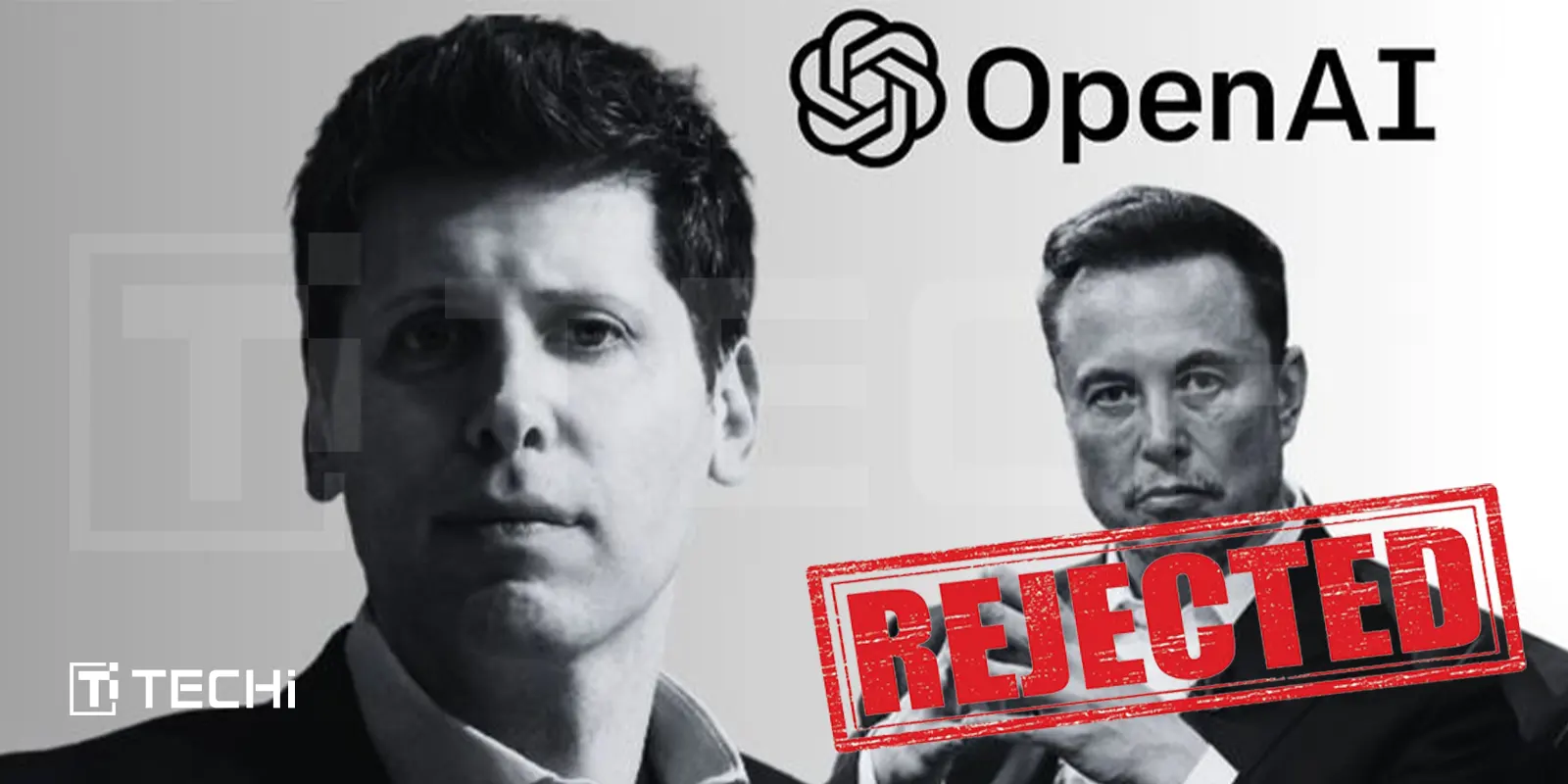
Elon Musk’s $97.4 Billion Offer to Acquire OpenAI Rejected

Tech billionaire Elon Musk, co-founder and former board member of OpenAI, recently made a staggering $97.4 billion offer to acquire full control of the artificial intelligence company. However, OpenAI’s board rejected the bid, citing concerns over its mission, autonomy, and ethical considerations. In an official statement released through OpenAI’s press account on X, board chair Bret Taylor described Musk’s offer as a deliberate move to interfere with his competition.

“OpenAI is not for sale, and the board has unanimously rejected Mr. Musk’s latest attempt to disrupt his competition,” Taylor said. “Any potential reorganization of OpenAI will strengthen our nonprofit and its mission to ensure [artificial general intelligence] benefits all of humanity.”

The New York Times reported that OpenAI also addressed a letter to Musk’s attorney, Marc Toberoff, stating that the proposal did not align with OpenAI’s mission and was not in its best interests. The decision has sparked widespread debate over the future of AI governance and Musk’s ambitions in the AI industry.

Why Did OpenAI’s Board Reject Musk’s Offer?

1. Preserving OpenAI’s Independence

OpenAI’s leadership believes that Musk’s takeover would jeopardize the organization’s autonomy, potentially shifting its priorities toward his business interests, mainly his AI venture, xAI. By rejecting the offer, the board aims to maintain control over its research direction and prevent external influence from dominating decision-making.

2. Conflict Between Mission-Driven and Profit-Driven Goals

Originally founded as a nonprofit, OpenAI transitioned into a capped-profit model to balance funding needs and ethical AI development. The board fears that Musk’s leadership could tilt the company towards a profit-driven agenda, undermining its commitment to developing AI for the broader good rather than commercial gain.

3. Musk’s History with OpenAI

Musk resigned from OpenAI’s board in 2018 after an unsuccessful attempt to take control of the company. The board considers this past power struggle as a key factor in rejecting his current bid, viewing it as a continuation of his previous efforts to dominate OpenAI’s direction.

4. Tensions with Microsoft and AI Ecosystem

OpenAI has a major partnership with Microsoft, which has invested billions in the organization. If Musk were to gain control, it could disrupt this collaboration, leading to legal and financial complications. The board is also concerned about potential conflicts between OpenAI’s roadmap and Musk’s competing AI firm, xAI.

5. Legal Risks and Regulatory Concerns

Musk has had numerous legal disputes and regulatory challenges in the past, including with the SEC and Tesla. OpenAI’s leadership fears that his control could introduce unnecessary instability, regulatory scrutiny, and delays in AI safety frameworks that are crucial for the industry’s responsible development.

Musk’s Response and Industry Reactions

Following the rejection, Musk expressed his displeasure, criticizing OpenAI for abandoning its original mission of creating open-source AI. He has also hinted at further legal action or alternative AI strategies, reinforcing his commitment to advancing artificial intelligence through xAI and other ventures.

Industry experts remain divided on the issue. Some argue that Musk’s resources and expertise could have accelerated OpenAI’s innovations, while others support the board’s stance on keeping AI development independent from corporate dominance.

What’s Next for OpenAI?

With Musk’s bid off the table, OpenAI will likely continue its current trajectory with Microsoft’s backing and expand its AI capabilities while maintaining governance safeguards. The rejection signals the board’s commitment to AI safety and ethical considerations, ensuring that advancements align with their foundational mission. As the AI race intensifies, OpenAI’s decision will shape the broader debate on who controls AI, how it is developed, and whether it remains a force for public benefit or corporate interests.

Read More: OpenAI Drops o3 AI Model to Unify AI Strategy with Game-Changing GPT-5
TikTok Returns to App Stores in the US and the Ownership Battle Continues

The odyssey of TikTok in the United States has been an exciting reality show with a high stakes infused series of courtroom battles and political backroom dealings along with last minute plot twists in between. A month-long disappearing act has made its grand re-entry to app stores of the U.S, however the drama might not be over yet. With concerns over national security, executive orders, and the prospect of U.S ownership looming, the events of the TikTok saga continue to unfold like a binge worthy series.

TikTok returns to the app stores in the United States, marking yet another chapter in its motto to survive. For nearly a month, the highly hyped short-video app, TikTok, was not available for download. Then, it re-entered the U.S today when Apple and Google reinstated it in their respective app stores. This follows the temporary ban earlier on national security grounds. Similarly, other apps of ByteDance, including the video editor CapCut and social media platform Lemon8, were also restored. However, without certainty as to whether it is going to be bought by one of the many incoming tech giants waiting in line for the apparent bidding war, the app’s future hangs in the balance.

TikTok’s Ban:

Government scrutiny of TikTok has been ongoing in the U.S for several years, with concerns related to national security risks from China’s ownership of ByteDance. In 2024, former President Biden signed a law requiring that by January 19, 2025, ByteDance has to dissociate from operating TikTok in the U.S or see the app outlawed altogether.

The law threatened significant financial penalties against any app store operators who failed to comply with it, resulting in Apple and Google pulling TikTok from their platforms. ByteDance tried to challenge the ruling, but on January 17, the Supreme Court reaffirmed the law making an obligation for TikTok to find a non-Chinese buyer or be permanently banned in the United States.

Trump’s Order and TikTok’s Return:

However, things turned around on January 20 when the newly elected President of the U.S, Donald Trump, signed an executive order putting the ban on hold for 75 days. This afforded ByteDance further tried to find a buyer for TikTok’s U.S operations, thus renewing support for the application from service providers like Oracle.

That is not the end of the road, rather the Apple and Google postponed TikTok’s return to their stores on account of uncertainty about the legal penalties that would be imposed under the law’s deferral. This makes a rather different situation for those users who had installed TikTok would be able to continue to use it, whereas others who uninstalled it would not be able to download it again. Thanks to the immediate tech industry response regarding potential U.S ownership of TikTok, the long-standing competitor of short video-sharing apps is witnessing one of the greatest upsurge of all time.

Of course, Trump would have the government owning 50% of the stake jointly with partner companies and setting up, as part of the deal, a sovereign wealth fund for the possible purchase of TikTok’s U.S operations, supposedly, Oracle and Microsoft are notable contenders for the acquisition. On the other hand, TikTok enemies have been aggressive in squeezing the situation. Social platforms such as X and Bluesky have introduced specific vertical video feeds to appeal to TikTok users, while Meta announced that it would develop a video-editing app for CapCut competition.

TikTok’s Popularity and Beyond:

As it stands in the year 2023, TikTok remains one of the most popular apps in the world in the United States. According to analytics company Sensor Tower, in 2022, it was the second most downloaded app in the U.S, with 52 million downloads. While the immediate future of TikTok in the U.S seems secured, its long term future depends on whether ByteDance would negotiate a sale to please regulators.

There is little doubt that the app’s popularity will be affected by all these factors, but more by how the company, U.S regulators, and future investors move forward as they all navigate through what will be a complex political and legal maze. All eyes will be on negotiating drama between ByteDance, U.S tech giants, and the federal government as time runs out with the 75-day extension. The one thing absolutely certain is that this is not the final twist, and the world will wait to see what happens next with the effects of this latest change in TikTok.

Read More: Elon Musk’s Battle to Buy OpenAI

Elon Musk’s Battle to Buy OpenAI, Five Crucial Insights from His Offer Letter

In the life of tech billionaires, the drama tends to arise sooner than a software update. Musk’s next move is all about bidding to the tune of nearly $97 billion to reclaim OpenAI, a company he once championed but is now suing. While OpenAI CEO, Sam Altman brushed his offer aside, the court filings reveal Musk’s detailed offer to tell the whole saga, including lawsuits, power wrangling, and strategic chess moves that have entangled two of the most powerful names in the AI Industry.

An investment syndicate led by Elon Musk’s xAI has proposed an unlikely offer of $97.4 billion to acquire OpenAI. Altman has anyway very quickly declared the offer as impossible because it is seen as a method to block OpenAI from making nonprofit transition, an action in which Musk is also challenging with his own suit. In a legal filing on Wednesday, Altman’s team argued that Musk’s position is contradictory, attempting to buy the assets of OpenAI while also trying to prevent its conversion to nonprofit.

Musk’s team countered that they would withdraw the offer if OpenAI’s efforts to move away from its nonprofit status ceased. Musk’s entire letter of intent to buy open AI was published as part of this legal turmoil, this opened up a broader understanding of his plan and motivation.

The five key details from Musk’s Offer Letter are following;

1. Deadline for the Offer:

A definite expiration date for May 10, 2025, is that of the unsolicited bid by Musk’s consortium. It goes off the track only if the parties to the interests finalize the deal, or they mutually decide to terminate discussions, or if OpenAI explicitly rejects the offer in writing.

Altman has publicly dismissed such offers (including a humorous counter offer to buy X at tenth of the price) but OpenAI has yet to issue an official rejection statement. Even offers between competitors must get consideration before being outright dismissed due to legal requirements.

2. Cash Transaction:

Musk’s financing group with notable venture capitalists like Joe Lonsdale’s 8VC and SpaceX investor Vy Capital has offered just $97.375 billion in cash. This is because, in the past, he has borrowed money to finance such acquisitions, like the $13 billion borrowed from banks to acquire twitter in 2022, and though self-proclaimed as having a fortune of about $400 billion, mostly raised by a boost from Donald Trump, it was not disqualified from consideration. Interestingly, the letter mentions seven investors, including Musk’s x.AI, alongside others unnamed, implying that Musk is not relying solely upon his wealth to finance the deal.

3. Access to all Financial and Operational Data:

The consortium of Musk demands full access to OpenAI’s financial records, assets, employees, and business operations before it commits a ginormous buy. “Assets, facilities, equipment, books, and records” is mentioned in the letter to indicate such needs.

This stress has indeed been caused, given that the said due diligence is normal in major transactions for such things, as making an acquisition review that is much more compelling opens it up to very internal and state of the art sensitive knowledge that might be a possible conflict of interest based on xAI’s having a direct market competitive claim in OpenAI to gain such level of access.

4. Undermining Musk’s Lawsuit:

Musk’s legal battle against OpenAI revolves around his contention that OpenAI’s assets can never be “transferred away” for private gain. However, in a filing on Wednesday, the lawyers for OpenAI pointed out that Musk’s offer contradicts this claim and emphasized that he is making an offer to dispose of an acquisition effort just to weaken a competitor. They said, “The offer isn’t serious, but an improper bid to undermine a competitor.”

According to OpenAI, the offer is not genuine and was strategically timed to complicate its privatization. Musk’s camp insisted otherwise, claiming that the bid was legitimate and that funding would be funneled straight into OpenAI’s nonprofit purpose.

5. Musk’s withdrawal from the offer:

Musk’s legal team stated that if the board of OpenAI decides not to convert into non-profit operation, he would withdraw the offer. More speculation would be reinforced with this statement that Musk’s bid was not aimed at buying OpenAI altogether but only bumping up the figure that would make Altman and other top executives acquire the company privately.

OpenAI board legal representative dismissed such an offer from Musk and said, “Musk’s bid doesn’t set a value for [OpenAI’s] non-profit and that the nonprofit is not for sale”.

The Repercussions:

This adds to the already complicated legal and financial drama over OpenAI, which is still far from being resolved. The rejection of the bid from OpenAI would give Musk the further ground to challenge the legitimacy of its nonprofit conversion. On the other hand, if OpenAI accepts or considers the offer, it risks getting into trouble over its governance. Either way, whether Musk’s offer is a genuine attempt to acquire OpenAI or just a tactic within his legal showdown, it has put OpenAI in a difficult position.

Truly, one wonders, whether the billionaire indeed wants to acquire OpenAI or is using the bid as a bluff or a feint to disrupt its transition into nonprofit status. Well, one thing is clear, it isn’t merely a corporate dispute rather it’s the critical moment of evolution regarding what artificial intelligence is and what big tech makes it into in the future. As both continue their game of legal and financial chess, the world waits to see who blinks first.

Read More: OpenAI Drops o3 AI Model to Unify AI Strategy with Game-Changing GPT-5
OpenAI Drops o3 AI Model to Unify AI Strategy with Game-Changing GPT-5
The gigantic leap in AI technology has allowed competing organizations to race ahead in building the most powerful and efficient models. OpenAI, a prime name in AI, has been at the forefront of its very transformation. However, it has now strategically scrapped its much publicized o3 AI model development in favor of a more unifying and integrated approach. This raises important questions about OpenAI’s long-term vision, competitive positioning, and the way AI development is shaping the landscape of technology.

OpenAI has canceled its much anticipated next-generation o3 model and has instead adopted a bigger platform to cast a greater net over AI technologies. According to its Chief Executive, Sam Altman, the organization has thus decided to focus on a new model, GPT-5, which is designed to unify all OpenAI’s AI technologies in one integrated and more specialized offer. Altman said, “In the coming months, OpenAI will release a model called GPT-5 that integrates a lot of [OpenAI’s] technology, including o3, in its AI-powered chatbot platform ChatGPT and API”. As a result of that roadmap decision, OpenAI no longer plans to launch o3 as a stand-alone model.
The new development marks a change in the path of OpenAI’s AI roadmap toward a more unified ecosystem from several standalone models. Altman wrote in his post on X, “We realize how complicated our model and product offerings have gotten. We want to do a better job of sharing our intended roadmap, and a much better job simplifying our product offerings. We want AI to ‘just work’ for you; we realize how complicated our model and product offerings have gotten. We hate the model picker [in ChatGPT] as much as you do and want to return to magic unified intelligence”.

OpenAI’s AI Models:

OpenAI had originally planned to launch o3 in early 2024, with a possible suggested timeline of February to March given by Chief Product Officer Kevin Weil. However, the latest pronouncement from Altman makes it clear that o3 would not be released as a separate model. Instead, the competencies would now be merged into GPT-5, which would not only power OpenAI’s ChatGPT platform but also its API services as well. The next GPT-5 release will be available in several tiers which includes; The Standard Access, that has unlimited chat access at base intelligence level, free but subjected to some abuse thresholds. ChatGPT Plus Subscribers will be able to have higher intelligence level with better reasoning and lastly, ChatGPT Pro Subscribers will have the access to highest intelligence level with advanced reasoning, deep research, and multimodal function included.
Altman said, “[GPT-5] will incorporate voice, canvas, search, deep research, and more. A top goal for us is to unify our models by creating systems that can use all our tools, know when to think for a long time or not, and generally be useful for a very wide range of tasks”. Before the arrival of GPT-5, OpenAI would experiment by introducing GPT-4.5 (the codename is Orion), which will happen in a few weeks. It would mark the last time that the company would be pitching a “non-chain of thought” model, such a model being a model prior to the movement toward reasoning based systems that check their own outputs.

Competition against o3 AI Model:

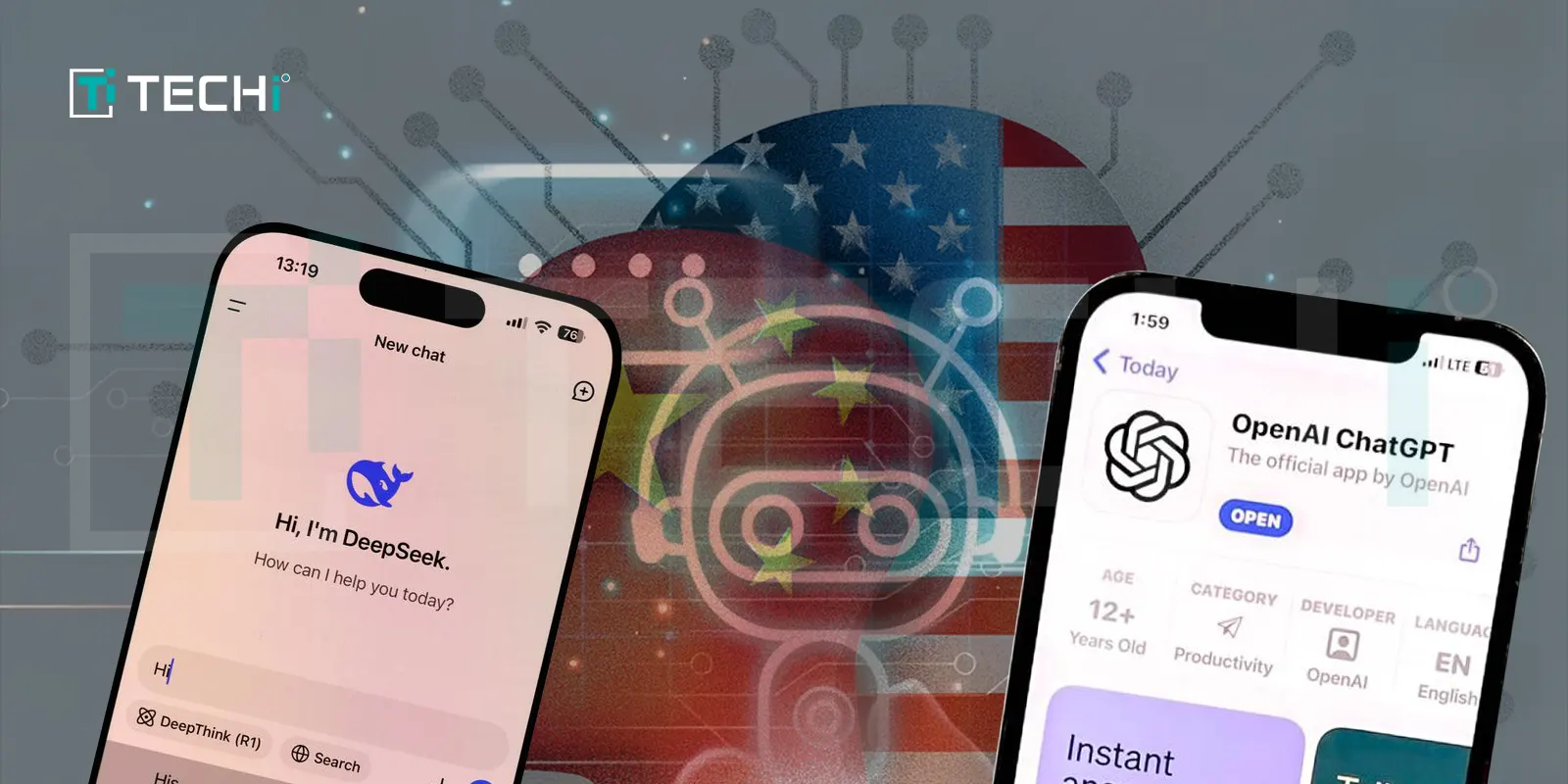
The delay of o3 and quick shift to GPT-5 by OpenAI is truly happening when all the activities at the moment are heating up with regards to global competition in AI. The latest news from Chinese AI Assistant, DeepSeek, surrounding its R1 model is creating big headlines, as this open-source alternative has reported some strong performance in important benchmarks against the previous works from OpenAI. While OpenAI adopts a proprietary format for users, DeepSeek’s model is open for software developers’ use under threat of potential challenge against OpenAI’s command.
Altman admitted that DeepSeek has reduced OpenAI’s technological lead, and in response said, “OpenAI would pull up some releases to better compete”. However, according to reports by Bloomberg, The Information, and The Wall Street Journal, Orion (GPT-4.5) has not met performance expectations and falls short of the improvements that have typically been associated with previous upgrades in models relative to GPT-4o.

Future AI Scenarios:

Such “integrated AI” would then get interpreted as a major industry trend itself, it would mean improving user experience and exceptional reasoning power capacity beyond what OpenAI offers with its new capabilities in GPT-5, featuring voice, canvas, search, and deep research functions.

While all AI companies are racing to make the next great breakthrough, it appears that OpenAI is readjusting its strategy by renouncing o3 and turning to GPT-5. Whether that strengthens the company’s lead in the arms race for the next-generation AI or makes room for new competitors is yet to be seen. One thing is very certain, as the AI environment evolves, so does the need for adaptability along with innovation.

Read More: Elon Musk’s $97.4B Bid for OpenAI Sparks Controversy and Industry Shockwaves

Elon Musk’s $97.4B Bid for OpenAI Sparks Controversy and Industry Shockwaves

Artificial intelligence is on its way to an advanced level day by day. Speaking of advanced, there can be none more audacious than Musk’s new initiative. He is making an incredulous $97.4 billion bid for OpenAI. This stirred up the tech industry with shock waves and the rest of the tech world is understandably confused, seeing as how OpenAI’s board states that it has not received a formal offer.

The feud between Elon Musk and OpenAI has taken another turn this week, as sources reveal the OpenAI board has yet to receive a formal takeover offer by the billionaire consortium. However, Musk’s lawyers assert that the offer was sent, and OpenAI stands firm that the nonprofit operating ChatGPT is not for sale.

The Bid:

The day after Musk publicly made his offer of $97.4 billion to buy OpenAI, doubts remained as to whether the board has even seen it or not. An anonymous source close to the situation alleged that OpenAI’s board has not received a formal offer, contradicting claims made by Musk’s attorney, Marc Toberoff. Toberoff asserts that a bid in the form of a four-page Letter of Intent was sent via email to OpenAI’s outside counsel at Wachtell, Lipton, Rosen & Katz. The law firm, however, has yet to confirm or deny receipt of the document. Toberoff said, “The bid – attached to an email – was in the form of a detailed four-page Letter of Intent to purchase OpenAI’s assets, signed by Musk and other investors and addressed to the board”. He further emphasized, referring to OpenAI’s CEO, “Whether Sam Altman chose to provide or withhold this from OpenAI’s other Board members is outside of our control”.

OpenAI CEO Sam Altman fiercely refuted Musk’s proposal. Addressing the audience at an AI summit in Paris, Altman dismissed the bid as “ridiculous,” arguing that OpenAI’s nonprofit side is not for sale. Altman said, referring to Musk, “The Company is not for sale. It’s another one of his tactics to try to mess with us”. This suggested that Musk’s bid was more for disruption than legitimate acquisition.

OpenAI’s Transformation:

Co-organized by Musk, OpenAI was inaugurated in 2015, a non-profit with the mission of being engaged in enlightened development of AI. Musk parted ways from the company because of disagreement over the vision and funding mechanisms. Since then, OpenAI has grown into one of the most prestigious destinations in AI, raising billions in its for-profit transformation.

OpenAI now finds itself in a maze of legal and regulatory cobwebs as it seeks to raise $40 billion while moving from the status of a non-profit to a capped-profit one. The attorney general of Delaware, Kathy Jennings, is looking into whether or not OpenAI’s transformation into a profit-oriented organization fits the aim for charitable operation it was designed for, thus preventing the current leadership from pursuing commercial objectives instead of benefitting the general public. She said, “I am reviewing OpenAI’s proposed changes to ensure the company is adhering to its specific charitable purposes for the benefit of the public beneficiaries, as opposed to the commercial or private interests of OpenAI’s directors or partners.”

Meanwhile, Musk’s startup is establishing its own AI project through promoting xAI as a competitor to OpenAI. The recent attempt to acquire OpenAI now throws a wrench into ongoing discussions on OpenAI’s valuation and fair market value for assets held by the nonprofit.

Challenges and Market Implications:

Legal experts remained certain that Musk’s offer would indirectly create an asset price for OpenAI’s nonprofit status. Robert Weissman, Co-President of consumer rights group, Public Citizen, pointed out that regulators would be obliged to ensure that any dismantling of these assets takes place at fair market value should OpenAI’s nonprofit entity decide to obtain control of the process. Weissman said, “It does help set a price point for the thinking about the valuation of the nonprofit assets. If it were to occur as proposed, the regulators have a duty to ensure that if there’s a selloff of assets to a for-profit entity, that fair market value is obtained.”

In the meantime, amidst the present volatility, OpenAI is put in a situation to get funding for financing and push AI research forward. Right now, Altman’s message to Musk is definitely no offers whatsoever for the purchase of OpenAI, regardless of whatever price it puts on the table.

Musk sees himself as the rightful steward of AI’s future, while OpenAI stands firm on independence and funding for future progress. Whether this standoff escalates into legal battles, under regulatory scrutiny, or with another surprising turn remains to be seen. One thing is for sure, the future of AI is equally about corporate power plays as technological breakthroughs.

Read More: OpenAI Hunts for U.S. Sites to Build Trump-Backed ‘Stargate’ AI Superhub

Saudi Arabia’s Grand Vision at Leap 2025; a $15 Billion Plan for AI Leadership
AI has come a long way, from being merely a figment of imagination in the minds of science fiction writers, it has translated to something real in today’s economies and industries, where billion dollar headlines are created. With this, Saudi Arabia upped its stakes by $15 billion in AI, underlining its efforts to establish itself among the major players in the global technology arena. More profoundly than the showcase of such investments, the questions raised at the LEAP 2025 tech show is whether AI is indeed a tool for persistence in the human condition or whether we are on the verge of some identity crisis where AI might know us better than we know ourselves?

For more than a decade, Leap 2025 has served as the Saudi capital city’s stage for the performance of advertisements and arguments related to artificial intelligence investment. Building projects worth about $15 billion have been announced by the kingdom yet again as part of its AI investment promising Leap 2025 tech show. In the last two years, AI has grown so much, almost like one step out of fiction that the next step seems like an inevitable focus on agentive AIs, that is, an artificial intelligence operating in the background to improve human output. Still, with advancements, comes the erosion of freedom and autonomy, possible cloning of identities, as well as disruption of society.

Saudi Arabia’s Vision 2030:

As for the announcement of investment in AI, the Saudi Vision 2030 constitutes a long-term economic strategy that would steer the kingdom away from dependence on oil and broaden its scope into technological improvement. AI is therefore earmarked as a prime theme with good discussion at LEAP 2025 on its applications as well as future developments. Other significant AI Investments include a $1.5 billion pact between Groq, the provider of AI infrastructure, and Aramco Digital to enhance AI-powered inference infrastructure and cloud computing, along with a $2 billion agreement between Saudi manufacturing conglomerate ALAT and Lenovo to create an advanced manufacturing center for AI and robotics, an expansion by Google in AI-backed digital infrastructure and new computing cluster, and an ALLaM, Arabic LLM launched by Qualcomm on Qualcomm Cloud AI.

The event also marks Saudi Arabia’s investment since 2022 into technology infrastructure projects, amounting to $42.4 billion, which includes; investment of Databricks of $300 million in AI tools development for development of PaaS, SambaNova committed $140 million to build advanced AI infrastructure, Salesforce invests $500 million in Hyperforce enhancement and the development of regional cloud, and Tencent Cloud allocates $150 million to build AI empower cloud regions in the Middle East.

Agentic AI’s Future and Risks:

A definite theme throughout Leap 2025 seemed to be the transition of artificial intelligence from simple user interplay to agentic AI, where AI becomes the almost invisible assistant who works for the individual. Yaser Al-Onaizan, CEO of the National Center for AI in the Saudi Data and AI Authority (SDAIA), elaborated on the transition and said, “The promise of AI is that it will be in everything that we do and we touch every day. It needs to be invisible. It cannot be in your face – it should be listening to you, understanding you and doing things based on your opinion”.

He went on to say that next-generation AI models would do more than just answer queries. They would plan and act without requiring anything more than tacit user consent to book flights or make reservations.

Although the possibilities of AI seem boundless, the experts at the conference also expressed some concerns regarding the risks it poses. Lambert Hogenhout, Chief of data, analytics, and emerging technologies with the United Nations, drew attention to threats against human independence posed by AI. He warned that unchecked AI could contribute to fraud, convolute identity determination, and corrode human-purpose connection to society. He stated, “We want to make sure AI increases living connections, that we are not eliminated. That it makes a good society. The society where a number of people are excluded is not going to work. It will create problems.”

Productivity and Innovation in AI:

Another main point was how firms should best be onward to the AI industry. Cohere’s Canadian Generation AI CEO, Aidan Gomez, compared generative AI to acting as CPUs, stating that generative AI is valuable only for how it integrates and actually is implemented for business specifications. He said, “A generative model is kind of like a CPU – it’s a general piece of technology. You could deploy it inside any vertical for any purpose, like a CPU. But, in and of itself, just owning a CPU isn’t valuable. It’s what you build with it that is valuable. So, for that piece, you do have to be technical. You need to be a developer, to be able to build something on top of this model to create value on the other side.”

Saudi Arabia’s $15 billion investment in AI is a key sign of the country’s desire to become a progressive world leader in AI. Discussions at Leap 2025 pointed out AI’s enormous potential to drive productivity and the need to address pertinent ethical issues. With Vision 2030 as the kingdom’s inspiration, harnessing AI for development versus human autonomy will be the key counterpoint before the kingdom’s decision makers, businesses, and society.

Read More: UK Minister Urges Western AI Leadership to Dominate AI Development

UK Minister Urges Western AI Leadership to Dominate AI Development

The world keeps fast-forwarding in the AI race, making it undeniably evident that whoever leads AI will lead the future. The real conflict lies when the algorithms are being subtly engineered to outthink humans, it is not just who produces the smartest machine that counts, rather it is who ensures that those digital minds fit into the world of democratic ideals. UK’s Technology Secretary, Peter Kyle argued that leadership in artificial intelligence must remain within the “western, liberal, democratic” nations, most especially against the backdrop of the increasing global race in the use of AI technologies. Speaking ahead of a global summit on artificial intelligence on Sunday in Paris, Kyle seemed to refer to the importance of democratic values in the future development of artificial intelligence, hinting to an extent against China and its rising presence in that area.

The Artificial Intelligence Action Summit, jointly organized by France’s President Emmanuel Macron and India’s Prime Minister Narendra Modi from February 10-11, will bring together political leaders, tech executives, and policymakers to discuss AI’s global roadmap for future development. The summit comes against the background of the recently established DeepSeek, a Chinese AI company that has sought to undermine Silicon Valley with its latest technological improvements.

Democratic Powers’ Role:

Kyle made it clear that the UK intends to position itself at the forefront of AI development, leveraging its scientific expertise and technological capabilities. He stressed that governments play a crucial role in ensuring that AI aligns with democratic values and does not become a tool for authoritarian regimes.

Kyle stated, “Government does have agency in how this technology is developed and deployed and consumed. We need to use that agency to reinforce our democratic principles, our liberal values and our democratic way of life. Adding that he was under no illusion, there were some [other] countries that seek to do the same for their ways of life and their outlooks”.

Without naming nor specifying any particular country, Kyle said, “he was not pinpointing one country, but it was important that democratic countries prevailed so we can defend, and keep people safe”. He explained that competing states are already shaping AI according to their respective political ideologies. Such remarks are indications that China has begun establishing its own foothold in AI as presumably challenging Western leadership in this area.

Impact of DeepSeek Emergence:

Some investors in the United States characterized DeepSeek’s recent breakthroughs as a “Sputnik moment,” referring to the trauma felt after the first artificial satellite was put in orbit by the Soviet Union in 1957. The AI model from the Chinese firm has been developed at a low cost and is mostly on par with or has improved on US rivals, raising security approaches by Western nations. Kyle confirmed that national safety repercussions of DeepSeek and its chatbot innovation would be scrutinized by British officials. However, he maintained that competition should be a motivation rather than something to cause fright. He said, “I am enthused and motivated by DeepSeek. I’m not fearful”.

 The AI Summit and UK’s AI Growth Zones:

Now, the Paris summit has been structured around facets of how AI will affect jobs, cultures, and global governance as opposed to merely safety concerns, which were the preoccupation of the UK’s first, inaugural AI summit held at Bletchley Park in 2023. Some of the prominent participants are; US Vice President, JD Vance, President of the European Commission, Ursula von der Leyen, Chancellor of Germany, Olaf Scholz, Google CEO, Sundar Pichai, CEO of OpenAI, Sam Altman and AI pioneer Nobel Prize winner, Demis Hassabis. China’s Vice Premier Zhang Guoqing will also be attending, making the summit geopolitically important.

Kyle has announced on the UK’s part that bids are opened for AI growth zones, part of the AI strategy of the UK, that will now host new data centers critical for AI training and operation. Its aim is to bring economic rejuvenation to what are considered historically left behind regions, especially those in Scotland, Wales, and northern England. Kyle stated, “We are putting extra effort in finding those parts of the country which, for too long, have been left behind when new innovations, new opportunities are available. We are determined that those parts of the country are first in the queue to benefit … to the maximum possible from this new wave of opportunity that’s striking our economy”.

Energy provision in AI growth zones would then be increased by government promise to ensure that the zones have access to more than 500MW of power, enough to power about two million homes. Potential first sites for these AI hubs include the Culham Science Centre in Oxfordshire, where the UK Atomic Energy Authority is based.

AI Development:

A draft early closing statement of the summit seen by the Guardian goes for making AI “sustainable for people and the planet.” The same statement emphasized that it should be open, inclusive, transparent, ethical, safe, secure, and trustworthy. It does say trust and safety in AI governance in spite of fears the summit will not be enough on safety issues. Although the AI race speeds up, the UK’s posture is indicative of a wider western push to retain its leadership in AI innovation while making sure the technology works for and with democratic values. Whether it can fulfill this vision with rising global competition still awaits to be seen.

Read More: China’s Chip Industry Gains Momentum

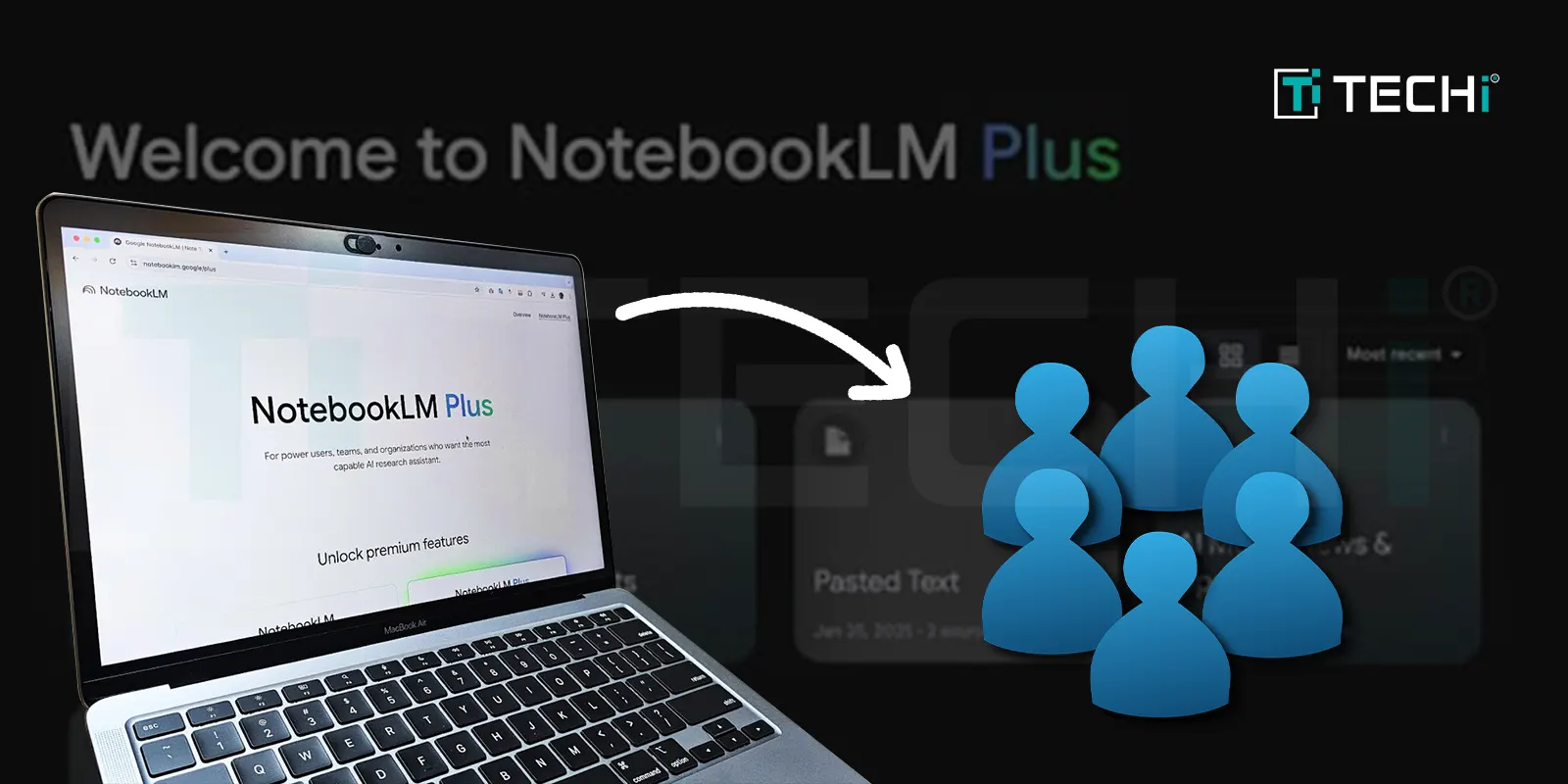
Google Expands NotebookLM Plus Access to Individual Users with AI Premium Features

Envision a world where your notes do not merely lie resting on a page, but rather actively collaborate with you in answering questions, summarizing research, and generating podcasts. Sounds futuristic? Well! Google is turning this imagination into a reality. The upgrade of AI-powered note taking brings with it the extension of NotebookLM Plus to individual users.

Google has unwrapped the NotebookLM Plus, a paid version of its AI-powered note and research assistant. It is available to individual users with the subscription to the Google One AI Premium plan, nearly two months after the launch of this service tailored to enterprises through Google Cloud and Google Workspace.

Improved Features for Subscribers:

Initially launched in December, following a pilot, NotebookLM Plus offers expanding higher usage limits and premium capabilities to subscribers. The subscribers’ access includes, five times the usage of free NotebookLM version, they can avail 500 notebooks and up to 300 sources per notebook and can access bigger 500 chat queries and 20 AI audio clips, all derived in a day.

These enhanced features now became available for individual users under the Google One AI Premium Plan at $20 per month. Google has also provided a 50% student discount through selling eligible U.S students above 18 years at $9.99 per month. Kelly Schaefer, director of product and domain lead at Google Labs said, “We have always wanted to get NotebookLM Plus out to enterprises and consumers, and have seen really a ton of interest from consumers, and in particular students from the beginning”.

Evolution of NotebookLM:

NotebookLM, launched in 2023, made waves and influenced when it featured Audio Overviews in September 2023. This feature lets users create audio conversations that sound like a podcast based on the content uploaded, and later on can be copied by its competitors like ElevenLabs and Meta. Google has kept refreshing NotebookLM with all sorts of improvements to keep up with the rest of the world, including advanced AI audio guidance. The firm is working on further extending support for other languages beyond English.

Schaefer explained, “We are thinking about how to prioritize the languages and then, most importantly, how to make sure that they feel really genuine and just as seamless and natural as our current Audio Overviews do”. Google has not described about adding which specific ‎Gemini AI models are powering NotebookLM, however, Schaefer confirmed that the same AI model underlies both Plus and free versions. Google Labs still experiments with several Gemini model variants to best optimize experience with specific tasks.

Advanced AI Integrations and Market Growth: 

Schaefer also elaborated on Google’s plan to come up with a NotebookLM mobile application that is programmed to create a seamless but customized mobile experience, although a date was not mentioned. On the other hand, Google is trying to visualize how advanced reasoning models can really come in handy for NotebookLM in improving the assistant’s capacity to set up complex thought processes and reasoning tasks. Schaefer said, “We want mobile to feel in many ways similar to the desktop experience but also really tailor it for the use cases that are most common for mobile”.

While NotebookLM Plus always strives to improve for paying subscribers, the company’s commitment remains that of providing a wonderful experience for all free users. As Schaefer explained, “We want folks to get an excellent experience on NotebookLM, whether they’re free or paid, and it’s very important to us that the NotebookLM free experience is excellent. So, we’re thinking more about how we offer even more to the Plus users versus degrading any experience for free users”.

Google has not revealed any figures regarding the number of users on NotebookLM, but market intelligence firm Similarweb suggests that the AI assistant was able to garner 28.18 million visits in the last three months, 9 million of those in January alone. As more users join NotebookLM Plus, a combination of sustained improvability and planned diversification could further uphold Google in the AI-driven research assistant market.

Read More: Your Favorite App Might Be Gone! Apple & Google Removed Dangerous App

Google’s Most Advanced AI Model Gemini 2.0 Now Available for Everyone

The future of AI is unfolding before our eyes, and Google is leading the charge with its latest advancements in the Gemini model family. Gemini 2.0 is now available to everyone, from faster processing to deeper reasoning it promises a new era of AI powered creation, interaction, and collaboration. Google has officially launched the most recently updated AI model, Gemini 2.0 that brings in improved capabilities as well as better accessibility for developers and users worldwide. It is a major milestone in AI evolution, indicating an array of models for a collection of tasks ranging from high speed reasoning to very cost effective AI solutions.

Evolution of Gemini 2.0:

In December, Google introduced the revolutionized era with an experimental release of Gemini 2.0 Flash, an advanced model characterized by efficiency, low latency, and performance enhancement. Following that, advanced updates have since been made in some of its better capabilities, with a version integrated into Google AI Studio for complex and problem solving skills.

Last week, Google again widened the scope of 2.0 Flash in terms of accessibility to all Gemini users across all desktop and mobile platforms. It is now taking a significant step in offering general availability of the updated Gemini 2.0 Flash via the Gemini API in Google AI Studio and Vertex AI for developers to easily build and deploy production applications.

Introducing Gemini 2.0 Pro and Flash-Lite:

Gemini 2.0 Pro (Experimental) is for coding and really complicated prompts, this is the most powerful model Google has put out yet. With an enormous 2 million token context window, it has deep analytical capabilities and can call tools, like Google Search and code execution. The model is currently available to Gemini Advanced users on Google AI Studio, Vertex AI, and the Gemini app.

Gemini 2.0 Flash-Lite is very cost-efficient where it slightly surpasses in quality over its predecessor (1.5 Flash) without sacrificing speed or cost. The context window of Flash-Lite is 1 million tokens, and it is optimized for jobs that can have AI work very fast for very little. For example, in the paid tier of Google AI Studio, it charges less than 1 dollar to generate 40,000 unique photos with a one liner caption that is very relevant to each photo. It is now available via Google AI Studio and Vertex AI.

Upgrades for the Advanced Era:

All Gemini 2.0s provide a multimodal input with text output and are extending into other upgrades in a few months. Features like image generation and text to speech are also under consideration, giving enhanced interaction possibilities to AI. Meanwhile, as AI technology matures, Google remains committed to its safety and responsible use. The reinforcement learning systems used in the Gemini 2.0 series allow the AI to critique its own answers with a view of being more accurate and sensitive towards prompts. Automated Red Teaming is also being employed to counter security threats such as indirect prompt injection attacks.

Google, with Gemini 2.0 now available to a wider audience, is hopeful to flourish in a whole new age of AI-driven solutions. The powers of this gem can be put to the test by developers and users alike in the Gemini app, Google AI Studio, or Vertex AI. As AI models continue to evolve, Gemini 2.0 provides the perfect platform for the next generation of highly sophisticated, accessible, and secure applications. 

Read More: Google Revises AI Ethics, No Longer Rules Out AI‘s use for Weapons and Surveillance

OpenAI Joins the Super Bowl Ad League: Tough competition to tech giants

OpenAI is set to make its debut in the mainstream advertising market. They are about to air its first TV commercial during Sunday’s Super Bowl– reported The Wall Street Journal on Wednesday. The Super Bowl is the world’s most popular and covered TV event, facilitating advertisers and promoters with its huge audience and creativity as commercials of the Super Bowl can create a huge outsider buzz.

Super Bowl Sunday is one of the greatest days of the year — and not just because of football. It has the legacy of creating super hit commercials. Some Top names are E*Trade (2008) launched one of the most memorable marketing campaigns in recent years during Super Bowl XLII. Apple (1984) wanted to let the world know and promoted the upcoming release of the Macintosh computer. Volkswagen The Force (2011) tapped into those childhood memories during Super Bowl XLV.

Super Bowl’s Potential

The 2024 Super Bowl drew an estimated 210 million viewers – figure that highlights its potential. OpenAI isn’t the first one to opt for this, rivals like Google run ads promoting its AI prowess during last year’s Super Bowl. The spot is estimated to cost up to $8 million for a 30-second ad during the Super Bowl 2025. According to Adweek’s Chief Content Officer Zoe Ruderman, the same similar spot made $7 million last year. 

On February 9 at 6:30 pm ET, The 59th Super Bowl is scheduled. With an estimated 83,000 spectators, The NFL championship game will occur in New Orleans at the Caesars Superdome, home to the New Orleans Saints.

New Marketing Moves:

CEO OpenAI Sam Altman has not only taken the above marketing measure. Since the ChatGpt release in November 2022  and a wide reach of over 300 million weekly active users two years later. The AI developer is in talks and making strategies to raise up to $40 billion at a valuation of $300 billion. He also hired its first chief marketing officer, Kate Rough in December 2024.

OpenAI, Google AI or LamaAI? Tough competition.

Not only OpenAI or Google, other competitors are entering the Super Bowl market as well. Well… we had two choices: Spend millions of dollars on a flashy commercial, OR – invest in building the best #GenAI-powered #lending platform. We went with the exciting option of course (sorry, Hollywood). Because for bankers, business lending isn’t a game. It’s about making the right decisions—quickly, confidently, and without second-guessing.

Consider it our unofficial #SuperBowl debut. Lama AI sparks confidence from their latest post on linkedin to create the same legacy as of Apple 1984. Will Super Bowl advertising change the destiny of many brands? Stay tuned to learn more.

Read More: Musk’s Legal Battle with OpenAI May Head to Trial, Judge Rules

Shake-Up in AI: OpenAI Co-Founder John Schulman Departs from Rival Anthropic

In the latest news, One of the OpenAI’s eleven co-founders and leading AI alignment researcher, John Schulman has left his role at Anthropic after five months of joining. He has led the reinforcement learning team that developed ChatGPT. Schulman’s great contribution to the project was applying reinforcement learning with human feedback (RLHF) to OpenAI’s language models. His future plans might include to walk on the footsteps of other OpenAI co-founders and form a new venture.

His departure was confirmed by Anthropic on Feb 5, Wednesday. In 2023, he explained: “The idea was to align our models with human preference — try to get them to actually listen to us and try to do what we want.” Since then, John has continued to focus on the similar agenda. In 2024 he made a surprising decision to leave OpenAI with fellow co-founders Jan Leike and Mira Muratti walking in his footsteps and leaving the company too.

After he left, only three of the original founders led language and code generation, having OpenAI CEO Sam Altman, Brockman and Wojciech Zaremba in the team. John Schulman on his farewell post on X in August, 2024 announced the biggest transitions of his life: 

I’ve made the difficult decision to leave OpenAI. This choice stems from my desire to deepen my focus on AI alignment, and to start a new chapter of my career where I can return to hands-on technical work. I’ve decided to pursue this goal at Anthropic, where I believe I can gain new perspectives and do research alongside people deeply engaged with the topics I’m most interested in. 

At that time, he intended to take up the role at Anthropic to “focus on AI alignment” and “return to hands-on technical work.” As far as Anthropic’s revenue is concerned, a major competitor to OpenAI hits about $875 million annually.

John’s new AI startup on the way?

After his sudden departure from Anthropic, Schulman itself hasn’t disclosed his future plans. One possibility is that his own AI startup just like the other co-founders including Ilya Sutskever, who founded Safe Superintelligence, Andrej Karpathy, who launched Eureka Labs, and Vicki Cheung, who helped found Gantry.

Anthropic’s chief science officer Jared Kaplan said in an emailed statement to Reuters: “We are sad to see John go but fully support his decision to pursue new opportunities.”

Among the field’s leading researchers, lab-hopping is common. From OpenAI to Anthropic and from 9 years to 5 months, John’s career is interesting. He isn’t the only former employee who found Anthropic its home but include other fellow OpenAI co-founders Jared Kaplan and Durk Kingman, the leading AI safety researcher Jan Leike, and Anthropics CEO and President Dario and Daniela Amodei. However, his time at Anthropic is short-lived. The eyes are on his next career move and its impact on AI technology and the world.

Read More: Musk’s Legal Battle with OpenAI May Head to Trial, Judge Rules

South Korea Blocks Access to DeepSeek Over Security Concerns

South Korea’s industry ministry has temporarily restricted employee access to the Chinese AI startup DeepSeek, citing security concerns. This move comes amid growing government caution over using generative AI tools.

Government Issues Caution for AI Use in Ministries

On Tuesday, South Korea’s government issued a notice urging ministries and agencies to exercise caution when using AI services like DeepSeek and ChatGPT. The warning highlights increasing concerns around data security and privacy in government operations.

State-run Organizations Take Action Against DeepSeek

Earlier this month, state-run Korea Hydro & Nuclear Power blocked the use of DeepSeek and other AI services. The Ministry of Defense also restricted access to DeepSeek on military computers, while the foreign ministry limited its use to systems connected to external networks.

DeepSeek Faces Scrutiny From Global Authorities

This is part of a wider global response to DeepSeek. Australia and Taiwan have banned the AI service from government devices this week, citing security risks. In January, Italy’s data protection authority ordered DeepSeek to block its chatbot over unresolved privacy concerns. Other nations, including those in Europe, the U.S., and India, are also examining the implications of using DeepSeek.

Privacy Concerns and Investigations into Data Management

South Korea’s privacy watchdog is now planning to inquire about DeepSeek’s management of personal data, particularly how it handles user information, which remains a key issue in the ongoing global debate about generative AI services.

Korean Tech Companies Limit Use of Generative AI

DeepSeek made waves last month with the launch of its latest AI models, claiming they outperform U.S. products at a fraction of the cost. In response, several South Korean tech giants, including Kakao Corp, have advised employees to refrain from using DeepSeek due to security concerns. Kakao recently partnered with OpenAI, a major player in generative AI.

Additionally, SK Hynix and Naver have both implemented restrictions on the use of generative AI services. These companies are limiting access to ensure their data remains secure.

Read More: Italy Bans DeepSeek But Banning AI Model is Harder Than You Think

The AI Revolution in Europe; AI Startups Secured $8 Billion in 2024

Europe’s AI startups secured a big bag of 8 billion dollars with a mic drop scene in Europe. I suppose Europe is not all about fine wine and old castles, rather they are focused on keeping up with the likes of the U.S and China’s AI developments. Startups dealing with AI have raised a whopping $8 billion through funding in Europe.

This amount greatly boosts investment and innovation across the continent. However, this surge comes just ahead of the Artificial Intelligence Action Summit, where world leaders and technology executives will gather in France to discuss AI from the perspectives of impact, ethics, and investment potential.

Emerging AI Landscape in Europe:

AI startups are popping up across Europe faster than tourists at the Eiffel Tower. While most of the discussion on the global AI landscape revolves around the likes of mainstream OpenAI or DeepSeek, European startups have formed their corner in a dignified fashion. In fact, this year’s AI accounted for an estimated 20% of total VC funding in Europe, signifying that investor confidence in the possibilities of AI in Europe is rising.

The majority, around 70%, of these investments have been directed toward AI companies in their initial stage, from seed funding to Series B rounds. This shows that the European AI ecosystem is still undergoing rapid growth, with many players well-positioned for future expansion. The UK, France, Germany, and the Nordic countries, traditionally strong with VC-backed startups, therefore supply major propulsion to AI innovation.

Interestingly, as European AI startups mature, they increasingly attract international investment, by the time they reach Series C and later rounds, about half of the funding comes from U.S based venture capital firms. This not only gives an idea about the strength of European AI firms but also implies that they are becoming relevant on an international scale.

AI Ecosystem in France is on the rise:

Innovation in AI is, indeed, the name of the game in France. The country is home to more than 750 AI startups that create approximately 35,000 jobs. Also, with 2,000 scientists and 600 doctorate students working on AI development, France has laid down a solid research infrastructure. As the Minister delegate for artificial intelligence and digital technologies Clara Chappaz said at a press conference that, “in France more specifically, there are more than 750 startups that have created 35,000 jobs and operate in all areas that are transforming today’s society”.

This abundance of talent is reflected in the increasing number of French engineers and researchers who contribute to leading AI companies in the U.S and elsewhere. According to the recently published French Report on AI in France, the spectrum of AI applications being born in France is rather wide. While Mistral AI and Poolside have been making headlines with their activities, many other startups are contributing to the AI infrastructure and application development.

LinkUp and Kestra for instance, optimize data workflows, ZML on the other hand improves inference performance. Others like Dust are creating AI agents to enhance productivity through automating large scale data processing. Nevertheless, most AI startups in France are focused to address the concerns in the health and climate industries.

AI Innovations for Health and Climate:

Owkin and Bioptimus, in the health sector, along with others, have been developing AI applications for medical imaging, drug discovery, and treatment optimization. These developments are keen on radically upgrading patient diagnostics and care towards a more precise and efficient way of doing things. In the meantime, AI-focused climate startups tackle some of the world’s most pressing challenges. Whether in agritech or carbon and energy management, AI-based solutions are finding their way to sustainability applications in Europe. Startups such as Altrove look for alternative materials that can leverage the green economy.

Future of AI in Europe:

Realistically, not every AI startup will survive in these coming years, however, the European ecosystem for AI is surely gaining a grip in the industry. As the very essence of AI gets embedded in various industries, the continent’s investment landscape is shifting accordingly to support innovation at every point.

This does not seem like a winner takes all situation, rather, the AI explosion appears to be quite an evenly spread phenomenon, with several members from various locations helping to shape its future. With the approaching AI Action Summit, the importance of Europe in shaping AI’s future has never been more prominent, as the next few years will speak to whether European AI startups will sustain the growth to compete on a global front but, for now, they are proving that AI innovation isn’t limited to a few tech superpowers.

Read More: Google’s Search Will Evolve into a Personal AI Assistant by 2025

DeepSeek Disrupts the AI Titans: Google, Meta, and Microsoft Fight Back with Unprecedented Spending

In the last two weeks, we have seen speculations that DeepSeek will revolutionize investments in AI and (might give tough competition to Tech Giants like Meta, Google and Microsoft. They caused Nvidia stocks to go down rapidly and investors feared that the demand for AI chips and data centers would no longer be the same. DeepSeek’s huge success also put a question mark on whether Meta, Google, and Microsoft will be spending less on AI investments.

But in Google parent company Alphabet’s latest earnings call, CEO Sundar Pichai ended the rumours. He noticed a Chinese AI company, DeepSeek, praised what they do and compared it with some Gemini models, stating that they are good enough, too.

He also talked about his plans. Instead of stepping back, Alphabet is doubling down on AI investments, with a massive increase of capital expenditures to $75 billion in 2025, a 42% jump from the previous. Alphabet spent $32.3 billion on capital expenditures in 2023, so $75 billion in 2025 would be a big jump.

The reason? 

Cheaper AI could drive higher demand for Google’s AI-powered services. More people will use it, leading to more business opportunities.

Mark’s Meta:

Not only Sundar, but Meta’s CEO Mark Zuckerberg also announced massive long-term AI spending. Zuckerberg already announced last week that Meta would spend more than $60 billion in 2025 alone on capital expenditures, primarily on data centres. Sparking his confidence from his statement over leading the AI dominance race. He also suggests that tech giants aren’t slowing down despite DeepSeek or any newcomer AI model popularity or success.

What is Meta up to:

Meta’s goal with its next model, Llama 4, is to make it the world’s most competitive, even compared to closed models (like ChatGPT). Zuckerberg expects Llama 4 to have agentic capabilities, a mixture of both OpenAI and Anthropic and multimodal ones.

Microsoft’s Agenda:

Microsoft CEO Satya also has a take on DeepSeek’s ‘lower cost’ agenda. He said the spending would ease capacity constraints that have hampered the technology giant’s ability to capitalize on AI.

“As AI becomes more efficient and accessible, we will see exponentially more demand,” he said on a call with analysts.

With this, Microsoft has earmarked $80 billion for AI in its current fiscal year, while Meta has pledged as much as $65 billion. All 3 tech giants seem to have healthy competition in the AI global dominance race. Less concerned about newcomers with their ‘new strategies’.

But here comes the real question:

  • Will this huge spending actually pay off? 
  • Time will surely unfold this mystery.
    Stay tuned to learn more.

Read More: OpenAI Seals Partnership with Kakao, Expanding Its Asian Collaborations

OpenAI Seals Partnership with Kakao, Expanding Its Asian Collaborations

Open AI unveiled its expansion by making a second major Asian alliance this week. Altman, Ceo of Open AI said, “We will develop products for South Korea with the AI collaboration between Open AI and Kakao.”  Moreover, he also sat with the chief executives of Samsung and SoftBank. 

On the whirlwind tour regarding Open Ai Asian expansion, Sam Altmon also announced its partnership with Japan. According to sources, it is also being recorded that his next visit on Wednesday is scheduled for India, where he is seeking to meet Prime Minister Narendra Modi. 

Like Softbank, Kakao also stated that they will introduce the Kakao AI talk Features with the help of ChatGPT. Hoping it will make a significant impact on their technological enhancement. Since Kakao is the dominant messaging app in South Korea which holds 97% of domestic shares along with the expansion in other industries like e-commerce, gaming and payments. It has positioned the AI as a catalyst of growth but analysts say that this has lagged the local rival Naver behind in the South Korean AI Market Growth. 

“We are particularly interested in AI and messaging,” Altman said at the joint press conference in Seoul with Kakao CEO Chung Shina. He also added that Korea’s technical companies make it a more demanding market for AI interaction in their products.

Stargate, Korea Computing Centre

Sam Altman has also said that Korean companies are significant contributors to Stargate project, a venture between OpenAi and Oracle to enhance the AI capacity in the U.S that has been backed by U.S. President Donald Trump. Altman refused to spill more saying that partnership conversations are confidential. 

Before the meeting on Stargate at Samsung’s office, SoftBank’s son mentioned a potential cooperation with Samsung. Later, he said, “We had a good discussion,” and didn’t elaborate.
Rene Hass, the Ceo of SoftBank has said that” Samsung is a good Partner.
” Meanwhile, Samsung declines to comment on the meeting.

Altman also met with the chairman of SK Group on Tuesday. Both Sk Hynix and Samsung Electronics produced the Ai Processor chips. Sk Hynix covered the topic saying they had a good chat with Altman regarding Ai chips for a valuable AI ecosystem.  

Son declined to answer when reporters asked about the Stargate initiative. Separately asked whether Open AI was looking to join or invest in the Korean computing centre project, Altman said the U.S. company was “ actively considering” such a move.

Last month, the South Korean government said that building a national AI computing centre would draw on an investment worth up to 2 Trillion won ($1.4 billion). Kakao Shares fell by 2% on Tuesday after rolling 9% a day earlier.  

Read More: OpenAI launched Deep Research, ChatGPT’s new AI agent

Dialing into the Future; Nokia and AT&T’s Multi-Year Expansion Agreement

In an environment of rivalry among the industry, strengthening cooperation is required through building strategic relationships to achieve an efficient market. U.S telecom giant AT&T and Finnish network major equipment supplier Nokia have sealed the deal and entered into a multi-year expansion agreement to deploy and enhance automation for AT&T’s voice services and 5G network in the U.S. The deal will further strengthen and sustain Nokia’s presence in the U.S telecom market, despite recent challenges in sealing major contracts.

Nokia’s strategy in the Telecom Market:

In this Telecom sequel, Nokia and AT&T’s story is all about incorporating 5G and AI to strengthen their long-standing relationship. The agreement follows a significant setback for Nokia, as they lost a major AT&T contract to Swedish competitor Ericsson last year. In 2023, Ericsson was awarded $14 billion by AT&T for a five-year contract to develop a telecom network covering 70% of its U.S wireless traffic by 2026. On the other hand, Nokia secured a smaller five-year contract in September to build a fiber network for AT&T, and this latest deal focuses on cloud-based voice core applications and network automation software.

Telecom is perhaps the most dynamic sector in which service providers do need some help from their friends or in this case, from a former partner. According to Raghav Sahgal, president of Cloud and Network Services at Nokia, this deal is considered important by him for the future relationship between Nokia and AT&T. Raghav stated, “This is an important deal for Nokia, reinforcing the strong and long standing relationship between Nokia and AT&T, and covering multiple years and technologies that will enable new 5G functionality”.

AT&T’s core network upgrade is expected to bring in the advanced voice services and plans to integrate AI and machine learning to enhance network efficiency and intelligence. This move aligns with the broader industry trend of integrating AI-powered solutions to enhance performance and service delivery.

AT&T’s stance of the Industry:

AT&T’s Senior VP of Technology & Network Services, Yigal Elbaz, expressed passion for the continued partnership with Nokia. He said,“ We are pleased to continue our relationship with Nokia to further optimize our network operations and enable new services that better support our customers’ evolving needs,”.

Although the financial terms were not disclosed, the agreement came at a favorable time for Nokia, as the company recently reported stronger and better than expected fourth-quarter, adjusted operating profits and sales. Nokia remains optimistic about its growth prospects in 2025, fueled by growing demand for telecom equipment in North America and India.

Apart from telecommunications contracts, Nokia is trying to position itself to benefit from the artificial intelligence fever. Last year, it announced the $2.3 billion acquisition of Infinera so that it can ride the increasing demand for AI-supported data centers. These include the Stargate project, a $500 billion initiative backed by OpenAI, SoftBank, and Oracle. With this latest contract, Nokia continues to strengthen its grip in the very competitive telecom industry through strategic acquisitions and key partnerships aimed at fostering innovation and growth in the evolving 5G and AI landscape. Let’s see if this partnership proclaims a brand new era in telecom innovation or if it’s just one more story that will disappear. 

Read More: DeepSeek’s potential impact on power demand in Japan

Development of Extremely Risky AI Systems may Halt, Meta indicates

CEO Mark Zuckerberg has committed to eventually making artificial general intelligence (AGI), it refers to the capability of AI in performing any human task which is considered in the future to be openly available. However, a new policy document from Meta suggests that in certain cases, the company may choose not to release highly advanced AI systems developed internally.

AI System’s risks:

In the document which is named the Frontier AI Framework, two types of AI systems, “high risk” and “critical risk”, are considered somewhat risky to be released. According to Meta, both classifications involve AI systems that would support breaking through cybersecurity measures, as well as attacks on chemical and biological fronts. The critical risk systems could cause a “catastrophic outcome that cannot be mitigated in a proposed deployment context,” whereas high-risk systems may facilitate attacks but not as effectively or reliably as critical risk ones.

Meta provides examples of potential threats, such as the automated end-to-end compromise of a practice protected corporate scale environment and the ‘’proliferation of high-impact biological weapons”. Meta says,“ it doesn’t believe the science of evaluation is sufficiently robust as to provide definitive quantitative metrics for deciding a system’s riskiness”. The company acknowledges that its list is not exhaustive but represents what it views as “the most urgent” and plausible risks arising from the release of powerful AI.

Astonishingly, Meta measures system risk not through a single empirical test but through insights garnered from the collaboration of several internal and external researchers and the final decision residing with senior executives. According to the company, current assessment methods are just not “sufficiently robust” to allow for definitive quantitative risk assessment to be set.

Suppose an AI system is classified as high-risk. In that case, access will be restricted from internal parties, and action on the system’s release will remain in limbo until mitigations can reduce the risk to a moderate level. Suppose a system is determined to reach critical-risk status. In that case, Meta will set in place measures to restrict access to all by putting security in place and suspending its development until such a time when the system can be made less dangerous.

Meta’s Frontier AI Framework:

Meta’s Frontier AI Framework is designed to evolve alongside advancements in AI and aligns with the company’s prior commitment to publishing it before the France AI Action Summit. This initiative appears to be a response to criticism regarding Meta’s open approach to AI development. In contrast to companies like OpenAI, which restrict access to their AI systems by putting them behind an API, Meta has generally favoured a comparatively more open yet still controlled access to its AI models.

While this has created much popularity for its Llama AI models, it has also been fairly contentious, especially with the reports that adversaries of the U.S. have used Llama to create a defence chatbot. With the announcement of the Frontier AI Framework, Meta may also be trying to distinguish its stance from DeepSeek, a Chinese AI company following a similar path of openly launching its models while consisting of fewer safeguards to stop harmful content creation.

Meta says, “[W]e believe that by considering both benefits and risks in making decisions about how to develop and deploy advanced AI, it is possible to deliver that technology to society in a way that preserves the benefits of that technology to society while also maintaining an appropriate level of risk.” Meta aims to develop advanced AI technology with an approach that maximizes the societal benefit of AI development and innovation while minimizing its risks.

Read More: Metas Shift to Community Notes: Revolution or Risk?

An Unconventional Alliance Forging AI Innovation; SoftBank and OpenAI Joint Venture in Japan

With Sam Altman bringing the brains and Masayoshi Son bringing in billions together, they’re on the way to raising the Tech Industry’s standard bar in Japan. SoftBank’s chairman, Masayoshi Son, and OpenAI’s CEO, Sam Altman, have announced the joint venture to provide AI services for corporate clients in Japan, which is named SB OpenAI Japan. It is a newly created SoftBank entity with its telecom arm in Japan, further cementing Japan’s investments into artificial intelligence. SB OpenAI Japan is jointly owned by OpenAI and a SoftBank-established company.

A Multimillion-dollar Engagement:

SoftBank’s share valuation soared when the firm invested $100 million in Yahoo! and other struggling tech companies. However, the trouble started when Son lost $70 billion out of his $78 billion and 95% of SoftBanks’s stock market value disappeared during the crash of 2000. Son did not give up and invested $30 million in a Chinese company called Alibaba that made the investment reach $130 billion over time. Today, SoftBank’s investments include companies like Uber, Slack, SoFi, DoorDash and its Vision Fund is the largest technology venture in the world.

SoftBank is paying $3 billion every year in using OpenAI technologies in its subsidiaries, marking a deepening interest from Son in AI. Furthermore, SoftBank is looking at investing an additional $15 to $25 billion into OpenAI further to solidify its position within the global AI ecosystem. SoftBank, outside Japan, will also put $15 billion into Stargate, another joint venture with OpenAI and Oracle to build AI infrastructure in the United States. The $500 billion Stargate AI Project, a landmark development for AI and economic growth is a collaborative venture spearheaded by OpenAI, SoftBank, Oracle and MGX and was announced by Trump. Msayoshi Son along with Altman appeared with Trump at the Stargate launch, they plan on investing $100 billion to create thousands of jobs under Trump’s presidency. This marks a wider commitment to the growth of AI beyond Japan.

The rise of the AI competition has not come easy, as the emergence of DeepSeek from China evokes a skepticism revolving around the radical capital invasion into AI technology. Altman did stand his ground, saying, “The world is going to just need so much compute.” With his endorsement of OpenAI, Son has made a comeback to the power circle of investing for the rest of SoftBank’s tech portfolio. He has a long history of partnerships with American tech firms, dating back to 2008, when SoftBank first brought Apple’s iPhone to Japan, transforming the mobile industry in that country.

Political Endorsement:

With a view for enriching their visions, Son and Altman met Japanese Prime Minister Shigeru Ishiba on Monday (Feb 3, 2025) which is a sign of government support for AI-led economic transformation. This joint venture by SoftBank and OpenAI aims to launch AI into a new advanced era in the corporate world of Japan. The partnership may flourish in the next realm of business and technological evolution with an increased implementation of AI in the region.

Read More: SoftBank’s Biggest AI Gamble Yet: What $25B Means for OpenAI & Stargate


USAID is “Beyond Repair”, Musk Claims He’s Working to Shut it Down 

Elon Musk’s latest outburst has him launching his usual $600 missile straight into USAID (metaphorically), which he declared “beyond repair” and is keen upon abolishing it. For Musk, after space travel, electric cars, and media, it just makes sense that he would become a part of cutting government waste and add it to the list. Backed by Trump, Musk’s latest entry has frankly raised eyebrows and had some discussions over this more than a little confusion.

Is it efficient? Or just another episode in the ceaselessly revolving door of the political circus? Billionaire Elon Musk revealed on X about shutting down the United States Agency for International Development. Musk was appointed to lead a federal cost-cutting initiative by U.S. President Donald Trump, where he went on to say USAID is beyond repair and confirmed the closure with Trump.

Musk’s Controversial Growing Role:

The USAID, being the largest single donor in the world, spent $72 billion in the year 2023, with regard to humanitarian assistance, health, anti-corruption, energy and security around the world. It gave 42% of all humanitarian aid which was tracked by the United Nations for 2024. Although within the framework defined by Trump’s “America first” policy, most of the U.S. foreign aid remains frozen, putting programs such as clearing landmines, field hospitals, and HIV/AIDS treatment at risk.

Musk, who also serves as CEO of Tesla and SpaceX, has been given a respectable position in the Trump administration to lead DOGE, a newly created Department of Government Efficiency. His work has raised worries, especially since revelations emerged that his team had acquired access to sensitive government systems like the Treasury payment system, which is responsible for processing more than $6 trillion per annum.

Cost-Cutting Scheme and Political Response:

According to Musk, the Trump administration can save $1 trillion from the deficit for the following year through the elimination of waste and fraud. He specifically alleged that “professional foreign fraud rings” obtain huge amounts of U.S. money by creating fake digital identities. However, no evidence was put forth by Musk in support of these allegations. Senator Peter Welch, a Democrat from the Senate Finance Committee, has initiated an investigation regarding the access granted to Musk over the Treasury system with allegations of the security of taxpayer data.

Welch said, “It’s a gross abuse of power by an unelected bureaucrat and it shows money can buy power in the Trump White House,” Despite the condemnation coming from the Democrats and the so-called progressives, Trump openly declared his support for Musk as a “big cost-cutter” for having streamlined the government and is not worried, as there will be times when they just don’t see eye to eye. Trump said, “He’s a big cost-cutter. Sometimes we won’t agree with it and we’ll not go where he wants to go but I think he’s doing a great job. He’s a smart guy, very smart and he’s very much into cutting the budget of our federal budget.

Musk has been rapidly expanding influence inside the administration. Undoubtedly ever since his vow, Trump has made the most unusual of drastic measures toward putting this government into his own design by firing and sidelining hundreds of bureaucrats and appointing loyalists to strategic positions. The shake-up indicates that U.S. governance is undergoing a radical transformation, with Musk at the center of a controversial operation to take down federal agencies and redefine the parameters of government intervention.

Read More: Elon Musk Reportedly Exerts Influence Over U.S. Government Agencies

Run AI on Your Laptop! Microsoft’s Bold Move with DeepSeek R1

Microsoft X DeepSeek R1?  It’s the biggest collaboration of 2025 for sure.

What’s happening?

Microsoft has announced that it will support the DeepSeek R1 AI model on its Azure cloud platform, GitHub tools, and Windows 11 Copilot+ PCs. Simply it means that you and the developers will be able to run DeepSeek R1 directly on their laptops without the need for high-powered cloud servers.

DeepSeek R1 will be ready & optimized for different PC processors:

  • Qualcomm Snapdragon X devices will be served first.
  • Intel Lunar Lake PCs will be the second
  • AMD Ryzen AI 9 processors will be on the third number on the list.

Developers will also get smaller versions of DeepSeek models (7B & 14B) through Microsoft’s AI Toolkit.

Why does it hold importance?

Microsoft is expanding its AI strategy.

Microsoft has three basic agendas behind this move:

  • Go beyond OpenAI (which powers ChatGPT & Microsoft Copilot) by integrating more AI models like DeepSeek.
  • Users will be given more AI choices grabbing a major audience.
  • Reduces Microsoft’s reliance on a single provider.

AI that runs directly on your laptop

AI models require cloud servers. DeepSeek gives the edge of running locally on powerful PCs. To run AI models on-device, 

Windows 11 Copilot+ PCs must have:

  • 256GB storage
  • 16GB RAM
  • An NPU with 40 TOPS of power (Neural Processing Unit).

Check these boxes, and you’re good to go.

DeepSeek is gaining traction (Smart moves as usual)

Low-cost models optimized for less powerful chips, DeepSeek competes with OpenAI by following this agenda. This smart move can make AI more accessible for businesses & developers. Is it as easy as it may sound? No, it is not.

The controversies behind:

  1. DeepSeek is facing the allegation of stealing intellectual property rights from U.S. tech companies (or tech giants)
  2. DeepSeek’s authenticity is a question. Microsoft is finding signs of distillation (where one AI learns from another) in DeepSeek whether it copied OpenAI’s technology or not.
  3. DeepSeek’s data servers are in China. A big question mark on data security and government control.
  4. Privacy is a priority. Some U.S. users might avoid DeepSeek due to privacy risks.
  5. DeepSeek censors some responses. However, users are already finding ways to jailbreak the AI model and bypass restrictions.

What are Netizens saying?

You may wonder what all the excitement about DeepSeek R1 is about. An excellent and easy way to find out is to install DeepSeek R1 locally on your PC. DeepSeek radically changes the AI landscape. DeepSeek R1 can be installed and up and running under 10 minutes, really! It’s honestly that simple. John Zoetebier in his recent post about DeepSeek on LinkedIn. DeepSeek is shaking up the AI industry, and Microsoft’s quick support could be a game-changer.

  • Will this move help Microsoft to let it free from any dependence?
  • Or do legal & security issues make DeepSeek too risky to support?

Stay tuned to learn more about who will rule the upcoming AI world.

Read More: Tim Cook praises China’s DeepSeek AI Strategy

DeepSeek’s potential impact on power demand in Japan is uncertain; says Japanese Ministry for METI

DeepSeek quality of being energy-efficient will either save the planet or just make AI addiction more affordable. According to an email from Japan’s Industry Ministry, the appearance of technology like DeepSeek may not reflect the demand for electricity, despite the belief that data center expansion may increase electricity demand. In late December, the government released a draft of its basic energy plan that is reviewed every three years. The plan predicts that due to AI-driven factors in view, electricity generation will increase 10% to 20% by 2040. 

Analyst’s views:

With the recent announcement of DeepSeek using less electricity than its competitors, technology becomes more affordable and popular which creates mixed views among analysts about whether demand for electricity will decrease or increase. Shares of energy and infrastructure companies were heavily sold as a result of speculation that AI might use energy differently than previously thought due to which the IEA added uncertainty to AI power requirements simply because of DeepSeek’s breakthrough.

According to analysts’ views, on one hand, if AI models were to advance towards efficiency, this might disrupt the growth expectations held by energy providers. On the other hand, energy demand is not likely to drop materially with a higher general acceptance of AI. This seems consistent with Jevons paradox; whichever way technological advancement goes, efficiency leads to more consumption.

The Challenge of Future Projections:

In terms of the demand for electricity on AI, METI indicated through the email that the demand for AI related energy is influenced by various factors, including the expansion of AI usage through improved performance and cost-effectiveness along with the creation of energy-efficient technologies. The statement noted that “For this reason, it is difficult to describe the impact on future energy demand with a single example. Noting that Japan’s economic growth and industrial competitiveness will depend on whether it is possible to secure sufficient decarbonized power sources to address the demand.”

This implies that it is challenging to depict the impact of decarbonization on Japan’s energy demand, as there will have to be some availability of decentralized power sources that will generate the electricity to meet the demand in future.

Energy Plan and AI-Driven Usage:

The future of energy demand, however, will depend significantly on the trade-off between operational efficiency and technology adoption. The emergence of energy-efficient models such as DeepSeek’s R1 has accelerated a debate on whether AI applications will even have a chance to cut their power requirements or not.

Advancements such as DeepSeek’s attention towards saving energy in artificial intelligence asserts that the effect of the technology on electricity demand will depend on a variety of factors, including the technology’s rate of adoption, performance increments, cost declines, and new inventions that save energy. These developments must be closely monitored by the policymakers and other stakeholders in the industry so that energy infrastructure and policies could evolve accordingly with the rapidly changing picture of AI-related energy consumption.

Read More: Tim Cook praises China’s DeepSeek AI Strategy

China’s New Tech Star? DeepSeek AI’s Founder Gets a Hero’s Welcome

DeepSeek founder, not a common man anymore?

Let’s find out!

Liang Wenfeng, the founder of DeepSeek, returned to his hometown in Guangdong, China, for the Lunar New Year. Where locals were praising his success with admiration. He was protected by bodyguards showing his high status.

But he really made a fortune out of just ‘DeepSeek’?

No, that’s not true! Wenfeng, now a billionaire at 40, originally made his fortune through his hedge fund, High-Flyer. After graduating from Zhejiang University, he co-founded the quantitative hedge fund High-Flyer in 2015 and incorporated AI in its trading strategies to predict market trends and help make smart and better investment and financial decisions.

Liang didn’t just stop at an undergraduate degree. No, he was just getting started. In 2010, he earned a Master of Engineering in information and communication engineering, a field that would serve as a springboard for his future ventures.

The reason behind the popularity of Liang Wenfeng:

DeepSeek. A simple yet realistic answer. In 2021, he bought thousands of Nvidia chips as part of an AI side project, then launched DeepSeek in 2023. Not only AI chatbot, but his locality and exceptional track background also play a huge role in his influence and popularity.

Liang Wenfeng Achievements

DeepSeek’s AI breakthrough

DeepSeek. A simple yet realistic answer. In 2021, he started buying thousands of Nvidia chips as part of an AI side project, then launched DeepSeek in 2023. The founder worked on the agenda of ‘making AI accessible for everyone’ Powerful AI models can be built using fewer and less powerful Nvidia chips (of course, funds too) Can change the entire AI development landscape in China, where access to high-end U.S. chips is restricted. Also, His work is seen as one of China’s chip shortage solutions, making AI more accessible despite tech restrictions.

Exceptional track background

Not only AI chatbot, but his locality and exceptional track background also play a huge role in his influence and popularity. A top student in school with a dire love of math, comic books and being a football fanatic. His success not only makes him but makes the whole hometown feel proud.

But why doesn’t he get a stardom like Elon Musk or Bill Gates?

In China, high-profile tech CEOs often attract government scrutiny. Chinese tech billionaires like Jack Ma (Alibaba) and Pony Ma (Tencent) faced ultimate consequences like political pressure after becoming too powerful. He stays lowkey and out of the spotlight to avoid being in trouble.

Next Jack Ma on the way?

But there are some questions in everyone’s mind:

  • Will Liang Wenfeng’s Success Lead to the Same Fate as Jack Ma?
  • Could DeepSeek AI’s success put Wenfeng at risk of political intervention like Alibaba and Tencent?
  • Will Liang be able to handle success maturely? 
  • Time will surely unfold this mystery.

Stay Tuned to learn more.

Read More: Impossible to Block Deepseek? Why Stopping China’s AI Growth is Harder Than Ever for OpenAI

OpenAI launched Deep Research, ChatGPT’s new AI agent for advanced level research

OpenAI with its new AI agent, Deep Research, will serve its users in conducting complex and in-depth research. Deep Research is much nerdier than it sounds, it is designed to assist professionals in fields such as, finance, science, engineering, and policy making, as it is an instrument for time consuming and intensive knowledge work. Deep Research is perfect for users who seek comprehensive, accurate, and reliable research and not just quick summaries or overviews.

For people who need to cross-source data analysis, along with ensuring a more rigorous approach to gathering information from multiple resources, the new AI agent is well equipped for that. OpenAI mentioned that, “Deep Research was aimed for people who do intensive knowledge work in areas like finance, science, policy, and engineering and need thorough, precise, and reliable research. It could also be useful for anyone making purchases that typically require careful research, like cars, appliances, and furniture.”

Availability and Access:

The features can be accessed by selecting “Deep Research” in the ChatGPT composer, entering a question and optionally adding files or spreadsheets. In contrast to typical chatbots, Deep Research takes a considerable time before being fully tested, it takes from 5 to 30 minutes to complete its queries, and users are alerted once the results are available. Although OpenAI was initially restricted to the web, it is set to be released soon in both mobile and desktop versions.

The Deep Research feature is currently accessible to ChatGPT Pro users, with a monthly limit of 100 queries. Enterprise customers will have additional access to Plus and Team, as well as other levels of functionality provided by OpenAI. The access for Deep Research is currently restricted to few areas, and OpenAI has not made it available to users in the U.K, Switzerland, or the European Economic Area.

Enhanced Capabilities and Future Upgrades:

Initially, Deep Research only provides text-based outputs, but OpenAI has announced that it will soon provide embedded images, data visualizations and analytic output in upcoming versions. Moreover, the company is striving to integrate the tool with specialized data sources such as subscriptions and internal resources.

One of the primary challenges with AI-driven research is its accuracy, to overcome that OpenAI has arranged for all Deep Research outputs to be fully documented with citations and a summary of reasoning, it will be easier for users to verify information. OpenAI admits that AI-generated content is plagued by hallucinations, misinterpretations and citation errors and to facilitate user verification of information, OpenAI said, “Every ChatGPT Deep Research output will be fully documented, with clear citations and a summary of [the] thinking, making it easy to reference and verify the information.

AI Model and Performance:

A specialized version of OpenAI’s o3 “reasoning” AI model is being used for Deep Research. This model has been trained in strengthening the learning for real-world tasks, such as searching the web and analyzing data in Python. OpenAI claims that o3 is designed to comprehend and scrutinize vast amounts of online material along with adapting as it processes information. OpenAI stated, “This version of o3 is optimized for web browsing and data analysis, it leverages reasoning to search, interpret, and analyze massive amounts of text, images, and PDFs on the internet, pivoting as needed in reaction to information it encounters.

The model is also able to browse over user-uploaded files, and plot and iterate on graphs using [a Python] tool, embed both generated graphs and images from websites in its responses, and cite specific sentences or passages from its sources.” Deep Research scored an accuracy of 26.6% in the Humanity’s Last Exam benchmark, which included 3,000 expert-level questions and was a high level difficulty test, while it outperformed other competitors such as Gemini Thinking (6.2%), Grok-2 (3.8%), and OpenAI’S GPT-4o (3.99%). Despite the scores, OpenAI asserts that Humanity’s Last Exam is designed to be more challenging than a typical AI test.

Competitive Landscape:

Google is not the only one in this race to achieve AI research, as it recently unveiled an artificial intelligence tool bearing the same name. This is just one example of the growing competition, as AI-led research assistants are increasingly being sought after as they go beyond basic chatbot functionality. Deep Research offers an exciting prospect for researchers, students, and professionals to explore knowledge facilitated by AI and is a promising area, but it’s not entirely free of obstacles.

The AI limitations in this particular agent are set out to be a caution for the users, as the tool can occasionally misunderstand authoritative sources, fail to indicate uncertainty and produce formatting errors in reports and citations. It is crucial for users to be willing to rely on the validity and critique of AI-generated content before accepting it. As AI progresses, only time can give an insight about whether the presence of AI-controlled research personnel will improve human knowledge or will they simply make it more accessible to copy and paste.

Read More: OpenAI Launches o3-Mini Reasoning Model with Free ChatGPT Access

Intel’s $2.2B Boost: The U.S. Chips War Just Got Real

What’s happening?

Intel received $2.2 billion in federal grants from the U.S. CHIPS and Science Act to level up their domestic chip production.

Track Record:

  • It received $1.1 billion in late 2024
  • Another $1.1 billion in January 2025.
  • The company is still set to receive $5.66 billion more, as part of a total $7.86 billion grant awarded in November 2024.

What’s the matter behind the huge investment?

BackStory:

Semiconductors are the backbone of modern technology, powering everything from smartphones to military systems. The semiconductor war isn’t just about business, it’s about global power. Whoever controls chip manufacturing controls the future of AI.The U.S. is making massive investments in domestic semiconductor manufacturing to surpass China in the technological rivalry race. They introduced new export controls in December 2024 to put barriers in the way of China’s access to semiconductor manufacturing and equipment.

All measures are targeted at only one aim:

To weaken China’s ability to develop cutting-edge technologies. Military agenda behind? Can be. As far as U.S. recent strategic moves, it highlights the U.S. government’s priorities always to grab #1 spot in the technological dominance race. As well as reducing dependency on foreign chip manufacturing especially what is coming from China and Taiwan, home to TSMC (Taiwan Semiconductor Manufacturing Company), produces over 90% of the world’s most advanced chips. By doing so,

  • They can secure their semiconductor supply chain.
  • No compromise on ‘National security above all’.
  • #1 spot in global semiconductor race.

Usage of the funds:

Intel will use the funds for manufacturing and advanced packaging of semiconductor chips at its plants in Arizona, New Mexico, Ohio, and Oregon. Is there any risk or uncertainty involved?

  • Political Uncertainty & Potential: Trump’s administration can be a barrier to the implementation of the CHIPS Act and impact funding for semiconductor production.
  • Long-Term Challenges: Even with government funding, scaling up domestic chip production is not a child’s play. It involves a complex, multi-year process.

Challenges like competition and supply chain barriers will surely come. Companies like Intel should have a backup plan for it to play a long-run game.

After Effects of the Deal:

If Intel successfully boosts domestic chip production, it could reduce reliance on Asian suppliers and help position the country as a global leader in semiconductor technology.

But it isn’t the entire truth:

The U.S. is making billion-dollar bets to regain its dominance, but success isn’t guaranteed as Intel has struggled with delays and manufacturing setbacks in recent years, and foreign competitors are not standing still.

Cost-effective, competitive, and premium technology. The real challenge isn’t just building new factories. Can the U.S. achieve chip independence, or will it always rely on Asian suppliers? This $2.2 billion grant is just the beginning. The real battle is yet to come.

Read More: US Authorities Investigate Whether DeepSeek Used Banned Nvidia AI Chips 

US Authorities Investigate Whether DeepSeek Used Banned Nvidia AI Chips 

The U.S., with its God complex and a dogmatic perception regarding other nations, is quite a paradoxical situation. A source with knowledge of the situation revealed that the U.S Department of Commerce is investigating whether DeepSeek, the Chinese firm responsible for the AI model’s success in China, has been using U.S. chips that are prohibited for shipment to China. When your AI model becomes the talk of the tech world and wipes $1 trillion off U.S stocks, someone with a God complex can have suspicions that it might have a little ‘forbidden fruit’ involved.

U.S Dominance in AI:

Last week, China’s DeepSeek unveiled a free assistant that uses less data and is priced below other U.S models. In just a few days, it became the most downloaded app in Apple’s App Store and raised concerns about the United States’ dominance in AI, leading to a major drop in U.S tech stocks, costing almost $1 trillion in market value. The current exports of the A100 and H100 models are restricted from China, as Nvidia’s advanced artificial intelligence chips are designed to prevent them from competing with other nations regarding AI technology for market share. 

Yet, as per the source, organizations that are smuggling AI chips to China have been observed in countries like Malaysia, Singapore, and the United Arab Emirates. DeepSeek and the Commerce Department failed to respond immediately when questioned on this matter.

A spokesperson for Nvidia explained that many of Nvidia’s clients have established businesses in Singapore and overseas, while others may also be involved in shipping their products to the U.S. and Western countries. Nvidia said, “We insist that our partners comply with all applicable laws, and if we receive any information to the contrary, act accordingly.” However, previous reports by DeepSeek suggest that it used Nvidia’s H800 chips, which were available to purchase legally before the latest U.S. restrictions were enacted in 2023.

AI Chips Supply Chain at Risk:

DeepSeek really went from a promising AI startup to a suspect involved in smuggling, standing in the courts of the U.S. Nvidia’s H20s, which are less powerful and available for purchase on DeepSeek, are still legal to ship to China, as the U.S. contemplated controlling them during the Biden presidency, and this issue is being discussed by Trump’s new officials. Dario Amodei, the CEO of Anthropic AI firm stated, “it appears that a substantial fraction of DeepSeek’s AI chip fleet consists of chips that haven’t been banned (but should be), chips that were shipped before they were banned; and some that seem very likely to have been smuggled.”

This implies that a significant portion of DeepSeek’s AI chip inventory is made up of chips that were either shipped to the country before the ban or chips that are not banned but should be, and others might be smuggled. The ban on exporting AI chips to China has been imposed by the U.S government, and it is now considering expanding these restrictions to other nations. The analysis of DeepSeek’s chip usage reveals the rising tensions between nations and mutual trust surrounding AI technology and chip supply chains. 

Read More: Italy Bans DeepSeek But Banning AI Model is Harder Than You Think

Italy Bans DeepSeek But Banning AI Model is Harder Than You Think

Italy remains firm on their ‘no-nonsense’ agenda. You will not find DeepSeek AI chatbot on Apple’s App Store and Google Store in Italy. 

How does it go from popularity to banning?

The Italian DPA was acting based on a complaint filed by consumer coalition group Euroconsumers over DeepSeek’s personal data handling practices. DeepSeek has been given 20 days to respond as the watchdog is investigating DeepSeek’s storage of user data on servers in China, which violates Euroconsumers data protection laws.

What is the actual issue behind?

  • Data privacy: User data is stored in China, raising fears of government access.
  • Cybersecurity: Nation’s safety above all technology. The U.S. Navy has warned its personnel against using DeepSeek for both work and personal use to prevent any kind of Cybercrime.
  • Biasness: DeepSeek with its open source and free of cost agenda can be manipulated and censored to give biased information.

Nation’s safety and security above all

U.S suspects DeepSeek’s AI model was trained using U.S. AI models (like ChatGPT) through a technique called “distillation” . Distillation is a process where a newer AI model learns from an existing, more powerful AI model. It provides an edge to developers so that they can transfer knowledge without investing a single penny in expensive computing resources. The U.S government consistently evaluates that it might have a harmful effect to national security as well as AI dominance.

Is it really banned in Italy?

The DeepSeek app is blocked, but Italy users can still download its open-source model and run it locally. They can also access it via Perplexity (third-party platform) which hosts it on servers in the U.S and EU. (outside of china)

Why Banning DeepSeek is difficult?

Banning Deepseek is difficult because of the following reasons: 

  • AI distillation: It’s Hard to detect when data is extracted from AI models like ChatGPT.
  • Open-source models can be downloaded freely (that makes their enforcement difficult)

What are Netizens saying?

It Seems DeepSeek is getting blocked in Italy. Remember they also blocked ChatGPT as well in the beginning for a short amount. Will this trend continue or is this a nothing burger”.Dominik Filkus on his recent tweet on X.

Is there any solution?

Well, of now. Blocking all Chinese IP addresses can be an instant solution. (But you never know) users could still find ways to bypass these restrictions. Italy. U.S. or another country on their way to go against DeepSeek. DeepSeek app removal is never the ‘ultimate’ solution. Proper guidelines and law enforcement can be.

Will DeepSeek be able to tackle challenges like these? Stay Tune to learn more!

Read More: Impossible to Block Deepseek? Why Stopping China’s AI Growth is Harder Than Ever for OpenAI

Impossible to Block Deepseek? Why Stopping China’s AI Growth is Harder Than Ever for OpenAI

What’s Happening? Popularity often comes with its consequences. Well, in the Deepseek case, this can be true as its rapid rise welcomed some allegations too. First, Italy’s Data Protection Authority (DPA), now Open AI. OpenAI vs DeepSeek just got serious. Developing an AI model at a lower cost is the hottest news in town right now. But its free-of-cost model shook up the entire AI industry. However, DeepSeek may have used a technique called distillation – according to sources like The Indian Express. Using this technique, they gain the advantage of learning from Big AI players like OpenAI and ChatGPT.

Let’s understand the term AI Distillation

Distillation is a process where a newer AI model learns from an existing, more powerful AI model. It provides an edge to developers to transfer knowledge without investing a single penny inexpensive computing resources. Maybe that’s the reason why they created such outclass AI models at a fraction of the cost on behalf of U.S. companies.

Why is this even a problem?

  • Violation of privacy policy and terms of service: OpenAI and other companies prohibit using their AI models’ outputs to train competitors. It’s against their privacy policy.
  • Regulatory Challenges: Due to OpenAI’s open-source nature and digital access across the globe, preventing AI model distillation is next to impossible. Especially when compared to semiconductor export controls.

U.S reaction over this:

I think they [China] only care about themselves and seek to harm us. And so we need to protect ourselves,” Lutnick said Wednesday when asked how he will address competition threats from China during his confirmation hearing. In a recent Fox News Interview, David Sacks, The man behind the White House’s AI and crypto czar, also raised these concerns.

Other than that:

  • Technical Barriers: U.S. firms like Grog have started blocking Chinese IP addresses to prevent any kind of AI access.
  • Investigation: OpenAI is reviewing and looking for any suspicious activity that will prove that DeepSeek improperly used its models.
  • Potential U.S. Sanctions: OpenAI pledged to collaborate with the U.S. government to protect American AI technology that could provoke Potential U.S. Sanctions

Why Stopping DeepSeek is Difficult:

  • Small is enough: Even if there are signs of distillation in the DeepSeek model, they needed fewer than a million data points from a larger model to boost their AI. So, detection in this case will feel like finding a needle in a haystack.
  • Evasion Tactics: Even if the U.S. makes hurdles in its way or puts sanctions in place, China-based developers can find workarounds through third parties.
  • Open-Source Models Exist: AI models like Meta’s Llama and Mistral can be freely downloaded, making it hard to track unauthorized use.

What are Netizens saying?

DeepSeek that sounds so much like DeepFake? People over the internet have mixed opinions. Nitika Sawhney listed down out 3 points in her recent post on Linkedin:

1. The platform has already faced a cyberattack, compelling it to cease new user registrations.
2. Analysts are doubting that the platform could pose national security risks.
3. Microsoft is already exploring if they improperly obtained OpenAI data

What’s Next?

Will the U.S. opt for strict “know-your-customer” rules for AI companies? Like banking regulations, it is vital to have a track record of using American AI models. This theory will remain uncertain, especially with a potential shift in U.S. political leadership. Stay Tuned to learn more!

Suggested Topic: Italy Demands Answers from DeepSeek: Is Your Data at Risk?

Zuckerberg doubles down on AI investments despite DeepSeek’s impact on Tech Industry

DeepSeek is not a concern for Meta, as the company’s billions of users, trillions in assets, and future AI-powered plans create an unsurprising level of competition. I am not sure if money can buy happiness, but I am aware now that it can succeed in keeping Zuckerberg calm. The likelihood of DeepSeek’s AI models exceeding GPU demand led to a panic in U.S. markets, with Nvidia’s stock falling by almost 20%. Meta is said to be a major player in the betting industry, and Mark Zuckerberg, the CEO of Meta, confirmed during the company’s earnings call, that the firm would invest “hundreds of billions of dollars” in AI over the long term and is set to spend over $60 billion on capital expenditures in 2025, with a focus on data centers.

Meta’s AI Infrastructure: A Strategic Edge:

The company has emphasized the development of more data centers to support its expanding AI initiatives. Zuckerberg is not really worried about DeepSeek, as he believes that the company still has billions of users, and this is unrelated to its growth. He dismisses the notion that DeepSeek’s expansion has affected Meta. He believes that Meta’s dedication to building AI infrastructure would be a significant asset and advantage in terms of both service quality and scale, the focus on AI infrastructure will continue to give “a strategic edge” to the company. The industry’s potential for growth and the significant number of users it serves are highly valued.

Zuckerberg revealed that his new model, Llama 4, is intended to compete head-to-head with OpenAI’s ChatGPT, offering agentic capabilities and multimodal functionality, which are common attributes in OpenAI and Anthropic. He stated, “Our goal with Llama 3 was to make open source competitive with closed models, and our goal for Llama 4 is to lead.” There is still a debate over the AI competition, with Zuckerberg feeling confident about it and Meta showing signs of trouble.

Read More: SoftBank’s Biggest AI Gamble Yet: What $25B Means for OpenAI & Stargate

Elon Musk’s launch of Tesla’s Ride-Hailing Robotaxi is on its way to revolutionize Urban Mobility

Musk’s commitment and consistency to revolutionize the future deserves praise; although his self-driving Robotaxi is not Bumblebee from Transformers (film series), I look forward to his futuristic promise. Elon Musk has made headlines once again after announcing that within the next six months, the company would be introducing its Ride-Hailing Robotaxi service in Austin, Texas. As Tesla relies solely on Full Self-Driving (FSDS) software for driving, the absence of human drivers is considered to be a significant limitation. Musk, despite its futuristic appearance, has not been forthcoming about his capacity to create ambitious timelines.

Musk’s habit of promising more and giving fewer details is either a blessing to us or just a marketing strategy. Despite expectations, Musk did not reveal much information but during Tesla’s earnings call, he disclosed that these autonomous vehicles would operate automatically and that unsupervised FSD could be rolled out to California and other states in the next year. However, the integration of Tesla cars into the ride-sharing service will not happen until 2025, and owners must wait for it to happen. In my opinion, the right type of information can sound very promising and Musk has not failed to do so regardless of his disclosing fewer details.

Cybercab and Tesla’s ambitions:

Initially, Elon Musk hinted at the possibility of launching an autonomous driving service in October when Tesla unveiled its Cybercab model that lacks a steering wheel or pedals. At that time, Tesla was considering launching an early version of its ride-sharing service in Texas and California in 2025, using Model Y SUVs and Model 3 Sedans. The CEO then called 2025 “maybe the most important year in Tesla’s history.”It is rumored that Tesla has expressed interest in securing the project in Austin, with city officials and other interested parties discussing its potential. However, there has been no announcement from the city’s press office.

Musk’s intriguing statement, “Then, you know, put a few more toes in the water, then put a foot in the water, with the safety of the general public and those in the car as a top priority”, implies that Tesla has been testing its FSD software in a controlled environment, a location with fewer challenges. As the safety of pedestrians and cyclists remains a crucial issue, Musk acknowledges Tesla’s ambition to surpass human drivers by striving to achieve safety levels that are significantly higher than those of regular drivers. He emphasized “looking for a safety level that is significantly above the average human driver.

Shortcomings:

Tesla’s “Vehicle Safety Report” has been available on the company’s website for years, it displays the distance covered by Autopilot, and its less capable driver assistance software and shows the gap between Autopilot and human-driven cars. There exist numerous shortcomings in this comparison of both, as autopilot driving activities are primarily conducted on highways, not surface roads. Tesla fails to provide any information on the conditions or severity of these crashes.

Although the State Transportation Commission has announced that self-driving Teslas could be available in Austin by June to transport passengers, it’s unclear how many. Until then, the focus is on Tesla’s progress and whether it’ll lead to another missed deadline or revolutionize urban mobility.

Read More: Tesla’s Model Y, a Major Advancement To The SUV

SoftBank’s Biggest AI Gamble Yet: What $25B Means for OpenAI & Stargate

Is SoftBank ahead of Microsoft? Is the success of DeepSeek the primary reason behind this vast AI investment? Let’s have a look over investment strategies:

Direct Investment in OpenAI:

SoftBank is in discussions to invest between $15 billion and $25 billion directly into OpenAI. If the deal is finalized, it would position SoftBank as OpenAI’s largest investor, surpassing Microsoft’s commitment of $14 billion. Well, this is a small chunk. SoftBank and OpenAI will support the OpenAI Stargate project with a commitment of $19 B, a significant AI infrastructure announced on January 21, 2025. Key players like OpenAI, SoftBank, Oracle, and MGX came together in a joint $500 billion venture aiming to develop AI data centers in the U.S. over the next 4 years.

This deal marks SoftBank’s biggest AI push since its $16 billion investment in WeWork (which was abandoned later from $16B to $2B)

The reason behind this?

Multiple factors can be the reason for this:

  • Strong commitment to AI or biggest bet? It shows SoftBank’s deep commitment to Open AI’s future.
  • Power Shift: No reliance on Microsoft if the deal got set. As Microsoft was their exclusive cloud provider.
  • DeepSeek R1 impact? Their rapid rise and shaking of the market have raised questions and concerns as well. AI hardware investments like Nvidia have lost their charm. 
  • Nvidia’s stock drop: Investors fear that AI models like DeepSeek are built at a lower cost and could disrupt big AI infrastructure spending.
  • OpenAI vs DeepSeek: OpenAI has accused DeepSeek of using a technique called distillation to copy its models at a lower cost.
  • OpenAI’s Future Plans: Their New Year resolutions have one aim: to become a for-profit entity and attract (of course) more funding.

What’s Next?

  • If the deal got done, SoftBank’s investment could reshape OpenAI’s funding structure and reduce its dependency on Microsoft.
  • The AI competition just got heated up after this, with DeepSeek’s low-cost agenda challenging the U.S. giants.
  • Investors are rethinking their bet on AI infrastructures like Nvidia and Microsoft after seeing their major losses.

What are people saying?

SoftBank is in talks to invest as much as $25B in Open AI. Wait, but didn’t DeepSeek show that AI is cheap? Why would we see $25B investments? Maybe progress in technology doesn’t mean the destruction of computer needs. – Jose Najarro Stocks in his latest tweet on X. Well, on my behalf, Softbank’s investment in OpenAI isn’t shocking, but the stargate angle is interesting. Are they setting up for total AI infrastructure control? Time will surely unfold this mystery.

Read More: Revival of US Tech Stocks Ignited after DeepSeek’s AI sell-off

DeepSeek AI Shocks U.S. Markets: Why Nvidia Lost $590 Billion Overnight

What Happened?

DeepSeek against U.S. tech giants? Of Course, you heard it right. They’ve developed a large language model that can give tough competition at a much lower cost. This development gave the U.S. a shock as they had restricted China’s access to advanced AI chips, yet Apple App Store DeepSeek still managed to find its way.

  • Tech stocks crashed: The S&P 500 tech sector fell 5.6%, its worst drop since 2020.
  • Nvidia suffered the most: Its market value dropped by $590 billion, a massive loss, while Nvidia’s CEO Jensen Huang lost $20.8 billion in net worth.
  • Top executives lost billions: Oracle’s Larry Ellison saw a $27.6 billion drop in net worth.
  • AI-related energy stocks were hit too: Vistra Corp, an independent power producer, dropped 28.3% because investors considering Deepseek’s hype thought that AI infrastructure demand might not be as strong as expected.

Impact of DeepSeek AI on the U.S. Stock Market:

Significant Impact, For sure.

What’s the actual reason behind this?

The announcement of AI competition from China raised concerns that it could be a strong competitor to Nvidia, Broadcom, and Google. This projection created panic in investors, who sold off their stocks, causing prices to fall sharply.

Has everyone out there faced the loss?

Not exactly, even though tech stocks crashed more than half (351) of the S&P 500 companies gained value on Monday. This even shows big tech stocks’ influence over the entire market. Even though the Dow Jones Industrial Average, which relies less on tech, ended the day with a small gain.

What are people saying?

This isn’t just a win for China – it’s a GAME CHANGER. DeepSeek’s success shows the U.S. can no longer claim undisputed tech dominance. – The Saviour on his recent thread on X.

U.S. vs China.  Who will win the A. I race? Who will dominate the global market? Or any other ‘Surprise’ Startup will go ahead with both. Indeed, time will unfold this heated mystery.

Read More: Revival of US Tech Stocks Ignited after DeepSeek’s AI sell-off

Revival of US Tech Stocks Ignited after DeepSeek’s AI sell-off

DeepSeek’s AI revolution has revived tech stocks. American tech stocks experienced a rebound after undergoing one of the most significant drops in their history, following the Chinese market’s surprise by DeepSeek. After NVIDIA market value was wiped out by $593 billion in a single day, it led towards the tech rebound. It maintained its previous highs by stabilizing at $128.99, with technology shares recovering from Nvidia’s dominance in AI chips. Higher-performing semiconductor technology companies with advanced power and infrastructure industries collectively lost more than $1 trillion. Meanwhile, investors were searching for deals following the recent global recession caused by the low-cost artificial intelligence model.

DeepSeek’s Effect:

The release of an AI assistant by China’s DeepSeek, which costs less than other AI models and requires less data, caused resentment among tech stocks worldwide. Despite doubts, DeepSeek’s claims of its cost were still widely discussed and caught worldwide attention. The Tech Sector Index saw a 3.6% increase. A 9.2% decline in the previous session, the Philadelphia Semiconductor Index gained 1% during the rebound. Following a 13.8% drop, Oracle bounced back with 3.6% of its earnings after a 13.8% drop, while Broadcom and Marvell Technology posted modest gains. As reported by Vanda Research, Nvidia’s decline was seized by retail investors, with an unprecedented $562.2 million increase in retail buy-ins. 

At a Miami conference, Steven Cohen, the founder of Asset Management, declared that the outcome of DeepSeek is favorable as it supports the move toward artificial intelligence. Despite the downturn in Nvidia, options traders were eager to continue trading at high prices as the chipmaker’s shares rebounded on Monday. The selloff of AI-related stocks may cause investors to be more cautious. Despite the advent of more affordable AI designs, advanced chips will still be necessary to meet the demand for high-performance AI and economically sensitive products like DeepSeek.  

Chaotic Market, an aftershock of DeepSeek:

China’s sudden entry into the AI market has rekindled the perception that the Chinese were behind their larger American competitors. The decrease in value indicates the amount of invested capital within a small group of stocks trading above their price on the market. A massive flow of capital into the equities market, driven by excitement over artificial intelligence (AI), has led to an estimated $10 trillion increase in market valuations for the “Magnificent Seven” companies since the launch of the AI boom with ChatGPT in November 2022. Market leaders, including Apple, played a significant role in the tech index surge, with the company’s new tab opening up 3.7% and giving Nasdaq its second-largest boost after Nvidia.

The index’s performance was primarily attributed to Meta, formerly Facebook, advancing to 2.2% daily gains for the seventh consecutive day, while Microsoft added 2.9% to the momentum. Some experts argue that AI can have positive and other negative impacts, motivate innovations in different areas, and disrupt markets. China’s potential involvement in AI development is back in the discussion, while some U.S. tech companies warn against letting China lead after DeepSeek’s success. While AI still reigns in the technology arena, the battle between cost-effective AI models and modern chip technology has been dragging on forever. Investors and stakeholders have intensified their insights into the AI arms race, which is now gathering strength because of heightened competition.

Read More: Italy Demands Answers from DeepSeek: Is Your Data at Risk?

Alibaba Disclosed a new AI Model, Qwen 2.5-Max, and made a strong claim of Outshining DeepSeek.

Alibaba’s Qwen 2.5-Max and Domestic Competitors:

Alibaba and DeepSeek are lighting up the flames with their latest AI products and claims. The Chinese tech company Alibaba introduced a new version of its Qwen2.5 artificial intelligence model that boldly claims to outperform the highly-praised DeepSeek-V3. DeepSeek has placed significant pressure on domestic competitors that haven’t quite learned to appreciate the open-source principle, as they chose to publicly announce it on the first day of the Chinese New Year. DeepSeek has indeed served as an eye-opener for the Chinese tech giants. The Lunar New Year’s AI release is probably happy news, but I don’t think the local AI competitors see it the same way. Following the release of the DeepSeek R1 model, ByteDance rushed to release an updated version of its flagship AI model that claimed to surpass the o1 model of OpenAI in the AIME benchmark test, which assesses the AI’s ability to follow complex instructions. On the contrary, the claim by DeepSeek that its R1 model scored better on various metrics has set an AI race among domestic rivals into motion.

Tech Giants price war:

DeepSeek-V2’s arrival in May 2020 sparked the most dramatic action. Its price-cutting benchmark variations provoked the reduction of prices by major Chinese tech companies, using a seemingly great maneuver; the framework was first deployed at a very low cost of just 1 yuan ($0.14) per 1 million tokens. Alibaba’s cloud unit had to announce price reductions of up to 97% on various models, while Baidu and Tencent were among the Chinese tech companies that followed suit and did not lag. However, DeepSeek founder Liang Wenfeng confirmed that the price war competition would not distract him from prioritizing artificial general intelligence (AGI) as his primary focus.

AGI Vision and Upgrades in AI:

DeepSeek demonstrated his AGI Vision through DeepTopia, and its projects have grown in reputation. Now, DeepTopia is very famous among the most favored online video platforms in China. While big firms like Alibaba employ large numbers of employees, DeepSeek is a research laboratory based on the investigations done by a core team of young graduates and doctorate students from top universities in China. Liang has spoken openly regarding the structural inefficiencies of prominent corporations, contrasting their high costs and rigid hierarchies with DeepSeek’s flexible and innovative approach. As the future of AI lies in agility and creativity rather than magnitude or price wars alone, AGI as an autonomous system outperforms humans in economically significant tasks and is a novelty approach. 

Read More: DeepSeek vs The Tech Giants: The AI Disruption No One Saw Coming