Trump Liberty Shakes Up Crypto with New Token Reserve

The financial system is a playground for innovation, risks, and sometimes slightly theatrical behavior. In recent years, the sudden rise of the Cryptocurrency has taken us to a new length of disruption, which has seen many global leaders and business tycoons joining in. The latest is Donald Trump, with World Liberty Financial (WLF) launching a set of strategic token reserves. Trump’s name is now very tied to the digital world as much as it is to real estate and reality television.

With all intents and purposes, even as WLF makes bold claims to be changing the very nature of finance with its token, one at a time, as the traditional market seems to be watching with great caution. World Liberty Financial (WLF), the new cryptocurrency platform in which Donald Trump has an investment, has announced the creation of its strategic token reserve intended to back the most important digital assets, such as Bitcoin and Ethereum

According to a post on X (formerly Twitter), the token reserve will provide capital to invest in Decentralized Finance (DeFi) projects while providing an additional buffer against market fluctuations. The company plans to enter into strategic alliances with financial institutions that will contribute tokenized assets to the WLF reserve. Despite the magnitude of this announcement, WLF is yet to reply to the media’s inquiries, as the White House declined to comment and so did the Trump Organization.

Trump’s Crypto Expansion and Financial Stakes:

This comes at a time when Trump and his family businesses are moving in the space of cryptocurrency. Apart from WLF, the Trump family owns the majority shareholding in Trump Media & Technology Group (TMTG), which has now amended its agreement to include plans for the integration of crypto-linked financial services. Just three days before his inauguration, Trump also launched the $Trump meme coin, a project that has generated substantial revenue.

According to calculations, WLF has raised more than $500 million from its token sales, which included $100 million just from fees associated with the meme coin. According to the website, Trump and his associates own 60% of WLF’s holding companies, which means they calculate 75% of the platform’s revenue and, thus, 22.5 billion tokens. Appearing two months before the U.S. presidential elections, this venture is a sure sign that Trump is getting serious about cryptocurrency as a prominent financial and political asset.

The assets of Trump were confirmed to be in a revocable trust, under which his children would administer it while he remained in office, causing much speculation on whether his political ambitions intersect with his business deeds, particularly in the fast developing crypto industry.

Wall Street Meets Crypto:

The WLF announcement followed quite an unexpected appearance by Donald Trump Jr. at the Ondo Summit in New York City, which is called “Wall Street 2.0“. He directed largely at participants from more established areas of finance, Trump Jr. spoke about the WLF’s intent to bridge the gap between crypto and retail investors, such as teachers, firemen, and dentists.

He emphasized that, without a structured and predictable regulatory environment that supports the sustainable development of digital assets, nothing is possible. He said, “Crypto is the future of finance and the future of American hegemony”. Trump Jr. is definitely on his way to stamping the family commitment to taking a stand in the digital asset revolution.

WLF’s Bold Entry:

Trump’s crypto involvement raises questions as to what the possible regulatory environment will look like under his regime. While some consider WLF’s token reserve a strategic play to shore up unstable digital assets, others raise the spectre that it might be a scheme to raise his financial empire amid an avalanche of political and legal turmoil.

Irrespective of the political overtone, WLF’s bold entry into the crypto world is indicative of a bigger trend, the acceptance of digital currency by those in mainstream finance. As the company builds a presence in crypto leading technology, experts from the industry are going to have their eyes on whether Trump is going to win big through his scheme in the areas of finance and politics.

Read More: South Korea’s Acting President Choi Responds to Trump’s 25% Tariff Shock

$1B Sale of Divvy Homes Leaves Some Shareholders Empty-Handed: What Went Wrong?

Are Divvy Homes making homeownership more accessible?

Yes, a San Francisco-based startup, founded in 2016 started with the aim of:

Help renters become homeowners. But the company itself is in dire need of help.

The company faced difficulties since mortgage interest rates surged in 2022 and was ready to get adopted.

How?

Let’s find out!

The Acquisition

How and why is this a problem for stakeholders?

Divvy raised over $700 million in debt and equity, and the proceeds from the sale will primarily go toward:

  • Repaying debts.
  • Covering transaction costs.
  • Paying preferred shareholders (investors with special privileges).

However, Shareholders (including founders, employees, and venture capitalists) are expected to receive nothing from the deal.

What Factors lead to this?

  1. Challenges Faced
    Rising mortgage interest rates in 2022 negatively impacted the rent-to-own model. Three rounds of layoffs in the company within a year. Sustainability issues due to tough market conditions.
  2. Decision to Sell:
    According to CEO Adena Hefets, the decision to sell came after a review of all strategic alternatives. He opted to sell its portfolio of homes to return as much capital as possible to investors.

What’s the Broader Context?

The PropTech Industry: Divvy’s story reflects the ups and downs of the property technology (PropTech) sector. While the industry saw major investments over the past decade, many startups have struggled due to: Economic pressures, Market instability and Rising interest rates.
Shareholder Losses: Despite the $1 billion sale, the deal highlights the risks of investing in startups, especially for common shareholders and employees.

Divvy Homes’ acquisition is a bittersweet ending. It showcases the challenges of scaling a startup in a volatile market. For Divvy, it’s a story of innovation that couldn’t withstand external pressures, but its mission positively impacted its customers.

Read More: Trump Orders Crypto Working Group to Draft New Regulations, Explore National

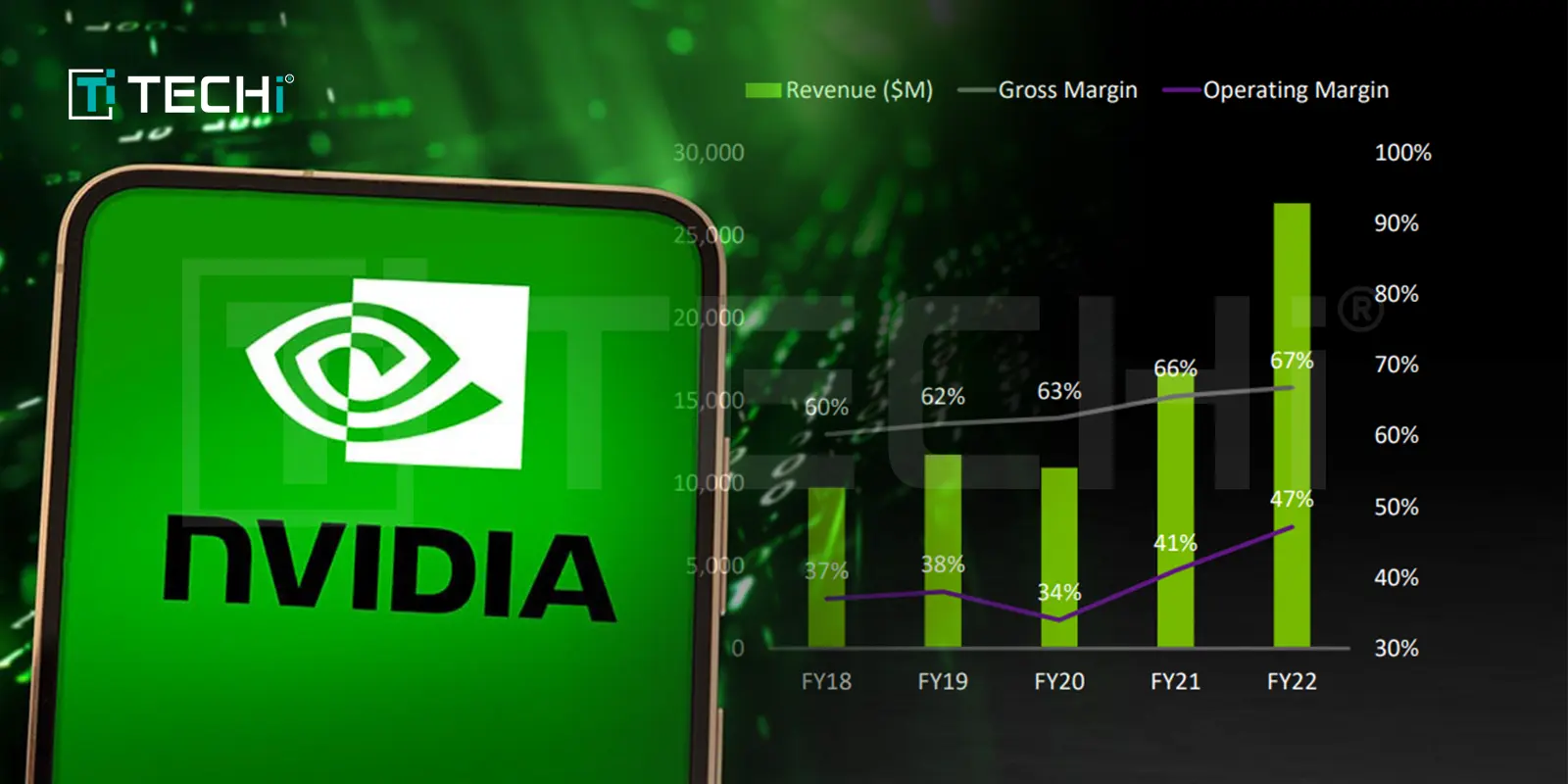
Nvidia $9 Billion Power Play is a turning point for investors, as UBS foresees Growth

UBS Predicts Growth:                    

Despite market concerns, UBS analysts are backing Nvidia (NASDAQ: NVDA) and predicting a pivotal game changing quarter ahead of it. UBS foresees explosive growth ahead, as NVIDIA is expected to increase its revenue by almost twice as much, driven by a predicted $9 billion in sales of its next-generation Blackwell chipsets by January.

 Progression towards Blackwell System:  

Nvidia’s instant shift from Hopper to Blackwell systems has led UBS forecasts for a highly active and productive future. To maintain optimal Supply chain management, UBS points to Nvidias’ employing end-users and original design manufacturers (ODMs) as a clever strategy for revenue recognition. Furthermore, Blackwell rack shipments are already in progress, with Hon Hai (HNHAF) at the forefront and Quanta on the rise.

Overcoming Challenges and Increasing Innovation:

Despite the hardware challenges, Nvidia’s performance is improving due to the use of connector cartridges from Amphenol (NYSE: APH), strengthening its ability to deliver under pressure. UBS has highlighted the growing dominance of Nvidia in AI and data centers, driven by the constant demand for hyperscalers. UBS’s $185 price target for Nvidia is a testament to their trust in the company’s repair strategy along with a turning point for investors. The Blackwell systems produced by Nvidia are not merely a product launch, but also a statement of redefining the field. As the innovation level continues to rise and grow, Nvidia is set to achieve high results in the future.

Read More: When will 5G Technology Launch in Pakistan?

Amazon Playing Bold Moves, Acquiring Indian Startup Axio For Over $150M.

Before getting deeper into it, let me tell you what is Axio. Axio is a ‘buy now, pay later’ (BNPL) company.

It helps people not put their desired products on the wishlist and wait for the next month’s salary but actually buy and enjoy them and pay later with an easy instalment plan. Axio works with popular Indian brands and websites like Flipkart, Myntra, Zomato, and Amazon India.

Over the years, Axio has raised $232 million from Investors who provided loans over $260 million to its customer base.

But that’s what the Axio alone is.

Now the most exciting part is that Amazon has shaken hands with them.

Amazon is a large e-commerce giant itself. Why did they buy it for over $150 M?

Amazon wants to grow its financial services in India. By owning Axio, they can offer its Indian customers easy credit options which catch more eyeballs to Amazon itself.

They have an equity stake in Axio for 6 years, and they are building a successful partnership right now. They signed the full acquisition agreement in December 2024 after completing all necessary financial formalities.

Smart move? Of course.

The more shopaholics, the more money Amazon will make. Creating a win-win situation for both users and owners is crucial for businesses to understand to grow on a large scale.
The opportunities and meaningful changes this transformation will make will be a treat to watch for everyone out there.

Read More: AWS Invests $11 Billion To Expand Georgia’s Data Centers

Elon Musk Sued By SEC Over Twitters’ Shares

SEC’s Lawsuit:

The U.S. Securities and Exchange Commission (SEC) has filed a lawsuit against Elon Musk with the allegations that him for violating security laws when he took over Twitter, now renamed X. According to the complaint that has been filed in federal court, Musk allegedly failed to reveal regarding his ownership of more than 5% of the Twitters’ shares on time and instead delayed the announcement to obtain more shares at a lower or discounted price.

Allegations:

According to the SEC, Musk should have filed a report announcing his 5% ownership by March 24, 2022, rather he did not choose to do so until April 4, 2022. During that time, he reportedly increased his stake from 5% to 9%, saving himself more than $150 million as Twitter’s stock increased 27% in price after the disclosure of this information. The SEC wants to impose civil penalties to return these apparent gains among other things. Musk’s lawyer, Alex Spiro, called it a weak attempt by the SEC to redeem itself, accusing the agency of a years-long harassment campaign. Musk has echoed those sentiments before when he rejected a settlement offer from the SEC. it will be up to a federal court to decide whether the SEC’s allegation is valid and whether to impose a penalty on Musk.

click here to read: Astrohaus Unveils a Specialized Mechanical Keyboard for Writers

Implications Of a New Shift:

Musk’s lawyer Alex Spiro labelled this complaint by the SEC as an “admission of the SEC’s inability to bring an actual case.” At this filing, Gensler, the SEC chairman, is preparing to leave the office, and the new commissioner nominated by Trump appears to take up the responsibility. This new leadership is suspected by analysts to be favourable for Musk and would shift things up.  The court will decide upon the case and it will find whether Musk invaded the securities law and will look into any chance of what penalty would be appropriate to impose.

Microsoft Invests $3 Billion in India to Lead AI Revolution

Bengaluru, January 7, 2025: Microsoft CEO Satya Nadella announced a $3 billion investment in India over the next two years to advance the country’s cloud and AI infrastructure. This includes building new data centres, expanding AI capabilities, and skilling 10 million people by 2030. The announcement underscores Microsoft’s commitment to supporting India’s vision of becoming a global AI leader.

Nadella stated at the Microsoft AI Tour in Bengaluru:India is unlocking incredible opportunities with AI. This investment ensures broad access to AI innovation, benefiting people and organizations nationwide.

As part of this initiative, Microsoft Research Lab launched an AI Innovation Network to bridge the gap between research and practical applications. The company is also partnering with SaaS Boomi to strengthen India’s AI and SaaS ecosystem, targeting over 5,000 startups and 10,000 entrepreneurs.

Transforming India into an AI-First Nation

Satya Nadella highlighted India’s growing leadership in the global AI environment, stating:
“India is rapidly unlocking opportunities with AI, and this investment ensures the benefits are accessible to everyone, fostering both innovation and inclusivity.

Puneet Chandok, President of Microsoft India and South Asia, echoed these sentiments, adding:
“From classrooms to boardrooms, Microsoft is making AI accessible to communities across India. We are committed to empowering the nation with the resources to excel globally in the AI era.

Advancing India’s AI and Skills Ecosystem

India is emerging as a global leader in AI skills, with professionals adopting AI expertise faster than ever. According to LinkedIn data:

  • Indian users spent 50% more time on learning weekly compared to global averages.
  • There has been a 122% year-over-year growth in Indian professionals adding AI skills to their profiles, surpassing the global rate of 71%.

Microsoft’s initiatives will accelerate this trend, equipping millions of Indians with the skills needed to thrive in a rapidly evolving job market.

Through its Advantage India program, Microsoft will train millions of Indians in AI skills to prepare them for the evolving job market. The company also emphasized sustainability, reaffirming its goals of becoming carbon-negative, water-positive, and zero waste by 2030.

Training and Sustainability

Puneet Chandok, President of Microsoft India and South Asia, said, “From classrooms to communities, Microsoft is making AI accessible, ensuring India is equipped with resources to thrive in the AI era.

This significant investment cements Microsoft’s role in India’s journey toward becoming an AI-first nation while advancing responsible and sustainable AI practices.

Building AI and Cloud Infrastructure

  • Microsoft will establish new data centres to expand its cloud and AI infrastructure.
  • With three operational data centre regions in India, Microsoft plans to launch a fourth in 2026.
  • This initiative will cater to the growing needs of India’s burgeoning AI startups and research communities, fostering scalable AI innovation.

Training 10 Million Indians in AI Skills

  • As part of the second edition of the ADVANTA(I)GE India program, Microsoft aims to skill 10 million people by 2030 in AI competencies.
  • The training initiative will support Indian professionals in adapting to the evolving nature of jobs, focusing on empowering students, entrepreneurs, and enterprises with future-ready AI expertise.

Launching the AI Innovation Network

Microsoft Research Lab has introduced the AI Innovation Network, which bridges the gap between research and real-world applications, enabling businesses to unlock the full potential of AI.

Empowering India’s SaaS Ecosystem

In collaboration with SaaSBoomi, Microsoft is driving the AI and SaaS ecosystem to achieve a trillion-dollar economy. This partnership will impact over 5,000 startups and 10,000 entrepreneurs, significantly boosting innovation in the region.

A New Era of AI-Driven Growth

With this massive investment, Microsoft is not just fueling AI innovation but also transforming India into a hub for AI-driven solutions. By empowering startups, training professionals, and fostering sustainability, the company is creating an ecosystem where technology catalyzes growth and inclusivity.

click here to read: Self-Driving Cars Take Center Stage at CES 2025

OpenAI Faces Loss Due to Excessive ChatGPT Pro Usage, Says CEO

OpenAI runs into Financial Despair.

Sam Altman, the CEO of OpenAI is apparently in distress as he stated that due to the unexpected excessive ChatGPT Pro usage, they are facing immense loss on its 200$ per month ChatGPT Pro Plan. Altman in one of his recent posts on X stated, “I determined the cost and figured that we would earn money.” This implies a lack of strategy and long-term vision, as a ChatGPT-powered AI chat box did not have a completely structured pricing plan that could be followed. This is not the first time OpenAI swiftly set its pricing structures without considering them in detail.  

Enchanting Features

ChatGPT Pro emerged a year ago and enchanted its users with various features, such as unlimited access to the o1 reasoning AI Model with o1 professional mode and even access to Sora, a video-generating tool made by the OpenAI squad.

Is ChatGPT Pro worth $2,400 a year?

The fact that ChatGPT Pro was primarily criticized for being too expensive lies in the idea of it being considered mainstream. The annual fee of about $2,400 is quite a hefty price, especially when the worth of o1 pro mode at least has not been established. As per Altman’s tweets, those who chose this plan are just heavy grey users consuming the service to its max. Altman, in one of his latest interviews with Bloomberg, recognized that the markup for ChatGPT was charged in the beginning without conducting any research. He said, we considered $20 and $42 as two possible prices and they went with $20 because $42 was believed to be too much, it was not a thoughtful plan and a snap decision towards the end of December 2022 or the start of January.

OpenAI’s Lofty Revenue Targets

After garnering cumulatively around $20 billion since its startup, OpenAI continues to experience a loss of around $5 billion on revenue of $3.7 billion. To become profitable, the company is believed to be increasing subscription fees, and some services may be transitioned into usage-based pricing. In the future, OpenAI intends to reach $100 billion in revenue in 2029.