Rivian Gears Up for a Hands-Free Highway Experience with Upcoming Driving Assist

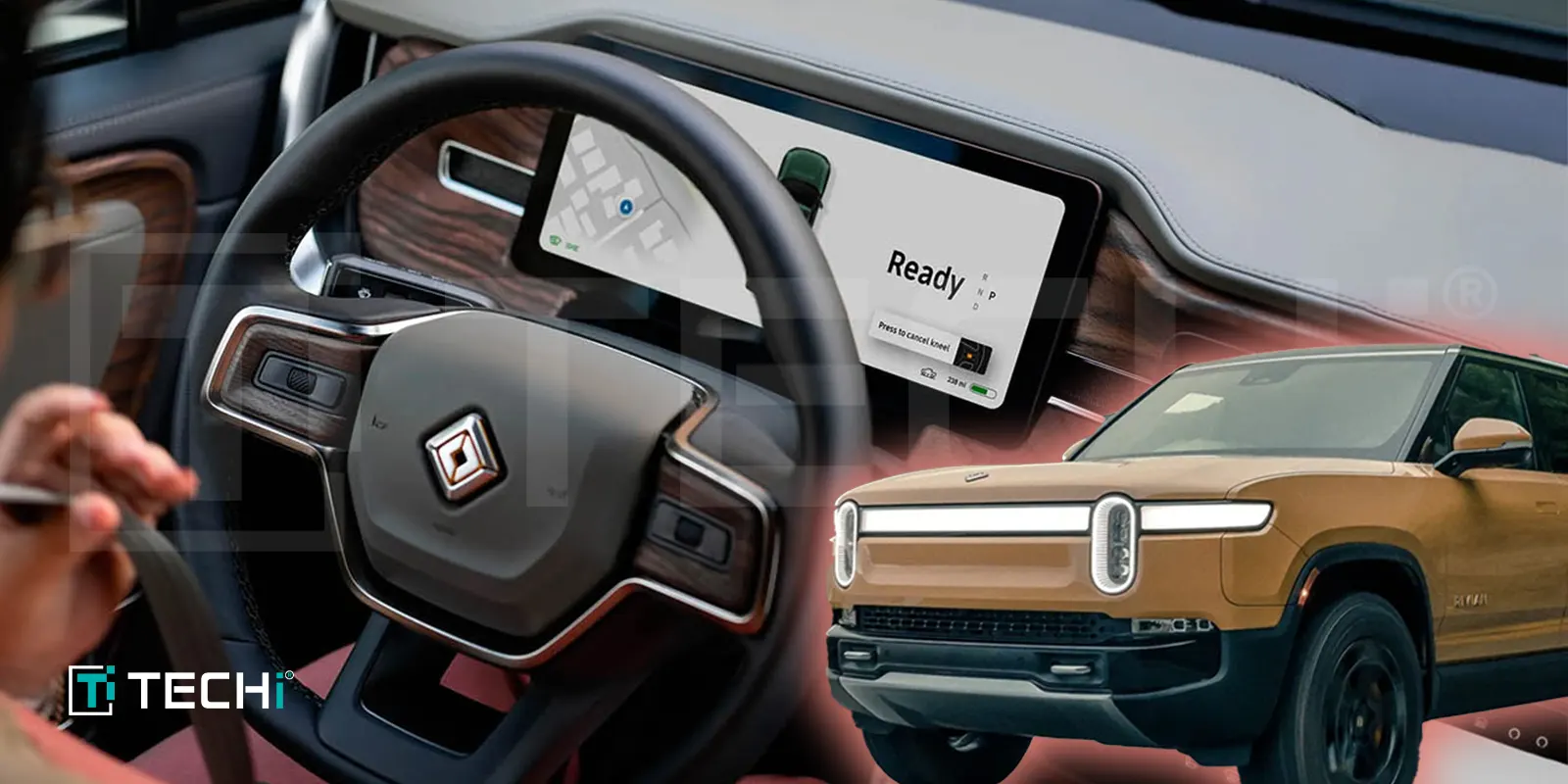
Autonomous driving is not just about who comes first to the market, it is about further defining success as those who can best ensure that everything goes according to plan. Rivian, with a spirit for outdoor adventures, is now changing its gear into the hands-off highway driver assist. Major updates in coming weeks would see Rivian taking on Ford and Tesla. Let’s keep it real though, as full autonomy is still some years out, we are still at the phase of self-driving technology called “trust but verify.”

On Thursday, Rivian announced that it would soon incorporate a hands-free version of its driver assistance system specifically for highway driving. This will be the last step before the company aims for an advanced version of “eyes-off” by 2026, which significantly strengthens the company’s current proposition in autonomous driving.

Autonomous Driving Arena:

One lands up Rivian in a race against Ford and General Motors as both carmakers have, in the past few years, ventured into launching comparable driver assistance systems. Ford’s BlueCruise and GM’s SuperCruise became selling features of their respective brands right away and of course, the full self-driving (monitored) system of Tesla still requires users to keep their hands on the wheel despite its own name.

Much of it is attributed to the expected changes under Trump’s rule in policies affecting the regulatory ground. Rivian, despite that, declared its first positive profit in Q4 2024, driven by cost cuts and a boost in its software and services.

Early Ambitions and End-To-End AI Training Strategy:

When it first broke out of its secrecy mode in 2018,CEO RJ Scaringe narrated some very futuristic scenarios, where a Rivian owner would go hiking while their vehicle would meet them at the end by itself. However, talking about autonomy for the time being in public had to take backstage as Rivian put all its energy into completing its IPO and scaling production of its three vehicles. Now, with Rivian in constant delivery mode of about 50,000 vehicles a year and a deep partnership with Volkswagen that took place last year in 2024, the flexibility exists to go back into advancing its driver assistance technology.

Rivian is going for the “end to end” training strategy in line with the driver assistance path, just like what is being used on Tesla’s Full Self-Driving (Supervised) software. It architects the whole system for a data-driven model. Rivian’s method of doing things does not rely on rules set up, instead, it trains machine learning models using data from its cameras and radar sensors to power all autonomous capabilities. Hands-free operation will initially be confined to highways, just like at Ford and GM. However, once the eyes-off version gets rolled out in 2026, Rivian intends to gradually broaden its scope to include more roads.

Creative Alternatives:

Instead of heavy capital investments to support the self-driving program, Rivian is looking at creative alternatives to tap large-scale GPU resource buildings. Scaringe said that, “Ultimately, the end state, we think hands-free, eyes-off needs to be available essentially everywhere”. (source Techcrunch) By going along this route, Rivian can efficiently train its self-driving models on a budget and can get the computational power to do so.

It is a great achievement of Rivian as it moves ahead toward hands-free and eventually eyes-off driving facilities. This is an exciting thing because the company is almost approaching complete autonomy with the development of its AI assistance, in competition with established players in the industry. There is great excitement over this but also a lot of apprehension. Maybe, just maybe, innovation along with Rivian’s impressive safety will eventually redefine what driving looks like. For now, it’s still the right thing to do, keeping at least one hand (and both eyes) ready, just in case our adventurous electric truck gets any wild ideas of its own.
Read More: Self-Driving Cars Take Center Stage at CES 2025

Arc’s Sport boat, an Aspiring Watercraft of The Future

Rise of Arc’s Innovation:

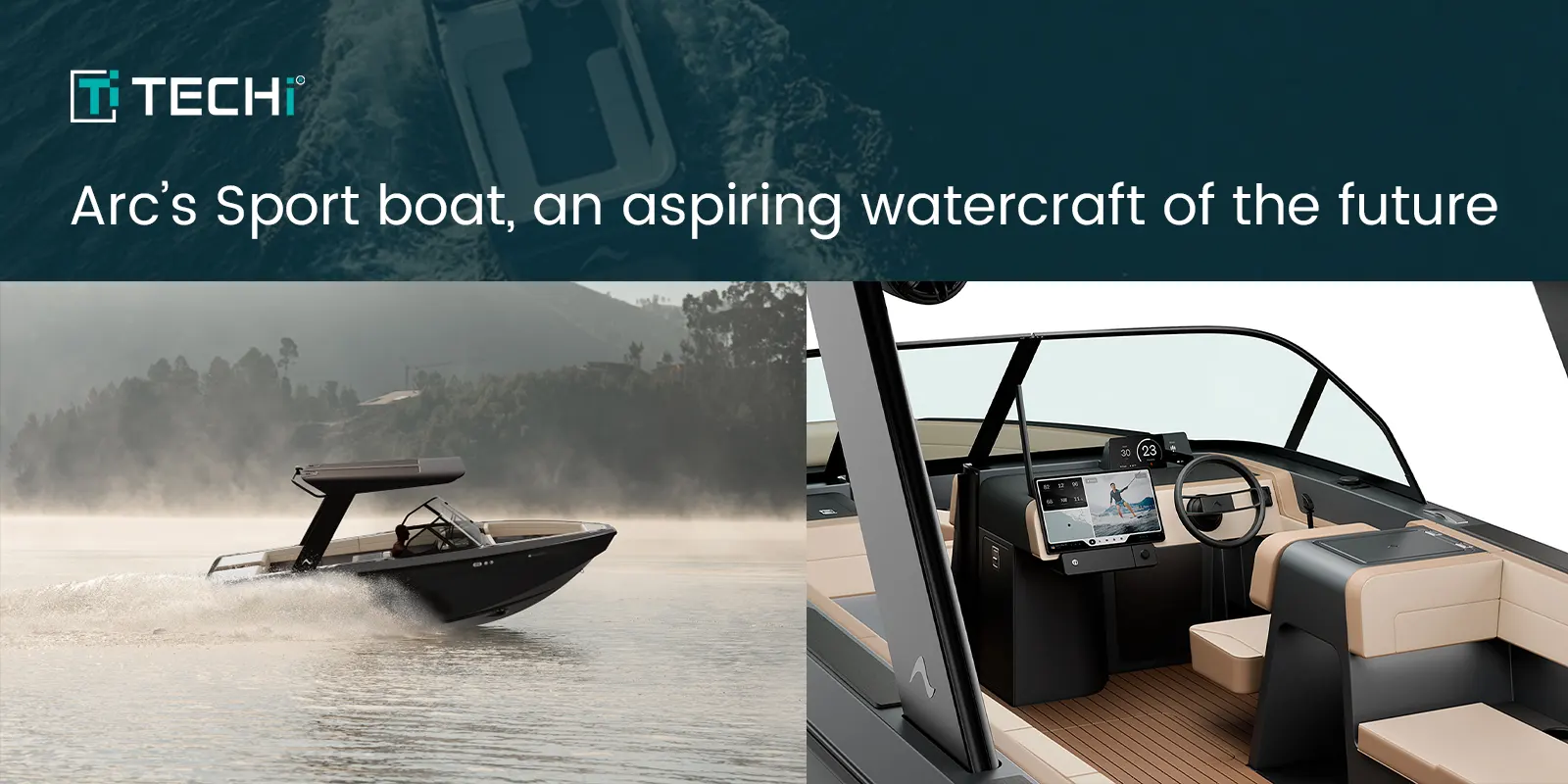
The new Sport Electric Boat, Arc’s latest innovation has not gone unnoticed, rather its waves and splashes are causing an uproar for good reasons in the world of boating. Arc was founded by SpaceX engineers and is Los Angeles-based, the company entered the market in  2021 with the exquisite invention of its first boat, Arc One. In 2023, $300,000 worth of Arc One boats were delivered and are set to make progress worth $258,000 with their latest Arc Sport model. Mitch Lee, founder and CEO, explained that “The Arc One for us was that [Tesla] Roadster. The first step was, let’s go manufacture this boat. Let’s do it at a small scale, and let’s learn from what it’s like to have these boats in the field with customers.” This is a quick rise of Arc as evidence of its focus on innovation itself.

Attributes and Aesthetics:

The Arc Sport isn’t just a sleek 23-foot boat, rather it’s a carefully engineered powerhouse. Its weight gives it stability on the water, making it feel more like a heavy jet ski than an inconvenient vehicle. Its power comes from a 226 kWh battery pack, with 500 horsepower attached to it which can deliver one smooth exhilarating ride. The high-performance Arc Sport boat attains very appealing aesthetics, its Tesla-inspired horizontal touchscreen, together with fluid software is modern and user-friendly. It consists of a second screen positioned behind the wheel showing important metrics such as speed, battery life, and an outlook from the forward-facing camera. The boat amazes us with its discreet motor which is less loud than most gas-powered vessels and allows us to have easy conversations at high speed. A ride in Arc Sport seems to be worthy of every splash as it promises adventure, innovation and a glimpse into the future of watercraft.

Forthcoming Ambitions:

Compared to a typical boat, one for what the industry is heading towards, it is clear that Arc has much greater ambitions and it opts towards the electrification of every watercraft. The Arc Sport shows us a thrilling view of electric boating, representing a fun, cleaner and quieter way to absorb the waterways. With investment by Andreessen Horowitz, the company will continue innovating and expanding and will definitely contribute in an adventure worth having.

Self-Driving Cars Take Center Stage at CES 2025

Self-driving cars stole the spotlight at CES 2025, showcasing exciting advancements in autonomous vehicle technology. Companies like Tesla, Ford, and General Motors introduced semi-autonomous driving systems that still require human intervention. Meanwhile, Alphabet’s Waymo announced fully self-driving taxis integrated into ride-hailing platforms such as Uber and Lyft. These driverless taxis are being tested and deployed in selected cities, while Uber and Lyft work on setting up the required infrastructure for maintenance, charging, and customer support.

Nvidia Expands AI Applications in Autonomous Vehicles

Nvidia pushed the boundaries of AI technology in autonomous vehicles at CES 2025. CEO Jensen Huang unveiled Nvidia Cosmos, a groundbreaking platform designed to create physical AI using synthetic data, making robotics more accessible. Ride-hailing giant Uber became one of the first adopters of Nvidia Cosmos. Nvidia also showcased its latest AI processor, Blackwell, which powers the new GeForce RTX 50-series GPUs and laptops, signalling a leap forward in AI-driven performance.

Elon Musk’sPredictions Affirmed by Industry Leaders

Elon Musk’s long-standing predictions about self-driving cars were validated by Nvidia’s CEO, Jensen Huang, during CES 2025. Huang highlighted three core components propelling self-driving technology: advanced AI models, AI training simulations, and powerful onboard AI computers. This vision is driving partnerships with companies like Aurora Innovation, which, in collaboration with Nvidia and Continental, is developing self-driving trucks expected to hit the roads by 2027.

CES 2025: A Glimpse Into the Future of Self-Driving Technology

The rapid developments unveiled at CES 2025 underscore the pace at which self-driving technology is evolving. The event demonstrated how major tech companies and automakers are working together to make autonomous vehicles a reality, reshaping the future of transportation and mobility.

Tesla’s Model Y, a Major Advancement To The SUV

Model Y’s launch and Tesla’s Revival:

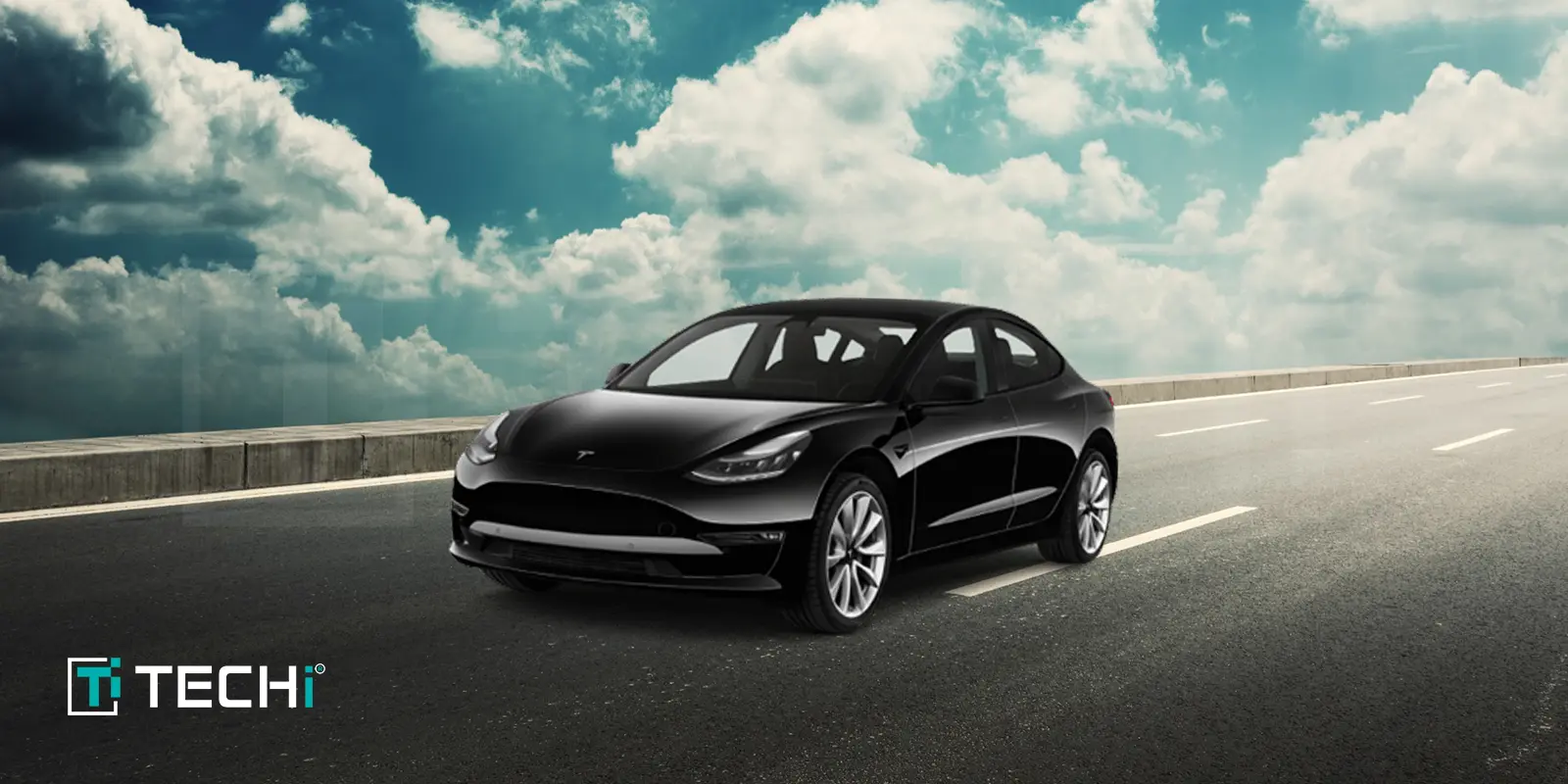
Tesla’s new Model Y has been launched for the Chinese and other Asian-Pacific markets. Since 2020, its first public launch, this is the first major renovation to the SUV of the Model Y. The year 2023-24 is not considered to be profitable for Tesla due to its fewer vehicle deliveries. The redesigning of a new Model Y became an obligation to recover from the loss of year-over-year decline since the company began selling cars to the mass market in 2012. Deliveries of the renewed Model Y are not yet known for Europe and the United States, for China and nearby countries, it will commence in March.   

Sleek Features:

After the first images were displayed of the new Model Y, codenamed “Juniper,” the new design borrows heavily from recent updates of the Model 3 while incorporating elements from the design of other Tesla projects. The vehicle’s front end is completely redesigned where it is sharper, sliced, and more angular, losing a more rounded look from the original. The headlights have been made continuous using a light bar across the front, along the lines of the Cybertruck and the prototype Cybercab. At the back side, the old taillights are replaced by a flamboyant ”cross-car lamp” which is a one-light bar stretching across the rear under a subtle protrusion in the hatch. Tesla calls this ”the first indirect reflective body panel taillight of its kind.’

Interior Renewals:

The interior upgrades include an ambient light bar, wrapping around the cabin that can be customized in different colors and fits similar to the one that comes with the Model 3. Passengers will enjoy powered rear seats, and they will have their monitor to blast some fun. According to Tesla, they have also enhanced the Model Y with suspension technology that enables it to ride smoother and an interior that is quieter with reduced road noise. The SUV, lighter and a few extra miles capable within a charge, shows slight improvement over previous versions and does not exhibit an obvious break in range or efficiency.

Evolving In the Competitive Market:

Model Y’s design goes down really well into the Chinese Electric Vehicle market where local competitors have been hammering Tesla’s record performance sales figures in the country and have brought about a situation which is forcing Tesla to modify its tactics to keep its feet in this fierce competitive scenario. The Model Y is also the fourth major vehicle that has been reinvented by Tesla. Model 3, Model S, and Model X are the other three vehicles. Since then, the only entirely new offering has been the Cybertruck, a product that has encountered quite a few issues before being available for the market. Tesla hinted at the launch of a new model or even models within this year. According to CEO Elon Musk, there is speculation that future models will come at a price lower than that of the Model 3 and Model Y, it would not reach the price point of $25,000. At the same time, the refreshed Model Y brings Tesla into more adapting activities, and innovative endeavours as well as guarding the stake out in an evolving Electric Vehicle market.

Delta’s in-Flight Experiences are Enriched With Advancements Along With a Sustainable Future

Delta’s High-Tech Upgrade:

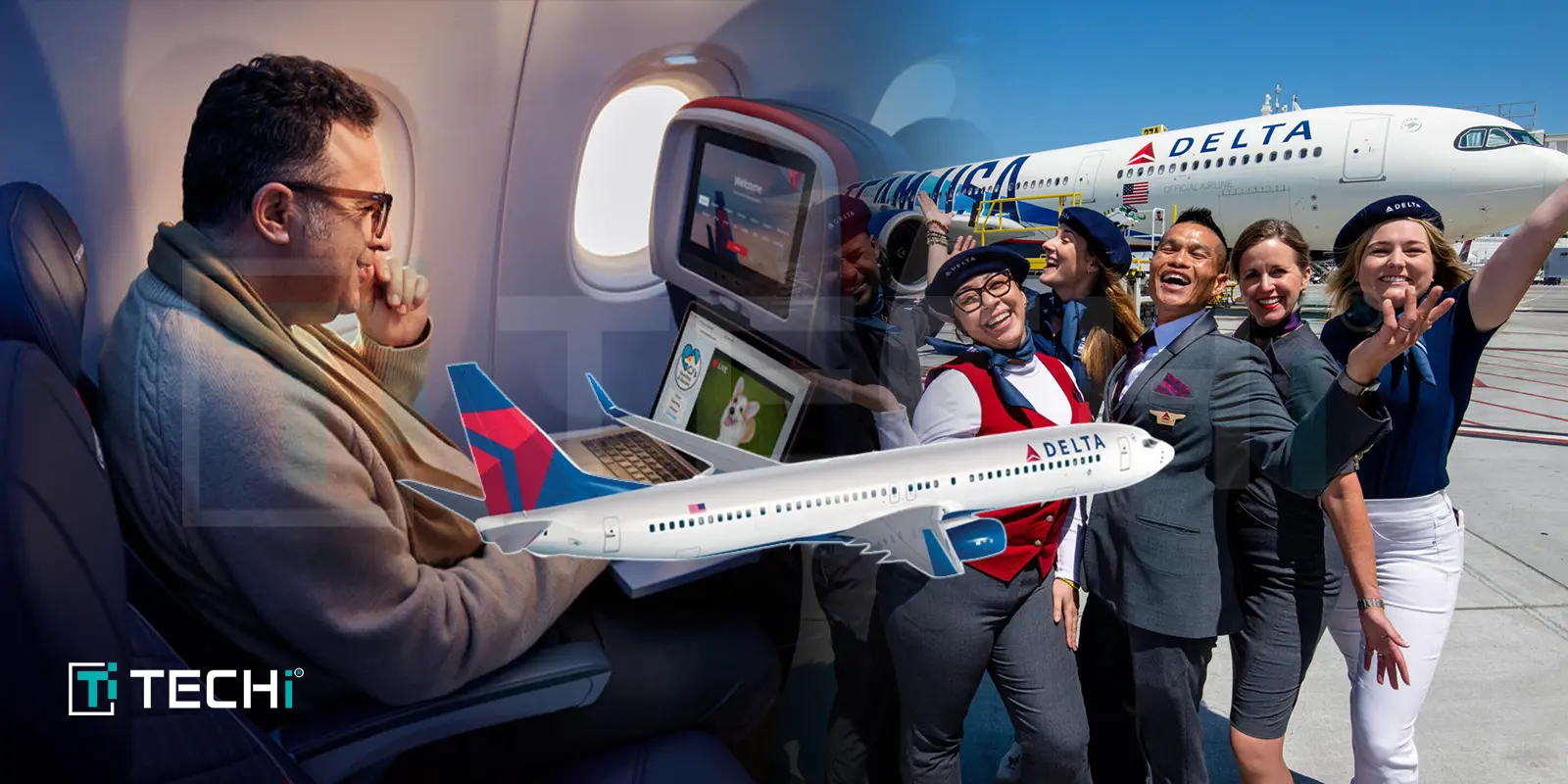
Air travel in Delta would soon see a major technological revolution as the airline revealed plans to install futuristic 4K HDR QLED in-flight screens on aircraft, offering the passengers ultra-high-definition entertainment at 35,000 feet. During Delta’s CES keynote address in Las Vegas, several new features were disclosed to improve enjoyment during air travel from the airline’s new partnerships with YouTube and Uber to an AI Chat Bot for customer service. Delta CEO, Ed Bastian said, “Technology has the power to transform travel and create moments for our customers to enjoy the journey as much as the destination. Whether through fast, free Wi-Fi, our industry-leading seatback screens or any of the other personalized channels in Delta’s digital ecosystem, we’re committed to creating a seamless and enriching experience for our SkyMiles Members.

SkyMiles Membership Benefits and In-flight Experiences:

Delta’s Skyline Membership promises to deliver a more stable and reliable internet, allowing travellers to stream with less friction, including free ads on YouTube. The members are also offered an option to link their Uber account and compile the mileage reward through an association with Uber by Delta, earning through taking rides covered to and from the airport as well as with the service delivery option for Uber Eats. To upgrade its seat-back displays to 4K HDR screens for passengers who were not very impressed with the currently available options, the airline is working with Thales Avionics. The same company is helping Emirates bring high-definition screens to its planes and the best bit is that according to Delta’s representative Allen Pham, “the new screens would be available in all cabins and not just in first class.

By 2026, along with fancy new screens, travellers will be able to watch Delta-sourced content through a “binge button” and can easily pair their wireless headphones to all cabins through Bluetooth connectivity.

Significant Advancements:

Delta’s upgrades include enhancements in stacking its inflight entertainment system with an advanced recommendation engine that will automatically make content recommendations to the passengers. Another advancement is set to be an updated app featuring an “AI Concierge” designed to make travel planning easier. The feature will offer custom advice based on the user’s location, flight details, and even when the user expects their passport to expire. It is also expected to have some future applications of packing tips and weather updates as well.

Delta’s Sustainable Future:

Sustainability is an important aspect in today’s world and Delta seems to have a vision of a greener future. The airline collaborates with Airbus in designing more fuel-efficient aeroplanes and is studying the sustainability of fuels with a target to fill 95 per cent of its fuel consumption by 2050. Innovations such as hydrogen-powered flights and new wing configurations are part of the plan to yield net-zero emissions. The passengers will have to wait a couple of years before they see some of Delta’s eco-friendly and high-tech futuristic plans.