X Blocks Signal Links – A Threat to Digital Freedom and Privacy?

X (formerly Twitter) has ignited controversy by blocking links to Signal.me, a domain linked to the widely used encrypted messaging app Signal. Users attempting to share these links are met with error messages suggesting they are spam or potentially harmful. However, links to Signal.org remain unaffected, leading to concerns that this selective restriction is an intentional move against encrypted communication rather than a broad moderation policy.

Why Is X Targeting Signal?

Signal has built a reputation as a go-to app for private messaging, relied upon by activists, journalists, and government officials seeking secure conversations. The app’s end-to-end encryption makes it an essential tool in an era where digital surveillance is an increasing concern.

Cybersecurity expert Matthew Green, a cryptography professor at Johns Hopkins University, expressed skepticism about X’s justification for blocking Signal links: “Blocking Signal links under the guise of ‘spam prevention’ is highly suspect. It’s hard not to see this as an attempt to make secure communication harder for people who rely on it.”

This move comes amid X’s history of restricting links to competing platforms like Facebook, Instagram, and Mastodon. However, Signal is not a direct competitor to X—it’s a private communication tool, not a social networking platform. So why would X take issue with Signal?

A Crackdown on Whistleblowers?

Some analysts believe this could be part of a broader effort to limit whistleblower activity, particularly among federal employees who have been increasingly using Signal to communicate privately about internal government matters. Reports indicate that employees in various agencies, including those under Elon Musk’s oversight, have turned to Signal to discuss concerns regarding internal policies, inefficiencies, and alleged misconduct.

Musk has previously hinted at developing his own encrypted messaging service within X, leading some to speculate whether this move is intended to direct users toward X’s own proprietary communication tools instead of an independent and secure platform like Signal.

What’s Next for Digital Privacy?

X Blocks Signal Links a worrying shift in digital communication policies. If X can arbitrarily suppress access to privacy-focused tools, what’s stopping other platforms from doing the same? Social media platforms have evolved into public communication spaces, and restricting encrypted messaging services could have widespread implications for journalists, activists, and privacy-conscious individuals.

For now, X has not officially commented on whether this block is intentional or a technical oversight. Users looking to share their Signal contacts will have to resort to workarounds, such as sharing usernames directly. However, the lack of transparency raises an important question.

Read More: Elon Musk’s AI Revolution Continues as xAI Unveils Grok 3 AI Model

What’s Next for TikTok in the U.S.? Billion-Dollar Bids and High-Stakes Battles

Fate has not been kind to TikTok in US lately, with tantrums of a legal battle between political turns and the suffering caused by billion-dollar bidding processes on a daily basis. One day it is banned, and the next day it is back with presidential blessings. Here it comes again, several of the high-profile investors take a stab at delving their fingers into the viral platform, the question remains about who is going to own a platform that creates trends, fuels influencer careers and keeps millions scrolling at 2 AM? As the battle heats up over TikTok, let’s break down what’s been going on so far and who has eyes on buying it.

TikTok’s Ongoing Controversy:

The last four years have been a storm of discontent for TikTok, which has had to crawl down in the U.S with a strong debate. The site is owned by a Chinese company, ByteDance, and this has raised worries in this country that the Chinese government might gain access to its users’ data. This has led to many legal actions, executive orders, and now, perhaps, the possible forced sale of TikTok’s U.S operations. Adding to the uncertain atmosphere, TikTok suffered a minor outage in the U.S last month leaving millions of users in suspense. The app was restored very quickly but reminded users about how fragile its hold exists in the country.

According to CFRA Research, Senior Vice President Angelo Zino, the value of TikTok’s U.S business could grow beyond $60 billion, with the demand from the U.S government to sell or ban TikTok. There have been several buyers emerging to snatch this most effective social media platform in the world.

TikTok’s Ban:

To make sense of that very uncertain future now with TikTok, we must revisit critical events in history that have forged its bumpy relationship with the U.S government. In August of 2020, President Donald Trump signed an executive order prohibiting transactions with ByteDance, virtually seeking to ban the app from usage within the U.S. The administration pushed for a forced sale of TikTok’s U.S operations, with Microsoft, Oracle, and Walmart lining up as potential buyers. A U.S judge temporarily blocked Trump’s executive order, allowing TikTok to continue its operations while legal proceedings were taking place.

Bipartisan efforts to address National Security concerns related to TikTok continued under former President Joe Biden. In April 2024, the U.S House of Representatives passed legislation that directly targeted TikTok, it later made its way through the Senate. President Biden signed the bill into law, making mandatory that TikTok either sell itself or be prohibited in the country.

In return, TikTok sued the U.S government, claiming that the ban was unconstitutional and a violation of First Amendment rights. The U.S Supreme Court upheld the Protecting Americans from Foreign Adversary Controlled Applications Act (PAFACA), popularly named as “the TikTok ban.

Trump’s Reversal and Temporary Extension:

Astonishingly, Trump submitted a court statement countering the expected ban on TikTok, suggesting that he wanted to find a way to keep TikTok in the U.S. In the aftermath of the Supreme Court’s ruling, TikTok swiftly shut down for a brief period in the U.S and it made its comeback within another less than 12-hour period with a statement that, “As a result of President Trump’s efforts, TikTok is back in the U.S”.

On January 20, Trump signed an executive order delaying the ban for 75 days, which will give TikTok additional time to sell a stake or sign some kind of agreement. Trump has proposed a 50-50 ownership deal between ByteDance and a U.S company, although nothing has been finalized yet.

Potential Buyers for TikTok in US:

Clearly, some potential investors and companies have emerged as prospective buyers of TikTok’s U.S operations. Here is who is contesting for the ownership;

1. The People’s Bid for TikTok:

Organized by Project Liberty founder Frank McCourt, The People’s Bid seeks to promote open-source initiatives that privilege privacy and data control. Kevin O’Leary, an investor and television personality, joined The People’s Bid on 6th January and has previously signaled interest in buying TikTok for $20 billion. Tim Berners-Lee, Prolific inventor of the World Wide Web said in a statement that, “users should have an ability to control their own data”, is also interested in bidding for it along with David Clark, a senior research scientist at MIT Computer Science and Artificial Intelligence Laboratory.

2. American Investor Consortium:

Headed by Jesse Tinsley, CEO of Employer.com, this consortium recently issued an all-cash $30 billion bid for TikTok U.S operation and the participants include: David Baszucki, Co-founder and CEO of Roblox, Nathan McCauley, CEO of crypto platform Anchorage Digital, and Jimmy Donaldson (MrBeast), the famous YouTube content creator.

3. Other Interested Buyers:

Other interested buyers are; Bobby Kotick, Former Activision CEO who is likely looking at how he can integrate TikTok into gaming. Steven Mnuchin, has come back into the discussion after being the U.S Treasury Secretary under Trump. Oracle has tried to acquire TikTok in 2020, but co-founder Larry Ellison is said to still have an interest. Walmart expressed interest in 2020 and it could have value in TikTok’s e-commerce potential. Microsoft, formerly a top player in 2020 who renewed interest according to reports. Rumble, the alternative video-sharing platform, which wants to purchase TikTok and be its cloud technology partner with it and Perplexity AI also submitted its bid last month.

TikTok’s Future in US:

The future of TikTok in the U.S will soon be determined by the months coming ahead as to whether the app will continue with new ownership or face another legal battle. The outcome might reshape how social media is being used by millions of creators and businesses and will be setting an example on how the U.S would treat digitally owned foreign platforms. What is for sure is that TikTok will shape not only the future of social media but also the broader conversation regarding data privacy, tech regulations, and digital influence. 

Read More: TikTok Returns to App Stores in the US
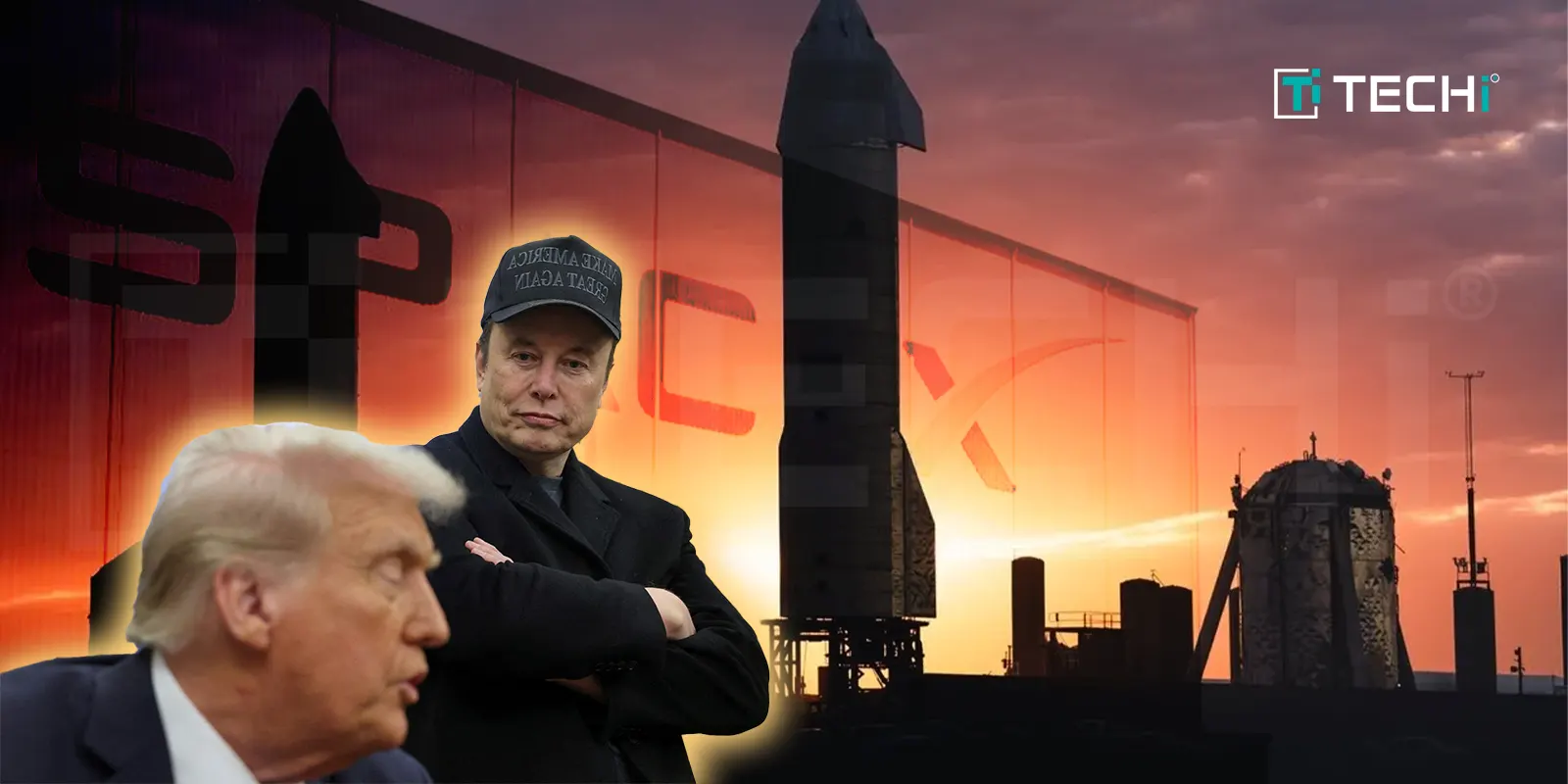
Trump Fires FAA Workforce as Musk’s SpaceX Enters Air Traffic Control

“You are fired!” seems to be apparently the new in-flight announcement. As Commercial aviation is the art of balancing both technological precision along with human expertise, what happens when one end of the equation is suddenly compromised overnight? The most recent mass firings at the Federal Aviation Administration (FAA), which have taken place alongside the introduction of yet an undefined role for SpaceX in the future of air traffic control, have raised eyebrows, sparked debates, and left a lot of people wondering if the skies have suddenly perhaps became a bit more turbulent. 

According to a CNN source, the Trump administration has dismissed hundreds of Federal Aviation Administration (FAA) employees assigned to critical air traffic control infrastructure. The terminations began late Friday night, just as SpaceX, under Elon Musk, was contracted to assist with developing an entirely new air traffic control system.

Mass Firings:

The number of affected workers is still unknown. However, the union representing the employees, the Professional Aviation Safety Specialists (PASS), noted that among them were mainly terminations due to probationary employees. These were newly hired employees who had yet to complete at least a year of duty since employment. Notably, these are not air traffic controllers, as the sector is already plagued by a shortage of staff due to resignations and retirements.

As reported by Dave Spero, president of PASS, “the employees were fired without cause nor based on performance or conduct. The emails didn’t come from a government email address; they came from an exec order Microsoft email address”. These employees belonged to professionals whose work includes maintenance on FAA radar equipment, landing systems, and navigation aids. An anonymous air traffic controller disclosed to the Associated Press that the layoff also affected aircraft certification specialists, aviation technical system experts, engineers, architects, and flight procedures teams. Galen Munroe, Deputy Director of Public Affairs at the National Air Traffic Controllers Association (NATCA), confirmed that the layoffs reached across several essential aviation safety roles.

Safety Concerns:

Congress has been pushing for years for the FAA to deal with the systemic problems posed by recurring near-misses and the modernization of its infrastructure. In spite of alarm bells rung by aviation experts, the agency has been negligent in facilitating any of the most needed safety upgrades.

This wave of firings follows a crash that occurred over Washington National Airport this January. A single controller was responsible for helicopter and commercial airline traffic at the heavily trafficked airport, and several other aviation accidents have followed since. Nick Daniels, President of NATCA, said, “We will analyze the effect of these terminations on aviation safety and the national airspace system. It’s a sad day for those who chose to serve in aviation safety and public service, only to have their careers cut short.”

SpaceX and the Future of Air Traffic Control:

Just days after the Washington D.C crash, Musk took to X (formerly Twitter) to announce that Trump’s Department of Government Efficiency (DOGE) had approved efforts to “make rapid safety upgrades to the air traffic control system.” However, there have been no further details made available by either Trump or Musk on the expected upgrades.

Secretary of Transportation Sean Duffy posted on X that, “On Monday, members of Musk’s SpaceX team were at the Air Traffic Control System Command Center in Virginia. The purpose of the visit was to allow SpaceX to get a firsthand look at the current system, learn what air traffic controllers like and dislike about their current tools, and envision how we can make a new, better, modern, and safer system.”

While it seems that SpaceX may have added modernizing air traffic control to their portfolio, recent mass firings raise a lot of concerns regarding immediate risks to safety and disruption to air traffic operations. The involvement of SpaceX introduces uncertainty but also excitement for the future of air traffic control which could lead either to innovations or to turbulence. For now, travelers and industry experts alike will keep their seatbelts fastened and tray tables locked, watching closely to see if this new trajectory opens up with a clear sky or causes another chaos. While the implications of such a decision are being debated by various industry experts and policymakers, the future of American air traffic control seems far from certain. 

Read More: Elon Musk’s AI Revolution Continues as xAI Unveils Grok 3 AI Model

Elon Musk’s AI Revolution Continues as xAI Unveils Grok 3 AI Model

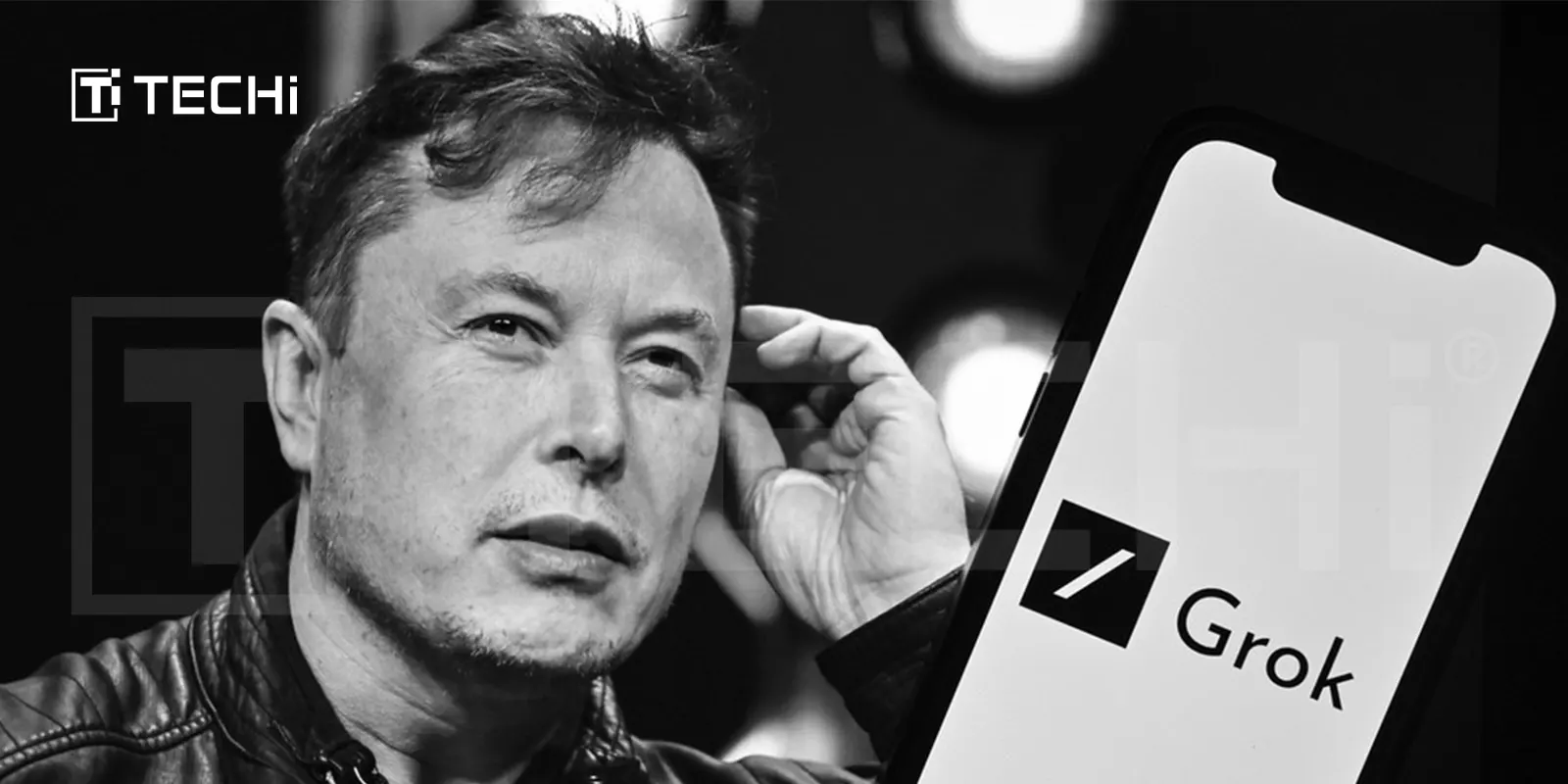
Artificial intelligence has evolved rapidly along with xAI certainly taking up the challenge with the launch of Grok 3 AI Model that promises advanced reasoning capabilities, deep search, and a voice mode, making it the most intelligent chatbot around. Although, in the current super competitive AI race, one question is raised in people’s minds, will Grok 3 outwit, outlast, and out-GPT its competitors?

The xAI’s Grok 3, founded by Elon Musk, became the latest flagship AI model launched, with new features being introduced in Grok apps on iOS and the Web. It is designed to compete with OpenAIs’ models GPT-4o or Google ‎Gemini. Grok 3 has extensive capabilities in image analysis, reasoning, and deep research functions, categorically establishing an AI performance benchmark.

Grok 3 AI Model step ahead in AI:

Grok 3 AI Model had reportedly been under development for a few months and was in need of massive training in a data center in Memphis with nearly 200,000 GPUs. Musk in his post on X claimed that, “Grok 3 was developed with 10x more computing than Grok 2, its predecessor, and with an expanded training data set that ostensibly includes filings from court cases”.

During a live-streamed presentation Musk said, “Grok 3 is an order of magnitude more capable than Grok 2. [It’s a] maximally truth-seeking AI, even if that truth is sometimes at odds with what is politically correct”. Grok 3 is not one model, but rather a family of models, including the Grok 3 mini, which works faster but with less accuracy. Not all features are available right away but the launch has started this Monday.

Performance and Benchmarks:

According to xAI, Grok 3 surpasses GPT-4o in major AI benchmarks, including American Invitational Mathematics Examination (AIME) (resolution of mathematically inclined questions) and Graduate-Level Google-Proof Q&A Benchmark (GPQA). Early on, Grok 3 was found to compete with others in the Chatbot Arena, which is a crowdsourced platform to assess AI performances.

Grok 3 also has two special variants, Grok 3 reasoning and Grok 3 mini reasoning, in contrast to OpenAI o3-mini and DeepSeek R1 models in certain problem solving tasks. Whereas these reasoning models are working on a deep self-verification path before delivering their answers, thereby significantly increasing the level of correctness on mathematical, scientific, and programming questions. xAI claims Grok 3 Reasoning is better than OpenAI’s leading o3-mini-high model for mathematics, especially for AIME 2025. Users can interact with these models from the Grok app, using Think mode for general reasoning or Big Brain mode for complex computations requiring additional processing.

DeepSearch and Subscription Plans:

Reasoning in Grok 3 is also present in DeepSearch, an AI powered research tool by xAI where the internet and X delivers complete analyses. DeepSearch is xAI’s answer to similar tools from OpenAI and other AI firms. Access to Grok 3 is first limited to subscribers of X Premium+ plan, which costs $22 per month. Meanwhile, an upgraded subscription tier, SuperGrok, is rumored to cost $30 per month or $300 per year, offering additional reasoning queries, DeepSearch capabilities, and unlimited image generation. Musk also announced that Grok 3 will soon gain a voice mode, enhancing user interaction with synthesized speech.

Within weeks, Grok 3 models will be available in xAI’s enterprise API alongside DeepSearch functionality. Additionally, Musk revealed plans to open source Grok-2 in the coming months, stating that, “Our general approach is that we will open-source the last version [of Grok] when the next version is fully out. When Grok 3 is mature and stable, which is probably within a few months, then we’ll open-source Grok 2.”

Political Controversy:

Musk originally pitched Grok as being a way for people to get away from mainstream AIs, promising it would be “edgy, unfiltered, and anti-woke.” In previous versions, however, Grok could not resist becoming politically sensitive or aligning with leftist views prevailing in most social issues. Musk attributed that to Grok’s training data and promised to change its tone toward political neutrality.

Whether Grok 3 will achieve that remains to be seen, as well as how its stance on “truth-seeking” AI will be able to shape public discourse and governance over AI. It’s a milestone in the changing AI landscape, and this latest release from xAI promises to stretch what AI models are capable of. How far Grok 3 will go in terms of its perceived capabilities remains to be seen, while Musk continues to pursue the population of AI with truth seeking.

Read More: Apple Maps May Introduce Google-Style Ads to Expand Its Revenue Stream

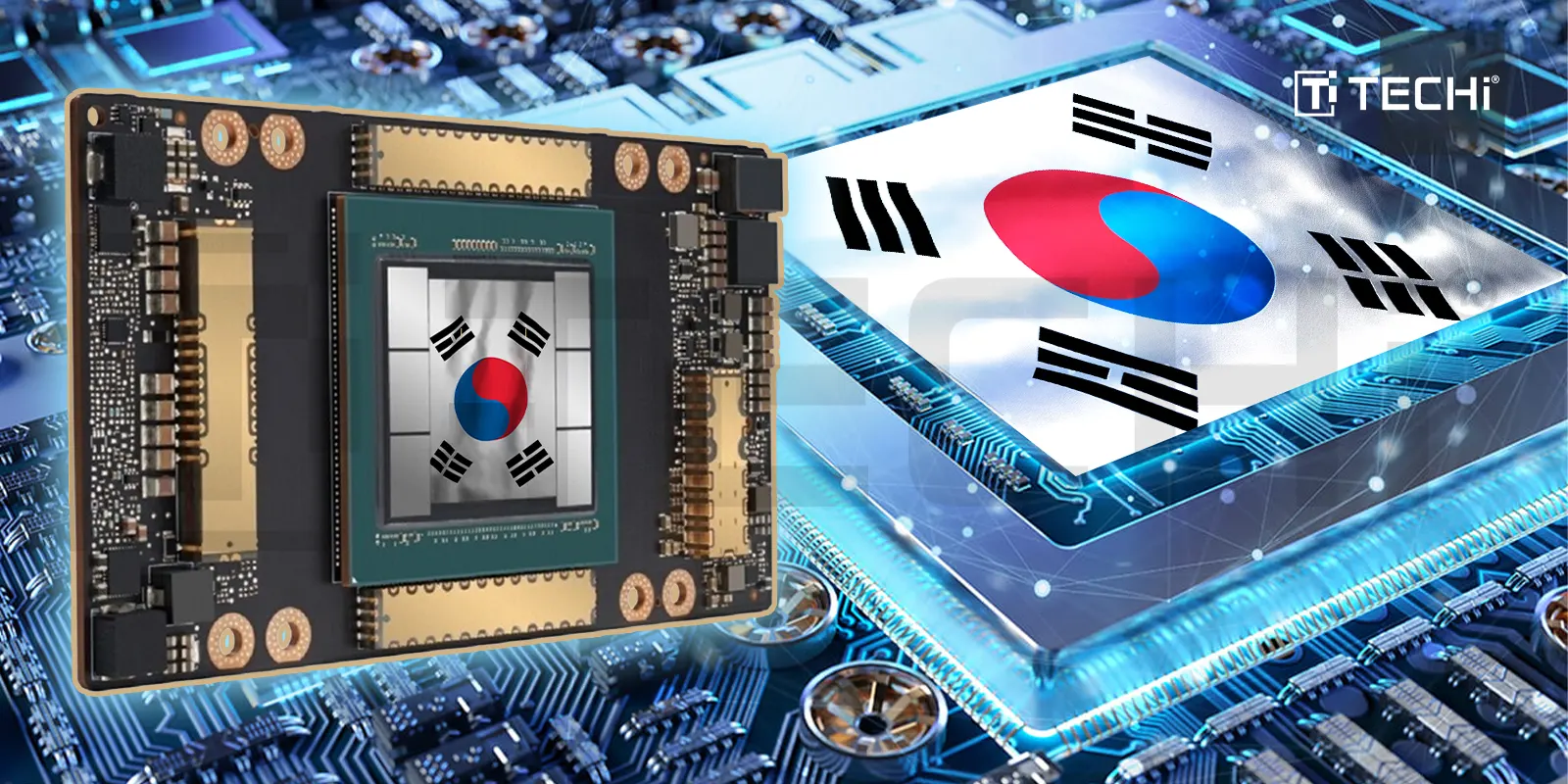
South Korea’s AI Power Play; Securing 10,000 GPUs for the Future

South Korea is on its way to procure about 10,000 high-performance GPUs during the year, with a view to furthering its interest in the rapidly accelerating global AI race. This falls under its wider plan to build a more cohesive national AI computing infrastructure and sustain the country’s innovation ecosystem. Artificial Intelligence has changed the face of this world, and all the countries are doing hard work to establish large computing infrastructures. Here, South Korea is one of the last countries to announce acquiring 10,000 high-end GPUs. The AI race is not just between the technological maharajas, it becomes an all-out national showdown among countries.

An Alternate Strategic View:

As artificial intelligence becomes a key driver for economic and technological growth, the intensified competition now encompasses not just corporate rivalries but also national innovation ecosystems. This strategic view was articulated by acting President Choi Sang-mok, who said, “As competition for dominance in the AI industry intensifies, the competitive landscape is shifting from battles between companies to a full-scale rivalry between national innovation ecosystems”.

In partnerships with the private sector, South Korea seeks to obtain the GPUs for its national AI computing center, set to start operations shortly, to support its AI aspirations.

Global Regulation for AI Chips:

This follows the recent regulations by the U.S government prohibiting exportation of AI chips. The new rulings, rank nations in different tiers and place South Korea among 18 countries that are exempt from export restrictions. Meanwhile, 120 other countries are facing export restrictions, whereas nations such as Iran, China, and Russia are virtually banned from accessing U.S AI chips.

The number of GPUs that would be needed for an AI model depends on factors like processing power demands, amount of data, complexity of the model, and time to train the model.The Ministry of Science and ICT in South Korea is yet to finalize its requirements regarding the budget, models of GPUs, and partners in the private sector. However, the government anticipates wrapping this up by September 2025.

Global GPU Market and South Korea AI Investment:

NVIDIA is considered to dominate the global GPU market by more than 80 percent and has continued to be a vital supplier for most AI companies across the globe. GPUs are publicized as general AI and accelerated computing application’s keystone hardware. However, all major companies like Microsoft backed OpenAI are now searching for alternatives to cut down their reliance on Nvidia. The company is finalizing the design of its own AI chip and for manufacturing, will turn to Taiwan Semiconductor Manufacturing Co (TSMC).

China is beginning to produce spectacular results in artificial intelligence, as the Chinese startup DeepSeek develops AI models that focus more on computational efficiency than on processing power, which could narrow the gap between Chinese and U.S AI chips.

Following its ambitious program of acquiring 10,000 GPUs, South Korea is driving very hard to assert itself into the ranks of highly competitive AI innovators. It builds partnerships with the private sector and takes exemption from the U.S chip restrictions to make sure it really leads the way in the revolution. The next few months will be vital for the government in ratifying procurement plans and advancing towards the national AI strategy. As long as technology keeps evolving, that investment by South Korea into infrastructure for AI may indeed prepare for revolutionary breakthroughs to arrive in the upcoming years.

Read More: South Korea Suspends New Downloads of DeepSeek over Data Privacy Concerns

Google’s YouTube TV Reaches New Deal to Keep Paramount Content Available

Finally, YouTube TV subscribers may heave a sigh of relief after a long tussle as Google and Paramount came to an agreement just in time to keep all of the latter’s content under the streaming service. As reported late Saturday, this particular deal would guarantee full availability without interruption to popular networks such as CBS and CBS Sports as well as Nickelodeon, among others, for subscribers of YouTube TV.

For a few moments, the nerve wracking experiences of YouTube TV subscribers seem just about to play out, hitting the power button only to find CBS, Nickelodeon, and their Paramount favorites nowhere to be seen in the digital realm. Just then, panic was about to set in and some were even considering the unthinkable cable. This was when Google and Paramount decided to inject a bit of drama into the agonizing contract fight by relenting and coming to terms, thus preserving Paramount’s channels on YouTube TV. The part of the deal seems to be an expanded streaming relationship, possibly with Paramount + more tightly integrated into Google’s ecosystem.

Deal for Subscribers:                              

Only a few days earlier, YouTube TV went as far as warning users that had almost cleared all of the Paramount content as it approached the final deadline of February 13, and emphasized that this collection of programming will soon be for replacement. Google, however, was still working on the signing of a deal that would prevent their subscribers from having to endure any new increases in the subscription price and give them more flexibility in the bundling of channels.

While the deal itself is still under wraps, a Paramount spokesperson defined it as an “expanded streaming relationship” and said that, “not only will YouTube Primetime Channels continue to offer streaming services Paramount +, with Showtime and BET+ as add-ons, but Google also gets the right to make Paramount + available to qualifying YouTube TV customers”.

Negotiations under High Stakes:

Neither is this the first time that YouTube TV has entered into major contracts that have involved high profile contract disputes with media giants. Previously, Google lost Disney and came almost to the brink of losing key Disney owned networks before striking a last minute deal. Negotiations of the same kind between Google and Paramount demonstrate what has continuously been often called strains between the traditional media and the streaming media regarding content distribution and the rapidly changing tastes of viewers.

In its own announcement, Google said, “We’re happy to share that we’ve reached a deal to continue carrying Paramount channels, including CBS, CBS Sports, Nickelodeon and more … To our subscribers, we appreciate your patience while we negotiated on your behalf”. At the time, Google said it was “fighting for an agreement that avoids passing along additional costs and offers [subscribers] more flexibility in how you watch your favorite sports and shows.” 

In a harsh internal memo, Paramount’s co-CEOs, George Cheeks, Chris McCarthy, and Brian Robbins, declared Google as “unwilling to agree to reasonable terms consistent with the market, choosing to jeopardize the entertainment experience at the expense of consumers”. They further cited Paramount’s importance, saying, “The reality is, you can’t have a successful video product without Paramount, one of the leading media families in TV viewing”.

Broader Implications:

The immediate takeaway for YouTube TV subscribers is quite simple, no more sudden blackouts of their favorite Paramount channels but, the implications are broader. The giant content and pricing war between technology champions like Google and legacy studio Paramount is still far from over. Under this new agreement, YouTube TV subscribers can breathe easy with Paramount channels CBS, Nickelodeon, and CBS Sports will remain on board.

As streaming platforms and media giants engage one another in their tug of war over contracts and revenues, there is no doubt that the real winners or losers are always viewers. For now, at least, they can be left to relax and enjoy their favorite shows until the next round of negotiation. Similar arguments about content availability, pricing, and consumer choice will continue to occur as streaming services dominate the entertainment landscape.

Read More: TikTok Returns to App Stores in the US and the Ownership Battle Continues
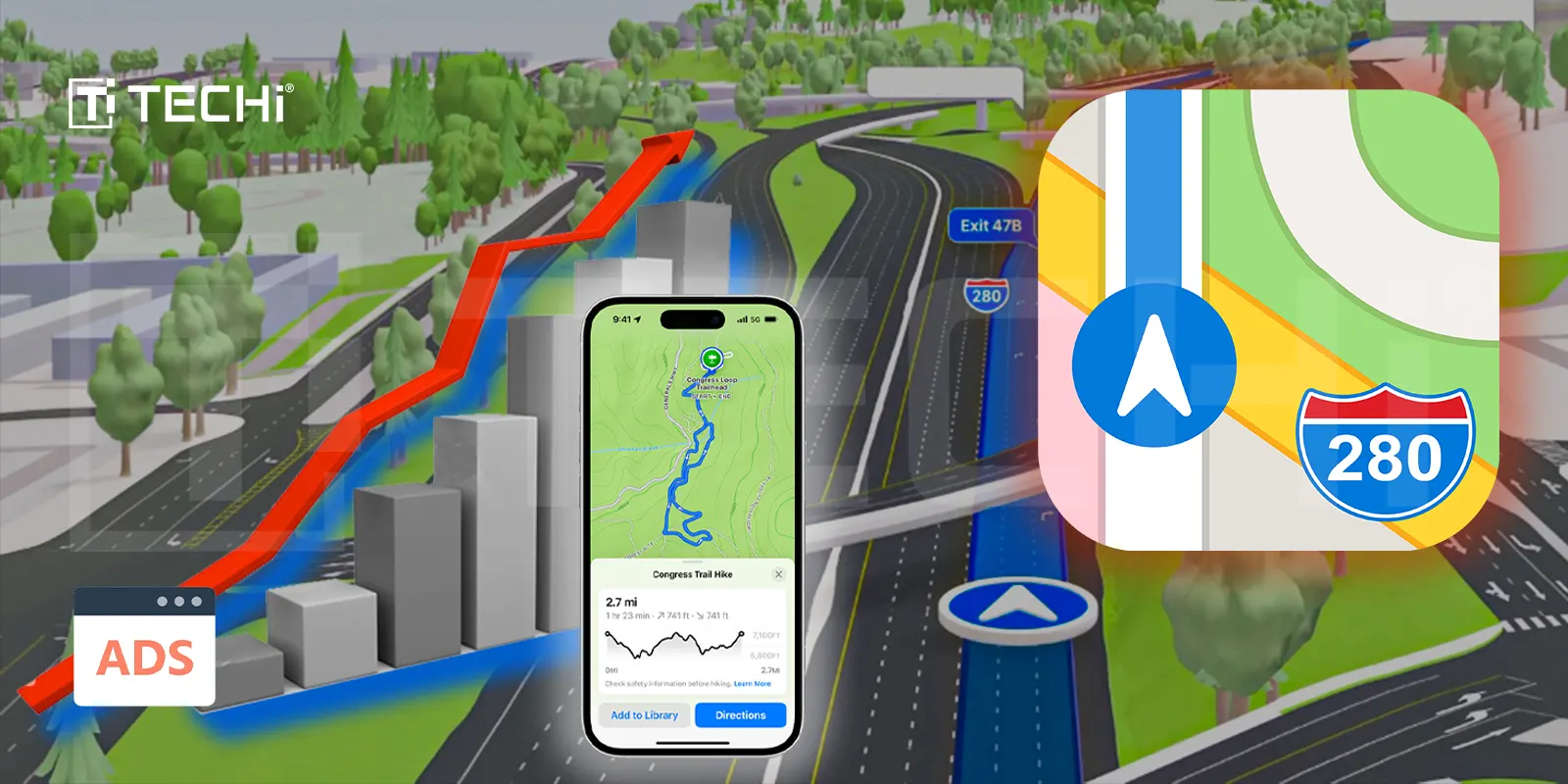
Apple Maps May Introduce Google-Style Ads to Expand Its Revenue Stream

The iPhone maker is envisioning a future where users could turn their navigation into a revenue-generating machine by implementing advertisements. Apple Inc. might open a new front in its advertising business by considering the introduction of ads into Apple Maps, as similar in the business model of Alphabet Inc. Google Maps. This could prove a huge shift in the company’s monetization strategy. In the event that this works, Apple Maps might soon be as much like Google Maps in terms of accuracy as monetization. This shift also shows an extension of Apple’s increasing ambitions regarding digital advertising, an area that has slowly yet surely been added into Apple’s catalog.

Apple Maps Monetization under Consideration:

The idea of paid advertising integrated within Apple Maps was raised during a recent Apple all-hands meeting. As Mark Gurman in his newsletter ‘Power On’ said, “During a recent all-hands meeting, Apple’s Maps division revisited the idea of monetizing its navigation app”. This would enable businesses to buy positions above organic results, something similar to ads in Google Maps.

Apple had previously tested out ads in several formats, with search ads within the App Store, advertisements in Apple News, and ads within the Stocks app being part of its strategy already. Extending this to Apple Maps will create another revenue source while aligning with Apple’s broader opportunity of increasing services income.

Revenue Significance:

Along with rapidly changing time comes the rapidly changed behavior of the users. In a 2023 antitrust case against Google, evidence showed that Google Maps usage on iPhones had significantly declined since Apple had switched over to its own mapping. Thus, Google had gained back only 40% of its historic mobile traffic, indicating that Apple has been growing its footprint in the navigation services.

Apple’s financials are also reflecting a growing portion of its revenue coming from services. For its fiscal first quarter of 2024, Apple made $124.3 billion in revenue, which is above the $124.13 billion forecast by analysts. The important bit was that its services revenue rose to $26.34 billion, from $23.12 billion a year ago, indicative of the company’s push toward subscription revenue and ad-based monetization.

Market Implications and Stock Market Response:

Advertising in Maps by Apple would bring huge changes to the digital advertising arena that has long been dominated by Google Maps in terms of location based search. Advertisers will tend to shift parts of their budgets toward Apple’s ecosystem that has a more dedicated user base and tougher strict privacy policies that target privacy conscious consumers. Apple’s already ‘privacy first’ moves, such as App Tracking Transparency (ATT), have already changed mobile advertising forever. Ads in Apple Maps will raise the question of how the company intends to generate revenue while keeping user privacy intact.

The stock of Apple was very calm with the news. The stock by after-hours trading registered an increase of 0.02% to $244.65 following a 1.27% rise to $244.60 at Friday’s close. Investors seem to be cautiously optimistic about the entry of Apple into location-based advertising.

Apple’s growing services:

The move that Apple is more likely to take in terms of advertising monetization within Maps will reinvent the methodologies employed by organizations when reaching users through navigation systems. While it represents a huge opportunity from Apple’s growing services business, it does bear several critical issues concerning user experience and privacy.

If Apple materialises its ad possibilities for Maps, then it may usher in a new era for Apple advertising, one that directly competes with Google’s immensely profitable model of search based advertising. Some users might appreciate recommendations that are relevant, while others could find them intrusive. As Apple dives further into services and advertising, iPhone users must prepare themselves to be monetized even further in the apps that they use on an everyday basis. The industry will be watching as Apple explores this possible revenue stream to see how it affects competition with Google and the digital advertising marketplace in general.

Read More: Apple to Bring AI Features and Spatial Content App to Vision Pro

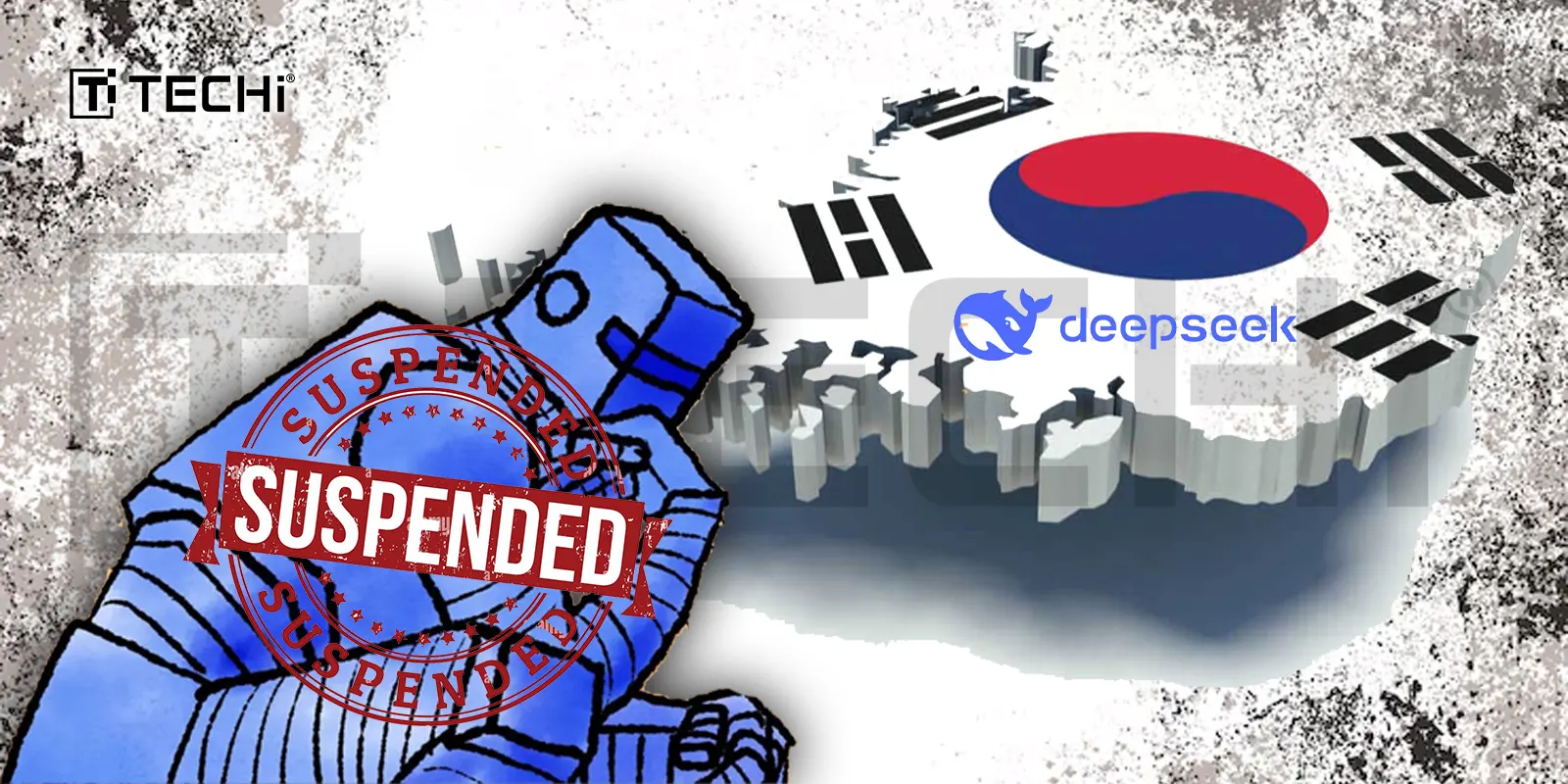
South Korea Suspends New Downloads of DeepSeek over Data Privacy Concerns

Suppose one downloads an AI chatbot to brainstorm ideas, solve inquiries, and perhaps even crack a joke, but only to find that it’s under deactivation due to data privacy issues. That is the exact situation faced by the South Korean users of DeepSeek, the Chinese AI app that is now being considered for regulatory attacks. Its web service continues to work, but downloading for the new user is immobilized until compliance with South Korean data protection law. I guess South Korean regulators just hit DeepSeek with the digital equivalent of a “Try again later” sign.

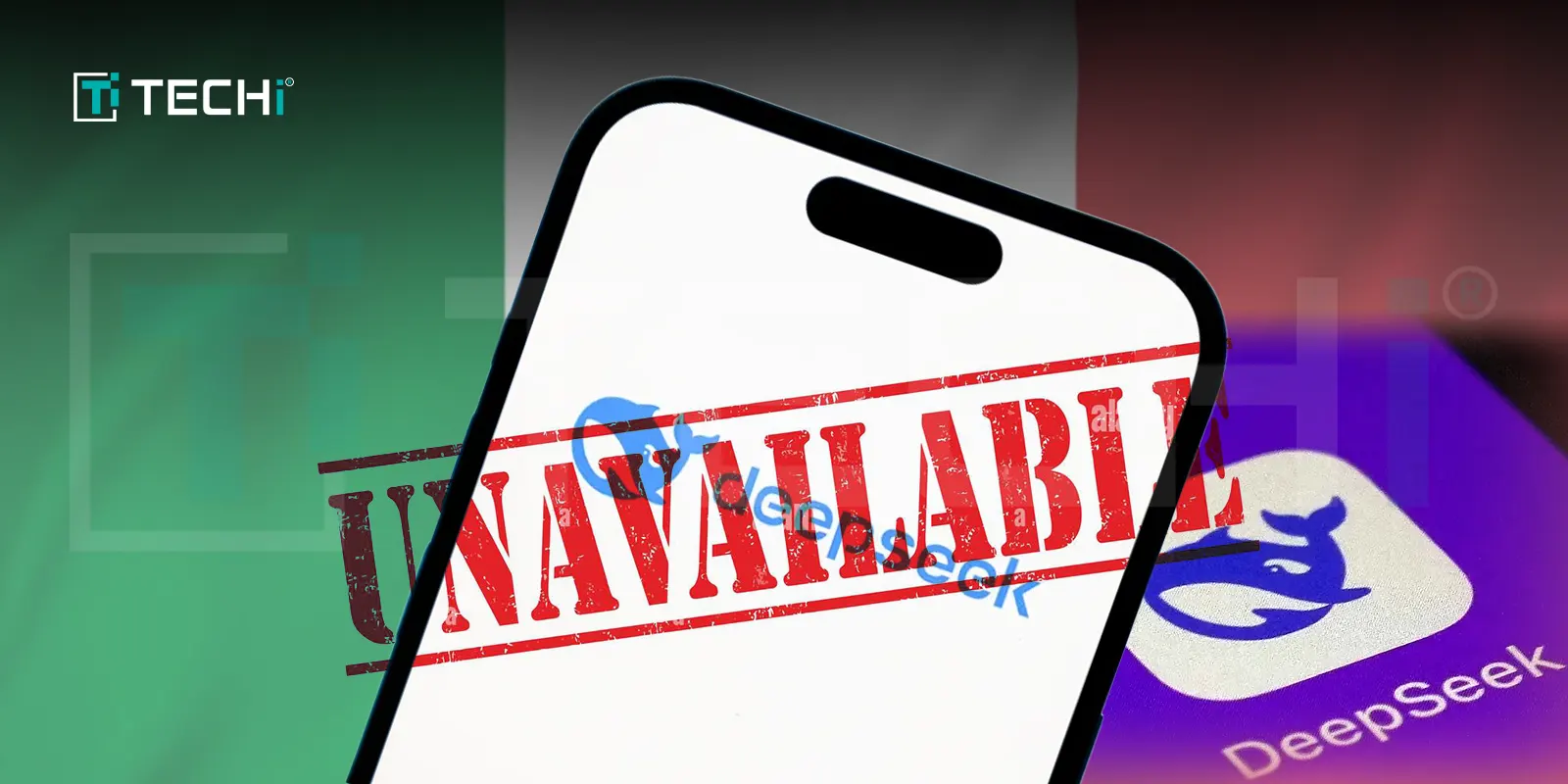
As South Korea has put an end to any further download of the Chinese artificial intelligence app, DeepSeek, due to concerns about breaching its data privacy laws, the Personal Information Protection Commission (PIPC)  highlighted that the suspension took place on Saturday and would continue until DeepSeek was modified to conform to South Korea’s privacy law.

The AI-enabled chatbot, meanwhile, can still be accessed in South Korea through the web-based service. The inspection is back on the app on how DeepSeek handles user data, especially against the backdrop of global concerns considering how other AI applications collect data and provide privacy protections.

Regulatory Scrutiny:

DeepSeek once admitted that, in certain respects, it has failed to give account for Korea’s personal data protection laws, which was told by the PIPC. The company has appointed legal representatives in South Korea, and is prepared to tackle those regulatory concerns. This follows a similar set of steps taken by Italy’s data protection authority, the Garante, last month, to order DeepSeek to suspend its chatbot services in that country due to privacy policy concerns still to be resolved.

Such incidents illustrate the increasing regulatory pressures bearing on AI startups, as governments around the world tighten oversight on the collection, storage, and use of personal data. It seems like AI chatbots are great at solving problems but terrible at avoiding them.

China’s Response:

Regarding the situation in South Korea, a spokesperson from China’s foreign ministry stressed Beijing’s commitment to data security and international obligations, also arguing that it would never order firms or individuals to unlawfully collect or store data. Though DeepSeek has not yet issued a formal statement on the South Korean suspension, the regulatory challenges are similar to those being faced by many other Chinese tech companies in international markets.

Sensitivity towards Data Compliance:

The regulatory issues at DeepSeek have been articulated regarding scrutiny from governments across the world on the AI services and user data. With improving privacy regulations by many governments worldwide, companies like DeepSeek have had to be careful in balancing innovation along with sensitivity towards data compliance. As the existing users get access to the AI chatbot through its web service, the stopping of new downloads signals that local privacy provisions must be met. It is yet to be seen if DeepSeek can handle the issues quickly, although one thing can be determined concerning the future of the AI, which has to do with regulatory approval as much as with technological advancements.

Given all the concerns being raised about gathering of the data with AI and national security risks, compliance and the ability to navigate through will be DeepSeek’s most significant factors in future global operations. For now, users in South Korea who had already installed DeepSeek can freely use it, while new downloads will remain blocked until the company adapts to domestic privacy policies.

Read More: TikTok Returns to App Stores in the US and the Ownership Battle Continues
EU’s AI Regulation Shift: A Strategic Advantage for U.S. Tech Giants?

The European Union (EU) is reassessing its approach to artificial intelligence (AI) regulations, which could create significant opportunities for Apple, Google, Microsoft, and other major U.S. technology companies. According to a report by the Financial Times,

“The European Union is looking to scale back certain regulatory restrictions on AI to attract more investment and boost competitiveness in the global AI sector. Henna Virkkunen, the European Commission’s digital policy chief, emphasized that the EU’s objective is to ‘help and support’ AI-driven businesses while ensuring that compliance obligations do not create unnecessary barriers to growth.”

This potential shift in policy comes as the EU faces increasing pressure to balance technological advancements with regulatory oversight. The proposed AI Act, which categorizes AI technologies based on their risk levels, imposes stricter regulations on high-risk models such as GPT-4 and Google Gemini. However, the latest discussions indicate that the European Commission may seek to minimize reporting obligations for European businesses to prevent excessive regulatory burdens.

EU’s Changing AI Policy and Industry Reactions

Henna Virkkunen, the European Commission’s digital policy chief, stated in an interview with Euractiv that the EU’s goal is to “help and support” companies while ensuring responsible AI development. She emphasized that European businesses should not be overwhelmed by compliance requirements that could hinder their global competitiveness.

In a parallel development, the European Commission has withdrawn a proposed AI liability directive, signaling an effort to streamline AI regulations. An upcoming AI code of practice, expected to be introduced in April 2025, aims to align existing AI laws with practical industry requirements.

However, this regulatory shift has drawn mixed reactions. U.S. officials have expressed concerns over Europe’s AI governance model, arguing that overregulation could stifle innovation. Speaking at an AI summit in Paris, U.S. Vice President JD Vance criticized Europe’s content moderation policies, calling them “authoritarian censorship,” and warned that excessive restrictions could undermine the potential of AI-driven industries.

A Competitive Landscape for AI Development

With the U.S. maintaining a flexible regulatory approach, analysts suggest that the EU’s move may reflect a response to growing competition in AI leadership. U.S. President Donald Trump’s administration maintained a pro-business stance on AI, which some believe has indirectly influenced Europe’s evolving AI policies.

While the EU maintains that its regulatory changes are independent of U.S. influence, the timing raises questions about whether the continent seeks to attract more AI investment and prevent businesses from shifting operations elsewhere. The next few months will determine whether these adjustments will benefit European tech firms or strengthen U.S. tech dominance in the region. The April 2025 AI code of practice will provide further insights into the EU’s long-term AI strategy, shaping the future of AI governance, industry innovation, and global competition.

Read More: Elon Musk Announces Live Demonstration of Grok 3 AI Chatbot

WhatsApp Rolls Out Permanent Chat List Filters for Easier Navigation

WhatsApp, the popular messaging platform Meta owns, has introduced a significant user interface (UI) update, ensuring that chat list filters remain permanently visible for seamless access. This update is rolling out to select beta testers and will reach more users in the coming weeks.

A Permanent Place For WhatsApp Chat List Filters

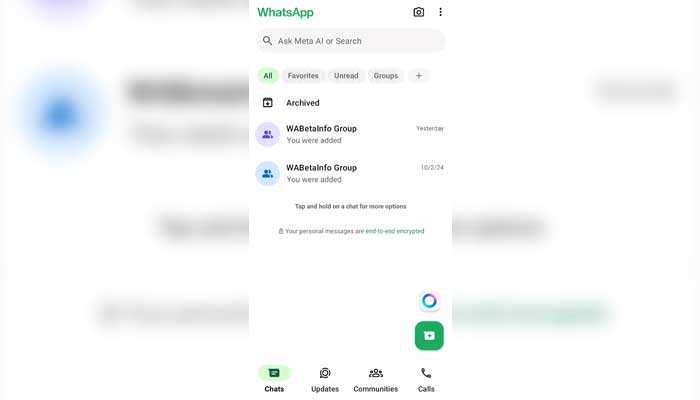
Until now, users needed to scroll through their conversation list and find chat filters manually. From now on, filters will be pinned to make it easier for users to switch to unread messages, personal chats, work chats, and group chats without scrolling too much across the hidden navigation functions.

This screenshot shows the new WhatsApp update. — Techi

New UI Update Improves WhatsApp Chat Navigation

The latest WhatsApp update makes chat management easier by enabling you to check your unread messages across various filters in real time, as shared by WABetaInfo. This means that users no longer have to scroll through the chat list to check for new messages.

Better Organizing Your Chats — for Personal and Business Users

This feature will help greatly improve workflow efficiency for businesses and professionals that have to deal with multiple chat threads. This allows users to organize better and respond to chats based on the category they fall in, ultimately reducing wait times.

Early Access to WhatsApp Beta Users

Other beta testers may notice as well that the ‘Favourites’ filter is being automatically placed before secondary filters. This change enables users to pin their most important contacts as favorites for easy access without any manual reordering required.

When Will the New WhatsApp Feature Be Live?

Users who want to try out this new feature will need to download the WhatsApp beta for Android 2.25.4.12 update from the Google Play Store. The update is gradually rolling out to a wider audience over the coming weeks. The constant UI improvements in WhatsApp are proof of their commitment to providing a better user experience and helping users navigate chats without any hindrances while keeping that experience tailormade for both personal as well as professional users.

Read More: Apple to Bring AI Features and Spatial Content App to Vision Pro

Apple to Bring AI Features and Spatial Content App to Vision Pro – Report

Apple (AAPL.O) is preparing to roll out major AI-powered enhancements to its Vision Pro headset, including a new spatial content app and an improved guest mode, according to Bloomberg News. The software update, expected as early as April, will integrate Apple Intelligence features into the device.

Apple Vision Pro AI Upgrade Expected Soon 

The update will introduce Apple Intelligence capabilities to the Vision Pro, aligning with the company’s broader push into artificial intelligence. According to Bloomberg, developers could get access to a beta version of these features as early as this week.

New Spatial Content App and Guest Mode Enhancements 

Apple’s new software update will reportedly include a spatial content app, enhancing immersive media experiences on the Vision Pro. Additionally, a refined guest mode will make it easier for multiple users to interact with the device.

Apple’s Push for AI Integration in Its Ecosystem 

Apple has been racing to integrate AI across its devices, aiming to stay ahead of competitors in the AI space. Reports suggest the company is also in discussions with Tencent (0700.HK) and TikTok owner ByteDance to incorporate AI models into iPhones sold in China. The anticipated AI-powered features for Vision Pro are the Writing Tools interface, Genmojis, and the Image Playground app. These additions aim to provide a more intuitive and creative user experience.

Will AI Revive Apple Vision Pro Sales? 

Apple’s Vision Pro, launched on February 2, 2024, initially generated strong interest but has faced declining sales due to its high $3,499 price tag and competition from more affordable alternatives like Meta’s Quest. Introducing AI-powered enhancements may be part of Apple’s strategy to boost consumer interest and drive sales. Apple has not officially commented on the Bloomberg report, but the tech industry is closely watching how AI integration shapes the future of the Vision Pro and other Apple products.

Read More: Apple’s iPhone SE 4 Leaks, Reveals New Design and Features

Elon Musk Announces Live Demonstration of Grok 3 AI Chatbot

Tech billionaire Elon Musk has announced that Grok 3, the latest iteration of xAI’s artificial intelligence chatbot, will be officially unveiled in a live demonstration on Monday at 8 p.m. Pacific Time (0400 GMT on Tuesday). Musk’s xAI, positioned as a competitor to OpenAI, has been developing Grok 3 as an advanced AI chatbot aimed at rivaling the capabilities of ChatGPT and other leading AI models.

Grok 3 in Final Stages of Development 

Earlier this week, Musk announced that Grok 3 was nearing completion and that its launch was expected within one to two weeks. This announcement aligns with Musk’s ongoing efforts to expand xAI’s role in the AI sector, following the introduction of earlier Grok models, which were integrated into his social media platform, X (formerly Twitter).

Musk Claims Grok 3 Outperforms Existing AI Models 

Musk has been vocal about Grok 3’s capabilities, hinting at significant improvements in reasoning and language understanding. While no official benchmarks have been released, he suggested that Grok 3 has demonstrated superior performance compared to existing chatbots in internal tests. This launch is expected to be a critical moment for xAI as it attempts to establish itself in the increasingly competitive AI race, currently dominated by OpenAI, Google DeepMind, and Anthropic.

xAI in Talks for $10 Billion Investment 

Beyond the Grok 3 release, reports indicate that xAI is in discussions to secure up to $10 billion in funding, potentially valuing the company at $75 billion. If successful, this would further solidify xAI’s position as a major player in the AI industry, providing the necessary resources to scale its technology and infrastructure.

 What to Expect from the Grok 3 Launch? 

The live demonstration of Grok 3 will likely showcase real-time AI interactions, emphasizing improvements in contextual understanding, speed, and reasoning abilities. Industry experts and AI enthusiasts will be watching closely to see how Grok 3 stacks up against ChatGPT and Google Gemini. With the AI landscape evolving rapidly, Musk’s xAI is aiming to disrupt the market by delivering a more advanced, responsive, and intuitive AI assistant. Whether Grok 3 lives up to the hype remains to be seen, but one thing is certain—the competition in AI innovation is intensifying.

Read More: Google’s Most Advanced AI Model Gemini 2.0 Now Available for Everyone

North Carolina Amazon Labor Union Vote Fails as Workers Reject Unionization

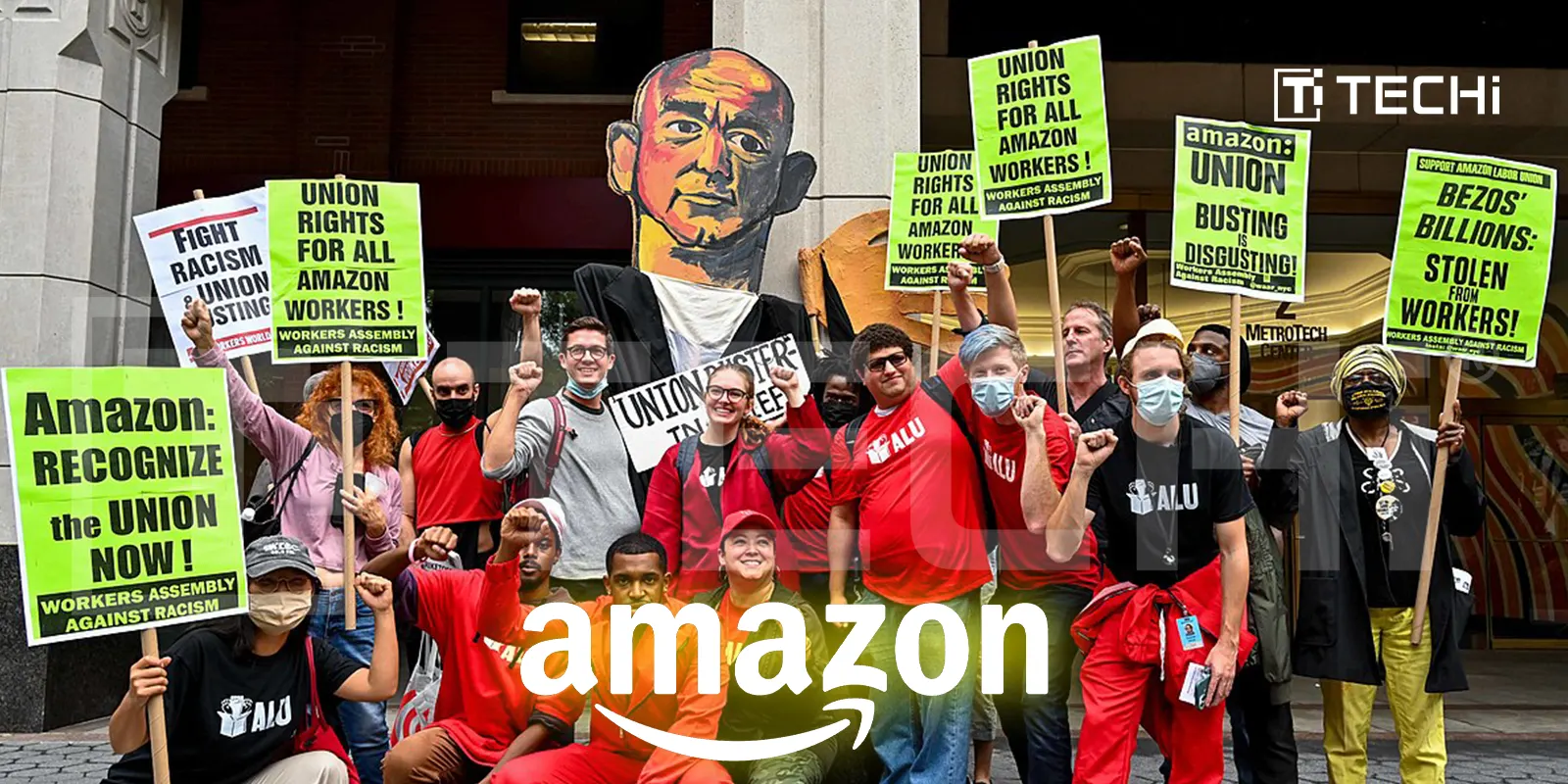
Garner, NC – Workers at an Amazon fulfillment center in Garner, North Carolina, have voted against forming a union, marking a significant setback for labor organizers seeking to expand union representation within the e-commerce giant. According to Carolina Amazonians United for Solidarity and Empowerment (CAUSE), the group advocating for unionization, 3,276 ballots were cast in the election. The final count revealed that only 25.3% of workers voted favor unionizing, while 74.7% opposed the effort; the National Labor Relations Board (NLRB) is set to certify the results.

Amazon Labor Union Vote Faces Strong Opposition 

In a statement provided to CNBC, CAUSE strongly accused Amazon of suppressing unionization efforts through what it described as illegal tactics.
“Amazon’s relentless and illegal efforts to intimidate us prove that this company is afraid of workers coming together to claim our power.”  The group alleges that Amazon violated labor laws to discourage union support, though no formal legal action has been announced in response to the election results.

Amazon Maintains Workers’ Decision Was Fair 

Amazon, which has long opposed unionization within its workforce, denied any wrongdoing. Company spokesperson Eileen Hards responded to the outcome, stating,
“We’re glad that our team in Garner was able to have their voices heard and that they chose to keep a direct relationship with Amazon.”

While the North Carolina warehouse rejected unionization, other Amazon locations have seen successful labor organization efforts. In 2022, workers at a Staten Island warehouse voted to form a union, marking a historic victory for organized labor within Amazon. Earlier this year, employees at a Philadelphia Whole Foods, an Amazon-owned grocery chain, also voted to unionize. However, Whole Foods has contested the results and petitioned the NLRB to overturn them.

Amazon’s Broader Legal Battles with the NLRB 

Beyond labor disputes, Amazon’s legal team recently joined SpaceX in a lawsuit challenging the structure of the NLRB. The companies argue that the board’s framework is unconstitutional, signaling a broader pushback against federal labor regulations.

What’s Next for Labor Organizers After the Vote? 

Despite the loss in North Carolina, CAUSE and other labor groups are expected to continue pushing for unionization efforts in Amazon facilities across the country. The outcome in Garner may serve as a case study for future campaigns, particularly regarding Amazon’s response to organizing efforts. With ongoing legal battles and a shifting labor landscape, the fight over unionization at Amazon is far from over.

Read More: Earnings Report Shock: Amazon’s Stock Plunges as AWS Growth Slows

Baidu Goes Open-Source With its Latest Ernie AI Model

The AI battlefield is getting more interesting day by day. Baidu, one of the top technology giants in China has decided to take a drastic step forward in the AI race by opening its Ernie AI model. Baidu of China has now declared making its next-generation artificial intelligence model Ernie open source starting June 30, in a major departure from the company’s previous exclusive hardcore AI development model. Such a shocking twist comes at a time when competition heats up in the domain of artificial intelligence with new entrants like DeepSeek, disrupting the field with accessible and cheaper AI solutions, along with intensifying competition in this sector has led to such a big leap.

Baidu’s Shifting Approach:

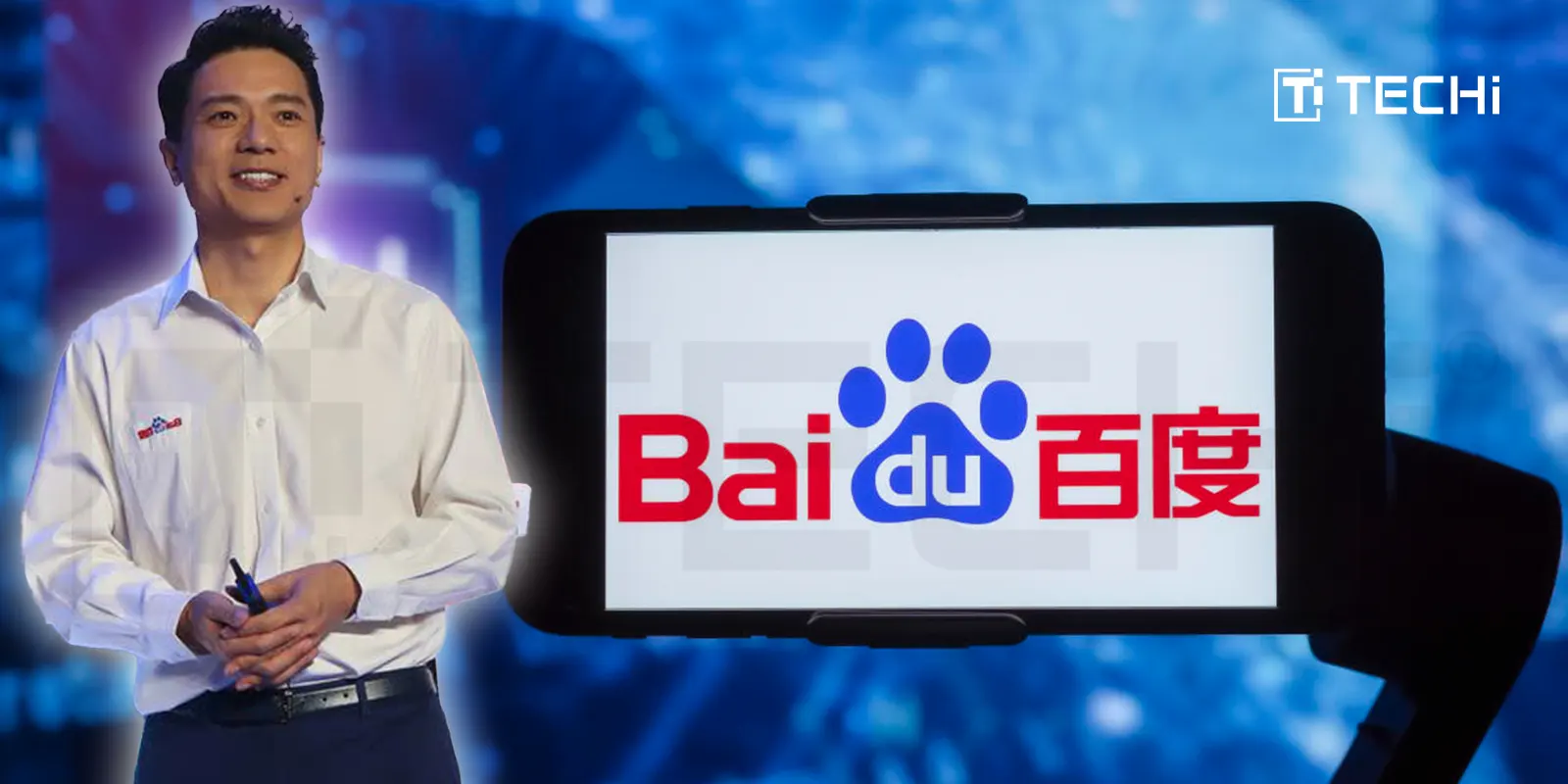
Baidu CEO Robin Li, a long-time advocate of closed-source AI models being the best ways to live with things, seems to be wavering on the issue. The growth of DeepSeek, a startup that offers open-source AI solutions with performance stated to rival that of OpenAI’s most developed systems, has shaken the environment. Cost effectiveness and accessibility have forced Baidu to reconsider its competitive strategy due to availability of open-source inputs.

Along with the open-sourcing of Ernie ai model, Baidu also made the announcement that starting April 1, its AI chatbot, Ernie Bot, will not require any payment to use. This move takes a very significant turn in the story since Ernie Bot was launched, premium versions were to be sold under exclusive services.

Market Share:

When OpenAI came up with its ChatGPT in 2022, Baidu was one of the first major Chinese entities that really poured money into AI ventures. Even with a lot of resources poured in, Ernie ai model still cannot fully compete with the adoption of public use. According to January statistics of AI product tracker Aicpb.com, present active monthly users are, Doubao chatbot by ByteDance at 78.6 million, followed by DeepSeek with 33.7 million, and Baidu’s Ernie Bot closes, with only 13 million users. Through open-sourcing Ernie, Baidu hopes to facilitate greater adoption and use of its AI technology.

Future of Ernie AI Model:

The gradual rollout of the Ernie 4.5 series will continue in the coming months, with the open-source release expected to take place on June 30. Baidu said in a WeChat post, “We will gradually launch the Ernie 4.5 series in the coming months and officially open-source it from June 30”. 

For the long term, Baidu is already working with future generations of their most up-to-date model, Ernie 5. This new model is expected to hit the market in the latter half of 2025. Li also emphasized the open-source aspects, arguing in effect that they would make models available to accelerate the process of tech adoption. He said, “If you open things up, a lot of people will be curious enough to try it. This will help spread the technology much faster”.

Baidu’s Strategy:

Baidu is positioning itself strategically in opening up Ernie, to work for and gain acceptance in increased AI adoption and compete with emerging rivals in the field. The decision by Baidu to open-source Ernie ai model is a big departure from its formerly closed view on AI development. With the fast-changing industry leaning towards accessibility and collaboration, could this position Baidu as a leader in open AI innovation, or is it merely a parting shot to remain relevant amid rising competitors?

With Ernie 5 coming up soon and open-source models releasing in June, only the next chapter of the AI race is beginning. How this might play out could be anyone’s guess, but it seems like one way or another, the AI space is trending towards quite an extraordinarily impulsive scenario. However, the strategy Baidu has for AI in the long term would prove to be very instrumental toward determining the future architecture and future avenues of artificial intelligence, both in China and globally.

Read More: Google’s Most Advanced AI Model Gemini 2.0 Now Available for Everyone

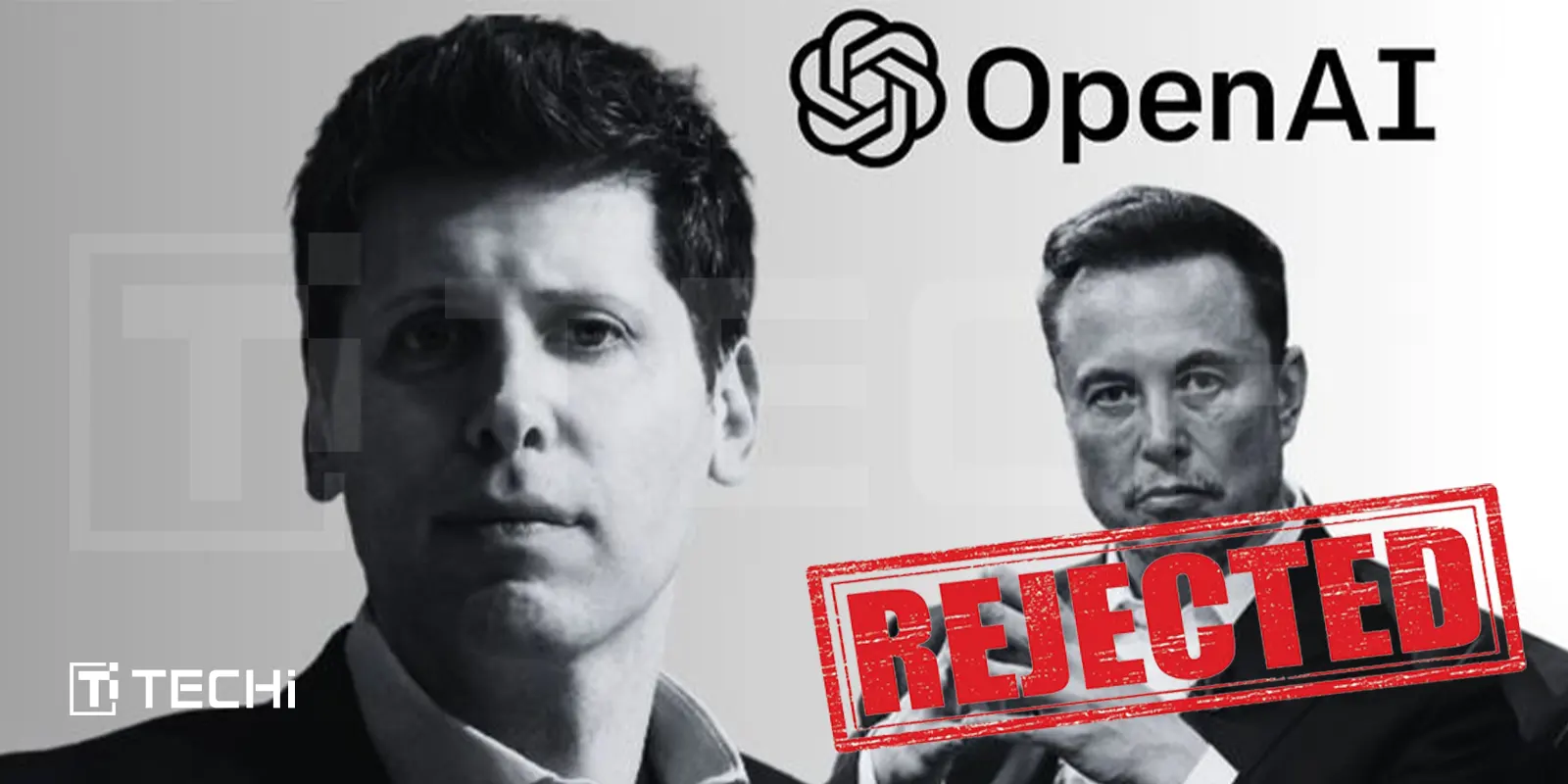
Elon Musk’s $97.4 Billion Offer to Acquire OpenAI Rejected

Tech billionaire Elon Musk, co-founder and former board member of OpenAI, recently made a staggering $97.4 billion offer to acquire full control of the artificial intelligence company. However, OpenAI’s board rejected the bid, citing concerns over its mission, autonomy, and ethical considerations. In an official statement released through OpenAI’s press account on X, board chair Bret Taylor described Musk’s offer as a deliberate move to interfere with his competition.

“OpenAI is not for sale, and the board has unanimously rejected Mr. Musk’s latest attempt to disrupt his competition,” Taylor said. “Any potential reorganization of OpenAI will strengthen our nonprofit and its mission to ensure [artificial general intelligence] benefits all of humanity.”

The New York Times reported that OpenAI also addressed a letter to Musk’s attorney, Marc Toberoff, stating that the proposal did not align with OpenAI’s mission and was not in its best interests. The decision has sparked widespread debate over the future of AI governance and Musk’s ambitions in the AI industry.

Why Did OpenAI’s Board Reject Musk’s Offer?

1. Preserving OpenAI’s Independence

OpenAI’s leadership believes that Musk’s takeover would jeopardize the organization’s autonomy, potentially shifting its priorities toward his business interests, mainly his AI venture, xAI. By rejecting the offer, the board aims to maintain control over its research direction and prevent external influence from dominating decision-making.

2. Conflict Between Mission-Driven and Profit-Driven Goals

Originally founded as a nonprofit, OpenAI transitioned into a capped-profit model to balance funding needs and ethical AI development. The board fears that Musk’s leadership could tilt the company towards a profit-driven agenda, undermining its commitment to developing AI for the broader good rather than commercial gain.

3. Musk’s History with OpenAI

Musk resigned from OpenAI’s board in 2018 after an unsuccessful attempt to take control of the company. The board considers this past power struggle as a key factor in rejecting his current bid, viewing it as a continuation of his previous efforts to dominate OpenAI’s direction.

4. Tensions with Microsoft and AI Ecosystem

OpenAI has a major partnership with Microsoft, which has invested billions in the organization. If Musk were to gain control, it could disrupt this collaboration, leading to legal and financial complications. The board is also concerned about potential conflicts between OpenAI’s roadmap and Musk’s competing AI firm, xAI.

5. Legal Risks and Regulatory Concerns

Musk has had numerous legal disputes and regulatory challenges in the past, including with the SEC and Tesla. OpenAI’s leadership fears that his control could introduce unnecessary instability, regulatory scrutiny, and delays in AI safety frameworks that are crucial for the industry’s responsible development.

Musk’s Response and Industry Reactions

Following the rejection, Musk expressed his displeasure, criticizing OpenAI for abandoning its original mission of creating open-source AI. He has also hinted at further legal action or alternative AI strategies, reinforcing his commitment to advancing artificial intelligence through xAI and other ventures.

Industry experts remain divided on the issue. Some argue that Musk’s resources and expertise could have accelerated OpenAI’s innovations, while others support the board’s stance on keeping AI development independent from corporate dominance.

What’s Next for OpenAI?

With Musk’s bid off the table, OpenAI will likely continue its current trajectory with Microsoft’s backing and expand its AI capabilities while maintaining governance safeguards. The rejection signals the board’s commitment to AI safety and ethical considerations, ensuring that advancements align with their foundational mission. As the AI race intensifies, OpenAI’s decision will shape the broader debate on who controls AI, how it is developed, and whether it remains a force for public benefit or corporate interests.

Read More: OpenAI Drops o3 AI Model to Unify AI Strategy with Game-Changing GPT-5

TikTok Returns to App Stores in the US and the Ownership Battle Continues
The odyssey of TikTok in the United States has been an exciting reality show with a high stakes infused series of courtroom battles and political backroom dealings along with last minute plot twists in between. A month-long disappearing act has made its grand re-entry to app stores of the U.S, however the drama might not be over yet. With concerns over national security, executive orders, and the prospect of U.S ownership looming, the events of the TikTok saga continue to unfold like a binge worthy series.

TikTok returns to the app stores in the United States, marking yet another chapter in its motto to survive. For nearly a month, the highly hyped short-video app, TikTok, was not available for download. Then, it re-entered the U.S today when Apple and Google reinstated it in their respective app stores. This follows the temporary ban earlier on national security grounds. Similarly, other apps of ByteDance, including the video editor CapCut and social media platform Lemon8, were also restored. However, without certainty as to whether it is going to be bought by one of the many incoming tech giants waiting in line for the apparent bidding war, the app’s future hangs in the balance.

TikTok’s Ban:

Government scrutiny of TikTok has been ongoing in the U.S for several years, with concerns related to national security risks from China’s ownership of ByteDance. In 2024, former President Biden signed a law requiring that by January 19, 2025, ByteDance has to dissociate from operating TikTok in the U.S or see the app outlawed altogether.

The law threatened significant financial penalties against any app store operators who failed to comply with it, resulting in Apple and Google pulling TikTok from their platforms. ByteDance tried to challenge the ruling, but on January 17, the Supreme Court reaffirmed the law making an obligation for TikTok to find a non-Chinese buyer or be permanently banned in the United States.

Trump’s Order and TikTok’s Return:

However, things turned around on January 20 when the newly elected President of the U.S, Donald Trump, signed an executive order putting the ban on hold for 75 days. This afforded ByteDance further tried to find a buyer for TikTok’s U.S operations, thus renewing support for the application from service providers like Oracle.

That is not the end of the road, rather the Apple and Google postponed TikTok’s return to their stores on account of uncertainty about the legal penalties that would be imposed under the law’s deferral. This makes a rather different situation for those users who had installed TikTok would be able to continue to use it, whereas others who uninstalled it would not be able to download it again. Thanks to the immediate tech industry response regarding potential U.S ownership of TikTok, the long-standing competitor of short video-sharing apps is witnessing one of the greatest upsurge of all time.

Of course, Trump would have the government owning 50% of the stake jointly with partner companies and setting up, as part of the deal, a sovereign wealth fund for the possible purchase of TikTok’s U.S operations, supposedly, Oracle and Microsoft are notable contenders for the acquisition. On the other hand, TikTok enemies have been aggressive in squeezing the situation. Social platforms such as X and Bluesky have introduced specific vertical video feeds to appeal to TikTok users, while Meta announced that it would develop a video-editing app for CapCut competition.

TikTok’s Popularity and Beyond:

As it stands in the year 2023, TikTok remains one of the most popular apps in the world in the United States. According to analytics company Sensor Tower, in 2022, it was the second most downloaded app in the U.S, with 52 million downloads. While the immediate future of TikTok in the U.S seems secured, its long term future depends on whether ByteDance would negotiate a sale to please regulators.

There is little doubt that the app’s popularity will be affected by all these factors, but more by how the company, U.S regulators, and future investors move forward as they all navigate through what will be a complex political and legal maze. All eyes will be on negotiating drama between ByteDance, U.S tech giants, and the federal government as time runs out with the 75-day extension. The one thing absolutely certain is that this is not the final twist, and the world will wait to see what happens next with the effects of this latest change in TikTok.

Read More: Elon Musk’s Battle to Buy OpenAI

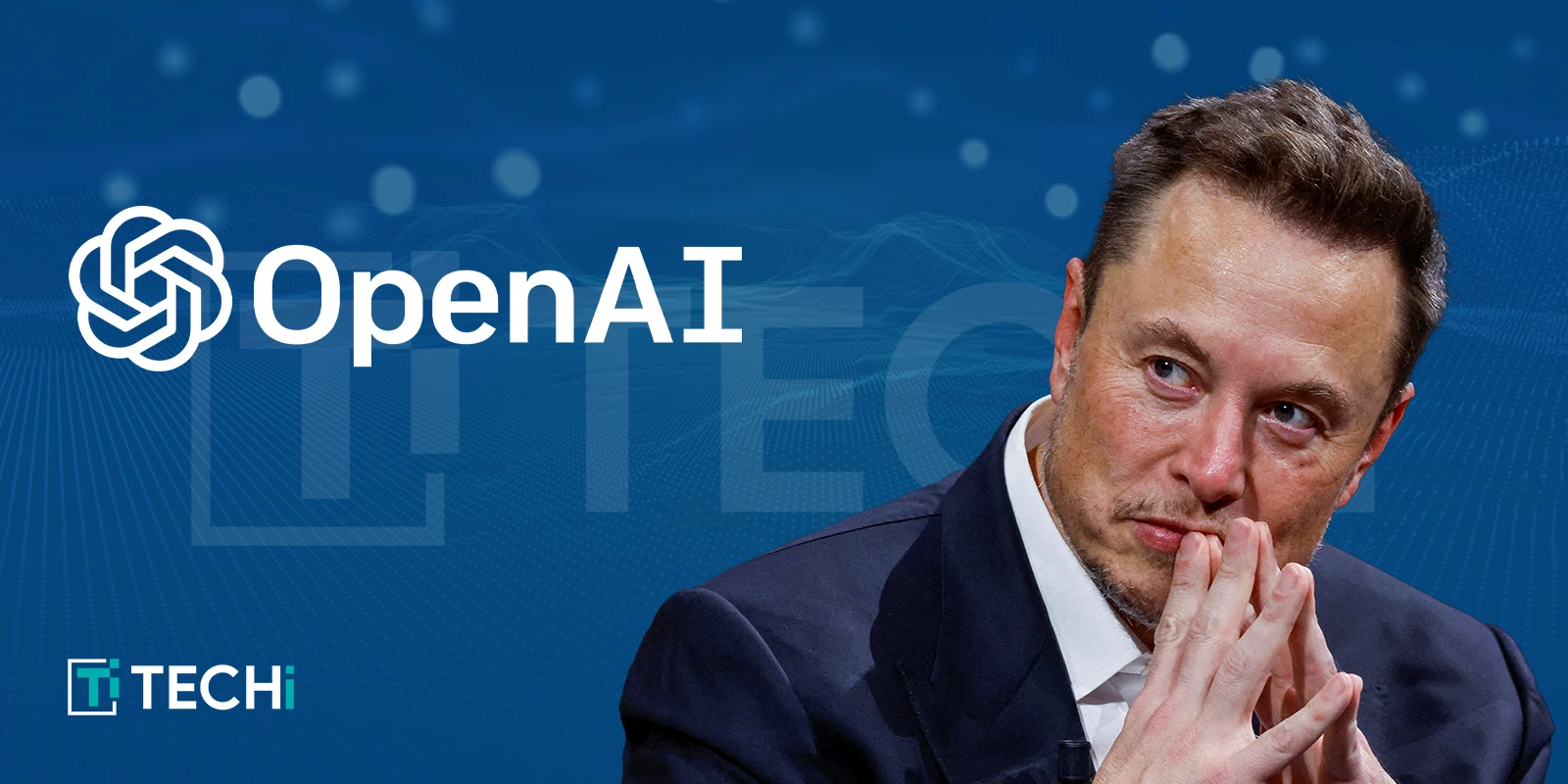
Elon Musk’s Battle to Buy OpenAI, Five Crucial Insights from His Offer Letter

In the life of tech billionaires, the drama tends to arise sooner than a software update. Musk’s next move is all about bidding to the tune of nearly $97 billion to reclaim OpenAI, a company he once championed but is now suing. While OpenAI CEO, Sam Altman brushed his offer aside, the court filings reveal Musk’s detailed offer to tell the whole saga, including lawsuits, power wrangling, and strategic chess moves that have entangled two of the most powerful names in the AI Industry.

An investment syndicate led by Elon Musk’s xAI has proposed an unlikely offer of $97.4 billion to acquire OpenAI. Altman has anyway very quickly declared the offer as impossible because it is seen as a method to block OpenAI from making nonprofit transition, an action in which Musk is also challenging with his own suit. In a legal filing on Wednesday, Altman’s team argued that Musk’s position is contradictory, attempting to buy the assets of OpenAI while also trying to prevent its conversion to nonprofit.

Musk’s team countered that they would withdraw the offer if OpenAI’s efforts to move away from its nonprofit status ceased. Musk’s entire letter of intent to buy open AI was published as part of this legal turmoil, this opened up a broader understanding of his plan and motivation.

The five key details from Musk’s Offer Letter are following;

1. Deadline for the Offer:

A definite expiration date for May 10, 2025, is that of the unsolicited bid by Musk’s consortium. It goes off the track only if the parties to the interests finalize the deal, or they mutually decide to terminate discussions, or if OpenAI explicitly rejects the offer in writing.

Altman has publicly dismissed such offers (including a humorous counter offer to buy X at tenth of the price) but OpenAI has yet to issue an official rejection statement. Even offers between competitors must get consideration before being outright dismissed due to legal requirements.

2. Cash Transaction:

Musk’s financing group with notable venture capitalists like Joe Lonsdale’s 8VC and SpaceX investor Vy Capital has offered just $97.375 billion in cash. This is because, in the past, he has borrowed money to finance such acquisitions, like the $13 billion borrowed from banks to acquire twitter in 2022, and though self-proclaimed as having a fortune of about $400 billion, mostly raised by a boost from Donald Trump, it was not disqualified from consideration. Interestingly, the letter mentions seven investors, including Musk’s x.AI, alongside others unnamed, implying that Musk is not relying solely upon his wealth to finance the deal.

3. Access to all Financial and Operational Data:

The consortium of Musk demands full access to OpenAI’s financial records, assets, employees, and business operations before it commits a ginormous buy. “Assets, facilities, equipment, books, and records” is mentioned in the letter to indicate such needs.

This stress has indeed been caused, given that the said due diligence is normal in major transactions for such things, as making an acquisition review that is much more compelling opens it up to very internal and state of the art sensitive knowledge that might be a possible conflict of interest based on xAI’s having a direct market competitive claim in OpenAI to gain such level of access.

4. Undermining Musk’s Lawsuit:

Musk’s legal battle against OpenAI revolves around his contention that OpenAI’s assets can never be “transferred away” for private gain. However, in a filing on Wednesday, the lawyers for OpenAI pointed out that Musk’s offer contradicts this claim and emphasized that he is making an offer to dispose of an acquisition effort just to weaken a competitor. They said, “The offer isn’t serious, but an improper bid to undermine a competitor.”

According to OpenAI, the offer is not genuine and was strategically timed to complicate its privatization. Musk’s camp insisted otherwise, claiming that the bid was legitimate and that funding would be funneled straight into OpenAI’s nonprofit purpose.

5. Musk’s withdrawal from the offer:

Musk’s legal team stated that if the board of OpenAI decides not to convert into non-profit operation, he would withdraw the offer. More speculation would be reinforced with this statement that Musk’s bid was not aimed at buying OpenAI altogether but only bumping up the figure that would make Altman and other top executives acquire the company privately.

OpenAI board legal representative dismissed such an offer from Musk and said, “Musk’s bid doesn’t set a value for [OpenAI’s] non-profit and that the nonprofit is not for sale”.

The Repercussions:

This adds to the already complicated legal and financial drama over OpenAI, which is still far from being resolved. The rejection of the bid from OpenAI would give Musk the further ground to challenge the legitimacy of its nonprofit conversion. On the other hand, if OpenAI accepts or considers the offer, it risks getting into trouble over its governance. Either way, whether Musk’s offer is a genuine attempt to acquire OpenAI or just a tactic within his legal showdown, it has put OpenAI in a difficult position.

Truly, one wonders, whether the billionaire indeed wants to acquire OpenAI or is using the bid as a bluff or a feint to disrupt its transition into nonprofit status. Well, one thing is clear, it isn’t merely a corporate dispute rather it’s the critical moment of evolution regarding what artificial intelligence is and what big tech makes it into in the future. As both continue their game of legal and financial chess, the world waits to see who blinks first.

Read More: OpenAI Drops o3 AI Model to Unify AI Strategy with Game-Changing GPT-5

Telegram Boosts User Experience with Improved Stickers, Video Tools, and Bot Discovery Features

In the rapidly evolving world of instant messaging, Telegram is a promising messenger that keeps on updating new things related to user experience. In addition to making its features available for competition among users, the application provides a smooth user oriented interface for that particular purpose with respect to communicating and sharing content.

Telegram, an eminent chat application gaining profits, keeps updating user experiences through features which help content discovery and engagement. The recent improvements to the new features include enhancing the sticker search, streamlining video sharing, and simplifying bot discovery. So these improvements are expected to make Telegram not just a messaging client but a vibrantly alive multimedia interaction portal.

AI-Powered Sticker Search Feature:

With the initial rollout of this AI-powered sticker search feature back in December, Telegram allowed users to find stickers by using their own phrases. Until now, the focus had been on a limited library of 40,000 stickers but with the current update, Telegram includes millions of stickers in their search. Users can also add queries, such as “Thinking monkey” or “Dog eyebrow raise” and thus receive far broader relevant sticker results from across the entire platform.

Enhanced Video and Improved Bot Discovery Features:

The app further improves its features around video so that users can better interact with multimedia content. Users can now share direct links to specific seconds of Telegram-hosted videos as easily as on YouTube. The new feature enables the customization of a frame from the video thumbnail for safe purposes, which acts like every other platform’s manual video thumbnail option. The future aim is still to edit further and enable reservations on the text, stickers, and emojis on the cover of the custom one, using the in-built video editor provided for Telegram. Another equally good add-on is being able to resume any video from when you left it off.

Just as media updates expand, so does the portal for discovering bots on Telegram. Much like the feature that recommends similar channels when a user joins one, the same thinking has been applied with respect to bots. When a user visits a bot’s profile, a “Similar Bots” section will be displayed to simplify the act of finding and exploring new bot services.

Challenges:

Despite efforts to improve its media features, piracy-related content continues to plague Telegram. The company has been active on this front, employing its workforce to monitor and remove illicit content, as last year’s report made a clean 15 million groups and channels disappear. Not all of the takedowns were linked to piracy, though. Nevertheless, the platform comes under scrutiny for its involvement in the dissemination of copyrighted material.

An Interactive Platform:

Telegram continues to refine its platform with these updates, through user-friendliness and interaction. The changes in sticker search and video consumption go well along with the broader vision through which the company seeks to improve engagement without losing competitive momentum in the messaging app landscape.

As far as the latest improvements are concerned, Telegram is not leaving it any time to be the all-embracing messaging and content delivery platform. With an augmented facility for searching through AI-powered stickers, more intuitive video features, enhanced bot discovery, and other improvements, the interface promises to be even more interactive and user-friendly. Though challenges such as content moderation remain, there is always assurance that the refinement of the ecosystem will find Telegram remains a worthy competitor in the messaging app industry. More improvement can be expected in the future with innovation from the company. 

Read More: Your Favorite App Might Be Gone! Apple & Google Removed Dangerous App

Nokia and Cellcard Collaborate to Elevate Cambodia Fiber Broadband Network

Phnom Penh, Cambodia – February 13, 2025 – In a significant move to enhance Cambodia’s digital infrastructure, Nokia and Cellcard have announced a partnership to upgrade the nation’s fiber broadband network. This initiative will transition the existing Gigabit Passive Optical Network (GPON) to the advanced 10-Gigabit Symmetrical Passive Optical Network (XGS-PON) technology, utilizing Nokia’s Lightspan and Altiplano solutions. The upgrade aims to deliver ultra-fast internet speeds of up to 10 Gbps to both residential and business customers across key cities, including Phnom Penh and Siem Reap.

Enhancing User Experience with Advanced Technology

The deployment of Nokia’s Lightspan Optical Line Terminals (OLTs) and the Altiplano Access Controller is set to improve network performance significantly. The Altiplano platform offers a cloud-native suite of network management and Software-Defined Networking (SDN) control functions, enabling Cellcard to automate operations and optimize broadband services. This modernization is poised to support high-bandwidth, low-latency applications such as Augmented Reality (AR) and Virtual Reality (VR), catering to the evolving demands of consumers and businesses alike.

Leadership Insights

Asitha De Costa, Chief Information Officer of Cellcard’s ICT Division, emphasized the company’s dedication to delivering superior network experiences: “We are committed to providing our customers with unparalleled digital services. Collaborating with Nokia allows us to enhance our residential broadband offerings, ensuring our subscribers can seamlessly engage with high-bandwidth applications like gaming, while also improving network efficiency through automation.”

Ajay Sharma, Head of South-East Asia North Sales, Network Infrastructure at Nokia, highlighted the significance of the partnership:

“Our proven Lightspan and Altiplano solutions will empower Cellcard to modernize its fiber broadband network, reducing power consumption and lowering carbon emissions. This collaboration underscores our strong partnership with Cellcard and reinforces our commitment to advancing Cambodia’s digital infrastructure.”

Strategic Implications and Future Prospects

This upgrade not only positions Cellcard to meet the increasing demand for high-speed internet but also aligns with global trends in fiber network advancements. The move to XGS-PON technology ensures scalability, allowing for future evolution to 25G PON as customer needs grow. By investing in this next-generation infrastructure, Cellcard is set to maintain a competitive edge in the telecommunications sector, offering enhanced services that cater to the digital aspirations of Cambodia’s populace.

Industry Context

The telecommunications industry is witnessing a global shift towards XGS-PON technology, driven by the need for higher bandwidth and more reliable internet services. This upgrade by Cellcard mirrors similar initiatives in the region, such as StarHub’s recent collaboration with Nokia to deliver nationwide 10 Gbps services in Singapore. These developments underscore a broader commitment within the industry to support emerging applications and services that demand robust and high-speed connectivity.

Conclusion

Nokia and Cellcard’s partnership marks a pivotal step in Cambodia’s digital transformation journey. By embracing advanced fiber Cambodia broadband technology, they are not only enhancing current service offerings but also future-proofing the network to accommodate forthcoming technological advancements. This initiative reflects a shared vision to provide Cambodian consumers and businesses with the digital tools necessary to thrive in an increasingly connected world. Please visit their official product pages for more information on Nokia’s Altiplano Access Controller and Lightspan FX fiber access nodes.

Stay updated with Techi for the latest developments in fiber broadband and global telecommunications innovations.

Read More: Huawei Dominates Global FTTP Market with its MA5800T Smart 10G OLT Series

Huawei Dominates Global FTTP Market with its MA5800T Smart 10G OLT Series

With the constantly evolving need for high-speed internet and advanced fiber optic networks, telecommunications operators are on the go in search of cutting-edge solutions for their network performance, scalability, and seamless integration. According to the newest FTTP Competitive Landscape Assessment from GlobalData, the OptiXaccess MA5800T smart 10G OLT series by Huawei has been rated on the first ranks and recognized with no peer capabilities in several metrics.

The OptiXaccess MA5800T smart 10G OLT series from Huawei has now been regarded as the highest ranking solution in the Fiber to the Premise (FTTP) Competitive Landscape Assessment, 2024, by GlobalData, a reputed consulting firm which specializes in the ICT industry. Assessing OLT products of five important global vendors, the report placed Huawei’s MA5800T series at No. 1 across all five key dimensions which are; density and scalability, backplane/system throughput capacity, ONT range, deployment flexibility, customer and market traction. This reinforces Huawei’s leadership in FTTP technology and strengthens its ability to offer high-performance future ready optical access solutions.

Advanced Features:

Compared with its peers in the industry, the Huawei MA5800T Series series features a special high-density architecture providing either 8 or 16-port symmetric or asymmetric triple-mode 50G PON to handle ever increasing demand for 10G connectivity. The series provides seamless data output with an industry leading, 1 Tbps per slot for optimizing upstream and downstream performance. It also incorporates vastly compatible features, as it can hold GPON ONTs together with 10G PON ONTs and 50G PON ONTs in one operation while ensuring compatibility with the network infrastructure it is attached to. In addition, the flexible deployment capabilities provide smooth upgrades without the need to change the existing optical distribution network (ODN), thus maximizing ROI for operators.

Global Presence:

Another factor behind Huawei’s top ranking is the global presence of more than 60 operators on the Huawei MA5800T Series. No other vendor can surpass the level of global presence achieved by the MA5800T series, and it is also the only ever commercially available OLT for 50G PONs. With its whole family designed for the 10G era, the MA5800T series has been the number one trade feature by combining advanced intelligence, ultra-large bandwidth, with a seamless upgrade path as an excellent operator and enterprise solution for implementing FTTP networks. With its ambition of changing the traditional bandwidth models into experience driven monetization, Huawei continues redefining future benchmarks in optical access technology across the industry in order to create the fiber networks of the next generation.

While the telecom world is quickly shifting towards next generation fiber networks, the MA5800T series by Huawei stands as a standard for innovation, efficiency, and long-term investment protection. GlobalData’s assessment ranks it on top in not only technical leadership but also reinforces how Huawei is committed to carrying forward the torch into the future of FTTP technology. Seamlessly upgrading networks with unmatched scalability and intelligent optimization is the next phase in digital transformation, which is all set for the future with Huawei’s MA5800T series.

Read More: Apple’s iPhone SE 4 Leaks, Reveals New Design and Features

OpenAI Drops o3 AI Model to Unify AI Strategy with Game-Changing GPT-5

The gigantic leap in AI technology has allowed competing organizations to race ahead in building the most powerful and efficient models. OpenAI, a prime name in AI, has been at the forefront of its very transformation. However, it has now strategically scrapped its much publicized o3 AI model development in favor of a more unifying and integrated approach. This raises important questions about OpenAI’s long-term vision, competitive positioning, and the way AI development is shaping the landscape of technology.

OpenAI has canceled its much anticipated next-generation o3 model and has instead adopted a bigger platform to cast a greater net over AI technologies. According to its Chief Executive, Sam Altman, the organization has thus decided to focus on a new model, GPT-5, which is designed to unify all OpenAI’s AI technologies in one integrated and more specialized offer. Altman said, “In the coming months, OpenAI will release a model called GPT-5 that integrates a lot of [OpenAI’s] technology, including o3, in its AI-powered chatbot platform ChatGPT and API”. As a result of that roadmap decision, OpenAI no longer plans to launch o3 as a stand-alone model.

The new development marks a change in the path of OpenAI’s AI roadmap toward a more unified ecosystem from several standalone models. Altman wrote in his post on X, “We realize how complicated our model and product offerings have gotten. We want to do a better job of sharing our intended roadmap, and a much better job simplifying our product offerings. We want AI to ‘just work’ for you; we realize how complicated our model and product offerings have gotten. We hate the model picker [in ChatGPT] as much as you do and want to return to magic unified intelligence”.

OpenAI’s AI Models:

OpenAI had originally planned to launch o3 in early 2024, with a possible suggested timeline of February to March given by Chief Product Officer Kevin Weil. However, the latest pronouncement from Altman makes it clear that o3 would not be released as a separate model. Instead, the competencies would now be merged into GPT-5, which would not only power OpenAI’s ChatGPT platform but also its API services as well. The next GPT-5 release will be available in several tiers which includes; The Standard Access, that has unlimited chat access at base intelligence level, free but subjected to some abuse thresholds. ChatGPT Plus Subscribers will be able to have higher intelligence level with better reasoning and lastly, ChatGPT Pro Subscribers will have the access to highest intelligence level with advanced reasoning, deep research, and multimodal function included.

Altman said, “[GPT-5] will incorporate voice, canvas, search, deep research, and more. A top goal for us is to unify our models by creating systems that can use all our tools, know when to think for a long time or not, and generally be useful for a very wide range of tasks”. Before the arrival of GPT-5, OpenAI would experiment by introducing GPT-4.5 (the codename is Orion), which will happen in a few weeks. It would mark the last time that the company would be pitching a “non-chain of thought” model, such a model being a model prior to the movement toward reasoning based systems that check their own outputs.

Competition against o3 AI Model:

The delay of o3 and quick shift to GPT-5 by OpenAI is truly happening when all the activities at the moment are heating up with regards to global competition in AI. The latest news from Chinese AI Assistant, DeepSeek, surrounding its R1 model is creating big headlines, as this open-source alternative has reported some strong performance in important benchmarks against the previous works from OpenAI. While OpenAI adopts a proprietary format for users, DeepSeek’s model is open for software developers’ use under threat of potential challenge against OpenAI’s command.

Altman admitted that DeepSeek has reduced OpenAI’s technological lead, and in response said, “OpenAI would pull up some releases to better compete”. However, according to reports by Bloomberg, The Information, and The Wall Street Journal, Orion (GPT-4.5) has not met performance expectations and falls short of the improvements that have typically been associated with previous upgrades in models relative to GPT-4o.

Future AI Scenarios:

Such “integrated AI” would then get interpreted as a major industry trend itself, it would mean improving user experience and exceptional reasoning power capacity beyond what OpenAI offers with its new capabilities in GPT-5, featuring voice, canvas, search, and deep research functions.

While all AI companies are racing to make the next great breakthrough, it appears that OpenAI is readjusting its strategy by renouncing o3 and turning to GPT-5. Whether that strengthens the company’s lead in the arms race for the next-generation AI or makes room for new competitors is yet to be seen. One thing is very certain, as the AI environment evolves, so does the need for adaptability along with innovation.

Read More: Elon Musk’s $97.4B Bid for OpenAI Sparks Controversy and Industry Shockwaves

Elon Musk’s $97.4B Bid for OpenAI Sparks Controversy and Industry Shockwaves

Artificial intelligence is on its way to an advanced level day by day. Speaking of advanced, there can be none more audacious than Musk’s new initiative. He is making an incredulous $97.4 billion bid for OpenAI. This stirred up the tech industry with shock waves and the rest of the tech world is understandably confused, seeing as how OpenAI’s board states that it has not received a formal offer.

The feud between Elon Musk and OpenAI has taken another turn this week, as sources reveal the OpenAI board has yet to receive a formal takeover offer by the billionaire consortium. However, Musk’s lawyers assert that the offer was sent, and OpenAI stands firm that the nonprofit operating ChatGPT is not for sale.

The Bid:

The day after Musk publicly made his offer of $97.4 billion to buy OpenAI, doubts remained as to whether the board has even seen it or not. An anonymous source close to the situation alleged that OpenAI’s board has not received a formal offer, contradicting claims made by Musk’s attorney, Marc Toberoff. Toberoff asserts that a bid in the form of a four-page Letter of Intent was sent via email to OpenAI’s outside counsel at Wachtell, Lipton, Rosen & Katz. The law firm, however, has yet to confirm or deny receipt of the document. Toberoff said, “The bid – attached to an email – was in the form of a detailed four-page Letter of Intent to purchase OpenAI’s assets, signed by Musk and other investors and addressed to the board”. He further emphasized, referring to OpenAI’s CEO, “Whether Sam Altman chose to provide or withhold this from OpenAI’s other Board members is outside of our control”.

OpenAI CEO Sam Altman fiercely refuted Musk’s proposal. Addressing the audience at an AI summit in Paris, Altman dismissed the bid as “ridiculous,” arguing that OpenAI’s nonprofit side is not for sale. Altman said, referring to Musk, “The Company is not for sale. It’s another one of his tactics to try to mess with us”. This suggested that Musk’s bid was more for disruption than legitimate acquisition.

OpenAI’s Transformation:

Co-organized by Musk, OpenAI was inaugurated in 2015, a non-profit with the mission of being engaged in enlightened development of AI. Musk parted ways from the company because of disagreement over the vision and funding mechanisms. Since then, OpenAI has grown into one of the most prestigious destinations in AI, raising billions in its for-profit transformation.

OpenAI now finds itself in a maze of legal and regulatory cobwebs as it seeks to raise $40 billion while moving from the status of a non-profit to a capped-profit one. The attorney general of Delaware, Kathy Jennings, is looking into whether or not OpenAI’s transformation into a profit-oriented organization fits the aim for charitable operation it was designed for, thus preventing the current leadership from pursuing commercial objectives instead of benefitting the general public. She said, “I am reviewing OpenAI’s proposed changes to ensure the company is adhering to its specific charitable purposes for the benefit of the public beneficiaries, as opposed to the commercial or private interests of OpenAI’s directors or partners.”

Meanwhile, Musk’s startup is establishing its own AI project through promoting xAI as a competitor to OpenAI. The recent attempt to acquire OpenAI now throws a wrench into ongoing discussions on OpenAI’s valuation and fair market value for assets held by the nonprofit.

Challenges and Market Implications:

Legal experts remained certain that Musk’s offer would indirectly create an asset price for OpenAI’s nonprofit status. Robert Weissman, Co-President of consumer rights group, Public Citizen, pointed out that regulators would be obliged to ensure that any dismantling of these assets takes place at fair market value should OpenAI’s nonprofit entity decide to obtain control of the process. Weissman said, “It does help set a price point for the thinking about the valuation of the nonprofit assets. If it were to occur as proposed, the regulators have a duty to ensure that if there’s a selloff of assets to a for-profit entity, that fair market value is obtained.”

In the meantime, amidst the present volatility, OpenAI is put in a situation to get funding for financing and push AI research forward. Right now, Altman’s message to Musk is definitely no offers whatsoever for the purchase of OpenAI, regardless of whatever price it puts on the table.

Musk sees himself as the rightful steward of AI’s future, while OpenAI stands firm on independence and funding for future progress. Whether this standoff escalates into legal battles, under regulatory scrutiny, or with another surprising turn remains to be seen. One thing is for sure, the future of AI is equally about corporate power plays as technological breakthroughs.

Read More: OpenAI Hunts for U.S. Sites to Build Trump-Backed ‘Stargate’ AI Superhub

Trump Liberty Shakes Up Crypto with New Token Reserve

The financial system is a playground for innovation, risks, and sometimes slightly theatrical behavior. In recent years, the sudden rise of the Cryptocurrency has taken us to a new length of disruption, which has seen many global leaders and business tycoons joining in. The latest is Donald Trump, with World Liberty Financial (WLF) launching a set of strategic token reserves. Trump’s name is now very tied to the digital world as much as it is to real estate and reality television.

With all intents and purposes, even as WLF makes bold claims to be changing the very nature of finance with its token, one at a time, as the traditional market seems to be watching with great caution. World Liberty Financial (WLF), the new cryptocurrency platform in which Donald Trump has an investment, has announced the creation of its strategic token reserve intended to back the most important digital assets, such as Bitcoin and Ethereum

According to a post on X (formerly Twitter), the token reserve will provide capital to invest in Decentralized Finance (DeFi) projects while providing an additional buffer against market fluctuations. The company plans to enter into strategic alliances with financial institutions that will contribute tokenized assets to the WLF reserve. Despite the magnitude of this announcement, WLF is yet to reply to the media’s inquiries, as the White House declined to comment and so did the Trump Organization.

Trump’s Crypto Expansion and Financial Stakes:

This comes at a time when Trump and his family businesses are moving in the space of cryptocurrency. Apart from WLF, the Trump family owns the majority shareholding in Trump Media & Technology Group (TMTG), which has now amended its agreement to include plans for the integration of crypto-linked financial services. Just three days before his inauguration, Trump also launched the $Trump meme coin, a project that has generated substantial revenue.

According to calculations, WLF has raised more than $500 million from its token sales, which included $100 million just from fees associated with the meme coin. According to the website, Trump and his associates own 60% of WLF’s holding companies, which means they calculate 75% of the platform’s revenue and, thus, 22.5 billion tokens. Appearing two months before the U.S. presidential elections, this venture is a sure sign that Trump is getting serious about cryptocurrency as a prominent financial and political asset.

The assets of Trump were confirmed to be in a revocable trust, under which his children would administer it while he remained in office, causing much speculation on whether his political ambitions intersect with his business deeds, particularly in the fast developing crypto industry.

Wall Street Meets Crypto:

The WLF announcement followed quite an unexpected appearance by Donald Trump Jr. at the Ondo Summit in New York City, which is called “Wall Street 2.0“. He directed largely at participants from more established areas of finance, Trump Jr. spoke about the WLF’s intent to bridge the gap between crypto and retail investors, such as teachers, firemen, and dentists.

He emphasized that, without a structured and predictable regulatory environment that supports the sustainable development of digital assets, nothing is possible. He said, “Crypto is the future of finance and the future of American hegemony”. Trump Jr. is definitely on his way to stamping the family commitment to taking a stand in the digital asset revolution.

WLF’s Bold Entry:

Trump’s crypto involvement raises questions as to what the possible regulatory environment will look like under his regime. While some consider WLF’s token reserve a strategic play to shore up unstable digital assets, others raise the spectre that it might be a scheme to raise his financial empire amid an avalanche of political and legal turmoil.

Irrespective of the political overtone, WLF’s bold entry into the crypto world is indicative of a bigger trend, the acceptance of digital currency by those in mainstream finance. As the company builds a presence in crypto leading technology, experts from the industry are going to have their eyes on whether Trump is going to win big through his scheme in the areas of finance and politics.

Read More: South Korea’s Acting President Choi Responds to Trump’s 25% Tariff Shock

Saudi Arabia’s Grand Vision at Leap 2025; a $15 Billion Plan for AI Leadership

AI has come a long way, from being merely a figment of imagination in the minds of science fiction writers, it has translated to something real in today’s economies and industries, where billion dollar headlines are created. With this, Saudi Arabia upped its stakes by $15 billion in AI, underlining its efforts to establish itself among the major players in the global technology arena. More profoundly than the showcase of such investments, the questions raised at the LEAP 2025 tech show is whether AI is indeed a tool for persistence in the human condition or whether we are on the verge of some identity crisis where AI might know us better than we know ourselves?

For more than a decade, Leap 2025 has served as the Saudi capital city’s stage for the performance of advertisements and arguments related to artificial intelligence investment. Building projects worth about $15 billion have been announced by the kingdom yet again as part of its AI investment promising Leap 2025 tech show. In the last two years, AI has grown so much, almost like one step out of fiction that the next step seems like an inevitable focus on agentive AIs, that is, an artificial intelligence operating in the background to improve human output. Still, with advancements, comes the erosion of freedom and autonomy, possible cloning of identities, as well as disruption of society.

Saudi Arabia’s Vision 2030:

As for the announcement of investment in AI, the Saudi Vision 2030 constitutes a long-term economic strategy that would steer the kingdom away from dependence on oil and broaden its scope into technological improvement. AI is therefore earmarked as a prime theme with good discussion at LEAP 2025 on its applications as well as future developments. Other significant AI Investments include a $1.5 billion pact between Groq, the provider of AI infrastructure, and Aramco Digital to enhance AI-powered inference infrastructure and cloud computing, along with a $2 billion agreement between Saudi manufacturing conglomerate ALAT and Lenovo to create an advanced manufacturing center for AI and robotics, an expansion by Google in AI-backed digital infrastructure and new computing cluster, and an ALLaM, Arabic LLM launched by Qualcomm on Qualcomm Cloud AI.

The event also marks Saudi Arabia’s investment since 2022 into technology infrastructure projects, amounting to $42.4 billion, which includes; investment of Databricks of $300 million in AI tools development for development of PaaS, SambaNova committed $140 million to build advanced AI infrastructure, Salesforce invests $500 million in Hyperforce enhancement and the development of regional cloud, and Tencent Cloud allocates $150 million to build AI empower cloud regions in the Middle East.

Agentic AI’s Future and Risks:

A definite theme throughout Leap 2025 seemed to be the transition of artificial intelligence from simple user interplay to agentic AI, where AI becomes the almost invisible assistant who works for the individual. Yaser Al-Onaizan, CEO of the National Center for AI in the Saudi Data and AI Authority (SDAIA), elaborated on the transition and said, “The promise of AI is that it will be in everything that we do and we touch every day. It needs to be invisible. It cannot be in your face – it should be listening to you, understanding you and doing things based on your opinion”.

He went on to say that next-generation AI models would do more than just answer queries. They would plan and act without requiring anything more than tacit user consent to book flights or make reservations.

Although the possibilities of AI seem boundless, the experts at the conference also expressed some concerns regarding the risks it poses. Lambert Hogenhout, Chief of data, analytics, and emerging technologies with the United Nations, drew attention to threats against human independence posed by AI. He warned that unchecked AI could contribute to fraud, convolute identity determination, and corrode human-purpose connection to society. He stated, “We want to make sure AI increases living connections, that we are not eliminated. That it makes a good society. The society where a number of people are excluded is not going to work. It will create problems.”

Productivity and Innovation in AI:

Another main point was how firms should best be onward to the AI industry. Cohere’s Canadian Generation AI CEO, Aidan Gomez, compared generative AI to acting as CPUs, stating that generative AI is valuable only for how it integrates and actually is implemented for business specifications. He said, “A generative model is kind of like a CPU – it’s a general piece of technology. You could deploy it inside any vertical for any purpose, like a CPU. But, in and of itself, just owning a CPU isn’t valuable. It’s what you build with it that is valuable. So, for that piece, you do have to be technical. You need to be a developer, to be able to build something on top of this model to create value on the other side.”

Saudi Arabia’s $15 billion investment in AI is a key sign of the country’s desire to become a progressive world leader in AI. Discussions at Leap 2025 pointed out AI’s enormous potential to drive productivity and the need to address pertinent ethical issues. With Vision 2030 as the kingdom’s inspiration, harnessing AI for development versus human autonomy will be the key counterpoint before the kingdom’s decision makers, businesses, and society.

Read More: UK Minister Urges Western AI Leadership to Dominate AI Development

Elon Musk’s China Bet: Tesla’s Shanghai Megapack Factory Starts Production

Tesla’s Shanghai mega-factory in the Ling-gang Special Area started its operations with an opening ceremony, according to Tesla, which is owned by US billionaire and advisor to the US government Elon Musk. It marks the significant expansion of the company’s presence in China.

Megafactory is set to make a substantial impact on Tesla’s worldwide energy storage ambitions with an initial yearly production capacity of 10,000 units, equating to roughly 40 gigawatt-hours of energy storage. In 2025, the company projects a 50 percent increase in energy storage deployments from the last year.

Tesla’s Megapack Background:

The Tesla Megapack is a large-scale rechargeable lithium-ion battery stationary energy storage product, intended for use at battery storage power stations, manufactured by Tesla Energy, the energy subsidiary of Tesla, Inc.

Launched in 2019, a Megapack can store up to 3.9 megawatt-hours (MWh) of electricity. Each Megapack is a container of similar size to an intermodal container. They are designed to be deployed by electric utilities. The energy stored can be used as required, for example during periods of peak electricity demand or when grid power is disrupted. Tesla Energy also offers the Powerwall, a smaller energy storage device intended for home use.

The new facility represents a total investment of around 1.45 billion yuan (approximately 202 million U.S. dollars), Spanning an area of approximately 200,000 square meters. The facts and figures are reported by the administration of the Lin-gang Special Area of the China (Shanghai) Pilot Free Trade Zone, where this Tesla factory is situated. Mass production began at the plant just eight months after construction officially started. It represents ‘Tesla Speed’ in China, with the Shanghai Gigafactory. Tesla’s inaugural plant in the eastern financial hub of the country, being constructed and inaugurated within a year in 2019.

“We have once again witnessed the remarkable pace of Shanghai and Tesla. I am thrilled to see this factory usher in an exciting year for Tesla,” stated Mike Snyder, Tesla’s vice president, during the launch ceremony on Tuesday, showing optimism that the new facility will become a vital part of Tesla’s global production network.

Read More: OpenAI’s $14M Super Bowl Gamble: Can It Beat Google & Meta in the AI Ad Wars?

UK Minister Urges Western AI Leadership to Dominate AI Development

The world keeps fast-forwarding in the AI race, making it undeniably evident that whoever leads AI will lead the future. The real conflict lies when the algorithms are being subtly engineered to outthink humans, it is not just who produces the smartest machine that counts, rather it is who ensures that those digital minds fit into the world of democratic ideals. UK’s Technology Secretary, Peter Kyle argued that leadership in artificial intelligence must remain within the “western, liberal, democratic” nations, most especially against the backdrop of the increasing global race in the use of AI technologies. Speaking ahead of a global summit on artificial intelligence on Sunday in Paris, Kyle seemed to refer to the importance of democratic values in the future development of artificial intelligence, hinting to an extent against China and its rising presence in that area.

The Artificial Intelligence Action Summit, jointly organized by France’s President Emmanuel Macron and India’s Prime Minister Narendra Modi from February 10-11, will bring together political leaders, tech executives, and policymakers to discuss AI’s global roadmap for future development. The summit comes against the background of the recently established DeepSeek, a Chinese AI company that has sought to undermine Silicon Valley with its latest technological improvements.

Democratic Powers’ Role:

Kyle made it clear that the UK intends to position itself at the forefront of AI development, leveraging its scientific expertise and technological capabilities. He stressed that governments play a crucial role in ensuring that AI aligns with democratic values and does not become a tool for authoritarian regimes.

Kyle stated, “Government does have agency in how this technology is developed and deployed and consumed. We need to use that agency to reinforce our democratic principles, our liberal values and our democratic way of life. Adding that he was under no illusion, there were some [other] countries that seek to do the same for their ways of life and their outlooks”.

Without naming nor specifying any particular country, Kyle said, “he was not pinpointing one country, but it was important that democratic countries prevailed so we can defend, and keep people safe”. He explained that competing states are already shaping AI according to their respective political ideologies. Such remarks are indications that China has begun establishing its own foothold in AI as presumably challenging Western leadership in this area.

Impact of DeepSeek Emergence:

Some investors in the United States characterized DeepSeek’s recent breakthroughs as a “Sputnik moment,” referring to the trauma felt after the first artificial satellite was put in orbit by the Soviet Union in 1957. The AI model from the Chinese firm has been developed at a low cost and is mostly on par with or has improved on US rivals, raising security approaches by Western nations. Kyle confirmed that national safety repercussions of DeepSeek and its chatbot innovation would be scrutinized by British officials. However, he maintained that competition should be a motivation rather than something to cause fright. He said, “I am enthused and motivated by DeepSeek. I’m not fearful”.

 The AI Summit and UK’s AI Growth Zones:

Now, the Paris summit has been structured around facets of how AI will affect jobs, cultures, and global governance as opposed to merely safety concerns, which were the preoccupation of the UK’s first, inaugural AI summit held at Bletchley Park in 2023. Some of the prominent participants are; US Vice President, JD Vance, President of the European Commission, Ursula von der Leyen, Chancellor of Germany, Olaf Scholz, Google CEO, Sundar Pichai, CEO of OpenAI, Sam Altman and AI pioneer Nobel Prize winner, Demis Hassabis. China’s Vice Premier Zhang Guoqing will also be attending, making the summit geopolitically important.

Kyle has announced on the UK’s part that bids are opened for AI growth zones, part of the AI strategy of the UK, that will now host new data centers critical for AI training and operation. Its aim is to bring economic rejuvenation to what are considered historically left behind regions, especially those in Scotland, Wales, and northern England. Kyle stated, “We are putting extra effort in finding those parts of the country which, for too long, have been left behind when new innovations, new opportunities are available. We are determined that those parts of the country are first in the queue to benefit … to the maximum possible from this new wave of opportunity that’s striking our economy”.

Energy provision in AI growth zones would then be increased by government promise to ensure that the zones have access to more than 500MW of power, enough to power about two million homes. Potential first sites for these AI hubs include the Culham Science Centre in Oxfordshire, where the UK Atomic Energy Authority is based.

AI Development:

A draft early closing statement of the summit seen by the Guardian goes for making AI “sustainable for people and the planet.” The same statement emphasized that it should be open, inclusive, transparent, ethical, safe, secure, and trustworthy. It does say trust and safety in AI governance in spite of fears the summit will not be enough on safety issues. Although the AI race speeds up, the UK’s posture is indicative of a wider western push to retain its leadership in AI innovation while making sure the technology works for and with democratic values. Whether it can fulfill this vision with rising global competition still awaits to be seen.

Read More: China’s Chip Industry Gains Momentum

Apple’s iPhone SE 4 Leaks, Reveals New Design and Features

The whole iPhone SE series for Apple has been a nostalgic nod to the past, whereas out there, the whole world is charging ahead with dynamic islands, multi-camera setups, and everything is AI-powered, but now the iPhone SE 4 looks like it might have a glow-up. The design leak suggests this could be the first time Apple may not be using retro design in the iPhone SE lineup for a while now. Thus, it might be just about time to say goodbye to your dear home-buttoned SE and actually get a Face ID like the rest of the lot.

Apple is rolling out updates for its budget friendly iPhone SE, and the iPhone SE 4 will totally be different in a way that it will change its typical way. This has long been anticipated and much awaited, as it finally brings the longtime old model closer to that of the modern designs and great features replaced with those of the iPhone 14. An introduction of an even bigger 6.1-inch OLED display with Face ID support and 5G will make this phone a life changer for those who want to buy an affordable yet feature rich iPhone.

Modern Look with New Features:

From the information leaked by the case maker Spigen, the iPhone SE 4 is going to ditch its thick bezels and the home button seen on its previous models. Like the iPhone 14, it would feature some thinner bezels with a notch. A dual camera system that comes with iPhone 14 has been replaced with a single 48MP rear camera. With just one camera, the SE 4 boasts a massive upgrade from its predecessor. Though it already features a home button, the SE 4 is reportedly being further improved into this by being equipped with Apple’s Face ID technology. The set also includes most of Apple’s other iPhone models, so the device isn’t meant to be any different.

Rumour has it that the iPhone SE 4 will contain an A18 Bionic chip, which has become synonymous with even the cheap kinds of iPhones that exist. All this would possibly contribute to higher speed, improved efficiency, and greater battery life. It is also claimed that the phone is going to have 8 GB of RAM, which makes even smoother operation in numerous tasks. The most substantial change includes the USB-C port, steering away from Apple’s traditional Lightning port. In this diversion, Apple falls in line with USB-C in all its products and also assures better compatibility with third-party accessories and better speed for fast charging in the future.

Budget Friendly:

It would seem unlikely that Apple would hold a major event to launch the SE 4. It is rumored that the iPhone SE 4 may be presented via YouTube and a press release on February 11, 2025. Pricing continues to remain unknown, but speculation suggests a launch price just below $500 (roughly Rs.49,000 in India). Although this is slightly more than prior SE editions, it still represents a good choice for budget conscious smartphone users compared to some of Apple’s other flagship offerings.

The SE 4 could be an option for those who want a modern iPhone without spending too much, but weigh your requirements beforehand to see if the iPhone SE 4 really meets the bar set by your expectations. With a completely reworked design, improved performance, and a reasonable price, Apple would be hoping to win over a lot of users with this budget friendly iPhone.

Read More: Apple May Reveal Next-Gen iPhone SE in Upcoming Event

OpenAI’s $14M Super Bowl Gamble: Can It Beat Google & Meta in the AI Ad Wars?

OpenAI is making history without using AI. Strange? Let’s find out!
Last night during Super Bowl LIX, OpenAI revealed its first-ever Super Bowl commercial that cost them $14 million. The most exciting part was that it was made entirely by humans without any AI help. This was OpenAI’s first time at the Super Bowl and it was famous as the most expensive cost-per-sec advertising in the world. The ad was developed under new CMO Kate Rouch. The ad was top-notch but missed the OpenAI core mission; mentioning AGI or superintelligence 

The ad ‘The Intelligence Age’ showcases the greatest human inventions throughout history in a black-and-white pointillism-style animation that begins with a single pulsing dot and builds through innovations including fire, space exploration, and the internet, culminating with the arrival of AI. It showed how ChatGPT handles everyday tasks like making business plans, language tutoring and brainstorming new ideas.

OpenAI used text-to-video AI Sora during conception to prototype ideas and explore different camera treatments, but the final animation was created entirely by human artists. According to Rouch, it was a mutual decision not to use AI-generated content in the final product by using a combination of human creativity with a sprinkle of an extension of human creativity (AI). Not only Rouch CEO Sam Altman recently gave a sneak peek of what the technological future holds.

Technology brought us from the Stone Age to the Agricultural Age and then to the Industrial Age. From here, the path to the Intelligence Age is paved with computing, energy, and human will. In the next couple of decades, we will be able to do things that would have seemed like magic to our grandparents. – Sam Altman talks about The Intelligence Age.

The ‘Ad’ significance:

The OpenAI’s Super Bowl ad is a critical moment for the company. Following are the four major reasons behind this:

  1. High Stakes: OpenAI is aiming for a $300 billion valuation and expects $11.6 billion in revenue this year. The Super Bowl ad was part of that campaign too.
  2. Competition is Heating Up: Google and Meta are also running Super Bowl ads showcasing their AI products like Google promoting Gemini and Meta featuring Ray-Ban smart glasses which makes competition tough.
  3. Learning from Google’s Mistakes: Google faced backlash recently when an AI-generated letter in its Olympics ad was criticized for lacking authenticity. OpenAI making sure ‘not to repeat it’ 
  4. Authenticity is Key: OpenAI constantly working and learning on how to present AI in a way that feels real and trustworthy

Public Opinion Matters:

OpenAI wants to hear ideas from the public. They created ‘The OpenAI Forum’ to have an open streamed talk and roundtable discussion this Wednesday at noon, featuring OpenAI’s Chief Marketing Officer Kate Rouch and Accenture Song/droga5 CEO David Droga.

Read More: DeepSeek’s R1 Model More Prone to Jailbreaking Than Other AI Models

Google Expands NotebookLM Plus Access to Individual Users with AI Premium Features

Envision a world where your notes do not merely lie resting on a page, but rather actively collaborate with you in answering questions, summarizing research, and generating podcasts. Sounds futuristic? Well! Google is turning this imagination into a reality. The upgrade of AI-powered note taking brings with it the extension of NotebookLM Plus to individual users.

Google has unwrapped the NotebookLM Plus, a paid version of its AI-powered note and research assistant. It is available to individual users with the subscription to the Google One AI Premium plan, nearly two months after the launch of this service tailored to enterprises through Google Cloud and Google Workspace.

Improved Features for Subscribers:

Initially launched in December, following a pilot, NotebookLM Plus offers expanding higher usage limits and premium capabilities to subscribers. The subscribers’ access includes, five times the usage of free NotebookLM version, they can avail 500 notebooks and up to 300 sources per notebook and can access bigger 500 chat queries and 20 AI audio clips, all derived in a day.

These enhanced features now became available for individual users under the Google One AI Premium Plan at $20 per month. Google has also provided a 50% student discount through selling eligible U.S students above 18 years at $9.99 per month. Kelly Schaefer, director of product and domain lead at Google Labs said, “We have always wanted to get NotebookLM Plus out to enterprises and consumers, and have seen really a ton of interest from consumers, and in particular students from the beginning”.

Evolution of NotebookLM:

NotebookLM, launched in 2023, made waves and influenced when it featured Audio Overviews in September 2023. This feature lets users create audio conversations that sound like a podcast based on the content uploaded, and later on can be copied by its competitors like ElevenLabs and Meta. Google has kept refreshing NotebookLM with all sorts of improvements to keep up with the rest of the world, including advanced AI audio guidance. The firm is working on further extending support for other languages beyond English.

Schaefer explained, “We are thinking about how to prioritize the languages and then, most importantly, how to make sure that they feel really genuine and just as seamless and natural as our current Audio Overviews do”. Google has not described about adding which specific ‎Gemini AI models are powering NotebookLM, however, Schaefer confirmed that the same AI model underlies both Plus and free versions. Google Labs still experiments with several Gemini model variants to best optimize experience with specific tasks.

Advanced AI Integrations and Market Growth: 

Schaefer also elaborated on Google’s plan to come up with a NotebookLM mobile application that is programmed to create a seamless but customized mobile experience, although a date was not mentioned. On the other hand, Google is trying to visualize how advanced reasoning models can really come in handy for NotebookLM in improving the assistant’s capacity to set up complex thought processes and reasoning tasks. Schaefer said, “We want mobile to feel in many ways similar to the desktop experience but also really tailor it for the use cases that are most common for mobile”.

While NotebookLM Plus always strives to improve for paying subscribers, the company’s commitment remains that of providing a wonderful experience for all free users. As Schaefer explained, “We want folks to get an excellent experience on NotebookLM, whether they’re free or paid, and it’s very important to us that the NotebookLM free experience is excellent. So, we’re thinking more about how we offer even more to the Plus users versus degrading any experience for free users”.

Google has not revealed any figures regarding the number of users on NotebookLM, but market intelligence firm Similarweb suggests that the AI assistant was able to garner 28.18 million visits in the last three months, 9 million of those in January alone. As more users join NotebookLM Plus, a combination of sustained improvability and planned diversification could further uphold Google in the AI-driven research assistant market.

Read More: Your Favorite App Might Be Gone! Apple & Google Removed Dangerous App

Your Favorite App Might Be Gone! Apple & Google Removed Dangerous App

Apple and Google, both have a track record of having apps causing malicious threats and user privacy risks. Not only in 2025, where they pulled as many as 20 apps from their respective app stores when found researchers that they were carrying data-stealing malware. Also in 2019, where both of the tech giants were accused of having malicious advertising apps in operation. The group behind the app became more sophisticated attacking both the Android and iOS ecosystem.

Backstory:

It all started in March 2023, when ESET researchers discovered that cybercrimes have found a new way of stealing user privacy. They were implanting malware embedded into various messaging app mods. Some of these scanned users’ image galleries in search of crypto wallet access recovery phrases. The most shocking part was this was happening in around 80 Android Apps and 9 in the Apple App Store, all applications were downloaded at least 13 million times. Huge Risk.

The same signs were found in 2025 as well when security researchers from Kaspersky discovered malware activities in SparkCat. Initially, it was diagnosed in a UAE food app but later found the signs in 19 others which were downloaded more than 242,000 times by Google’s Play Store.

Cryptocurrency at Risk?

This time the main target was cryptocurrency, however, other removed app names weren’t disclosed. They were using OCR (Optical Character Recognition) which uses code designed to capture text visible on the user’s display. Researchers found the malware scanned the image galleries on victims’ devices to find recovery phrases (keywords) for cryptocurrency wallets across various languages, including English, Chinese, Japanese, and Korean.

By doing so, they could gain complete control over a victim’s wallet and steal their funds. Not only money, they can extract your personal information from screenshots and messages. Google somehow protected their users from this known version of malware through the built-in Google Play Protect security feature.

Upon raising concerns, Apple & Google both removed compromised Apps from their respective stores last week. 

According to Fernandez (A google spokesperson), All the identified apps are removed from Google Play and Develops making it are banned Apple hasn’t responded to any questions yet but somehow the real question is:

Will Tech Giants be able to tackle user privacy concerns and make their platforms safe and secure? Or will they continue their mistakes and let huge cyber crimes be committed on their platforms?

Stay tuned to learn more.

Read More: BRKZ Bags $17M to Digitize Construction Procurement in Saudi’s $3T Boom

China’s Chip Industry Gains Momentum, Challenging Taiwan’s Dominance

Taiwan has been for decades and is the most important chip supplier for manufacturing electronics worldwide. It is the sole country supplying the very semiconductors needed across the globe, powering everything from smart phones to cars. However, in the world of changing technology, dominance does not last long. China rapidly expands its semiconductor industry with large state support and aggressive pricing policies, and thus, Taiwan is losing its grip on the legacy chip market.

The legacy chip industry in Taiwan, once unrivaled in dominance, has now been under a mounting pressure by China’s aggressive drive to increase its share in the mature node semiconductor market. A big player in Taiwan’s chip sector, Powerchip Technology learned this first hand at the failure of its joint venture with Hefei in 2015 to establish Nexchip, which turned into a masquerade rivalry. Today, Nexchip, together with other Chinese foundries like Hua Hong and SMIC, is stepping up the race through steep discounts and hefty government support to reshape the future of Taiwan’s $56.3 billion legacy chip industry. Taiwan’s industry now stands at a crossroad, they have the option to either adapt, specialize, or be outdone by the growing China.

China’s Chip Market Expansion:

The Chinese foundries are now benefitting from the American trade restrictions regarding high-end chip-making technologies by concentrating on mature node chips. These mature node chips involve those made using 28 nm processes or above. Taking into consideration the still considerable state funding backing, the foundries can offer the lowest prices with production expansion aggressively. As for TrendForce, by 2024, China was to hold 34% of the total global mature node manufacturing capacity, while Taiwan was at 43%. Future estimates would, however, indicate that China will be having a greater portion than Taiwan by 2027, this situation would, again, be a threat to Taiwan’s long standing leadership in the field.

The government of China’s support would strengthen localization and provide incentives for many Chinese customers, such as those in consumer oriented products like display panels to be dumped to domestic suppliers. Increasing tension is arising from Taiwanese chip designers as customers are asking them to have their products fabricated in Chinese Fabs. Then, this will soon be difficult for Taiwanese foundries in maintaining their dominance in the market.

Impact on Taiwanese Foundries:

As Chinese companies increase the production while also lowering their prices, the effect seems not to spare the major foundries in Taiwan, namely Powerchip, UMC, and Vanguard International. Frank Huang, chairman of Powerchip said, “Mature-node foundries like us must transform; otherwise, Chinese price cuts will mess us up even further”. He reaffirmed that transformation is needed, or else the suitors would walk away with more market erosion.

UMC, likewise responded by entering into a partnership with Intel to get beyond chip e-making, while Powerchip is shifting itself toward the new 3D stacking technology which incorporates logic and DRAM chips for better performance and efficiency. As mentioned by Huang that, “they plan to reduce their work on display driver and sensor chips, which are largely used in the Chinese market, and shift focus towards 3D stacking, a technique that integrates logic and DRAM memory chips to improve computing performance and reduce power consumption”. Another silence over strategic direction is owned by Vanguard, most likely he has been under similar pressure.

Rise of Geopolitical Tensions:

This has been better for Taiwanese companies while the trade war between U.S and China has made it more difficult for Chinese foundries to acquire advanced semiconductor technology. Some Western customers are voluntarily avoiding China for chips, looking for alternatives in Taiwanese manufacturing. An executive from a chip design firm based in Taiwan remarked that starting in 2023, overseas clients have started to ask for production based outside China, thus along the paths that are developing a gap in global supply chains of semiconductors. An executive from a chip design company in Taiwan, spoke on condition of anonymity because of the sensitivity of the situation, said they had been receiving more orders from international customers asking to make chips outside China since 2023.

However, the new forms of problems could be added by the possible changes in the policies of the USA. Donald Trump has talked about upping tariffs on the semiconductors produced outside the United States to even 100%, such an act could spoil the efforts Taiwan is making to draw foreign business.

Shift in Taiwan’s Chip Market:

Although facing rising threats from potential competitors, Taiwan’s traditional chipmakers are able to rely on process stability and production yields. However, as Chinese foundries continue to expand aggressively and offer undercut prices, the Taiwanese semiconductor industry should turn toward more advanced technologies to remain competitive. Galen Zeng, a senior research manager at global market intelligence firm IDC, said “Taiwanese chip designers and foundries were likely to specialize their processes and diversify away from legacy chips, although their profitability would still be hit by Chinese competition in the medium-term”.

For Powerchip, the future lies in reducing reliance on display driver and sensor chips, which are products that are highly related to the Chinese market, and instead investing in advanced technologies. Although the company still owns a stake of 19% in Nexchip, it has distanced itself from management and accepts the limitation of competition in an increasingly localized supply chain in China. Huang said, “For chips that will be used in China, we won’t be able to do the business… We must exit, otherwise, there’s no way to survive”.

 Taiwan’s traditional chip industry has been at a crossroads. Although geopolitical tensions and rescaling supply chains yield certain opportunities, relentless spread of the Chinese foundries is forcing reconsideration into the Taiwanese strategy. Whether it is through the paths of technology innovation or diversification or geopolitical alignment, the leaders of Taiwan’s semiconductor will need to adapt to pass through this rapid transformation and secure their places in the future of global chip manufacturing.

Read More: China’s New Tech Star? DeepSeek AI’s Founder Gets a Hero’s Welcome

BRKZ Bags $17M to Digitize Construction Procurement in Saudi’s $3T Boom

Saudi Arabia is making big moves with its infrastructure. The Mena region drives forward $3 trillion with its building projects, but construction companies face critical challenges like fragmented supply chains and inefficient procurement processes that lead to delayed projects, payments and lengthy negotiations. 

To tackle this issue, BRKZ, a Riyadh-based construction tech startup, 

announced the scale of its technology platform that will revolutionise how contractors source and purchase building materials. Also, they completed their A Series funding at $17M – a cost that will help them to scale their platform better.

$17M funding includes an $8M Series A2 round closed in January 2025; it was complemented by Capifly in venture debt of $1M. After that, it was followed by an initial $8M Series A1 round from December 2023.

BRKZ has interesting facts and figures, with an exciting number of company valuations at 46% in the last year and raising $22.5 million, including $5.5 million from pre-seed and seed rounds within the two years of its launch.

Existing investors re-participated, including BECO Capital, RZM Investment, Class 5 Global, MISY Ventures, Knollwood Investment Advisory, Fluent Ventures, Aramco’s Waed, 9900 Capital, and Better Tomorrow Ventures.

BRKZ’s Background: 

A platform changing the way how contractors and suppliers interact, where tech-enabled marketplace meets embedded financing solutions. On BRKZ, you, as a contractor,r can access over 7,000 SKUs from more than 1,100 local suppliers, receiving competitive quotes within 20 minutes. The most exciting part is that it addresses the pain point of the industry, streamlining cash flow cycles with built-in financing options. 

BRKZ has served 850 contractors and big names like flagship projects of King Salman Park, Neom, and Red Sea. Expansion to 40 cities and the launch of its Series A1 processing $350m (SAR 1.3 billion) in RFQs through its platform all of these things validate its approach of rapid adoption.

BRKZ is planning to expand its network in global markets in 2025, especially in China and India, with a mission and vision of consistently upgrading and enhancing its technology platform and financing solutions and positioning itself as the comprehensive solution for construction procurement in the MENA region.

BRKZ’S Future Plans

  1. Full-service construction ecosystem

They aim to address four pillars of any project to provide a full construction ecosystem:

  • Procurement 
  • Financing 
  • Workforce supply
  • Equipment procurement/rental
  1. AI and complete platform package:

Former Careem executive Manna believes expanding into workforce and equipment services will help BRKZ become a complete platform for contractors and developers. The company plans to use AI and machine learning to automate pricing, purchase orders, and other processes, improving BRKZ’s and its partners’ efficiency. The newly raised capital will fuel expansion into Saudi Arabia and help BRKZ establish itself as a leading procurement hub. Investor Dany Farha from BECO Capital supports the company’s growth, highlighting its financing product as a solution to contractors’ cash flow challenges.

Read More: T-Mobile’s Game-Changing Collaboration with Starlink has begun Nationwide Testing of Satellite-Based Connectivity

T-Mobile’s Game-Changing Collaboration with Starlink has begun Nationwide Testing of Satellite-Based Connectivity

For several years, mobile dead zones were an unavoidable source of annoyance, whether it was on the hike in the mountains, a drive on those long rural highways or standing alone in one of the most peculiar corners of a house where calls mysteriously drop. Thanks to T-Mobile and SpaceX’s Starlink, the two companies have now officially launched widespread testing of their satellite-to-cell service that aims to push mobile access to even the remotest locations. If you text “HELP” from a remote island and no one replies, at least you’ll know it’s personal. 

Game-Changer and edge in the Wireless Market:

T-Mobile, last Sunday launched a beta trial of the satellite service to allow such customers to send text messages via satellite. The company will make the service available for free to beta testers until July, after which it will be a standard offering in T-Mobile’s premium plan, Go5G Next, with no additional charges. Other T-Mobile customers can opt into the service for an additional $15 per month after the launch this summer.

Company estimates that about 500,000 square miles of the U.S, previously unreachable by traditional cell towers, will stay connected. Text messages are the first step, voice and data capabilities are expected to follow, hence eventually keeping the uninterrupted mobile coverage alive. Its market partner has given T-Mobile a competitive edge in relation to its competition.

This aspect also connects T-Mobile to other smartphone manufacturers such as Apple and Google to integrate the satellite connection capability into the operating systems. As Mike Katz, T-Mobile’s president of marketing, strategy and products, said, “T-Mobile has been working closely with Apple and Google to ensure that this experience is integrated directly into their OS (operating system), and this will be the default satellite system across both of those phones”.

He emphasized on the service’s performance on nearly all smartphones of the last four years, indicating no need for new devices or specialized hardware. Katz said, “This is something that nobody else in the U.S. has done, and one of the big distinctive things this network has is that it works across almost all smartphones from the last four years”.

T-Mobile has also opened its satellite service to rival customers, specifically those from AT&T and Verizon, without the requirement of switching networks. Katz said, “Customers who sign up for the trial will get a 33% discount when the service is commercially launched”. It seems that this could mark a paradigm shift in the way telecom companies will require cross-network cooperation on improvements in infrastructure.

Future of Satellite-Enabled Mobile Networks:

Satellite technology is the next frontier that mobile networks compete for as they strive to achieve universal connectivity. While T-Mobile and Starlink are taking the lead, the vision of customers of the extinction of “no service” zones will be a reality in the future. The trial invitation gives customers a glimpse of the future when portable companies will no longer be limited to cell towers but would attain a vast reach of a limitless space.

Read More: Starlink Satellite Access for the iPhone is a progressive groundbreaking approach; Apple’s latest update

South Korea’s Acting President Choi Responds to Trump’s 25% Tariff Shock – What’s Next for Global Trade?

In the latest news, Trump’s remarks over import tariffs and taxes have caused immediate stress among global trading partners. On Monday, President Trump announced that the U.S. will impose 25% tariffs on all aluminium and steel imports as well as other import duties later this week, including Canada and Mexico. He broke this news on his way to attend the Super Bowl from Florida to New Orleans when asked about trade tax scenarios; he assured that aluminium was included as well.

Trump’s Tariffs Strategy:

In Trump’s presidency, this was the first time that tariffs came earlier than before his time at the White House, also when he prioritised tax cuts and deregulation. There are two sides of Trump’s tariff strategy:

  1. Import taxes as a tool to force concessions on issues like immigration.
  2. Source of revenue that would greatly help the government’s budget deficit.

After Effects:

This announcement has caused worry among financial markets and Americans. American citizens are expecting a high inflation rate in the upcoming months because of duties. Financial Markets fell on friday and stock prices also saw the drop because of reciprocal tariffs and of course ‘consumer sentiment’. Consumers of Shein and Temu weren’t able to receive their packages until customs officials could find an alternative way. The small packages have previously been exempt from tariffs.

Previously, he threatened 25% import taxes on all goods from Canada and Mexico but he paused them for 30 days a few days ago. Not only them, China has also been on the radar as he proceeded to add 10% duties on imports from China.

Global Trader’s Reaction:

Trump’s tax policies have caused some serious stress to global trading partners. On Monday, Choi Sang-Mok, South Korea’s acting president (who also serves as the country’s finance minister) called a meeting with the country’s trade and foreign policy officials to examine how Trump’s proposed tariffs on steel and aluminum would affect its industries as well as the U.S.-Japan summit. Also, Choi highlighted the need to strengthen the nation’s AI competitiveness while monitoring the growth of startup tech companies such as China’s DeepSeek. Specific details were not disclosed however according to him they discussed the impact and possible responses. The stock prices of major South Korean steelmakers, including POSCO and Hyundai Steel, dropped as the market opened on Monday.

From January to November, 2024, South Korea shipped about $4.7 billion worth of steel to the United States, which accounted for 21% of its global exports of the products during the period.

Read More: Trump’s Paris AI Summit: An Exclusive Showdown with AI Safety Institute Staff Being Ridiculed

Earnings Report Shock: Amazon’s Stock Plunges as AWS Growth Slows

Amazon investors had a rough day as the company’s latest earnings report failed to impress Wall Street. Shares of Amazon plunged on Thursday, as investors took the stock down after the cloud computing unit performed worse than expected along with the first-quarter revenues and profits turned out to be quite a bit lower than perceived. The stock dropped by as much as 5% in after-hours trading after the company’s fourth-quarter earnings announcement, wiping out almost $90 billion in market cap, and settled to end the day with a loss of 4.2%.

Brian Olsavsky, the CFO of Amazon, elaborated that the company is estimating its capital expenditure in 2025 to be at the same level as in the fourth quarter of the previous year, which was $26.3 billion. The company has upped its game on investments in AI, but even then, sales forecasts for the first quarter of 2025 were disappointing and failed to meet the analysts’ forecasts. The revenue guidance for Amazon was in the range of $151 to $155 billion, which is below the market expectation of $158 billion, even with the inclusion of $2 billion’s negative impact due to Leap Day.

Growth prospects and AI-Related Expenditures:

Amazon’s cloud computing arm Amazon Web Services (AWS) grew 19% year after year to $28.79 billion, not meeting the analysts’ estimates of $28.87 billion. The company has been seeing growth restrictions due to supply chain problems, such as delays in chip deliveries from third-party suppliers. According to CEO Andy Jassy, “the inconsistent flow of computer chips had held back some growth in AWS. We could be growing faster, if not for some of the capacity constraints, and they come in the form of chips from our third-party partners coming a little bit slower than before”.  A mixed narrative concerning cloud growth does not plague only Amazon, rather Microsoft and Google have experienced similar sluggishness over the past several quarters.

The massive investments in artificial intelligence and big infrastructure by the so-called Big Techs have raised the concern of investors who want to see returns from heavy AI investments. Investors turned sour as the result from Amazon was inferior following a strong third quarter, the competition in AI has become stiffer, especially with the entry of new players like China’s DeepSeek. Daniel Morgan, the senior portfolio manager at Synovus Trust said, “After very strong third-quarter numbers, this quarter the growth rates all missed. That’s what the market doesn’t want to hear. This is particularly true after the emergence of new competitors in artificial intelligence such as China’s DeepSeek”.

The Retail Business and Future AI Developments:

Amazon’s retail business extended some optimism despite the harsh environment it went through. Online expenditure grew by 7% to $75.56 billion, surpassing analyst estimates of it hitting only $74.55 billion. Advertising revenues also made a mark, climbing by 18% to $17.3 billion beneath market estimates of $17.4 billion. Amazon, Microsoft, Google, and Meta Platforms are together likely to anticipate $230 billion in capital spending for 2025, mostly due to AI-based accomplishments. Amazon’s fourth-quarter revenue stood at $187.8 billion, edging slightly higher than expectations of $187.3 billion. Net income was nearly doubled from the previous year, hitting $20 billion compared to $10.6 billion one year ago. EPS stood at $1.86 against expectations of $1.49.

Looking ahead, Amazon remains focused on its AI plans. It featured new AI models set to attract both enterprise and consumer customers at its AWS conference in December. Amazon will roll out the much-awaited Alexa generative AI voice application after significant delays caused by quality and performance worries. On one hand, retail and advertising revenues remain strong and on the other hand, with some slowdown in cloud growth, capital expenditure concerns weigh on investor sentiment. With increased competition in AI and cloud computing, Amazon will have to show that it can convert massive investments into sustainable growth for the sake of gaining its investors’ confidence.

Read More: Apple May Reveal Next-Gen iPhone SE in Upcoming Event

Trump’s Paris AI Summit: An Exclusive Showdown with AI Safety Institute Staff Being Ridiculed

Artificial Intelligence seems to be gaining acceptance as the new battleground on which nations compete, with world leaders attempting to put forth policies, safety frameworks, and the outlines of innovation roadmaps. A U.S. delegation led by Vice President JD Vance will be present at the Paris Artificial Intelligence Action Summit on the 10th and 11th of February.  However, one major player will be off to Paris for the forthcoming AI summit being present, the AI Safety Institute (AISI). Such absence raises questions about the changing AI strategy of the United States under the Trump administration and what that means for global AI governance. According to sources knowledgeable about the scenario, technical staff from the U.S AI Safety Institute are being excluded from the delegation which seems to have become a last-minute change.

Absence of AI Safety Institute:

With 100 representative countries gathering in Paris for discussions on the AI revolution, it is going to be an interesting event indeed. It might not be so unique, but the fact that according to the Principal Deputy Director Lynne Parker and the Senior Policy Advisor for Artificial Intelligence, Sriram Krishnan, U.S delegation members from the White House Office of Science and Technology Policy (OSTP) will be included, while other high profile names from the Department of Homeland Security and the Department of Commerce will be absent.

Rumours fly in Washington regarding the Trump administration’s cancellation of trips for many officials that would delegate representatives from the AI Safety Institute now, formed under the rule of President Biden. The AI Safety Institute has moved quickly to assess AI risk and negotiate safety agreements with industry players such as OpenAI and Anthropic, the institute has not made any official comment about this incident.

U.S AI Policy under President Trump:

From the side of the AI Safety Institute, the exclusion is symbolic of other doubts about the Trump administration’s stand on AI governance. Even while taking over the office, President Trump was not interested in a verdict regarding AI policy, yet he trumped an executive order initiated by Biden several days ago on the same subject. United States AI policy is twisting in the context of many question marks.

In all possibilities, the absence of AI Safety Institute staff at the summit is reflective of changes within the Commerce Department, the institute’s host, as well as new focal points in Washington. The concerns would majorly move away as a main topic while shifting to more benefits discussed across the board concerning AI for the contrasting cities that were hosting the global summits on AI safety at Bletchley Park, Seoul on the previous occasions.

U.S in Global AI Debate:

Regardless of the absence of AI Safety Institute staff members, the U.S. would still interact to some extent with worldwide AI governance. As per information to this date, the U.S. chairing the International Network of AI Safety Institutes will ensure its presence at the summit. Moreover, U.S. representatives would not be entirely segregated from parallel tracks of discussions on AI regulation and innovation.

Once we consider China’s lead in AI, it becomes a critical geopolitical issue on how Washington influences international AI policies. Since the Trump administration is possibly considering redesigning its foreign policy, the absence of AI safety experts from the heart of Paris might hint at the themes unfolding in American national priorities-going from risk management to wider technological innovation and, increasingly, global politics.

Read More: South Korea Blocks Access to DeepSeek Over Security Concerns

Google’s Most Advanced AI Model Gemini 2.0 Now Available for Everyone

The future of AI is unfolding before our eyes, and Google is leading the charge with its latest advancements in the Gemini model family. Gemini 2.0 is now available to everyone, from faster processing to deeper reasoning it promises a new era of AI powered creation, interaction, and collaboration. Google has officially launched the most recently updated AI model, Gemini 2.0 that brings in improved capabilities as well as better accessibility for developers and users worldwide. It is a major milestone in AI evolution, indicating an array of models for a collection of tasks ranging from high speed reasoning to very cost effective AI solutions.

Evolution of Gemini 2.0:

In December, Google introduced the revolutionized era with an experimental release of Gemini 2.0 Flash, an advanced model characterized by efficiency, low latency, and performance enhancement. Following that, advanced updates have since been made in some of its better capabilities, with a version integrated into Google AI Studio for complex and problem solving skills.

Last week, Google again widened the scope of 2.0 Flash in terms of accessibility to all Gemini users across all desktop and mobile platforms. It is now taking a significant step in offering general availability of the updated Gemini 2.0 Flash via the Gemini API in Google AI Studio and Vertex AI for developers to easily build and deploy production applications.

Introducing Gemini 2.0 Pro and Flash-Lite:

Gemini 2.0 Pro (Experimental) is for coding and really complicated prompts, this is the most powerful model Google has put out yet. With an enormous 2 million token context window, it has deep analytical capabilities and can call tools, like Google Search and code execution. The model is currently available to Gemini Advanced users on Google AI Studio, Vertex AI, and the Gemini app.

Gemini 2.0 Flash-Lite is very cost-efficient where it slightly surpasses in quality over its predecessor (1.5 Flash) without sacrificing speed or cost. The context window of Flash-Lite is 1 million tokens, and it is optimized for jobs that can have AI work very fast for very little. For example, in the paid tier of Google AI Studio, it charges less than 1 dollar to generate 40,000 unique photos with a one liner caption that is very relevant to each photo. It is now available via Google AI Studio and Vertex AI.

Upgrades for the Advanced Era:

All Gemini 2.0s provide a multimodal input with text output and are extending into other upgrades in a few months. Features like image generation and text to speech are also under consideration, giving enhanced interaction possibilities to AI. Meanwhile, as AI technology matures, Google remains committed to its safety and responsible use. The reinforcement learning systems used in the Gemini 2.0 series allow the AI to critique its own answers with a view of being more accurate and sensitive towards prompts. Automated Red Teaming is also being employed to counter security threats such as indirect prompt injection attacks.

Google, with Gemini 2.0 now available to a wider audience, is hopeful to flourish in a whole new age of AI-driven solutions. The powers of this gem can be put to the test by developers and users alike in the Gemini app, Google AI Studio, or Vertex AI. As AI models continue to evolve, Gemini 2.0 provides the perfect platform for the next generation of highly sophisticated, accessible, and secure applications. 

Read More: Google Revises AI Ethics, No Longer Rules Out AI‘s use for Weapons and Surveillance

OpenAI Hunts for U.S. Sites to Build Trump-Backed ‘Stargate’ AI Superhub

OpenAI makers are considering U.S states for its massive Stargate venture as potential artificial intelligence data centre locations. They have sensed the urgency of the United States to beat China in the global AI race as a golden opportunity. 

Stargate, announced by Trump after returning to the White House, is a joint venture between OpenAI, Oracle and Softbank. With an initial investment of $100 billion and eventually up to $500 billion, the partnership is expected to build large-scale data centres for advanced AI development. According to Chris, multiple states reached out to OpenAI about opening additional data centres there in the past, especially after Trump’s announcement.

OpenAI’s priority:

This week, officials of ChatGPT prepared request proposals for land, electricity, qualified engineers and architects and visited multiple desired locations in Oregon, Wisconsin and Pennsylvania. OpenAI’s priority for choosing sites is to have the maximum necessary infrastructure including power and water.  The one big concern with the AI is it uses vast amounts of energy which majorly comes from burning fossil fuels – the ultimate cause of climate change. Some data centres require a large amount of water for cooling.

Around 16 states have shown their interest in building data centers for Stargate and the initial one is already in construction in Texas with the making contract being in the hand of Crusoe, a San Francisco based startup. 

Keith Heyde, appointed for site selection for Stargate announced that OpenAI expects to use the Abilene data centre in the late 2025 and others will announce later ranging between 5 to 10 locations including Arizona, California, Florida, Louisiana, Maryland, Nevada, New York, Ohio, Utah, Virginia, Washington and West Virginia.

Crusoe Suggests the cheapest way of energy:

CEO Lochmiller has an interesting take on utilizing wind power in the location where his company is building the project. Crusoe’s CEO supports wind-powered data centres. Lochmiller said: ”West Texas fits that mould where it’s one of the most consistently windy and sunny places in the United States.”

Trump’s opposition to wind farms seems like a hurdle to accessing the cheapest way of energy.

OpenAI to rule the world?

 “Whoever ends up prevailing in this competition is going to really shape what the world looks like going forward, whether we have democratic AI that’s free and open, or authoritarian AI that is autocratic,”  said Chris Lehane, OpenAI’s chief global affairs officer. 

Previously OpenAI relied on business partner Microsoft for its computing needs. But they enabled OpenAI to pursue data centre development on its own after ending their partnership.

Read More: OpenAI Joins the Super Bowl Ad League: Tough competition to tech giants

OpenAI Joins the Super Bowl Ad League: Tough competition to tech giants

OpenAI is set to make its debut in the mainstream advertising market. They are about to air its first TV commercial during Sunday’s Super Bowl– reported The Wall Street Journal on Wednesday. The Super Bowl is the world’s most popular and covered TV event, facilitating advertisers and promoters with its huge audience and creativity as commercials of the Super Bowl can create a huge outsider buzz.

Super Bowl Sunday is one of the greatest days of the year — and not just because of football. It has the legacy of creating super hit commercials. Some Top names are E*Trade (2008) launched one of the most memorable marketing campaigns in recent years during Super Bowl XLII. Apple (1984) wanted to let the world know and promoted the upcoming release of the Macintosh computer. Volkswagen The Force (2011) tapped into those childhood memories during Super Bowl XLV.

Super Bowl’s Potential

The 2024 Super Bowl drew an estimated 210 million viewers – figure that highlights its potential. OpenAI isn’t the first one to opt for this, rivals like Google run ads promoting its AI prowess during last year’s Super Bowl. The spot is estimated to cost up to $8 million for a 30-second ad during the Super Bowl 2025. According to Adweek’s Chief Content Officer Zoe Ruderman, the same similar spot made $7 million last year. 

On February 9 at 6:30 pm ET, The 59th Super Bowl is scheduled. With an estimated 83,000 spectators, The NFL championship game will occur in New Orleans at the Caesars Superdome, home to the New Orleans Saints.

New Marketing Moves:

CEO OpenAI Sam Altman has not only taken the above marketing measure. Since the ChatGpt release in November 2022  and a wide reach of over 300 million weekly active users two years later. The AI developer is in talks and making strategies to raise up to $40 billion at a valuation of $300 billion. He also hired its first chief marketing officer, Kate Rough in December 2024.

OpenAI, Google AI or LamaAI? Tough competition.

Not only OpenAI or Google, other competitors are entering the Super Bowl market as well. Well… we had two choices: Spend millions of dollars on a flashy commercial, OR – invest in building the best #GenAI-powered #lending platform. We went with the exciting option of course (sorry, Hollywood). Because for bankers, business lending isn’t a game. It’s about making the right decisions—quickly, confidently, and without second-guessing.

Consider it our unofficial #SuperBowl debut. Lama AI sparks confidence from their latest post on linkedin to create the same legacy as of Apple 1984. Will Super Bowl advertising change the destiny of many brands? Stay tuned to learn more.

Read More: Musk’s Legal Battle with OpenAI May Head to Trial, Judge Rules

Shake-Up in AI: OpenAI Co-Founder John Schulman Departs from Rival Anthropic

In the latest news, One of the OpenAI’s eleven co-founders and leading AI alignment researcher, John Schulman has left his role at Anthropic after five months of joining. He has led the reinforcement learning team that developed ChatGPT. Schulman’s great contribution to the project was applying reinforcement learning with human feedback (RLHF) to OpenAI’s language models. His future plans might include to walk on the footsteps of other OpenAI co-founders and form a new venture.

His departure was confirmed by Anthropic on Feb 5, Wednesday. In 2023, he explained: “The idea was to align our models with human preference — try to get them to actually listen to us and try to do what we want.” Since then, John has continued to focus on the similar agenda. In 2024 he made a surprising decision to leave OpenAI with fellow co-founders Jan Leike and Mira Muratti walking in his footsteps and leaving the company too.

After he left, only three of the original founders led language and code generation, having OpenAI CEO Sam Altman, Brockman and Wojciech Zaremba in the team. John Schulman on his farewell post on X in August, 2024 announced the biggest transitions of his life: 

I’ve made the difficult decision to leave OpenAI. This choice stems from my desire to deepen my focus on AI alignment, and to start a new chapter of my career where I can return to hands-on technical work. I’ve decided to pursue this goal at Anthropic, where I believe I can gain new perspectives and do research alongside people deeply engaged with the topics I’m most interested in. 

At that time, he intended to take up the role at Anthropic to “focus on AI alignment” and “return to hands-on technical work.” As far as Anthropic’s revenue is concerned, a major competitor to OpenAI hits about $875 million annually.

John’s new AI startup on the way?

After his sudden departure from Anthropic, Schulman itself hasn’t disclosed his future plans. One possibility is that his own AI startup just like the other co-founders including Ilya Sutskever, who founded Safe Superintelligence, Andrej Karpathy, who launched Eureka Labs, and Vicki Cheung, who helped found Gantry.

Anthropic’s chief science officer Jared Kaplan said in an emailed statement to Reuters: “We are sad to see John go but fully support his decision to pursue new opportunities.”

Among the field’s leading researchers, lab-hopping is common. From OpenAI to Anthropic and from 9 years to 5 months, John’s career is interesting. He isn’t the only former employee who found Anthropic its home but include other fellow OpenAI co-founders Jared Kaplan and Durk Kingman, the leading AI safety researcher Jan Leike, and Anthropics CEO and President Dario and Daniela Amodei. However, his time at Anthropic is short-lived. The eyes are on his next career move and its impact on AI technology and the world.

Read More: Musk’s Legal Battle with OpenAI May Head to Trial, Judge Rules

Amazon Prepares to Unveil Next-Gen Alexa With AI Upgrades in February

As Amazon is all set for perhaps one of its largest product revamps in years, it went on to set the stage for the introduction of a generative AI-powered version of its renowned voice assistant, Alexa. Amazon has taken a giant leap into the future with a generative AI-powered Alexa that claims to be more conversational, more intuitive, and perhaps even more useful. The generational change is to be aired for preview on February 26 in New York, and enhanced conversational ability with advanced automation is promised for the new generation. While the massive upgrade comes with an opportunity for Amazon, it also poses consequential risks, with a lot of talk about AI reliability and user adoption.

Upgrades and Bezos Vision:

Launched in 2014, Alexa was a paradigm shifter in the competition of smart assistants that saw herself outperform Apple’s Siri in usability and household adoption. Unfortunately, technology has stagnated over the years, thus causing many users to restrict Alexa for simple tasks like setting timers and checking the weather. The plan of a new AI-driven renewal from Amazon is all set to turn that around. The new Alexa will not only respond to many prompts in sequence, but it will also act as an agent, executing tasks for the user without them being involved directly. This upgrade is the closest Alexa has come to the original Amazon vision of that Star Trek type voice assistant that could take on a myriad of requests without breaking a sweat.

The Amazon founder, Jeff Bezos pictured the futuristic voice assistant to fulfil the dreams of an AI-powered computer from Star Trek. The main vision was that Alexa would seamlessly do the tasks of turning lights on, preheating the oven, setting schedules, web surfing, and even placing orders. As former Amazon’s chief of devices, Dave Limp, said nearly a decade ago, “Someday in the future that might be years or decades away – it could answer everything that you would ever ask it”. In its early days, Alexa showed great promise, but little improvements have been met today, as it performs only rudimentary functions. With the change in the AI paradigm soon to launch, Amazon is certainly looking to breathe new life into Alexa to fulfil Bezos’ vision.

Challenges and Opportunities

The new Alexa faces abundant challenges. For instance, generative AI models have been plagued with inaccuracies and so-called “hallucinations”. In an interview with the Financial Times in January, Rohit Prasad, Senior VP and head scientist for AGI at Amazon talked about some of the hurdles in developing what is an entirely new service, and especially working to eliminate hallucinations. Such a showcase of misinformation in vehicles, smart homes, and even handheld devices is vital for ensuring Amazon’s bold brand reliability.

An internal Amazon meeting is booked on February 14, for the discerning executives to think through whether or not AI is ready for launch. In the event this goes through, new versions of Alexa will see the trial as a first stop, with a few selected users for free, however, if rumours are to be believed, a paid membership in the range of $5-$10 a month is under consideration by the company.

Despite selling more than 500 million Alexa-enabled devices, the product is not making any real profits. Therefore, Amazon’s drive for a more capable Alexa is not simply out of innovation, rather it is to generate some profit. The analysts from Bank of America claim that, if 10% of Alexa’s active users opt for a subscription of $5, Amazon could make an extra $600 million in annual revenues.

AI Partnerships and Customer Preferences:

Amazon is principally leveraging the AI technologies of Anthropic, a startup funded $8 billion by Amazon itself, in the creation of its next-gen Alexa. Presumably, this cooperation will be instrumental in making Alexa’s replies more natural and in developing the use of actions. An early version of the new Alexa had been introduced by Amazon in September 2023, but delays in fulfilling response quality postponed several launch dates. Internally, the codename for the project has been Banyan and Remarkable Alexa, however, whether these will eventually serve as the product’s name is unclear.

The new Alexa is orientated to fit with existing Alexa devices, so it will be easy for active users to embrace the technology. It is set up to keep in mind customer preferences and recommend them, which could serve as an indication of an intelligent and human-like digital assistant shortly. Amazon has great hopes for Alexa, but the ability of the system to improve on its predecessor will determine if it succeeds or not. The updates will be watched closely by tech lovers and industry opponents, as AI-based voice assistants are undergoing rapid evolution. Only time will tell if this upgrade will be worth it or would be just another tiny improvement.

Read More: SoftBank moves closer to Acquiring Renee James’ Ampere for $6.5 billion: An unexpected alliance

Paris AI Summit: Will Microsoft, Google, China & US Agree on the Future?

From 6 to 12 Feb 2025. Capital of France will host the Artificial Intelligence (AI) Action Summit where heads of state and government, CEOs of International organizations, leaders of small/large companies, representatives of non-governmental organizations, artists and member societies and people from over 100 countries across the world will get together. Significant figures like Sam Altman CEO of OpenAI, and Top Executives from Microsoft and Google Parent company Alphabet are attending the Paris Summit. The exciting part is that India will also co-chair this AI Action Summit. Participants are invited based on their commitment to the action promoted by the summit. Also, they desired to debate at the summit. Previously two summits were organized by the United Kingdom and the Republic of Korea. 

This summit will be a huge deal for AI startups as France is using this summit for their promotion which are more likely to compete with U.S AI firms. Who can forget the hot news of recent times, Chinese AI startup DeepSeek, the most daring thing they did to challenge the U.S. dominance in AI at lower costs. Their Impact will also be a part of the discussion.

Key Focus of The Summit:

The participants will seek to achieve three main objectives:

  • Open-source AI systems (independent, safe and reliable AI to every user out there)
  • Clean energy for AI (AI that is environmentally friendly)
  • Effective and Inclusive global governance of Artificial Intelligence. (countries controlling their own AI instead of relying on U.S. tech giants.

This summit is based on five strategic focuses:

  • Future of Work
  • Trust in AI 
  • Innovation and Culture
  • Global Governance of AI
  • Public Service

Why is Trump’s administration in the spotlight?

The above is all about the summit. But why is Trump’s administration in the limelight? Well, there are many questions but the hottest question is: Will the U.S. align with China and other countries on AI principles? Since entering the White House on Jan 20, 2025., Donald Trump has revoked Biden’s 2023 (a set of guidelines for AI safety and ethics). Trump also pulled the U.S. out of the Paris Climate Agreement, again. He has faced congressional calls to consider new export controls on AI chips to counter rival China. 

From the U.S. side, Vice President JD Vance will represent the American delegation.

A non-binding AI principles document is being negotiated, which would be a huge diplomatic win if the U.S. and China both sign it.

No New AI Regulations

In previous summits, Safety commitment dominated the conversation but this year no new AI regulation is on the agenda to tackle upcoming challenges. France is evaluating how to implement the EU AI Act flexibly so it doesn’t discourage technology and innovation. 

Also, AI models consume massive electric energy, which ultimately raises its concerns about being unsustainable in the future. Meanwhile, the Hangzhou-based company disrupted global markets last month by proving it could compete with U.S. giants in human-like reasoning technology – at a significantly lower cost.

France has seized on the development as evidence that the global race to more powerful AI remains wide open.

Expected Outcomes of the Summit

  • $500M in AI funding, potentially increasing to $2.5B over five years, for global AI projects.
  • Agreement (or disagreement) on AI principles between the U.S., China, and other nations.
  • A push for open-source AI to benefit developing countries.
  • Discussions on how to balance AI innovation with national policies.

Read More: The AI Revolution in Europe; AI Startups Secured $8 Billion in 2024

SoftBank moves closer to Acquiring Renee James’ Ampere for $6.5 billion: An unexpected alliance

In another episode of corporate chess, SoftBank is said to be on the verge of acquiring Ampere, the deal might still be fragile and it is clear that Ampere’s destiny is about to turn, but it raises the question about why SoftBank is eager to add another chip company to its collection?

Reports have suggested that SoftBank is close to acquiring Ampere, a semiconductor company founded by Renee J. James, a former Intel executive, for about $6.5 billion. This deal is a huge development in the controversy surrounding Ampere’s ongoing ownership narrative and could be viewed as a continued investment of SoftBank into the semiconductor space.

As per the report, the supposed acquisition price is lower from Ampere’s $8 billion valuation in 2021 when SoftBank was considering purchasing a minority stake. However, even with a downgraded valuation, the deal is considered to be very strategic, given that Ampere’s expertise in designing ARM-based data center chips fits well with SoftBank holding a major stake in ARM Holdings, the chip designer.

Ampere’s rise:

Founded in 2017 by Renee James, who has had a 28 year long career at Intel, Ampere was formed with the view of producing data center chips based on ARM low-energy designs. That was a truly novel idea in the context of that time. Backed by Oracle and private equity firm Carlyle, Ampere gained a fast grip, luring in key cloud computing customers such as Microsoft and Oracle.

Oracle in its annual report disclosed a 29% stake in Ampere, has put in place options and convertible notes that could confer on it a controlling interest in Ampere. Oracle wrote, “If either of such options is exercised by us or our co-investors, we would obtain control of Ampere and consolidate its results with our results of operation”.

These financial arrangements have fed speculation on the eventual future of Ampere. Conversely, the most recent speculation has it that, after serving on the board since 2015, Renee James would depart from it, which raises even more questions.

A Strategic Acquisition for SoftBank:

For SoftBank to be interested in Ampere, the demand from the AI perspective for efficient data center chips at scale is on the increase. With ARM Holdings as its other asset, the ARM chip technology of Ampere is enhancing the prospect of SoftBank as a player in the AI and cloud computing revolution.

Negotiations are underway, and there is a possibility that terms may change or the acquisition may not happen at all, as the deal is not concluded yet. Should it be concluded, this acquisition could be transformative for the future of Ampere and will further sustain its reputation in the semiconductor business. The semiconductor industry is fast in being merged and transformed with companies racing to establish AI-driven processing power.

If SoftBank goes through with the Ampere acquisition, this will represent yet another turning point in the rapidly changing world of chip manufacturing and data center computing. Whether the deal goes on or dies is one thing that needs not be clarified now but the struggle for dominance in the semiconductor world will go on.

Read More: An Unconventional Alliance Forging AI Innovation; SoftBank and OpenAI Joint Venture in Japan

The AI Revolution in Europe; AI Startups Secured $8 Billion in 2024

Europe’s AI startups secured a big bag of 8 billion dollars with a mic drop scene in Europe. I suppose Europe is not all about fine wine and old castles, rather they are focused on keeping up with the likes of the U.S and China’s AI developments. Startups dealing with AI have raised a whopping $8 billion through funding in Europe.

This amount greatly boosts investment and innovation across the continent. However, this surge comes just ahead of the Artificial Intelligence Action Summit, where world leaders and technology executives will gather in France to discuss AI from the perspectives of impact, ethics, and investment potential.

Emerging AI Landscape in Europe:

AI startups are popping up across Europe faster than tourists at the Eiffel Tower. While most of the discussion on the global AI landscape revolves around the likes of mainstream OpenAI or DeepSeek, European startups have formed their corner in a dignified fashion. In fact, this year’s AI accounted for an estimated 20% of total VC funding in Europe, signifying that investor confidence in the possibilities of AI in Europe is rising.

The majority, around 70%, of these investments have been directed toward AI companies in their initial stage, from seed funding to Series B rounds. This shows that the European AI ecosystem is still undergoing rapid growth, with many players well-positioned for future expansion. The UK, France, Germany, and the Nordic countries, traditionally strong with VC-backed startups, therefore supply major propulsion to AI innovation.

Interestingly, as European AI startups mature, they increasingly attract international investment, by the time they reach Series C and later rounds, about half of the funding comes from U.S based venture capital firms. This not only gives an idea about the strength of European AI firms but also implies that they are becoming relevant on an international scale.

AI Ecosystem in France is on the rise:

Innovation in AI is, indeed, the name of the game in France. The country is home to more than 750 AI startups that create approximately 35,000 jobs. Also, with 2,000 scientists and 600 doctorate students working on AI development, France has laid down a solid research infrastructure. As the Minister delegate for artificial intelligence and digital technologies Clara Chappaz said at a press conference that, “in France more specifically, there are more than 750 startups that have created 35,000 jobs and operate in all areas that are transforming today’s society”.

This abundance of talent is reflected in the increasing number of French engineers and researchers who contribute to leading AI companies in the U.S and elsewhere. According to the recently published French Report on AI in France, the spectrum of AI applications being born in France is rather wide. While Mistral AI and Poolside have been making headlines with their activities, many other startups are contributing to the AI infrastructure and application development.

LinkUp and Kestra for instance, optimize data workflows, ZML on the other hand improves inference performance. Others like Dust are creating AI agents to enhance productivity through automating large scale data processing. Nevertheless, most AI startups in France are focused to address the concerns in the health and climate industries.

AI Innovations for Health and Climate:

Owkin and Bioptimus, in the health sector, along with others, have been developing AI applications for medical imaging, drug discovery, and treatment optimization. These developments are keen on radically upgrading patient diagnostics and care towards a more precise and efficient way of doing things. In the meantime, AI-focused climate startups tackle some of the world’s most pressing challenges. Whether in agritech or carbon and energy management, AI-based solutions are finding their way to sustainability applications in Europe. Startups such as Altrove look for alternative materials that can leverage the green economy.

Future of AI in Europe:

Realistically, not every AI startup will survive in these coming years, however, the European ecosystem for AI is surely gaining a grip in the industry. As the very essence of AI gets embedded in various industries, the continent’s investment landscape is shifting accordingly to support innovation at every point.

This does not seem like a winner takes all situation, rather, the AI explosion appears to be quite an evenly spread phenomenon, with several members from various locations helping to shape its future. With the approaching AI Action Summit, the importance of Europe in shaping AI’s future has never been more prominent, as the next few years will speak to whether European AI startups will sustain the growth to compete on a global front but, for now, they are proving that AI innovation isn’t limited to a few tech superpowers.

Read More: Google’s Search Will Evolve into a Personal AI Assistant by 2025

Google’s Search Will Evolve into a Personal AI Assistant by 2025

Google Search is undergoing a transformation that could mark a defining moment for search technology in 2025. Sundar Pichai, Google CEO, in an interview during his opening remarks said, “As AI continues to expand the universe of queries that people can ask, 2025 is going to be one of the biggest years for search innovation yet”.

The company’s vision is to evolve Search from a simple tool that provides links into an AI assistant to be capable of browsing the internet, analyzing web pages, and delivering well-structured answers.

Evolution of AI Assistant:

This transition began with AI Overviews, a fundamental shift in how Google processes and presents information to users. As the rollout has been controversial due to some bizarre errors which include suggesting users eat rocks, Google remains committed to integrating AI into Search. Pichai said that, “You can imagine the future with Project Astra”, this implies that he believes AI can handle a broader range of queries, and in 2025, Google aims to introduce more advanced features.

One of the key multimodal AI system that contributes to this modification is DeepMind’s Project Astra. Unlike conventional search engines, Astra can process and analyze live video or images in real time, providing answers based on what it perceives. This innovation could accelerate Google’s vision for AR smart glasses, moving the company further into an AI-driven future.

Search and AI Research:

Another major feature of Google is the Gemini Deep Research, which is an AI agent that is designed to work in creating extensive and comprehensive research reports. This can then change everything about how users interact with Google Search, rather than going through tons of links, users would receive complete AI-generated insights on very complex topics. This would help in automating tasks that are usually done manually.

On the other hand, Project Mariner, another AI initiative, carries automation even further by attempting to perform online tasks on behalf of users. This could massively change how people browse the web, potentially making it unnecessary to visit a website. Google would like to further enhance these developments by making Search more conversational, allowing a user-friendly experience where follow-up conversations and queries will upgrade the interaction, resulting much like that of a chatbot.

Google’s AI-driven Search is a way to counter the esteemed chatbots, its great rivals, and not just more of a benefit for the enhancement of user experience. The rapid rise of ChatGPT proves to be an even greater challenge to the dominance of Google in online search. Its strategy of throwing AI deep into Search, Google wants to remain relevant in the age when users expect an intelligent instant response rather than a simple list of links.

However, the first generation of Google Search AI was nevertheless full of bumps and faced challenges but a whole string of unfortunate mess ups followed the rollout of AI overviews, as it dished out improper and at times, even foolish responses. Google accepted the mishaps and promised improvements, while continuing to make sure to refine the AI-supported Search rollout for a reliable experience of users.

Future of Google Search:

Sundar Pichai regarding the future of Google stated, “You are really dramatically expanding the types of use cases for which Search can work – things which don’t always get answered instantaneously, but can take some time to answer. Those are all areas of exploration, and you will see us putting new experiences in front of users through the course of 2025.” This hinted towards some new ways that users will be able to interact with Search, mainly through conversational features and a more robust capability over time to respond to complex queries.

He also said, “I think the [Search] product will evolve even more. As you make it more easy for people to interact and ask follow-up questions, etc., I think we have an opportunity to drive further growth.” It shows us that regardless of criticisms and hurdles, Google aims to spearhead the AI revolution in search technology.

Read More: Google Partners with HTC in $250M XR Deal: A Bold Step to Rival Apple and Meta in Immersive Tech

Google Revises AI Ethics, No Longer Rules Out AI‘s use for Weapons and Surveillance

In the current scenario of AI, corporate ethics appear to be very flexible. It is becoming very certain that the boundaries that separate innovation, ethics, and business interests are blurring by the day. It seems like Google’s AI ethics is now open source, as it’s free for anyone to rewrite, including Google itself. Google has silently removed one of the central ethical barriers that was once enshrined in its AI principles, a pledge not to develop AI technology for weapons and mass surveillance. This change, pointed out by CNN‘s analysis of the Internet Archive Wayback Machine, now indicates a major shift in Google’s perspective on AI ethics.

Ethical breach:

The much denied combat applications once had envisioned a greater consequences for such actions, AI principles generally formulated that Google would not engage in AI applications for weapons or other technologies whose principal purpose or implementation is to cause or directly facilitate injury to people, nor develop technology that gathers or uses information for surveillance and resulting in violating internationally accepted norms. With the latest update, such language has completely disappeared, thus leaving it less clear on how Google engages with these topics now.

Since OpenAI released ChatGPT in 2022, AI has reached an unheard and unmatched level of evolution without proper regulation and ethical oversight. It can be assumed that with applications in law-and-order cases and military projects, Google could be flexibly engaging with such governments and defense contractors with its new policy wording.

A Shift in Values:

In a Tuesday blog, Senior Vice President of research, labs, technology and society, James Manyika and Google DeepMind head Demis Hassabis defended the policy shift, stating that, “AI frameworks published by democratic countries have deepened Google’s understanding of AI’s potential and risks. There’s a global competition taking place for AI leadership within an increasingly complex geopolitical landscape. We believe democracies should lead in AI development, guided by core values like freedom, equality, and respect for human rights”.

This latest turn is radically opposed to everything Google had committed itself to in the past. In 2018, thousands of upset and protesting employees who signed a petition against military applications of AI, Google had bid $10 billion for a Pentagon cloud computing contract. It explained then that it could not be sure that this project would be within its AI principles, as some employees even resigned in protest.

On this matter the post further elaborated and said, “We believe that companies, governments, and organizations sharing these values should work together to create AI that protects people, promotes global growth, and supports national security.” AI will remain ahead, and so shall the tussles regarding its ethical use, as Google’s recent pivot indicates that its position is far from being cemented.

Read More: OpenAI Seals Partnership with Kakao, Expanding Its Asian Collaborations

OurSky and PlaneWave Merge to Launch Observable Space: Shaping the Future of Telescopes

2025 came with lots of exciting collaborations. On Feb 4, 2025, Los Angeles startup OurSky announced a merger with PlaneWave instruments – a telescope manufacturer to create ‘Observable Space’ – An integrated software and hardware products company. With a goal of creating a next-generation telescope platform to improve usability and expand market opportunities.

Backstory:

But how does this merger come to mind? The idea was born when OurSky, a space data software platform, realized that even top-notch telescope manufacturers relied on cobbled-together, inefficient software to process images. Also, when they secured a $9.5 million seed funding round led by Upfront Ventures.This reliance made complex software integration, long setup times and inefficiencies in telescopic operations. So both of the startups put their strengths on the table – integrating their software and hardware into a single, proper system  and decided to create Observable Space.

OurSky X PlaneWave = Observable Space.

Observable Space will open doors to new capabilities and allows users to:

  1. Easily connect and control the very powerful, top-of-the-line telescopes from a smartphone or laptop.
  2. Improve space object tracking (useful and non-negotiable for NASA, the U.S. Space Force, and etc.)
  3. Cost-effective and scalable solutions for scientific institutions and the space industry.

“Our combined vision continues to support all our many partners across the space industry from commercial space companies, researchers, scientists, space domain awareness partners, laser communications, and global defense and intelligence.” 

Co-founder & CEO Observable Space Daniel Roelker in his recent post on LinkedIn.

The company already serves high-profile clients NASA, U.S Space force and Georgia State University centre for high angular resolution astronomy. Both OurSky founder Dan Roelker and PlaneWave founder Richard Hedrick highlighted the potential of combining their expertise. 

The Market’s Potential:

The Space Industry’s growth in 2025 is inevitable. Launch of more satellites and objects into orbit is supporting the fact. Observable Space and its predecessors have raised $11 million. Investors include In-Q-Tel, the U.S. intelligence community’s investment arm, Upfront Ventures, Venrex Investment Management, Oceans Ventures, Marlinspike Partners and Embedded Ventures. They see Observable Space as a key player in tracking and communication solutions for satellites, defense, and commercial space ventures. They also believe in its impact on global space infrastructure. Also what makes it unique is its U.S based telescope manufacturing, it holds a competitive edge over those who rely on foreign-made equipment.

Observable Space will maintain its operations in Michigan. They remain revenue generating and plan to expand its market further by offering advanced integrated solutions for space observation and research.

Read More: Dialing into the Future; Nokia and AT&T’s Multi-Year Expansion Agreement

DeepSeek Disrupts the AI Titans: Google, Meta, and Microsoft Fight Back with Unprecedented Spending

In the last two weeks, we have seen speculations that DeepSeek will revolutionize investments in AI and (might give tough competition to Tech Giants like Meta, Google and Microsoft. They caused Nvidia stocks to go down rapidly and investors feared that the demand for AI chips and data centers would no longer be the same. DeepSeek’s huge success also put a question mark on whether Meta, Google, and Microsoft will be spending less on AI investments.

But in Google parent company Alphabet’s latest earnings call, CEO Sundar Pichai ended the rumours. He noticed a Chinese AI company, DeepSeek, praised what they do and compared it with some Gemini models, stating that they are good enough, too.

He also talked about his plans. Instead of stepping back, Alphabet is doubling down on AI investments, with a massive increase of capital expenditures to $75 billion in 2025, a 42% jump from the previous. Alphabet spent $32.3 billion on capital expenditures in 2023, so $75 billion in 2025 would be a big jump.

The reason? 

Cheaper AI could drive higher demand for Google’s AI-powered services. More people will use it, leading to more business opportunities.

Mark’s Meta:

Not only Sundar, but Meta’s CEO Mark Zuckerberg also announced massive long-term AI spending. Zuckerberg already announced last week that Meta would spend more than $60 billion in 2025 alone on capital expenditures, primarily on data centres. Sparking his confidence from his statement over leading the AI dominance race. He also suggests that tech giants aren’t slowing down despite DeepSeek or any newcomer AI model popularity or success.

What is Meta up to:

Meta’s goal with its next model, Llama 4, is to make it the world’s most competitive, even compared to closed models (like ChatGPT). Zuckerberg expects Llama 4 to have agentic capabilities, a mixture of both OpenAI and Anthropic and multimodal ones.

Microsoft’s Agenda:

Microsoft CEO Satya also has a take on DeepSeek’s ‘lower cost’ agenda. He said the spending would ease capacity constraints that have hampered the technology giant’s ability to capitalize on AI.

“As AI becomes more efficient and accessible, we will see exponentially more demand,” he said on a call with analysts.

With this, Microsoft has earmarked $80 billion for AI in its current fiscal year, while Meta has pledged as much as $65 billion. All 3 tech giants seem to have healthy competition in the AI global dominance race. Less concerned about newcomers with their ‘new strategies’.

But here comes the real question:

  • Will this huge spending actually pay off? 
  • Time will surely unfold this mystery.
    Stay tuned to learn more.

Read More: OpenAI Seals Partnership with Kakao, Expanding Its Asian Collaborations

Nintendo Switch Sales Decline as Next-Gen Console Tease Sparks Anticipation for 2025 Launch 

Nintendo is finally ready to switch things up (literally). With outliving the trends, console wars and our controllers (RIP to all the joy-cons lost to drift), the Nintendo Switch has had a legendary run. With the fading sales and whispers of the next-generation console getting louder, it seems that Nintendo is finally ready to pass the baton.

Japan’s Nintendo has revised its full-year sales forecast for the Nintendo Switch, reducing expectations by 12% to 11 million units. As the ageing console is walking its last miles in the life cycle, the company is preparing for the launch of its next-generation device, expected later this year.

Nintendo maintaining the standard:

Despite expanding into theme parks, films, and retail stores, Nintendo remains primarily reliant on its console business. While hardware and software sales have remained relatively strong in the Switch’s eighth year, meeting sales expectations has been proved as a challenge for the company. As Nintendo President Shuntaro Furukawa acknowledged at an earnings briefing and said that, “While we think sales of hardware and software are solid for the eighth year, we did not achieve our plan“.

Initial sales projections were not met. Nintendo sold 9.54 million Switch units between April and December, putting lifetime sales of the console at an impressive 150.86 million units. As the excitement and expectation is growing for the much anticipated Nintendo’s next console, the demand for the current model is somehow naturally falling.

Preparing for the future:

Nintendo’s profits might be down, but their ability to make us buy the same game on a new console remains undefeated. The next-generation console will be revealed this year by Nintendo, with an entirely dedicated event to “Nintendo Direct” that is scheduled for April 2, 2025. The upcoming console, nicknamed “Switch 2” by analysts and fans, is expected to carry through with the hybrid concept that became paramount in reviving and sending Nintendo’s fortunes back up after the Wii U slapped it down and made it an underwhelming Wii U era.

Nintendo has revised and lowered its operating profit estimation to 280 billion yen ($1.8 billion) after the declining hardware sales, cutting it by 22.2% for the financial year ending in March. The company reported a decline of 46.7% in profit during the April-December period, totalling 247.6 billion yen.

As the Switch successor is on the radar, it is indeed a pivotal year for Nintendo. While the company is under financial pressure because of the declining sales of the Switch, the upcoming console launch has the potential to revive the company’s hardware business and flourish in a new era of success. All eyes are now on April 2, when Nintendo is expected to outline its vision for the future.

Read More: Dialing into the Future; Nokia and AT&T’s Multi-Year Expansion Agreement

Dialing into the Future; Nokia and AT&T’s Multi-Year Expansion Agreement

In an environment of rivalry among the industry, strengthening cooperation is required through building strategic relationships to achieve an efficient market. U.S telecom giant AT&T and Finnish network major equipment supplier Nokia have sealed the deal and entered into a multi-year expansion agreement to deploy and enhance automation for AT&T’s voice services and 5G network in the U.S. The deal will further strengthen and sustain Nokia’s presence in the U.S telecom market, despite recent challenges in sealing major contracts.

Nokia’s strategy in the Telecom Market:

In this Telecom sequel, Nokia and AT&T’s story is all about incorporating 5G and AI to strengthen their long-standing relationship. The agreement follows a significant setback for Nokia, as they lost a major AT&T contract to Swedish competitor Ericsson last year. In 2023, Ericsson was awarded $14 billion by AT&T for a five-year contract to develop a telecom network covering 70% of its U.S wireless traffic by 2026. On the other hand, Nokia secured a smaller five-year contract in September to build a fiber network for AT&T, and this latest deal focuses on cloud-based voice core applications and network automation software.

Telecom is perhaps the most dynamic sector in which service providers do need some help from their friends or in this case, from a former partner. According to Raghav Sahgal, president of Cloud and Network Services at Nokia, this deal is considered important by him for the future relationship between Nokia and AT&T. Raghav stated, “This is an important deal for Nokia, reinforcing the strong and long standing relationship between Nokia and AT&T, and covering multiple years and technologies that will enable new 5G functionality”.

AT&T’s core network upgrade is expected to bring in the advanced voice services and plans to integrate AI and machine learning to enhance network efficiency and intelligence. This move aligns with the broader industry trend of integrating AI-powered solutions to enhance performance and service delivery.

AT&T’s stance of the Industry:

AT&T’s Senior VP of Technology & Network Services, Yigal Elbaz, expressed passion for the continued partnership with Nokia. He said,“ We are pleased to continue our relationship with Nokia to further optimize our network operations and enable new services that better support our customers’ evolving needs,”.

Although the financial terms were not disclosed, the agreement came at a favorable time for Nokia, as the company recently reported stronger and better than expected fourth-quarter, adjusted operating profits and sales. Nokia remains optimistic about its growth prospects in 2025, fueled by growing demand for telecom equipment in North America and India.

Apart from telecommunications contracts, Nokia is trying to position itself to benefit from the artificial intelligence fever. Last year, it announced the $2.3 billion acquisition of Infinera so that it can ride the increasing demand for AI-supported data centers. These include the Stargate project, a $500 billion initiative backed by OpenAI, SoftBank, and Oracle. With this latest contract, Nokia continues to strengthen its grip in the very competitive telecom industry through strategic acquisitions and key partnerships aimed at fostering innovation and growth in the evolving 5G and AI landscape. Let’s see if this partnership proclaims a brand new era in telecom innovation or if it’s just one more story that will disappear. 

Read More: DeepSeek’s potential impact on power demand in Japan

Development of Extremely Risky AI Systems may Halt, Meta indicates

CEO Mark Zuckerberg has committed to eventually making artificial general intelligence (AGI), it refers to the capability of AI in performing any human task which is considered in the future to be openly available. However, a new policy document from Meta suggests that in certain cases, the company may choose not to release highly advanced AI systems developed internally.

AI System’s risks:

In the document which is named the Frontier AI Framework, two types of AI systems, “high risk” and “critical risk”, are considered somewhat risky to be released. According to Meta, both classifications involve AI systems that would support breaking through cybersecurity measures, as well as attacks on chemical and biological fronts. The critical risk systems could cause a “catastrophic outcome that cannot be mitigated in a proposed deployment context,” whereas high-risk systems may facilitate attacks but not as effectively or reliably as critical risk ones.

Meta provides examples of potential threats, such as the automated end-to-end compromise of a practice protected corporate scale environment and the ‘’proliferation of high-impact biological weapons”. Meta says,“ it doesn’t believe the science of evaluation is sufficiently robust as to provide definitive quantitative metrics for deciding a system’s riskiness”. The company acknowledges that its list is not exhaustive but represents what it views as “the most urgent” and plausible risks arising from the release of powerful AI.

Astonishingly, Meta measures system risk not through a single empirical test but through insights garnered from the collaboration of several internal and external researchers and the final decision residing with senior executives. According to the company, current assessment methods are just not “sufficiently robust” to allow for definitive quantitative risk assessment to be set.

Suppose an AI system is classified as high-risk. In that case, access will be restricted from internal parties, and action on the system’s release will remain in limbo until mitigations can reduce the risk to a moderate level. Suppose a system is determined to reach critical-risk status. In that case, Meta will set in place measures to restrict access to all by putting security in place and suspending its development until such a time when the system can be made less dangerous.

Meta’s Frontier AI Framework:

Meta’s Frontier AI Framework is designed to evolve alongside advancements in AI and aligns with the company’s prior commitment to publishing it before the France AI Action Summit. This initiative appears to be a response to criticism regarding Meta’s open approach to AI development. In contrast to companies like OpenAI, which restrict access to their AI systems by putting them behind an API, Meta has generally favoured a comparatively more open yet still controlled access to its AI models.

While this has created much popularity for its Llama AI models, it has also been fairly contentious, especially with the reports that adversaries of the U.S. have used Llama to create a defence chatbot. With the announcement of the Frontier AI Framework, Meta may also be trying to distinguish its stance from DeepSeek, a Chinese AI company following a similar path of openly launching its models while consisting of fewer safeguards to stop harmful content creation.

Meta says, “[W]e believe that by considering both benefits and risks in making decisions about how to develop and deploy advanced AI, it is possible to deliver that technology to society in a way that preserves the benefits of that technology to society while also maintaining an appropriate level of risk.” Meta aims to develop advanced AI technology with an approach that maximizes the societal benefit of AI development and innovation while minimizing its risks.

Read More: Metas Shift to Community Notes: Revolution or Risk?

An Unconventional Alliance Forging AI Innovation; SoftBank and OpenAI Joint Venture in Japan

With Sam Altman bringing the brains and Masayoshi Son bringing in billions together, they’re on the way to raising the Tech Industry’s standard bar in Japan. SoftBank’s chairman, Masayoshi Son, and OpenAI’s CEO, Sam Altman, have announced the joint venture to provide AI services for corporate clients in Japan, which is named SB OpenAI Japan. It is a newly created SoftBank entity with its telecom arm in Japan, further cementing Japan’s investments into artificial intelligence. SB OpenAI Japan is jointly owned by OpenAI and a SoftBank-established company.

A Multimillion-dollar Engagement:

SoftBank’s share valuation soared when the firm invested $100 million in Yahoo! and other struggling tech companies. However, the trouble started when Son lost $70 billion out of his $78 billion and 95% of SoftBanks’s stock market value disappeared during the crash of 2000. Son did not give up and invested $30 million in a Chinese company called Alibaba that made the investment reach $130 billion over time. Today, SoftBank’s investments include companies like Uber, Slack, SoFi, DoorDash and its Vision Fund is the largest technology venture in the world.

SoftBank is paying $3 billion every year in using OpenAI technologies in its subsidiaries, marking a deepening interest from Son in AI. Furthermore, SoftBank is looking at investing an additional $15 to $25 billion into OpenAI further to solidify its position within the global AI ecosystem. SoftBank, outside Japan, will also put $15 billion into Stargate, another joint venture with OpenAI and Oracle to build AI infrastructure in the United States. The $500 billion Stargate AI Project, a landmark development for AI and economic growth is a collaborative venture spearheaded by OpenAI, SoftBank, Oracle and MGX and was announced by Trump. Msayoshi Son along with Altman appeared with Trump at the Stargate launch, they plan on investing $100 billion to create thousands of jobs under Trump’s presidency. This marks a wider commitment to the growth of AI beyond Japan.

The rise of the AI competition has not come easy, as the emergence of DeepSeek from China evokes a skepticism revolving around the radical capital invasion into AI technology. Altman did stand his ground, saying, “The world is going to just need so much compute.” With his endorsement of OpenAI, Son has made a comeback to the power circle of investing for the rest of SoftBank’s tech portfolio. He has a long history of partnerships with American tech firms, dating back to 2008, when SoftBank first brought Apple’s iPhone to Japan, transforming the mobile industry in that country.

Political Endorsement:

With a view for enriching their visions, Son and Altman met Japanese Prime Minister Shigeru Ishiba on Monday (Feb 3, 2025) which is a sign of government support for AI-led economic transformation. This joint venture by SoftBank and OpenAI aims to launch AI into a new advanced era in the corporate world of Japan. The partnership may flourish in the next realm of business and technological evolution with an increased implementation of AI in the region.

Read More: SoftBank’s Biggest AI Gamble Yet: What $25B Means for OpenAI & Stargate


USAID is “Beyond Repair”, Musk Claims He’s Working to Shut it Down 

Elon Musk’s latest outburst has him launching his usual $600 missile straight into USAID (metaphorically), which he declared “beyond repair” and is keen upon abolishing it. For Musk, after space travel, electric cars, and media, it just makes sense that he would become a part of cutting government waste and add it to the list. Backed by Trump, Musk’s latest entry has frankly raised eyebrows and had some discussions over this more than a little confusion.

Is it efficient? Or just another episode in the ceaselessly revolving door of the political circus? Billionaire Elon Musk revealed on X about shutting down the United States Agency for International Development. Musk was appointed to lead a federal cost-cutting initiative by U.S. President Donald Trump, where he went on to say USAID is beyond repair and confirmed the closure with Trump.

Musk’s Controversial Growing Role:

The USAID, being the largest single donor in the world, spent $72 billion in the year 2023, with regard to humanitarian assistance, health, anti-corruption, energy and security around the world. It gave 42% of all humanitarian aid which was tracked by the United Nations for 2024. Although within the framework defined by Trump’s “America first” policy, most of the U.S. foreign aid remains frozen, putting programs such as clearing landmines, field hospitals, and HIV/AIDS treatment at risk.

Musk, who also serves as CEO of Tesla and SpaceX, has been given a respectable position in the Trump administration to lead DOGE, a newly created Department of Government Efficiency. His work has raised worries, especially since revelations emerged that his team had acquired access to sensitive government systems like the Treasury payment system, which is responsible for processing more than $6 trillion per annum.

Cost-Cutting Scheme and Political Response:

According to Musk, the Trump administration can save $1 trillion from the deficit for the following year through the elimination of waste and fraud. He specifically alleged that “professional foreign fraud rings” obtain huge amounts of U.S. money by creating fake digital identities. However, no evidence was put forth by Musk in support of these allegations. Senator Peter Welch, a Democrat from the Senate Finance Committee, has initiated an investigation regarding the access granted to Musk over the Treasury system with allegations of the security of taxpayer data.

Welch said, “It’s a gross abuse of power by an unelected bureaucrat and it shows money can buy power in the Trump White House,” Despite the condemnation coming from the Democrats and the so-called progressives, Trump openly declared his support for Musk as a “big cost-cutter” for having streamlined the government and is not worried, as there will be times when they just don’t see eye to eye. Trump said, “He’s a big cost-cutter. Sometimes we won’t agree with it and we’ll not go where he wants to go but I think he’s doing a great job. He’s a smart guy, very smart and he’s very much into cutting the budget of our federal budget.

Musk has been rapidly expanding influence inside the administration. Undoubtedly ever since his vow, Trump has made the most unusual of drastic measures toward putting this government into his own design by firing and sidelining hundreds of bureaucrats and appointing loyalists to strategic positions. The shake-up indicates that U.S. governance is undergoing a radical transformation, with Musk at the center of a controversial operation to take down federal agencies and redefine the parameters of government intervention.

Read More: Elon Musk Reportedly Exerts Influence Over U.S. Government Agencies

Run AI on Your Laptop! Microsoft’s Bold Move with DeepSeek R1

Microsoft X DeepSeek R1?  It’s the biggest collaboration of 2025 for sure.

What’s happening?

Microsoft has announced that it will support the DeepSeek R1 AI model on its Azure cloud platform, GitHub tools, and Windows 11 Copilot+ PCs. Simply it means that you and the developers will be able to run DeepSeek R1 directly on their laptops without the need for high-powered cloud servers.

DeepSeek R1 will be ready & optimized for different PC processors:

  • Qualcomm Snapdragon X devices will be served first.
  • Intel Lunar Lake PCs will be the second
  • AMD Ryzen AI 9 processors will be on the third number on the list.

Developers will also get smaller versions of DeepSeek models (7B & 14B) through Microsoft’s AI Toolkit.

Why does it hold importance?

Microsoft is expanding its AI strategy.

Microsoft has three basic agendas behind this move:

  • Go beyond OpenAI (which powers ChatGPT & Microsoft Copilot) by integrating more AI models like DeepSeek.
  • Users will be given more AI choices grabbing a major audience.
  • Reduces Microsoft’s reliance on a single provider.

AI that runs directly on your laptop

AI models require cloud servers. DeepSeek gives the edge of running locally on powerful PCs. To run AI models on-device, 

Windows 11 Copilot+ PCs must have:

  • 256GB storage
  • 16GB RAM
  • An NPU with 40 TOPS of power (Neural Processing Unit).

Check these boxes, and you’re good to go.

DeepSeek is gaining traction (Smart moves as usual)

Low-cost models optimized for less powerful chips, DeepSeek competes with OpenAI by following this agenda. This smart move can make AI more accessible for businesses & developers. Is it as easy as it may sound? No, it is not.

The controversies behind:

  1. DeepSeek is facing the allegation of stealing intellectual property rights from U.S. tech companies (or tech giants)
  2. DeepSeek’s authenticity is a question. Microsoft is finding signs of distillation (where one AI learns from another) in DeepSeek whether it copied OpenAI’s technology or not.
  3. DeepSeek’s data servers are in China. A big question mark on data security and government control.
  4. Privacy is a priority. Some U.S. users might avoid DeepSeek due to privacy risks.
  5. DeepSeek censors some responses. However, users are already finding ways to jailbreak the AI model and bypass restrictions.

What are Netizens saying?

You may wonder what all the excitement about DeepSeek R1 is about. An excellent and easy way to find out is to install DeepSeek R1 locally on your PC. DeepSeek radically changes the AI landscape. DeepSeek R1 can be installed and up and running under 10 minutes, really! It’s honestly that simple. John Zoetebier in his recent post about DeepSeek on LinkedIn. DeepSeek is shaking up the AI industry, and Microsoft’s quick support could be a game-changer.

  • Will this move help Microsoft to let it free from any dependence?
  • Or do legal & security issues make DeepSeek too risky to support?

Stay tuned to learn more about who will rule the upcoming AI world.

Read More: Tim Cook praises China’s DeepSeek AI Strategy

DeepSeek’s potential impact on power demand in Japan is uncertain; says Japanese Ministry for METI

DeepSeek quality of being energy-efficient will either save the planet or just make AI addiction more affordable. According to an email from Japan’s Industry Ministry, the appearance of technology like DeepSeek may not reflect the demand for electricity, despite the belief that data center expansion may increase electricity demand. In late December, the government released a draft of its basic energy plan that is reviewed every three years. The plan predicts that due to AI-driven factors in view, electricity generation will increase 10% to 20% by 2040. 

Analyst’s views:

With the recent announcement of DeepSeek using less electricity than its competitors, technology becomes more affordable and popular which creates mixed views among analysts about whether demand for electricity will decrease or increase. Shares of energy and infrastructure companies were heavily sold as a result of speculation that AI might use energy differently than previously thought due to which the IEA added uncertainty to AI power requirements simply because of DeepSeek’s breakthrough.

According to analysts’ views, on one hand, if AI models were to advance towards efficiency, this might disrupt the growth expectations held by energy providers. On the other hand, energy demand is not likely to drop materially with a higher general acceptance of AI. This seems consistent with Jevons paradox; whichever way technological advancement goes, efficiency leads to more consumption.

The Challenge of Future Projections:

In terms of the demand for electricity on AI, METI indicated through the email that the demand for AI related energy is influenced by various factors, including the expansion of AI usage through improved performance and cost-effectiveness along with the creation of energy-efficient technologies. The statement noted that “For this reason, it is difficult to describe the impact on future energy demand with a single example. Noting that Japan’s economic growth and industrial competitiveness will depend on whether it is possible to secure sufficient decarbonized power sources to address the demand.”

This implies that it is challenging to depict the impact of decarbonization on Japan’s energy demand, as there will have to be some availability of decentralized power sources that will generate the electricity to meet the demand in future.

Energy Plan and AI-Driven Usage:

The future of energy demand, however, will depend significantly on the trade-off between operational efficiency and technology adoption. The emergence of energy-efficient models such as DeepSeek’s R1 has accelerated a debate on whether AI applications will even have a chance to cut their power requirements or not.

Advancements such as DeepSeek’s attention towards saving energy in artificial intelligence asserts that the effect of the technology on electricity demand will depend on a variety of factors, including the technology’s rate of adoption, performance increments, cost declines, and new inventions that save energy. These developments must be closely monitored by the policymakers and other stakeholders in the industry so that energy infrastructure and policies could evolve accordingly with the rapidly changing picture of AI-related energy consumption.

Read More: Tim Cook praises China’s DeepSeek AI Strategy

China’s New Tech Star? DeepSeek AI’s Founder Gets a Hero’s Welcome

DeepSeek founder, not a common man anymore?

Let’s find out!

Liang Wenfeng, the founder of DeepSeek, returned to his hometown in Guangdong, China, for the Lunar New Year. Where locals were praising his success with admiration. He was protected by bodyguards showing his high status.

But he really made a fortune out of just ‘DeepSeek’?

No, that’s not true! Wenfeng, now a billionaire at 40, originally made his fortune through his hedge fund, High-Flyer. After graduating from Zhejiang University, he co-founded the quantitative hedge fund High-Flyer in 2015 and incorporated AI in its trading strategies to predict market trends and help make smart and better investment and financial decisions.

Liang didn’t just stop at an undergraduate degree. No, he was just getting started. In 2010, he earned a Master of Engineering in information and communication engineering, a field that would serve as a springboard for his future ventures.

The reason behind the popularity of Liang Wenfeng:

DeepSeek. A simple yet realistic answer. In 2021, he bought thousands of Nvidia chips as part of an AI side project, then launched DeepSeek in 2023. Not only AI chatbot, but his locality and exceptional track background also play a huge role in his influence and popularity.

Liang Wenfeng Achievements

DeepSeek’s AI breakthrough

DeepSeek. A simple yet realistic answer. In 2021, he started buying thousands of Nvidia chips as part of an AI side project, then launched DeepSeek in 2023. The founder worked on the agenda of ‘making AI accessible for everyone’ Powerful AI models can be built using fewer and less powerful Nvidia chips (of course, funds too) Can change the entire AI development landscape in China, where access to high-end U.S. chips is restricted. Also, His work is seen as one of China’s chip shortage solutions, making AI more accessible despite tech restrictions.

Exceptional track background

Not only AI chatbot, but his locality and exceptional track background also play a huge role in his influence and popularity. A top student in school with a dire love of math, comic books and being a football fanatic. His success not only makes him but makes the whole hometown feel proud.

But why doesn’t he get a stardom like Elon Musk or Bill Gates?

In China, high-profile tech CEOs often attract government scrutiny. Chinese tech billionaires like Jack Ma (Alibaba) and Pony Ma (Tencent) faced ultimate consequences like political pressure after becoming too powerful. He stays lowkey and out of the spotlight to avoid being in trouble.

Next Jack Ma on the way?

But there are some questions in everyone’s mind:

  • Will Liang Wenfeng’s Success Lead to the Same Fate as Jack Ma?
  • Could DeepSeek AI’s success put Wenfeng at risk of political intervention like Alibaba and Tencent?
  • Will Liang be able to handle success maturely? 
  • Time will surely unfold this mystery.

Stay Tuned to learn more.

Read More: Impossible to Block Deepseek? Why Stopping China’s AI Growth is Harder Than Ever for OpenAI

OpenAI launched Deep Research, ChatGPT’s new AI agent for advanced level research

OpenAI with its new AI agent, Deep Research, will serve its users in conducting complex and in-depth research. Deep Research is much nerdier than it sounds, it is designed to assist professionals in fields such as, finance, science, engineering, and policy making, as it is an instrument for time consuming and intensive knowledge work. Deep Research is perfect for users who seek comprehensive, accurate, and reliable research and not just quick summaries or overviews.

For people who need to cross-source data analysis, along with ensuring a more rigorous approach to gathering information from multiple resources, the new AI agent is well equipped for that. OpenAI mentioned that, “Deep Research was aimed for people who do intensive knowledge work in areas like finance, science, policy, and engineering and need thorough, precise, and reliable research. It could also be useful for anyone making purchases that typically require careful research, like cars, appliances, and furniture.”

Availability and Access:

The features can be accessed by selecting “Deep Research” in the ChatGPT composer, entering a question and optionally adding files or spreadsheets. In contrast to typical chatbots, Deep Research takes a considerable time before being fully tested, it takes from 5 to 30 minutes to complete its queries, and users are alerted once the results are available. Although OpenAI was initially restricted to the web, it is set to be released soon in both mobile and desktop versions.

The Deep Research feature is currently accessible to ChatGPT Pro users, with a monthly limit of 100 queries. Enterprise customers will have additional access to Plus and Team, as well as other levels of functionality provided by OpenAI. The access for Deep Research is currently restricted to few areas, and OpenAI has not made it available to users in the U.K, Switzerland, or the European Economic Area.

Enhanced Capabilities and Future Upgrades:

Initially, Deep Research only provides text-based outputs, but OpenAI has announced that it will soon provide embedded images, data visualizations and analytic output in upcoming versions. Moreover, the company is striving to integrate the tool with specialized data sources such as subscriptions and internal resources.

One of the primary challenges with AI-driven research is its accuracy, to overcome that OpenAI has arranged for all Deep Research outputs to be fully documented with citations and a summary of reasoning, it will be easier for users to verify information. OpenAI admits that AI-generated content is plagued by hallucinations, misinterpretations and citation errors and to facilitate user verification of information, OpenAI said, “Every ChatGPT Deep Research output will be fully documented, with clear citations and a summary of [the] thinking, making it easy to reference and verify the information.

AI Model and Performance:

A specialized version of OpenAI’s o3 “reasoning” AI model is being used for Deep Research. This model has been trained in strengthening the learning for real-world tasks, such as searching the web and analyzing data in Python. OpenAI claims that o3 is designed to comprehend and scrutinize vast amounts of online material along with adapting as it processes information. OpenAI stated, “This version of o3 is optimized for web browsing and data analysis, it leverages reasoning to search, interpret, and analyze massive amounts of text, images, and PDFs on the internet, pivoting as needed in reaction to information it encounters.

The model is also able to browse over user-uploaded files, and plot and iterate on graphs using [a Python] tool, embed both generated graphs and images from websites in its responses, and cite specific sentences or passages from its sources.” Deep Research scored an accuracy of 26.6% in the Humanity’s Last Exam benchmark, which included 3,000 expert-level questions and was a high level difficulty test, while it outperformed other competitors such as Gemini Thinking (6.2%), Grok-2 (3.8%), and OpenAI’S GPT-4o (3.99%). Despite the scores, OpenAI asserts that Humanity’s Last Exam is designed to be more challenging than a typical AI test.

Competitive Landscape:

Google is not the only one in this race to achieve AI research, as it recently unveiled an artificial intelligence tool bearing the same name. This is just one example of the growing competition, as AI-led research assistants are increasingly being sought after as they go beyond basic chatbot functionality. Deep Research offers an exciting prospect for researchers, students, and professionals to explore knowledge facilitated by AI and is a promising area, but it’s not entirely free of obstacles.

The AI limitations in this particular agent are set out to be a caution for the users, as the tool can occasionally misunderstand authoritative sources, fail to indicate uncertainty and produce formatting errors in reports and citations. It is crucial for users to be willing to rely on the validity and critique of AI-generated content before accepting it. As AI progresses, only time can give an insight about whether the presence of AI-controlled research personnel will improve human knowledge or will they simply make it more accessible to copy and paste.

Read More: OpenAI Launches o3-Mini Reasoning Model with Free ChatGPT Access

OpenAI Launches o3-Mini Reasoning Model with Free ChatGPT Access

San Francisco, CA — OpenAI has officially launched its latest reasoning model, o3-mini, which is now available in ChatGPT and through API services. For the first time, a version of this advanced model will be accessible to free ChatGPT users, albeit with rate limits.

o3-Mini Delivers Faster, Smarter Responses

OpenAI CEO Sam Altman had hinted two weeks ago that o3-mini would be released soon, and today it’s live. Originally announced during OpenAI’s “12 Days of Ship-mas” in December, o3-mini is engineered to match the performance of the earlier o1 model in math, coding, and science—but with a significant boost in speed and accuracy. OpenAI claims o3-mini responds 24% faster than o1-mini while offering more precise answers. Like its predecessor, o3-mini explains the reasoning behind its responses, enhancing transparency.

Benchmark Results Highlight Improvements

Early benchmarks provided by OpenAI indicate that the o3 model outperformed o1 in December, and the newly launched o3-mini continues this trend. The model excels in coding and reasoning tasks, offering lower costs and reduced latency for developers using OpenAI’s API services including Chat Completions API, Assistants API, and Batch API.

Advanced Options for Paid Users

For paid users, OpenAI is offering o3-mini-high, described as the “best coding option in ChatGPT.” This variant delivers higher intelligence responses, though they may take slightly longer to generate. Additionally, o3-mini integrates search capabilities, providing answers linked to credible web sources.

Free Access for ChatGPT Users

This marks the first time that free ChatGPT users can experience OpenAI’s advanced reasoning models. This move follows Microsoft’s recent decision to make o1 free for all Copilot users and the growing competition from AI platforms like DeepSeek. Free users can try o3-mini by selecting the Reason feature in the chat bar, with rate limits similar to GPT-4o.

Expanded Availability and Increased Limits

Starting today, o3-mini is available to ChatGPT Plus, Team, and Pro users worldwide. OpenAI is tripling the message limits for Plus and Team users to 150 messages per day. Pro users, who pay $200 a month, will enjoy unlimited access to o3-mini.

Additionally, Microsoft has announced that o3-mini is now available via the Azure OpenAI Service, GitHub Copilot, and other GitHub models.

Read More: Impossible to Block Deepseek? Why Stopping China’s AI Growth is Harder Than Ever for OpenAI

Elon Musk Reportedly Exerts Influence Over U.S. Government Agencies

Washington, D.C. — In a shocking turn of events, Elon Musk and his associates are said to be taking control of key operations within several U.S. government agencies, including the Office of Personnel Management, the Treasury Department, and the General Services Administration (GSA). This situation reflects Musk’s disruptive approach, similar to his management style after acquiring Twitter.

Tensions Rise in the Treasury Department

According to The Washington Post, the Treasury Department’s highest-ranking career official is stepping down after a “clash” with members of Musk’s so-called Department of Government Efficiency (DOGE). The disagreement reportedly revolves around “access to sensitive payment systems” that manage over $6 trillion annually, funding essential programs like Social Security and Medicare.

Since the November election, DOGE officials have been pushing to gain access to these critical systems. The Trump administration has also been exploring ways to halt federal funding, enacting a controversial spending freeze that legal experts argue could violate the Constitution.

Civil Servants Locked Out

Reuters reports that Musk’s aides have locked career civil servants out of vital computer systems containing the personal data of millions of federal employees. Leaked documents obtained by Wired indicate that Musk’s team has also taken control of the General Services Administration, which manages federal offices and technological infrastructure.

Tech Scrutiny and Employee Exodus

Across various government departments, tech employees are reportedly being subjected to intense code reviews and audits led by Musk’s team, as per Wired. Furthermore, a recent government-wide email believed to have Musk’s influence offered federal employees the option to resign, reflecting the chaotic restructuring seen during Musk’s Twitter takeover.

From Advisory Role to Direct Control

Initially, DOGE was created by Donald Trump as an external advisory group meant to recommend federal spending cuts. However, this purpose shifted significantly after Trump’s inauguration. He signed an executive order renaming the U.S. Digital Service to the U.S. DOGE Service, effectively embedding Musk within the federal government.

Reports suggest Musk now has an office in the West Wing of the White House and has even been seen sleeping at the DOGE headquarters, showcasing his hands-on management style.

A Growing Concern Over Federal Autonomy

This unprecedented influence raises serious concerns about federal agency independence and potential conflicts of interest. Musk’s deep involvement in government operations blurs the lines between private sector influence and public governance.

Further updates are expected as more details emerge regarding Musk’s role and the broader implications for U.S. governmental operations.

This article has been updated to include new reports from Wired confirming that Elon Musk’s staff have also infiltrated the General Services Administration.

Read More: Italy Bans DeepSeek But Banning AI Model is Harder Than You Think

Apple Intelligence suite brings in inclusivity and goes multilingual

As we are entering into an advanced future, it’s time for Apple intelligence to become multilingual. In order to make its AI more accessible worldwide, Apple is broadening its horizon by supporting other languages and incorporating it in its system. The emergence of Apple’s ability to learn new languages is mainly due to the fact that not everyone speaks English with a Siri-like accent.

This signifies a major focus on what the world requires and not what the company implies, this shifts the future approach of bringing in advanced features. Launching in April, the CEO of Apple, Tim Cook affirmed that the Apple Intelligence (AI suite) would support and incorporate other languages in different parts of the world, during Q4 2024 earnings call.

Apple’s AI Suite integrating more languages:

Apple Intelligence service will support languages other than U.S English and the update will include French, Italian, Portuguese, Spanish, Japanese, Korean and Simplified Chinese, all these languages will be supported. Furthermore, English access on the local level will be made available for India and Singapore. Apple Intelligence (AI suit) was first introduced in America in the English language. Support for iOS 18.2 was expanded in December, resulting in the inclusion of English localizations for Australia, Canada, New Zealand, South Africa, and the U.K.

There has not been any announcements regarding launching Apple’s AI suite in China or the European Union. Cook highlighted the language expansion and revealed that the next Siri will be launched in the near future, with enhancements to the on-screen context awareness. This update is designed to make things more user-friendly while also allowing users to integrate Apple’s AI into their daily lives more effectively. Apple Intelligence is getting smarter, more global, and more useful, let’s just hope it doesn’t start talking back in every language.

Read More: Starlink Satellite Access for the iPhone is a progressive groundbreaking approach

Tim Cook praises China’s DeepSeek AI Strategy

As the AI rivalries are heating up and Tim Cook is praising DeepSeek, calling it a ‘good thing’ is making me wonder about the actual hidden meaning behind it. Does it mean, ‘let’s seal the deal’ or ‘we are watching you closely’? Either way, DeepSeek is floating high in the sky and I believe whether it’s negative comments or appraisals, they don’t bother about it.

After the app stores’ popularity in recent weeks, DeepSeek’s AI models were praised by Apple CEO Tim Cook for their efficiency enhancement. He announced a collaboration with ChatGPT on Apple’s hybrid AI initiative, but refrained from discussing the possibility of incorporating DeepSeek’s models due to competition from OpenAI.

Innovation driving efficiency:

During Apple’s earnings call with investors, Cook was asked about the impact of DeepSeek’ AI models on margins. He replied, “In general, I think innovation that drives efficiency is a good thing. And, you know, that’s what you see in that model.” As DeepSeek was dominating US app stores, it caused quite a chaos among AI giants as their perception of American dominance was challenged. This implies that the Chinese AI startup is leading the way in an efficient AI era, as innovation that drives efficiency is generally beneficial.

When asked about Apple’s AI strategy, Cook went into detail about the hybrid model strategy in the realm of AI, highlighting its effectiveness. He said, “From a CapEx point of view, we’ve always taken a very prudent, deliberative approach to our expenditure, and we continue to leverage a hybrid model, which I think continues to serve as well.” Although Apple has been open about incorporating AI models from Google and Anthropic, there is no definitive agreement on this matter, as it was not disclosed by Cook if Apple would include DeepSeek’s open-source models in future upgrades.

DeepSeek and OpenAI rivalry:

In a paper released last month, DeepSeek revealed that its V3 language model was constructed at apparently $5.6 million and was programmed in a ma\nner to operate on older-generation Nvidia H800 GPUs. Google, Anthropic, and OpenAI have spent billions of dollars on creating similar models as well but fail to surpass DeepSeek’s V3 model. On the other hand, OpenAI alleges DeepSeek that it is using a ‘distillation’ method to train its models with data from other AI systems. Whether this claim by OpenAI is another random assumption or if it holds some accuracy to it, concerns about DeepSeek and its potential impact on competitive AI markets are rising.

As DeepSeek has entered the Tech Industry, the two AI giants are facing a more intense competition. ChatGPT was no longer available on US app stores This is incorrect. Rephrase to clarify DeepSeek’s rise in popularity. “GPUs have not” – The sentence is unclear. Revise for clarity. The OpenAI vs. DeepSeek rivalry section needs better structure. Ensure facts are presented logically. Some sentences are repetitive. Trim unnecessary details for a smoother flow.

Read More: Impossible to Block Deepseek? Why Stopping China’s AI Growth is Harder Than Ever for OpenAI

Intel’s $2.2B Boost: The U.S. Chips War Just Got Real

What’s happening?

Intel received $2.2 billion in federal grants from the U.S. CHIPS and Science Act to level up their domestic chip production.

Track Record:

  • It received $1.1 billion in late 2024
  • Another $1.1 billion in January 2025.
  • The company is still set to receive $5.66 billion more, as part of a total $7.86 billion grant awarded in November 2024.

What’s the matter behind the huge investment?

BackStory:

Semiconductors are the backbone of modern technology, powering everything from smartphones to military systems. The semiconductor war isn’t just about business, it’s about global power. Whoever controls chip manufacturing controls the future of AI.The U.S. is making massive investments in domestic semiconductor manufacturing to surpass China in the technological rivalry race. They introduced new export controls in December 2024 to put barriers in the way of China’s access to semiconductor manufacturing and equipment.

All measures are targeted at only one aim:

To weaken China’s ability to develop cutting-edge technologies. Military agenda behind? Can be. As far as U.S. recent strategic moves, it highlights the U.S. government’s priorities always to grab #1 spot in the technological dominance race. As well as reducing dependency on foreign chip manufacturing especially what is coming from China and Taiwan, home to TSMC (Taiwan Semiconductor Manufacturing Company), produces over 90% of the world’s most advanced chips. By doing so,

  • They can secure their semiconductor supply chain.
  • No compromise on ‘National security above all’.
  • #1 spot in global semiconductor race.

Usage of the funds:

Intel will use the funds for manufacturing and advanced packaging of semiconductor chips at its plants in Arizona, New Mexico, Ohio, and Oregon. Is there any risk or uncertainty involved?

  • Political Uncertainty & Potential: Trump’s administration can be a barrier to the implementation of the CHIPS Act and impact funding for semiconductor production.
  • Long-Term Challenges: Even with government funding, scaling up domestic chip production is not a child’s play. It involves a complex, multi-year process.

Challenges like competition and supply chain barriers will surely come. Companies like Intel should have a backup plan for it to play a long-run game.

After Effects of the Deal:

If Intel successfully boosts domestic chip production, it could reduce reliance on Asian suppliers and help position the country as a global leader in semiconductor technology.

But it isn’t the entire truth:

The U.S. is making billion-dollar bets to regain its dominance, but success isn’t guaranteed as Intel has struggled with delays and manufacturing setbacks in recent years, and foreign competitors are not standing still.

Cost-effective, competitive, and premium technology. The real challenge isn’t just building new factories. Can the U.S. achieve chip independence, or will it always rely on Asian suppliers? This $2.2 billion grant is just the beginning. The real battle is yet to come.

Read More: US Authorities Investigate Whether DeepSeek Used Banned Nvidia AI Chips 

US Authorities Investigate Whether DeepSeek Used Banned Nvidia AI Chips 

The U.S., with its God complex and a dogmatic perception regarding other nations, is quite a paradoxical situation. A source with knowledge of the situation revealed that the U.S Department of Commerce is investigating whether DeepSeek, the Chinese firm responsible for the AI model’s success in China, has been using U.S. chips that are prohibited for shipment to China. When your AI model becomes the talk of the tech world and wipes $1 trillion off U.S stocks, someone with a God complex can have suspicions that it might have a little ‘forbidden fruit’ involved.

U.S Dominance in AI:

Last week, China’s DeepSeek unveiled a free assistant that uses less data and is priced below other U.S models. In just a few days, it became the most downloaded app in Apple’s App Store and raised concerns about the United States’ dominance in AI, leading to a major drop in U.S tech stocks, costing almost $1 trillion in market value. The current exports of the A100 and H100 models are restricted from China, as Nvidia’s advanced artificial intelligence chips are designed to prevent them from competing with other nations regarding AI technology for market share. 

Yet, as per the source, organizations that are smuggling AI chips to China have been observed in countries like Malaysia, Singapore, and the United Arab Emirates. DeepSeek and the Commerce Department failed to respond immediately when questioned on this matter.

A spokesperson for Nvidia explained that many of Nvidia’s clients have established businesses in Singapore and overseas, while others may also be involved in shipping their products to the U.S. and Western countries. Nvidia said, “We insist that our partners comply with all applicable laws, and if we receive any information to the contrary, act accordingly.” However, previous reports by DeepSeek suggest that it used Nvidia’s H800 chips, which were available to purchase legally before the latest U.S. restrictions were enacted in 2023.

AI Chips Supply Chain at Risk:

DeepSeek really went from a promising AI startup to a suspect involved in smuggling, standing in the courts of the U.S. Nvidia’s H20s, which are less powerful and available for purchase on DeepSeek, are still legal to ship to China, as the U.S. contemplated controlling them during the Biden presidency, and this issue is being discussed by Trump’s new officials. Dario Amodei, the CEO of Anthropic AI firm stated, “it appears that a substantial fraction of DeepSeek’s AI chip fleet consists of chips that haven’t been banned (but should be), chips that were shipped before they were banned; and some that seem very likely to have been smuggled.”

This implies that a significant portion of DeepSeek’s AI chip inventory is made up of chips that were either shipped to the country before the ban or chips that are not banned but should be, and others might be smuggled. The ban on exporting AI chips to China has been imposed by the U.S government, and it is now considering expanding these restrictions to other nations. The analysis of DeepSeek’s chip usage reveals the rising tensions between nations and mutual trust surrounding AI technology and chip supply chains. 

Read More: Italy Bans DeepSeek But Banning AI Model is Harder Than You Think

Italy Bans DeepSeek But Banning AI Model is Harder Than You Think

Italy remains firm on their ‘no-nonsense’ agenda. You will not find DeepSeek AI chatbot on Apple’s App Store and Google Store in Italy. 

How does it go from popularity to banning?

The Italian DPA was acting based on a complaint filed by consumer coalition group Euroconsumers over DeepSeek’s personal data handling practices. DeepSeek has been given 20 days to respond as the watchdog is investigating DeepSeek’s storage of user data on servers in China, which violates Euroconsumers data protection laws.

What is the actual issue behind?

  • Data privacy: User data is stored in China, raising fears of government access.
  • Cybersecurity: Nation’s safety above all technology. The U.S. Navy has warned its personnel against using DeepSeek for both work and personal use to prevent any kind of Cybercrime.
  • Biasness: DeepSeek with its open source and free of cost agenda can be manipulated and censored to give biased information.

Nation’s safety and security above all

U.S suspects DeepSeek’s AI model was trained using U.S. AI models (like ChatGPT) through a technique called “distillation” . Distillation is a process where a newer AI model learns from an existing, more powerful AI model. It provides an edge to developers so that they can transfer knowledge without investing a single penny in expensive computing resources. The U.S government consistently evaluates that it might have a harmful effect to national security as well as AI dominance.

Is it really banned in Italy?

The DeepSeek app is blocked, but Italy users can still download its open-source model and run it locally. They can also access it via Perplexity (third-party platform) which hosts it on servers in the U.S and EU. (outside of china)

Why Banning DeepSeek is difficult?

Banning Deepseek is difficult because of the following reasons: 

  • AI distillation: It’s Hard to detect when data is extracted from AI models like ChatGPT.
  • Open-source models can be downloaded freely (that makes their enforcement difficult)

What are Netizens saying?

It Seems DeepSeek is getting blocked in Italy. Remember they also blocked ChatGPT as well in the beginning for a short amount. Will this trend continue or is this a nothing burger”.Dominik Filkus on his recent tweet on X.

Is there any solution?

Well, of now. Blocking all Chinese IP addresses can be an instant solution. (But you never know) users could still find ways to bypass these restrictions. Italy. U.S. or another country on their way to go against DeepSeek. DeepSeek app removal is never the ‘ultimate’ solution. Proper guidelines and law enforcement can be.

Will DeepSeek be able to tackle challenges like these? Stay Tune to learn more!

Read More: Impossible to Block Deepseek? Why Stopping China’s AI Growth is Harder Than Ever for OpenAI

Starlink Satellite Access for the iPhone is a progressive groundbreaking approach; Apple’s latest update

Apple’s updates always give us groundbreaking, innovative features. A recent report indicates, Starlink satellite network now integrated into Apple’s latest iPhone software platform, the iOS 18.3 release, is said to be a result of collaboration with SpaceX and T-Mobile. According to Mark Gurman, “Apple Inc. has been secretly working with SpaceX and T-Mobile US Inc. to add support for the Starlink network in its latest iPhone software, providing an alternative to the company’s in-house satellite-communication service.” 

Game changing updates:

The tech-enabled update that is not being widely delivered has been called ‘unexpected’ by Gurman, and that T-Mobile’s prior option to deliver emergency messages via Starlink satellite was restricted to Samsung phones. In contrast, Apple adopted the Globalstar network in its satellite emergency service. The announcement of Apple’s latest update on X was made by Mario Nawfal, founder of IBC Group, who called it a “game changer”. Elon Musk expressed that the new Starlink direct to phone constellation should be able to support images with high resolution, music, and audio podcasts, through sharing Nawfal’s comment, “Medium resolution images, music and audio podcasts should work with the current generation Starlink direct-to-phone constellation.

Next generation constellations will do medium resolution video.” T-Mobile beta testers enabled a few iPhones on the network to play moderately high-quality video and were notified stating they were in Starlink beta and stay connected to satellite messaging from anywhere. Users wanting coverage beyond iOS 18.3 must update to this version for updated features. 

To control the satellite feature, the program’s participants are given a new toggle switch in their iPhone cellular data settings. According to Gurman, “Users in the program have a new toggle switch in their iPhone cellular data settings to manage the satellite feature.” While texting was the main focus in the first version, SpaceX and T-Mobile are planning to offer data connections and voice calls next. T-Mobile’s iPhone will be automatically connected to the SpaceX satellite when cellular connectivity is lost and while the number of iPhones in the beta is currently limited, T-Mobile plans to extend the program in future.

Read More: Apple Miami Worldcenter opens Friday, January 24, in downtown Miami

Impossible to Block Deepseek? Why Stopping China’s AI Growth is Harder Than Ever for OpenAI

What’s Happening? Popularity often comes with its consequences. Well, in the Deepseek case, this can be true as its rapid rise welcomed some allegations too. First, Italy’s Data Protection Authority (DPA), now Open AI. OpenAI vs DeepSeek just got serious. Developing an AI model at a lower cost is the hottest news in town right now. But its free-of-cost model shook up the entire AI industry. However, DeepSeek may have used a technique called distillation – according to sources like The Indian Express. Using this technique, they gain the advantage of learning from Big AI players like OpenAI and ChatGPT.

Let’s understand the term AI Distillation

Distillation is a process where a newer AI model learns from an existing, more powerful AI model. It provides an edge to developers to transfer knowledge without investing a single penny inexpensive computing resources. Maybe that’s the reason why they created such outclass AI models at a fraction of the cost on behalf of U.S. companies.

Why is this even a problem?

  • Violation of privacy policy and terms of service: OpenAI and other companies prohibit using their AI models’ outputs to train competitors. It’s against their privacy policy.
  • Regulatory Challenges: Due to OpenAI’s open-source nature and digital access across the globe, preventing AI model distillation is next to impossible. Especially when compared to semiconductor export controls.

U.S reaction over this:

I think they [China] only care about themselves and seek to harm us. And so we need to protect ourselves,” Lutnick said Wednesday when asked how he will address competition threats from China during his confirmation hearing. In a recent Fox News Interview, David Sacks, The man behind the White House’s AI and crypto czar, also raised these concerns.

Other than that:

  • Technical Barriers: U.S. firms like Grog have started blocking Chinese IP addresses to prevent any kind of AI access.
  • Investigation: OpenAI is reviewing and looking for any suspicious activity that will prove that DeepSeek improperly used its models.
  • Potential U.S. Sanctions: OpenAI pledged to collaborate with the U.S. government to protect American AI technology that could provoke Potential U.S. Sanctions

Why Stopping DeepSeek is Difficult:

  • Small is enough: Even if there are signs of distillation in the DeepSeek model, they needed fewer than a million data points from a larger model to boost their AI. So, detection in this case will feel like finding a needle in a haystack.
  • Evasion Tactics: Even if the U.S. makes hurdles in its way or puts sanctions in place, China-based developers can find workarounds through third parties.
  • Open-Source Models Exist: AI models like Meta’s Llama and Mistral can be freely downloaded, making it hard to track unauthorized use.

What are Netizens saying?

DeepSeek that sounds so much like DeepFake? People over the internet have mixed opinions. Nitika Sawhney listed down out 3 points in her recent post on Linkedin:

1. The platform has already faced a cyberattack, compelling it to cease new user registrations.
2. Analysts are doubting that the platform could pose national security risks.
3. Microsoft is already exploring if they improperly obtained OpenAI data

What’s Next?

Will the U.S. opt for strict “know-your-customer” rules for AI companies? Like banking regulations, it is vital to have a track record of using American AI models. This theory will remain uncertain, especially with a potential shift in U.S. political leadership. Stay Tuned to learn more!

Suggested Topic: Italy Demands Answers from DeepSeek: Is Your Data at Risk?

Zuckerberg doubles down on AI investments despite DeepSeek’s impact on Tech Industry

DeepSeek is not a concern for Meta, as the company’s billions of users, trillions in assets, and future AI-powered plans create an unsurprising level of competition. I am not sure if money can buy happiness, but I am aware now that it can succeed in keeping Zuckerberg calm. The likelihood of DeepSeek’s AI models exceeding GPU demand led to a panic in U.S. markets, with Nvidia’s stock falling by almost 20%. Meta is said to be a major player in the betting industry, and Mark Zuckerberg, the CEO of Meta, confirmed during the company’s earnings call, that the firm would invest “hundreds of billions of dollars” in AI over the long term and is set to spend over $60 billion on capital expenditures in 2025, with a focus on data centers.

Meta’s AI Infrastructure: A Strategic Edge:

The company has emphasized the development of more data centers to support its expanding AI initiatives. Zuckerberg is not really worried about DeepSeek, as he believes that the company still has billions of users, and this is unrelated to its growth. He dismisses the notion that DeepSeek’s expansion has affected Meta. He believes that Meta’s dedication to building AI infrastructure would be a significant asset and advantage in terms of both service quality and scale, the focus on AI infrastructure will continue to give “a strategic edge” to the company. The industry’s potential for growth and the significant number of users it serves are highly valued.

Zuckerberg revealed that his new model, Llama 4, is intended to compete head-to-head with OpenAI’s ChatGPT, offering agentic capabilities and multimodal functionality, which are common attributes in OpenAI and Anthropic. He stated, “Our goal with Llama 3 was to make open source competitive with closed models, and our goal for Llama 4 is to lead.” There is still a debate over the AI competition, with Zuckerberg feeling confident about it and Meta showing signs of trouble.

Read More: SoftBank’s Biggest AI Gamble Yet: What $25B Means for OpenAI & Stargate

Elon Musk’s launch of Tesla’s Ride-Hailing Robotaxi is on its way to revolutionize Urban Mobility

Musk’s commitment and consistency to revolutionize the future deserves praise; although his self-driving Robotaxi is not Bumblebee from Transformers (film series), I look forward to his futuristic promise. Elon Musk has made headlines once again after announcing that within the next six months, the company would be introducing its Ride-Hailing Robotaxi service in Austin, Texas. As Tesla relies solely on Full Self-Driving (FSDS) software for driving, the absence of human drivers is considered to be a significant limitation. Musk, despite its futuristic appearance, has not been forthcoming about his capacity to create ambitious timelines.

Musk’s habit of promising more and giving fewer details is either a blessing to us or just a marketing strategy. Despite expectations, Musk did not reveal much information but during Tesla’s earnings call, he disclosed that these autonomous vehicles would operate automatically and that unsupervised FSD could be rolled out to California and other states in the next year. However, the integration of Tesla cars into the ride-sharing service will not happen until 2025, and owners must wait for it to happen. In my opinion, the right type of information can sound very promising and Musk has not failed to do so regardless of his disclosing fewer details.

Cybercab and Tesla’s ambitions:

Initially, Elon Musk hinted at the possibility of launching an autonomous driving service in October when Tesla unveiled its Cybercab model that lacks a steering wheel or pedals. At that time, Tesla was considering launching an early version of its ride-sharing service in Texas and California in 2025, using Model Y SUVs and Model 3 Sedans. The CEO then called 2025 “maybe the most important year in Tesla’s history.”It is rumored that Tesla has expressed interest in securing the project in Austin, with city officials and other interested parties discussing its potential. However, there has been no announcement from the city’s press office.

Musk’s intriguing statement, “Then, you know, put a few more toes in the water, then put a foot in the water, with the safety of the general public and those in the car as a top priority”, implies that Tesla has been testing its FSD software in a controlled environment, a location with fewer challenges. As the safety of pedestrians and cyclists remains a crucial issue, Musk acknowledges Tesla’s ambition to surpass human drivers by striving to achieve safety levels that are significantly higher than those of regular drivers. He emphasized “looking for a safety level that is significantly above the average human driver.

Shortcomings:

Tesla’s “Vehicle Safety Report” has been available on the company’s website for years, it displays the distance covered by Autopilot, and its less capable driver assistance software and shows the gap between Autopilot and human-driven cars. There exist numerous shortcomings in this comparison of both, as autopilot driving activities are primarily conducted on highways, not surface roads. Tesla fails to provide any information on the conditions or severity of these crashes.

Although the State Transportation Commission has announced that self-driving Teslas could be available in Austin by June to transport passengers, it’s unclear how many. Until then, the focus is on Tesla’s progress and whether it’ll lead to another missed deadline or revolutionize urban mobility.

Read More: Tesla’s Model Y, a Major Advancement To The SUV

SoftBank’s Biggest AI Gamble Yet: What $25B Means for OpenAI & Stargate

Is SoftBank ahead of Microsoft? Is the success of DeepSeek the primary reason behind this vast AI investment? Let’s have a look over investment strategies:

Direct Investment in OpenAI:

SoftBank is in discussions to invest between $15 billion and $25 billion directly into OpenAI. If the deal is finalized, it would position SoftBank as OpenAI’s largest investor, surpassing Microsoft’s commitment of $14 billion. Well, this is a small chunk. SoftBank and OpenAI will support the OpenAI Stargate project with a commitment of $19 B, a significant AI infrastructure announced on January 21, 2025. Key players like OpenAI, SoftBank, Oracle, and MGX came together in a joint $500 billion venture aiming to develop AI data centers in the U.S. over the next 4 years.

This deal marks SoftBank’s biggest AI push since its $16 billion investment in WeWork (which was abandoned later from $16B to $2B)

The reason behind this?

Multiple factors can be the reason for this:

  • Strong commitment to AI or biggest bet? It shows SoftBank’s deep commitment to Open AI’s future.
  • Power Shift: No reliance on Microsoft if the deal got set. As Microsoft was their exclusive cloud provider.
  • DeepSeek R1 impact? Their rapid rise and shaking of the market have raised questions and concerns as well. AI hardware investments like Nvidia have lost their charm. 
  • Nvidia’s stock drop: Investors fear that AI models like DeepSeek are built at a lower cost and could disrupt big AI infrastructure spending.
  • OpenAI vs DeepSeek: OpenAI has accused DeepSeek of using a technique called distillation to copy its models at a lower cost.
  • OpenAI’s Future Plans: Their New Year resolutions have one aim: to become a for-profit entity and attract (of course) more funding.

What’s Next?

  • If the deal got done, SoftBank’s investment could reshape OpenAI’s funding structure and reduce its dependency on Microsoft.
  • The AI competition just got heated up after this, with DeepSeek’s low-cost agenda challenging the U.S. giants.
  • Investors are rethinking their bet on AI infrastructures like Nvidia and Microsoft after seeing their major losses.

What are people saying?

SoftBank is in talks to invest as much as $25B in Open AI. Wait, but didn’t DeepSeek show that AI is cheap? Why would we see $25B investments? Maybe progress in technology doesn’t mean the destruction of computer needs. – Jose Najarro Stocks in his latest tweet on X. Well, on my behalf, Softbank’s investment in OpenAI isn’t shocking, but the stargate angle is interesting. Are they setting up for total AI infrastructure control? Time will surely unfold this mystery.

Read More: Revival of US Tech Stocks Ignited after DeepSeek’s AI sell-off

DeepSeek AI Shocks U.S. Markets: Why Nvidia Lost $590 Billion Overnight

What Happened?

DeepSeek against U.S. tech giants? Of Course, you heard it right. They’ve developed a large language model that can give tough competition at a much lower cost. This development gave the U.S. a shock as they had restricted China’s access to advanced AI chips, yet Apple App Store DeepSeek still managed to find its way.

  • Tech stocks crashed: The S&P 500 tech sector fell 5.6%, its worst drop since 2020.
  • Nvidia suffered the most: Its market value dropped by $590 billion, a massive loss, while Nvidia’s CEO Jensen Huang lost $20.8 billion in net worth.
  • Top executives lost billions: Oracle’s Larry Ellison saw a $27.6 billion drop in net worth.
  • AI-related energy stocks were hit too: Vistra Corp, an independent power producer, dropped 28.3% because investors considering Deepseek’s hype thought that AI infrastructure demand might not be as strong as expected.

Impact of DeepSeek AI on the U.S. Stock Market:

Significant Impact, For sure.

What’s the actual reason behind this?

The announcement of AI competition from China raised concerns that it could be a strong competitor to Nvidia, Broadcom, and Google. This projection created panic in investors, who sold off their stocks, causing prices to fall sharply.

Has everyone out there faced the loss?

Not exactly, even though tech stocks crashed more than half (351) of the S&P 500 companies gained value on Monday. This even shows big tech stocks’ influence over the entire market. Even though the Dow Jones Industrial Average, which relies less on tech, ended the day with a small gain.

What are people saying?

This isn’t just a win for China – it’s a GAME CHANGER. DeepSeek’s success shows the U.S. can no longer claim undisputed tech dominance. – The Saviour on his recent thread on X.

U.S. vs China.  Who will win the A. I race? Who will dominate the global market? Or any other ‘Surprise’ Startup will go ahead with both. Indeed, time will unfold this heated mystery.

Read More: Revival of US Tech Stocks Ignited after DeepSeek’s AI sell-off

Revival of US Tech Stocks Ignited after DeepSeek’s AI sell-off

DeepSeek’s AI revolution has revived tech stocks. American tech stocks experienced a rebound after undergoing one of the most significant drops in their history, following the Chinese market’s surprise by DeepSeek. After NVIDIA market value was wiped out by $593 billion in a single day, it led towards the tech rebound. It maintained its previous highs by stabilizing at $128.99, with technology shares recovering from Nvidia’s dominance in AI chips. Higher-performing semiconductor technology companies with advanced power and infrastructure industries collectively lost more than $1 trillion. Meanwhile, investors were searching for deals following the recent global recession caused by the low-cost artificial intelligence model.

DeepSeek’s Effect:

The release of an AI assistant by China’s DeepSeek, which costs less than other AI models and requires less data, caused resentment among tech stocks worldwide. Despite doubts, DeepSeek’s claims of its cost were still widely discussed and caught worldwide attention. The Tech Sector Index saw a 3.6% increase. A 9.2% decline in the previous session, the Philadelphia Semiconductor Index gained 1% during the rebound. Following a 13.8% drop, Oracle bounced back with 3.6% of its earnings after a 13.8% drop, while Broadcom and Marvell Technology posted modest gains. As reported by Vanda Research, Nvidia’s decline was seized by retail investors, with an unprecedented $562.2 million increase in retail buy-ins. 

At a Miami conference, Steven Cohen, the founder of Asset Management, declared that the outcome of DeepSeek is favorable as it supports the move toward artificial intelligence. Despite the downturn in Nvidia, options traders were eager to continue trading at high prices as the chipmaker’s shares rebounded on Monday. The selloff of AI-related stocks may cause investors to be more cautious. Despite the advent of more affordable AI designs, advanced chips will still be necessary to meet the demand for high-performance AI and economically sensitive products like DeepSeek.  

Chaotic Market, an aftershock of DeepSeek:

China’s sudden entry into the AI market has rekindled the perception that the Chinese were behind their larger American competitors. The decrease in value indicates the amount of invested capital within a small group of stocks trading above their price on the market. A massive flow of capital into the equities market, driven by excitement over artificial intelligence (AI), has led to an estimated $10 trillion increase in market valuations for the “Magnificent Seven” companies since the launch of the AI boom with ChatGPT in November 2022. Market leaders, including Apple, played a significant role in the tech index surge, with the company’s new tab opening up 3.7% and giving Nasdaq its second-largest boost after Nvidia.

The index’s performance was primarily attributed to Meta, formerly Facebook, advancing to 2.2% daily gains for the seventh consecutive day, while Microsoft added 2.9% to the momentum. Some experts argue that AI can have positive and other negative impacts, motivate innovations in different areas, and disrupt markets. China’s potential involvement in AI development is back in the discussion, while some U.S. tech companies warn against letting China lead after DeepSeek’s success. While AI still reigns in the technology arena, the battle between cost-effective AI models and modern chip technology has been dragging on forever. Investors and stakeholders have intensified their insights into the AI arms race, which is now gathering strength because of heightened competition.

Read More: Italy Demands Answers from DeepSeek: Is Your Data at Risk?

Alibaba Disclosed a new AI Model, Qwen 2.5-Max, and made a strong claim of Outshining DeepSeek.

Alibaba’s Qwen 2.5-Max and Domestic Competitors:

Alibaba and DeepSeek are lighting up the flames with their latest AI products and claims. The Chinese tech company Alibaba introduced a new version of its Qwen2.5 artificial intelligence model that boldly claims to outperform the highly-praised DeepSeek-V3. DeepSeek has placed significant pressure on domestic competitors that haven’t quite learned to appreciate the open-source principle, as they chose to publicly announce it on the first day of the Chinese New Year. DeepSeek has indeed served as an eye-opener for the Chinese tech giants. The Lunar New Year’s AI release is probably happy news, but I don’t think the local AI competitors see it the same way. Following the release of the DeepSeek R1 model, ByteDance rushed to release an updated version of its flagship AI model that claimed to surpass the o1 model of OpenAI in the AIME benchmark test, which assesses the AI’s ability to follow complex instructions. On the contrary, the claim by DeepSeek that its R1 model scored better on various metrics has set an AI race among domestic rivals into motion.

Tech Giants price war:

DeepSeek-V2’s arrival in May 2020 sparked the most dramatic action. Its price-cutting benchmark variations provoked the reduction of prices by major Chinese tech companies, using a seemingly great maneuver; the framework was first deployed at a very low cost of just 1 yuan ($0.14) per 1 million tokens. Alibaba’s cloud unit had to announce price reductions of up to 97% on various models, while Baidu and Tencent were among the Chinese tech companies that followed suit and did not lag. However, DeepSeek founder Liang Wenfeng confirmed that the price war competition would not distract him from prioritizing artificial general intelligence (AGI) as his primary focus.

AGI Vision and Upgrades in AI:

DeepSeek demonstrated his AGI Vision through DeepTopia, and its projects have grown in reputation. Now, DeepTopia is very famous among the most favored online video platforms in China. While big firms like Alibaba employ large numbers of employees, DeepSeek is a research laboratory based on the investigations done by a core team of young graduates and doctorate students from top universities in China. Liang has spoken openly regarding the structural inefficiencies of prominent corporations, contrasting their high costs and rigid hierarchies with DeepSeek’s flexible and innovative approach. As the future of AI lies in agility and creativity rather than magnitude or price wars alone, AGI as an autonomous system outperforms humans in economically significant tasks and is a novelty approach. 

Read More: DeepSeek vs The Tech Giants: The AI Disruption No One Saw Coming

Italy Demands Answers from DeepSeek: Is Your Data at Risk?

What’s Happening?

The rapid rise in popularity? Here’s Italy’s Data Protection Authority (DPA). Italy’s Data Protection Authority (DPA) has officially asked DeepSeek, a Chinese AI company, to clarify how it handles user data. This is the first significant regulatory action against DeepSeek since its rise in popularity.

Before going to the actual news, I came across the company’s privacy policy and pointed out big red flags everyone should read:

  1. Data Storage? All in China. There’s no mention of any EU-approved data transfer mechanisms required if they handle EU user data.
  2. There is no EU Representative. Despite actively serving European users, DeepSeek has not designated a Data Protection Officer (DPO), an essential GDPR requirement.
  3. What About User Rights? They don’t clearly explain how EU users can exercise their data rights under GDPR.
  4. Vague on Data Retention & Legal Basis. There’s no clear breakdown of how and on what legal grounds they’re processing user data. GDPR requires specificity, and this policy just doesn’t have it.

Why Is This a Big Deal?

  • Lack of Transparency: What data does DeepSeek collect, its use, and how is it all gathered? Regulators want to know each and everything.
  • Children’s Data at Risk? Deepseek started with an agenda of only 18+. However, the DeepSeek minors’ data policy is still unclear. Regulators worry about minor’s data protection.
  • Possible Censorship Issues: Europe works on ‘Free Speech Mode’.Since Chinese AI and GDPR compliance can be controversial, there are concerns about whether it censors politically sensitive topics.

What are people and experts saying?

Italy’s no-nonsense approach is a masterclass in governance. It tells the world that compliance isn’t optional, whether you’re a Silicon Valley giant or an ambitious Chinese newcomer. Italy is a nation that guards privacy and sets a standard for ethical, transparent, and responsible AI. Clara Lin Hawking – an AI governance specialist, in her recent post on LinkedIn.

I would be very cautious about using Deepseek’s models in an enterprise setting and as a private citizen. – Simone Bussu Simm, a Data Analysis Specialist, in his recent post on LinkedIn.

What’s Next?

  • DeepSeek has 20 days to respond to the Italian authorities.
  • More European regulators may investigate DeepSeek’s privacy practices.
  • The European Commission on DeepSeek monitors the situation but hasn’t launched a formal investigation yet.

Italy is the first country to challenge DeepSeek GDPR compliance, but it might not be the last. If the AI company fails to comply with GDPR, it could face serious legal and financial consequences in Europe. Will Italy’s Data Protection Authority (DPA) put a full stop to DeepSeek’s popularity, grabbing their #1 spot on the Apple Store?

Read More: DeepSeek vs The Tech Giants: The AI Disruption No One Saw Coming

Helion has secured an investment of $425 Million to seal the Fusion Power Deal with Microsoft

I have grown up watching many sci-fi movies, and trust me when I say Helion’s fusion reactor is no less than a showstopper reactor, which is worth fighting for in the world of sci-fi superhero films. Helion’s approach of thinking outside the box and creating a fusion reactor asserts the rise of the Tech Industry and an innovative future. Helion, a fusion power startup, has secured an investment of $425 million to support the construction of a fusion reactor for Microsoft. Helion, supported by Sam Altman, received $425 million in Series F funding, raising its value to $5.25 billion. The probability is to generate and supply electricity for Microsoft by 2028, which would be a significant leap from its competitors in the fusion market.

Polaris and Helion’s other innovative approaches:

Fusion Energy’s innovative approach assures a cost-effective solution. Helion’s seventh prototype, Polaris, is located within a 27,000-square-foot facility in Everett, Washington. If Helion’s reactor was a superhero, I believe Polaris would be a perfect name for him. In order to achieve its ambitious 2028 goal, Helion will need to speed up the commercial-scale power plant. The startup uses a new reactor called a Field-reversed configuration reactor, which does not work with steam turbine systems, to directly convert fusion energy into electricity. This unusual design may allow for 50 megawatts of energy per reactor. Helion has a short timetable for the engineering challenges, such as scaling up the pulse-power system. CEO David Kirtley said several years of planning were needed to secure key components such as capacitors and semiconductors.

Strategies for a new paradigm:

The primary funding will increase the company’s production and further accelerate the development of the reactor. Helion’s bold strategies are causing a stir in the fusion market, as Helion’s technologies could provide innovative and advanced ways to convert energy production into a new paradigm. Helion’s daring approach with high ambitions for the future causes the company’s technology to maintain the potential to revolutionize energy production by providing clean and efficient power at a lower cost.

Read More: Microsoft’s Relationship with OpenAI Cracked When it Hired Mustafa Suleyman

TikTok’s revival in the U.S. lies in the hands of Donald Trump and Microsoft’s CEO, Satya Nadella.

What’s brewing in the U.S. lately other than banning TikTok? If your guess is the acquisition of TikTok’s bidding war, you and I have the same humor indeed. It seems like the future of the U.S. lies in the hands of TikTok; the good news is that they are going through a bidding war and not a real war. Microsoft and President Donald Trump are said to have returned to discussions about the potential acquisition of TikTok, the popular social media platform owned by Chinese company ByteDance. These discussions were provoked particularly by fears regarding National Security in America. Despite having an estimated 170 million American users of TikTok, the only choice for ByteDance is to either sell TikTok or face a U.S. ban.

TikToks’ Bidding War:

It is not the first time that Microsoft has considered purchasing TikTok; back in 2020, it almost entered negotiations when other proposals were suggested to Trump by the same government committee on National Security. Trump decided to Eliminate TikTok and ban it from the country, resulting in a halt. There have been speculations that acquisition bids by other social media platforms had already begun by Elon Musk, CEO of Tesla. Perplexity AI sources claim that the takeover might accommodate as much as 50% of TikTok’s share capital once they merge. On the other hand, Satya Nadella, CEO of Microsoft, declared that the deal was a revolutionary attempt by Microsoft. As no particulars are available on the government’s involvement, there is no such interference about the terms of the agreement. TikTok’s future in the U.S. is uncertain until more news about Microsoft could emerge due to its purchase, which is a significant deal for them.

Read More: Microsoft’s Relationship with OpenAI Cracked When it Hired Mustafa Suleyman

OpenAI CEO, Sam Altman is fascinated with DeepSeek R1 model

Sam Altman applauds the new AI competitor:

Let’s enter into a much more affordable AI era, which is indeed good news for AI users and perhaps bad news for AI competitors. OpenAI CEO Sam Altman has recently praised the Chinese AI startup DeepSeek R1 model as remarkable. DeepSeek recently emerged and is selling its system for roughly $15 to $100, demonstrating its affordability and high-performance commitment compared to OpenAI on its platforms. Not only is its cost-friendly attribute gaining global attention, but its DeepSeek-V3 model variant has also been trained using Nvidia’s lower capacity H800 chips, which are under $6 million, and is making headlines.  Altman on X applauds DeepSeek R1, the newly launched WeChat version, for its low cost, as R1 is said to be 20 to 50 times cheaper than OpenAI’s o1 model and possesses high performance. OpenAI, on the other hand, emphasized that computing power was crucial for its success and acknowledged the critical need for high computing power to advance AI.

DeepSeek’s launch has raised concerns about the significant investments of U.S. tech giants in AI technology. As Nvidia’s stock price falls, the market could be redirected towards low-cost AI choices like DeepSeek R1 in the future. DeepSeek indicates the growing awareness and affordability of innovative and cost-effective solutions in the highly competitive AI field. OpenAI continues to execute its research plan and refine the importance of developing and innovating to achieve its mission.

Read More: OpenAI Faces Loss Due to Excessive ChatGPT Pro Usage

Denali or Mount McKinley? Trump’s Renaming Hits Google Maps

What Happened?

  • Google Maps announced that it would rename some famous U.S. landmarks based on changes that former President Donald Trump had ordered.
  • The Gulf of Mexico will soon be called the Gulf of America for U.S. users.
  • Alaska’s Denali mountain will be renamed Mount McKinley, reversing a name change made during the Obama administration.

Backstory:

McKinley, a Republican native of Ohio who served as the 25th U.S. president (1897–1901), was assassinated early in his second term in 1901 in Buffalo, New York. Under McKinley’s leadership, the United States went to war against Spain in 1898 and acquired a global empire, which included Puerto Rico, Guam, and the Philippines.

A prospector in 1896 dubbed the peak “Mount McKinley” after President William McKinley, who had never been to Alaska. The U.S. government formally recognized that name until Obama changed it over opposition from lawmakers in McKinley’s home state of Ohio. Former President Barack Obama changed the official name to Denali in 2015 to reflect the traditions of Alaska Natives and the preferences of many Alaska residents. In recent years, the federal government has endeavored to change place names considered disrespectful to Native people. “Denali is an Athabascan word meaning “the high one” or “the great one.”

Things remained constant until Trump’s inauguration in 2025. Trump showed his intentions to rename Denali back to Mount McKinley during his inaugural address.

“America will reclaim its rightful place as the greatest, most powerful, most respected nation on Earth, inspiring the awe and admiration of the entire world,” he said on Monday. “A short time from now, we are going to be changing the name of the Gulf of Mexico to the Gulf of America.” – Trump’s inaugural address

When & Why Google is Making These Changes?

  • Google Maps follows names from official government sources, like the U.S. Geographic Names Information System (GNIS).
  • Trump issued an executive order to change these names, and Google Maps will be updated once the government database is updated.

Who Will See the Changes?

  • U.S. Users: Google Maps users in the U.S. will see the new names (Gulf of America, Mount McKinley).
  • Mexican Users: In Mexico, the Gulf will still appear as the Gulf of Mexico.
  • Other Countries: Google might show both names outside the U.S. and Mexico.

New Controversies are on their way:

What are natives saying?

  • Trump changing Denali back to McKinley is the stupidest thing in the world. Nobody in Alaska uses McKinley anymore; neither native Alaskans nor white ppl want it changed, and no one gonna use it. Trump doesn’t know anything about Alaska or its people. – Native Alaskan on his recent post on X.
  • Mexico’s President Sheinbaum mocked Trump’s idea of renaming the gulf, saying it doesn’t make sense.
  • Trump’s decision to revert it to Mount McKinley has upset some Alaskan leaders.

Stay Tuned to learn more about upcoming Trump decisions!

Read More: Google Stance on European Union Fact-checking Mandates

OpenAI vs Indian Newsrooms: OpenAI Faces Copyright Controversy

Lawsuit against OpenAI:

AI’s habit of “just borrowing” in legal language would translate into a Copyright issue. This ultimate drama has landed in India and made headlines, incorporating famous names like Ambani and Adani; AI deserves some credit for this. Yes, Mukesh Ambani and Gautam Adani, the Indian business tycoons, combined to fight against OpenAI in a copyright dispute and emphasize the importance of intellectual property. A legal battle in India over Copyright issues took place, which is considered parallel to the violation of rights. This has resulted in OpenAI being sued by Indian news outlets for violating Copyright laws. Indian news organizations, including The Indian Express, Hindustan Times, and other news agencies owned by Gautam Adani and Mukesh Ambani, have filed a lawsuit against OpenAI and other major digital outlets. The legal action alleges that the AI firm has been using Copyrighted material from its platforms to train its AI models without authorization or compensation. The lawsuit filed in New Delhi by the Digital News Publishers Association (DNPA) involves 20 other media companies, including Gautam Adani’s NDTV and Mukesh Ambani’s Network18. This leads to a rising concern among publishers. Copyright disputes have been intensifying lately, and writers, musicians, and media outlets continue to resist the exploitations of technology companies. Indian publishers claim that the variations carried by OpenAI in the content are a significant breach of their intellectual property rights.

OpenAI’s Global and Local Effects:

Perhaps OpenAI, being an Artificial Intelligence, is quite intelligent when it comes to attaining a human ability of ‘sharing is caring’ literally and making the copyright content as its diary. This is not the first time OpenAI has been sued due to the copyright issue; they have been in this position multiple times globally. For instance, The New York Times filed a lawsuit against OpenAI and Microsoft in 2023 for using its articles without authorization. In India, ANI filed the first legal lawsuit against OpenAI in 2024. Despite the Copyright accusations, OpenAI has established partnerships with outlets worldwide.

On the other hand, India’s rapidly growing 690 million smartphone users and the widespread growth of AI in the country give OpenAI essential market value. Among other companies, Time Magazine and Financial Times are comparatively at a disadvantage as they have not been able to secure comparable deals locally and globally. OpenAI, in its defense, claims that Indian courts cannot handle its operations as its servers are situated outside India. Indian publishers, on the other hand, are afraid that OpenAI’s actions will jeopardize and put the Indian media industry at stake. This implies that OpenAI is turning into a profit-driven organization while gaining revenues on a significant level from its generative output without providing suitable compensation for the Indian media industry. Although Copyright issues of OpenAI are something to be addressed and worked on, the rise of AI will result in legal challenges that affect how new technologies are incorporated into intellectual property laws.

Read More: Reliance Plans World’s Biggest AI Data Centre in India

Can TikTok Sustain itself in the U.S through Perplexity AI’s merge with TikTok?

Perplexity AI’s bid to restore TikTok:

TikTok has become one of the most popular social media platforms globally, connecting content creators and influencers with new audiences and spreading viral trends in food, fashion, and music, contributing to the platform’s global cultural influence. As of April 2020, it had accumulated over two billion mobile downloads worldwide. On the other hand, with great power comes great responsibility, and TikTok perhaps failed to take on that responsibility. Data privacy, mental health issues, misinformation, offensive content, and TikTok’s role in the Israel-Hamas war have led to criticism; countries have either fined, banned, or attempted to restrict TikTok to protect children or pose national security concerns. The question arises: is there any chance of redemption for TikTok? Perhaps Perplexity AI can make some amends regarding TikTok’s restoration. Perplexity AI, a search engine, has proposed to grant the U.S. government 50% ownership through merging with TikTok, as highlighted in their new proposal to the parent company ByteDance. In its initial report, the AP publicized that the shares of the U.S. government would get recognized after no less than $300 million worth of public offerings (IPO).

Navigating through uncertain times:

AP’s report regarding forming a new company that integrates Perplexity AI, TikTok US, and other investors, along with ByteDance, the Chinese parent company that may be granted some control of TikTok as part of the agreement, is valid. To address the current concerns about TikTok’s ownership and operations in the United States of America, Perplexity AI has presented a new proposal following several previous proposals. As reports suggest, ByteDance faced mixed signals from the Trump administration, particularly regarding ownership and infrastructure of TikTok U.S. Perplexity AI’s proposal aims to resolve the ambiguities by offering a transparent and discreet ownership structure. During Donald Trump’s presidency, TikTok experienced significant pressure from the U.S. government, where the U.S. imposed deadlines for ByteDance to sell its UX, causing a brief shutdown of TikTok. The app came alive after Donald Trump signed an executive order to extend the sale deadline. Still, uncertainty lies deeply about how it would be sold. President Trump agreed to discuss TikTok with various parties but did not specify details about Oracle’s involvement.

Meanwhile, discussions between the White House and Oracle have reportedly included plans for the tech companies to oversee TikTok’s U.S traffic infrastructure. TikTok’s U.S. operations are causing concern about data security, ownership, and the platform’s future in a politically charged situation. Perplexity AI’s proposal is just one of many attempts to address these issues, but it remains to be seen if all stakeholders will agree on its success. 

Related Articles:

Microsoft’s Relationship with OpenAI Cracked When it Hired Mustafa Suleyman

TikTok’s Fight Against Going Dark Gains Support from Key US Lawmakers

Metas Shift to Community Notes: Revolution or Risk?

Meta, the company behind Facebook and Instagram, is changing how it deals with misinformation. It will also allow Meta to address misinformation on a much larger scale. What is the actual problem with the ‘previous’ traditional fast checkers? Traditional fact-checkers are resource-intensive and can only review a limited number of posts daily. Meta claims a community-driven system could fact-check much faster and on a larger scale.

Instead of relying on experts (fact-checkers) to verify false information, it plans to use something called “community notes.”

Where did the idea come from?

This idea comes from Elon Musk’s platform X (formerly Twitter), where users can write helpful notes to clarify posts, and those notes are rated by other users for accuracy.

Let the community decide what’s true. Getting users’ attention? Smart move? Ofcourse.

While some people support this idea, saying it’s faster and involves more voices, others are worried. Critics argue that regular users might not have the expertise to identify complex misinformation, and the system might miss important false claims. This will also lead to more rumours and cybercrimes as well.

This is not enough. Meta is also making its moderation rules less strict on sensitive topics, like immigration and gender. This will surely make people less censored.

But who will handle the flood of harmful & misleading content?

Backstory: What’s the actual reason behind it?

  1. Political Influence:

Meta’s traditional fact-checking programs, initiated after the 2016 election, faced criticism from conservatives, including former President Trump, who labelled them as politically biased.

This move aligns with efforts to favour the Trump administration, as evidenced by other recent actions.

  1. Resource and Scalability Challenges:

Fact-checking partnerships involved over 100 organizations globally, but this model struggled to match the scale of misinformation on Meta’s platforms.

The volume of content on Facebook and Instagram far exceeded what human fact-checkers could effectively monitor, leaving many false claims unchecked.

  1. Operational Delays:

Traditional fact-checking processes were slow, taking hours or even days to review and debunk viral misinformation. By the time a fact-check was published, the false information often reached a wider audience.

  1. Rebranding Under “Free Expression”?

By ending fact-checking, Meta signals a commitment to “free expression”.This shift also distances the company from accusations of partisan censorship.

Trying to copy the idea of X without realizing its repercussions

And wait,

Did X succeed in the implementation?

Here are the results from X’s system:

It faces significant challenges in combating misinformation. 

While many proposed notes provide accurate context, only a small percentage are approved and displayed publicly due to strict consensus requirements, with delays often exceeding 11 hours—allowing false posts to spread widely. The system also shows potential political bias, as notes on Republican posts are approved more often than on Democratic ones. 

Volunteers have expressed frustration over their efforts being largely unseen, and experts argue that, despite its innovation, Community Notes cannot replace traditional moderation, especially in a highly polarized environment where misinformation has real-world consequences. But for Meta, It embarks a new controversy because it trades professional oversight for user participation.

A total gamble, for sure. A hybrid model is suggested as the best approach in this case. Will Meta get similar or better results than X? Major success or a new disaster on the way? Time will tell.

Read More: Trump VS Biden: The AI Showdown Reshaping America’s Tech Future


Meta’s AI Chatbot Controversies: Presidential Confusion, Policy Shifts, and Growing Trust Issues

Technical fault or Informed decision? Meta is facing operational issues in its AI chatbot and social media services.

What happened?

Meta’s AI chatbot mistakenly identified Joe Biden as the current U.S. president, even though Donald Trump had been inaugurated as 47th U.S. president on January 20, 2025.

The contradiction:

The chatbot acknowledged Trump as the new president in one part of its response but continued to state that Biden was president, showing confusion.

The Meta’s Response?

Meta classified this as a “SEV” (site event), an internal emergency protocol for fixing critical issues. The frequent SEV incidents suggest that Meta may not have robust systems in place for managing predictable transitions, like a presidential inauguration or a natural event.

Repeated Incidents:

Well, this is not the first time.Their repeated and (same pattern mistakes) have raised eyebrows and concerns as well.

Hashtag Search Disruptions

Instagram users experienced difficulties searching for hashtags like #Democrat and #Democrats, while Republican-associated hashtags functioned normally.

Forcing Follows: 

Users reported being automatically re-followed to Trump-related accounts (Trump, VP JD Vance, and Melania Trump) on Facebook and Instagram after previously unfollowing them. It infringes on user autonomy, a foundational principle of social media trust. While they attributed it to technical errors.

Political Biases?

Social media experts raised concerns about Meta’s handling of these issues, especially given the political sensitivity of the U.S. presidential transition.

Changes at Meta: Recently, CEO Mark Zuckerberg implemented several changes to improve relations with the incoming Trump administration, including:

  • Ending the U.S. fact-checking program.
  • Appointing Republican Joel Kaplan as chief global affairs officer.
  • Adding a Trump ally to Meta’s board.
  • Ending diversity programs.

Meta’s credibility, unbiasedness, transparency, and reliability of its AI and social media services are at great risk. If these repeats are not solved early on. And the signs of biases are found frequently. It will lose Meta fans as well as damage Meta’s reputation for sure.

Read More: Meta Faces Backlash Over Instagram Hashtag Error

DeepSeek vs The Tech Giants: The AI Disruption No One Saw Coming

What’s happening? A new AI app called DeepSeek has become super popular, hitting #1 on Apple’s App Store.

DeepSeek taking over Apple’s App Store?

Yes, you heard it right! It has gained massive attention for its large language models (LLMs), which are claimed to rival those of AI giants OpenAI and Meta.

What truly makes a difference?

DeepSeek claims that it developed its advanced AI systems at a fraction of the cost, challenging industry norms. Shaking the entire market? A new fear of missing out is seen in the global market.

Let’s have a look at after effects:

Wall Street Impact:

All three major U.S. stock indexes fell on Friday, with the S&P 500 retreating from a record high. How did it happen? The drop was fueled by concerns that DeepSeek’s efficient AI models could disrupt the dominance of U.S. tech giants.

Tech Stocks Hit Hard:

U.S. companies, especially those having mastery in AI and chipmaking, saw a significant decline. For Instance, Nvidia, a leader in AI accelerators, faced concerns over decreased demand for its products if DeepSeek’s AI proves game-changing.

Ripple Effects in Asia

In Japan, tech and chip firms were among the biggest losers: The Nikkei index dropped, with companies like Advantest Corp. (a chip-making tools firm) suffering losses. In contrast, Chinese tech companies tied to DeepSeek, such as Iflytek Co., surged in value.

DeepSeek’s potential as a Geopolitical tool?

For sure, DeepSeek could become a tool for Beijing to strengthen tech ties with developing nations, positioning itself as the leader of affordable AI solutions.

Will it become users’ new favourite?

Why not? With lower operational costs, it could bring high-quality AI tools to price-sensitive markets, reshaping industries like e-commerce and content creation at the grassroots level. It will ease AI access for small businesses and individuals.

What’s the big deal?

  • DeepSeek is seen as a Chinese competitor to U.S. AI leaders like OpenAI.
  • Its rapid rise has raised concerns about a shift in global technological leadership away from the U.S. to China.
  • Companies like SoftBank, heavily invested in competing AI ventures, for instance: Trump’s AI project Stargate, also took a hit, with its stock losing over 6%.

Will DeepSeek maintain its winning streak against existing tech giants?

DeepSeek can maintain its winning streak by focusing on innovation, localized expertise, and agility, but it faces tough competition from established tech giants. Success will depend on its ability to differentiate and adapt in a fast-evolving industry.

Read More: OpenAI Gains More Flexibility as Microsoft Backs $500B Stargate Initiative

What is more Controversial, Wall Street Banks Setting to Sell off Musk’s X debt at a Lower Cost or Musk’s Gesture towards Trump?

Musk’s acquired debt and impact of a volatile market:

Elon Musk doesn’t shy away from making news now and then. His controversies find a way to take over the internet just as his innovative achievements do. Talk of the town is that Wall Street banks are said to sell the debt of Elon Musk’s purchase of the famous social media site X, which was formerly known as Twitter. Morgan Stanley and various banks are trying to sell a significant portion of the $13 billion debt financing commitment, where Musk agreed to cover the price of his purchase and closing costs in his $44 billion acquisition. According to WSJ, Morgan Stanley is leading the charge and intends to sell senior debt on the dollar at a discounted price of 90 to 95 cents. There is a reason that banks do not usually keep the debts for long. X’s unpredictable finances and the volatile perception in the market caused an interruption and delay in the completion of the sales. There have been serious advertiser concerns surrounding Musk’s debt as brand safety, and challenges with content moderation added another layer of complexity for the banks to clear out the debt. 

Cautious Advertisers on Musk’s Actions:

I never really thought that Musk would be making a debt-related headline, I’m not sure if I am saying that because my perception about him is high or because he is rich, either way after all that controversy, advertisers deserve to have some assurance for the future. In a report by WSJ, Musk himself sent an email to staff where he expressed disappointment in the financial report’s progress.  He showed distress because the company’s growth is still unsustainable and its revenue is not meeting its cost objectives. Musk noted X’s impact on the outcomes of the current market nationwide, the platform was termed as “power”, although, it is unclear if it will be enough to restore the assurance among advertisers that they need. As X’s advertisers are hesitant due to the platform’s concerns about brand safety, it gives an impression that Musk’s performance has been relatively average. Advertisers have been tangled up in a sea of controversy lately due to Musk’s straight arm gesture on the anniversary of President Donald Trump, let’s keep this open for interpretation so you can make a free guess who the hailing is for, this debate is adding to the advertiser’s doubts against association with the site. The banks’ attempt to sell the debt that is associated with X has caused observers to recall larger concerns about Musk’s acquisition. Despite the potential for cash-in on the discounted sale, there is no assurance of the platform’s long-term sustainability or its relationship with advertisers.

Read More: Elon Musk Sued By SEC Over Twitters

Trump Orders Crypto Working Group to Draft New Regulations, Explore National Stockpile

U.S. President Donald Trump to reshape cryptocurrency policy?

Trump has a legacy of making bold decisions when it comes to U.S. government policy.

Initially, Trump was sceptical of cryptocurrencies. But now, in favour.

Let’s see what he is up to now.

Biden Administration’s Crypto Crackdown:

Before Trump’s administration, President Joe Biden’s regulators took a strict stance on cryptocurrencies. Major exchanges like Coinbase and Binance faced lawsuits for allegedly violating U.S. laws. This crackdown created frustration in the crypto industry.

Trump’s Return to Power:

However, After regaining office, Trump moved quickly to act on his campaign promises. He framed cryptocurrencies as an innovation that could fuel economic growth and ensure U.S. leadership in financial technology.

Key Actions in the Executive Order:

Quick Action in First Days of Office:

Trump issued the executive order within his first few days back in the White House, signalling his administration’s commitment to crypto reform.

Actions meet strategy, positioning the U.S. as a global leader in innovation and technology.

Taskforce and Leadership:

Trump appointed David Sacks, a well-known venture capitalist and former PayPal executive, as the “crypto and artificial intelligence czar.” The task force includes key officials such as the Treasury Secretary and the heads of the SEC and others.

Together, they are responsible for creating comprehensive crypto regulations.

Key Objectives of the Order:

  1. Develop a regulatory framework to clarify how digital assets should be categorized. (e.g., as securities, commodities, or other categories).
  2. Explore the creation of a national cryptocurrency stockpile, which could use seized crypto assets for potential government reserves.
  3. Remove previous policies seen as anti-crypto.
  4. Ban the creation of central bank digital currencies (CBDCs) to prevent competition with private cryptocurrencies.

Read More: Trump VS Biden: The AI Showdown Reshaping America’s Tech Future

Why Now?

Pressure from the Crypto Industry:

Tired of hostility perceived under Biden’s administration, players in the crypto industry were desperate for new regulations which they hoped to be in their favour. They were pushing for reforms that would make it easier for businesses to innovate and operate.

Market Opportunity:

Cryptocurrencies like Bitcoin and Ethereum have become significant players in the global economy, with institutional investors and nations recognizing their potential. Trump likely sees this as an opportunity to position the U.S. as a leader in the digital asset space.

      Economic and Political Strategy:

      By supporting cryptocurrencies, Trump appeals to investors, financial innovators, and a younger generation of voters who are enthusiastic about crypto.

      It’s also a way to differentiate his administration from Biden’s.

          Impact of the Executive Order

          On the Crypto Industry:

          The order has been warmly received by the crypto industry. Clearer regulations are expected to boost adoption and innovation. Bitcoin and other cryptocurrencies saw price increases after the announcement, reflecting market optimism.

          In the U.S. Economy:

          The order could help integrate cryptocurrencies into mainstream finance, potentially driving economic growth and attracting international crypto businesses to the U.S.

          Potential Challenges:

          Critics argue that banning CBDCs might hinder the U.S. from competing with countries like China, which are advancing their state-backed digital currencies.

          However, the success of these efforts will depend on effective implementation and balancing the risks associated with fraud, money laundering, and volatility in the crypto market.

          Read More: Will Neko Health Revolutionize Healthcare with its Body-Scanning Tech?

          Reliance Plans World’s Biggest AI Data Centre in India, Report Says

          Mukesh Ambani’s Reliance Industries is planning to build what could be the world’s largest data center in Jamnagar, India, with a capacity of three gigawatts. This project is set to take advantage of the growing demand for artificial intelligence (AI) services and infrastructure. Bloomberg reports that the proposed data center will dwarf the existing largest data center in the world. Microsoft’s 600-megawatt site in Virginia and could finally cost between $20 billion and $30 billion. This project is changing the paradigm of India as a player in the global AI and tech industry.

          Key Details:

          Scale and Capacity: The new data center is proposed to have a vast three-gigawatt power capacity, which would make it the largest should it come to completion.

          Investment: The expected cost of $20 billion to $30 billion indicates both the sheer magnitude of this plant and the scale of ambition behind it.

          Sustainability: Reliance plans to power the data center entirely from renewable energy generated at the adjacent green energy complex, which is expected to produce solar, wind, and hydrogen power in line with the company’s sustainability targets.

          Partnerships and Technology: For state-of-the-art AI capability in the facility, Ambani secured a partnership with Nvidia to supply the chips that are central to the data center. This partnership, which was announced in October, will play a key role in the pillow support of AI applications for multiple industries.

          Ambani’s Vision and Future Impact: 

          As of now, India being the most valuable company, Reliance has already raised some US$ 25 billion plus from investors such as Meta, Google, Silver Lake, and KKR for its expanding operations in retail and telecom. The data centre project in Jamnagar is embedded in Ambani’s larger vision to make India a leader in AI and digital infrastructure, where the new facility will serve as the mainstay for AI development and digital services.

          The timing of this pronouncement is critical, given that other global heavyweights such as Open AI, SoftBank, and Oracle are actively investing in AI infrastructure. These corporations recently have put together pledges, to the tune of US$ 500 billion in AI development in the U. S under the Stargate Project.
          The very realization of the project demands that Reliance’s colossal data centre in Jamnagar will trigger an obnoxious change in the AI scenario, imparting high-tech capabilities to India and generating employment for thousands while making India more and more significant on the digital economy map.

          Read More: Trump Unveils $500B Stargate Project to Transform AI Infrastructure in the U.S

          Meet Operator: OpenAI’s Bold Step Toward an AI That Works for You

          Remember ‘Operator’?

          I’ve previously introduced and given a sneak peek of the upcoming AI agent to you guys!

          In that post, we talked about what we’ve learned from the leaks. But now OpenAI has launched its latest innovation ‘Operator’. For a test drive, of course.

          Let me tell you what it is actually.

          An AI agent designed to perform tasks autonomously.

          No, it will not do laundry for you but,

          • Can take actions on behalf of you, like booking travel, shopping online, or making restaurant reservations.
          • It uses a dedicated browser interface to interact with websites, much like a human would (e.g., clicking buttons, navigating menus, filling forms).

          Mimicking humans? Yes, maybe.

          Key Features:

          1. Autonomy: Operator can independently complete tasks like online bookings and purchases.
          2. Supervision: It requires user confirmation for critical tasks like finalizing payments or sending emails, ensuring accuracy and security. (control in your hands)
          3. Technology: It’s powered by OpenAI’s Computer-Using Agent (CUA) model, which combines vision and reasoning capabilities from GPT-4o and other advanced models.
          4. Collaborations: OpenAI is working with platforms like DoorDash, Uber, and eBay to ensure Operator aligns with their terms of service. (trying to get your daily tasks done in seconds)
          5. Limited Launch: Initially available in the U.S. for users of ChatGPT’s $200/month Pro subscription plan, with plans to expand to more users and countries.

          Limitations:

          • Initial stage so can’t do complex jobs.
          • May struggle with tasks requiring users to step in when needed like asking for passwords.
          • Security measures can be a hurdle for it like completing bank transactions etc.

          Why Is This a Big Deal?

          • Step Toward AI Agents: Major move into the aura of AI agents; tools capable of taking real world actions.
          • Vision of the Future: AI agents X ChatGPT shortly?! Potentially revolutionize how people interact with technology.

          Concerns and Precautions:

          • Prevention of misuse can be a big concern for both users and OpenAI. Adding safety measures will be non-negotiable.
          • The release is a research preview, meaning OpenAI is still exploring its full capabilities and limitations.

          Why Does It Matters?

          • A step closer to where  AI doesn’t just inform but acts.
          • It sets the stage for competition with similar AI agent technologies from Google, Anthropic, and others.

          Stay Tuned!

          To learn more about how this technology unfolds.

          Related Articles:

          Microsoft’s Relationship with OpenAI Cracked When it Hired Mustafa Suleyman, Rival Marc Benioff Says

          OpenAI Gains More Flexibility as Microsoft Backs $500B Stargate Initiative

          Meet Operator: OpenAI’s AI Tool That Could Take Over Your Computer Tasks

          Trump VS Biden: The AI Showdown Reshaping Americas Tech Future

          Is Trump trying to make the U.S. the global leader in Artificial Intelligence?

          His executive orders scream his vision. Trump makes a strategic move to create policies that position the U.S. as the top innovator in AI, ensuring it remains ahead of global competitors like China and the European Union.

          What was Biden’s thought process regarding AI?

          National security, public health and safety above all – The AI executive order signed by Biden in 2023.

          Biden’s administration was focused on AI regulation and risk management.

          Developers were restricted from sharing safety test results with the government before releasing the technology, preventing misuse & harm.

          What is Trump up to now?

          New AI Executive Order:

          Trump signed an executive order that mandates the creation of an Artificial Intelligence Action Plan. The plan must be completed within 180 days and aims to:

          Strengthen America’s position as the global leader in AI innovation.

          Promote human flourishing, AI technology that improves the quality of life.

          To enhance economic competitiveness, the U.S. benefits financially from its AI advancements.

          Safeguard national security, AI to compete against the US. enemies. 

          Revoking Biden’s Policies:

          Disabling Biden-era policies on AI?

          Trump views Biden’s regulations as obstacles to innovation, arguing that they create unnecessary red tape for developers and companies.

          and order to Implement newly created policy by disabling the biden’s.

          Trump and Biden have contrasting approaches towards AI.

          Biden’s policies leaned toward caution and regulation, focusing on the risks of AI and ensuring responsible development.

          Trump’s approach prioritizes rapid development and deployment, aiming to reduce regulatory barriers that might slow innovation.

          What Does This Mean?

          • AI Action Plan Goals:
            The action plan will provide a comprehensive strategy for AI innovation, likely involving:
            • Investment in AI research and development.
            • Policies to attract AI talent and companies to the U.S.
            • Collaboration between the government and private sector to accelerate progress.
          • Regulatory Changes:
            • Trump eliminates the requirement for AI developers to submit safety tests for high-risk systems to the government leading to harmful or untested AI technologies.
            • This deregulation could make the U.S. a more attractive hub for AI companies but raises concerns about ethical and safety risks.
          • Global AI Competition:
            • By removing regulations and promoting innovation, Trump hopes to ensure the U.S. stays ahead in this competition.

          Key Take aways

          • For AI Developers:
            • Trump’s policies favour innovation by reducing oversight and regulation, which could accelerate the development and deployment of AI technologies.
          • For Critics:
            • The removal of safety requirements raises concerns about potential risks to privacy, security, and ethical standards.
          • For the U.S. Economy:
            • Could boost America’s AI industry, create jobs, and position the U.S. as a leader in the global tech economy.

          Will Trump’s favouring innovation and reduced regulation over caution and oversight could be the biggest success or technological disaster?

          Read More: Revolutionizing Application Security and Network Management through F5 AI Assistant

          Ninja Gaiden 2 Black Announced — and It’s Out Now

          A thrilling moment for gamers! The renowned Ninja Gaiden franchise has just upped the ante with this unexpected announcement of Ninja Gaiden 2 Black. Even better, the game is already available for players to enjoy! This remaster enhances graphics, all new game mechanics, and new content to update the original’s brutal fast-paced action for fans. As legendary Ryu Hayabusa, players again tackle relentless foes in the captivating tale of vengeance and survival.

          A surprising announcement that has rattled the gaming community, Ninja Gaiden 2 Black is now officially announced and directly available for download. The new entry brings back all the lethal ninja Ryu Hayabusa and the trademark fast-paced intensity and action that have endeared this franchise to many for years. A remastering of an experience with all the classic gameplay of the original 2008 title mixed with upgraded visuals, slick mechanics, and a plethora of new features is what Ninja Gaiden 2 Black is. It promises to be a thrill ride from start to finish for series enthusiasts and newcomers alike.

          Ninja Gaiden 2 Black Features:

          Visual Overhaul: The remaster breathes fresh life into the gory world of the Game with enhanced graphics featuring improved textures, lighting, and character models.
          Refined Combat: Experience combat sequences that are smoother and less fidgety, getting rid of adjustments to the enemy AI and control responsiveness that otherwise would have made for a more cohesive gaming experience.It includes new modes, bonus levels, and unlockable goodies to give plenty to crave after the main story.
          New Content: Additional game modes, bonus levels, and unlockable items ensure that players have plenty to explore long after finishing the main story.
          Classic action with fresh twists: The game holds its ground, maintaining its brutal difficulty and exhilarating boss fights while adding a twist or two to keep even veterans on their toes. 

          Ryu Hayabusa steps back into the fray once again in Ninja Gaiden 2 Black as he hacks his way through endless hordes on the road to vengeance. The release signals an exhilarating return to one of the fiercest action franchises in gaming history. Ninja Gaiden 2 Black, now out on PlayStation, Xbox, and PC, lets fans retrace the footsteps of Ryu Hayabusa as he embarks on a quest for revenge against hordes of enemies. The game brings an exciting return to one of the most intensely action-packed franchises ever in video game history.

          If you’ve awaited some challenge or are looking for another good action game to fall into, look no further, as Ninja Gaiden 2 Black is it. Sharpen your blades for a deadly battle; this game is not for the weak-hearted!

          Read More: A collaboration between Windows and Xbox, Microsoft’s vision for a better gaming future

          Will Neko Health Revolutionize Healthcare with its Body-Scanning Tech?

          Spotify Co-founder in the health sector?

          Weird collaboration? 

          Let’s find out!

          Daniel Ek’s Next Big Bet!

          The Spotify co-founder’s startup raises $260 million to disrupt the healthcare industry.  

          What’s so special about it?

          1. What is Neko Health?

          Neko Health is a health tech startup founded by Daniel Ek in 2018. 

          It specializes in full-body scanning technology designed to detect:  

          • Skin cancer  
          • Stroke and heart disease risks  
          • Other potential health issues  

          2. Big funding on the way?

          Neko Health raised $260 million in its latest funding round, led by Lightspeed Venture Partners.  

          This puts the company’s valuation at $1.8 billion.  

          3. What makes Neko Health unique? 

          • For £299 ($368) per scan  
          • 10,000 scans completed in Stockholm and London.  
          •  A waiting list ten times larger is proof of its popularity.  

          4. Why is this significant?

          • Not limited to the UK and Sweden, plans to expand in the US market.
          • Can challenge traditional health diagnostics

          5. How does this compare to its past growth? 

          In July 2023, Neko Health raised $65 million, showing consistent growth and investor interest.  

          Is Neko Health paving the way for a new era in preventive healthcare?  

          Can this innovation scale globally, reshaping how we approach health diagnostics?  

          Stay tuned to see how Daniel Ek’s vision unfolds with techi.com!

          Read More: Artificial intelligence to improve Surrey’s Pothole Detection and Road Repairs

          $1B Sale of Divvy Homes Leaves Some Shareholders Empty-Handed: What Went Wrong?

          Are Divvy Homes making homeownership more accessible?

          Yes, a San Francisco-based startup, founded in 2016 started with the aim of:

          Help renters become homeowners. But the company itself is in dire need of help.

          The company faced difficulties since mortgage interest rates surged in 2022 and was ready to get adopted.

          How?

          Let’s find out!

          The Acquisition

          How and why is this a problem for stakeholders?

          Divvy raised over $700 million in debt and equity, and the proceeds from the sale will primarily go toward:

          • Repaying debts.
          • Covering transaction costs.
          • Paying preferred shareholders (investors with special privileges).

          However, Shareholders (including founders, employees, and venture capitalists) are expected to receive nothing from the deal.

          What Factors lead to this?

          1. Challenges Faced
            Rising mortgage interest rates in 2022 negatively impacted the rent-to-own model. Three rounds of layoffs in the company within a year. Sustainability issues due to tough market conditions.
          2. Decision to Sell:
            According to CEO Adena Hefets, the decision to sell came after a review of all strategic alternatives. He opted to sell its portfolio of homes to return as much capital as possible to investors.

          What’s the Broader Context?

          The PropTech Industry: Divvy’s story reflects the ups and downs of the property technology (PropTech) sector. While the industry saw major investments over the past decade, many startups have struggled due to: Economic pressures, Market instability and Rising interest rates.
          Shareholder Losses: Despite the $1 billion sale, the deal highlights the risks of investing in startups, especially for common shareholders and employees.

          Divvy Homes’ acquisition is a bittersweet ending. It showcases the challenges of scaling a startup in a volatile market. For Divvy, it’s a story of innovation that couldn’t withstand external pressures, but its mission positively impacted its customers.

          Read More: Trump Orders Crypto Working Group to Draft New Regulations, Explore National

          Apple Miami Worldcenter opens Friday, January 24, in downtown Miami

          Apple is set to expand its presence in Florida with the grand opening of its latest retail store, Apple Miami Worldcenter, on Friday, January 24, 2025. Located in the heart of downtown Miami at the prestigious Miami Worldcenter, this store promises to deliver Apple’s signature shopping experience with an added touch of Miami’s unique cultural flair.

          Prime Location at Miami Worldcenter

          Answering the needs of residents and visitors, Apple Miami Worldcenter is part of one of the largest mixed-use urban developments in the United States. The Miami Worldcenter itself is an exciting place featuring luxury retail spaces, apartment towers, restaurants, and entertainment venues. The Apple store is placed in a location where it can attract heavy customer flow from the bustling environment of the development.

          What Would Customers Expect

          More than just a retail store selling products, Apple Miami Worldcenter will give people an experience. It will host Apple’s latest design concepts like open spaces, interactive displays, and specialty areas for product workshops and customer support.

          • Genius Bar and Product Support: The Genius Bar provides customers personal technical support and repair services.
          • Today at Apple Sessions: They will offer creative sessions that provide free, hands-on learning in photography, coding, music production, and more.
          • Complete Product Range: This will include the full line of Apple products from iPhone, iPad, Macs, Apple Watches, and accessories. To celebrate the grand opening event, Apple will welcome special exclusive events to take place this weekend. Besides being the first customers in the store, they can also join the fun with live demonstrations, interact with artistic exhibits, and be part of exclusive Today at Apple events with some local creators. Some limited-edition Apple merch may also be included in the festivities.
          • Commitment to Sustainability: Miami Worldcenter reflects Apple’s commitment to sustainability and has energy-efficient systems and materials, as per the pledge made by the company to turn carbon neutral within the year 2030.

          Additional Locations Opened By Apple in Florida
           

          The Miami Worldcenter location fortifies the trend that Apple would continue the investment in Florida. It has numerous stores operating in the state, and this site symbolizes the effort of making that high level of top-quality service and access to state-of-the-art technologies for the dynamic cities in the nation. 

          Apple Miami Worldcenter officially opens at 10 am on January 24, 2025, for the public. It encourages customers to get in early to explore the new store and Apple’s latest offerings and enjoy the grand opening celebrations. This opening will cement the spot of Apple as a tech giant in Miami whilst offering citizens and visitors combined innovation, creativity, and community involvement.

          Read More: Apple’s Store App launch in India

          Samsung Introduces Cobalt Recycling for the Galaxy S25

          Samsung is moving way ahead on the sustainable line with cobalt recycling for its Galaxy S25 series. It is a new initiative which has been showcased in a recent video and is in tandem with much broader company objectives in closing the loop and minimizing general environmental impacts.

          A Game-Changing Recycling Process

          Cobalt is an important ingredient in lithium-ion batteries and is well known for the moral and ecologically problematic mining linked with it. This recycling technology from Samsung is the best for mining cobalt from discarded devices to repurpose it for new products.

          The video that Samsung has published shows the actual advanced technology based on this recycling process. The procedure includes dismantling old devices, extracting cobalt from battery components, and purifying it into a condition for new batteries. Therefore, it minimizes the entry of fresh raw materials into application through ensuring quality and usability of the material.

          Impact on the Galaxy S25

          The flagship smartphone series of Samsung that is going to be used as a prototype for innovative cobalt recycling, however, is the Galaxy S25 series. Samsung has claimed that it has shifted considerable amounts of its cobalt obtained from recycled materials, not through mining but through recycled materials, thus reducing its carbon footprint, by the targets set.

          The Galaxy S25 series is Samsung’s new hallmark in different innovative environmentally friendly technology. Apart from recycled cobalt, the green innovation includes creating components using recycled aluminium, glass, and plastic. All of this sets a new standard in environment-conscious manufacturing.

          A Commitment Toward Circularity

          The cobalt recycling initiative run by Samsung is part of its more extensive scheme under the framework of “Galaxy for the Planet” and aims at achieving net-zero carbon emissions by 2050. The company has been busy searching for means through which recycled materials can get into its products, e-waste reduction, and executing sustainable production techniques. 

          Samsung showcases in the video its partnership synergies within the industry in creating a closed-loop system. The process of getting back materials obtained from discarded devices and reinserting them into production helps pave the way for a circular economy for the tech industry.

          Consumer Benefits

          Samsung’s recycling initiative is more than just sustainability; it offers physical benefits to consumers. Use of recycled cobalt in the manufacture of the Galaxy S25 is expected to deliver better performance from the battery like longer life cycles and improved energy efficiency to meet consumer demand for durable and environmentally friendly products.

          It Appealed For Change Across the Board

          This step taken by Samsung for cobalt recycling has made waves in the technology sector-wide for a change that goes beyond diminutive activity. In practice, it shows how innovation can solve tough problems of the environment.

          Looking Forward

          The cobalt recycling process marks a new chapter in continued efforts by Samsung to push the envelope of sustainable technology. With the introduction of the Galaxy S25 series, it is no longer just a smartphone but instead demonstrates the marriage of technology and sustainability. 

          Consumers can now look forward to buying the Galaxy S25 knowing that they are purchasing a product that will prioritize environmental responsibility. Samsung’s dream for a greener future is becoming reality, one recycled piece at a time.

          Read More: Revolutionizing Application Security and Network Management through F5 AI Assistant

          Google Partners with HTC in $250M XR Deal: A Bold Step to Rival Apple and Meta in Immersive Tech

          Google’s Latest & Bold Move!!

          Acquiring a part of HTC’s XR business for $250 million?

          Trying to rule the XR space?

          Google is damn serious about competing in the advanced technology space.

          What’s happening?

          Let’s start from scratch.

          1. What is XR?

          • XR, or Extended Reality, is a collective term that includes:
            • Virtual Reality (VR): Fully immersive digital environments.
            • Augmented Reality (AR): Digital overlays on the real world (think Pokémon GO).
            • Mixed Reality (MR): A mix of both VR and AR.

          2. What’s the Deal About?

          • Google is buying a part of HTC’s XR business for $250 million.
          • The deal includes:
            • Engineering staff: HTC VIVE engineers known for their expertise in VR headsets and technology will now work for Google.
            • Intellectual Property (IP): Google gets non-exclusive rights to HTC’s XR technology, meaning HTC can still use and develop it.

          3. Why Is This Important?

          • Google recently launched its Android XR platform, a system for running XR applications (like headsets and smart glasses). This acquisition will speed up the development of this platform.
          • Google will be a strong competitor to companies like:
            • Meta (Facebook): Known for Oculus VR headsets.
            • Apple: Vision Pro and much more (who doesn’t know them?)

          4. History Between Google and HTC

          Lifetime collaboration on the way?

           5. What Does this deal have for HTC?

          • HTC will retain the rights to use and develop XR technology, so it’s not about losing its entire XR division.
          • This allows HTC to still innovate in the XR space while having funds from Google.

          6. The Bigger Picture

          Who will play a long-run game?

          Google is trying to catch Meta and Apple, which are already ahead in their XR devices. Investing heavily to become Top 1 and become a key part of the future.

          Google, Apple, Meta or any other pro player rule the XR game?

          Time will tell.

          Stay tuned to techi.com to get regular updates.

          Read More: Google Stance on European Union Fact-checking Mandates

          Microsoft’s Relationship with OpenAI Cracked When it Hired Mustafa Suleyman, Rival Marc Benioff Says

          Reportedly, friction has arisen anew between the technology giants Microsoft and OpenAI, whose partnership in the past has broken new ground in artificial intelligence. According to Marc Benioff, the Salesforce CEO, Microsoft hit a snag in negotiating a ‘narrow moment’ after it hired Mustafa Suleyman, DeepMind co-founder, and currently CEO of Inflection AI, a key rival in generative AI.

          Microsoft’s welcome to Suleyman is aligned with the company’s aggressive move to boost AI adoption, especially in generative and conversational AI technologies. But this seems to have rattled OpenAI, which has been closely collaborating with Microsoft in various joint ventures, including Azure OpenAI Service and the integration of GPT technology into Office 365 and Bing among other Microsoft products.

          Although Suleyman’s vast experience of devising sophisticated AI systems might therefore settle under ‘strategic acquisition,’ it still raises issues regarding Microsoft’s general strategic direction. By attracting a key individual from an anti competitor company, Microsoft could be setting a marker that indicates it wants to develop more independent AI capabilities rather than rely solely on OpenAI.

          Benioff’s comments are indicative of the duality within the technology space, which has partnerships but competes at the same time. Thus, alongside this loose partnership of Microsoft and OpenAI, such highly promising breakthroughs are being ushered in but may not necessarily uphold a positive dynamic from here onward.

          The two companies are yet to comment on how the hiring of Suleyman by Microsoft would impact their relationship. However, industry experts believe that this development could catalyze further alignments and realignments in strategic partnerships. Today, the stakes are even higher for tech titans as AI technology changes rapidly and competitive boundaries shift.

          This latest move underlines just how competitive the AI race is, where alliances can be tested as companies seek to secure their positions at the forefront of innovation.

          Read More: Meet Operator: OpenAI’s AI Tool That Could Take Over Your Computer Tasks

          Revolutionizing Application Security and Network Management through F5 AI Assistant

          AI Assistant enhancing NetsecOps along with Hybrid Deployment:

          F5 has introduced an AI Assistant in its Distributed Cloud Services, designed to assist SecOps and NetOpps teams in managing and securing applications across complex and hybrid networks. The AI Assistant offers advanced monitoring capabilities with its innovation of providing important insights into how to manage applications across hybrid, complex and diverse networks as it is designed for modern hybrid and multi-cloud environments. It has been found that 88% of organizations use hybrid methods to manage apps and APIs. In addition, a massive increase in the number of organizations using six or more hybrid deployment models has been observed, with over 38% now employing these methods. According to Pranav Dharwadkar, F5’s Vice President of Product Management, “There have never been more apps and APIs to maintain, nor a wider surface area of deployment environments to monitor. More than ever, SecOps and NetOps teams require the right Tools to ensure they are on top of threats to their network. Our AI assistant has been built around their needs.”

          An Insight on AI Assistant Features:

          The AI Assistant enhances productivity by responding to real-time queries and offering insights. Several capabilities are included in the AI assistant to enhance operational efficiency and security which includes Customizable Dashboards that creates queries to appraise site wellness and oversee multi-cloud operations. It examines the events and risks associated with attacks through Real-Time Threat Responses. It also includes Streamlined Operations which decreases the response time of zero-day threats to minutes instead of days. It reverses daily security and networking duties to streamline team work, allowing them to concentrate on strategic objectives. The AI Assistant is co-located with human teams and controls a broad system of data from organizations facing similar threats, ensuring its responses are well-informed and adaptive.

          Integration of Natural Language Interface:

          Many organizations that are facing similar threats have shared data insights to the AI assistant, this enabled the formulation of contextually relevant recommendations that are tailored to specific requirements for engineers and teams through the sharing of data insights. The assistant integrates seamlessly with the F5 as its natural language interface simplifies interactions. With this intuitive design, current users can quickly and easily access the AI Assistant, allowing them to seamlessly integrate it into their workflows. Dharwadkar elaborated, “We recognise how stretched network and security teams currently are and the AI assistant will serve as an intelligent partner for them. This can help to reduce response times from days to minutes, ensuring that critical assets are protected, and breaches are swiftly addressed.”

          A Commitment to Revolutionize AI:

          Integrating AI into Application security and delivery highlights a long-term commitment of F5’s AI Assistant. The emphasis is on the integration of AI into the workflows of network and security teams to bring about a new level of resource allocation and threat management. It’s an essential component in facilitating customer assistance throughout their AI journey. The introduction of F5’s AI assistant is expected to revolutionize the way organizations handle and protect their applications by addressing the challenges of hybrid environments and enabling faster and smarter responses.

          Read More: OpenAI Gains More Flexibility as Microsoft Backs $500B Stargate Initiative


          Netflix’s increasing Subscription Cost Plans Tends to Maintain its Top Streaming Service Position

          Raise in the Subscription Cost Plans:

          According to the most recent reports of the company, Netflix subscription cost plans in the US, Canada, Portugal, and Argentina would rise and might become expensive. The Ad-supported cost plan will include an increase from $6.99 to $7.99 per month, the Standard ad-free plan will jump from. $15.49 to $17.99 per month and the Premium plan would have raised its cost from $22.99 to $24.99 per month. . The price hikes will go into effect during subscribers’ next billing cycle, according to Shengjie Zhou.

          Growth of a Fresh Objective:

          This is the first increase in price for an ad-supported plan since its launching in 2022. Netflix proclaims that the price hikes are necessary to finance programming and provide a better experience for its customers. Despite the massive increase in subscriber numbers, the company possesses an attitude of room for more subscribers and is still adding a total of 19 million new subscribers in the last quarter to its 300 million global customer base. It was the first time when Netflix announced its operating income, which was above $10 billion. However, the company claims that even with the popularity of streaming today, it is available only in less than 10% of households with TVs in the countries, which could be expanded.

          Strategizing with Strong Plan and Content:

          Along with the price hike, Netflix announced that it is introducing a new Extra Member with Ads plan service, which will allow those on the ad-supported plan to add someone outside their household to their subscription. The strategy to stream a strong content lineup that included new seasons of Squid Game and the League of Legends spinoff Arcane is growing. Its approach to live content has also gotten more aggressive within the past several weeks, as it has gone from airing “sports-adjacent” events like a golf tournament that paired PGA players with Formula One drivers to NFL games featuing performances from Beyoncé and Mariah Carey. Netflix aims to maintain its position as the top streaming service through maintaining profitability, content investment and new plans.

          Read More: OpenAI Gains More Flexibility as Microsoft Backs $500B Stargate Initiative

          Nvidia $9 Billion Power Play is a turning point for investors, as UBS foresees Growth
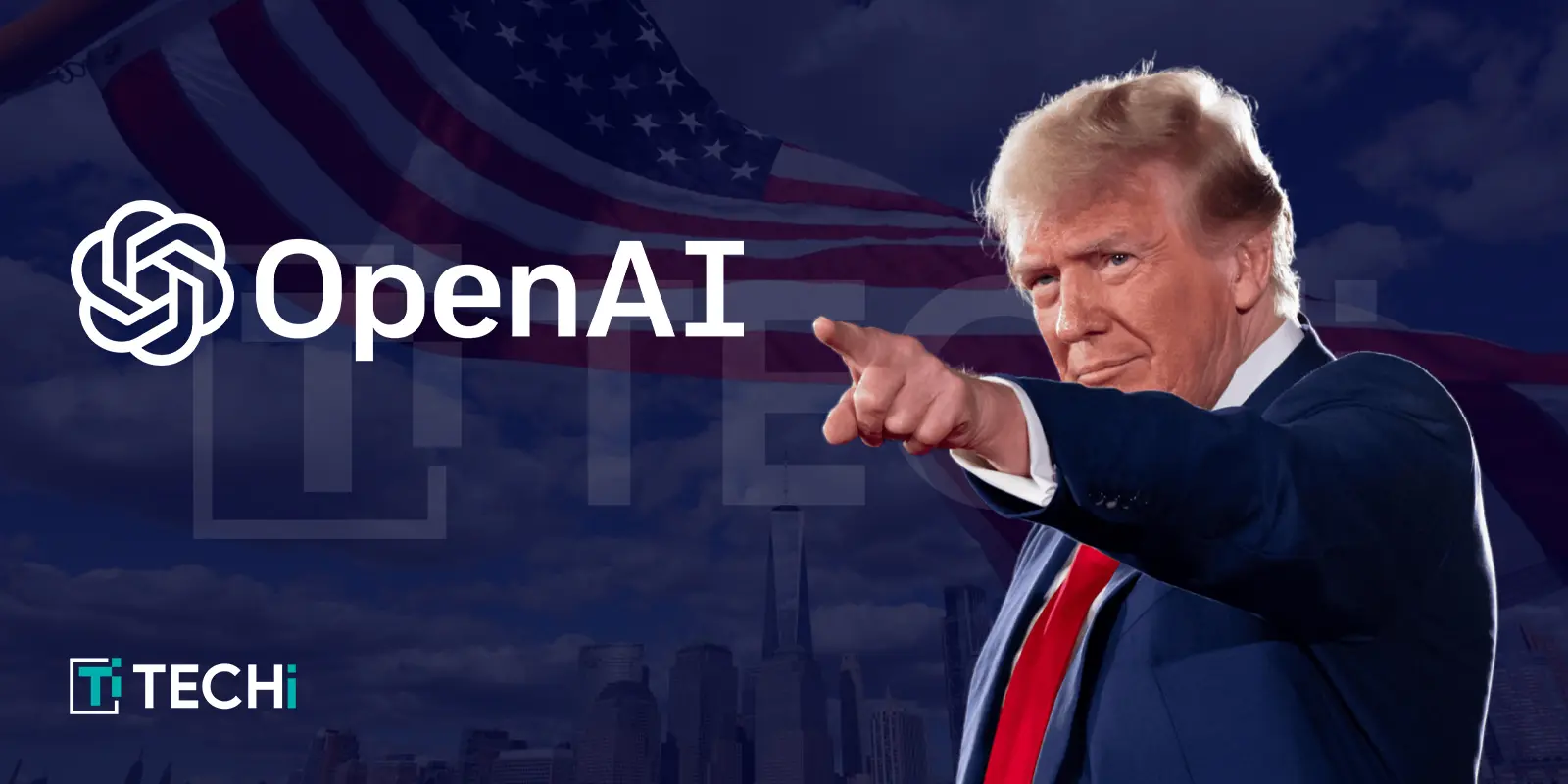
          UBS Predicts Growth:                    
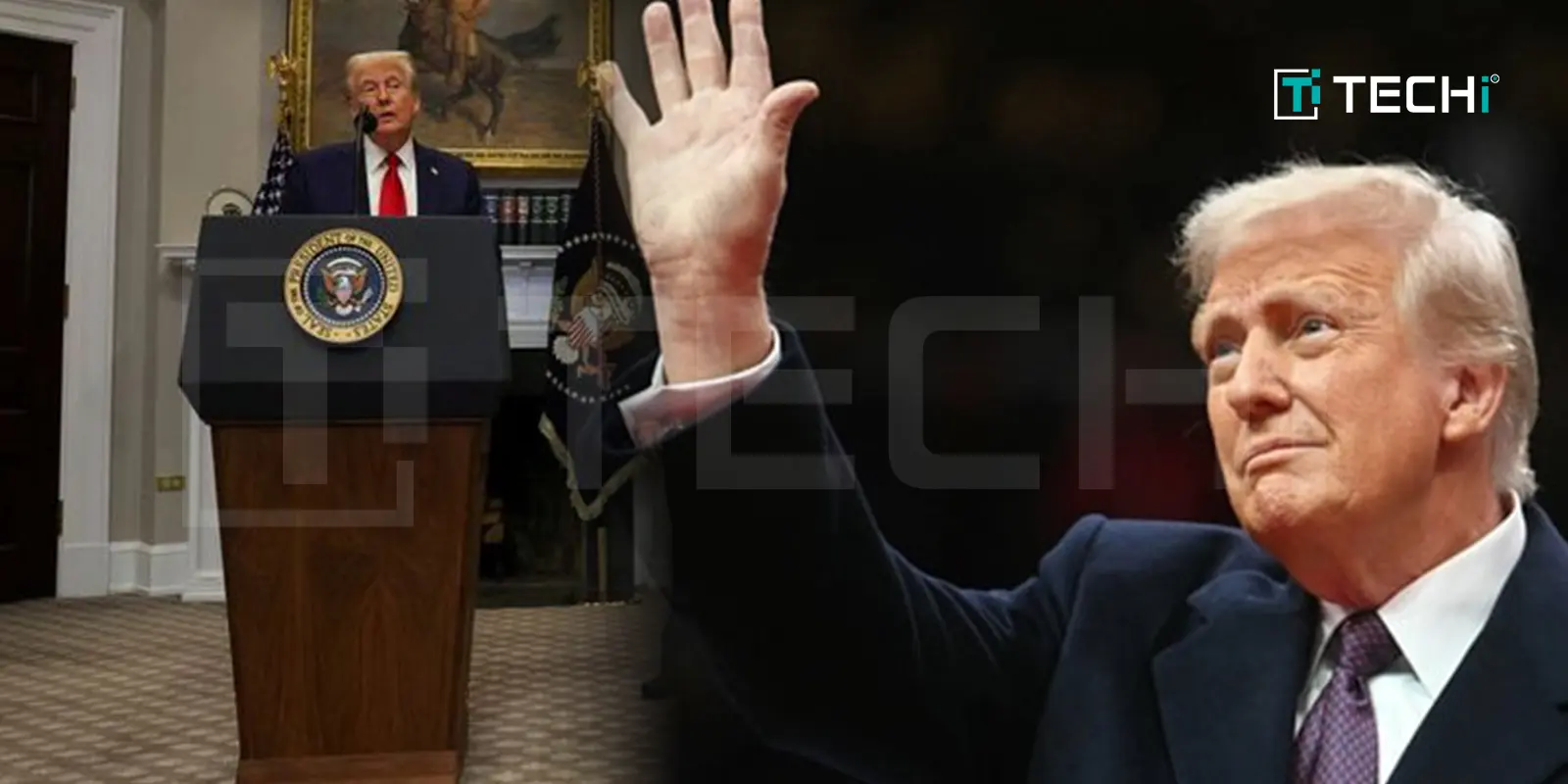
          Despite market concerns, UBS analysts are backing Nvidia (NASDAQ: NVDA) and predicting a pivotal game changing quarter ahead of it. UBS foresees explosive growth ahead, as NVIDIA is expected to increase its revenue by almost twice as much, driven by a predicted $9 billion in sales of its next-generation Blackwell chipsets by January.

           Progression towards Blackwell System:  

          Nvidia’s instant shift from Hopper to Blackwell systems has led UBS forecasts for a highly active and productive future. To maintain optimal Supply chain management, UBS points to Nvidias’ employing end-users and original design manufacturers (ODMs) as a clever strategy for revenue recognition. Furthermore, Blackwell rack shipments are already in progress, with Hon Hai (HNHAF) at the forefront and Quanta on the rise.

          Overcoming Challenges and Increasing Innovation:

          Despite the hardware challenges, Nvidia’s performance is improving due to the use of connector cartridges from Amphenol (NYSE: APH), strengthening its ability to deliver under pressure. UBS has highlighted the growing dominance of Nvidia in AI and data centers, driven by the constant demand for hyperscalers. UBS’s $185 price target for Nvidia is a testament to their trust in the company’s repair strategy along with a turning point for investors. The Blackwell systems produced by Nvidia are not merely a product launch, but also a statement of redefining the field. As the innovation level continues to rise and grow, Nvidia is set to achieve high results in the future.

          Read More: When will 5G Technology Launch in Pakistan?

          Trump Unveils $500B Stargate Project to Transform AI Infrastructure in the U.S

          Former U.S. President Donald Trump announced the launch of the $500 billion “Stargate Project” on January 21, 2025, an ambitious private-sector initiative aimed at revolutionizing the nation’s artificial intelligence (AI) infrastructure. The project involves collaboration with major corporations, including OpenAI, Oracle, SoftBank, and MGX, to establish AI data centers across the United States, starting with Texas.

          The Stargate Project is set to kick off with an initial investment of $100 billion, which will fund the construction of advanced data centers. These centers are designed to support AI model development, cloud computing, and advanced analytics. Over four years, the project aims to create over 100,000 jobs while securing the U.S.’s position as a global leader in AI technology.

          Trump emphasized that the initiative would strengthen U.S. competitiveness, particularly against countries like China, which have been rapidly advancing in AI development. Alongside this, he introduced a series of executive measures to support the project, including reversing an earlier executive order regulating AI technologies and providing incentives for private-sector energy production to power the data centers.

          The announcement has garnered widespread attention, with tech giants like Nvidia and Oracle seeing significant stock market gains following the news. Masayoshi Son of SoftBank and Larry Ellison of Oracle were present at the event and expressed their confidence in the project’s transformative potential.

          Sam Altman, CEO of OpenAI, highlighted that the initiative would not only accelerate AI research but also democratize access to AI tools for businesses and individuals. OpenAI, as part of its involvement, plans to scale its reliance on Microsoft’s Azure platform while utilizing resources from other partners like Nvidia for computational capabilities.

          The project represents a critical milestone in the AI industry, with President Trump positioning it as a key driver of economic growth, technological leadership, and national security in the coming decades.

          Read More: Russian Hackers Target WhatsApp Accounts of Ministers Worldwide

          OpenAI Gains More Flexibility as Microsoft Backs $500B Stargate Initiative

          Microsoft, OpenAI, SoftBank, Oracle, and MGX have joined forces to launch the “Stargate Project,” a groundbreaking initiative aiming to invest $500 billion in the U.S.-based artificial intelligence (AI) infrastructure over the next four years. This joint venture represents one of the largest commitments to AI development in history and is set to transform the landscape of AI innovation in the United States.

          The project will kick off with a $100 billion initial investment, focusing on building state-of-the-art data centres in Texas, with plans to expand into other states. These data centres are expected to support advanced AI model training and deployment, making the U.S. a global hub for AI research and infrastructure.

          In a significant development, Microsoft has loosened its exclusive grip on OpenAI’s use of data centres. This change allows OpenAI to collaborate with other companies in establishing these centres, fostering greater scalability and innovation. However, Microsoft continues to hold exclusive rights to OpenAI’s API services, and key elements of their partnership, including revenue-sharing, will remain in place until 2030.

          The Stargate Project will also see OpenAI significantly increasing its reliance on Microsoft’s Azure cloud services to power its AI models and operations. Alongside Azure, other technological heavyweights like Nvidia and Arm Holdings will provide critical hardware and software support, ensuring the project meets its ambitious goals.

          This massive investment is being positioned as a strategic move to solidify the U.S.’s position as a leader in AI development, particularly in light of growing competition from China and other global players. Beyond boosting technological capabilities, the project is expected to create thousands of jobs, drive economic growth, and establish the U.S. as a frontrunner in AI research and infrastructure development.

          Read More: Meet Operator: OpenAI’s AI Tool That Could Take Over Your Computer Tasks

          Political Bias or Technical Issue: Meta Faces Backlash Over Instagram Hashtag Error

           #Democrat and #Democrats to display “results hidden” on Instagram.

          What’s the problem with that?

          Technical error or Informed decision?

          However, 

          #Republicans show millions of posts, which makes the situation seem one-sided.

          Curious how people come to know about this?

          Zuckerberg and team take on this?

          It’s not about politics – It’s a technical error. Not just #Democrat and #Democrats, some Republican-related ones, need fixation too. Promised to handle the errors.

          Social media expert Matt Navarra told BBC, describing the situation as “embarrassing” for Meta

          “In today’s hyper-partisan environment, even unintentional errors can lead to accusations of bias,” he explained. “If Meta doesn’t resolve this quickly, they risk escalating conspiracy theories and damaging their reputation further.”

          What’s the current status? Has Meta solved it?

          No, The error hasn’t been fixed till today.

          Searching for Democrats manually (without the hashtag) also shows no results and claims it’s due to sensitive content. Will these minor-seeming errors cause a bad reputation and conspiracy theories for Meta and Mark?

          Stay Tuned to Techi.com to get regular updates.

          Read More: Venture Capitals’ Major investment is ineffective for struggling startups